
NIPCO to deploy 20 new CNG stations nationwide

cngNIPCO Gas Limited has announced that it is constructing 20 additional compressed natural gas stations across Nigeria as part of efforts to deepen gas utilisation and support the Federal Government’s clean energy and post-subsidy reform agenda.

The Managing Director of NIPCO Gas Limited, Nagendra Verma, disclosed this during a media engagement held recently at his office in Lagos, where the company outlined its ongoing expansion initiatives within Nigeria’s evolving energy landscape.

“Aligned with the Federal Government’s clean energy and post-subsidy reform agenda, NIPCO Gas Limited, in a joint venture with NGML, is currently constructing 20 additional Compressed Natural Gas stations across Nigeria,” Verma stated.

He added that the expansion also includes the development of strategic compression hubs to support distribution nationwide. According to him, the nationwide rollout is designed to improve access to gas-powered mobility infrastructure along critical routes and urban centres.

Verma elaborated, “In addition, CNG mother stations located at Lekki and Ore are at advanced stages of completion.

These facilities will serve as primary compression and dispatch hubs, enabling the efficient supply of CNG to daughter stations and industrial customers across various regions.

“The nationwide expansion is strategically designed to ensure broader coverage along key transport corridors and high-traffic urban centres, thereby improving accessibility and affordability of CNG for commercial vehicles, fleet operators, mass transit systems, and private motorists.”

He explained that the company would leverage a network-based distribution model to extend supply beyond pipeline-connected locations.

“Through the mother-daughter network model, reliable gas supply will be extended to areas not directly connected to pipeline infrastructure,” he added.

Verma stressed that all facilities under development are being executed in line with regulatory and safety standards, adding that the expansion would have broader economic and environmental benefits.

“This expansion is expected to generate significant employment opportunities, reduce transportation fuel costs, stimulate enterprises within the mobility value chain, lower carbon emissions, and contribute to improved air quality,” he highlighted.

Emphasising the company’s wider commitment to Nigeria’s gas development agenda, Mr Verma said NIPCO Gas remains well positioned to advance energy security and sustainable growth through continued infrastructure investments.

Beyond the CNG rollout, the company is also expanding pipeline and distribution infrastructure in the South-West. Mr Verma disclosed that, pursuant to a mandate granted by the Nigerian National Petroleum Company Limited, NIPCO Gas Limited, in partnership with NNPC Gas Marketing Limited, is constructing an 18-inch, 80-kilometre natural gas pipeline from Sagamu to Ibadan.

He stated that the project is scheduled for completion by June or July 2026 and is expected to improve gas availability for industries and commercial consumers in Ogun and Oyo states, as well as adjoining areas.

“This critical infrastructure will enhance manufacturing competitiveness, reduce production costs for industries currently dependent on alternative fuels, and stimulate regional economic growth,” he asserted.

The firm is also developing gas distribution infrastructure from Sagamu to Abeokuta in Ogun State to deepen gas penetration within the South-West.

Fidelity Bank Advances Financial Inclusion in Kebbi as Community Celebrates New Branch Launch

Residents of Kamba in Dandi Local Government Area of Kebbi State have welcomed the opening of a new branch of Fidelity Bank Plc, describing it as a major milestone that will ease long-standing financial and logistics challenges faced by farmers, small-scale traders and individuals in the community.
The Chairman of Dandi Local Government Council, Dr. Mansur Isah-Kamba, described the branch as a welcome relief after years of limited access to formal banking services. Represented by the Council Secretary, Alhaji Abdulkadir Muhammad, Isah-Kamba noted that residents – including over 83 traditional rulers on the local government payroll—previously travelled long distances to Birnin Kebbi for routine banking transactions.
“With the opening of this branch in our locality, the stress, cost and time associated with banking outside the community will be significantly reduced,” he said. He also commended Fidelity Bank for its foresight and commitment to supporting farmers and small and medium-scale enterprises (SMEs).
On his part, the Sarkin Shikon of Kamba, Alhaji Mahmoud Zarumai-Fana, described farming as the primary occupation in the area will help improve commercial activities.
“Our people are predominantly farmers. Access to financial services will help them improve productivity and livelihoods. Farmers need support such as pumping machines, fertilisers, and pesticides, and proximity to banking services will make it easier to save, access loans, and participate in agricultural intervention programmes,” he said.
Speaking at the official inauguration ceremony, Regional Bank Head, North‑West Region, Fidelity Bank Plc, Mr. Muhammad Lawal‑Ahijo, highlighted the bank’s commitment to expanding financial access and supporting economic growth across Nigeria.
“Our decision to establish this branch is rooted in our belief that every community deserves access to reliable financial services that enable people to grow, businesses to thrive, and local economies to prosper. Kamba is a thriving agricultural community, and the decision to open a branch here is a strategic investment in the future of its farmers, traders, and households. While the infrastructure is for the bank, this branch belongs to the community. We encourage residents to take ownership by fully utilising the services available.” Lawal-Ahijo said.
He further noted the bank’s overall dedication to empowering informal sector workers and small and medium-scale enterprises (SMEs), adding, “Our goal is to bring banking closer to the people and support farmers, SMEs and households with accessible financial services that drive sustainable growth.”
In his remarks, a member of the Kebbi State House of Assembly representing Dandi Constituency, Dr. Abubakar Suleiman-Fana, said the new branch marked a significant step toward strengthening financial inclusion in rural communities.
“This is a milestone for our constituency. Financial inclusion is critical to rural development, and farmers, traders, and youths must take advantage of this opportunity to grow their businesses and improve their economic well-being,” he said.
Residents also expressed delight about the impact the new branch will have on their daily lives. A petty trader, Mrs. Hassana Abubakar, said she previously had to close her shop whenever she travelled to Birnin Kebbi for banking transactions.
“Now I can do my banking here without losing a whole day’s business. This will help my shop grow,” she said.
The opening of the Fidelity Bank branch in Kamba underscores the bank’s ongoing commitment to advancing financial inclusion, supporting rural economies and empowering farmers and small businesses across Nigeria.
Ranked among the best banks in Nigeria, Fidelity Bank Plc is a full-fledged Commercial Deposit Money Bank serving over 10 million customers through digital banking channels, its 255 business offices in Nigeria and United Kingdom subsidiary, FidBank UK Limited.
The Bank is a recipient of multiple local and international Awards, including the 2024 Excellence in Digital Transformation & MSME Banking Award by BusinessDay Banks and Financial Institutions (BAFI) Awards; the 2024 Most Innovative Mobile Banking Application award for its Fidelity Mobile App by Global Business Outlook, and the 2024 Most Innovative Investment Banking Service Provider award by Global Brands Magazine.
Additionally, the Bank was recognized as the Best Bank for SMEs in Nigeria by the Euromoney Awards for Excellence and as the Export Financing Bank of the Year by the BusinessDay Banks and Financial Institutions (BAFI) Awards.
CBN receives locally sourced LBMA-Standard Gold into foreign reserves

…As Cardoso advocates reforms to unlock Nigeria’s mineral potential
 The Central Bank of Nigeria (CBN) has taken delivery of responsibly sourced gold refined to London Bullion Market Association (LBMA) Good Delivery standards into its foreign reserves.
This brings the CBN’s total gold holdings to $3.5 billion, marking a significant step in its reserve diversification strategy.
The gold, sourced in Nigeria, was aggregated by the Solid Minerals Development Fund (SMDF) through the National Gold Purchase Programme (NGPP).
 The programme involves local miners and operates within a responsible sourcing framework aligned with the Organisation for Economic Co-operation and Development (OECD) Due Diligence Guidelines and the World Gold Council’s London Principles.
Speaking at the one-day Workshop on Strategies to Maximise the Economic Benefits of Minerals in Nigeria on Friday, February 27, 2026, the Governor of the Central Bank of Nigeria (CBN), Mr. Olayemi Cardoso, disclosed that the CBN acquired the monetary-grade gold in Naira at pricing linked to LBMA benchmarks, a structure designed to preserve Nigeria’s foreign exchange holdings while strengthening the nation’s gold reserves. By purchasing domestically refined gold without deploying foreign currency, he said, the transaction enhances reserve accretion and supports broader macroeconomic stability objectives.
Mr. Cardoso also highlighted major shifts in global reserve management strategies, noting their increasing importance amid rising global economic uncertainties. He described the event as a reflection of Nigeria’s shared commitment to responsible and strategic management of its mineral resources. He emphasised that the workshop underscores the nation’s readiness to adapt to the realities of an evolving global economy, where resilience, diversification, and prudent governance have become increasingly vital.
He further explained that the session, convened by the CBN’s Corporate Secretariat and Reserve Management Departments, was designed to create a structured platform for engagement with key players in the gold sector and to deepen understanding of the industry’s current landscape, opportunities, and challenges across its value chain.
The Governor noted that central banks around the world are prioritising economic resilience amid persistent geopolitical and market uncertainties. Gold, he said, has regained importance as a hedge against inflation and volatility, while other critical minerals are increasingly shaping global supply chains and advanced industrial development.
Mr Cardoso emphasised that Nigeria’s immense natural and human resource potential can only be fully realised through prudence, strategic coordination, and long-term planning. He highlighted the need for strict adherence to internationally recognised standards, stressing that institutional credibility depends on strong governance frameworks.
The Executive Secretary of the Solid Minerals Development Fund (SMDF), Hajiya Fatima Umaru Shinkafi, highlighted that the successful delivery of LBMAstandard gold demonstrates the strength of the organisation’s formalisation framework and supply chain duediligence processes. The World Gold Council’s Director of Central Banks and Public Policy, Ms Kurtulus Taskale Diamondopoulos, commended both the CBN and SMDF for designing the Nigerian Gold Purchase Programme (NGPP) in line with the twelve London Principles for responsible artisanal and small-scale gold sourcing. She noted that the partnership between the CBN as sole off-taker and the SMDF as fiscal and supplychain manager offers a strong model for other countries seeking to strengthen similar programmes.
The President and CEO of the Africa Finance Corporation (AFC), Mr. Samaila Zubairu, reaffirmed AFC’s commitment to financing and formalising Nigeria’s mineral sector, stressing the importance of accurate data and mineral processing infrastructure to attract investment, improve gold recovery, reduce environmental impact and support central bank purchases. Also speaking, the Executive Vice Chairman of Kian Smith Gold Company, Ms. Nere Emiko, underscored the urgent need for Nigeria to build strategic gold reserves and leverage commodity exchanges, noting the country’s low reserve levels relative to peers and calling for greater investment in exploration and transparency.
The Domestic Gold Purchase Programme forms part of the Central Bank’s broader strategy to enhance reserve quality, reduce external vulnerabilities, and position Nigeria’s mineral wealth as a pillar of long-term economic stability.
Nigeria’s Manufacturing Sector Loses Foreign Investment Appeal as Capital Inflows Plummet 54% in 2025

Lagos, Nigeria – March 2026 – Nigeria’s manufacturing sector suffered a sharp decline in foreign investment in 2025, even as total capital inflows into the country more than doubled, raising concerns about industrial growth and economic diversification.

According to the National Bureau of Statistics (NBS), total capital importation surged by 131.96% year-on-year, reaching $16.78 billion between January and September 2025, up from $7.23 billion in the same period of 2024. However, foreign investment in manufacturing plummeted by 54.11%, dropping to just $463.52 million—a mere 2.76% of total inflows.

Quarterly Volatility Highlights Investor Caution

The data reveals erratic trends:

Q1 2025: $129.92 million

Q2 2025: $261.35 million (brief rebound)

Q3 2025: $72.25 million (steep decline)

Meanwhile, overall capital inflows remained strong, rising from $6.01 billion (Q1) to $6.24 billion (Q2) before moderating to $4.53 billion (Q3).

Why Are Investors Avoiding Manufacturing?

Segun Ajayi-Kadir, Director-General of the Manufacturers Association of Nigeria (MAN), blamed structural bottlenecks, inflation, FX volatility, and poor infrastructure for the sector’s declining appeal.

“Foreign investors are wary of long-term manufacturing projects due to high operational risks,” he said. “Unstable power, costly logistics, port inefficiencies, and policy uncertainty make Nigeria less competitive compared to sectors with quicker returns.”

Economic Diversification at Risk

Analysts warn that Nigeria’s reliance on short-term portfolio flows (rather than productive FDI) threatens job creation and industrialization. Manufacturing is crucial for economic diversification, but dwindling investment could:

Stall expansion plans

Reduce capacity utilization

Weaken job growth

What Needs to Change?

Industry leaders urge urgent reforms:

Stabilize FX & Curb Inflation – Restore investor confidence with predictable policies.

Fix Infrastructure Gaps – Reliable power, transport, and port efficiency are critical.

Ensure Policy Consistency – Clear regulations and incentives for value-added production.

Lower Financing Costs – Affordable credit is essential for local and foreign-backed ventures.

The Bottom Line

While Nigeria attracts record capital inflows, the real challenge is channeling funds into factories—not just financial markets. Without decisive action, the manufacturing slump could deepen unemployment and stall economic transformation.

ZENITH BANK SET TO HOST 2026 INTERNATIONAL WOMEN'S DAY SEMINAR IN LAGOS


Zenith Bank Plc will commemorate the 2026 International Women’s Day with a renewed call to
purposeful action and leadership. As part of preparations to celebrate this significant occasion, the
Bank is set to hold its annual International Women’s Day Seminar on Monday, March 9, 2026, at
The Civic Centre, Victoria Island, Lagos.
Aligned with the global theme ‘Give to Gain” which underscores the principle that sustainable
progress is achieved when individuals and institutions invest intentionally in women, Zenith Bank’s
2026 IWD seminar is themed “Take It, You Own It.” The theme reflects the Bank’s belief that while
institutions must give through enabling environments and equitable systems, women must also
step forward to claim space, own their value, and lead with confidence. It is both an affirmation and
a challenge: embrace opportunity, empower yourself and others, and take ownership of your
growth journey.
Building on the success of previous seminars, including the 2025 edition themed “Winning On All
Fronts”, Zenith Bank’s 2026 programme is designed to deepen meaningful engagement around
women’s empowerment, leadership, and sustainable impact. Over the years, the Bank’s
International Women’s Day initiatives have brought together women leaders, professionals,
entrepreneurs, and emerging talents for dynamic dialogue, inspiration, and shared learning around
gender equity, professional growth, and inclusive opportunity.
More than a commemorative gathering, the 2026 seminar is designed as a convergence of
influence, insight, and inspiration, bringing together accomplished women and progressive leaders
across business, governance, creative industries, technology, and social impact.
Speaking ahead of the Seminar, the Group Managing Director/CEO, Dame Dr. Adaora Umeoji,
OON, who will deliver the welcome address, said “The International Women’s Day is a reminder
that progress requires intentionality. ‘Give to Gain’ speaks to the responsibility institutions have to
create real opportunities, while our theme ‘Take It, You Own It’ challenges women to step forward
boldly and lead. At Zenith Bank, we are deliberate about building environments where women are
supported to grow, thrive, and shape outcomes, not only within our institution but across the
communities and industries we serve.”
The seminar will include segments focused on leadership insight, professional empowerment,
wellbeing, and collaboration, offering attendees opportunities to engage deeply with thought
leadership and practical strategies for advancing equity.
With a carefully curated programme spanning keynote addresses, panel conversations, Q&A
sessions, and creative interludes, Zenith Bank’s 2026 International Women’s Day Seminar
promises to be a catalyst for meaningful action.

Through its alignment with “Give to Gain” and its bold seminar theme, “Take It, You Own It,” Zenith
Bank reaffirms its belief that when institutions give intentionally and women lead confidently, entire
ecosystems rise. As conversations around inclusion continue to shape the future of business and
society, the Bank remains resolute in its mission to foster platforms where women’s potential is
recognised, amplified, and fully owned.

Nigeria ports record 24.8% cargo growth – Report

Abubakar DantsohoNigeria’s maritime sector recorded a historic surge in activity in 2025, driven by increased cargo throughput, rising container traffic, and a growing export footprint, according to the 2025 Operational Performance Report released by the Nigerian Ports Authority.

The report stated that total cargo throughput rose by 24.8 per cent, increasing from approximately 103.6 million metric tonnes in 2024 to over 129.3 million metric tonnes in 2025.

The Managing Director of the Nigerian Ports Authority, Dr Abubakar Dantsoho, described the growth as one of the most significant annual increases in Nigeria’s maritime history, noting that the milestone strengthens the country’s position as a more competitive and strategic player in regional and global trade.

While imports continued to dominate overall cargo traffic, the report highlighted a steady rise in outward trade, with exports accounting for 39.0 per cent of total cargo throughput. Inward traffic represented 59.2 per cent, while transhipment contributed 1.8 per cent. Analysts said the growth in export volumes validates the Federal Government’s economic diversification initiatives aimed at reducing dependence on crude oil and promoting non-oil sector exports.

Containerised cargo, a key indicator of export trade activity, also grew significantly. Total container traffic increased by 25.7 per cent, surpassing 2.1 million Twenty-foot Equivalent Units. Of this figure, export containers grew by 3.1 per cent, while import-laden containers surged by 32.8 per cent. The report further noted a 205.8 per cent increase in transshipment containers, signalling Nigeria’s emergence as a pivotal regional logistics and trade hub.

Lekki Port emerged as the leading port in Nigeria, handling 40.6 per cent of the nation’s total cargo throughput. Onne Port followed with 19.1 per cent, while Apapa Port accounted for 16.7 per cent.

Beyond cargo volume, Lekki Port also attracted the largest vessels, with an average Gross Registered Tonnage of 55,712, slightly higher than Onne Port at 53,022 GRT. Apapa and Tin Can Island Port received ships averaging 33,251 GRT and 36,909 GRT, respectively, while Delta Ports handled vessels averaging 17,414 GRT.

The report underscored a structural shift in vessel traffic. Although Tin Can Island Port recorded the highest frequency of ship arrivals, accounting for 22.7 per cent of total ship calls, Lekki and Onne ports are increasingly receiving the industry’s “heavyweight” vessels, enhancing Nigeria’s capacity to handle larger and more valuable cargoes.

Overall, total ship calls rose by nearly 12 per cent to 4,477 vessels, reflecting broad-based growth across operational metrics. Liquid bulk cargo, including fuel and chemicals, remained the dominant commodity at 54.7 per cent, while containerised cargo accounted for 24 per cent. Analysts noted that the increasing size and sophistication of vessel traffic, coupled with container growth, indicate that the maritime sector is gradually aligning with global shipping standards.

The report also highlighted the rising importance of transshipment cargo, particularly containerised goods destined for other West and Central African ports. The 205.8 per cent surge in transshipment containers positions Nigeria as a strategic regional hub, attracting international shipping lines and boosting revenue for the Nigerian Ports Authority.

The 2025 NPA Operational Performance Report signals a transformative phase in Nigeria’s maritime industry. Export-led growth, rising container traffic, and the strategic role of Lekki Port illustrate that the country is not only handling more cargo but also diversifying the types of goods moving through its ports.

“This is a pivotal moment for Nigeria’s trade ecosystem,” maritime analysts said. “The growth in exports and transshipment reflects the success of policy reforms aimed at reducing reliance on oil revenues, while enhancing the competitiveness of Nigerian ports in regional trade.”

With the nation’s ports showing resilience and dynamism, the report reinforced the Federal Government’s efforts to expand non-oil exports, attract investment into port infrastructure, and integrate Nigeria more fully into global supply chains.

Looking ahead, Dantsoho expressed confidence that the next phase of growth will be driven by the Federal Government-approved port modernisation programme and the implementation of the National Single Window system.

The comprehensive port modernisation project is designed to overhaul ageing infrastructure, deepen berths, rehabilitate quays, expand cargo-handling capacity, and deploy advanced digital solutions across Nigeria’s port network. The initiative is expected to improve vessel turnaround time, reduce cargo dwell time, enhance safety standards, and significantly boost operational efficiency across all terminals.

Fuel price spike triggers fresh naira-for-crude supply calls

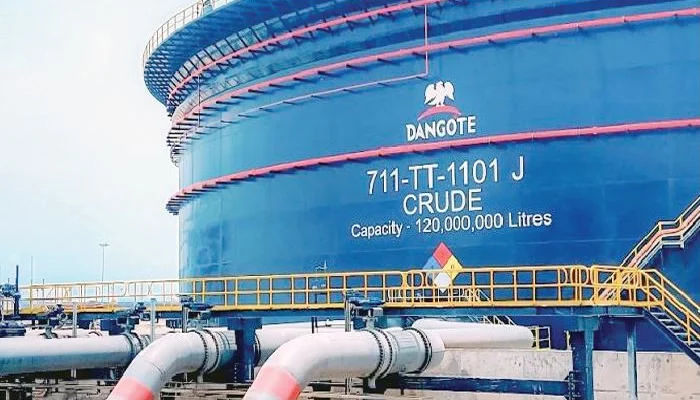
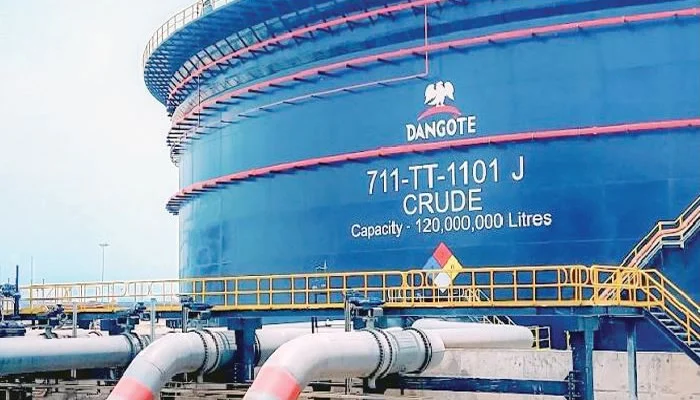
Petrol prices rose to N937 per litre on Tuesday amid escalating tensions in the Middle East, prompting oil marketers and refinery operators to urge the Federal Government to provide more crude oil to the Dangote Petroleum Refinery in naira to help stabilise domestic fuel prices.

The PUNCH reported on Monday that the Dangote refinery increased its gantry price from N774 to N874. The adjustment followed a jump in oil prices to $84 per barrel, up from below $70 days before the airstrikes involving the United States, Iran, Israel, and other countries.

“The new gantry price is now N874 per litre from N774. The review became necessary due to changes in global crude fundamentals and replacement costs,” an official of the Dangote refinery said.

Following the increment, filling stations on Tuesday raised their pump prices to N937 or N935, depending on the location. A survey by our correspondents confirmed that an MRS filling station in Obalende, Lagos, sold petrol at N937 on Tuesday.

The MRS and Petrocam stations in Mowe, Ogun State, dispensed petrol at N935, while Heyden offered N930. Similarly, SAO, SGR, and AP sold the product at N925. Matrix also dispensed the fuel at N937.

Before the Middle East crisis, some filling stations had already been selling premium motor spirit at prices ranging between N812 and N839, depending on the location. However, the crisis over the weekend disrupted the global fuel market, affecting Nigeria and other countries.

Reacting in a statement on Tuesday, the Petroleum Products Retail Outlet Owners Association of Nigeria emphasised the urgent need to consolidate and strengthen Nigeria’s domestic refineries, particularly the Dangote refinery, through the provision of adequate and consistent crude oil supply in naira.

According to PETROAN’s spokesperson, Joseph Obele, this “proactive approach” is essential to minimising the impact of external geopolitical shocks on the nation’s petroleum market.

The National President of PETROAN, Billy Gillis-Harry, expressed deep concern over the ongoing military escalation involving the United States, Iran, Israel, and allied nations, and its far-reaching implications for the global energy industry, particularly Nigeria’s petroleum sector.

According to him, recent geopolitical tensions have significantly disrupted global energy markets and supply chains.

PETROAN noted that hostilities in the Middle East, especially around the strategic Strait of Hormuz, through which approximately 20 per cent of the world’s crude oil supply passes daily, have triggered sharp volatility in international oil prices and heightened uncertainty regarding supply continuity.

It added that as the conflict intensified, global crude oil benchmarks had surged, with analysts projecting that prices could exceed $100 per barrel if disruptions persist, noting that the upward trend reflected growing concerns over potential supply shortages should shipping activities through the Strait of Hormuz remain restricted.

PETROAN stated that any sustained increase in crude oil prices would inevitably be reflected at petroleum retail outlets across Nigeria. “If the crisis continues, the impact will extend beyond pump prices to affect foreign exchange stability, domestic fuel pricing structures, and overall inflation levels within the country,” Gillis-Harry warned.

The association urged the Federal Government to encourage and prioritise local refineries by ensuring a steady crude oil supply in naira, particularly to the Dangote refinery, and by creating enabling policies that support optimal operations.

PETROAN also called on the government to sustain and strengthen the Naira-for-Crude policy to reduce pressure on foreign exchange and stabilise domestic fuel pricing.

“In view of these developments, PETROAN calls for urgent and strategic actions to safeguard Nigeria’s energy security: encourage and prioritise local refineries by ensuring a steady crude oil supply in naira, particularly to the Dangote refinery, and create enabling policies that support optimal operations. Sustain and strengthen the Naira-for-Crude policy to reduce pressure on foreign exchange and stabilise domestic fuel pricing.

“Urgently revamp the four government-owned refineries to restore them to full operational capacity and reduce dependence on imported petroleum products. Monitor global market developments and respond proactively to emerging risks. Advocate policies that strengthen domestic refining capacity and reduce reliance on imports. Support measures aimed at shielding consumers from excessive fuel price shocks,” the statement stated.

SAHCO procures equipment to boost aircraft handling

Skyway Aviation Handling Company Plc has strengthened its operational capacity with the acquisition of new ultra-modern Ground Support Equipment aimed at improving aircraft handling efficiency across Nigerian airports.

The company’s Public Relations Officer, Mrs Adetola Uansohia, said the investment underscores its commitment to safety, faster turnaround times, and world-class service delivery to airline partners operating within and outside the country.

As part of the upgrade, SAHCO said it took delivery of a high-tech Goldhofer F300 pushback tractor, manufactured by Goldhofer, a globally recognised German ground support equipment producer.

The Goldhofer F300, powered by a heavy-duty diesel engine, is designed to handle most wide-body aircraft and is built with rugged materials suited to Nigeria’s operating terrain and already deployed to one of SAHCO’s hub stations to bolster ramp operations.

In addition, the ground-handling firm also announced the procurement of five Ground Power Units manufactured in France by Guinault, a respected global aviation equipment manufacturer. Each unit delivers 45kVA at 115 volts and 28V DC output, providing stable electrical power to aircraft systems while on the ground.

The official explained, “The GPUs are powered by fuel-efficient gasoline engines and engineered for durability, portability, and optimal ramp performance.

“This investment reflects our unwavering commitment to operational excellence. The new equipment will significantly enhance safety standards, reduce aircraft turnaround time, and improve service reliability for our airline partners”.

She further explained that the advanced GPUs are capable of supporting most Class A aircraft and selected Class B aircraft, making them suitable for high-traffic airport environments. “Their compact design reduces fuel consumption while the rugged build guarantees long-term reliability and flexibility, especially in demanding operational conditions,” the official added.

SAHCO noted that the acquisition forms part of its broader strategy of continuous investment in cutting-edge technology to maintain leadership in Nigeria’s aviation ground handling sector. “We are intentional about staying ahead through equipment upgrades, technological advancement, and service innovation. Our goal is to consistently deliver world-class support to every airline we serve,” the company stated.

As the only aviation ground-handling company with an operational presence across all commercially operated airports in Nigeria, SAHCO said it remains focused on raising industry benchmarks through innovation and customer-focused solutions.

SanlamAllianz Nigeria Pays Over ₦77 Billion Claims In 2025 Reinforces Financial Strength, Customer Trust

SanlamAllianz Nigeria, comprising SanlamAllianz Life Insurance and its subsidiary, SanlamAllianz General Insurance, has announced total claims payments of ₦77 billion across its Life and General Insurance businesses for the 2025 financial year, reaffirming its financial strength and commitment to policyholders amid sustained macroeconomic pressures.
A statement by Group Head, Strategy, Marketing and Customer Relations, Chris Ekwonwa, stated that the performance underscores the company’s role as a reliable risk partner and reflects the strength of the Sanlam Allianz joint venture, which combines African market leadership with global insurance expertise.
The Company’s unaudited figures showed that the Life business recorded Net Claims Incurred of ₦57.06 billion in FY 2025, compared to ₦51.04 billion in FY 2024, representing an 11.8% year-on-year increase.
The increase reflects elevated claims costs driven by Nigeria’s 2025 macroeconomic environment, including inflationary pressures impacting benefit payouts and medical-related claims across the industry.
Despite this, the Life business delivered strong top-line growth, with Gross Written Premium (GWP) rising to ₦81.39 billion in 2025, up from ₦60.86 billion in 2024, a significant 33.7% year-on-year increase.
Commenting on the results, Tunde Mimiko, Chief Executive Officer, Life Business, said: “Our unaudited 2025 results reflect disciplined growth and an unwavering commitment to our policyholders. In a year defined by economic pressure, we honoured our obligations promptly and responsibly. The strong premium growth demonstrates increasing trust in our Life solutions and confidence in the SanlamAllianz value proposition. Our focus remains on protecting families and businesses so they can truly live with confidence.”
The General Insurance business, on the other hand, according to its unaudited results, paid ₦20.9 billion in claims in 2025, compared to ₦13.97 billion in 2024, marking a 47.6% year-on-year increase in claims settlement.
Gross Written Premium for the General business stood at ₦47.05 billion in 2025, reflecting sustained underwriting capacity and expansion across corporate and retail portfolios.
Jacqueline Agweh, Chief Executive Officer, General Insurance Business, stated: “The true measure of an insurance company is its ability to pay claims efficiently and transparently. Our unaudited 2025 performance demonstrates operational strength and financial resilience. As part of the SanlamAllianz joint venture, we leverage global underwriting standards, strong capital backing, and deep local expertise to ensure individuals and businesses remain protected against uncertainty.”
SanlamAllianz Nigeria operates under a strategic joint venture between Sanlam, Africa’s largest non-banking financial services group, and Allianz, one of the world’s leading global insurers. The alliance combines global risk management expertise, strong capital and governance frameworks, advanced technical underwriting capabilities, and deep local market understanding.
The company’s claims record reinforces its brand promise, “Live with Confidence.” By honouring over ₦77 billion in claims in 2025 alone, SanlamAllianz continues to provide financial security, stability, and peace of mind to individuals, families, and businesses across Nigeria.
Formed as a merger of Sanlam, Africa’s biggest non-banking financial services firm and Allianz, easily the world’s most recognizable insurance brand in a JV across 28 countries on the continent, SanlamAllianz has  become the clear leader in the non-banking financial services industry in Africa with strong commitments to be top two in every market in which they operate. Consummated in Nigeria as SanlamAllianz Nigeria in June 2025, the brand immediately embarked on a rebrand campaign which saw it dominate headlines to the delight of industry watchers.
Banks disburse N36.4tn to trade sector amid rate cuts

Segun AjibolaNigerian deposit money banks disbursed a total of N36.39tn in credit to the Trade and General Commerce sector in the first nine months of 2025, amid calls for more credit to the private sector for productive activities and investment in critical infrastructure.

The PUNCH found that the amount extended by the deposit money banks to the business ecosystem represented a 0.96 per cent increase from the N36.05tn recorded in the corresponding period of 2024.

An analysis of the Central Bank of Nigeria’s quarterly statistical bulletin for Q3 2025 showed that total credit rose from N36.05tn in January to September 2024 to N36.39tn in the same period of 2025, reflecting a modest year-on-year growth driven largely by stronger lending in the third quarter of 2025.

The data indicated that August 2025 recorded the highest credit distribution at N5.06tn, followed by September at N4.85tn, while July witnessed a sharp rise to N4.51tn. The surge marked a strong rebound after a relatively slow start to the year.

In contrast, January and February 2025 recorded the lowest credit disbursements at N3.48tn and N3.54tn, respectively, before lending accelerated from March onward.

For 2024, banks recorded their highest credit disbursements in February at N4.91tn and January at N4.62tn, reflecting a strong first-quarter performance.

However, lending moderated significantly mid-year, with July and August posting the lowest figures at N3.41tn and N3.48tn before a mild recovery in September.

On average, banks distributed N4.04tn monthly to Trade and General Commerce between January and September 2025, slightly higher than the N4.01tn monthly average in the same period of 2024.

Credit extended to businesses has remained on a stable line, with interest rates as high as 30 per cent from commercial banks. The Monetary Policy Rate was pegged at a historic high of 27.5 per cent, a move that the real sector repeatedly decried. The recent decision of the Monetary Policy Committee to shave off 50 basis points in February eased the benchmark interest rate to 26.5 per cent and brought some relief to the trade and commerce ecosystem.

Analysts and members of the organised private sector have called for more credit to flow to productive private sector activities, alongside increased investment in critical infrastructure to strengthen the real sector.

A former Chairman of the Chartered Institute of Bankers of Nigeria, Prof Segun Ajibola, said credit growth in trade depends largely on demand dynamics and signals from monetary authorities.

“Many factors influence the push of credit to different sectors of the economy. One has to be need-oriented and demand-oriented. In other words, those who need credit must come forward to request from their bankers,” Ajibola said.

He added, “Dropping rates is an invitation to do more. And more importantly, it also signals the direction of the economy. When the rate drops, the monetary authorities and the fiscal authorities are beckoning operators in the sectors to do more, so that the multiplier effects will help push the economy to higher growth.”

Members of the Organised Private Sector, including the Director-General of the Lagos Chamber of Commerce and Industry, Dr Chinyere Almona, said the rate cut should translate into stronger private sector lending and infrastructure investment.

“We see the rate cut as a bridge from reform to results. We want to see more credit to the private sector for productive activities, more investment in critical infrastructure, government commitment to continued transparency in the FOREX market, and strong support to building our local refining capacity,” Almona said.

She added that with firm coordination between monetary and fiscal authorities, “the Nigerian economy will make good progress towards achieving a Gross Domestic Product growth rate above five per cent in the short term.”

Also, the Director of the Manufacturers Association of Nigeria, Segun Ajayi-Kadir, said the rate cut, though modest, could ease borrowing costs for businesses if banks pass on the benefits.

“Lower borrowing costs for businesses will allow them to access cheaper loans, invest more in machinery, expand operations, and increase working capital. This will increase production capacity, encourage the hiring of more workers, and expand the performance of Small and Medium Enterprises,” Ajayi-Kadir remarked.

He stressed that the impact would depend on effective transmission, controlled inflation, exchange rate stability, and resolution of structural challenges such as power, logistics, and insecurity.

The President of the Association of Small Business Owners of Nigeria, Dr Femi Egbesola, said the reduction in the MPR could lower banks’ funding costs and support lending to SMEs and traders. “If these factors align, we can expect a modest but meaningful rise in credit flowing to productive sectors,” Egbesola said.

Similarly, the Director of the Centre for the Promotion of Private Enterprise, Dr Muda Yusuf, warned that weak transmission between policy rates and lending rates remains a concern.

“We have historically had a very weak transmission mechanism between the monetary policy rate and the lending rate. Several times in the past, when we see a reduction in the monetary policy rate, it hardly reflects in lower lending rates,” Yusuf said.

He added that high operating costs, risk premiums, and structural bottlenecks continue to constrain lending, urging greater intervention by development finance institutions to provide longer-term, lower-cost funding to the real sector.