2027: ‘Let’s go to primaries, you don’t believe in zoning’ – Amaechi tells Atiku

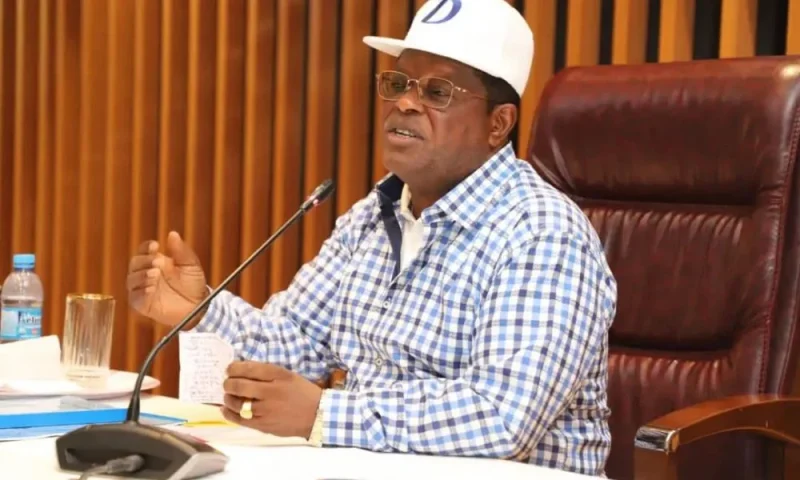
Former Minister of Transportation, Rotimi Amaechi, has told former Vice President Atiku Abubakar that they should go to the primaries since Atiku said he does not believe in zoning.

Amaechi made this statement on Monday while responding to questions in an interview on Trust TV.

The chieftain of the African Democratic Congress, ADC, said this will be the first time Atiku will taste failure in primary election.

He was speaking on the level of his preparedness for the primary election of the party.

The former Rivers state governor said, “Atiku said he does not like zoning, so let’s go to primaries.

“I listen when said he has never failed the primaries before. I hope this will be the first time he fails the primaries.

“That is not the issue, the issue is that every time he has passed the primaries, he has not won the election.

“You see as I’m talking to my colleagues and brothers in the North, let’s not play North and South politics. It’s not necessary. I don’t do it and I will not do it.

“I would like to copy former president Olusegun Obasanjo. He’s a huge nationalist. You may not like him. But he was a Nigerian President and not a Yoruba President.”

When asked what what his fate would be if an aspirant, Mohammed Hayatu-Deen decides to step down for Atiku, the former Rivers state governor said he wished them luck.

Only five GAC members supported Hamzat, no consensus candidate in Lagos APC – Jim-Kamal

Ahead of Thursday’s All Progressives Congress, APC, governorship primary election in Lagos State, one of the aspirants, Lanre Jim-Kamal, has insisted that there is no officially endorsed candidate in the race, stressing that all contestants should participate in a transparent direct primary process.

Jim-Kamal made the remarks on Monday during the unveiling of his five-point agenda in Lagos, where he said his administration would focus on addressing what he described as longstanding irregularities in the state’s political and governance system.

According to him, the signing of the 2026 Electoral Act by President Bola Tinubu reflected support for direct primaries and opposition to the culture of candidate imposition within political parties.

He argued that the president’s endorsement of direct primaries was rooted in a desire to strengthen internal democracy and discourage predetermined candidacies.

Jim-Kamal urged delegates expected to participate in the governorship primary to vote according to their conscience and support a candidate capable of providing effective leadership for Lagos State.

“I urge the delegates to open their eyes and vote for the person that will lead us well,” he said.

The APC aspirant also appealed for a peaceful conduct of the exercise, stating that Lagos should demonstrate political maturity and serve as a model for other states across the country.

“Let us be peaceful. Let us go out and show other states that we are no more ‘Eko for Show’ but ‘Eko for Action’. We are going to lead by example this time around,” he stated.

Speaking further, Jim-Kamal described the planned exercise as a direct primary to be conducted using the Option A4 system, noting that although the APC was not traditionally known for that method, the party had now embraced it.

“That is what is happening now, direct primary, what they call Option A4. APC may not be used to it because it has been more common with other parties, but now they have started it,” he said.

The governorship aspirant also dismissed reports suggesting that there was a consensus arrangement in favour of the Deputy Governor of Lagos State, Obafemi Hamzat.

According to him, reports of endorsement were exaggerated, claiming that only a five members of the party’s Governorship Advisory Council, GAC, allegedly backed Hamzat out of the council’s larger membership.

He further stated that the chairman of the council had recently denied claims that any aspirant had been officially endorsed.

Jim-Kamal criticised the idea of consensus candidacies within political parties, arguing that such arrangements often create resentment and division among party members.

“If consensus stands, the deputy governor will not be running from pillar to post seeking support. Consensus breeds bad blood. There is nothing like consensus. We are all equal in this race,” he said.

Court orders forfeiture of private jet linked to alleged N23.1bn power fraud

A Federal High Court has ordered the final forfeiture of a private jet allegedly linked to fraud connected to the Maiduguri Emergency Power Project, MEPP, valued at 114.1 million dollars and N23.1 billion.

The development was disclosed in a statement posted on the official page of the Nigeria National Grid.

According to the statement, investigations by the Economic and Financial Crimes Commission, EFCC, allegedly revealed that Abdulsalam Mustapha Kachallah leaked bidding information to China Machinery Engineering Company, CMEC, in exchange for financial kickbacks.

The statement alleged that CMEC later transferred about 2.07 million dollars through Afuwa Integrated Services, identified as a Bureau De Change operator, using what were described as forged invoices to facilitate the purchase of the aircraft for Valiente Jet Limited.

Justice Emeka Nwite reportedly described the transaction as a disguised arrangement linked to fraudulent activities surrounding the project.

“Justice Nwite condemned the disguised transaction, forfeiting the asset to the FG. The court ordered the permanent forfeiture of the aircraft to the Federal Government,” the statement read.

We’ll mobilise only graduates with NERD certificate – NYSC

The National Youth Service Corps, NYSC, has reaffirmed that it is committed to enforcing the Federal Government’s directive mandating all Prospective Corps Members to present a compliance certificate from the Nigeria Education Repository and Databank, NERD.

The Director-General of NYSC, Brigadier General Olakunle Nafiu, stated this in his keynote address at the 2026 Batch ‘B’ Pre-Mobilization Workshop themed, “Strengthening Institutional Accountability and Compliance in the NYSC Mobilization Process for Effective Service Delivery,” held in Abuja.

He appealed to Corps Producing Institutions to adequately sensitize their students and ensure strict compliance with the initiative.

General Nafiu emphasized that the mobilization process was not the sole responsibility of the NYSC, urging regulatory bodies, security agencies, and relevant ministries to provide the necessary support through policy guidance, capacity building, and enforcement of compliance standards.

He said, “When we work in synergy, we ease the path for our Prospective Corps Members, ensuring that their transition from student to national service is smooth, transparent, and credible.

“Let us be bold in confronting the obstacles before us and creative in fashioning solutions that will stand the test of time.

“Let us build a more accountable, transparent, and efficient mobilization process for the benefit of all,” he said.

Earlier in her address, the NYSC Director, Corps Mobilization, Mrs. Rachel Ideawor, described the Pre-Mobilization Workshop as a vital platform for fostering collaboration between the Scheme, Corps Producing Institutions, and other critical stakeholders.

She noted that although significant progress had been made in enhancing the NYSC mobilization process, there was still a need to optimize service delivery across the entire mobilization value chain.

“I urge our Student Affairs Officers to approach their responsibilities with diligence and integrity, ensuring that the information provided accurately reflects the true profiles of Prospective Corps Members,” Ideawor said.

The workshop was attended by representatives of the Joint Admissions and Matriculation Board, JAMB, National Universities Commission, NUC, National Board for Technical Education, NBTE, Federal Ministry of Education, NERD, SIDMACH Technologies, as well as 266 Student Affairs Officers, SAOs from various Corps Producing Institutions across the country.

Bandit attacks threaten northern campuses, student group warns

BANDITSThe Student Wing of the Northern Youth Frontiers on Monday raised concerns over worsening insecurity around tertiary institutions in the North, warning that persistent attacks by bandits and kidnappers are undermining access to education and threatening the future of thousands of students in the region.

The group said that despite the gains recorded under the Federal Government’s student loan initiative through the Nigerian Education Loan Fund, insecurity around campuses continued to discourage learning and expose students to danger.

The concerns were contained in a communiqué issued after an emergency joint congress of student leaders, campus delegates and youth stakeholders from the 19 northern states and the Federal Capital Territory, held in Abuja.

The communiqué was jointly signed by the National Coordinator of the NYF Student Wing, Ibrahim Bello, and the Secretary-General, Hauwa Abdulaziz.

According to the students, many tertiary institutions and off-campus student communities in the North remained vulnerable to attacks, forcing students to live in fear while pursuing their education.

“We urgently appeal to President Bola Tinubu to intensify security efforts across Northern campuses, which remain vulnerable to threats from bandits and kidnappers,” the communiqué stated.

The congress called for increased investment in the Safe Schools Initiative and demanded a stronger security presence around universities, polytechnics and colleges of education across the region.

“Specifically, we call for the aggressive funding of the Safe Schools Initiative, alongside the deployment of specialised, round-the-clock military and police patrols around tertiary institutions, off-campus student residential zones and critical transit routes to guarantee that students can utilise their loans in safety and peace,” the students said.

The group warned that insecurity has continued to disrupt academic activities, heighten anxiety among parents and students, and worsen educational challenges in the North.

The students, however, commended the Federal Government for the implementation of the student loan scheme under NELFUND, describing it as a critical intervention that has restored hope to indigent students struggling with tuition and living expenses.

According to the communiqué, over N72.03bn has been disbursed directly into students’ accounts as monthly N20,000 upkeep support, helping beneficiaries cope with feeding, accommodation and academic costs.

“By stepping in where poverty would have forced brilliant minds out of school, NELFUND has restored dignity to the less privileged and brought immense psychological and financial relief to countless struggling families,” the communiqué added.

The congress also noted that more than 1.3 million Nigerian students had reportedly registered and applied through the NELFUND portal, while over N161.97bn had been disbursed under the scheme in 2026.

The students passed a vote of confidence in President Tinubu and the Managing Director of NELFUND, Akintunde Sawyerr, describing the education loan programme as one of the administration’s most impactful interventions in the education sector.

They urged the Federal Government not to allow insecurity to erode the benefits of the programme, stressing that access to education can only improve in an environment where students feel safe.

In recent years, several schools and tertiary institutions across northern Nigeria have faced security threats ranging from abductions to attacks on school communities, leading to temporary closures, disruption of academic calendars and heightened fear among students and lecturers.

The insecurity crisis has also contributed to declining school enrolment in some affected communities, with many parents reluctant to send their children far from home due to fears of kidnapping and violence.

Education stakeholders have repeatedly warned that the situation could deepen the out-of-school children crisis already confronting Northern Nigeria, which accounts for a significant percentage of the country’s out-of-school population.

Lagos appoints Oseni as new medical director of Gbagada General Hospital

The Lagos State Government has appointed Dr Saliu Olugbenga Oseni as the new Medical Director of General Hospital, Gbagada, as part of ongoing efforts to strengthen healthcare delivery across public health institutions in the state.

A statement by the Lagos state government said the management and staff of the hospital officially welcomed Dr. Oseni following the retirement of the immediate past Medical Director, Dr. Babafemi Olusegun.

Before his new appointment, Dr. Oseni served at General Hospital, Isolo, where he was recognised for his professionalism, administrative competence, and dedication to quality healthcare service delivery.

His appointment to General Hospital, Gbagada, according to the hospital management, forms part of the Lagos State Government’s broader plan to sustain excellence and improve healthcare services across state-owned medical facilities.

Welcoming the new Medical Director, the hospital management expressed confidence in his ability to build on the achievements of his predecessor, Dr. Babafemi Olusegun, whose tenure was described as impactful and professionally driven.

The management noted that Dr. Oseni possesses the experience and leadership capacity needed to further advance the hospital’s vision of providing efficient, accessible, and patient-centred healthcare services to residents.

“The new MD is well-positioned to build on the achievements of his predecessor while advancing the hospital’s vision of delivering efficient, accessible, and patient-centred healthcare services,” the statement said.

Staff and stakeholders of the hospital pledged their support and cooperation to the new Medical Director, assuring members of the public of the institution’s continued commitment to quality healthcare services under the new leadership.

APC primaries: Onjeh, Ottah, Alapa, others battle for senatorial ticket in Benue South

The race for the All Progressives Congress (APC) senatorial ticket in Benue South has become intense ahead of the party’s primary election taking place, as leading aspirants continue to lobby members and mobilise support across the district.

Leading the race are former APC senatorial candidate, Daniel Onjeh, former House of Representatives member, Francis Ottah Agbo; former lawmaker, Nelson Alapa; Joe Ojobo; Patrick Ojechema Idoko; and Oloche Agidani, all vying to emerge as the party’s candidate for the 2027 general election.

DAILY POST gathered that the contest, which has generated tension within the APC in Benue South, is also exposing growing cracks among stakeholders, party loyalists and influential political interests ahead of the 2027 general elections.

Benue South Senatorial District, largely dominated by the Idoma Igede ethnic nationalities, remains one of the most politically sensitive zones in the state.

The APC is seeking a strong candidate capable of challenging the incumbent senator, Senator Abba Moro of the Peoples Democratic Party (PDP), who is eyeing a third term in office.

Since the return of democracy in 1999, the PDP has remained dominant in Benue South, with Senator David Mark representing the district for 20 years, while Senator Abba Moro is currently rounding off his second term in office.

This development has heightened internal pressure within the APC, with stakeholders reportedly divided over who possesses the political strength, grassroots appeal, financial capacity and acceptability to capture the district for the ruling party.

Among the leading aspirants, Francis Ottah Agbo appears to have gained momentum within influential circles of the party.

Despite the growing momentum behind Ottah, supporters of former National Association of Nigerian Students (NANS) president, Daniel Onjeh, insist that he remains the strongest grassroots politician in the race.

Onjeh, who flew the APC flag in the 2015, 2016 rerun and 2023 senatorial elections, still retains a loyal political structure across parts of Benue South.

Sources said Onjeh was initially believed to be the preferred aspirant of some influential figures within the party before the dynamics allegedly changed at the last minute.

The development reportedly triggered frustration within his camp.

Tensions escalated after reports emerged that some stakeholders outside Benue South allegedly participated in attempts to influence the choice of candidate for the zone.

The situation reportedly led to heated disagreements during a stakeholders’ meeting in Makurdi.

Onjeh was later said to have stormed the residence of Governor Hyacinth Alia to seek clarification over the alleged endorsement of another aspirant by his pointman, Moses Ternenge, who is not from Benue South.

Shortly after the meeting, Onjeh issued a public statement, saying: “Relax, Benue South. I just left the Governor, and he vowed on his integrity that he never sent Moses Ternenge to endorse any candidate.”

The statement further fueled speculation about deepening divisions within the party ahead of the primaries.

However, Ottah in a post on Facebook claimed that all stakeholders of the party were behind him as the claim of external influence were misleading and untrue.

While much attention has focused on the rivalry between Ottah and Onjeh, former Minority Leader of the House of Representatives, Nelson Alapa is also said to be quietly building support within strategic blocs of the APC.

Though less vocal publicly, party insiders told our report that Alapa enjoys support among some stakeholders who believe he represents a compromise option capable of uniting aggrieved factions after the primaries.

His supporters are reportedly banking on his legislative background, relationship with grassroots mobilisers and perceived neutrality in the ongoing power struggle within the party.

Apart from the leading contenders, other aspirants in the race include former Benue State House of Assembly lawmaker representing Ogbadibo, Joe Ojobo, oil magnate Patrick Ojechema Idoko and young politician Oloche Agidani.

Each of them is believed to command pockets of influence within different local government areas.

For now, tension remains high across the district as party members prepare to decide who eventually emerges as the APC standard bearer in one of the most closely watched senatorial contests in Benue State.

Taraba APC primaries marred by allegations, confusion, internal crisis

The recent primaries conducted by the All Progressives Congress,APC, in Taraba State have sparked widespread controversy, with allegations of manipulation, irregularities, and internal divisions threatening to deepen tensions within the party ahead of the 2027 elections.

What was expected to be a democratic exercise to select candidates for elective positions descended into confusion and accusations of fraud, as aggrieved aspirants and party stakeholders have continued to question the credibility of the process.

Several aspirants alleged that the primaries lacked transparency and were characterized by procedural inconsistencies, including the late arrival of electoral materials, disputed voting processes, and claims of predetermined outcomes.

One of the strongest criticisms came from governorship aspirant, David Sabo Kente, who alleged that no genuine House of Representatives primaries took place in several parts of the state.

According to him, electoral materials reportedly arrived late in some locations, while results had already emerged before voting processes could properly commence.

Kente claimed that election materials were distributed overnight even as social media videos purportedly showed completed voting exercises, raising questions about the integrity of the exercise.

The allegations have fueled suspicions among party members that the outcomes of the primaries may have been predetermined long before delegates and party members cast their votes.

However, the APC leadership in Taraba has dismissed the claims, insisting that the primaries were successfully conducted across the state. Party spokesperson, Aaron Artimas, described the allegations as “false and misleading,” maintaining that due process was followed.

Despite the official response, critics within the party argued that concerns over transparency were not adequately addressed. Some stakeholders accused party officials of relying on political intimidation and dismissing aggrieved aspirants as “bad losers” rather than responding directly to procedural complaints.

The controversy surrounding the primaries has also intensified fears of possible litigation, especially over alleged attempts to impose candidates through consensus arrangements.

Under Nigeria’s electoral guidelines, consensus candidacy requires the voluntary written consent of all cleared aspirants. However, reports from within the party suggested that some aspirants felt pressured to step down, while others accused party leaders of selectively applying the rules to favor preferred candidates.

Political observers say the situation has exposed deeper contradictions within the party, particularly between the APC’s public commitment to “internal democracy” and allegations of backdoor political negotiations.

Tensions within the party reportedly escalated further following the political realignment involving Governor Agbu Kefas, whose movement into the APC is believed to have altered the balance of power within the state chapter.

The development has reportedly generated resentment among long standing APC members, many of whom fear that the party structure is increasingly being controlled by newly aligned political interests.

Grassroots members have also expressed dissatisfaction over what they describe as the growing influence of elite negotiations over popular participation within the party.

Although the APC adopted direct primaries in an attempt to ease internal tensions and broaden participation, the process instead generated further controversy, with complaints over membership verification, logistical challenges, and monitoring procedures.

Political analysts note that the controversy reflects broader concerns about the conduct of party primaries in Nigeria, where allegations of manipulation, elite interference, and disputed results have become recurring issues across major political parties.

The APC in Taraba now faces growing concerns over party cohesion as reports of dissatisfaction and possible defections continue to emerge following the disputed primaries.

Observers warn that unresolved grievances could weaken the party ahead of future elections, especially as opposition parties seek to capitalize on internal divisions.

Many party supporters have also expressed concern that repeated controversies surrounding party primaries risk deepening public distrust in the democratic process.

As senatorial primaries continue across the state on Monday, political observers are closely monitoring developments to see whether similar controversies will emerge in the next phase of the APC’s internal elections.

Four soldiers injured as troops survive IED blast, ambush in Borno

Four soldiers were injured on Saturday after troops on patrol survived an improvised explosive device (IED) blast and a subsequent ambush along the Damboa–Kumala–Maiduguri supply route in Borno State.

The incident was disclosed by security expert Zagazola Makama in a post on his X handle on Sunday.

According to the post, the attack occurred at about 11:45 am on May 16, roughly nine kilometres from Kumala Junction in Konduga Local Government Area.

Troops of 25 Brigade, who were on a dominance patrol along the strategic highway, reportedly encountered a command-detonated IED planted by suspected terrorists before coming under ambush.

The troops were said to have fought through the attack, although four soldiers sustained injuries during the engagement.

Reinforcements from the brigade headquarters, alongside an Explosive Ordnance Disposal (EOD) team, were later deployed to the area to secure the route and support ongoing operations.

The EOD team subsequently discovered and safely neutralised another suspected IED planted along the same axis.

Security sources also disclosed that troops safely escorted 89 civilian vehicles through the corridor, while 165 others were turned back to Damboa as a precautionary measure due to the threat posed by the attack.

Nigerian Navy dismantles reconstructed illegal refinery

The Nigerian Navy has dismantled an illegally reconstructed refining cluster, along the Rivers–Bayelsa border, recovering about 8,500 litres of suspected petroleum products.

The Director of Naval Information, Navy Capt. Abiodun Folorunsho, made this known in a statement on Sunday in Abuja.

Folorunsho said that the operation was carried out by personnel of Nigerian Navy Ship (NNS) SOROH under Operation DELTA SENTINEL.

“This crackdown followed a credible intelligence on illegal refining around Egboama/Ogbogolo community in Ahoada West Local Government Area of Rivers State,” he said.

He said that the operation involved coordinated land and water insertion, supported by aerial surveillance to locate the concealed refining sites, within the creek.

“The troops uncovered approximately 5,500 litres of suspected crude oil and 3,000 litres of suspected illegally refined Automotive Gas Oil, AGO,” he said.

Folorunsho added that generators, welding machines and other tools used in expanding the illegal facilities were also recovered during the operation.

“Findings depicted deliberate efforts by the criminal networks to restart the refining infrastructure previously destroyed by security forces.

“All identified sites and equipment have been deactivated in line with operational procedures, while surveillance and monitoring of adjoining creek corridors remain ongoing,” he said.

The naval spokesman said that the sustained operations were focused on preventing the re-establishment of illegal refining camps and dismantling support structures sustaining crude oil theft.

He reaffirmed the Nigerian Navy’s commitment to intelligence-driven operations aimed at protecting critical national assets, securing the maritime domain and denying economic saboteurs freedom of action in the Niger Delta.