Peter Obi sues kinsman, Kenneth Okonkwo

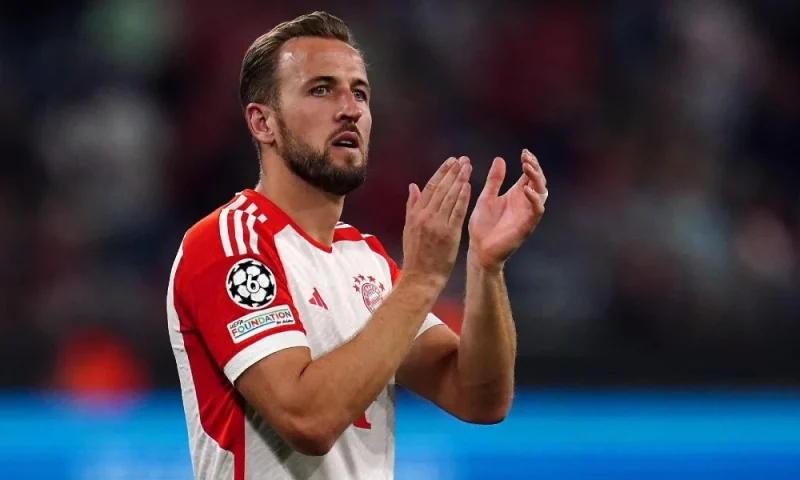
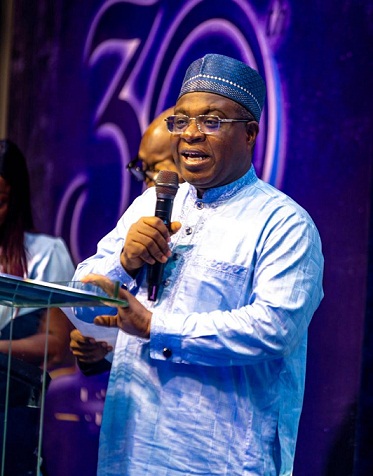
Peter Obi, presidential candidate of the Nigerian Democratic Congress and former governor of Anambra State, has dragged his former loyalist and kinsman, Kenneth Okonkwo, to court.

A suit made by Peter Obi’s legal counsel dated June 9, 2026, and signed by Chief Alex Ejesieme, SAN, of Alex Ejesieme (SAN) & Co. (Madiba Chambers) described Okonkwo’s allegations as fabricated and damaging.

Recall that the Nollywood actor-turned-lawyer-and-politician, Okonkwo had alleged that Peter Obi and others had collected a bribe of N10 million from House of Representatives aspirants.

However, Peter’s legal team said the claim is false.

According to the legal document, Okonkwo stated in substance and effect:

“(a) That our client, Mr. Peter Obi, together with the leaders of the Nigeria Democratic Congress (NDC) in the South-East, informed the party’s aspirants that any person seeking to contest as a member of the House of Representatives must, after paying the prescribed expression of interest fee, pay a bribe of ten million naira (N10,000,000.00) to the NDC and to the caucus leaders;”

The document further outlines additional claims made by Okonkwo during the broadcast, noting his assertions:

“(b) that the said unlawful demand was accompanied by documentary proof; the person who relayed the information to you having sent the said information together with the receipt evidencing the payment;

(c) that our Client personally wrote and compiled the list of the party’s candidates from his hotel room at the Johnwood Hotel;

(d) that you warned the said aspirants that our Client is going to scam them;

(e) that our Client travels abroad to collect money from people; and

(f) that our Client and the leaders of the NDC in the South-East are perpetuating criminality.”

Rejecting the assertions, Obi’s legal team emphasized that the remarks directly target their client’s character, integrity, and public standing.

The chambers stated:

“The above statements, in their natural and ordinary meaning and by necessary implication, falsely and maliciously represent our client as a person who demands, solicits, organizes, and collects bribes; who extorts, defrauds, and swindles political aspirants of their money; who is a fraudster, a scammer, and a dishonest political actor; and who, in concert with others, is engaged in criminal conspiracy and is actively perpetuating criminality. These are extremely grave, damaging, and reckless imputations of bribery, extortion, fraud, financial dishonesty, and criminality directed at the character, integrity, reputation, and public standing of our Client.”

The letter goes on to describe the public nature of the statements as particularly troubling due to their rapid amplification across digital channels.

“For the avoidance of doubt, our Client states categorically that the said allegations are false, baseless, malicious, reckless, defamatory, and wholly unsupported by any fact. They were made with the clear intent and purpose of lowering our client in the estimation of right-thinking members of society, exposing him to hatred, contempt, and ridicule, and injuring his hard-earned reputation as a man of unquestionable integrity, a statesman, and a political leader. It is particularly disturbing that the said statements were made by you on live television and were thereafter republished, broadcast, and widely circulated through online and social media platforms, including video-sharing platforms, where such falsehoods spread rapidly and assume a life of their own. Your words were not mere political commentary. They crossed the permissible bounds of fair comment and constituted a direct assault on our Client’s person, integrity, image, and reputation.”

The law firm said that the right to freedom of expression does not permit the reckless destruction of another person’s reputation.

The firm’s listed demands require Okonkwo to immediately withdraw the defamatory statements in their entirety and publish a clear, unequivocal, and unreserved public apology to Peter Obi.

“This withdrawal and apology must be given equal prominence to the original broadcast and shared across all his social media platforms, including X (formerly Twitter), Instagram, Facebook, and YouTube.

Additionally, the legal team demanded a written undertaking that he will cease making or publishing further defamatory statements against their client, alongside a financial compensation package,” his legal team stated.

Recall that in the past days Okonkwo had launched accusations at Peter Obi after dumping the African Democratic Congress.

Okonkwo has not hidden his support for the presidential aspiration of Atiku Abubakar, former vice president, who emerged as the flagbearer of ADC ahead of the the 2027 general election.

Withheld primary results may undermine party credibility – NDC Reps aspirant warns

A House of Representatives aspirant on the platform of the Nigeria Democratic Congress (NDC), Hon. Onus Igwe Nwankwo, has accused party officials of withholding the results of the party’s primary election for the Ohanivo Federal Constituency and warned against any attempt to alter the outcome of the exercise.

In a statement issued on Tuesday, Nwankwo claimed that the NDC primary election for the constituency was conducted on May 29 across the three local government areas of Ohaozara, Onicha and Ivo, despite reported disruptions during the process.

According to him, delegates participated in the exercise and votes were cast, but the results were never publicly announced.

“The primary election took place. I participated in the election, my delegates participated, voting was conducted, and delegates exercised their democratic rights,” he said.

Nwankwo stated that he possesses video recordings and other materials documenting the conduct of the election, adding that the evidence has been preserved.

He expressed concern over the failure to officially declare the results, describing it as a threat to transparency and due process.

“In every credible democratic exercise, results must be openly declared in the presence of aspirants, agents, delegates and observers. The withholding of results creates uncertainty and opens the door to potential manipulation of the democratic process,” he said.

The aspirant further alleged that he had received credible information suggesting that efforts were being made to alter or substitute the genuine results of the primary election.

“I wish to state clearly that any result which differs from what was actually recorded at the polling locations across Ohaozara, Onicha and Ivo will be challenged through all available lawful and party mechanisms,” he said.

Nwankwo called on the NDC Election Appeals Committee, National Working Committee and other party leaders to ensure transparent collation of votes and immediate public declaration of the authentic results.

He also urged the party to suspend the submission of candidates’ names to the Independent National Electoral Commission (INEC) until the results are properly collated and announced.

The aspirant additionally raised concerns over what he described as the concentration of both the Senate and House of Representatives tickets within the same ward and village in Onicha Community, warning that such an arrangement could generate feelings of exclusion among other parts of the constituency.

“Given the diversity of our constituency, equity, inclusiveness and balanced representation remain essential to party unity and electoral success,” he said.

Despite the dispute, Nwankwo reaffirmed his loyalty to the NDC, saying he remains committed to the party and its democratic ideals.

He also appealed to his supporters and residents of Ohanivo Federal Constituency to remain calm and peaceful while pursuing the matter through lawful channels.

“The people of Ohanivo have spoken through the democratic process, and I am confident that the leadership of the NDC will uphold the principles of fairness, transparency, justice and equity,” he added.

The NDC leadership had yet to publicly respond to the allegations as of the time of filing this report.

Senator Abba Moro mourns beheaded health worker, others killed in Apa attack

Senate Minority Leader and Senator representing Benue South Senatorial District, Comrade Abba Moro, has expressed deep sorrow over the killing of several residents of Apa Local Government Area, including a health worker, Ojama Emie, who was reportedly beheaded by armed attackers.

In a statement issued on Tuesday through his Media Adviser, Emmanuel Eche’Ofun John, Moro described the incident as heartbreaking and condemned the continued attacks on communities across Benue South.

According to the senator, Ojama was ambushed and killed by armed men along the Ikobi-Olegogba road in Apa LGA, with the assailants allegedly severing and taking away his head. Other residents were also reportedly killed during the attack.

Moro lamented what he described as the worsening security situation in Benue South, saying communities in the district remain under constant threat from armed assailants.

He questioned why the killings have continued despite the presence of security agencies and called for urgent action from both the Benue State Government and relevant security authorities to halt the violence.

The lawmaker said he stands in solidarity with the people of Ikobi and the entire Apa Local Government Area during the difficult period and urged government at all levels to prioritize the protection of lives and property.

He stressed that residents deserve to live peacefully, sleep safely in their homes, and carry out their lawful activities without fear of attack.

Moro also extended his condolences to the family of Ojama Emie and other victims of the incident, praying for the peaceful repose of their souls.

Nigeria-US security partnership key to anti-terror war – Presidency

The Presidency has described the Nigeria-United States security joint collaboration as key to end terrorism and banditry in the country.

Special Adviser to the President on Media and Public Communication, Sunday Dare, made this statement on Tuesday during an X Space discussion.

Dare said intelligence sharing, security collaboration and joint counter-terrorism operations between both countries remain critical to dismantling insurgent groups and criminal networks operating within the region.

According to him, the administration of President Bola Tinubu remains focused on restoring peace across the country, protecting lives and property, and safeguarding Nigeria’s territorial integrity against internal and external threats.

He noted that the growing collaboration between Nigeria and the United States reflects a shared determination to tackle security challenges through coordinated action, capacity building and intelligence-driven operations. NigerianAgricultural Insurance

Dare also raised concerns over the increasing spread of misnformation and fake news on digital platforms, warning that false narratives could undermine national security and public confidence.

He cautioned that unverified information has the potential to fuel social tensions, incite unrest and create unnecessary panic among citizens.

“The deliberate spread of false information can create unnecessary panic, provoke disorder, and threaten national cohesion. Nigerians must remain vigilant and avoid becoming tools in the dissemination of content capable of destabilizing the country,” he said.

Senate panel gives BoA, NSPMC, REA one week to answer audit queries

The Senate Committee on Public Accounts has given the Bank of Agriculture (BoA), the Nigerian Security Printing and Minting Company (NSPMC), and the Rural Electrification Agency (REA) one week to appear before it and respond to outstanding audit queries.

The directive followed the agencies’ failure to appear before the committee during its hearing on Tuesday in Abuja.

However, the committee’s secretary informed the chairman, Senator Ibrahim Dankwambo (Gombe North), that he had received correspondence from the Bank of Agriculture signed by its legal adviser.

In the letter, the bank stated that it had previously appeared before the panel between February 2023 and November 2024 and that issues raised during those appearances had been resolved with the committee and relevant government authorities.

The bank requested details of any unresolved matters and sought at least two weeks to enable its management to collate documents.

Dankwambo faulted the letter, noting that it was signed by officials below the rank of Managing Director and Chief Executive Officer.

The chairman maintained that all communications relating to committee invitations must be personally signed and transmitted by agency chief executives.

He also criticised the bank’s failure to present its Managing Director before the committee despite being invited to explain outstanding audit issues.

The committee rejected the request for two weeks, insisting that agencies could not determine timelines for legislative oversight proceedings.

Committee members unanimously resolved that the Managing Director of the Bank of Agriculture must personally appear before the committee within one week.

The lawmakers stressed that previous audit concerns involving the bank remained unresolved, contrary to the claims contained in the correspondence.

The committee further warned that future communications signed by subordinate officers instead of chief executives would no longer be entertained.

The lawmakers also described the absence of the Nigerian Security Printing and Minting Company and the Rural Electrification Agency as unacceptable and directed that the organisations be given a final one-week opportunity to appear before the panel.

Several members expressed concern over what they described as a growing pattern of disregard for legislative summons by government agencies.

They noted that audit queries were serious accountability matters requiring prompt responses and should not be treated with indifference by public institutions.

The committee emphasised that it was acting on reports submitted through constitutional processes and not pursuing issues outside its statutory mandate, warning that agencies failing to honour invitations after the final notice would face sanctions in line with its powers.

Dankwambo said strong letters would be issued immediately to the defaulting agencies, outlining unresolved issues requiring their attention.

He added that the agencies must appear within one week or risk sanctions for failing to cooperate with legislative oversight responsibilities.

IG deploys DIGs, orders crackdown on unregistered vehicles

The Inspector General of Police, Olatunji Disu, has approved the deployment of Deputy Inspectors General of Police to their respective geopolitical zones effective Monday, June 15, 2026.

He said the move was designed to bring leadership closer to the field and improve operational coordination across the country.

The IG announced the measure at a police conference with senior officers in Abuja on Tuesday.

He said, “In furtherance of our operational objective, I have approved the deployment of Deputy Inspectors General of Police to their respective geopolitical zones with effect from Monday, June 15, 2026.

“This initiative is designed to strengthen supervision, improve operational coordination, enhance accountability and provide strategic oversight of policing activities within their zones.

“This deployment is not ceremonial; it is intended to bring leadership closer to the field, improve response mechanisms and ensure that emergencies and priority threats receive prompt attention.”

The IGP directed the deployed DIGs to work closely with Assistant Inspectors General of Police and Commissioners of Police to ensure that operational directives were effectively implemented and measurable results achieved.

Alongside the deployment, he also ordered CPs in neighbouring states to establish what he described as handshake patrols, noting that criminals do not respect state boundaries.

“Too often offenders exploit the jurisdictional gap by committing crimes in one state and escaping to another,” he said.

Disu directed commissioners to establish coordinated patrols along shared entry and exit routes, maintain open intelligence sharing channels and initiate joint responses whenever circumstances demanded, insisting that security must be approached from a regional rather than purely territorial perspective.

The IG also ordered an immediate crackdown on vehicles operating without registration number plates across the country.

He said the force would no longer tolerate what he described as acts of impunity.

“Every vehicle operating on our roads must be properly registered and must display its approved registration number in accordance with the law.

“Any vehicle found without number plates or with a deliberately obscured, concealed or tampered registration number will be stopped, grounded and subjected to the appropriate legal process.”

He linked the practice directly to criminal activity, noting that criminals, kidnappers, terrorists and other offenders often exploit unregistered vehicles to perpetrate crimes and evade detection.

The IGP directed all CPs and tactical commanders to immediately intensify enforcement operations with no preferential treatment or selective enforcement.

Highlighting the success of the police, Disu said eight suspected terrorists, 29 murder suspects, 65 armed robbery suspects, 55 kidnapping suspects and 42 other criminal suspects were arrested.

He added that the operations led to the recovery of 843 rounds of ammunition of various calibres and 28 stolen vehicles, while 88 kidnapped victims were rescued.

Nigeria’s federal structure has long exposed a critical gap in policing, as criminals routinely exploit state boundaries to commit offences in one jurisdiction and flee to another, while fragmented command structures have hampered swift operational response and field-level accountability across the country’s six geopolitical zones.

FG opens $1bn AfCFTA fund for exporters

trade ministerThe Federal Government has reaffirmed its commitment to accelerating Nigeria’s export-led growth agenda under the African Continental Free Trade Area, unveiling opportunities for businesses to access a $1bn AfCFTA Adjustment Fund Credit Facility designed to boost production, competitiveness, and intra-African trade.

The Minister of Industry, Trade and Investment, Jumoke Oduwole, disclosed this on Tuesday during the second-quarter 2026 meeting of the AfCFTA Central Coordination Committee held in Abuja.

According to a statement issued by the ministry’s Head of Press and Public Relations, Obilor-Duru Augustina Okechi, Oduwole said the financing facility represented a major opportunity for Nigerian businesses seeking to expand operations, modernise production processes, and increase exports to African markets.

The statement read: “The Federal Government has reaffirmed its commitment to accelerating Nigeria’s export-led growth agenda under the African Continental Free Trade Area, unveiling opportunities for businesses to access a US$1 billion AfCFTA Adjustment Fund Credit Facility aimed at boosting production, competiti

She noted that despite the progress Nigeria had made in implementing the continental trade agreement, many local businesses continued to face obstacles that limited their ability to take advantage of the single African market.

“Many businesses still face challenges relating to export documentation, certification, standards compliance and market access,” the minister said.

She explained that the Federal Government was addressing these bottlenecks through enhanced trade facilitation measures, simplified AfCFTA guidance tools, stakeholder engagement programmes, and stronger collaboration with institutions such as the Nigeria Customs Service and the Nigerian Export Promotion Council.

Oduwole stressed the need to strengthen Nigeria’s legal and regulatory framework by domesticating key AfCFTA protocols, particularly the Digital Trade Protocol, to position the country as a major player in Africa’s growing digital economy.

The minister also highlighted some of the gains recorded in Nigeria’s AfCFTA implementation efforts. According to her, the expansion of Nigeria’s Air Cargo Corridor Initiative to Rwanda, increased collaboration with development partners and private sector players, as well as sustained engagement with state governments, were helping to deepen awareness and participation in the continental market.

In her welcome address and first-quarter update, the National Coordinator and Chief Executive Officer of the Nigeria AfCFTA Coordination Office, Mrs Patience Okala, congratulated Oduwole on her recent appointment as Chair of the AfCFTA Council of Ministers.

She described the development as evidence of Nigeria’s increasing influence in Africa’s trade integration process. Okala disclosed that recent AfCFTA sensitisation programmes held in Kano attracted more than 470 businesses, including significant participation from women-led enterprises.

She added that the newly introduced AfCFTA ABC Series was equipping businesses with practical knowledge on export procedures and helping them understand how to access opportunities within the continental market.

“The recent AfCFTA sensitisation engagements in Kano attracted more than 470 businesses, including strong participation by women-led enterprises. The newly launched AfCFTA ABC Series is helping businesses better understand export procedures and take advantage of opportunities within the continental market.”

Providing details of the financing initiative, Okala said the $1bn AfCFTA Adjustment Fund Credit Facility was targeted at large African businesses with a minimum financing capacity of $10m.

She revealed that the National AfCFTA Coordination Office was working closely with fund managers to facilitate access for eligible Nigerian companies and had begun assembling a pilot group of businesses to ensure that Nigeria maximised the opportunities provided by the facility.

Also speaking at the meeting, a Deputy Director at the Nigerian Export Promotion Council, Mr Njoku, reiterated that registration with the council remained compulsory for all exporters operating in Nigeria.

He announced that the registration process had been fully digitised, enabling businesses across the country to complete the exercise online. According to him, successful applicants receive an Exporter’s Certificate valid for two years, granting them access to incentives such as the Export Expansion Grant and the Export Development Fund.

Delivering the vote of thanks on behalf of the Permanent Secretary of the Federal Ministry of Industry, Trade and Investment, Chris Osa Isokpunwu, the Director of Special Duties, Dr Simon Om-Ezomo, commended the AfCFTA Secretariat, the Nigeria Customs Service, government agencies, private sector operators and development partners for their continued support.

He emphasised the importance of sustained collaboration, stakeholder engagement, and effective implementation of policies to enable Nigeria to fully harness the benefits of the continental free trade agreement.

The meeting ended with renewed commitments from stakeholders to strengthen inter-agency cooperation, expand opportunities for women and youth entrepreneurs, increase the utilisation of AfCFTA market access provisions, and deepen Nigeria’s participation in regional and continental value chains.

Participants also reaffirmed their support for Nigeria’s preparations for major continental engagements scheduled for June and July 2026, with a shared objective of boosting exports, attracting investment, driving industrial growth, and creating jobs.

The African Continental Free Trade Area, which commenced trading in January 2021, is the world’s largest free trade area by number of participating countries, bringing together 54 African nations into a single market of more than 1.4 billion people with a combined Gross Domestic Product estimated at over $3tn.

Nigeria formally began trading under the AfCFTA Guided Trade Initiative in 2024 and has since intensified efforts to improve export readiness among businesses. Government officials have repeatedly argued that the agreement presents a significant opportunity for the country to diversify away from oil dependence, increase non-oil exports and integrate local manufacturers into regional value chains.

However, stakeholders have continued to identify challenges such as limited access to trade finance, inadequate knowledge of export procedures, standards compliance issues and logistics constraints as barriers preventing many businesses, particularly small and medium-sized enterprises, from fully benefiting from the agreement.

The newly unveiled $1bn AfCFTA Adjustment Fund Credit Facility is expected to address some of these financing gaps and enhance the competitiveness of African businesses within the continental market.

NGX gains N830bn as Airtel Africa leads market rally

stock exchange NSE

The Nigerian Exchange Limited sustained its upward trajectory on Tuesday, as renewed buying interest in telecom heavyweights and select financial stocks lifted the headline market indices by 0.53 per cent.

Driven by intensive position-taking, the benchmark all-share index advanced significantly to close the day at exactly 244,697.62 points. Concurrently, the total value of listed equities expanded by N830bn to settle at an impressive equities market capitalisation of N156.94tn.

Market analysts attributed the bullish momentum to portfolio rebalancing by institutional investors seeking out resilient defensive counters amid broader macroeconomic adjustments.

While the fixed income market capitalisation experienced a marginal contraction of 0.06 per cent to close at N56.74tn, investors showed strong enthusiasm in alternative windows. This was particularly evident in the Exchange Traded Products market capitalisation, which by 4.40 per cent to settle the trading day at N103.00bn.

A granular look at the day’s performance showed a highly competitive gainers’ log dominated by the telecommunications and financial sectors, as visualised in the official daily snapshot.

Leading the premium leaderboard was telecom giant Airtel Africa Plc, which hit the maximum daily regulatory ceiling with a 10.00 per cent increase to close at N4,021.20 per share. It was followed closely by International Energy Insurance Plc, which emerged as the second-highest gainer of the day by advancing 9.90 per cent to finish at N8.77 per share.

The remaining spots on the prime leaderboard were swept by strong banking and insurance counters. Abbey Mortgage Bank Plc spiked 9.76 per cent to close at N11.25, while its sub-sector peer, Infinity Trust Mortgage Bank Plc, grew 9.63 per cent to settle at N10.25.

Rounding out the top five gainers was financial services powerhouse, First HoldCo Plc, which advanced 8.49 per cent to finish the trading session at N69.00 per share.

Market operators continue to advise retail investors to maintain positions in fundamentally sound assets as the trading week progresses.


Oil prices fall on Iran-US peace optimism

An oil platform

Oil prices tumbled on Tuesday as growing optimism over a possible diplomatic breakthrough between Iran and the United States triggered a sharp sell-off in global crude markets, with Brent sliding toward the $91 per barrel mark.

According to the Economic Times, Brent crude fell by over three per cent during intraday trading, while WTI dropped nearly four per cent, as markets reacted to reports that a draft Iran–US peace agreement had been submitted for review in Washington and described as “preliminarily acceptable”.

The development immediately weakened the geopolitical risk premium that had kept oil prices elevated in recent weeks, particularly following heightened tensions that disrupted sentiment around Middle East supply routes and the strategically critical Strait of Hormuz.

The strait, through which roughly 20 per cent of global crude shipments pass, had been a key focus for traders after earlier disruptions triggered a sharp rally that pushed oil prices above $120 per barrel in late February.

At the time, fears of prolonged supply shocks sent global energy markets into panic buying. Tuesday’s decline therefore marks a significant reversal, as traders began pricing in the possibility that easing geopolitical tensions could stabilise supply flows and reduce the likelihood of further disruptions.

Experts said the market is now reacting less to immediate supply concerns and more to expectations of diplomatic progress, although they warn that sentiment remains highly sensitive to any setback in negotiations.

Any breakdown in talks, they note, could quickly reverse the current price trend given the still-fragile security environment in the Gulf region.

The Economic Times notes that energy markets reacted swiftly to shifting geopolitical signals and easing fears over supply disruption.

Oil traders said the combination of easing geopolitical fears and shifting supply data continued to drive volatility in global crude markets.

In Nigeria, the Nigerian National Petroleum Company Limited recorded an over 70 per cent rise in revenue and profit. The Dangote Refinery also benefited from high fuel exports, but households are enduring higher fuel prices, raising inflation pressures.

However, the conflict involving Iran led to a sharp rise in fuel costs, impacting Nigeria’s inflation figures negatively. It is expected that a further crash in oil prices would translate to cheaper fuel for Nigerians.

Nigeria’s foreign debt to hit $72.6bn after 2027 polls – IMF

IMF

Nigeria’s public external debt is projected to rise by $20.7bn by 2027, the country’s election year, according to the International Monetary Fund.

The IMF disclosed this in its 2026 Article IV Consultation report on Nigeria released on Tuesday, projecting that public external debt would increase from $51.9bn in 2025 to $72.6bn by 2027.

The projected increase represents a 39.9 per cent rise within two years and underscores growing concerns over the country’s debt burden despite recent improvements in macroeconomic stability.

The Fund noted that Nigeria’s next presidential election would take place in January 2027 and warned that spending pressures associated with rising poverty, food insecurity and the election cycle could widen fiscal deficits and increase borrowing requirements.

“Spending pressures from elevated poverty and food insecurity, including in the run-up to the elections, could widen fiscal deficit and increase financing needs,” the IMF stated.

According to the Fund’s Balance of Payments projections, public external debt is expected to rise from $51.9bn in 2025 to $66.5bn in 2026 before climbing further to $72.6bn in 2027.

The IMF’s projection broadly aligns with the latest Debt Management Office data, which showed that Nigeria’s public external debt stood at $51.86bn as of December 31, 2025.

Based on the Fund’s forecast, the debt stock would increase by about $20.74bn between the end of 2025 and 2027.

Beyond public debt, the IMF projected that Nigeria’s total external debt stock, which includes both public and private sector obligations, would rise from $109.3bn in 2025 to $119.3bn in 2026 and further to $132.0bn in 2027.

This indicates that total external debt could increase by $22.7bn between 2025 and 2027, with $12.7bn of the increase occurring in 2027 alone.

The report showed that public external debt would remain elevated relative to the size of the economy and export earnings. Public external debt is projected to increase from 17.9 per cent of GDP in 2025 to 18.7 per cent in 2027. As a share of exports of goods and services, it is expected to rise from 82.9 per cent in 2025 to 104.3 per cent by 2027.

The IMF also projected a deterioration in debt service indicators over the period.

Public external debt service due is expected to increase from 8.1 per cent of exports of goods and services in 2025 to 8.8 per cent in 2027, after easing to 5.0 per cent in 2026. The Fund further projected that interest payments on public debt would rise from $2bn in 2025 to $3bn by 2027.

At the Federal Government level, debt servicing is expected to continue consuming more than half of government revenue. The IMF estimated that interest payments absorbed 53.2 per cent of Federal Government revenue in 2025 and projected the ratio at 53.7 per cent in 2026 before easing marginally to 52.4 per cent in 2027.

The report highlighted the growing role of external borrowing in financing government operations. According to the IMF, financing for the 2026 consolidated government deficit is expected to rely more on external than domestic sources, with plans including a proposed $5bn total return swap with an international bank and another Eurobond issuance.

The Fund expressed reservations about the proposed swap arrangement, noting that it carried borrowing costs comparable to Eurobond yields and could expose the government to margin calls if the value of the naira-denominated collateral declines.

“The arrangement exposes the government to margin calls if the FX value of the naira securities drops (naira depreciation, higher interest rates) and could thus give rise to political constraints on monetary or exchange rate policy,” the IMF said.

The PUNCH earlier reported that the IMF warned Nigeria to tread carefully in pursuing a proposed $5bn Total Return Swap financing arrangement with First Abu Dhabi Bank, describing such structures as opaque and potentially risky despite the country’s improved access to international capital markets.

The IMF Resident Representative for Nigeria, Christian Ebeke, disclosed this on Tuesday during a virtual press briefing on the Fund’s 2026 Article IV Consultation Report on Nigeria.

Speaking on the proposed transaction, Ebeke said, “We say in the report, and our view is that the transaction and these types of structures carry risks. Usually, they are opaque. So, the terms are not always very transparent when we review these instruments across countries.”

His comments come weeks after the Senate approved the Federal Government’s request to raise up to $5bn through a Total Return Swap arrangement with a Middle Eastern bank, widely reported to be First Abu Dhabi Bank.

Ebeke noted that beyond concerns over transparency, such financing arrangements could expose countries to additional financial risks if underlying assets lose value or exchange rates move adversely. “They also carry risk, as we flag in the report: the margin calls in the case of the value of the asset drops or the currency depreciates,” he said.

According to him, Nigeria currently has alternative funding options that may be less complicated and more transparent. “We think that Nigeria has market access. Nigeria can issue euro bonds to finance the deficit. And we also think that there are other avenues for Nigeria to raise funds, including on concessional terms,” Ebeke added.

While noting that the Fund did not yet have detailed information on the proposed swap structure, he urged authorities to closely monitor the transaction’s potential risks. “At this point, we don’t have any further information on the TRS. But our view is that it carries risk, and it’s important to monitor those risks very, very carefully,” he said.

The IMF’s caution formed part of a broader assessment in which the Fund acknowledged that economic reforms undertaken by the Nigerian government over the past three years had strengthened macroeconomic stability and improved the country’s ability to withstand external shocks.

Despite the projected increase in debt, the Fund maintained that Nigeria’s sovereign debt position remains manageable. “The risk of sovereign stress is assessed as moderate,” the IMF stated, noting that public debt fell to 36.1 per cent of GDP in 2025 from 39.3 per cent in 2024 due to stronger growth, naira appreciation and improvements in macroeconomic stability.

However, it warned that weak revenue mobilisation, expenditure slippages, contingent liabilities and election-related fiscal pressures could worsen the debt outlook if not carefully managed.

The Fund urged the government to strengthen fiscal transparency, improve budget implementation, sustain revenue mobilisation reforms and avoid spending outside the budget framework in order to contain borrowing needs and preserve debt sustainability.

At the virtual briefing, the IMF Mission Chief for Nigeria, Axel Schimmelpfennig, said recent reforms had enhanced resilience and helped the country manage the economic fallout from the ongoing conflict in the Middle East. “One of the key messages from the report is that strong reforms over the past three years have improved macroeconomic outcomes and improved resilience,” he said.

According to Schimmelpfennig, higher global oil prices resulting from the conflict could improve Nigeria’s export earnings and government revenues, but would also create inflationary pressures through increased fuel, food and fertiliser costs.

He said the IMF recommended a broadly neutral fiscal stance for 2026, with the budget deficit remaining largely unchanged relative to 2025 to support macroeconomic stability and complement the Central Bank of Nigeria’s efforts to curb inflation.

“We continue to think that the flexible exchange rate regime is serving Nigeria well, and we’ve even seen an appreciation against the US dollar since the start of the year,” he said.

The IMF also projected that Nigeria’s economy would grow by 4.1 per cent in 2026 and 4.3 per cent in 2027, although these forecasts were lower than previous projections due to the economic consequences of the conflict in the Middle East. “For 2026, we project real GDP growth to be 4.1 per cent. And for 2027, we see some acceleration to 4.3 per cent,” Schimmelpfennig stated.

He stressed that monetary policy should remain restrictive for longer than previously anticipated, given renewed inflationary pressures stemming from global developments.

The IMF chief further urged the government to continue expanding its cash transfer programme to cushion the impact of economic shocks on vulnerable households while sustaining reforms aimed at improving infrastructure, electricity supply, security, agriculture, education and healthcare.

The Fund also reiterated its support for efforts to increase government revenue, noting that Nigeria remains one of the countries with the lowest revenue-to-GDP ratios globally.

Schimmelpfennig said strengthening tax administration and, over time, aligning some tax rates with those of peer countries would be necessary to create fiscal space for development spending, while ensuring that vulnerable citizens are protected through targeted social interventions.

Obi tackles FG

In a related development, the 2027 presidential candidate of the Nigeria Democratic Congress, Peter Obi, has criticised President Bola Tinubu’s administration over what he described as excessive borrowing and poor fiscal accountability.

Obi said Nigeria’s total public debt has risen to about N200tn, which he attributed to what he called “imprudent governance” under the current administration. He said the debt level represents an increase of over N100tn in three years, contrasting it with the approximately N49tn accumulated during the eight-year administration of former President Muhammadu Buhari.

The former Labour Party presidential flagbearer in the 2023 election stated this in a statement posted on his X handle on Tuesday, saying the situation reflected a lack of accountability and transparency in the management of borrowed funds.

“President Bola Tinubu’s administration has engaged in remarkably imprudent borrowing, escalating Nigeria’s total debt to approximately N200tn. This represents an increase of over N100tn within a mere three years, a stark contrast to the roughly N49tn accumulated during President Muhammadu Buhari’s eight-year tenure, which would have projected to around N80tn.

“As millions of Nigerians grapple with the shock of this unsustainable debt accumulation, the situation is exacerbated by the government’s reckless approach to borrowing and a profound absence of accountability and transparency in the utilisation of these funds,” he said.

However, the Presidency has dismissed claims by Obi that the administration of President Bola Tinubu has accumulated more than N100tn in debt within three years, attributing the increase in Nigeria’s debt profile largely to the impact of naira devaluation.

Special Assistant to the President on Social Media, Dada Olusegun, stated this on Tuesday while responding to Obi’s criticism of the government’s borrowing record and fiscal management.

“For the umpteenth time, Nigeria’s obvious debt portfolio increase over the past three years under the administration of President Tinubu is not a function of new borrowings rather; vast majority of them are mathematical impacts of currency devaluation which you also promised to implement during your campaigns,” Olusegun said.

Olusegun also maintained that Nigeria’s public debt figures include obligations incurred by state governments over the years and should not be attributed solely to the Federal Government.

Questioning Obi’s interpretation of the debt figures, the presidential aide said fluctuations in exchange rates significantly affect the naira value of external debt. The aide further argued that Nigeria’s debt stock in dollar terms had remained relatively stable.