2027: Peter Obi never begged Amaechi to step down – Umeh

Anambra Central Senator, Victor Umeh, says former Labour Party presidential candidate, Peter Obi, never begged former Minister of Transportation, Rotimi Amaechi, to step down for him ahead of the 2027 general elections.

Umeh made the clarification on Monday when he featured in an interview on ‘Prime Time’, a programme on Arise Television.

He was speaking on the speculation that Obi’s visit to Amaechi was to beg the ex-Rivers state governor to step down for him.

The lawmaker said, “Obi’s visit to Amaechi was a noble one with good intention. You have to talk to your opponent.

“Saying Peter Obi went to beg Amaechi to step down for him is very condescending. Obi is not someone who will beg you for what he wants, Amaechi knows that.”

DAILY POST reports that both Obi and Amaechi are in the same African Democratic Congress, ADC, and are presidential hopeful of the party in the next year’s general elections.

Plateau APC crisis deepens as another chieftain dumps party, declares guber ambition under ADC

An internal crisis currently rocking the fold of the All Progressives Congress, APC, in Plateau State, has deepened with the defection of another party chieftain, Chief Jude Eli Dakur, to the African Democratic Congress, ADC, where he declared his intention to contest the 2027 governorship election.

Dakur, a former commissioner in the state, made his gubernatorial declaration on Monday during a stakeholders’ meeting held at his hometown in Kerang district, Mangu Local Government Area.

He said his decision to leave the APC was driven by the need to pursue a people-oriented vision focused on inclusiveness, sincerity, and effective governance.

Dakur stated that the APC was derailing from the dreams of committed members.

Dakur’s defection from the APC is coming barely a month after another party stalwart and former governorship aspirant in the 2023 elections, Brig.-Gen. John Sura, resigned from the ruling party three months after defecting from the PDP.

Although Sura did not provide details of his resignation from the APC, political analysts believed it was not unrelated to the defection of Gov. Caleb Mutfwang to the APC.

The defection of Dakur and other party chieftains in the last three months is seen by many as an internal crisis within the APC, which could lead to an imminent implosion.

Otukpo kidnapping: How we rescued all Benue Link passengers – Police

The Nigeria Police Force has announced a significant operational success with the rescue of all individuals kidnapped in the Otukpo incident.

This event involved passengers from a Benue Links bus and occurred on April 15, 2026.

A statement issued by DCP Anthony Okon Placid, the Force Public Relations Officer, indicated that based on reliable intelligence, the operatives of the Benue State Police Command initiated coordinated clearance operations throughout the Amla Forest corridor and surrounding regions.

He noted that these actions resulted in the safe recovery of the remaining 13 victims, which included eight students traveling to Otukpo for their UTME examinations.

“In total, all 18 passengers have now been accounted for. Each rescued individual has undergone medical evaluation, is in stable condition, and will be reunited with their families following debriefing,” he stated.

He further elaborated that during the operation, seven suspects were apprehended, three of whom have been positively identified as members of the kidnapping syndicate.

He added that investigations are ongoing to capture additional accomplices and dismantle the broader criminal network responsible for the attack.

He confirmed that the suspects are in custody and are being interrogated in accordance with legal procedures.

According to Mr. Placid, the Inspector-General of Police, IGP Olatunji Rilwan Disu, praised the professionalism, resilience, and bravery exhibited by the officers and personnel of the Benue State Command.

He stated that the IGP has instructed the intensification of clearance operations within the Otukpo area to ensure the safety and security of the communities.

He reassured Nigerians of the Nigeria Police Force’s dedication to safeguarding lives and property across the nation.

ICPC disowns viral video, denies investigating SAN, any individual over N50bn bribe

The Independent Corrupt Practices and Other Related Offences Commission, ICPC, has refuted what it characterized as a malicious video circulating on the internet, attributed to the commission.

It stated that the visuals, names, and information presented in the video were fabricated and, in certain cases, generated by artificial intelligence, intended solely to mislead unsuspecting members of the public.

In a statement issued by J. Okor Odey, Head of Media and Public Communication, the Commission clarified that it had not released any report or statement endorsing the claims made in the video, including the purported involvement of any individual or judicial officer.

“To clarify, the ICPC is not conducting an investigation into any individual, Senior Advocate of Nigeria (SAN), group of lawyers, or judicial officer concerning the fictitious N50 billion bribe mentioned in the video,” the statement emphasized.

“No such case, transaction, or investigation is recorded within the Commission’s files. These assertions are completely false and should be ignored,” it further stated.

The ICPC reaffirmed its commitment to fulfilling its mandate of conducting credible, evidence-based investigations in accordance with the law.

It cautioned individuals or groups responsible for the creation and distribution of the video to cease their actions immediately.

“The ICPC will not permit the misuse of its name and institutional integrity to propagate disinformation under the guise of ‘content creation’,” it added.

The Commission indicated that those accountable for originating or amplifying the malicious content will face severe legal repercussions upon being apprehended.

Arabambi Abayomi: Re-Ogun East senatorial endorsement of Dapo Abiodun

My attention has just been drawn to an article written by Wale Onifade with the caption: “Ogun East Ticket: How Dapo Abiodun Is Bullying, Threatening, and Manipulating His Way to a Senatorial Showdown.”

Ordinarily, I would never have dignified such an insanely mischievous diatribe with a response, but due to its extremely divisive nature, it is only natural that I put this down.

The writer’s mission has exposed the attributes of someone who might perhaps be suffering from pseudologia fantastica. His mission was not only mischievous and dishonest, but also erroneous, laced with incorrect narratives that can only be spun by unctuous, dissipated, debauched, nd desperate elements attempting to turn a perfectly organised APC Ogun East stakeholders’ meeting—where His Excellency, Prince Dapo Abiodun, was endorsed as the senatorial candidate of the APC in the upcoming 2027 general elections into something mendacious and devious.

There is a season for politics, and then there is a season for statecraft. The two are not the same, though mischief-makers delight in blurring the line. We are entering the latter—a period when far-reaching decisions are made for the good of the state, when roads must be laid, hospitals stocked, salaries paid, and oil wells brought to life. Yet here comes an article dressed as investigation, parading as conscience, that offers nothing but hearsay, envelopes, and anonymous threats. This is not journalism. This is the politics of the poisoned well, and those who drink from it will find only thirst.

The piece titled “Ogun East Ticket: How Dapo Abiodun Is Buying, Threatening, and Manipulating His Way to a Senatorial Showdown” can best be described as mischievous politics taken too far. It deploys the grammar of exposure—“sources say,” “multiple party sources confirm,” “one party chieftain said”—but delivers no evidence, no named accuser, no audited trail of cash. What it offers instead is speculation served as fact, and malice dressed as vigilance. This is the political season, yes—but that is precisely why we must not play politics with everything around us.

Let us name what is happening. Governor Dapo Abiodun has performed creditably well in infrastructure, education, health, and aviation. The Gateway International Airport is not a rumour; it is tarmac and terminal. Two oil wells have been discovered in Ogun State, and soon the state will be counted among Nigeria’s oil-producing entities. Salaries are paid as and when due. Pensions are paid. Gratuities are paid. When last did Ogun workers go on strike? When last did the ghost of unpaid wages haunt the corridors of power? The governor has turned the state into a construction site, not a conspiracy theory. Yet the article mentions none of this. Why? Because facts are inconvenient. Envelopes sell.

The writer claims that Governor Abiodun is bribing 400 persons at the Adeola Odutola Event Hall in Ijebu-Ode. Four hundred names? No list. No photograph of an opened envelope. No bank statement.

The truth is that the hall held the full complement of Ogun East’s leadership: every councillor, all ward chairmen, all ward executives, all local government chairmen, all local government executives, all serving members of the National Assembly, all serving members of the State Assembly, all past members of the State and National Assembly, and all members of the State Advisory Council.

Therefore, what manner of slumber produces a dream where an entire political class sells its honour in full view of one another, with not a single dissenting voice or leaking hand?

This article is part of the damage bad politics inflicts. It does not seek truth; it seeks traction. It does not serve Ogun East; it serves the writer’s appetite for influence and whatever mission he pursues. The governor’s office had not responded as of press time, the article admits. Then why publish? Why not wait for a reply? Because waiting is honourable, and honour is not the currency here.

The most audacious paragraph accuses the governor of colliding with President Bola Tinubu. “He is calling Aso Rock’s bluff,” a “senior party figure” says—anonymous, of course. The Presidency has not commented, the article concedes. So, the writer manufactures a collision between two leaders who have worked together to stabilise the party and the state. This is not politics. This is pantomime.

And what of the “ranking senator” argument? The article insists that sacrificing a ranking senator for a first-term aspirant is self-harm. A fair point—if delivered in good faith. But this is not good faith; this is a cudgel. The same writer who weeps for senatorial seniority says nothing about the seniority of development—the roads, the schools, the airport, the emerging oil economy. Ogun State has taken on a new look. That is the ranking that matters.

Let me say this plainly: playing politics with everything around us—with every rumour, every anonymous whisper, every imagined slight—is the fastest way to fracture a state. The political season demands vigilance, yes, but it also demands restraint. Decisions are being made for the good of the state: budgets approved, roads awarded, schools renovated, health centres equipped. If we drown these in hearsay, we lose the signal in the noise.

The governor, Dapo Abiodun, has run this race and continues to run it—toward a gold medal, as his supporters would say. That is not empty praise; it is the testimony of visible works. The airport did not build itself. The oil wells did not discover themselves. Salaries did not pay themselves. If opponents wish to contest, let them present their own performance index—their own roads, their own schools, their own record on pensions. But do not bring envelopes without evidence. Do not bring threats without names. Do not bring anonymous chieftains who speak only in shadows.

The article ends with theatrical gravity: “The real verdict on who enters the Red Chamber will not be delivered in an envelope at the Adeola Odutola Hall. It will be delivered at the ballot.” Agreed. So let us wait for the ballot. Let us stop printing indictments before investigations conclude. Let us stop calling a stakeholders’ meeting a cash-and-carry operation simply because we dislike the convener.

Ogun East deserves better. Ogun State deserves better. The political season demands vigilance, yes—but also responsibility. Not every gathering is a bazaar. Not every endorsement is a bribe. And not every journalist who shouts “fire” in a crowded theatre is a hero. Some are simply arsonists with bylines.

Give honour to whom it is due. Governor Dapo Abiodun has performed. Let his works be his witness. And let this article be remembered for what it is: mischief dressed in a trench coat, caught in the rain without an umbrella.

Note:

I am fully aware that the writer and his sponsors have hired armchair “rice-and-beans” activists, crude analysts, and compromised civil society voices to stage a media war and protests against Governor Prince Dapo Abiodun. Let me leave them with a simple parable:

There was once a village that had never seen rain in December. Every elder knew this; every farmer planned accordingly. Then came a stranger who declared, “This year, December will flood.” He hired drummers to announce it, paid storytellers to spread it, and gathered a crowd to swear by it. But when December came, the sun burned as it always had.

The villagers asked the stranger, “Why did you promise what has never happened?”

He replied, “I wanted to be the first to say it.”

That is your war.

You seek to do what has never been done in Ogun East—turn a hall of leaders into a den of thieves, a performing governor into a villain, and a political season into a carnival of falsehood. You may hire your analysts and fund your civil society prophets, but the sun will still rise.

Dr. Arabambi Abayomi (FBAU)

AJAGUNGBADE I of Nigeria

State Convener

Sustainability of Ogun & Dapo Abiodun Legacy Beyond 2027

Date: Monday, April 20, 2026

FRSC returns N1.12m recovered from fatal crash to deceased’s family

The Federal Road Safety Corps (FRSC) has handed over the sum of N1,120,000 recovered from a fatal road crash to the family of a deceased motorist, in what it described as part of its commitment to integrity, transparency and professionalism.

In a statement by the FRSC, the crash occurred on April 11, 2026, at Idu Village along the Gegu–Abaji route and involved a Toyota Corolla with registration number GWP418CV and a Volkswagen Golf with registration number RBC220DG.

The driver of the Volkswagen Golf, Mallam Aliyu Mohammed Bala, sustained serious injuries in the crash and was later confirmed dead at the hospital despite efforts to save his life.

During the rescue operation carried out by the FRSC Zebra Team, the sum of N1,120,000, along with other personal valuables was carefully recovered from the scene and properly documented in line with standard operational procedures.

At a solemn event held at the Command on April 20, 2026, the Corps formally handed over the recovered money to the family of the deceased.

The elder brother of the late driver, Mr. Bala Yakubu, received the money on behalf of the family in the presence of witnesses, including N. Yusuf and Aminu Mahmud Maku.

The handover was conducted by the Ag. Unit Commander, Chief Route Commander RC Ojonugwa E. Ejah, alongside other senior officers of the Command.

The Corps Marshal, Shehu Mohammed, while describing the gesture as a reflection of the Corps’ ethical standards, said it reinforces accountability within the agency.

He also extended condolences to the bereaved family, noting that the entire management and staff of the Corps sympathised with them and prayed for the peaceful repose of the deceased.

BOI, RMRDC to boost agric value chain

The Bank of Industry and the Raw Materials Research and Development Council have signed a Memorandum of Understanding to strengthen Nigeria’s agricultural value chain and drive economic growth.

According to a statement, the agreement, signed on April 17, 2026, aims to enhance value addition across key agricultural commodities and raw materials while addressing bottlenecks in production, processing, and distribution.

Both institutions said the partnership followed extensive engagements and would tackle challenges across harvesting, post-harvest losses, seedlings, cultivation, storage, processing, packaging, logistics, and marketing.

The initiative also aligns with efforts to reduce post-harvest losses, promote import substitution, improve Gross Domestic Product, create jobs, and boost entrepreneurship and industrial capacity.

To drive implementation, the BOI has set up a Joint Steering Committee to oversee execution, including the development of strategies for agricultural and minerals value chains and the adoption of locally developed machinery for raw materials processing.

The agreement also provides for joint feasibility studies and pilot projects targeting commodities such as onions, cassava, kenaf, leather, and kaolin, alongside improved frameworks for storage, processing, and logistics.

The Managing Director/Chief Executive Officer of BOI, Dr Olasupo Olusi, said the partnership would unlock value from Nigeria’s abundant raw materials.

Olusi said, “This partnership brings together two institutions with complementary strengths: RMRDC’s deep expertise in raw materials research and development, and BOI’s capacity to translate viable projects into financed, executable industrial investments. Together, we can do what each institution cannot do as effectively on its own. We can convert research into bankable projects that add value, create jobs, and retain wealth within our economy.

“In practical terms, this means identifying and developing raw material-based opportunities across agro-processing, solid minerals, and industrial inputs and channelling BOI financing to the entrepreneurs and enterprises ready to process local resources into finished and semi-finished goods. Nigeria’s raw materials should not be leaving our shores as commodities. They should be leaving as products.

“At BOI, we are ready. Ready to co-identify opportunities, structure financing, and support the enterprises that will turn this framework into concrete industrial outcomes. Let this be the beginning of a collaboration that Nigerians will feel in the factories that open, the jobs that are created, and the value that stays here at home.”

In his remarks, the Director-General/Chief Executive Officer of RMRDC, Prof. Nnanyelugo Martin Ike-Muonso, said the collaboration would advance industrialisation and economic prosperity.

Ike-Muonso said, “We, at the Raw Material Research and Development Council, deeply appreciate this relationship, and we are thrilled to initiate the formalisation process. We are uniting on key aspects, primarily focusing on value exchange development and promoting the advancement of process technologies. These elements serve as the foundation for industrialisation, the creation of prosperity, and the generation of employment, along with all the indicators that guarantee that people live the kind of lives that they deserve.”

He appreciated the BOI for working with the RMRDC in co-designing, co-sharing, data sharing, co-service programmes, and joint implementation of the programmes, as well as joint efforts on advocacy. He added, “By coming up strongly to say you are going to finance and work with us on this, it gives hope, and then it gives hope to the country and all the people who believe that this project will work.”

Wema Bank meets N264.7bn capital threshold, retains licence

Wema BankWema Bank has officially secured its future in the top tier of the nation’s financial sector, announcing on Monday that it has not only met but significantly surpassed the Central Bank of Nigeria’s new recapitalisation requirements, comfortably retaining its National Banking Licence.

The bank disclosed a Total Qualifying Capital of N264.7bn, a figure that towers over the N200bn minimum threshold mandated by the regulator for national banks. Perhaps most impressive is the speed of execution; Wema Bank finalised the process in April 2026, a full six months ahead of the CBN’s stipulated deadline.

The capital boost was driven by a two-pronged strategic fundraise. The bank successfully executed an N150bn Rights Issue between April and May 2025, which saw massive participation from existing shareholders. This was followed by an additional N50bn special placement later in 2025, solidifying a balance sheet capable of weathering global economic shocks.

Commenting on the development, the Managing Director/Chief Executive Officer of Wema Bank, Moruf Oseni, said, “The successful completion of our recapitalisation exercise is a defining moment for Wema Ban

It is a strong validation of our strategy, our performance, and the enduring confidence our shareholders and stakeholders have in our vision.”

The journey to this milestone began in March 2024, when the Central Bank of Nigeria, under Governor Olayemi Cardoso, announced a sweeping recapitalisation programme. The policy was designed to fortify the Nigerian banking industry against currency volatility and inflation while positioning banks to support the federal government’s goal of achieving a $1tn economy.

For national banks like Wema, the bar was raised from N25bn to N200bn. Wema Bank’s success is particularly noteworthy given its history; after operating as a regional player for years, it only regained its national banking licence in 2015. This latest achievement cements its status as a permanent heavyweight in the national landscape.

“We have not only met the CBN’s requirements; we have exceeded them, reinforcing our position as a national bank with the scale, strength, and stability to compete and lead,” Oseni added.

With the capital exercise concluded, Wema Bank is pivoting toward a new phase of aggressive market expansion. The beefed-up balance sheet is expected to translate into increased lending capacity for Small and Medium Enterprises, enhanced digital infrastructure, and a more robust corporate banking suite.

By utilising its digital-first approach through ALAT, the bank intends to bridge the gap between traditional banking stability and fintech-driven agility.

“This milestone strengthens our ability to compete at scale, deepen our market presence, and deliver more value to our customers across Nigeria through improved access to credit, enhanced digital banking experiences, and innovative financial solutions,” Oseni added.

Looking ahead, the bank aims to leverage its strengthened position to act as a primary catalyst for Nigeria’s broader economic growth.

“This is not just about retaining our licence; it is about building a bigger, stronger, and more impactful Wema Bank,” the MD/CEO noted.

Established in 1945, Wema Bank is Nigeria’s longest-standing indigenous commercial bank. It has evolved from a traditional retail bank into a technology leader, launching ALAT in 2017. Following its successful recapitalisation, the bank continues to operate with a National Licence, serving millions of Nigerians across the country.

Nigeria buys 61.7m barrels US crude amid bulk exports

crude oilNigeria imported about 61.7 million barrels of crude oil from the United States between January 2024 and January 2026, underscoring the country’s growing rel iance on foreign feedstock to support domestic refining despite being a major oil producer.

This is despite the fact that Nigeria exported over 300 million barrels of crude in the first 10 months of 2025 and 55.39 million barrels in January and February 2026.

Data obtained from the US Energy Information Administration showed that crude exports from the United States to Nigeria surged during the period, marking a sharp reversal from nearly a decade of negligible crude trade flows between both countries.

Before 2024, American crude shipments to Nigeria were virtually non-existent. The only notable supply recorded within the period was in March 2016, when exports averaged just 19,000 barrels per day, translating to about 0.589 million barrels for the entire year.

However, the trade pattern changed significantly in 2024, coinciding with the commencement of operations at the Dangote refinery, which industry observers said has emerged as the primary buyer of US crude to supplement domestic supply constraints.

The EIA reports its data in thousands of barrels per day, meaning the daily figures must be multiplied by the number of days in each month to derive the total monthly volume.

For 2024, data available for January to June indicated that Nigeria imported a total of 15.701 million barrels from the United States within six months. In January, imports averaged 125,000 barrels per day, translating to 3.87 million barrels. February recorded 110,000 barrels per day or 3.19 million barrels, while March fell to 51,000 barrels per day, amounting to 1.58 million barrels.

Imports rose again in April to 67,000 barrels per day, representing 2.01 million barrels, before dropping to 35,000 barrels per day in May, equivalent to 1.08 million barrels. June recorded the highest inflow for the year at 132,000 barrels per day, which translated to 3.96 million barrels.

The volume increased further in 2025, which accounted for the largest share of the two-year imports. Between February and December 2025, Nigeria imported 41.06 million barrels of US crude.

According to the EIA, the year started with 111,000 barrels per day in February and climbed steadily in the following months.

Imports peaked in June 2025 at 305,000 barrels per day, the highest monthly rate in the dataset, delivering about 9.15 million barrels within 30 days. Another strong inflow was recorded in August at 201,000 barrels per day, equivalent to 6.23 million barrels.

However, the supply slowed sharply towards the end of the year. Imports dropped to 12,000 barrels per day in November, translating to just 0.36 million barrels, before slightly rising to 23,000 barrels per day or 0.71 million barrels in December.

For 2026, data available for January showed that Nigeria imported 159,000 barrels per day, amounting to 4.93 million barrels.

A breakdown of the figures showed that the combined total for 2024, 2025 and January 2026 stood at 61.685 million barrels, which rounds up to 61.7 million barrels.

The development highlights a paradox in Nigeria’s oil sector, where the country exports large volumes of crude oil but still struggles to supply enough feedstock to domestic refineries.

For decades, Nigeria relied heavily on importing refined petroleum products such as petrol and diesel due to limited refining capacity. The commissioning of the Dangote refinery in 2024 shifted the pattern, with the country now importing crude oil for local processing instead of finished fuels.

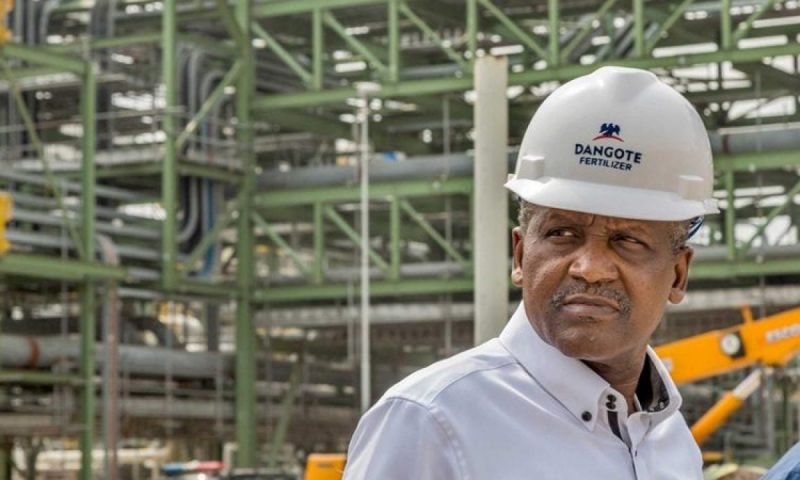
Aliko Dangote once said the imports from the United States were largely driven by the need to bridge the gap between domestic crude supply and the refinery’s operational requirements.

The Dangote facility, one of the world’s largest single-train refineries, requires substantial daily feedstock to run at optimal capacity, needing over 19 million barrels monthly.

Sources told our correspondent that the Dangote refinery imports crude from Ghana and other African countries even as the country sells crude to other countries.

Data from the Central Bank of Nigeria showed that Nigeria exported an estimated 306.7 million barrels of crude oil between January and October 2025, despite concerns over feedstock shortages faced by domestic refineries.

The figures indicated that while the country produced about 443.5 million barrels during the 10-month period, averaging roughly 1.45 million barrels per day, a significant portion of the output was shipped overseas.

Cumulatively, exports between January and October represented about 69 per cent of total production, leaving roughly 137 million barrels for domestic use.

Similarly, Nigeria exported 55.39 million barrels of crude oil in the first two months of 2026 even as the Dangote refinery continues to struggle with inadequate domestic feedstock supply.

According to CBN data, the country shipped out 31.31 million barrels in January and 24.08 million barrels in February.

In January, crude production averaged 1.46 million barrels per day with exports at 1.01 mbpd. In February, production fell to 1.31 mbpd while exports averaged 0.86 mbpd. Total crude production for the two months stood at 81.94 million barrels, meaning that 26.55 million barrels were left behind for local refineries in the first two months of 2026.

On several occasions, the Dangote refinery complained of low crude supply despite the naira-for-crude arrangement, forcing it to source feedstock from the United States and other countries, including Ghana.

Also, the Crude Oil Refiners Association of Nigeria lamented that some modular refineries under its umbrella shut down intermittently due to inadequate crude supply.

CBN tightens grip as interbank deficit hits N4.1tn

Central Bank of Nigeria, Olayemi CardosoIn a strategic move to curb rising food and fuel prices, the Central Bank of Nigeria has tightened its grip on the financial system, pushing the interbank deficit to N4.1tn. By vacuuming out excess liquidity through high-yield government bills, the CBN is betting that a short-term drought in the banking system is a necessary sacrifice to stabilise the naira and prevent inflation from spiralling out of control after its recent jump to 15.4 per cent.

According to the latest Afrinvest Weekly Market and Economic Analysis, the interbank system remains under immense pressure as the apex regulator prioritises the containment of resurgent inflation and exchange rate volatility.

The report reveals that system liquidity conditions, representing the volume of discretionary cash available for banks to lend to one another, remain deep in negative territory. While the average system deficit narrowed by 18.7 per cent to settle at N4.1tn, down from N5.0tn the previous week, the figures signal a deliberate drought orchestrated by the regulator to mop up excess money supply.

Mop-up operations

Analysts at Afrinvest noted that this persistent shortfall is not accidental but a core feature of the current fiscal defence strategy. “The persistent system liquidity shortfall reflects sustained monetary tightening by the CBN, driven by a combination of OMO-induced sterilisation and limited offsetting inflows,” the report stated.

To anchor inflation expectations and prevent excess naira from chasing limited foreign exchange, the CBN utilised Open Market Operations. By offering N600bn in high-yield OMO bills, the CBN effectively mopped up cash from the banking system, locking it away to prevent it from driving up general price levels.

Despite the cash scarcity, investor appetite remains voracious. The 140-day and seven-day bills saw massive oversubscriptions, with bid-to-cover ratios of 8.6x and 4.3x, respectively. “Investor demand was robust, underscoring continued appetite for high-yield government securities despite prevailing liquidity constraints,” the analysis added.

Liquidity divide, stability

A striking takeaway from the analysis is the growing liquidity segmentation within the Nigerian banking sector. This phenomenon occurs when a few large, cash-rich banks hold massive surpluses while smaller institutions struggle with deficits.

Instead of lending to their struggling peers in the interbank market, often due to heightened risk concerns, these surplus institutions are choosing to park their money back with the CBN.

The report highlighted that Standing Deposit Facility placements averaged N4.1tn, noting that “these placements highlight continued liquidity segmentation as surplus institutions maintained significant deposits at the CBN despite the broader system deficit.”

Surprisingly, despite the liquidity crunch, interbank funding rates remained stable. The Open Repo rate held steady at 22.0 per cent, while the Overnight rate moderated slightly to 22.3 per cent.

Analysts suggest this indicates that the market has fully priced in the CBN’s hawkish stance, meaning banks have already adjusted their operations to a high-interest-rate environment.

Inflationary pressures

Looking ahead, the forecast remains consistent as the tight grip is not expected to loosen soon. Experts expect “liquidity conditions to remain constrained in the near term, and funding rates are likely to remain elevated but stable”, anchored by the prevailing monetary policy.

This aggressive tightening comes at a pivotal moment for the national economy. After eleven months of cooling prices, Nigeria’s headline inflation rebounded to 15.4 per cent in March 2026. This spike was largely driven by a global energy shock that pushed crude oil prices above $100/bbl, leading to higher domestic fuel and logistics costs.

By keeping the interbank system thirsty for cash, the CBN aims to support the naira and control the Consumer Price Index. While the squeeze on liquidity raises the cost of funds for banks, the apex bank appears convinced that a short-term sting in interest rates is a necessary price to pay to avoid the long-term pain of runaway inflation.