Lagos begins 2026 promotion exercise for civil servants

Lagos State Government has commenced its 2026 promotion exercise for civil servants and personnel in its parastatal and agencies.

The development was announced via the state government’s official X handle, indicating that the exercise covers officers on Grade Levels 01–05 within the core civil service and those on Grade Levels 01–16 in parastatal organisations.

As part of the process, officers on Grade Levels 01–05 in the mainstream service and Grade Levels 01–10 in parastatals are participating in the Revised Structured Training Programme, RSTP, while those on Grade Levels 12–16 in parastatal agencies are undergoing the Structured Evaluation Assessment Programme, SEAP.

SEAP is being introduced for the first time as a formal requirement for senior-level promotions, incorporating written examinations and computer-based tests, in line with the state’s push for a merit-driven system.

According to officials, the initiative is designed to ensure that career advancement is determined by competence, performance, and professional development, in line with the government’s broader reform agenda.

The exercise is currently taking place at the Public Service Staff Development Centre in Magodo and the Women Development Centre in Agege.

A total of 388 officers are participating in the SEAP, while 4,870 officers are undergoing the structured training programme.

The Commissioner for Establishments and Training, Afolabi Ayantayo, who monitored the exercise, described the conduct of participants and the coordination at the centres as orderly. He encouraged officers to remain committed throughout the process, urging them to “approach the process with dedication and a strong sense of responsibility.”

Ayantayo noted that the introduction of SEAP would ensure that promotions are based on proven knowledge, skills, and competence, while also strengthening the capacity of the public workforce.

Also speaking, the Permanent Secretary, Olubusola Abidakun, expressed satisfaction with the level of organisation and preparedness, reiterating the ministry’s resolve to sustain reforms aimed at boosting efficiency and productivity within the civil service.

The promotion exercise is expected to continue through the week and into the following week, with various sessions designed to prepare officers for higher responsibilities.

In line with civil service regulations, promotion committees will assess eligible candidates, while officers who are unsuccessful retain the right to appeal within a stipulated period.

I apologize to Nigerians over poor electricity – Minister of Power, Adelabu

The Minister of Power, Adebayo Adelabu, has apologised to Nigerians over the ongoing power challenges across the country, assuring that the situation is temporary and efforts are underway to restore stable electricity supply.

Adelabu expressed remorse that the disruption has caused hardship for citizens, particularly during the current dry season marked by intense heat, affecting businesses, schools and industries nationwide.

He tendered his apologies during a press conference on Tuesday in Abuja.

Adelabu explained that the challenges were caused by factors beyond the government’s control but stressed that authorities are working round the clock to resolve them.

“I want to apologise to Nigerians for this temporary issue that is causing hardship, especially during this dry season where there is so much heat everywhere and where businesses, schools and industries are being affected,” Adelabu said.

According to him, the government was not expecting the situation but has intensified efforts to address it.

“It is not our wish to find ourselves in this situation, but some factors are actually beyond our control. However, we are not relenting. We are working on it 24/7 to make sure we return to the trajectory we achieved in 2025,” he said.

“In 2025, you commended us, praised us for a job well done. If we were able to provide such a service then, this is 2026 and we are willing to do even more and do better,” the minister added.

He further assured Nigerians that the current power challenges would soon be resolved.

“I can assure Nigerians that in the next few weeks all these issues will be over,” Adelabu said.

IG redeploys AIGs, CPs

The Inspector General of Police, Olatunji Disu, has ordered the posting of senior officers to various strategic positions across the Nigeria Police Force as part of efforts to strengthen operational efficiency, enhance leadership capacity and improve service delivery nationwide.

The postings, according to a statement on Tuesday by the  Force spokesman, DCP Anthony Placid, are in line with the police commitment to an effective command structure and strategic deployment of personnel across commands, formations and departments.

Under the new arrangement, he said AIG Ado Emmanuel was posted to Research and Planning, Force Headquarters, Abuja; AIG Joseph Eribo to the Department of Armament; AIG Miller Dantawaye to the Department of Operations; AIG Henry Ifeanyi Uche to the Department of Training and Development; AIG Olanrewaju Peter Ogunlowo to Police Accounts and Budget; while AIG Dahiru Mohammed was deployed to Zone 15, Maiduguri.

“Similarly, AIG Dankombo F. Morris was posted to Zone 4, Makurdi; AIG Bello Shehu to Zone 14, Katsina; AIG Ibrahim Balarabe Maikaba to the Department of Legal Services; AIG Ahmed Musa to Community Policing; AIG Olohundare Moshood Jimoh to Zone 2, Lagos; AIG Simeon U. Akpanudom to FCID Annex, Lagos; and AIG Haruna Olufemi to the Special Protection Unit, Force Headquarters, Abuja,” the statement added.

The IG also redeployed several Commissioners of Police to state commands and other formations.

CP Haruna Yahaya was posted to Jigawa State Command; CP Betty  Otimenyin to Welfare, Force Headquarters; CP Olugbenga Abimbola to Oyo State Command; CP Yemi John Oyeniyi to Delta State Command; CP Olubode Ojajuni to Ogun State Command; CP Michael  Falade to Ekiti State Command; and CP Yakubu Dankaro to Adamawa State Command.

Others include CP Muhammed Ahmed to the Federal Capital Territory Command; CP Olatunji  Fatai to Lagos State Command; CP Morkwap  Dongshal to Taraba State Command; CP Ahmed  Bello to Zamfara State Command; CP Umar Fagge to Katsina State Command; and CP Hayatu Shaffa Hassan to Sokoto State Command.

In further postings, CP Akan Ezima was named Director, NPF-NCCC, Abuja; CP Abbas Sule to the Special Protection Unit; CP Ajo Geoffrey Ordue to INTERPOL, Abuja; CP Mnwadiogbu Cletus as Deputy Commandant, POLAC; CP Danjuma I. Yahaya to General Investigation, FCID Annex, Kaduna; CP Sheikh M. Danko to FCID Annex, Lagos; and CP Moses Ashu Otta to SWAT, Abuja.

Additional redeployments include CP Abdulrahim A. Shuaibu to Eastern Ports Authority; CP Sarah Ehindero to Administration, FCID Abuja; CP Edwin Ogbegbghagha to Provost, Force Headquarters; CP Preye R. Egbe to INEC, Abuja; CP Adebisi Bola Lateef to Master Printing, Lagos; CP Bolou O. Etete to Community Policing, Research and Planning; and CP Ojugbele E. Adebola to General Investigation, FCID Alagbon, Lagos.

Also affected are CP Fidelis N. Ogarabe, posted to INTERPOL Annex, Lagos; CP Theodore C. Obasi as Deputy Commandant, Police College, Ikeja; CP Eloho E. Okpoziakpo to Special Fraud Unit, Ikoyi; CP Kayode Uthman Magaji to K9, Dei-Dei; CP Markus Ishaku Basiran to Courses, POLAC; CP Mohammed Babakura to Administration, Department of Operations; CP Silas Bamidele Aremu to Safer Highway, Department of Operations; CP Magaji Ismaila to Community Safety and Crime Prevention; and CP Rebecca Uchenna Okereke as Director of Music, Force Headquarters, Abuja.

“Tunji Disu charges the officers to bring their wealth of experience to bear in their respective assignments and to uphold the highest standards of professionalism, discipline, and service in the discharge of their duties,” he said

Financial reforms gain traction with global recognition

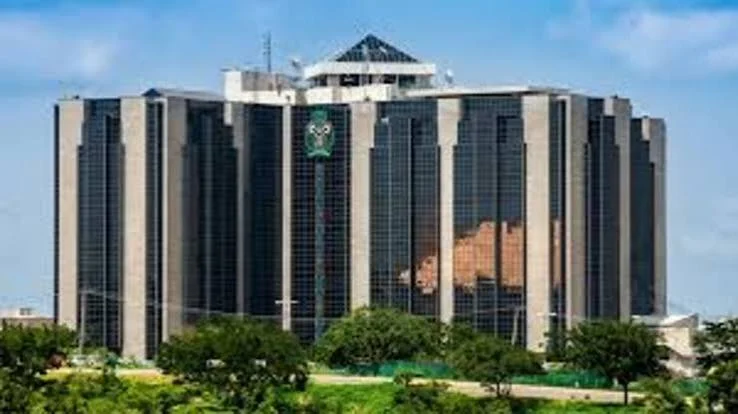
Governor of the Central Bank of Nigeria, Olayemi CardosoThe Central Bank of Nigeria secured a major global endorsement last week after it was named Central Bank of the Year 2026 by the Central Banking Awards Committee in London, a recognition that underscores the institution’s role in steering Africa’s largest economy through a difficult period of instability toward gradual recovery.

Announced at the 13th annual Central Banking Awards, the honour has drawn international attention to Nigeria’s ongoing financial sector reforms and the central bank’s efforts to stabilise the macroeconomic environment. It also reflects a broader narrative of economic adjustment, highlighting both the severe pre-reform challenges and the progress recorded in exchange rate stability, foreign investment inflows, and domestic economic resilience.

Under the leadership of its Governor, Olayemi Cardoso, the apex bank has gained global recognition for implementing far-reaching reforms that have helped redirect the Nigerian economy toward a path of stability and growth. The awards committee noted that the country faced an acute economic crisis before the current reform programme began, requiring bold and coordinated policy responses.

According to the committee, Nigeria’s economic conditions prior to the reforms were deeply strained. When President Bola Tinubu assumed office in May 2023, he inherited an economy that was nearing what observers described as “hyperinflation” and “fiscal bankruptcy.” The naira had been depreciating rapidly, while inflationary pressures continued to intensify, eroding purchasing power and undermining confidence.

In response, the administration introduced a series of sweeping reforms aimed at addressing structural imbalances. Among the most consequential were the removal of fuel subsidies and the liberalisation of the foreign exchange market. While these measures were widely seen as necessary, their immediate effects were difficult for many Nigerians, as they triggered a sharp rise in prices and pushed inflation to 34.80 per cent by December 2024—the highest level recorded in nearly three decades.

Despite the initial hardship, the Central Banking Awards Committee observed that the Central Bank of Nigeria, under Cardoso’s leadership, embarked on a reform agenda designed to restore stability, rebuild trust, and reinforce the financial system. The strategy centred on disciplined monetary policy, institutional restructuring, and enhanced transparency in policy implementation.

A key aspect of the reforms involved discontinuing quasi-fiscal interventions, where the central bank had previously extended direct credit to various sectors of the economy. This practice had contributed to excess liquidity and rising inflation. By ending such interventions, the apex bank signalled a return to orthodox monetary policy, aimed at restoring credibility and controlling price pressures.

Internally, the institution also undertook significant restructuring. Staff numbers were reduced, cases of misconduct were addressed, and personnel were redeployed to areas considered critical for achieving the bank’s objectives. These changes were part of a broader effort to strengthen governance and improve operational efficiency.

A senior official of the bank explained that transparency and accountability have become central pillars of its operations. The CBN has improved the way it communicates policy decisions, strengthened internal oversight, and adopted more robust analytical tools to guide decision-making. These measures have helped build confidence among stakeholders, including investors and market participants.

One of the most significant areas of reform has been the foreign exchange market. The central bank replaced the multiple exchange rate system with a willing-buyer, willing-seller framework, allowing market forces to play a greater role in determining the value of the naira. In addition, it introduced an electronic foreign exchange matching system to improve transparency and efficiency in transactions.

Cardoso stated that these changes have led to a substantial reduction in the disparity between official and parallel market exchange rates, bridging the gap to less than two per cent from over 60 per cent previously. He also noted that the bank has cleared a backlog of foreign exchange obligations, a move that has helped restore confidence among investors and businesses operating in the country.

Nigeria’s external reserves have also strengthened, reaching approximately $46.7bn by November 2025—the highest level recorded in nearly seven years. This improvement has provided a buffer against external shocks and enhanced the country’s ability to meet its international obligations. The International Monetary Fund commended these efforts, noting that reforms in the foreign exchange market have improved liquidity and facilitated more effective price discovery.

Beyond the FX market, the central bank has worked to deepen financial markets by collaborating with the Securities and Exchange Commission and the National Pension Commission. Together, they have introduced measures to enhance transparency in the fixed-income market and promote long-term investment, which is critical for sustainable economic growth.

DLM Capital initiates N30bn SBCN plan with maiden payout

DLM Capital GroupDLM Capital Group has officially moved from proof-of-concept to proven execution, announcing the successful disbursement of the first principal and coupon payments on its Sovereign Bond-Backed Composite Notes.

The payment marks a decisive turning point for the N30bn programme, which seeks to blend the high-yield opportunities of corporate structuring with the rock-solid security of sovereign collateral. The Series 1 Notes, which include the N7.30bn Tranche A and N1.70bn Tranche B, are currently listed on the FMDQ Exchange.

The milestone is particularly significant given the initial market climate. When the instrument launched in July 2025, it was met with “cautious interest” from an investment community wary of new structures. However, the timely fulfilment of these financial obligations has silenced sceptics and bolstered the reputation of the AAA-rated instrument.

The leadership at DLM Capital and market analysts have been vocal about what this payout represents for the Nigerian capital markets: “This first payment is a clear validation of the structure. It demonstrates that the SBCNs are not just innovative but dependable,” said DLM Capital Group.

“The instrument has delivered on its core promise: strong credit quality, reliable cash flows, and enhanced returns. With momentum building toward Series 2, DLM Capital is setting a new standard for structured debt innovation in Nigeria’s capital markets,” the statement added.

The SBCNs have distinguished themselves through their unique risk-reward profile. Tranche A has notably emerged as the most valuable AAA-rated corporate bond in Nigeria, offering an impressive 40.62% Hold-To-Maturity return.

Backed by sovereign bond collateral and rated AAA by both GCR and DataPro, the notes have successfully addressed the “flight to quality” currently seen among institutional investors. By providing a bridge between capital preservation and yield optimisation, DLM Capital appears to have carved out a new niche for high-quality fixed-income opportunities.

As the Group prepares for the Series 2 issuance, the successful servicing of the Series 1 debt provides a robust track record that is expected to drive even higher subscription rates from pension fund administrators and insurance firms seeking stable, high-yield assets.

Global trade moves 500 billion tonnes virtual water – Report

World-BankGlobal trade transports an estimated 500 billion tonnes of virtual water every year, the hidden water embedded in goods such as food, textiles and industrial products, indicating the growing link between international commerce and water sustainability, according to a new World Bank report.

The report explains that virtual water refers to the large volumes of freshwater used during production processes but not visible in the final product. For example, producing a single cup of coffee can require about 150 litres of water, while sugar, milk and baked goods add significantly more, meaning a typical breakfast may consume more water than many households use daily.

According to the World Bank, the scale of virtual water flows is immense, amounting to roughly a quarter of global water use and about 50 times the weight of goods shipped annually by sea. Over the past two decades, virtual water trade has expanded by about 50 per cent, driven by rising incomes, changing diets and increasingly complex global value chains.

The report notes that trade can improve global water efficiency by shifting production to regions where water resources are more abundant. Crop trade alone saves around 500 billion cubic metres of water annually, as agricultural goods are often produced in locations that use water more efficiently than importing countries.

Water-dependent sectors, including agriculture, energy and industry, support approximately 1.7 billion jobs worldwide, underscoring the economic importance of efficient water use.

However, the benefits are uneven. About one-fifth of irrigation water embedded in traded goods originates from water-stressed regions where water is used less efficiently, effectively exporting scarce water resources and increasing long-term economic risks for those countries.

The World Bank said trade policy plays a critical role in determining where water-intensive production occurs.

Import tariffs, subsidies and regulatory standards influence competitiveness in sectors such as agri-food, textiles, leather, pulp and paper, and chemicals. Meanwhile, tariffs on water-saving technologies, including drip irrigation systems, smart meters and wastewater treatment equipment, can slow the adoption of efficiency solutions.

Governments are increasingly using non-tariff measures such as product standards and sustainability regulations to manage water use. Australia’s water-efficiency labelling scheme and the European Union’s corporate sustainability due diligence rules were cited as examples of policies shaping water outcomes across supply chains.

Private companies are also playing a growing role. Multinational firms are setting targets to reduce water use in manufacturing and working with suppliers to improve irrigation and processing efficiency across global sourcing networks.

The report added that trade agreements could further promote sustainable water use by incorporating environmental commitments and cooperation mechanisms. Examples include agreements between the European Union and Chile and between Japan and Australia, which encourage collaboration on efficient water management.

The World Bank cautioned that aligning trade with water sustainability will require gradual policy reforms to avoid disrupting producers and consumers, particularly in developing economies. Measures such as phased disclosure of water footprints, improved supply-chain traceability and investment in water-efficient technologies could help businesses remain competitive while reducing environmental risks.

SEC DG, Agama Re-Elected AMERC Vice Chair

The Securities and Exchange Commission Nigeria (SEC Nigeria) is pleased to announce the re-election of its Director-General, Emomotimi Agama, as Vice Chair of the Africa/Middle-East Regional Committee (AMERC) of the International Organization of Securities Commissions (IOSCO) for a second term spanning 2026–2028.
IOSCO was established in 1983, serves as the global standard-setter for the securities industry and is recognised as the leading international policy forum for securities regulators. Its members regulate more than 95 per cent of the world’s securities markets across over 100 jurisdictions.


This appointment, confirmed by IOSCO, reflects the growing recognition of Nigeria’s capital market and its strategic importance within the Africa and Middle East region. It highlights the confidence of peer regulators in Nigeria’s leadership, regulatory progress, and continued commitment to strengthening capital market systems.


The re-election also presents a significant opportunity for SEC Nigeria to deepen its engagement at the highest level of global securities regulation. As AMERC Vice Chair, Nigeria will maintain a seat on the IOSCO Board, the organisation’s highest policy-making body, where critical decisions shaping global capital market standards, regulatory frameworks, and cross-border cooperation are made. This position ensures that Nigeria’s perspectives, experiences, and priorities are represented in key discussions that influence the direction of international financial markets.


According to Agama, “Beyond representation, this development enhances Nigeria’s ability to contribute meaningfully to global regulatory dialogue, particularly in areas such as enforcement cooperation, market integrity, and investor protection. It creates a stronger platform for collaboration with other jurisdictions on cross-border regulatory issues, including tackling illicit financial flows and strengthening supervisory frameworks. The role further supports ongoing efforts to align Nigeria’s capital market with international best practices, fostering greater investor confidence and facilitating increased participation in global financial markets.


“Ultimately, this milestone reinforces Nigeria’s position as a leading voice in regional and global capital market development. It is expected to contribute to building a more resilient, transparent, and robust capital market ecosystem, not only within Nigeria but across the broader Africa and Middle East region. SEC Nigeria remains committed to leveraging this opportunity to advance regulatory excellence, deepen market integration, and support sustainable economic growth”

Otti’s chances of re-election less than 30 percent – Abia APC

Abia State chapter of the All Progressive Congress, APC, has told Governor Alex Otti that his support for the re-election of President Bola Tinubu should not be announced through his proxies.

The APC also said that the Abia Governor’s chances of getting re-elected is less than 30 per cent.

The party, which spoke through its Publicity Secretary, Uche Aguoru, on Monday, was reacting to the report where a member of the House of Representatives, Ginger Oneusibe of the Labour Party declared that Governor Alex Otti would deliver the votes for President Bola Tinubu’s victory in 2027.

APC claimed that the situation stemmed from desperate political survival tactics in the Governor’s camp.

“Rather than openly and boldly identifying with President Tinubu, he has chosen to deploy proxies to communicate supposed support.

“This sudden declaration of support is nothing more than a desperate and deceptive tactic aimed at political survival.

“It is clear that Governor Otti understands the reality on ground- that his chances of re-election are less than 30% even with all the social media sponsored deception,” Abia APC said.

The broom party, which boasted about having the capacity to give up to 90 percent votes for the President, urged President Bola Tinubu to disregard any misleading overtures but to rely on the party’s strength in Abia.

Ogun 2027: Meet four female politicians battling for Abiodun’s seat

As the countdown to 2027 begins, the political atmosphere in Ogun, the Gateway State is already thick with ambition.

There is presently an intense jostling for the seat of Governor Dapo Abiodun.

By 2027, Governor Abiodun will be completing his eight years term in office, giving way for the fresh blood at the Oke Mosan seat of power.

Findings by DAILY POST revealed that more than 15 aspirants across party lines are eyeing the Ogun number one political office.

However, of all the aspirants, there are four female politicians attempting to make history in the state and Nigeria by extension.

A Jinx Waiting to be Broken

Ogun State has always been a pioneer in female leadership, producing the likes of late Titilayo Ajanaku, the first woman to be elected as a local government chairman in Nigeria (Old Abeokuta LG), female speaker, and at least three deputy governors.

Salimot Badiru served eight years under Otunba Gbenga Daniel (2003-2011), while Yetunde Onanuga served four years under Ibikunle Amosun (2015-2019) and Noimot Salako-Oyedele is the present deputy governor of the Abiodun-led administration.

However, the ultimate prize, the Governor’s office, has remained all-male enclave since the state’s creation in 1976. Will they break the jinx in 2027? This remains a poser on the lips of political pundits in the state.

Noimot Salako-Oyedele:

As the current Deputy Governor, Noimot Salako-Oyedele is arguably the most strategically positioned. The 60-year-old real estate expert and civil engineer hails from the Ado-Odo/Ota Local Government (Ogun West).

She hasn’t declared but her poster has been playing around with the inscription, “Ogun 2027, Let The Good Works Continue.”

Our correspondent observed that her supporters have also begun singing her praises saying, “Noimot lo le se oo” meaning in English, “Noimot can do it.”

And the fact that her region, Ogun West, hasn’t produced a governor since the creation of Ogun State in 1976, boosts her chances. Although, she has formidable aspirants from the region to contend with.

However, history has shown that deputy governors in Nigeria struggle to succeed their principals, hence she must overcome the “Deputy’s Curse”.

Iyabo Obasanjo-Bello: The Return of the “Lioness”

Iyabo, daughter of former Nigeria President Olusegun Obasanjo, is a name that still sends ripples through the Nigerian political landscape. She was a former Commissioner for Health in Ogun State from 2003 to 2007 under Otunba Gbenga Daniel’s administration before being elected as a Senator representing the Ogun CentralSenatorial District in April 2007 until 2011.

In January, she returned to active politics after about 15 years break and defected from the People’s Democratic Party (PDP) to the ruling All Progressive Congress (APC) to declare her governorship ambition. This sent shockwaves through the state.

Recall that she had lost her re-election bid in 2011 to Senator Gbenga Obadara of the then Action Congress of Nigeria (ACN) and subsequently returned to the United States to pursue her academic career, rising to the rank of professor.

Her supporters see her as a no-nonsense leader who can bring federal-level experience back to her home state. The 59 years old professor of epidemiology who hails from Ifo Local Government (Ogun Central – Ibogun Ward) recent visibility has sparked rumors that she is ready for a major comeback.

Although critics have labeled her a “diaspora politician” out of touch with modern grassroots realities, she is proving her “street” credibility while embarking on several consultations with political leaders and stakeholders across the state.

The aspirant explained that her focus on people-centred development is influenced by her past experiences in public service as commissioner and senator, where she said she consistently prioritised interventions that improved the lives of ordinary citizens.

She also assured the women folk that if elected, they will become decision makers and not just mere mobilizers during elections.

She said, “Development demands continuity, institutional memory and a leadership that understands that governance is a relay, not a sprint. If entrusted with the mandate in 2027, my administration will be anchored on credibility, competence and compassion.

“We will not run a government of exclusion. Women will not merely be mobilisers during elections; they will be decision-makers at the highest levels of governance.”

The former senator also pledged to lead an open administration with quantifiable results and accountability.

Modele Sarafa-Yusuf: The Media Guru

The 59-year-old veteran broadcast journalist, Modele Sarafa-Yusuf has already tested the waters. She served as a Special Adviser on information and strategy to Governor Dapo Abiodun, and resigned to contest for the ticket in 2023, signaling her long-term intent.

Sarafa-Yusuf announced her intention to run for the 2027 gubernatorial election in an open letter posted on her official X account in February.

The retired sport journalist who hails from Sagamu Local Government (Ogun East – Iperu Remo) framed the position as a stabilising force amid the risks of party fracture, drawing on her experience in 2022, when she accepted defeat without upsetting relations.

While admitting that the state is blessed, she asserted that blessings alone do not guarantee progress but rather deliberate leadership and trust.

The letter addressed to leaders, members, and stakeholders of the All Progressives Congress (APC), Ogun State, reads, “Ogun State is blessed with industry, blessed with intellect, blessed with culture, and blessed with strategic relevance to the nation.

“Yet we all know that blessings alone do not guarantee progress. Progress requires deliberate leadership, balance, and trust among our people. It requires continuity.

“After deep reflection and wide consultation, I have decided to make myself available to serve as our party’s candidate for Governor, Ogun State, in the 2027 elections.

“I chose this system of declaration deliberately to be public, honest, and focused on responsibility rather than spectacle.“

Meanwhile, she clarified that this is, however, not a return driven by unfinished business but a response to a different political environment, asserting that the state needs inclusion without escalation, as loud politics can mobilise quickly and collapse quickly, leaving damage behind.

She insisted that her aspiration would pave the way for future generations of women leaders in Ogun state and Nigeria at large.

“Nigeria has never elected a female governor, and I’m aware of the weight of breaking that ceiling.

“To that extent, my aspiration isn’t just about me; it’s about paving the way for future generations of women leaders in Ogun State and Nigeria at large.

“However, this is not about symbolism. It is about capacity and competence,” Sarafa-Yusuf said.

Dr. Bolaji Marie Odusina- From Medical Missions To Political Mission

The United States-based physician and humanitarian formally announced her intention to run for governor of Ogun State in 2027 on Tuesday.

For years, Odusina popularly known as DeeDoc, has quietly built a following through massive free medical outreaches in rural Ogun communities.

Her formal declaration for 2027 signals a shift from medical missions to a political mission.

Although she did not disclose her party affiliation, she said her political platform would be made public in the coming days.

While others talk about politics, the 62-year-old paediatrician, who founded Doctors Without Prejudice with over thirty years of experience in both Nigeria and the US, focused on healthcare, maternal mortality, and grassroots economic empowerment.

Citing findings from the Nigeria Demographic and Health Survey, she decried gaps in maternal healthcare and child mortality, describing them as urgent concerns requiring immediate government attention.

She said, “I have seen families travel across borders for basic medical care. These are not statistics to me; they are real people whose pain I have witnessed.”

The paediatrician hails from Ijebu land.

However, analysts note that her ambition may face hurdles, including the need to build a formidable political structure, secure a viable party platform and translate public goodwill into electoral success.

EFCC hands over N3bn recovered  funds to NNPCL

The Economic and Financial Crimes Commission, EFCC, on Thursday, March 18, 2026 handed over a total sum of N3,936,145, 822 ( Three Billion, Nine Hundred and Thirty Six Million, One Hundred and Forty Five Thousand, Eight Hundred and Twenty Two Naira) to the Nigeria National Petroleum Company, NNPC Ltd.

The presentation was made on behalf of the Executive Chairman of the Commission, Ola Olukoyede by the Secretary to the Commission, Mohammed Hammajoda in a brief ceremony at the EFCC headquarters, Abuja.

In his remark at the occasion,   Hammajoda reiterated  the commitment of the Commission to the task of curbing economic and financial crimes, stressing that the funds were recovered through diligent investigation and professional uncovering  of fraudulent engagements by some actors in the NNPCL.

“On behalf of the Executive Chairman, we will continue to put ourselves on the line to serve over 220 million Nigerians.  Along the line, many of our colleagues have paid the price and others will still pay the price as we continue to do our work with courage and integrity. We will serve and continue to serve this country.  So,  on behalf of the EFCC, I present the sum of Three Billion, Nine Hundred and Thirty Six million, One Hundred and Forty Five Thousand, Eight Hundred and Twenty Two Naira to you”, he said.

Receiving the funds on behalf of NNPC, the Executive Vice President,   Downstream, Mumuni Dagazau excitedly thanked the Commission for  its assistance in the recovery “which goes to show the core unity that exists in our system”

“NNPC over the years has had its struggles and challenges and one thing we have always tried to do is correct the system. When the opportunity came for this recovery from your people that handled this,  it was something I was really proud of. I was also happy that we brought it to EFCC to help and support us.  We are very excited, for me this is a great day for us, we will continue to rely on you for assistance.