Police arrest Baruwa, reveal how over 300 armed men stormed NURTW secretariat

The court-recognised President of the National Union of Road Transport Workers (NURTW), Tajudeen Ibikunle Baruwa, and six others loyal to him have been arrested by operatives of the Federal Capital Territory, FCT, Police Command.

The spokesperson of the command, SP Josephine Adeh, explained in a statement issued on Monday that the command received a distress call reporting that about 300 individuals, armed with cutlasses, bottles, bows, and arrows, had stormed the NURTW headquarters along Sapele Street, Garki II, Abuja.

She said the information indicated that the armed men were removing items from the NURTW premises, triggering violence as another factional leader resisted the attempt to take over the facility.

The FCT Police Public Relations Officer said that in a swift response, the Deputy Commissioner of Police in charge of Operations, DCP Isyaku Sharu, led a response team to the scene.

According to her, upon arrival, it was learnt that Baruwa and his group “were attempting to enforce a court order on the premises without the presence of court sheriffs and other officials.

“This action degenerated into a physical confrontation when other members of the NURTW attempted to resist them, which led to one victim being inflicted with severe machete wounds to the neck.

“He was rescued by the police team, while several others who sustained varying degrees of injuries were rushed to a nearby hospital for medical treatment.”

The suspects arrested include Sulaiman A. Musa, Nasir Ibrahim, Alhaji Sadisu Musa, Dalha Suleiman, Abdullahi Garba, Rasheed Fojebi, and Ibikunle T. Baruwa.

The police said all the suspects have been “charged to Magistrate Court 1, Wuse Zone 2, while normalcy has since been restored to the area.”

Josephine Adeh also debunked videos circulating on social media alleging that personnel of the command shot at some NURTW members.

She said the claims are false and misleading, stressing that they were aimed at rousing public sentiment.

Amnesty International demands probe into alleged killing of man by soldiers in Maiduguri

Amnesty International has called on Nigerian authorities to immediately investigate the alleged killing of a resident, Abdulrahman Mustapha, popularly known as “Abchin,” by soldiers in Maiduguri, Borno State.

In a statement posted on its verified Facebook account on Tuesday, the global human rights organisation said the incident occurred on March 22, 2026, around the Polo axis near the Federal High Court in an area known as Karshen Kolta.

According to Amnesty International, eyewitnesses said Mustapha was shot dead by soldiers of the Nigerian Army while returning from a Sallah visit to his siblings residing in the Polo area.

The organisation said it was disturbing that the military reportedly transported the victim’s lifeless body alongside his vehicle to the GRA Police Station in Maiduguri.

From there, the body was taken to the University of Maiduguri Teaching Hospital, where he was formally confirmed dead.

Condemning the incident, Amnesty International described the killing as another troubling example of alleged abuses by security forces.

“What happened to Abdulrahman is a sad reminder of the Nigerian military’s consistent utter disregard for the sanctity of human life and the rule of law,” the organisation said.

It warned that such incidents erode public confidence in security institutions.

“Such flagrant disregard for human rights undermines public trust and creates a toxic climate of impunity,” Amnesty International stated.

The organisation urged the government to ensure accountability and justice for the victim.

“The authorities must stop turning a blind eye to such unlawful killings. They must live up to their constitutional and international human rights obligations by ensuring that all suspected soldiers involved are brought to justice in a prompt and fair trial,” the statement added.

As of the time of filing this report, there was no official response from the Nigerian military regarding the allegation.

Fuel price hike: Experts, CSOs divided on subsidy as Nigerians face worsening hardship

Experts and civil society organizations are divided over calls for the administration of Bola Ahmed Tinubu to introduce palliatives or reinstate fuel subsidies to cushion the impact of soaring petrol prices triggered by rising global crude oil costs.

The spike in oil prices follows the 24-day conflict involving Iran, the United States and Israel, which has disrupted global energy markets and pushed crude prices above $100 per barrel— far above Nigeria’s 2026 budget benchmark of $64 per barrel.

While the surge has boosted Nigeria’s oil revenue in recent weeks, it has also worsened domestic economic conditions.

Petrol prices have jumped by about N492, or 56 percent, rising to between N1,367 and N1,390 per liter as of Monday, March 23, 2026, from N875 recorded before February 28.

The increase has triggered higher transport fares and food prices, further eroding the purchasing power of millions of Nigerians, particularly those earning the N70,000 minimum wage.

Amid growing hardship, some stakeholders have called on the government to introduce relief measures to ease the cost-of-living crisis.

The Centre for the Promotion of Private Enterprises (CPPE) has urged the Federal Government to adopt a coordinated policy framework to prevent energy-driven inflation.

In a statement, CPPE’s Chief Executive Officer, Muda Yusuf, warned that the Middle East crisis could reverse Nigeria’s disinflation trend, which stood at 15.06 percent in February.

Similarly, the president of the Nigeria Labour Congress, Joe Ajaero, said the government should not wait for industrial action before intervening.

“The government is making huge revenues from the crisis, which has also doubled the budget benchmark.

“The government should use part of these funds to cushion the impact on citizens,” he said.
Oyo State government recently approved N10,000 wage allowances for its civil servants to cushion the surge in fuel prices.

However, experts who spoke with DAILY POST remain divided on the appropriate response by the Nigerian government.

Fuel Subsidy return misconceived– Prof emeritus, Wumi provides alternative solutions

A professor emeritus of petroleum economics, Wumi Iledare, dismissed calls for the return of fuel subsidy, describing them as misguided and economically unsustainable.

“The position by some stakeholders advocating a return to fuel subsidy to cushion recent petrol price spike appears misconceived and difficult to justify.

“Consumer fuel subsidies tend to create market inefficiencies and significant welfare losses,” he told DAILY POST.
According to him, past subsidy regimes have diverted resources away from critical sectors such as healthcare, education, infrastructure and power.

“Evidence over the past two to three decades suggests that subsidy regimes often crowd out critical public investments,” he added, warning that a return to subsidy would be ill-advised.

Instead, Iledare recommended targeted social interventions, improved governance in the energy sector and strategic use of oil windfalls to strengthen economic resilience.

He also suggested policy options such as crude oil discounts for local refineries, including the Dangote Refinery, as well as the removal of import duties or Value Added Tax on petrol products to ease costs.

Tinubu’s govt lacks pro-people policies – Rafsanjani

On the other hand, the Executive Director of the Civil Society Legislative Advocacy Centre (CISLAC) and Transparency International Nigeria, Auwal Rafsanjani, called for urgent pro-people policies to address the hardship.

“First and foremost, Nigerian leaders need to have a package for relief to mitigate the suffering of Nigerians in all ramifications,” he said.

Rafsanjani criticized what he described as the absence of “sympathetic” and “pro-poor” policies, warning that the situation could worsen if urgent action was not taken.

“The money from the subsidy removal has not translated into mitigating Nigerian suffering,” he said, adding that political priorities ahead of elections may be overshadowing governance.

Describing the situation as a disconnect between leaders and citizens, he stressed the need for inclusive policies that prioritize the welfare of ordinary Nigerians.

“We have a governance system and political leaders that are not pro-poor and not interested in putting systems in place to mitigate the suffering of Nigerians,” he said.

Air Peace refutes tax evasion claims, seeks talks with Lagos govt

Air-peaceNigeria’s largest carrier, Air Peace, has expressed shock over reports alleging that its Chairman and Chief Executive Officer, Allen Onyema, and Vice Chairman, Alice Onyema, are facing a tax evasion suit instituted by the Lagos State Government, describing the claims as surprising and unsubstantiated.

The airline, in a statement on Monday, said neither the company nor its principal officers had been served with any court summons or official notification regarding the alleged suit, questioning the credibility of claims that legal proceedings had been ongoing since February without formal communication.

It recalled media reports alleging that the airline’s chairman became embroiled in a legal tussle instituted by the Lagos State Government over an alleged tax bill running into N94m.

According to the reports, the state revenue board initiated legal proceedings against the airline founder and his wife weeks after he publicly criticised federal tax reforms.

The airline said the development had raised concerns within the organisation, given its long-standing commitment to regulatory compliance and transparency.

Air Peace maintained that all its tax obligations, both corporate and personal, had been fully met and remain up to date in accordance with existing laws.

The airline, however, expressed willingness to engage with the Lagos State Government in the event of any discrepancies, emphasising that such engagement would be in the interest of due process, clarity, and accountability.

The statement read in part, “We wish to state unequivocally that neither the Onyemas nor Air Peace has been served with any court summons or official notification regarding the purported suit. The claim that legal proceedings have been ongoing since February, without service or formal communication, is quite surprising and shocking.

“We maintain that all personal and corporate tax obligations have been duly met and remain up to date, in full compliance with applicable laws and regulatory requirements. However, if there is any discrepancy in the computation of taxes, the Onyemas and Air Peace remain open to engaging the Lagos State Government to review and reconcile shortfalls, if any, in the interest of transparency, clarity, and due process.”

The carrier further highlighted the contributions of its leadership to the growth of Nigeria’s aviation industry, noting that the Onyemas have consistently demonstrated resilience and patriotism in sustaining operations despite challenging economic conditions.

It added that it remains focused on delivering safe and reliable services to passengers and would not be distracted by the allegations.

OPS, NLC demand action as petrol hits N1,400/litre

NLCThe Organised Private Sector and the Nigeria Labour Congress on Monday called for urgent government intervention as petrol prices surged towards N1,400 per litre across parts of the country, raising fears of worsening inflation, job losses, and business closures.

The development follows successive price increases by the Dangote Petroleum Refinery, which recently raised its ex-depot price to about N1,275 per litre, marking its fifth hike in March. The price hikes have intensified concerns over pricing dynamics in Nigeria’s deregulated downstream petroleum sector.

Following the last hike over the weekend, petrol prices jumped from N1,240 to nearly N1,400, depending on the location. Reports have it that the petrol prices are higher in the North, while those in Lagos and Ogun still buy at the rates around N1,340.

The surge in petrol prices was triggered by the US-Israel-Iran war in the Middle East. As oil prices rise, the Dangote refinery also hikes fuel prices in Nigeria, fuelling an increase in the cost of living.

From an average of N839 before February 28, a litre of petrol has risen by about N500. Analysts fear that the price could hit N1,500 to N2,000 if the crisis continues with the Strait of Hormuz closed.

Speaking with The PUNCH, stakeholders, in separate interviews, urged the Federal Government to introduce immediate relief measures, including tax incentives for refiners, naira-based crude supply, and temporary subsidies, while accelerating long-term reforms in the energy sector.

However, the regulator and marketers argued that the Federal Government cannot cap petrol prices as done in China, saying the sector is deregulated.

NLC laments

The Nigeria Labour Congress said Nigerians are paying the price for alleged monopoly in the downstream petroleum sector. The NLC Assistant Secretary-General, Onyeka Chris, told The PUNCH that the poor Nigerian workers and the masses are “reaping the consequences of adopting a monopolist”.

The union drew parallels with the cement industry, questioning why Nigerian-made cement is reportedly more expensive than in neighbouring countries like Ghana or Rwanda.

The NLC emphasised that the downstream petroleum market operates as a “seller’s market”, in which dominant players control prices. “A monopoly commands the market. The seller determines the price and fixes it the way he wants,” the labour group said.

It added that statistics show Nigeria has the highest income credit for refined petroleum products, yet ordinary Nigerians receive none of the benefit. The union also blamed the government, saying, “The government sponsors them, repairs them, compensates them, and makes them the monopolist.”

It added that public refineries could operate efficiently if the existing workforce were properly engaged and managed. The NLC warned that Nigerians must organise to counter the economic concentration.

“Until we organise ourselves and exercise our sovereign will, there will be no mercy. We will not benefit from this country. Unions, workers, students, artisans, and citizens need to act together to challenge monopolistic control over essential commodities,” the NLC official stated.

The Congress added that the monopolistic control in the petroleum sector reinforces calls for urgent government action to ensure fair fuel pricing and protect consumers.

Also, the Acting Secretary-General of the NLC, Benson Upah, told one of our correspondents that geopolitical upheavals in the oil-rich Middle East have historically triggered shocks in the global oil market, but Nigeria’s vulnerability has been amplified by weak domestic buffers.

Upah noted that countries with stronger economic management typically maintain strategic petroleum reserves to cushion such shocks. “In anticipation that conflicts are inevitable and could rapidly degenerate, serious governments build strategic reserves by way of massive storage tanks,” he said.

He, however, stressed that such reserves were not permanent solutions but temporary buffers designed to stabilise markets and give governments time to respond.

“Strategic reserves are no permanent solutions.

They are intended to minimise sudden shocks or impacts as well as give the government time to respond more coherently to the unravelling of the market,” he added.

The labour leader questioned Nigeria’s preparedness, arguing that the near-instantaneous impact of the crisis suggests either an absence of reserves or a failure to deploy them effectively. “The impact on us was instantaneous, suggesting there were no reserves, and if, per chance, there were, they were not released,” Upah stated.

On policy responses, Upah cautioned against adopting price caps, noting that Nigeria’s economic structure differs significantly from countries like China, where such measures have been used.

“Price caps are not it. We run two different economic systems. Whereas theirs might be working perfectly well, such a decision here could lead to unintended consequences,” he said.

Instead, he advocated a temporary subsidy framework targeted at “the source” to cushion consumers without distorting the broader market. “The government should provide temporary subsidies at the source. That will be beneficial to all,” he added.

More fundamentally, the NLC chief called for a structural shift in Nigeria’s oil and refining strategy, urging the Federal Government to supply crude oil in naira to domestic refineries, including the Dangote refinery.

“The government is advised to sell in naira enough crude to the Dangote refinery and any other functional refinery to process crude for local consumption and the surplus for export,” Upah said.

While higher global oil prices typically boost government revenues, Upah warned that the current windfall may not be sufficient to offset the broader economic fallout. “Although the government is making stupendous money from the crude oil market at the moment, I doubt the windfall will be sufficient to cover our needs,” he said.

The NLC boss also warned of a potential inflation spiral driven by rising energy costs, which could trigger wider economic and social consequences. “It is of utmost importance that the government takes proactive measures to protect the gains of its policies by pre-empting or managing inflation spirals and shutdowns due to prohibitive energy costs. These things have their social dimensions we can’t readily predict,” Upah said.

Upah concluded by urging the government to prioritise citizen welfare, noting that even non-oil-producing countries often deploy protective measures during global crises. “In light of this, if non-oil-producing countries offer some level of protection to their citizens in these precarious times, we expect our government to do more,” he said.

OPS speaks

The President of the Lagos Chamber of Commerce and Industry, Leye Kupoluyi, said excessive taxation on refineries was a major contributor to high pump prices and urged the government to review the fiscal burden.

Kupoluyi added that multiple taxes imposed on refiners ultimately translate to higher fuel prices for consumers, stating, “There are 40 different types of taxes on them. Can the government look at it and track down some of those taxes? Because at the end of the day, those taxes go back to the public price. I think that’s what the Federal Government needs to do. That is the only way we can show our clarity to our customers.”

Amid concerns that the Dangote refinery could become the sole determinant of petrol pricing in Nigeria, Kupoluyi dismissed the narrative as simplistic, noting that market realities often favour dominant players.

“To me, I think Dangote has been very fair in his prices. For many markets in the environment, the person who had the largest recovery seemed to dominate when they were not even dominating nationally. That’s what we expected,” he stated.

He stressed the need for collaboration between the government and refiners to ensure fair pricing, adding that there’s no other refinery in the country with a similar capacity to Dangote’s.

Similarly, the Director-General of the Nigerian Employers’ Consultative Association, Adewale Oyerinde, said global crude oil realities continue to shape domestic fuel prices, limiting the ability of local refiners to sell below international benchmarks.

Oyerinde said, “The reality of global crude prices is staring us in the face, and Nigeria is not insulated from the effects. The same situation is faced by other global oil producers. The Dangote refinery, being a private enterprise, is also forced to buy or import crude at the international price, which makes it impossible not to sell at the appropriate global price.”

He, however, urged the government to deploy short-term relief measures, including tax incentives, while charting a long-term transition to cleaner energy sources.

“While short-term interventions by the government to cushion the negative economic effects on citizens are desirable, the reality of moving away from dependence on fossil fuel to clean energy remains a more sustainable solution,” Oyerinde stated.

Also, the Nigeria Employers’ Consultative Association warned that if rising global oil prices continue unchecked, Nigeria risks business closures, job losses, and a deeper cost-of-living crisis.

NECA stressed that the situation is translating into increased energy costs in Nigeria, with significant consequences for businesses and households.

In a statement on Monday, the Director-General of NECA, Mr Adewale-Smatt Oyerinde, in reaction to ongoing tensions in the Middle East and their impact on global oil markets, noted that the current trend is driving up domestic fuel prices and worsening inflationary pressures across the economy.

He stated that the situation reflects a growing paradox, where increases in crude oil prices are pushing up domestic energy costs, placing pressure on businesses and eroding the purchasing power of citizens.

“What we are witnessing is Nigeria’s oil paradox. Rising crude oil prices are pushing up domestic energy costs, squeezing businesses and worsening the cost of living for citizens. If this trend continues unchecked, we risk business closures, job losses, and a deeper cost-of-living crisis,” Oyerinde said.

The NECA boss noted that fuel prices have risen sharply in recent days, with petrol prices in some locations exceeding N1,300 per litre and diesel approaching N1,800 per litre.

He stressed that energy costs sit at the heart of Nigeria’s economy, and energy is the engine of production and distribution. “Once fuel prices rise, the effects are immediate and widespread; transport costs increase, food prices rise, and the overall cost of doing business escalates,” he stated.

According to him, businesses, particularly in manufacturing, agriculture, and logistics, are already under significant pressure. “For many firms that rely on diesel for operations, current price levels are becoming increasingly difficult to sustain. Profit margins are shrinking, and businesses are being forced to either pass on costs or scale down operations,” Oyerinde stressed.

Oyerinde mentioned that while the Middle East conflict has contributed to the rise in oil prices, the impact is exposing deeper structural weaknesses, underinvestment, weak infrastructure, and inefficiencies in Nigeria’s energy value chain.

“This situation is not only driven by external factors; it is also reflecting ongoing constraints within the energy value chain, including supply inefficiencies and infrastructure limitations,” he said.

He urged the government to stabilise the downstream sector and support vulnerable industries. “The government must act swiftly to ease supply constraints, stabilise prices, and provide targeted relief for critical sectors,” he pleaded.

He cautioned that if properly managed, this could strengthen the nation’s economy; “if not, the gains from rising oil prices will be completely eroded by inflation and economic hardship.”

Regulator, marketers react

In China, the government on Monday limited the amount by which the country’s fuel costs can rise, to mitigate surging oil prices due to the Middle East war.

“To mitigate the impact of abnormal increases in international oil prices, ease the burden on downstream users, and ensure stable economic operations and public welfare, temporary regulatory measures have been adopted,” China’s state planner said in a statement.

But regulators and marketers of petroleum products in Nigeria rejected price capping, saying Nigeria’s petroleum sector is a deregulated market.

The Nigerian Midstream and Downstream Petroleum Regulatory Authority told The PUNCH on Monday that limiting price hikes is like proposing a price cap, saying this is equal to regulating an already deregulated market.

CBN targets single-digit inflation

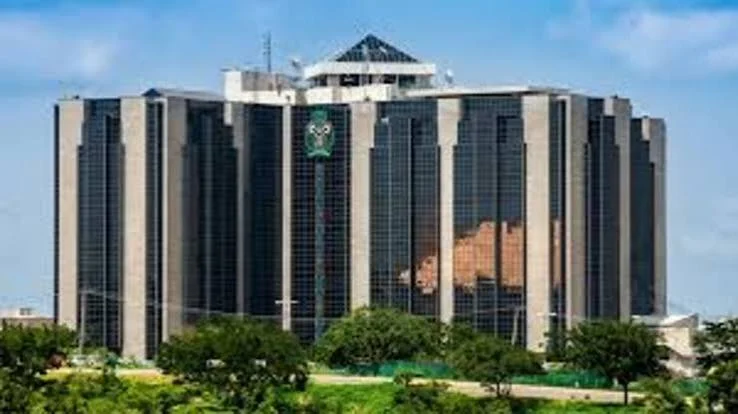
CBN headquartersThe Central Bank of Nigeria has said it is on course to reduce inflation to single digits as part of its transition to an inflation-targeting monetary policy framework.

This was disclosed in a statement issued by the apex bank on Sunday following an engagement with the Nigerian Economic Society and members of the academic community in Abuja.

Speaking at the session held on March 18, 2026, the CBN Deputy Governor in charge of Economic Policy, Dr Muhammad Abdullahi, said the shift to inflation targeting represents a major change in Nigeria’s monetary policy approach.

He described the engagement as timely and essential to Nigeria’s ongoing economic reforms, adding that the new framework would strengthen policy credibility and long-term price stability.

According to the statement, “the transition to an inflation-targeting framework marks a significant shift toward a transparent, forward-looking, and rules-based monetary policy system anchored in long-term price stability.”

Abdullahi said the framework would serve as a key anchor for the economy by shaping expectations and reducing the impact of external shocks.

He noted that inflation targeting would serve as a crucial nominal anchor for the Nigerian economy, adding that stabilising inflation expectations would help lower risk premia and support long-term investments.

The CBN noted that ongoing global uncertainties, including geopolitical tensions and volatile energy prices, make the need for a credible monetary anchor more urgent for emerging economies like Nigeria.

The statement highlighted several reforms already implemented by the bank to support the transition, including a return to orthodox monetary policy tools and a gradual withdrawal from quasi-fiscal interventions.

It added that foreign exchange market reforms, such as rate unification and the introduction of electronic trading platforms, have improved price discovery and reduced volatility.

The apex bank also cited improvements in banking sector stability through recapitalisation efforts and stronger prudential oversight, alongside better coordination with fiscal authorities.

According to Abdullahi, these measures are already producing results. “Headline inflation declined sharply from 34.8 per cent in late 2024 to 15.1 per cent by early 2026, driven by sustained monetary tightening and improved policy discipline,” the statement said.

Looking ahead, the CBN said it is firmly on track to achieve low and stable inflation in the medium term. “The medium-term target is to steer inflation into a single-digit range of 6–9 per cent, barring major external shocks,” the statement read.

Abdullahi further noted that achieving this target would depend on sustained policy discipline, well-anchored expectations, and strong institutional credibility.

Earlier, the Director of the Monetary Policy Department, Dr Victor Oboh, said collaboration with the academic community is critical to improving monetary policy effectiveness.

He noted that the success of inflation targeting depends not only on technical design but also on public trust and communication.

Oboh noted that academics, researchers, and thought leaders play a vital role in shaping narratives, influencing expectations, and building the evidence base for sound policy decisions.

In his remarks, the President of the Nigerian Economic Society, Dr Baba Yusuf Musa, commended the CBN’s reform direction and pledged continued support for its stabilisation efforts.

“Nigeria needs a credible Central Bank, and the Nigerian Economic Society needs a Central Bank worth standing with,” he said.

Participants at the session, drawn from universities and policy institutions, also expressed support for the bank’s transition to inflation targeting, describing it as a necessary step toward strengthening macroeconomic stability.

Nigeria’s headline inflation rate eased marginally to 15.06 per cent in February 2026, according to the Consumer Price Index report released by the National Bureau of Statistics

Dangote price hike fuels increase in cooking gas cost

Cooking gas cylindersFresh pressure is mounting on household energy costs as marketers on Monday warned that the price of Liquefied Petroleum Gas, popularly known as cooking gas, could rise further following a new price adjustment by the Dangote Petroleum Refinery and worsening global crude oil dynamics.

The Nigerian Association of Liquefied Petroleum Gas Marketers said retail prices have already climbed sharply to N1,000 per kilogramme, driven by higher ex-depot prices, surging logistics costs, and the ripple effects of rising crude oil prices.

This comes as the Dangote refinery increased its LPG ex-gantry price from N760 and N800 last week to N825 per kilogramme on Monday, a development seen by industry players as a key trigger for downstream price adjustments across the country.

Speaking in an interview on Monday, the association’s Publicity Secretary, Damilola Owolabi-Osinusi, confirmed that consumers should expect higher prices at retail outlets nationwi

She said, “Yes, definitely. The price of cooking gas will rise. The prices have already increased to N1,000 per kg at retail stations. This is because of the cost of logistics. It has increased too, haulage and other loading costs, particularly haulage. Even the Dangote refinery has increased its price. It’s N825 from Dangote as of today.”

Her comments signal a widening gap between ex-depot and retail prices, underscoring the cumulative impact of supply chain costs on final consumer pricing.

Operators explained that, beyond the refinery price adjustment, rising transportation costs, fuelled by higher diesel prices and operational bottlenecks, are significantly compounding the situation.

The latest hike is closely linked to the sustained increase in global crude oil prices, which directly influences LPG pricing, as both products are derived from hydrocarbon processing.

As crude prices climb in the international market, the cost of propane and butane, the primary components of LPG, also rises, leading to higher import parity prices and upward pressure on domestic supply.

Nigeria, despite being a major gas producer, still relies partly on imports and market-linked pricing, making local LPG prices vulnerable to global energy shocks.

The anticipated increase is expected to further strain Nigerian households already grappling with rising food and energy costs, as LPG remains a critical cooking fuel for urban and semi-urban populations.

Over the past year, the Federal Government has promoted LPG adoption as part of its clean energy transition strategy, encouraging a shift away from firewood and kerosene. However, recurring price spikes have continued to threaten affordability and slow adoption rates.

Marketers warned that unless there is a significant drop in crude prices or targeted interventions to ease logistics and distribution costs, the upward trend may persist in the near term.

Stakeholders attribute the situation to a combination of factors, including foreign exchange volatility, high vessel and terminal charges, and infrastructure gaps in the domestic gas distribution network.

With the Dangote refinery now playing a more prominent role in domestic LPG supply, its pricing decisions are increasingly shaping market trends. Despite the concerns, marketers insist that the current adjustments are market-driven and necessary to sustain supply.

For now, consumers may have to brace for higher cooking gas prices, as the interplay between crude oil markets and local supply realities continues to dictate the cost of clean cooking energy in Africa’s largest economy.

Meanwhile, Ukraine’s President, Volodymyr Zelenskyy, said on Monday that Ukraine is exploring plans to import liquefied natural gas from Mozambique, as it grapples with energy shortages caused by years of Russian attacks on its production infrastructure.

Before the war, Ukraine met almost all of its gas needs through domestic production. However, Russian strikes have meant that Ukraine has lost about half of its gas output, Central Bank Governor Andriy Pyshnyi said late last year.

Last autumn, Russia intensified its attacks on Ukrainian gas production facilities, most of which are located in frontline regions in northeast and central Ukraine.

Speaking on the Telegram messaging app after meeting with Mozambique’s President, Daniel Chapo, Zelenskyy suggested that Kyiv could offer the southern African nation—which is battling an Islamist insurgency—support in countering its security challenges.

“Ukraine is interested in additional energy supplies. Mozambique is interested in Ukraine’s experience and technologies to strengthen its internal security and protect people from terror,” Zelenskyy said, without providing details of the volumes of gas that might be involved in any deal.

Mozambique is a major African gas producer, and in January, the country and TotalEnergies announced that they would relaunch an LNG project previously halted by the insurgency.

With the capacity to produce 13 million metric tonnes of LNG annually, the project is expected to make Mozambique a major gas exporter. Ukraine has not imported Russian gas since 2015.

In recent years, Kyiv has also been expanding its LNG supplies, establishing access to U.S. LNG from terminals in Poland and the Baltic countries.

Ukraine also imports U.S. LNG via the so-called Vertical Corridor of pipelines from Greece. European AGSI official energy data showed last week that Ukraine had begun storing gas in its underground facilities in preparation for the next heating season.

Energy minister Denys Shmyhal has said that Ukraine intends to start the 2026–2027 heating season with at least 13 billion cubic metres of gas in underground storage, roughly the same volume as in the previous season. Since the start of the war with Russia, Ukraine has not disclosed full details of its gas imports.

Court fixes date to hear suit challenging PDP candidates’ nomination for Rivers LG polls

A Rivers State High Court in Port Harcourt has scheduled April 14, 2026, for the hearing of all pending applications in a suit instituted by three aggrieved members of the Peoples Democratic Party, PDP, in the state.

The defendants in the matter include the factional state chairman of the PDP, Aaron Chukwuemeka; the Rivers State Independent Electoral Commission (RSIEC); the PDP; the Rivers State Government; as well as three local government council chairmen, Obio-Akpor, Port Harcourt City, and Ogba/Egbema/Ndoni, along with their respective vice chairmen and councillors.

The claimants, Enyi Uchechukwu, Wisdom Kalio, and Uche Amadi, are seeking judicial clarification on whether the Aaron Chukwuemeka-led state executive committee, whose emergence was nullified by a prior court judgment, possessed the legal authority to submit a list of candidates to RSIEC for the recently concluded local government elections.

They further request the court to determine whether the PDP validly nominated candidates through the said leadership for participation in the August 30, 2025 council polls.

At the resumed hearing on Tuesday, counsel representing the PDP and the affected local government councils, most of whom are Senior Advocates of Nigeria, informed the court that they had only been served with the originating processes on March 13, 2026.

They consequently requested additional time to respond on points of law.

The application for adjournment was not opposed by counsel to the claimants, Glory Chizim-Chinda.

Presiding over the matter, Justice Stephen Jumbo granted the request and adjourned proceedings to April 14, 2026, for the hearing of all pending motions and possible rulings before the substantive issues are addressed.

Osun 2026: Oyebamiji, Accord bicker over alleged presidential alliance

A fresh political dispute has emerged in Osun State following conflicting claims by rival political groups over alleged support from Bola Ahmed Tinubu ahead of the 2026 governorship election.

The controversy centres on accusations and counter-accusations involving supporters of Governor Ademola Adeleke and those aligned with Munirudeen Bola Oyebamiji, the Osun All Progressives Congress, APC, governorship candidate, as well as allies of former governor, Adegboyega Oyetola.

The AMBO Media Fronts, speaking for Bola Oyebamiji, dismissed claims of any alliance between President Tinubu and Governor Adeleke.

The group in a statement by Adebayo Adedeji, Coordinator, AMBO Media Fronts, described such reports as “false and misleading.

It insisted that “the President would not support the re-election of the incumbent governor.”

It argued that “Oyebamiji remains a loyal party member with a track record in public service. His tenure at the National Inland Waterways Authority as evidence of administrative capacity.”

The AMBO Media Fronts also raised concerns about governance in Osun State, including policies on education funding and the status of certain projects, alleging gaps in implementation.

However, the Governor Ademola Adeleke aligned Accord Media Centre countered him by highlighting what it described as the governor’s popularity and acceptance among key demographic groups in the state.

The Accord Media Centre, in a statement, criticised former governor Adegboyega Oyetola and Bola Oyebamiji, accusing them of actions it said were capable of embarrassing the President and deepening divisions within the All Progressives Congress.

The group alleged that the minister and the APC candidate had demonstrated divisive and cantankerous conduct, claiming their actions were weakening party cohesion in the state.

It further stated that “internal disagreements within the APC had led to dissatisfaction among party members, alleging that the imposition of candidates had alienated some stakeholders.”

According to the Accord Media Centre, “those who genuinely support the President have moved beyond internal disputes and are aligning with the preference of the people of Osun.”

The group maintained that Governor Adeleke enjoys widespread grassroots backing across various sectors, including labour groups, artisans, students, and farmers.

It added that political assessments and reports, which it described as credible, indicate that Adeleke remains a strong contender in the forthcoming August 15, 2026 election.

The statement also urged former governor Oyetola and Oyebamiji to “refrain from conduct that could portray the President in a negative light.”

Ozoro: Youths protest at Lagos Assembly, demand justice

Nigerian youths on Sunday staged a protest at the Lagos State House of Assembly, calling for justice for victims of an alleged sexual assault incident said to have occurred during a fertility festival in Ozoro, Isoko North Local Government Area of Delta State.

The demonstrators, operating under the banner of the “End The Rape Culture” campaign, expressed outrage over reports and videos circulating online, which allegedly showed victims crying out and pleading for help during the incident.

Speaking during the protest, the Executive Director of Hacey Health Initiative, Rhoda Robinson, described the situation as deeply disturbing, stressing that the issue goes beyond headlines and reflects a broader societal problem.

“It is heartbreaking. I keep asking myself, what if it were me? This is a stark reminder that rape culture still exists,” she said.

Robinson recalled that when the campaign was launched alongside Sunshine Rosman and other advocates, there were claims that rape culture was no longer prevalent in Nigeria.

She, however, questioned that assertion, noting that survivors were often silenced, blamed and denied justice.

“How can anyone say rape culture does not exist when victims are still being silenced and justice remains elusive?” She asked.

She cited data indicating that a significant number of women and girls in Nigeria experience sexual violence, with many cases going unreported due to fear, stigma, and societal pressure.

According to her, even reported cases rarely result in justice for survivors.

Robinson also referenced the widely reported case of Ochanya, a young girl who was repeatedly abused by close relatives and later died from complications related to vesicovaginal fistula and trauma. She said the case underscores the persistent vulnerability of many girls across the country.

According to her, Ochanya’s experience is not an isolated case, as many victims continue to suffer in silence.

“The reality is harsh: victims are blamed, families suppress the truth, and systems fail to protect. Women and girls continue to face oppression, and this must change. We need stronger safeguards, effective laws, and justice that is consistent, not selective. No one should be forced to endure such suffering in silence,” she added.

Meanwhile, the Delta State Commissioner of Police, Aina Adesola, visited the affected area alongside senior officers, including the Deputy Commissioner of Police in charge of Operations, Olumuyiwa Adejobi, as part of efforts to address the situation.