Lagos govt urges 2026 Hajj pilgrims to prioritise health

Lagos State Government has advised pilgrims participating in the 2026 Hajj in the Kingdom of Saudi Arabia to pay close attention to their health and wellbeing ahead of the commencement of the major pilgrimage rites.

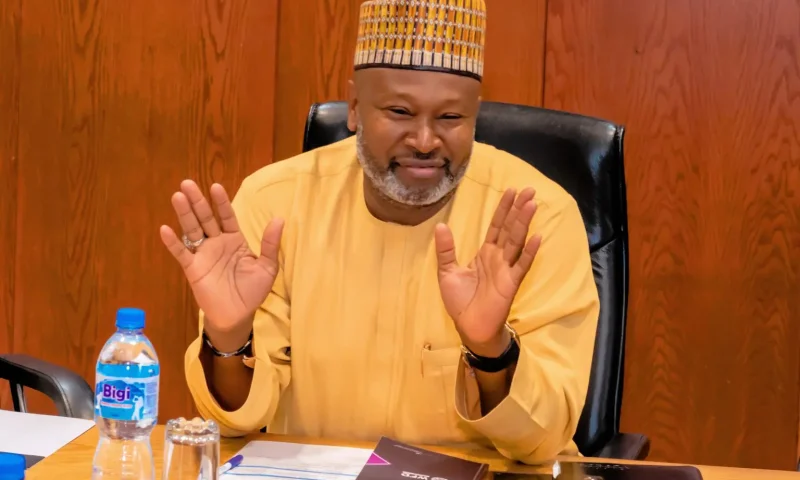
The Special Adviser to the Governor on Islamic Matters and Chairman of the 2026 Hajj Ad-hoc Committee, Dr Abdullahi Jebe, gave the advice during a tour of historical Islamic sites in Makkah organised for Lagos pilgrims by the Lagos State Muslim Pilgrims Welfare Board.

Jebe stressed the importance of conserving energy and maintaining good health ahead of the physically demanding Hajj exercises.

“It is imperative for pilgrims to conserve their energy, stay hydrated, and be healthy ahead of the main Hajj rites,” he said, describing the pilgrimage activities as rigorous and demanding.

According to him, the excursion to the historical sites was designed to help pilgrims gain firsthand knowledge of the locations and understand their religious significance before the commencement of the core Hajj rituals.

He explained that Mount Arafah, one of the major pilgrimage sites, could become difficult to access on the Day of Arafah because of the large number of worshippers expected.

Following the completion of the visits, the pilgrims are expected to remain in Makkah until their scheduled movement to Mina on Sunday, May 24, corresponding to the 7th day of Dhul Hijjah 1447 AH, when the main Hajj rites will begin.

The Secretary of the Lagos State Muslim Pilgrims Welfare Board, AbdulHakeem Ajomagberin, disclosed that the state government had secured Category A+ tents in Mina and Arafah to ensure the comfort of pilgrims during the exercise.

He advised the pilgrims to comply strictly with instructions from officials and remain prayerful throughout the pilgrimage.

Also speaking during the tour, the Chairman of the Dawah and Enlightenment Sub-Committee, Prof. Kabir Paramole, said the historical sites visited by the pilgrims reflected the spiritual heritage and historical foundations of Islam.

According to him, “Islam is a religion of peace with historical and spiritual sites that show it is a divinely given religion from Allah to Prophet Muhammad.”

During the tour, the pilgrims visited Jabal Thawr, where Prophet Muhammad and Abu Bakr reportedly sought refuge during the Hijrah, as well as Jabal Nur, recognised as the location where the first revelation of the Qur’an was received.

They also visited Mount Arafah, traditionally believed to be the place where Prophet Adam and Hawwa reunited after leaving Paradise.

Other locations toured included Mina, where pilgrims are expected to stay during the Hajj rites; Muzdalifah, where pilgrims spend the night and gather pebbles; and the Jamarat area, where the symbolic stoning of the devil takes place.

Arrest Ahmad Gumi immediately – Adeyanju tells Nigerian Govt

The Nigerian government has been urged to immediately arrest controversial Islamic cleric, Ahmad Gumi over his alleged inflammatory comments on the rising security crisis in the country.

Activist lawyer, Deji Adeyanju made the call on Wednesday amid the viral video of the clergy allegedly defending bandits.

In the video, Gumi could be heard saying that Fulani herdsmen are going nowhere, stating that “they are part of us and we are part of them. We must live with them”.

In a post on his Facebook page, Deji said Terrorists sympathizers should be treated as terrorists, stressing that only in a failed state people like Gumi can survive.

He wrote, “People like Gumi can only survive in a country without a government. Terrorists sympathizers are terrorists.

“His words and actions promote terrorism in Nigeria. I call on the government to arrest him to serve as a deterrent to others”.

Zulum assures safe return of 48 abducted schoolchildren in Borno

Borno State Governor, Babagana Zulum, has assured residents of Mussa community in Askira Uba Local Government Area that efforts are ongoing to secure the safe release of 48 abducted schoolchildren.

The governor gave the assurance on Tuesday during a sympathy visit to Uba town following the abduction incident.

Addressing residents, Zulum expressed sympathy to the Emir of Uba, parents of the abducted children and members of the community over the attack.

He said the Federal Government, security agencies and the Borno State Government were working to ensure the victims regain their freedom.

Zulum also disclosed that security operatives, including military and police personnel, had been deployed to strengthen security in the area and support rescue efforts.

The governor pledged to reinforce security in Askira, Uba and surrounding communities to prevent further attacks.

He further appealed to the abductors to release the children, describing them as innocent minors in need of parental care and protection.

Speaking during the visit, the Emir of Uba, Alhaji Ali Ibn Isma’ila Mamza II, said the abduction occurred on Friday, May 15, in Mussa community.

According to the monarch, the victims include 37 primary school pupils, six secondary school students and five other residents.


Lagos arrests, prosecutes 859 traffic offenders

Lagos State Government has disclosed that no fewer than 859 traffic offenders were apprehended and prosecuted across Lagos Island and Ikeja over various traffic-related violations.

The Special Adviser to Governor Babajide Sanwo-Olu on Central Business Districts, Bola Olumegbon Lawal, revealed this on Tuesday during the 2026 Ministerial Press Briefing commemorating the third anniversary of the administration’s second term in office.

Lawal also disclosed that 24 tricycles were seized and prosecuted for offences ranging from illegal parking and unlawful U-turns to traffic light violations and driving against traffic.

According to her, the Lagos State Central Business Districts have sustained efforts aimed at improving the business environment and enhancing the overall living conditions for residents, commuters and visitors within the state.

She noted, however, that maintaining law and order within the districts has continued to present significant challenges for enforcement officials.

Lawal recalled that personnel of the agency had on several occasions come under attack from suspected hoodlums and individuals allegedly linked to the National Union of Road Transport Workers, NURTW.

She added that despite the challenges, the agency had continued to strengthen its operations through regular training and retraining programmes for officials, alongside safety campaigns and rescue activities across the districts.

The special adviser reiterated the state government’s commitment to enforcing traffic regulations and maintaining order within key commercial areas of Lagos.

W’Bank flags skills deficit across African economies

World-Bank

A widening gap between the skills African workers possess and what employers require is emerging as a key constraint on business expansion, productivity and job creation across the continent, according to analysis highlighted in a World Bank blog post.

The assessment revealed that more than one in five young people in Africa are neither in education nor employment, reflecting deep structural weaknesses in education systems and labour market alignment. Employers across medium and large firms continue to report difficulty finding workers with adequate skills, a challenge that is increasingly shaping hiring decisions and slowing operational growth.

The blog argues against persistently weak foundational learning. Only a small proportion of children in the region are able to read and understand a simple sentence by age ten, a benchmark widely used as an early indicator of future learning and workforce readiness. These early deficits, it notes, compound over time and feed directly into later skills shortages in the labour market.

The World Bank analysis revisits findings from a 2019 report, The Skills Balancing Act in Sub-Saharan Africa: Investing in Skills for Productivity, Inclusivity, and Adaptability, which identified two core policy tensions: balancing skills for broad-based productivity gains against those for social inclusion and striking the right mix between foundational education and technical or vocational training.

Those trade-offs, the blog suggests, have become more difficult to manage as labour markets tighten and economic transformation slows in many countries across the region.

Technical and vocational education and training systems are singled out as a critical weak link. While TVET is designed to equip young people with job-ready skills, many programmes remain poorly aligned with employer needs, limiting their effectiveness in addressing unemployment and productivity gaps.

The blog highlighted the growing relevance of global skills partnerships as a potential solution. These arrangements involve cooperation between sending and receiving countries to jointly invest in training systems that align with industry demand while also supporting skilled labour mobility.

Examples cited include pilot programmes involving countries such as Germany working with Ghana and Senegal in sectors including construction, renewable energy and information technology. These initiatives typically offer dual training pathways, enabling participants to pursue employment either domestically or in international labour markets.

Advocates argue that such partnerships can help close skills gaps by directly linking training curricula to employer needs while also expanding employment opportunities for African workers in global markets facing demographic ageing and labour shortages.

Another major constraint identified is the lack of reliable data on labour market outcomes for training programmes. Many countries in the region do not systematically track the employment trajectories of technical and vocational education and training graduates, making it difficult for students to assess the value of different courses and for policymakers to evaluate programme effectiveness.

Some progress is being made. Rwanda’s graduate tracking system, for example, provides data on employment outcomes across different training programmes, offering insights into job placement rates and time-to-employment. Chile is also cited as a more advanced model, with comprehensive data that allows comparisons across institutions and fields of study.

The analysis also flags accelerating technological change as a growing pressure point. The rapid diffusion of digital technologies, automation and artificial intelligence is reshaping job requirements across sectors, increasing demand for both foundational and digital skills.

This shift is exposing further weaknesses in education systems, particularly where literacy, numeracy and digital competencies remain low. It also highlights a growing “usage gap” in digital access, especially among women, driven by constraints such as infrastructure deficits, affordability challenges and limited digital literacy.

The blog noted that without urgent reforms, Africa’s skills mismatch risks becoming a binding constraint on economic growth and job creation. It calls for stronger alignment between education systems and labour market needs, greater investment in foundational learning, improved labour market data, and expanded public-private partnerships to deliver demand-driven training.

Access Bank FX liquidity to service $1bn debt – Fitch

access-bankAccess Bank Plc possesses adequate foreign currency liquidity to comfortably service its looming $1bn external debt obligations maturing later this year.

Global credit rating agency Fitch Ratings disclosed this in its latest institutional credit assessment, where it also affirmed the bank’s Long-Term Issuer Default Rating at ‘B’ with a Stable Outlook.

The financial institution faces two significant hard-currency repayments in the third quarter of 2026, comprising a $500m Additional Tier 1 Eurobond callable in October and an additional $500m senior unsecured Eurobond maturing in September.

According to the rating agency, despite the macroeconomic headwinds and tight domestic liquidity parameters, Access Bank’s liquidity runway remains resilient enough to absorb these maturing obligations without triggering capital flight stresses.

Analysing the bank’s external balance sheet capacity, a senior credit analyst at Fitch pointed out that the bank’s diversified cross-border operations have provided the necessary buffers to absorb sovereign shocks.

“Fitch believes that the bank’s foreign currency liquidity is sufficient to meet the upcoming repayments,” the analyst said.

The analyst further explained that the financial institution’s recent aggressive international expansions have repositioned its operational baseline.

“The acquisition and consolidation of Mauritius-based AfrAsia Bank Limited in 2025 have improved our assessment of Access Bank’s operating environment, adding a large amount of investment-grade assets to its balance sheet,” he added.

However, the global agency noted that while foreign currency liquidity remains intact, Access Bank’s standalone Capital Adequacy Ratio settled at 17.4 per cent in the first quarter of 2026, leaving a relatively tight buffer over the 15 per cent regulatory minimum requirement.

Reflecting on the bank’s internal capitalisation strategies, an investment banking strategist observed that redeeming the $500m debt instruments could exert temporary pressure on core capital ratios due to historical foreign exchange adjustments.

“A redemption will reduce core capital because these notes are currently accounted for at a pre-devaluation exchange rate,” the strategist stated.

He maintained that the Tier 1 lender is already implementing remedial balance sheet measures to shore up its capital cushion against statutory benchmarks.

“Access Bank has already raised tier-two capital and actively plans to further strengthen its standalone CAR through internal capital generation and the planned sale of minority stakes in some foreign subsidiaries,” he said.

Meanwhile, the agency reported that the bank’s asset quality remained stable, with its impaired loans ratio holding firm at three per cent at the end of 2025, supported by a moderate oil and gas sector credit concentration of nine per cent of gross loans, which remains significantly lower than its domestic peer average.

Refinery Listing Will Democratize Africa’s Industrial Prosperity – Dangote

… South African investors eye investment opportunities


President/Chief Executive, Dangote Group, Aliko Dangote, has said the planned listing of the Dangote Petroleum Refinery & Petrochemicals on the Nigerian Exchange is designed to democratise wealth creation and give Africans direct access to participate in the continent’s industrial transformation.


Dangote spoke during the visit of the leadership of South Africa’s Government Employees Pension Fund (GEPF), alongside the Public Investment Corporation and Alterra Capital Partners, to the Dangote Petroleum Refinery & Petrochemicals and Dangote Fertiliser Limited in Lagos. The South African delegation included Chairperson of GEPF, Frans Baleni; Principal Executive Officer of GEPF, Musa Mabesa; Deputy Chairperson of PIC, Mongwena Maluleke; Chief Executive Officer of PIC, Patrick Dlamini; and Managing Partner of Alterra Capital Partners, Genevieve Sangudi.


The visit comes amid rising investor interest in Africa-led industrialisation and long-term infrastructure investments. GEPF is Africa’s largest defined benefit pension fund, managing the retirement and associated benefits of more than 1.8 million public sector workers in South Africa, while PIC is the continent’s largest asset manager.


Speaking on the planned refinery listing, Dangote said Africa’s next phase of economic growth must be anchored on large-scale industrial projects capable of creating jobs, strengthening domestic production capacity and generating broad-based prosperity.


“We are opening the doors for investors to participate directly in Africa’s industrial future and the prosperity it will create,” Dangote said.


According to him, the refinery project reflects the scale of untapped opportunities within Africa’s energy market, particularly as most African countries remain dependent on imported refined petroleum products despite growing industrial demand and rising consumption.


Dangote said the Group’s long-term investment strategy is driven by Africa’s expanding energy needs and the urgent requirement for regional refining capacity capable of serving multiple markets across the continent.


The billionaire industrialist noted that demand for products such as polypropylene, aviation fuel and refined petroleum products has exceeded earlier projections, reinforcing the commercial viability of the refinery and shaping future expansion plans.


“We thought about Nigeria first and then exports, but even with our current production, we are practically living hand to mouth because the market demand is extremely high,” he said.


Speaking after the tour of the Dangote facilities in Ibeju-Lekki, the Chairperson of GEPF, Frans Baleni, said that the refinery stands as evidence that Africa can execute transformational infrastructure projects when backed by visionary leadership, long-term investment and strong technical expertise.


“If it can be done anywhere else in the world, it can be done in Africa,” he said. “This project has shown that the continent is capable of achieving world-class industrialisation at scale.”


Baleni added that the significance of the project extends well beyond Nigeria’s borders. “What has been built here is reshaping how the world should think about African industrial capability — and it should reshape how Africa thinks about itself. For too long, projects of this magnitude have been associated with other parts of the world. The Dangote Refinery and Petrochemicals Complex is a powerful demonstration that, with visionary leadership and long-term capital, that perception no longer holds. This is the kind of African-led industrial scale that institutional investors on this continent should be backing.”


On his part, Chief Executive Officer of PIC, Patrick Dlamini, described the refinery as one of the most transformative industrial projects undertaken on the continent, saying it is reshaping global perceptions about Africa’s industrial capabilities and economic potential.


Quoting former South African President Nelson Mandela, Dlamini said: “It always looks impossible until it’s done. This project is redefining the story of Africa and the possibilities of Africa.”


He said PIC, which manages about $230 billion in assets largely on behalf of South Africa’s Government Employees Pension Fund, is actively seeking long-term partnerships aligned with infrastructure development, industrialisation and economic transformation across Africa.


“PIC’s mandate is to deploy long-term, patient capital in service of industrialisation, infrastructure and economic transformation across Africa,” Dlamini said. “What we have seen today reinforces our conviction that the next chapter of African prosperity will be written through partnership between African institutional capital and African industrial champions. There is real strategic alignment between Dangote’s industrial agenda and how we are positioning our portfolio, and we look forward to exploring meaningful avenues for collaboration.”


According to him, poverty, unemployment and economic exclusion remain major drivers of instability across Africa, making industrialisation and large-scale job creation critical to the continent’s long-term development.

T+1 Settlement Cycle Takes Off June 1- SEC

In furtherance to its mandate to promote an efficient, fair, and transparent capital market, the Securities and Exchange Commission has announced the transition to a T+1 settlement cycle for equities and commodities transactions with effect form Monday June 1, 2926.
This notice published by the by SEC on May 18, 2026, outlines a comprehensive framework that all capital market operators and relevant stakeholders are encouraged to adopt in preparation for this significant change.
The Commission stated that the migration to a T+1 settlement cycle forms part of the Commission’s ongoing market
modernization initiatives aimed at enhancing market efficiency, strengthening risk management,
reducing counterparty exposure, improving liquidity, and aligning the Nigerian capital market with
international standards and global best practices.
According to the notice,  with the new framework, all eligible trades executed in the Nigerian capital market will settle one business day after the trade date, effectively reducing the current two-business-day settlement period.
“Importantly, the final trading day under the existing T+2 cycle will be May 29, 2026.
Specifically, trades executed on both May 29 and June 1, 2026, will settle on the same date, June 2, 2026, creating a seamless convergence window that supports an efficient transition.
“From June 1 onward, all trades will operate under the T+1 framework, and it is essential for all capital market operators, securities exchanges, clearing and settlement infrastructure providers, custodians, registrars, issuers, and other stakeholders to ensure they are fully operationally ready by the commencement date.”
“Implementation Highlights are: Effective Monday, June 1, 2026, all eligible trades shall settle on a T+1 basis; Friday, May 29, 2026, shall be the final trading day under the existing T+2 settlement cycle; Trades executed on Friday, May 29, 2026, and Monday, June 1, 2026, shall both settle on Tuesday, June 2, 2026; and All trades executed from Monday, June 1, 2026, onward shall be subject to the T+1 settlement cycle”.
This strategic move further positions Nigeria on a trajectory of convergence with developed market standards, following in the footsteps of the United States, which migrated to T+1 in May 2024, along with Canada and Mexico. India has also made notable strides in compressing its settlement cycle and is piloting instantaneous settlement for select trades.
For retail investors, this means quicker access to proceeds from share sales. Meanwhile, institutional players and custodians must prioritize reconfiguring their back-office systems and reconciliation workflows to align with the T+1 cycle before June 1.
The recent reforms reflect Nigeria’s dedication to bridging the infrastructure gap with more developed markets and signify an attractive opportunity for foreign institutional investors.
The journey from T+3 to T+2 and now to T+1 in less than seven months highlights the SEC’s proactive approach toward fostering a more dynamic and robust capital market.
“Market participants are expected to review and align their systems, processes, controls, and operational workflows ahead of the implementation date.
“The Commission will continue to engage stakeholders and monitor the implementation process to ensure an orderly and seamless transition. We remain committed to strengthening market integrity, enhancing investor confidence, and fostering the development of a modern, resilient, and globally competitive Nigerian capital market. For further information, please contact: emidivision@sec.gov.ng” the Circular added.
2027: ‘Let’s go to primaries, you don’t believe in zoning’ – Amaechi tells Atiku

Former Minister of Transportation, Rotimi Amaechi, has told former Vice President Atiku Abubakar that they should go to the primaries since Atiku said he does not believe in zoning.

Amaechi made this statement on Monday while responding to questions in an interview on Trust TV.

The chieftain of the African Democratic Congress, ADC, said this will be the first time Atiku will taste failure in primary election.

He was speaking on the level of his preparedness for the primary election of the party.

The former Rivers state governor said, “Atiku said he does not like zoning, so let’s go to primaries.

“I listen when said he has never failed the primaries before. I hope this will be the first time he fails the primaries.

“That is not the issue, the issue is that every time he has passed the primaries, he has not won the election.

“You see as I’m talking to my colleagues and brothers in the North, let’s not play North and South politics. It’s not necessary. I don’t do it and I will not do it.

“I would like to copy former president Olusegun Obasanjo. He’s a huge nationalist. You may not like him. But he was a Nigerian President and not a Yoruba President.”

When asked what what his fate would be if an aspirant, Mohammed Hayatu-Deen decides to step down for Atiku, the former Rivers state governor said he wished them luck.

Only five GAC members supported Hamzat, no consensus candidate in Lagos APC – Jim-Kamal

Ahead of Thursday’s All Progressives Congress, APC, governorship primary election in Lagos State, one of the aspirants, Lanre Jim-Kamal, has insisted that there is no officially endorsed candidate in the race, stressing that all contestants should participate in a transparent direct primary process.

Jim-Kamal made the remarks on Monday during the unveiling of his five-point agenda in Lagos, where he said his administration would focus on addressing what he described as longstanding irregularities in the state’s political and governance system.

According to him, the signing of the 2026 Electoral Act by President Bola Tinubu reflected support for direct primaries and opposition to the culture of candidate imposition within political parties.

He argued that the president’s endorsement of direct primaries was rooted in a desire to strengthen internal democracy and discourage predetermined candidacies.

Jim-Kamal urged delegates expected to participate in the governorship primary to vote according to their conscience and support a candidate capable of providing effective leadership for Lagos State.

“I urge the delegates to open their eyes and vote for the person that will lead us well,” he said.

The APC aspirant also appealed for a peaceful conduct of the exercise, stating that Lagos should demonstrate political maturity and serve as a model for other states across the country.

“Let us be peaceful. Let us go out and show other states that we are no more ‘Eko for Show’ but ‘Eko for Action’. We are going to lead by example this time around,” he stated.

Speaking further, Jim-Kamal described the planned exercise as a direct primary to be conducted using the Option A4 system, noting that although the APC was not traditionally known for that method, the party had now embraced it.

“That is what is happening now, direct primary, what they call Option A4. APC may not be used to it because it has been more common with other parties, but now they have started it,” he said.

The governorship aspirant also dismissed reports suggesting that there was a consensus arrangement in favour of the Deputy Governor of Lagos State, Obafemi Hamzat.

According to him, reports of endorsement were exaggerated, claiming that only a five members of the party’s Governorship Advisory Council, GAC, allegedly backed Hamzat out of the council’s larger membership.

He further stated that the chairman of the council had recently denied claims that any aspirant had been officially endorsed.

Jim-Kamal criticised the idea of consensus candidacies within political parties, arguing that such arrangements often create resentment and division among party members.

“If consensus stands, the deputy governor will not be running from pillar to post seeking support. Consensus breeds bad blood. There is nothing like consensus. We are all equal in this race,” he said.