Fidelity Bank Partners Aircraft Finance Germany To Grow African Aviation Industry

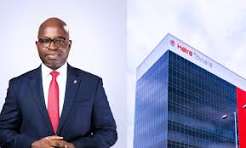
Fidelity Bank Plc, has announced the signing of a strategic partnership agreement with Aircraft Finance Germany (AFG) to advance the aviation sector in Nigeria and across Africa by both organisations.

The agreement was formally executed by Mr. Christian Hatje, Managing Director, Business Aviation and SVP Commercial, representing AFG; and Mr. Stanley Amuchie, Executive Director and Chief Operations and Information Officer of Fidelity Bank Plc at a signing ceremony in Germany recently.

Speaking at the signing ceremony, Mr. Christian Hatje stated, “This partnership marks a significant milestone in our commitment to Africa’s aviation future. Partnering with Fidelity Bank, Nigeria’s leading aviation financier, we are confident in our ability to structure solutions that will drive meaningful growth across the sector.”

Through this partnership, both institutions will work closely to identify, finance, and grow aviation opportunities across the continent. The collaboration aims to provide innovative leasing and financing solutions that support airlines, aviation operators, and related stakeholders in expanding capacity, modernizing fleets, and strengthening operational and fleet efficiency.

“Fidelity Bank remains dedicated to supporting the aviation industry through tailored financial solutions. Our collaboration with AFG strengthens our capacity to provide sustainable financing that will contribute to the expansion of aviation in Nigeria and across Africa,” explained Mr. Stanley Amuchie.

This partnership reflects a shared vision to foster long-term development, stimulate investment, and create sustainable opportunities within the African aviation industry.

Nigeria remains a strategic hub for aviation development in Africa. By combining AFG’s leasing expertise with Fidelity Bank’s deep sector knowledge and financial strength, the partnership is positioned to unlock new growth pathways and enhance the sustainability of the aviation ecosystem.

This collaboration in Africa forms part of AFG’s broader global portfolio expansion strategy, reflecting the company’s continued commitment to structured aviation investments across multiple international markets.

Fidelity Bank is regarded as a market-leader in the Nigerian aviation industry with a long list of interventions across the value chain. Its aviation finance solutions support aircraft acquisition and leasing, route expansion, aviation infrastructure development, cargo and export enablement; and partnership structures for large projects.

Skyway Aviation Handling Company Posts Strong Profit

Skyway Aviation Handling Company Plc delivered a robust financial performance for the year ended December 31, 2025, with profit after tax more than doubling to N11.73 billion, underscoring strong operational momentum and improved efficiency across its business lines.

The company’s audited results show revenue rose significantly by 54 per cent to N44.46 billion in 2025, up from N28.94 billion recorded in 2024. The growth was driven largely by increased demand for passenger and cargo handling services, alongside improved contributions from ancillary and Value Chain operations.

Costs of sales also climbed during the period, rising to N18.98 billion from N12.56 billion in the prior year. However, the increase was outpaced by revenue growth, resulting in gross profit expanding to N25.48 billion from N16.38 billion in 2024.

Operating performance remained strong, with profit from Operations nearly doubling to N14.62 billion compared with N6.53 billion recorded a year earlier. This was achieved despite higher administrative expenses, which rose to N11.24 billion from N10.05 billion, reflecting inflationary pressures, increase in utility and increased personnel costs.

After accounting for a tax expense of N2.55 billion, profit after tax stood at N11.73 billion, representing a 142 per cent increase from N4.83 billion in the previous year.

Total comprehensive income for the year came in at N11.42 billion, compared with N6.89 billion in 2024, reflecting a foreign exchange loss of N314.5 million during the period, in contrast to a gain recorded in the prior year.

The company’s balance sheet remained solid, with total assets increasing to N56.58 billion as at December 31, 2025, from N41.78 billion in 2024. The growth was largely driven by a significant rise in property, plant and equipment, which climbed to N24.61 billion from N16.03 billion, indicating continued investment in operational capacity.

Shareholders’ equity also strengthened, rising to N39.87 billion from N29.27 billion, supported by retained earnings growth to N21.74 billion.

Cash flow generation improved markedly, with net cash inflow from operating activities rising to N13.47 billion from N5.01 billion in the previous year. The company ended the year with cash and cash equivalents of N5.70 billion, up from N3.03 billion in 2024.

Despite increased capital expenditure of over N11 billion on fixed assets, Skyway maintained positive financing cash flow, supported by additional borrowings during the year.

Earnings per share rose to 867 kobo from 357 kobo in 2024, reflecting the strong profitability performance and enhanced shareholder value.

The company, however, declared a final dividend of N1.6 billion to its shareholders for the year under review.

Overall, Skyway Aviation Handling Company’s 2025 results highlight strong revenue expansion, good operational efficiency, and sustained investment in infrastructure, positioning the firm for continued growth amid rising demand in Nigeria’s aviation services sector.
Speaking on the Company’s financial performance, the Managing Director/CEO stated that the results reflect the strength of SAHCO’s strategic direction, the resilience of its business model, and the unwavering commitment of its workforce. She noted that despite a challenging operating environment marked by inflationary pressures and rising costs, the Company sustained strong margins and nearly doubled its operating profit.
Dr. Barr Taiwo Afolabi (CON), Chairman of Skyway Aviation Handling Company PLC commenting on the financial report, emphasized that sustained investments in modern equipment and infrastructure have been instrumental in driving operational efficiency, enhancing service delivery, and positioning SAHCO for long-term growth.

BUA’s MD to promote real sector growth at summit

Managing Director of BUA Foods, Ayodele AbioyeBUA Foods Plc has reinforced its push for real sector growth as its Managing Director, Dr Ayodele Musibau Abioye, is set to deliver a keynote address at the 2026 Industry Summit.

The organisers of the event disclosed that Abioye will speak on “Unlocking Value: BUA Foods’ Role in Transforming Nigeria’s Real Sector Through Innovation and Sustainability,” positioning the company at the forefront of efforts to deepen industrial development.

In a statement, the organisers said, “Dr Abioye, a distinguished business leader and engineer with over 30 years of experience in business and manufacturing engineering, will deliver a paper on the topic ‘Unlocking Value: BUA Foods’ Role in Transforming Nigeria’s Real Sector Through Innovation and Sustainability.’”

The summit, themed ‘The Year of the Real Sector,’ will be held on 17 April 2026 at the Civic Centre, Victoria Island, Lagos.

The Convener of the Industry Summit and Awards, Mr Goddie Ofose, said Abioye’s selection reflects his track record in driving industrial growth and operational excellence.

“Dr Abioye is a results-driven leader with proven expertise in operations, manufacturing, supply chain management, and business development, with a track record of consistently delivering growth and profitability,” Ofose said.

Abioye joined BUA Group as Chief Operating Officer in 2021 and later became the Managing Director of BUA Foods Plc, where he has led the company’s expansion into a leading player in Nigeria and across Africa’s food sector.

Ofose added that Abioye combines strong academic and professional credentials with global exposure.

“He has a Bachelor’s degree in mechanical engineering and technology from the University of Ilorin, a Master’s degree in engineering management, and a PhD in manufacturing engineering from the University of Benin. He has extensive professional training and exposure locally and internationally across the United States of America, Europe, and South Africa. He is a registered engineer with the Nigerian Society of Engineers and COREN and is also an advisory board member of the University of Ilorin’s Food Engineering Department,” Ofose said.

According to the organisers, Abioye’s keynote will highlight how innovation, sustainability, and efficient value chains can unlock growth in Nigeria’s real sector, aligning with broader efforts to boost manufacturing and reduce import dependence.

The event will also feature industry stakeholders, including media, marketing, and corporate leaders from leading firms such as Tolaram, FrieslandCampina WAMCO, PHD Nigeria, Guinness Nigeria, Diageo West and Central Africa, UAC Foods, and Godrej Consumer Products.

The Minister of Industry, Trade and Investment, John Enoh, will chair the event, while the Lagos State Commissioner for Information and Strategy, Gbenga Omotoso; the Senior Special Assistant to the President on New Media and Digital Communications, O’tega Ogra; and the Special Adviser to the Lagos State Governor on Media and Publicity, Gboyega Akosile, will attend as special guests.

Industry watchers said the summit is expected to amplify conversations around strengthening Nigeria’s real sector, with BUA Foods’ role seen as pivotal in driving sustainable industrial growth.

Sterling Bank celebrates zero-fee anniversary, returns over N2bn

Sterling Bank towersSterling Bank has marked the first anniversary of its disruptive “Zero Transfer Fees” initiative, announcing on Wednesday that the policy has successfully returned over N2bn directly to Nigerian consumers.

The initiative, which launched on 1 April 2025, made Sterling the first major Nigerian bank to completely waive revenue from customer online transactions. One year later, the bank reports that the gamble has fundamentally reshaped the relationship between the institution and its millions of digital users.

Speaking on the milestone, the Chief Executive Officer of Sterling Bank, Abubakar Suleiman, emphasised that the move was a strategic shift in the bank’s core business model.

He said: “We made a deliberate decision to stop charging for the movement of money and to build our model around delivering real value instead. One year on, the outcome has validated both the principle behind that choice and the strength of the model itself.”

Suleiman noted that the ability to sustain such a high-impact policy was not an overnight feat but the result of a multi-year digital overhaul.

“Our transformation was never about technology for its own sake.

It was about building enduring capacity to serve, to scale, and ultimately to deliver more value to our customers. When that capacity matured, we made a conscious decision to return the benefits to the people who make the system work,” he added.

The zero-fee policy, executed via the bank’s OneBank digital platform, has seen rapid adoption among small businesses and digital-first Nigerians. According to the bank, the N2bn saved by customers represents a significant rebalancing of wealth in a sector where transaction fees have long been the industry standard.

Also speaking on the development, the Chief Marketing Officer of Sterling Bank, Donatus Okpako, described the anniversary as a signal to the rest of the financial services sector.

He said: “This initiative has challenged long-held assumptions about how banks create value. We are demonstrating that it is entirely possible to run a strong, commercially sound institution while being fundamentally fair to customers.”

Okpako added that the N2bn milestone is just the beginning of a broader transparency drive.

“The N2bn represents real relief, real impact, and a rebalancing in favour of the customer. That principle will continue to guide what we build next,” he added.

Industry analysts point out that Sterling’s success is largely due to its migration to a homegrown core banking platform and a scalable private cloud environment. By removing legacy costs, the bank has been able to absorb transaction expenses that other lenders still pass on to their users.

As the bank enters its second year of the policy, leadership remains committed to expanding access to credit and savings, doubling down on the zero-fee philosophy to drive deeper financial inclusion across Nigeria.

Newspapers
Breaking News Alerts

Nigeria has faced significant inflationary pressures over the past two years. With the Central Bank of Nigeria maintaining a high Monetary Policy Rate, exceeding 27 per cent in late 2024 and 2025 to curb inflation, the cost of credit has skyrocketed.

Sterling Bank’s initiative actually preceded a major regulatory shift. By January 2026, the CBN officially moved to scrap five major bank charges, including certain transfer levies and SMS alert fees, to ease the financial burden on citizens.

Dangote refinery disputes seven cargo allocation reports

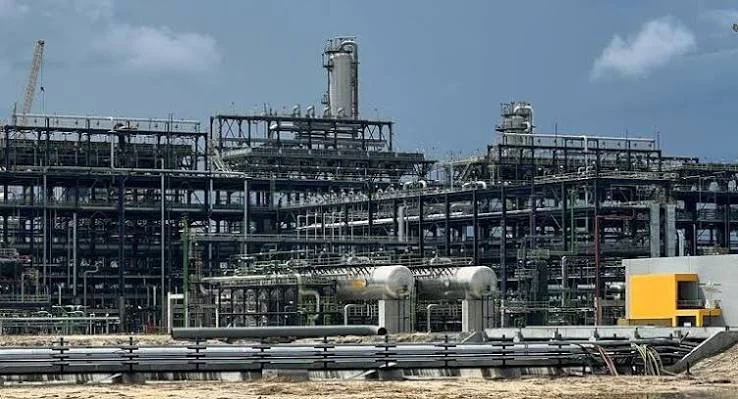
Dangote refineryOfficials of the Dangote Petroleum Refinery are unaware of claims that seven crude cargoes have been allocated to it in May by the Nigerian National Petroleum Company Limited, The PUNCH reports.

Senior officials at the refinery told our correspondent that, although talks were ongoing with the NNPC, they could not confirm an increase in the refinery’s monthly crude allocation from five to seven cargoes.

There were reports that the NNPC had increased crude oil supply to the Dangote refinery, allocating seven cargoes for May loading to boost domestic fuel production.

Two trader sources had told Reuters on Tuesday that the latest allocation marked an increase from the five cargoes the refinery had been receiving in previous months.

But speaking exclusively with our correspondent on Thursday, officials of the Dangote Group, who requested anonymity due to a lack of authorisation, said they had not yet been informed of the decision.

According to them, the refinery is expected to receive six cargoes of crude in May, contrary to reports that seven cargoes were allocated for next month.

“Our May allocation is about 6.15 million barrels. The report of seven cargoes’ allocation is not clear yet,” one of the officials stated.

It was reiterated that the 650,000-barrel-per-day facility needs over 19 cargoes of crude monthly, but it only struggles to get five cargoes. A cargo contains about one million barrels.

“Our monthly requirement is 19.77 million barrels. A cargo is one million barrels. In October, we got 4.55 million; we got 6.45 million in November; 4.30 million in December; 5.65 million barrels in January; and 4.66 million barrels in February. March is around six million.

“Our May allocation is about 6.15 million barrels, not up to 7 million,” another official told The PUNCH, appealing to the government to allocate more crude to the refinery.

Earlier, the Dangote refinery had lamented that it was not getting enough crude locally for its operations. As the Iran-US war continues to disrupt global oil supply, the Dangote refinery has effected multiple fuel price increases, raising petrol pump prices above N1,200 per litre.

Defending these price hikes, the Dangote refinery said in a statement that local crude producers were refusing to supply feedstock to its facility, forcing it to rely more on imported crude.

According to the company, the refinery also received just five cargoes every month from the national oil company instead of 13 cargoes, adding that the cargoes were paid for at international market prices.

“While we receive about five cargoes a month from NNPC, which we pay for in naira, these cargoes are priced at international market prices plus premium and fall short of the 13 cargoes which we require to support sales into Nigeria.

Skyway  Aviation Handling Company Posts Strong  Profit Growth , Revenue Surges 54% In  2025

Skyway Aviation Handling Company Plc delivered a robust financial performance for the year ended December 31, 2025, with profit after tax more than doubling to N11.73 billion, underscoring strong operational momentum and improved efficiency across its business lines.


The company’s audited results show revenue rose significantly by 54 per cent to N44.46 billion in 2025, up from N28.94 billion recorded in 2024. The growth was driven largely by increased demand for passenger and cargo handling services, alongside improved contributions from ancillary and Value Chain operations.


Costs of sales also climbed during the period, rising to N18.98 billion from N12.56 billion in the prior year. However, the increase was outpaced by revenue growth, resulting in gross profit expanding to N25.48 billion from N16.38 billion in 2024.


Operating performance remained strong, with profit from Operations nearly doubling to N14.62 billion compared with N6.53 billion recorded a year earlier. This was achieved despite higher administrative expenses, which rose to N11.24 billion from N10.05 billion, reflecting inflationary pressures, increase in utility and increased personnel costs.


After accounting for a tax expense of N2.55 billion, profit after tax stood at N11.73 billion, representing a 142 per cent increase from N4.83 billion in the previous year.


Total comprehensive income for the year came in at N11.42 billion, compared with N6.89 billion in 2024, reflecting a foreign exchange loss of N314.5 million during the period, in contrast to a gain recorded in the prior year.


The company’s balance sheet remained solid, with total assets increasing to N56.58 billion as at December 31, 2025, from N41.78 billion in 2024. The growth was largely driven by a significant rise in property, plant and equipment, which climbed to N24.61 billion from N16.03 billion, indicating continued investment in operational capacity.


Shareholders’ equity also strengthened, rising to N39.87 billion from N29.27 billion, supported by retained earnings growth to N21.74 billion.


Cash flow generation improved markedly, with net cash inflow from operating activities rising to N13.47 billion from N5.01 billion in the previous year. The company ended the year with cash and cash equivalents of N5.70 billion, up from N3.03 billion in 2024.


Despite increased capital expenditure of over N11 billion on fixed assets, Skyway maintained positive financing cash flow, supported by additional borrowings during the year.


Earnings per share rose to 867 kobo from 357 kobo in 2024, reflecting the strong profitability performance and enhanced shareholder value.


The company, however, declared a final dividend of N1.6 billion to its shareholders for the year under review.


Overall, Skyway Aviation Handling Company’s 2025 results highlight strong revenue expansion, good operational efficiency, and sustained investment in infrastructure, positioning the firm for continued growth amid rising demand in Nigeria’s aviation services sector.
Speaking on the Company’s financial performance, the Managing Director/CEO stated that the results reflect the strength of SAHCO’s strategic direction, the resilience of its business model, and the unwavering commitment of its workforce. She noted that despite a challenging operating environment marked by inflationary pressures and rising costs, the Company sustained strong margins and nearly doubled its operating profit.


Dr. Barr Taiwo Afolabi (CON), Chairman of Skyway Aviation Handling Company PLC commenting on the financial report, emphasized that sustained investments in modern equipment and infrastructure have been instrumental in driving operational efficiency, enhancing service delivery, and positioning SAHCO for long-term growth.

Nigeria’s oil reserves dip, as gas resources rise

NUPRCNigeria’s oil reserves recorded a marginal decline in 2026, while gas resources expanded, reflecting a gradual shift in the country’s hydrocarbon profile amid sustained production and discoveries.

The Nigerian Upstream Petroleum Regulatory Commission disclosed this on Wednesday in Abuja, releasing the nation’s official petroleum reserves position as of January 1, 2026.

In a statement signed by its Chief Executive, Oritsemeyiwa Eyesan, the commission said Nigeria’s total oil and condensate reserves stood at 37.01 billion barrels, while total gas reserves rose to 215.19 trillion cubic feet.

Titled “Media Release on the National Annual Petroleum Reserves Position as at 1st January 2026,” the statement highlighted the commission’s commitment to strengthening upstream performance and ensuring long-term resource sustainability.

Eyesan said, “The Nigerian Upstream Petroleum Regulatory Commission, in keeping with its mandate, is committed to improving upstream sector performance, enhancing the growth of oil and gas reserves, and ensuring stable production for shared prosperity via the operationalisation of the Petroleum Industry Act, 2021, and implementation of the strategic pillars of the Commission.”

Providing a breakdown, she stated, “2P crude oil and condensate reserves stand at 31.09 billion barrels and 5.92 billion barrels, respectively, amounting to a total of 37.01 billion barrels.”

On gas, she said, “2P associated gas and non-associated gas reserves stand at 100.21 trillion cubic feet and 114.98 trillion cubic feet, respectively, resulting in total gas reserves of 215.19 trillion cubic feet.”

The commission added that Nigeria’s reserves life index stood at 59 years for oil and 85 years for gas, indicating the estimated duration the resources would last at current production levels.

Explaining the changes recorded within the period, Eyesan noted that crude volumes declined slightly due to production activities during the previous year.

“The Reserves Life Index is 59 years and 85 years for oil and gas, respectively. The reason for the slight change in 1.1.2026 oil and condensate reserves by 0.74 per cent is attributable to production in 2025 and reserves update due to field performance and technical evaluation based on subsurface studies.

“The reason for the increase in 1.1.2026 AG and NAG reserves by 2.21 per cent is largely because reserves update is based on discoveries and the result of robust reservoir studies,” she said.

In contrast, gas reserves increased on the back of fresh discoveries and improved technical assessments. “The reason for the increase in 1.1.2026 associated gas and non-associated gas reserves by 2.21 per cent is largely because the reserves update is based on discoveries and the result of robust reservoir studies,” Eyesan added.

Declaring the figures official, she said, “Consequently, and in furtherance of the provisions of the Petroleum Industry Act, I hereby declare the total oil and condensate reserves of 37.01 billion barrels and total gas reserves of 215.19 trillion cubic feet as the official national petroleum reserves position as of 1st January 2026.”

Findings show that Nigeria’s reserves position in 2026 reflects a modest shift from 2025, when total oil and condensate reserves were slightly higher at about 37.3 billion barrels, while gas reserves stood at approximately 210–211 trillion cubic feet.

The 2026 data indicate a 0.74 per cent decline in oil reserves, largely driven by sustained production and limited new oil discoveries, while gas reserves expanded by 2.21 per cent due to ongoing exploration success and renewed focus on gas development.

The trend underscores Nigeria’s gradual transition towards a gas-driven energy strategy, in line with the Federal Government’s “Decade of Gas” initiative and global demand for cleaner fuels.

The Petroleum Industry Act, 2021, which restructured the upstream sector and strengthened regulatory oversight, is expected to play a key role in boosting reserves growth through improved investment climate, enhanced data management, and more transparent licensing processes.

Nigeria exports 950,000 barrels of new crude blend

NNPC LimitedThe Nigerian National Petroleum Company Limited has marked a major milestone with the lifting of 950,000 barrels of Cawthorne blend crude into the global market through the ultramodern FSO Cawthorne vessel, Nigeria’s first new crude oil terminal in 50 years.

According to a statement by Sahara Group, the development confirms reports on the exportation of a new light sweet crude called Cawthorne under the Bayo Ojulari-led NNPC.

According to Sahara Group, over the weekend, the first shipment of 950,000 barrels from FSO Cawthorne was initiated following its licensing and gazetting by the Nigerian Upstream Petroleum Regulatory Commission.

It was stated that FSO Cawthorne serves as a critical offshore production support asset, providing storage and offtake capabilities for crude produced from OML 18 and nearby producing assets.

Reacting to the development, Sahara Group, a global energy and infrastructure conglomerate, reiterated the strategic role of FSO Cawthorne in strengthening Nigeria’s energy security through its reliable production, storage and evacuation infrastructure.

Sahara Group also said it recognised the advanced technologies deployed on FSO Cawthorne, noting that the facility incorporates cutting-edge systems supported by AI-enabled monitoring and robust QHSE frameworks, enhancing operational efficiency, asset integrity, safety performance and environmental stewardship.

Sahara commended NNPCL for its leadership of OML 18, where Sahara Group is a joint operator and joint venture partner, noting that the company’s collaborative approach continues to drive continuous improvement and value delivery across Nigeria’s upstream sector.

The Head of Commercial and Planning at Asharami Energy, a Sahara Group upstream company, Dr Tosin Etomi, said the crude lifting from FSO Cawthorne represents a defining moment for the asset, the OML 18 partnership and the wider oil and gas sector.

“The successful commencement of crude lifting from FSO Cawthorne is a significant milestone for the OML 18 partnership and a strong demonstration of what can be achieved through shared vision, technical discipline and committed collaboration,” Etomi said.

Etomi noted that the milestone aligns with Sahara Group’s broader upstream strategy, which is focused on building a resilient, scalable and responsible production portfolio anchored on strong partnerships, asset optimisation and long-term value creation.

“The transition of FSO Cawthorne into active export is consistent with our upstream growth strategy, prioritising operational excellence, indigenous participation and infrastructure capable of sustainably supporting Nigeria’s production ambitions,” he said.

He noted that Sahara Group’s upstream portfolio includes a growing oilfield services division, which is redefining innovation, efficiency and sustainability in the sector.

“Our expanding oilfield services capabilities are integral to our upstream vision, enabling smarter operations, improved efficiencies and responsible resource development,” Etomi said.

He added: “Sustainable social impact interventions and community participation have been key drivers of our upstream success, and we remain committed to aligning our operations with the highest global environmental, social and governance standards.”

Bank recapitalisation: Local investors provide 72% of N4.6tn

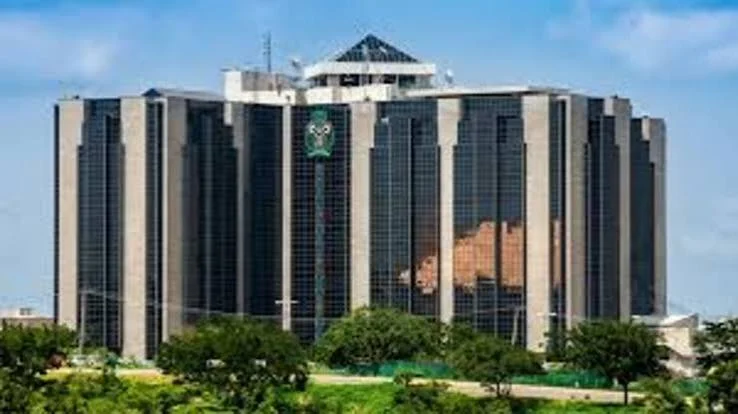
CBN-VUILDING-700×375The Central Bank of Nigeria on Wednesday said domestic investors accounted for the bulk of funds raised under its banking sector recapitalisation programme, contributing 72.55 per cent of the N4.65tn total capital secured by lenders.

The apex bank disclosed this in a statement marking the conclusion of the exercise, which began in March 2024 and saw 33 banks meet the new minimum capital requirements.

The statement was jointly signed by the Director of Banking Supervision, Olubukola Akinwunmi, and the Acting Director of Corporate Communications, Hakama Sidi-Ali.

According to the CBN, Nigerian investors provided about N3.37tn of the total capital raised, underscoring strong domestic confidence in the banking sector, while foreign investors accounted for the remaining 27.45 per cent.

So This Happened (EP 383) review: Tensions rise in South Africa as anti-foreigner protests resurface

“Over the 24-month period, Nigerian banks raised a total of N4.65tn in new capital, strengthening the resilience of the financial system and enhancing its capacity to support the economy,” the statement said.

Commenting on the outcome, the CBN Governor, Olayemi Cardoso, said, “The recapitalisation programme has strengthened the capital base of Nigerian banks, reinforcing the resilience of the financial system and ensuring it is well-positioned to support economic growth and withstand domestic and external shocks.”

The bank confirmed that 33 lenders had met the revised capital thresholds, while a few others were still undergoing regulatory and judicial processes.

“The CBN confirms that 33 banks have met the revised minimum capital requirements established under the programme,” it stated.

“A limited number of institutions remain subject to ongoing regulatory and judicial processes, which are being addressed through established supervisory and legal frameworks.

“All banks remain fully operational, ensuring continued access to banking services for customers.”

The regulator stressed that the recapitalisation exercise was completed without disrupting banking operations nationwide, noting that key prudential indicators, particularly capital adequacy ratios, had improved and remained above global Basel benchmarks.

Minimum capital adequacy ratios were pegged at 10 per cent for regional and national banks and 15 per cent for banks with international licences.

The CBN added that the exercise coincided with a gradual exit from regulatory forbearance, a move it said improved asset quality, strengthened balance sheet transparency, and enhanced overall system stability.

To sustain the gains, the apex bank said it had strengthened its risk-based supervision framework, including periodic stress tests and requirements for adequate capital buffers.

It added that supervisory and prudential guidelines would be reviewed regularly to improve governance, risk management, and resilience across the sector.

“The successful completion of the programme establishes a stronger and more resilient banking system, better positioned to support lending, mobilise savings, and withstand domestic and global shocks,” the statement added.

Meanwhile, data from the National Bureau of Statistics showed that foreign capital inflows into the banking sector rose by 93.25 per cent year-on-year to $13.53bn in 2025 from $7.00bn in 2024, reflecting strong investor interest during the recapitalisation drive.

However, the Centre for the Promotion of Private Enterprise has cautioned that despite the strengthened banking system, credit to small businesses remains weak, warning that the benefits of the reforms are yet to fully impact the real economy.

Oil prices drop amid US withdrawal from Iran

FUEL PUMPOil prices slumped on Wednesday amid reports that the United States would be “out of Iran pretty quickly” and could return for “spot hits” if needed.

President Donald Trump told Reuters on Wednesday about the planned withdrawal of troops from Iran to end a war that started on February 28.

According to Reuters, Trump and his top officials have offered a variety of timelines for ending the war. He said on Tuesday that the US could end its military campaign against Iran within two to three weeks. In the Reuters interview, he declined to provide a precise timeline.

“I can’t tell you exactly … we’re going to be out pretty quickly,” he said, adding that once a US exit is achieved, “we’ll come back to do spot hits” on Iranian targets as needed.

Following the report, Brent crude fell from about $115 on Tuesday to $101 on Wednesday evening. WTI traded at $99.32 at the same time. According to oilprice.com, oil prices eased in Wednesday’s session on hopes of a quick de-escalation of the conflict.

Brent crude for May delivery was down 1.9 per cent.

However, oil prices remained more than 40 per cent above late February levels when the war broke out.

It remains uncertain whether the region will return to its pre-crisis state any time soon, as tensions are still very high. Iran’s Islamic Revolutionary Guard Corps (IRGC) has issued a direct threat to target 18 American technology and industrial companies in the Middle East, including Microsoft, Google, Intel, Tesla, IBM, Apple, and Boeing.

The IRGC has labelled these firms as “legitimate targets,” alleging they are “spy companies” involved in designing and tracking targets for US and Israeli military operations.

Meanwhile, as the war continues to disrupt traffic through the Strait of Hormuz, Brazilian state-run oil firm Petrobras hiked jet fuel prices by about 55 per cent on Wednesday, according to data on the company’s website.

Petrobras, the largest oil producer in Brazil and responsible for most refining activity, adjusts jet fuel prices at the beginning of each month based on factors such as international oil prices and foreign exchange rates.

In Nigeria, the Dangote Refinery is shipping aviation fuel and diesel to other countries due to escalating tensions in the Middle East. The refinery assured Nigerians that its fuel export would not affect the domestic supply of petroleum products.