Owo Church attack: DSS arrests High-profile ISWAP commander hiding in Edo village

Operatives of the Department of State Services, DSS, have reportedly arrested the sixth suspected terrorist involved in the 2022 attack on St. Francis Catholic Church, Owo, Ondo state.

the members of the Islamic State West Africa Province, ISWAP, had during the attack, killed at least 40 innocent worshipers.

No fewer than five of the suspects identified as Idris Omeiza, Al Qasim Idris, Jamiu Abdulmalik, Abdulhaleem Idris, and Momoh Otuho Abubakar were earlier arrested and are currently being prosecuted.

It was gathered that the sixth suspect had been evading arrest nearly four years, making him one of the most wanted fugitives in Nigeria.

A security source told NTA that DSS, operatives, who had for years been on the trail of the sixth suspect, identified as Sani Yusuf, arrested him in Iguosa community, along Powerline in Ovia North Local Government Area of Edo State.

According to the source, Yusuf, a high-profile commander of the ISWAP had after the Owo church attack, temporarily slipped into Kano before deciding to relocate to the sleepy community in Edo State.

Court delays ruling in Ganduje port case

A Kano High Court has postponed proceedings in the case involving former governor, Abdullahi Ganduje over the ownership of a multi-billion-naira inland port project.

Ganduje and three others are facing 10 charges, including criminal conspiracy, misuse of public funds, breach of trust, and conflict of interest.

The Kano State Government filed the charges against him, his aide Abubakar Bawuro, his lawyer, Adamu Aliyu-Sanda, and a former Managing Director of the Nigerian Shippers’ Council, Hassan Bello.

The case was stalled on Monday after a strong disagreement between the defence and the prosecution teams.

Lead defence lawyer, A.S. Gadanya (SAN), questioned the legal approval, known as a fiat, that allowed the state’s legal team to prosecute the case.

He argued that the document presented in court was meant for a different matter and did not authorise the current prosecution. Based on that, he asked the court to nullify all previous proceedings handled by the prosecution.

However, the state’s lawyer, R.O. Zakariyya, disagreed. He told the court that the prosecution team had proper legal backing. Zakariyya presented what he described as a valid fiat, which he said clearly listed all members of the prosecution team and empowered them to handle the case.

Justice Yusuf Ubale of High Court No. 2, sitting at the Audu Bako Secretariat in Kano, listened to both sides but did not give an immediate ruling. Instead, he fixed 6 May to deliver a decision on the defence’s objection.

According to the state government, Ganduje and the other defendants allegedly worked together to transfer 80 percent of the shares of Dala Inland Dry Port, including the state government’s 20 percent stake to a private company identified as “City Green Enterprise.”

Prosecutors also claim that more than N4.49 billion belonging to Kano State was used to fund infrastructure projects at the port, such as road construction, electricity supply, and fencing, allegedly for personal and family gain.

The defendants are further accused of using their official positions to divert public resources for private benefit, in violation of financial and constitutional rules.

The case is expected to continue after the court rules on the legal challenge in May.

Ex-AfDB adviser unveils book on Africa’s industrial future

Prof. Banji Oyelaran-Oyeyinka

A former Senior Special Adviser on Industrialisation to the President of the African Development Bank, Professor Banji Oyelaran-Oyeyinka, has released a new book, The Quest for Industrialisation: Pioneering Technology Innovation and Industrial Development in Africa, urging African leaders to prioritise technological capability and manufacturing as the foundation for sustainable growth.

Oyeyinka, a professor of development economics and a globally respected scholar on innovation policy, describes the book as a compilation of his selected works spanning decades of research, policy engagement, and intellectual reflection.

“This book speaks to what I describe as my journey of Intellectual Discovery. The pursuit of knowledge is an endless search for meaning,” he said.

Oyeyinka began his academic career in chemical engineering at the University of Ife (now Obafemi Awolowo University) before earning a master’s degree at the University of Toronto, Canada. However, while preparing for his PhD, he experienced what he calls a defining ‘epiphany’.

“My appetite for engineering was totally replaced by a curiosity to understand better the forces that drive economic growth and why there is so much inequality in society,” he stated.

That moment, inspired by a lecture on technology transfer to developing countries, redirected his career towards development economics and technological change. He later completed his doctoral work at the science policy research unit, University of Sussex, specialising in industrialisation and innovation systems.

Over the years, Oyeyinka has served in several high-level policy and academic roles, including as Senior Special Adviser on Industrialisation to the AfDB President, where he provided strategic guidance on Africa’s industrial transformation agenda.

In the book’s introduction, the scholar argues that Africa’s weak industrial base has come at a heavy cost, particularly during global crises.

“The cost to Africans of a weak industrial base manifested most severely during the COVID-19 pandemic,” he notes. “In the face of acute shortages of vaccines, African countries looked on helplessly while individuals in Western nations received multiple booster shots. It was not only about money.”

He pointed to the rapid development of mRNA vaccines by pharmaceutical giants such as Pfizer as evidence that technological dominance, built over decades, determines economic resilience.

“History matters, and progress is path dependent,” Oyeyinka emphasises, arguing that knowledge accumulation is cumulative and that industrial capability cannot be built overnight.

The book strongly critiques Africa’s reliance on crude oil and mineral exports, describing it as an “unsustainable pathway”. “Resource dependence without the attendant technological base has been a race to the bottom of the wealth hierarchy,” he writes.

According to him, Nigeria’s oil discovery and the Democratic Republic of Congo’s mineral wealth exerted “a strong exclusionary effect on industrialisation”, stifling growth in manufacturing and tradable sectors.

“For most African countries, the share of manufacturing to GDP and manufacturing exports to GDP have declined or stagnated. Clearly, therein is the root of the pervasive foreign exchange crisis that countries face,” he states.

He warns that many African economies are experiencing premature deindustrialisation, a decline in manufacturing at much lower income levels than was the case in advanced economies, thereby losing the productivity gains that historically powered growth in Europe and Asia.

“Development is signalled by structural transformation from agrarian, low-technology economies to industrial countries that process commodities into high-value manufactured goods,” he explains.

Oyeyinka insists that sustainable industrialisation is Africa’s “non-negotiable development imperative”. “The mastery of manufacturing provides the greatest opportunities for countries to engage in learning, innovation and manufacturing exports,” he argues, adding that technological change, mediated by sound institutions and leadership, is the key determinant of long-term prosperity.

The volume also draws from his earlier influential works, including From Consumption to Production and Reversal of Fortune, which analyse Nigeria’s economic trajectory in comparison with rapidly industrialising Asian countries.

Former President Olusegun Obasanjo, in his endorsement of From Consumption to Production, described Oyeyinka’s scholarship as “well researched and supported with forcefully argued facts and figures.”

Similarly, political economist Richard Joseph hailed Reversal of Fortune as ‘a magisterial study’ that convincingly explains the divergence between Nigeria and Asian economies.

Through The Quest for Industrialisation, Oyeyinka says he hopes to reach a broader audience beyond academia.

“I have pulled these impact papers into one volume for those who have not had access to my two dozen books,” he writes. “My hope is that those who feel the pains of the poor but hope for an African renaissance would consider how its lessons and challenges continue to resonate even now.”

NNPC begins export of new crude grade in March – Report

NNPC LimitedNigeria is set to begin exporting a new light, sweet crude grade known as Cawthorne in March as part of efforts to boost oil production and consolidate the recent recovery in output, the Nigerian National Petroleum Company Limited has disclosed.

The development, which was confirmed by a spokesperson of the Nigerian National Petroleum Company Limited to Reuters on Tuesday, is expected to strengthen the country’s position within the Organisation of the Petroleum Exporting Countries as it seeks a higher production target amid improving output levels.

According to the report, the launch of the new grade is part of Nigeria’s broader push to lift production, which has been constrained for years by crude oil theft, pipeline vandalism, and security challenges in the Niger Delta. A source familiar with the development said the first export cargo is expected in the third week of March.

Cawthorne crude, which has an API gravity of 36.4, is similar in quality to Nigeria’s flagship Bonny Light, a grade widely valued by refiners for its high yields of gasoline and diesel. The report disclosed that NNPC issued a tender last week for the new grade for loading between March 24 and 25.

Analysts at energy intelligence firm Kpler noted that the crude is expected to be exported through the Floating Storage and Offloading vessel Cawthorne, which has a storage capacity of about 2.2 million barrels.

The facility is designed to enhance crude transportation and production from Oil Mining Lease 18 and surrounding assets in the eastern Niger Delta.

The introduction of the grade could increase Nigeria’s crude and condensate supply from about 1.65 million barrels per day to roughly 1.7 million barrels per day for the rest of the year, depending on operational stability and market demand.

Nigeria’s crude production quota under the OPEC+ framework currently stands at 1.5 million barrels per day. Data from the cartel showed that the country produced about 1.48 million barrels per day in January.

The country has, in recent months, ramped up security efforts across oil infrastructure and pipelines, leading to improved output and reduced losses from theft. Cawthorne is the third new crude grade introduced by Nigeria in recent years as the government and industry players work to diversify export streams and attract more buyers.

Other new grades launched include Obodo in 2025 and Utapate in 2024. Experts say the introduction of additional crude streams helps Nigeria target different market segments, improve pricing flexibility, and strengthen resilience in global oil trade.

Nigeria, Africa’s largest oil producer, is intensifying reforms in the oil and gas sector under President Bola Tinubu, with a focus on improving production, increasing investment, and boosting government revenue.

The country’s oil output had declined in recent years due to operational disruptions and divestments by international oil companies. However, recent improvements in pipeline security and upstream activity are gradually restoring production levels.

A sustained growth in output and the introduction of new crude grades could enhance Nigeria’s earnings at a time when global oil prices remain volatile but supportive of energy-exporting economies.

Dangote signs deal to distribute 65m litres petrol

Dangote Cement Plc Signs Deal With Sinoma International Engineering Co. Ltd.The Dangote Petroleum Refinery has concluded an offtake agreement with 12 major petroleum marketing companies to distribute between 60 million and 65 million litres of Premium Motor Spirit (petrol) daily across the country, in a move expected to stabilise supply and deepen Nigeria’s fuel self-sufficiency.

President of the Dangote Group, Aliko Dangote, disclosed this in Lagos, noting that the structured framework would guarantee nationwide availability of petrol while exporting surplus volumes.

According to a statement issued, Dangote said, “We have agreed an offtake framework to supply up to 65 million litres daily for the domestic market. Any surplus, estimated at between 15 and 20 million litres, will be exported.”

Dangote stated that the initiative marks a major shift in the country’s downstream petroleum sector, as Nigeria’s daily consumption currently ranges between 50 million and 60 million litres.

This means the refinery is expected to supply about 1.8 billion to over 2 billion litres of petrol monthly, depending on daily output and the number of days in the month.

The latest offtake and distribution arrangement follows an earlier agreement reached in October 2025 between the Dangote Petroleum Refinery and downstream operators aimed at stabilising fuel supply and curbing volatility in pump prices.

At the time, independent petroleum marketers disclosed that the refinery had set a target to release up to 600 million litres of Premium Motor Spirit monthly to the domestic market as part of efforts to address supply disruptions and rising costs across the country.

Under the arrangement endorsed by the Nigerian Midstream and Downstream Petroleum Regulatory Authority, selected marketers will handle nationwide distribution to prevent supply disruptions and eliminate speculative practices.

The marketers include MRS Oil Nigeria Plc, Nigerian National Petroleum Company Limited Retail, 11 Plc, TotalEnergies Marketing Nigeria, Rainoil Limited, Northwest Petroleum & Gas Company Limited, Ardova Plc, Bovas & Company Limited, AA Rano Nigeria Limited, AYM Shafa Limited, Conoil Plc, and Masters Energy.

The statement noted that the structured offtake model is designed to ensure efficient logistics, reduce hoarding, and support price stability. It added that the refinery would export between 15 million and 20 million litres daily once domestic supply obligations were met.

“This would conserve foreign exchange, improve the country’s trade balance and strengthen external reserves, as Nigeria will no longer rely heavily on imported fuel,” the statement explained.

For decades, Africa’s largest oil producer depended on imported refined products, exposing the economy to exchange rate volatility, global supply disruptions and recurring shortages.

The Group Chief Executive Officer of the Nigerian National Petroleum Company Limited, Bayo Bashir Ojulari, recently described the refinery as a transformative national asset capable of redefining the country’s energy security architecture.

He said, “This plant was designed for 650,000 barrels per day. None of us thought it would even touch 550,000. What we saw live today was 661,000. These are live parameters, not reports or photographs.”

Ojulari added that the refinery represents a new era of industrial capability and technological advancement for Nigeria.

Nigeria has intensified reforms in the oil and gas sector following the deregulation of the downstream market and removal of fuel subsidy under President Bola Tinubu.

The Dangote refinery, Africa’s largest, is expected to play a central role in ending decades of petrol importation, stabilising prices, and positioning Nigeria as a net exporter of refined petroleum products across West and Central Africa.

The success of the structured offtake model could usher in a more stable fuel supply chain and reduce the risk of shortages that have plagued the country for years.

MPC’s modest rate cut sends positive signal – OPS

Yemi-CardosoThe Monetary Policy Committee of the Central Bank of Nigeria has reduced the benchmark interest rate to 26.5 per cent, a move members of the Organised Private Sector described as minimal but a positive signal for businesses and the broader economy.

At the end of its 304th meeting in Abuja, the MPC cut the Monetary Policy Rate by 50 basis points from 27 per cent to 26.5 per cent. All 11 members of the committee were in attendance.

The CBN Governor, Olayemi Cardoso, announced the decision on Tuesday. “The committee decided to reduce the monetary policy rate by 50 basis points to 26.5 per cent,” Cardoso said.

He added that the MPC also resolved to “retain the Standing Facilities Corridor around the MPR at +50/-450 basis points” and to “retain the Cash Reserve Requirement for Deposit Money Banks at 45.00 per cent, Merchant Banks at 16.00 per cent, and 75.00 per cent for non-TSA public sector deposits.

The latest move marks the second rate cut under the current leadership of the apex bank, following a similar 50-basis-point reduction in September 2025 and a hold at the November 2025 meeting.

Cardoso said the decision was based on “a balanced evaluation of risks to the outlook,” which indicates that “the ongoing disinflation trajectory would continue, largely supported by the lagged transmission of previous monetary tightening, sustained exchange rate stability, and enhanced food supply.”

He disclosed that headline inflation eased to 15.10 per cent in January 2026 from 15.15 per cent in December 2025, marking the eleventh consecutive month of year-on-year decline. According to him, “Food inflation declined markedly to 8.89 per cent from 10.84 per cent,” while “core inflation declined to 17.72 per cent from 18.63 per cent.”

On a month-on-month basis, headline inflation fell to -2.88 per cent in January from 0.54 per cent in December, signalling what the committee described as “a continued softening of price pressures.”

The governor referenced the newly issued Presidential Executive Order 09, which redirects oil and gas revenues into the Federation Account. The committee “welcomed” the order and “acknowledged the potential impact of this Order in improving fiscal revenue and accretion to reserves.”

He reaffirmed the MPC’s commitment to “an evidence-based policy framework, firmly anchored on the Bank’s core mandate of ensuring price stability, while safeguarding the soundness and resilience of the financial system.” The next MPC meeting is scheduled for May 19 and 20, 2026.

Reacting to the decision, members of the Organised Private Sector described the 50-basis-point reduction as cautious but a welcome development. In separate interviews with The PUNCH, private sector leaders said the cut, though modest, signalled a gradual shift toward supporting growth.

Director-General of the Nigeria Employers’ Consultative Association, Adewale Oyerinde, said the marginal cut indicated that monetary authorities were responding to sustained pressures facing businesses.

“The marginal reduction in the benchmark interest rate represents a cautious but noteworthy signal that monetary authorities are beginning to respond to the sustained pressures facing businesses and the productive sector,” Oyerinde said.

He added, “While the 50 basis point reduction may not immediately translate into significantly lower lending rates, it reflects a gradual shift toward supporting economic growth without undermining price stability.”

Oyerinde stressed that the overall policy stance remained tight due to the retention of the Cash Reserve Ratio at 45 per cent for commercial banks and other liquidity controls. “With a substantial portion of bank deposits still sterilised, the capacity of financial institutions to expand credit to the real sector may remain constrained in the near term,” he remarked.

He noted that inflation, particularly in food, energy, and transportation, continued to pressure employers and households. “For the modest easing in policy rate to have a meaningful impact, it must be complemented by coordinated fiscal and structural reforms that address supply-side constraints, improve infrastructure, and enhance productivity,” Oyerinde said.

National Vice President of the National Association of Small-Scale Industrialists, Segun Kuti-George, described the move as a conscious adjustment to preserve recent monetary gains.

“What this interest rate cut means to me is a conscious adjustment to prevent botching the country’s monetary achievements,” Kuti-George said. “With these reasonable adjustments, there will hopefully be relative stability.”

He added that there had been some improvement in inflation trends, stating, “Prices of consumable goods, particularly foods, have generally stayed below what it used to be in the corresponding time of last year. We hope that the trend will be maintained.”

On his part, Director of the Centre for the Promotion of Private Enterprise, Dr Muda Yusuf, described the rate cut as growth-supportive but warned that weak policy transmission and fiscal vulnerabilities could blunt its impact.

“This policy direction is appropriate and growth-supportive. It reflects improving macroeconomic fundamentals and reinforces confidence in the economy’s stabilisation trajectory,” Yusuf said.

He cautioned that lending rates might remain elevated due to structural constraints, stressing, “Unless these structural rigidities are addressed, the benefits of monetary easing may not fully translate into lower borrowing costs for manufacturers, SMEs, agriculture, and other productive sectors.”

Yusuf added that fiscal consolidation remained the missing anchor. “Without fiscal consolidation, monetary easing could be undermined by continued fiscal pressures and crowding-out effects in the financial system,” he stated.

The Lagos Chamber of Commerce and Industry welcomed the rate cut as “cautious” and a signal of Nigeria’s shift to stabilisation and investment-led growth.

Director-General of the LCCI, Dr Chinyere Almona, said, “This move signals a significant shift from aggressive monetary tightening toward a stabilisation phase anchored on disinflation, exchange rate convergence, and improving supply-side conditions. It is a cautious, positive step in the right direction.”

The LCCI observed that, whereas the CBN’s decision to retain other monetary parameters suggests that liquidity conditions remain restrictive, the rate cut sends a critical confidence signal to the Organised Private Sector and establishes a pathway toward a gradual reduction in the cost of capital.

But Almona stressed that businesses still require tangible relief in financing costs to restore production, expand capacity, and preserve jobs.

2027: ‘It’s corruption’ – Idowu condemns N10 billion for presidential campaign

Bukola Idowu, Executive Director, Kimpact Development Initiative has kicked against the N10 Billion spending mark for presidential election campaign, insisting it gives room for corruption.

He noted that the president in four years does not earn up to N10 billion as his salary, saying this does not add up.

He said that by making this law, the National Assembly has made elections purely commercial.

“That has been the narrative. That is what the lawmakers were saying that, look, this was a provision from the 2022 Electoral Act and then when you look at the inflation rate, then that 5 billion is not justifiable and justiciable,” he said on Arise News..

“But the question we keep asking them, and we have made this presentation to them several times, and that is to tell you that, look, their decision is not being backed by fact, statistics or data.

“How did you arrive at 3 billion for Governors? Because look at it this way, Kano has about 44 local government areas. Bayelsa has eight local government areas. So if you are campaigning in Bayelsa, you are going to campaign with 3 billion. Someone in Lagos is going to campaign with 3 billion. What data are you using?

“So at the end of the day, you now say the President is going to be 10 billion. So even the governor is going to go round like about 30 local governments with 3 billion. So how did you arrive at 10 billion for the President?

“So it doesn’t really make any statistical sense. It is not backed by law. The president in four years does not earn up to this amount in salary,” he stated.

FCT polls: By 3pm I already won election – ADC’s Mo claims

Candidate of the African Democratic Congress, ADC, in the 2026 Abuja Municipal Area Council election, Dr Moses Paul Ogigi, has claimed that by 3pm on Saturday, he had already won the elections.

He said he had already won by 3pm, before what he described as magic began to happen.

Dr Mo, who was defeated by the candidate of the All Progressives Congress, APC, as announced by the Independent National Electoral Commission, INEC, said it was disheartening to see the imposition of curfews, mutilation of results, vote buying and how members of the ADC were harassed.

“This is why these particular elections that we just concluded will be a defining moment in the democratic journey for Nigeria,” he said on Arise News.

“Not because it reflects the will of the people, but because it exposes that obstacle that hangs in the way of the will of the people. I came into this particular race, hoping that, believing in democracy, believing in the resilience of the will of the people in Abuja, believing that, especially with the change in the INEC leadership, so I was hoping for something new.

“By 3pm I had already won the elections across board and then magic began to happen. And this is, this is a crazy thing. So not only do I reject the outcome of the results, but I also…it is so disheartening to see the imposition of curfew, to see the mutilations of result, to see how members of the ADC were harassed from different polling booths.

“And I’ve never seen a heightened level of vote buying like we’ve seen in this particular election.”

Lagos launches aerial surveillance patrols to boost crime fighting

The Lagos State Security Trust Fund has launched aerial surveillance operations across Lagos in partnership with the Nigeria Police Force Airwing Command, to strengthen crime prevention and public safety in the state.

In a statement released on Monday, the Trust Fund explained that the initiative is designed to deepen intelligence-led policing and improve the overall security architecture of Lagos.

The first operation, conducted the same day, involved low-altitude patrols over both Lagos Island and the mainland, showcasing the operational reach and rapid-response capability of the new surveillance strategy.

Commenting on the development, LSSTF Executive Secretary, Ayo Ogunsan, described the aerial patrols as a critical step toward modernising security operations in the state. He said the initiative represents a strategic investment aimed at protecting lives, property and economic activities.

According to Ogunsan, the patrols will enable real-time monitoring of crime-prone areas, enhance situational awareness, deter criminal activity and improve coordination among security agencies across Lagos.

He noted that the maiden flight signalled the beginning of a sustained programme rather than a one-off exercise.

He stressed that the continuous deployment of aerial surveillance sends a clear message to residents and criminals alike, assuring law-abiding citizens of enhanced safety while warning those intent on disrupting public order that criminal activities will not be tolerated. Ogunsan also acknowledged the support of Governor Babajide Sanwo-Olu in facilitating the initiative.

Providing further insight after the maiden patrol, the Commissioner of Police in charge of the Airwing Command, Martin Nwogoh, said the exercise demonstrated the efficiency of aerial surveillance in policing operations.

He explained that the patrol covered extensive parts of the state within minutes, highlighting the speed and flexibility of air support in security management.

Nwogoh added that beyond surveillance, aerial assets could be deployed for rescue missions and tactical operations, including the rapid deployment of personnel when required.

The Commissioner of Police, Lagos State Command, Moshood Jimoh, said the introduction of air patrols would significantly enhance coordination between ground, marine and aerial units.

He noted that the patrol route covered areas such as Makoko, Yaba and parts of Lagos Island, describing the exercise as a strong warning to criminal elements operating within the state.

The LSSTF reaffirmed that the aerial patrols form part of a broader plan to deploy innovative security solutions across Lagos.

It assured residents that the flights are strictly for surveillance and public safety purposes, while urging continued cooperation with law enforcement agencies to maintain peace and security statewide.

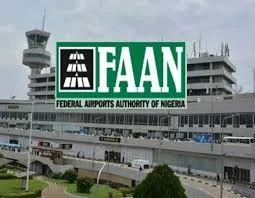
Lagos Airport reopens after fire incident, three flights diverted

The Federal Airports Authority of Nigeria, FAAN, says the airspace at Murtala Muhammed International Airport Terminal One has reopened following a fire outbreak.

Managing Director Mrs. Olubunmi Kuku told journalists on Monday that there were no fatalities, but six people sustained injuries during the incident.

She said three international flights were diverted, including those operated by Emirates, British Airways, and Lufthansa.

According to Kuku, “Some of our operations were affected; however, they will be back up and running in the next half an hour.”

She said the immediate priority was containing the fire, while investigations into the cause are ongoing.

“What is important is that we activated our emergency procedures and evacuated everyone with no fatalities due to coordinated efforts by all agencies,” she said.

Kuku said the airport’s Emergency Operations Centre had been activated, led by the airport manager as Chief Safety and Security Officer.

“He is taking charge. There is a standard procedure we follow when it comes to emergencies,” she added.

She noted that coordination among agencies followed established protocols, with support from relevant state authorities where necessary.

On renovation works, Kuku said projects were ongoing within the airport, but not in the area where the fire reportedly began.

“In the area we believe the fire started, nothing was happening at the time. People were only moving items out.

“The fire started from the ground floor, according to our investigations so far. We are awaiting confirmation and cannot say more at this time,” she said.

She confirmed the fire escalated to the roof, adding that police and helicopters supported rescue operations swiftly.

“We have professionals, including civil and structural engineers, to assess the building’s integrity and determine the next steps,” she said.

Kuku said most departures and arrivals had been moved, with departures largely relocated to Terminal Two.

She added that four airlines were scheduled to move into the temporary terminal, which she described as ready for use.

“In terms of the full operations affected, I would say not a lot,” she said, adding that the temporary terminal would be active within days.

Addressing lingering smoke, Kuku assured passengers that firefighters would remain on the ground as a precaution.