 The decision by the All Progressives Congress, APC, to go into the 2027 presidential election with a Muslim-Muslim ticket has re-opened the debate that dominated the 2023 election.
President Tinubu, had, last week, renominated Vice President Kashim Shettima as his running mate for the 2027 presidential election, a decision that is again generating mixed feelings among Nigerians.
While for the ruling party and their supporters it is a political master-stroke that would ensure stability and continuity, other Nigerians argue that in a multi-religious country like Nigeria, the same faith ticket is akin to discarding the feelings of the adherents of other faiths.
Before now, there had been uncertainty, different views, opinions, intensive debates and controversy over Shettima’s candidacy as vice president and the possibility of the ruling APC retaining the same faith ticket against the impression of many Nigerians, who opposed it prior to the 2023 election.
Groups like the Middle Belt Forum, MBF, Northern Christian Elders’ Forum, NOSCEF, and Arewa Consultative Forum, ACF, as well as individuals, have all expressed their views on the development.
Commenting on the development, the Senator representing Plateau Central, Diket Plang, applauded the decision, describing it as a demonstration of the recognition of loyalty, stability, courage and continuity in governance.
He said he was pleased that President Tinubu resisted pressures from different quarters to change his running mate, describing the decision as one that would strengthen national unity and policy continuity.
“I thank God that President Tinubu has remained steadfast and retained Shettima as his vice president.
“That is stability at the highest level of leadership. I am proud of that decision because Shettima has been loyal, active, accessible and committed to the success of this administration,” he said.
He advised Nigerians to be willing to make personal sacrifices in support of the Tinubu administration, insisting that his vision, courage, inclusiveness and commitment to infrastructure development deserved broad national backing.
Also, a retired military officer and professor of law, Major Bello M. Magaji threw his weight behind the Muslim-Muslim ticket, describing it as a strategic and commendable decision.
“In my view, beyond political symbolism, it reinforces continuity in governance, which is critical at this stage of Nigeria’s development.
“First, retaining the same ticket preserves institutional memory and policy consistency. The administration has already initiated key reforms in the economy, security and governance architecture; changing the leadership configuration midway could disrupt momentum and dilute the ongoing efforts.
“Continuity, in this sense, provides stability and allows policies sufficient time to mature and yield measurable outcomes.
“Also, the Tinubu–Shettima partnership has, over time, developed a working synergy that is essential for effective executive coordination. Governance at the highest level benefits greatly from trust, familiarity, and a shared strategic vision; qualities that are not easily rebuilt in a new political pairing.
“Third, from a political management perspective, the decision projects confidence and internal cohesion within the ruling structure. It signals that performance, loyalty and alignment with the administration’s agenda are being rewarded, which can strengthen discipline and focus within the government,” he said in an interview.
But for a chieftain of the National Rescue Movement (NRM), Rev. Emmanuel Olorunmagba, APC’s decision to run on the same faith ticket is a missed opportunity to promote national inclusion and unity.
He said the reported reaffirmation of the Muslim-Muslim presidential ticket reflected political convenience over national inclusion, arguing that while the Nigerian Constitution does not prohibit such an arrangement, political leadership should demonstrate sensitivity to the country’s religious and ethnic diversity.
He noted in a statement that Nigeria’s current socio-economic and security challenges require leadership that fosters national cohesion and one that reassures all segments of the population that they are adequately represented in the government.
He argued that the APC could have sent a stronger message of unity by adopting a more religiously and regionally inclusive ticket for the 2027 general election.
“Nigeria’s strength lies in its diversity. Our federation is built on mutual respect among people of different faiths, ethnicities, and regions. A leadership that consciously reflects this diversity strengthens national confidence and reinforces the principle that no group should feel excluded from the highest levels of governance,” he said.
He, however, urged Nigerians not to focus solely on political symbolism or personalities as the country approaches the 2027 elections but to evaluate candidates based on their competence, track records, policy proposals and capacity to address the country’s pressing challenges.
He said issues such as economic recovery, insecurity, unemployment, accountability and good governance should dominate the political discourse as the country prepares for another electoral cycle.
The NRM chieftain added that Nigeria deserves leadership that is capable of inspiring confidence across religious, regional and ethnic lines, while governing fairly and promoting national development. In the same vein, the Middle Belt Forum, MBF, has expressed disappointment over the development, describing it as a continuation of a strategy that has failed to reflect Nigeria’s religious and regional diversity.
In a statement by its national spokesperson, Luka Binniyat, the forum said the decision represented another missed opportunity to acknowledge the strategic importance of the Middle Belt in Nigeria’s political landscape.
It noted that the reaffirmation of the Tinubu-Shettima ticket means the continuation of the Muslim-Muslim presidential ticket that excludes even Muslims from the Middle Belt.
The forum, which said it was established in 1954 to protect the socio-political interests of more than 300 ethnic nationalities across 14 northern states and the Federal Capital Territory, argued that the region had continued to demonstrate goodwill and support for the Tinubu administration despite its predominantly Christian population.
“We believe this is another missed opportunity to recognise the strategic importance of the Middle Belt, a region that today gives Tinubu’s administration tremendous goodwill and support despite having a majority Christian population,” the statement said.
It contended that the President’s decision could be interpreted as a lack of appreciation for the region’s political significance, saying,
“By overlooking the Middle Belt once again, it would appear that the President does not place much value on the region and its 60 per cent voting population of Northern Nigeria, especially in our move to produce the 2031 President,” he stated.
The forum maintained that Nigeria’s highest political offices should reflect the country’s religious and cultural diversity.
“The MBF has always maintained that the Nigerian presidency should reflect the country’s religious and cultural diversity where Muslims and Christians do not have a clear majority.
“In a multi-religious nation like Nigeria, with Muslims, Christians and people of other faiths, the highest offices of government should promote inclusion, fairness and national unity,” Binniyat said.
Despite its criticism of the composition of the presidential ticket, the forum said it had not taken a definitive political position for the 2027 election.
“However, the Middle Belt Forum will not rush into taking a political position on the 2027 presidential election.
“Our position will be guided by the decisions of our Board of Trustees, BoT, and the National Working Committee (NWC), which will carefully consider which political party and candidate will best protect and promote the interests of the Middle Belt and the unity of Nigeria,” the group submitted.
The Northern Christian Elders Forum, NOSCEF, has also kicked against the APC’s decision.
Chairman of the christian group, Elder Sunday Oibe, argued that the proponents of Muslim-Muslim presidential ticket should tell Nigerians how far the current same faith ticket had gone to grow and develop Nigeria and her citizens since 2023.
He said: “I don’t have much of a comment for now rather than to wish them well. Nigerians should judge how well they had fared with the Muslim Muslim ticket of Tinubu/Shetima ticket.
“The question to the proponents of Muslim Muslim tickets should be ‘how market?’ Nigerians will speak at the appropriate time.”
The Arewa Consultative Forum (ACF), on its part, has not taken any official position on the development.
The ACF’s national publicity secretary, Prof. Tukur Muhammad-Baba, said the forum has only received reports of the development and has not met to deliberate on the matter.
He said the choice of a running mate remains the prerogative of President Tinubu and the APC, but added that the Forum would observe how the implications of the decision unfold before making any formal pronouncement.
“The ACF has only received the news about President Bola Tinubu’s reappointment of Vice President Kashim Shettima as his running mate and is yet to debate and take a concrete position on the matter.
“For now, the Forum only wants to note that the decision remains that of the President and the APC. The ACF will watch as the implications of the decision unfold,” Muhammad-Baba said.
On concerns surrounding the Muslim-Muslim presidential ticket, he said the more important issue should be whether any candidate combination delivers good governance and addresses the country’s challenges.
He noted that, ultimately, it is the electorate that will determine which ticket to support at the polls.
However, ACF’s former scribe, Mr. Anthony Sani is of the opinion that Tinubu cannot be faulted if he sees Muslim-Muslim ticket as his winning game plan for the ruling party.
He also said: “If the move, to some people, is not a winning game plan, they are at liberty to counteract it with their superior game plan.
“After all, we are in a multiparty democracy which allows political parties to devise their own strategies. Democracy in action, one might say,” he responded during an interview.
Some analysts argue that while the Muslim–Muslim ticket remains a subject of debate, it is equally important to assess leadership based on competence, delivery and national impact.
For APC supporters, Shettima’s reappointment as a vice presidential candidate is more about sustaining direction, consolidating gains and ensuring that the administration’s long-term objectives are not derailed.

 Kebbi State House of Assembly has suspended legislative activities for a one-month recess and is expected to resume plenary on August 11, 2026.

 The regulator of the midstream and downstream petroleum sector has told The PUNCH exclusively that the Dangote Petroleum Refinery has not violated any provision of the Petroleum Industry Act by opting to sell fuel in dollars instead of naira.
 The Nigerian equities market maintained its upward momentum on Wednesday as renewed demand for banking stocks offset profit-taking in select counters, keeping the Nigerian Exchange near historic highs despite a slowdown in trading activity.
 The Managing Director and Chief Executive Officer of First Bank of Nigeria Limited, Olusegun Alebiosu, has called for stronger government intervention in Nigeria’s housing sector, saying it is necessary to make homes affordable for millions of Nigerians.
 Lasaco Assurance Plc has recorded a major milestone in its ongoing recapitalisation programme, reinforcing its commitment to meeting the requirements of the Nigerian Insurance Industry Reform Act 2025.
 The faction of the African Democratic Congress, ADC, under the leadership of Bala Gombe, has called on the Independent National Electoral Commission, INEC, to promptly remove the National Working Committee, NWC, led by David Mark from its official portal.
 Lagos State Police Command has uncovered a vehicle fraud syndicate allegedly responsible for defrauding car dealers of more than N1 billion through a series of coordinated scams involving exotic vehicles.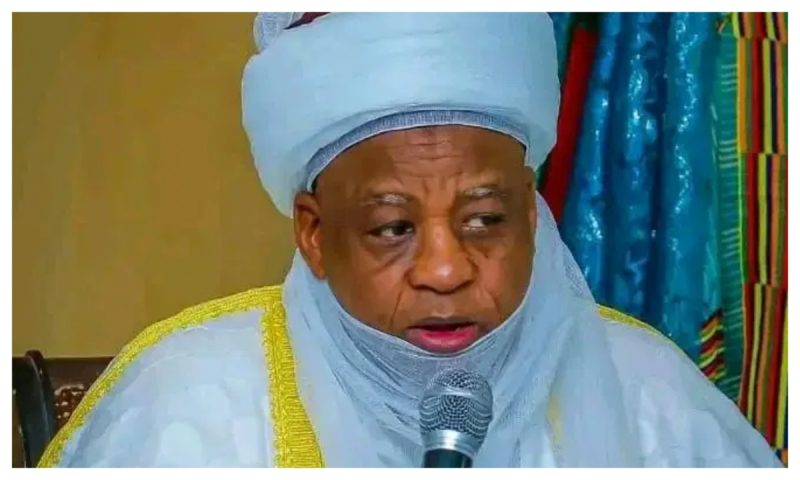
 The Sultan of Sokoto, Alhaji Muhammad Sa’ad Abubakar III, has declared Thursday, July 16, 2026, as the first day of Safar 1448AH after the non-sighting of the new crescent moon across Nigeria.
 The Nigerian Air Force (NAF), on Wednesday, announced successful candidates for enlistment into Air Force BMTC 46/2025.