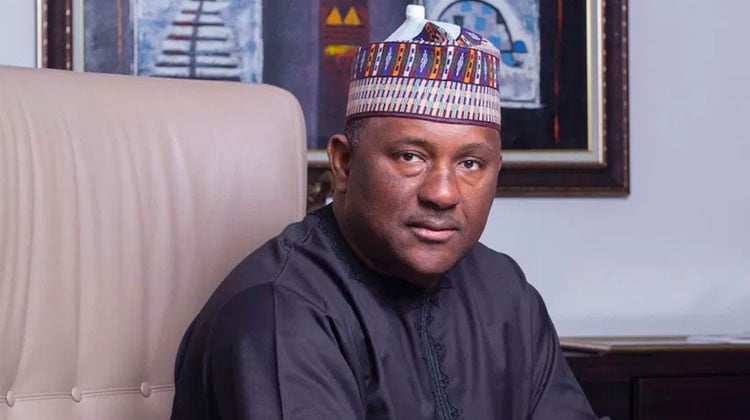
Nigeria To Utilise Gas To Power Africa’s Rise — NNPCL

As an emerging global energy powerhouse, Nigeria has the responsibility to utilise its abundant gas resources to power Africa’s rise and contribute meaningfully to global stability.

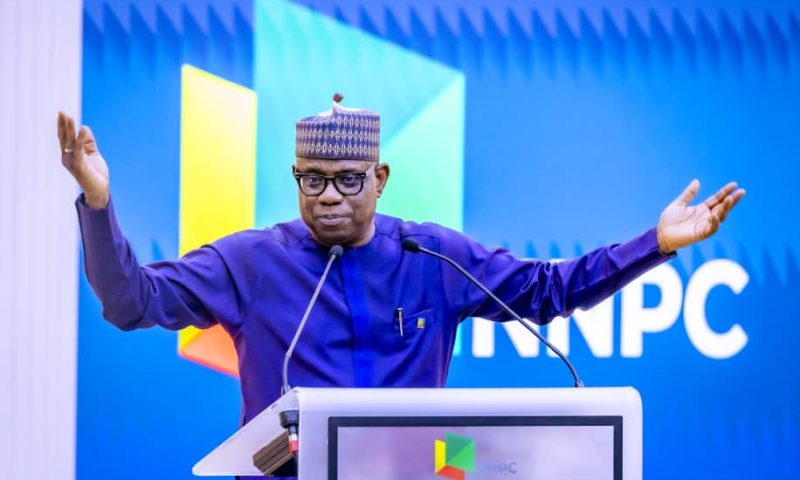
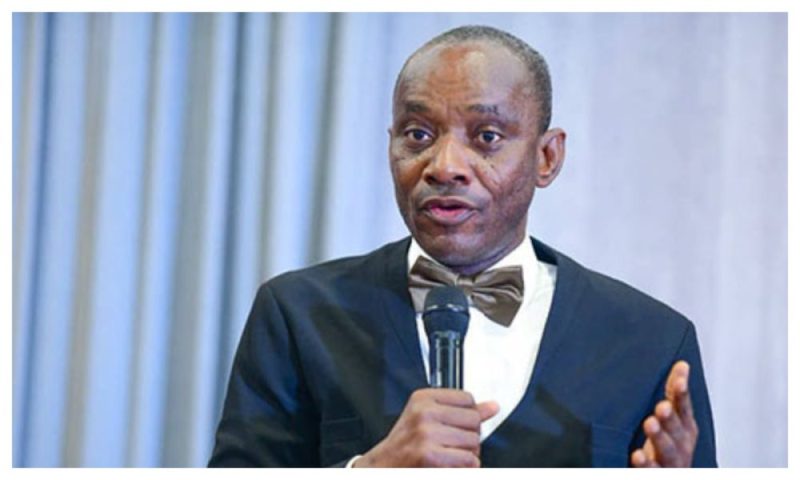
Group Chief Executive Officer of NNPC Ltd, Engr. Bashir Bayo Ojulari, disclosed this during an address at the opening ceremony of the Nigeria International Energy Summit (NIES) 2026 held at the Banquet Hall of the Presidential Villa, Abuja.

“Nigeria’s pathway to a prosperous future lies in our collective ability to leverage our resource abundance, especially as gas sits at the heart of our strategy. It is our bridge to a cleaner future, our engine for industrialization, and our foundation for export-led growth”, Ojulari stated.

Describing what he termed as Africa’s energy trilemma, Ojulari said though the African continent is endowed with vast energy resources, it still grapples with issues of accessibility, affordability, and sustainability, with over 600 million Africans living without access to electricity.

He said that with 37 billion barrels crude oil and 209 trillion cubic feet of gas reserves, Nigeria and the NNPC Ltd are ready to lead the charge in changing the narrative.

“With over 600 million Africans still lacking electricity, the continent’s priority cannot be a copy and paste. Ours must be a just, equitable, people-centered energy additions, one that lifts our people out of poverty, powers industries, supports agriculture, transforms transportation, and unleashes the creativity of Africa’s youth”, he stated.

He said NNPC Ltd was not just a commercial entity but also a peace and prosperity enabler.

On steps being taken to enhance access to gas as the primary fuel for driving industrialization and economic growth, the GCEO said NNPC Ltd has launched a new Gas Masterplan, while aggressively progressing strategic gas infrastructure projects such as the Obiafu-Obrikom-Oben (OB3), Ajaokuta-Kaduna-Kano (AKK) gas pipelines, and the Escravos-Lagos Pipeline System (ELPS) expansion.

“These projects are more than pipelines, they are highways for economic opportunity”, he explained.

Labour Party crisis: Abure faction rejects Otti’s reconciliation move

The internal crisis within the Labour Party, LP, intensified on Monday after the Julius Abure-led National Working Committee, NWC, firmly rejected reconciliation efforts initiated by Abia State Governor, Dr Alex Otti, describing the move as dishonest and ill-timed.

The Abure faction maintained that the leadership dispute remains unresolved, stressing that ongoing legal proceedings have not been exhausted.

It also accused Governor Otti of playing a central role in triggering the crisis currently engulfing the party.

The party’s National Publicity Secretary, Mr Obiora Ifoh, dismissed Otti’s reconciliation proposal, questioning both its sincerity and timing.

“We are not interested in any reconciliation move being proposed by Governor Alex Otti because he is largely responsible for the crisis facing the party today,” Ifoh said.

He added that the reconciliation call was premature, noting that the court ruling being celebrated by the opposing faction was only a judgment of a lower court.

“What we witnessed was a decision of a court of first instance. Why can’t he wait for the outcome of the appeal before talking about reconciliation?” He asked.

Ifoh accused Otti of acting in haste, insisting that the Abure-led leadership would eventually prevail.

“Why is he suddenly in a rush? As far as we are concerned, their celebration is a pyrrhic victory. It will fade away, and Nigerians will soon see the authentic leadership of the Labour Party. The battle is far from over,” he stated.

The strong rejection emphasises the deepening divisions within the party, despite recent court rulings and the Independent National Electoral Commission’s, INEC, decision to recognise the Nenadi Usman-led National Caretaker Committee.

The Abure camp’s response came hours after Governor Otti publicly lamented the exit of the party’s former presidential candidate, Mr Peter Obi, describing his departure as a significant blow to the Labour Party.

Otti made the remarks in Abuja during a meeting involving members of the party’s Board of Trustees, leaders of the National Caretaker Committee, and representatives of the Nigeria Labour Congress, NLC, and the Trade Union Congress, TUC.

The meeting followed INEC’s recognition of the Nenadi Usman-led caretaker committee, a move earlier criticised by the Abure faction as rushed and prejudicial.

Addressing stakeholders, Otti said the party’s new leadership was committed to healing internal divisions and restoring unity after its court victory.

“We have agreed that there is a need to establish a reconciliation committee. The interim National Working Committee will advise on the appropriate time to set it up. The goal is to reconcile all members who are willing to return,” he said.

He appealed directly to the Abure-led faction to reconsider its position.

“We call on Julius Abure and his team to sheathe their swords and return to the party. As long as they are willing to abide by the party’s rules, we will gladly welcome them back,” Otti added.

The Abia governor also disclosed that the Labour Party would not participate in the forthcoming Federal Capital Territory, FCT, council elections and ruled out any plan to join a broader opposition coalition ahead of the 2027 general elections.

“Labour Party is already a coalition, a coalition of Nigerian workers and progressive-minded citizens. We have no intention of joining any other coalition,” he said.

Otti also commended INEC for complying with the Federal High Court judgment by replacing the Abure-led executive committee with the Nenadi Usman-led National Caretaker Committee on its official portal.

2027: APC constitutes central coordination committee ahead national convention

The All Progressives Congress (APC) has constituted a central coordination committee for its 2026 National Convention, in a move aimed at ensuring a smooth and well-organised party congress.

The committee was announced in a statement signed by the APC National Secretary, Senator Surajudeen Ajibola Basiru.

Imo State Governor, Hope Uzodimma was appointed Chairman of the committee, while Kwara State Governor, AbdulRahman AbdulRazaq will serve as Vice Chairman. Governor Mai Mala Buni of Yobe State was named Secretary of the committee.

The committee is made up of 73 members drawn from across the country, including serving governors, senators and other key party stakeholders. The list include governors from Kano, Kaduna, Borno, Lagos, Ogun, Rivers, Plateau, Katsina, Sokoto, Gombe, Jigawa, Yobe, Benue, Cross River, Ebonyi, and Nasarawa states, among others.

Prominent members include Senate President Godswill Akpabio, Speaker of the House of Representatives Tajudeen Abbas, Deputy Senate President Barau Jibrin, and several others.

The party noted that details regarding the inauguration of the Central Coordination Committee, as well as other activities leading up to the 2026 National Convention, would be announced in due course.

Tinubu Rejoices Over Fela’s Grammy Lifetime Achievement Award

President Bola Tinubu has identified with Nigeria’s afro beat king, Fela Anikulapo Kuti as a fearless voice of the people.

Tinubu, praised the late legend as the world of music honoured him.

In his words, Tinubu described Fela as more than a musician but a fearless voice of the people, a philosopher of freedom, and a revolutionary force whose music confronted injustice and reshaped global sound.

His courage, creativity, and conviction defined a generation and continue to inspire the world and in Yoruba mythology, he has transcended to a higher plane as an Orisa and he is now eternal.

Fela Kuti has blazed the trail with the Recording Academy of America’s Lifetime Achievement Award, becoming the first African to receive this honour, though posthumously. The award is an affirmation of his enduring global influence and the foundational role he has played in the evolution and impact of Africa on modern music.

“He defined Afrobeat, and you can hear and see his influence in generations of Nigerian musicians and in Afrobeats and beyond.” Tinubu wrote.

NAPTIP Raids Hotel In Anambra State, Arrests 4 Suspects

As part of the renewed onslaught on the activities of some human traffickers across the Country, the National Agency for the Prohibition of Trafficking in Persons (NAPTIP) has raided a popular, highly rated Hotel (Name withheld) located around the famous 33 areas of Onitsha, Anambra State, arrested four suspected traffickers, and rescued 17 alleged victims of human trafficking.

Also, during the coordinated operations, which was carried out with the support of the Military, two suspects allegedly involved in the selling and buying of babies within the States of the South East Region, were apprehended.

Sadly, 4 of the victims were said to be infected with HIV and are currently being counselled by a Team of Caregivers from NAPTIP and volunteers from the Anambra State Aids Control Agency (ANSACA).

It would be recalled that the Director General of NAPTIP, Binta Adamu Bello, OON, had few weeks ago read the riot act to human traffickers in the Country and promised to make the year 2026 unpleasant for them if they failed to desist from their nefarious activities.

The latest operation followed a credible intelligence by a non – State Actor based in Anambra State which indicated the presence of some underage girls within the said facility and the health status of the victims, having carried out a voluntary screening on them after proper counselling.

Investigation revealed that residents of the area have, before now expressed worried over the unwholesome activities of the operators of the Hotel which has about 45 rooms most especially the influx of men who daily throng there to cool off with the underage girls.

During the operation, while some of the victims were caught in the act with the randy lovers, other victims were seen in skimpy wears and bump shots apparently waiting for their usual customers.

During interrogation, the Victims disclosed that they were recruited from Benue, Imo, Ebonyi and Akwa Ibom States and trafficked to Onitsha for alledged prostitution.

They added that each of them remits the sum of N20, 000 to N25, 000 to their “Madam” daily by sleeping with about 5 men with multiple sex rounds.

“It was my boyfriend who said he saw a job for me here in Onitsha. When I arrived here, the Madam sent someone to pick me at the park and she introduced me to this hustling job. She said I will work for her and pay N20, 000 daily and that at the end of the year, she will buy me a box filled with assorted clothes and the sum of N500, 000 so that I can be free to go and start my own work. It is not with a good mind that I am doing this job, but it was too late for me to refuse”, one of the Victims narrated.

Another Victim whose status is compromised stated that “When the people care here to test us. They told me that I have been infested, and they advised me and my friends that we need to start treatment to flush out the infection. They gave us medicine. But, after they left, our Madam beat us seriously because we came out of the rooms to see the people who tested us. She collected the medicine they gave to us and warned us that we should never go out for any treatment again. I cried and cried for hours, and the more I cried, the more she beat me”, another victim ,narrated her ordeal with a bitter lamentation.

Speaking on the development, the Director General of NAPTIP, Binta Adamu Bello, expressed sadness over the plights of the victims and most especially their deteriorating health status.

“I want to sincerely thank the Military in Onitsha for their support to NAPTIP during this operation, and also the Gender and Human Rights State Response Team (GHR-SRT) domiciled under the Anambra State Aids Control Agency (ANSACA) in the Office of the Governor who provided timely intervention and collaboration that led to the rescue of the underage girls.

“I am most devastated by the health status of the rescued victims and the action of their so-called Madam who not only collected the Antiretroviral medicines that were given to them by the good spirited Organization that visited the hotel, but also prevented them from assessing any further medical opportunity. This is a criminal act and NAPTIP has launched a manhunt for her.

“The Agency has also invited the Owner of the Hotel for interrogation with a view to determining the next sanction on the facility.

“As said few weeks ago, NAPTIP shall continue to double its efforts and scale up activities to ensure a good chase for the human trafficking criminal elements in the Country”, the NAPTIP Director General stated.

Sanwo-Olu Urges Investors To Partner With Lagos State

The Governor of Lagos State, Mr. Babajide Sanwo-Olu, has urged local and international investors to invest in Lagos, saying the State is willing and ready to partner with investors.

He assured them of his administration’s commitment to providing infrastructure and a secure and safe environment for businesses in the State.

The Governor spoke at the Nigeria-UAE Investment Forum tagged “Investopia Global Africa” hosted by the Federal Ministry of Industry, Trade and Investment at Eko Hotels and Suites, Victoria Island, Lagos, on Monday.

Governor Sanwo-Olu said Lagos State in the last six and a half years of his administration has provided infrastructure across the State in different sectors and is willing to partner with investors to do more for the people.

He said: “Lagos is positioning itself, leading the Nigerian conversation, and we are getting tremendous support from the Federal Government because, at the end of the day, all of those investments sit at the sub-national.

“I want to assure all of our local and international investors that Lagos is indeed a willing and ready partner. Whatever the red tapes there are, we are removing them. We also want to step back and let the businesses run for themselves. The security environment is safe, sound, and secure.

“Lagos State made an investment in the Lekki Port, which is the biggest deep port in the country. We are also making an actual investment in the Badagry Port. It is all about partnerships and creating an enabling environment.

“Lagos State is planning, with the support of the Federal Government, to build another international airport. That is also forward-looking. Lagos State is also planning to build the largest logistics hub that will ensure that all of the markets that are in the agribusiness can sit in Lagos and work well.”

Governor Sanwo-Olu also spoke about his administration’s commitment to boosting the State and national economy through the Lagos International Financial Center (LIFC), which is a joint initiative of the Lagos State Government and EnterpriseNGR.

He said: “We have had extensive conversation around the path of the Lagos International Financial Centre (LIFC). We started this journey in 2023. We still have another eight months to a year to finally unveil it. The beauty of it is the amount of global support that we are receiving.

“We are trying to learn from various regions to bring about a model that will be a true African model that will work for everyone but will also be a Nigerian model. We are actually thinking globally. We are thinking about how to remain competitive, resilient, and able to play on the same level of platforms with other big cities and other big markets in the world.

“The Lagos International Financial Centre we are talking about is not just about Lagos; it is really a conversation about Nigeria, but it has to be in a city and a place where it can also be attractive and be ready to unlock the investment.”

EFCC Arrests 10 Suspects, Trucks For Suspected Illegal Mining Activities In Kwara

Operatives of the Ilorin Zonal Directorate of the Economic and Financial Crimes Commission, EFCC, have arrested ten individuals suspected of involvement in illegal mining activities along the Ilorin – Ogbomosho axis.

They were arrested on Sunday, February 1, 2026, following credible intelligence on unlawful mineral excavation and transportation in parts of Kwara and Oyo States.

The suspects, comprising nine truck drivers and one escort were intercepted and taken into custody in a well -coordinated sting operation. Solid minerals arrested with the suspects include lithium, tin, and lepidolite. The suspects have no requisite licences, permits, or regulatory approvals for their mining activities.

Other items recovered from the suspects are trucks loaded with the unlawfully mined materials.

The suspects will be charged to court upon the conclusion of investigations.

Refiners battle crude shortage as Nigeria exports 306m barrels

crude oilAs local oil refiners in Nigeria complain of persistent crude shortages, the country exported an estimated 306 million barrels of crude oil between January and October 2025, according to figures from the Central Bank of Nigeria.

The data reveal that while Nigeria produces substantial volumes of crude, the bulk of it is earmarked for export, leaving domestic refineries struggling to obtain adequate feedstock.

On several occasions, the Dangote Petroleum Refinery has complained of low crude supply despite the naira-for-crude deal, prompting it to source feedstock from the United States and even from neighbouring countries like Ghana and others.

Similarly, the Crude Oil Refiners Association of Nigeria lamented that some of its members’ modular refineries shut down intermittently due to a lack of crude oil.

Between January and October, the CBN data shows that Nigeria’s crude production amounted to roughly 443.5 million barrels, averaging about 1.45 million barrels per day over the period. The calculation of total production is derived directly from the CBN’s monthly figures, which are presented in million barrels per day.

To determine actual monthly production, the daily output was multiplied by the number of days in each month. For example, January’s production averaged 1.54 mbpd, and with 31 days in the month, the total production reached 47.74 million barrels.

February, with 28 days, saw daily production of 1.47 mbpd, translating into 41.16 million barrels for the month.

This method was applied consistently through October, taking into account the varying number of days per month.

Exports, on the other hand, remained closely aligned with production trends but consistently represented a significant proportion of total output.

January’s daily export averaged 1.09 mbpd, which over 31 days equals 33.79 million barrels shipped out. February exports of 1.02 mbpd over 28 days amounted to 28.56 million barrels, and the pattern continued through October.

Cumulatively, total exports over the 10 months reached approximately 306.7 million barrels, accounting for nearly 69 per cent of total production. This left roughly 137 million barrels available for the domestic market.

The monthly breakdown reveals both the production and export dynamics. Crude production started strong in January at 1.54 mbpd but declined to 1.40 mbpd in March before recovering modestly to 1.51 mbpd in June and July. The last three months of the period, August to October, saw production ease again, with September dipping to 1.39 mbpd and October stabilising at 1.40 mbpd.

Export volumes followed the same trend. Higher production months like June and July saw exports rise to 1.06 mbpd, while lower production months, such as March and September, recorded exports below 0.95 mbpd.

This imbalance between local consumption and exports exposes the tension among local refineries despite the domestic crude supply obligation. The Domestic Crude Supply Obligation is a Nigerian regulatory policy under the Petroleum Industry Act section 109, requiring upstream oil producers to allocate a portion of their crude production for local refining.

Enforced by the Nigerian Upstream Petroleum Regulatory Commission, the DCSO mandates that producers prioritise domestic demand over exports to strengthen national energy security, reduce reliance on imported products, and boost local refining capacity.

However, refiners said the DCSO implementation has been hampered by the ‘willing buyer, willing seller’ policy. While the country produces a significant quantity of crude, a majority of the output is directed to overseas markets. Domestic refiners, therefore, have to contend with limited allocations, forcing some plants to operate below capacity or delay operations.

It was observed that the shortfall does not stem from insufficient national production but from the seeming prioritisation of export revenue, which is seen as more lucrative due to dollar-denominated payments.

Speaking in an interview with The PUNCH, the National Publicity Secretary of the Crude Oil Refiners Association of Nigeria, Eche Idoko, decried the inability of local refineries to secure crude for production. Idoko said a modular refinery like Opac couldn’t get crude, and it stopped production for months.

According to Idoko, local refineries have the capacity to produce more than their current output, blaming the lack of enough feedstock for the current output. “We have the capacity to produce far more than what we are producing now. The challenge has always been inadequate feedstock,” he stated.

Idoko stated that some modular refineries like OPAC produce about 10 per cent of their capacities, while some shut down due to a lack of crude oil.

“A good example, the OPAC refinery has a 10,000-barrel capacity. It produces just about 1,000, and it’s not consistent. Sometimes, the refinery is shut down for months because of the unavailability of crude. The Dangote refinery was recently producing at 60 per cent of its total capacity due to the unavailability of feedstock.

Regulatory gaps scaring African energy investors – NUPRC boss

The Commission Chief Executive of the Nigerian Upstream Petroleum Regulatory Commission, Oritsemeyiwa EyesanThe Commission Chief Executive of the Nigerian Upstream Petroleum Regulatory Commission, Oritsemeyiwa Eyesan, has warned that inconsistent regulatory frameworks across African countries remain one of the biggest obstacles to cross-border energy investments, calling for the strengthening of the African Petroleum Regulators’ Forum as a continent-wide platform for regulatory alignment.

Eyesan made the call in a keynote address at the Nigerian International Energy Summit held at the International Conference Centre, Abuja, on Monday.

She was represented at the event by the Director, NUPRC, Mr Edu Inyang.

Her remarks were contained in a statement issued on Monday by the Head, Media and Strategic Communication of the commission, Mr Eniola Akinkuotu.

Speaking on the theme “One Africa, One Regulator Voice: Aligned Policies for Continental Prosperity and Investment,” the NUPRC boss said Africa’s energy challenge is no longer about resource availability, but about regulatory fragmentation that raises costs, delays projects and scares away investors.

“Investors are not deterred by Africa’s geology; they are deterred by inconsistent rules,” Eyesan said.

According to her, AFRIPERF was created to address this gap by driving regulatory convergence, improving predictability and accelerating the execution of cross-border oil and gas projects that can deliver shared prosperity across the continent.

“AFRIPERF was established to institutionalise regulatory convergence, provide predictability and enable faster execution of cross-border projects that deliver shared prosperity,” she added.

Eyesan explained that the forum, launched in collaboration with petroleum regulators across Africa, is already making progress in aligning technical standards, developing shared data platforms, building regulatory capacity and projecting a unified African voice at global energy and climate engagements.

She noted that Africa’s prospects for industrialisation and inclusive growth remain immense if its resources are developed through coordinated policies and aligned regulatory frameworks.

“Africa holds about eight per cent of global oil and gas reserves, nearly 30 per cent of known critical mineral resources, and has a population exceeding 1.5 billion people, most of whom are youthful and economically active.

“When these advantages are harnessed through integrated infrastructure, coordinated policies and aligned regulations, they can drive industrialisation, strengthen regional value chains, enhance energy security and deliver inclusive growth” she said.

Despite the global energy transition, Eyesan reaffirmed that oil and gas will remain central to Africa’s development for decades, supporting electricity generation, clean cooking, fertiliser and petrochemical production, as well as public revenues required to fund infrastructure, healthcare and education.

She highlighted Africa’s growing success in speaking with one voice at international platforms, noting that coordinated advocacy at successive Conferences of the Parties helped secure recognition of gas as a transition fuel and culminated in the establishment of the Loss and Damage Fund at COP27 in Sharm el-Sheikh.

“These successes show what Africa can achieve when it speaks with one voice,” she said, adding that similar unity is required within the continent’s regulatory and investment frameworks.

Eyesan cited existing examples of policy alignment yielding results, including the African Continental Free Trade Area, regional power pools and cross-border gas infrastructure such as the West African Gas Pipeline.

However, she lamented that more than 180 trillion cubic feet of discovered natural gas across Africa remains undeveloped, largely due to fragmented markets and unaligned fiscal and regulatory regimes.

“This is a huge missed opportunity for energy access, industrial growth and economic transformation,” she said.

The NUPRC chief noted that Nigeria has taken deliberate steps to lead by example through the enactment of the Petroleum Industry Act 2021, transparent licensing rounds and the development of major gas infrastructure projects such as the Ajaokuta–Kaduna–Kano pipeline, the Nigeria–Morocco Gas Pipeline and the revived Trans-Saharan Gas Pipeline.

She also pointed to the establishment of the Africa Energy Bank, headquartered in Nigeria, as a major step towards mobilising African capital for African energy projects, especially at a time when global financing for fossil fuel investments is shrinking.

In her closing remarks, Eyesan urged African regulators and policymakers to deepen cooperation by strengthening AFRIPERF, expanding regional gas and electricity networks, adopting shared sustainability standards and maintaining a unified stance in global energy and climate discussions.

“Our voice must be one, our frameworks aligned, and our actions coordinated. Only then can we unlock the full transformative power of Africa’s resources for our people”, she said.

AFRIPERF, launched by African petroleum regulators, was conceived as a response to these challenges. The forum aims to harmonise regulatory standards, align fiscal and operational frameworks, share data and build capacity among regulators to support cross-border projects and improve Africa’s competitiveness as an investment destination.

CBN Outlines Priority Needs To Support Digital Financial Growth

The Central Bank of Nigeria (CBN) has released a comprehensive assessment of Nigeria’s fintech landscape, outlining the priorities needed to sustain innovation, strengthen system integrity, and support the next phase of digital financial growth.

The report examines the scale and maturity of Nigeria’s fintech ecosystem, highlighting the country’s leadership in real-time payments and the structural factors shaping recent growth. It positions fintech innovation as a complementary force within the financial system, expanding access, efficiency, and reach, while preserving stability and resilience.

Informed by surveys and extensive stakeholder engagement, the report outlines practical policy directions to improve regulatory coordination, strengthen supervisory capability, and support responsible innovation, including cross-border scale. It underscores interoperability, proportional regulation, and effective execution as critical enablers of sustainable ecosystem development.

This publication forms part of an ongoing series through which the CBN will continue to engage the financial sector, provide clearer regulatory direction, and support more coordinated execution. It is intended to serve as a shared reference point for banks, fintech firms, regulators, infrastructure providers, investors, and partners as Nigeria consolidates its position within the regional and global fintech landscape.