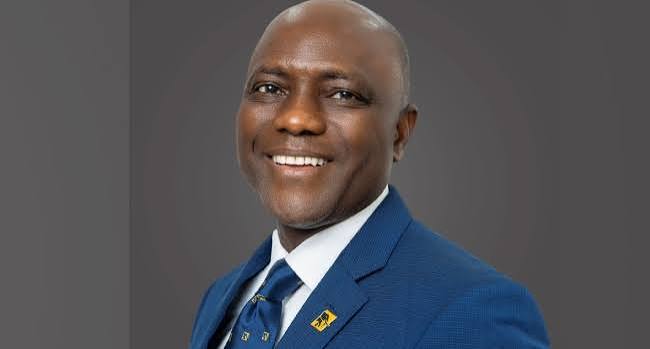
Sanwo-Olu appoints Muyiwa Adetola as Lagos Accountant-General

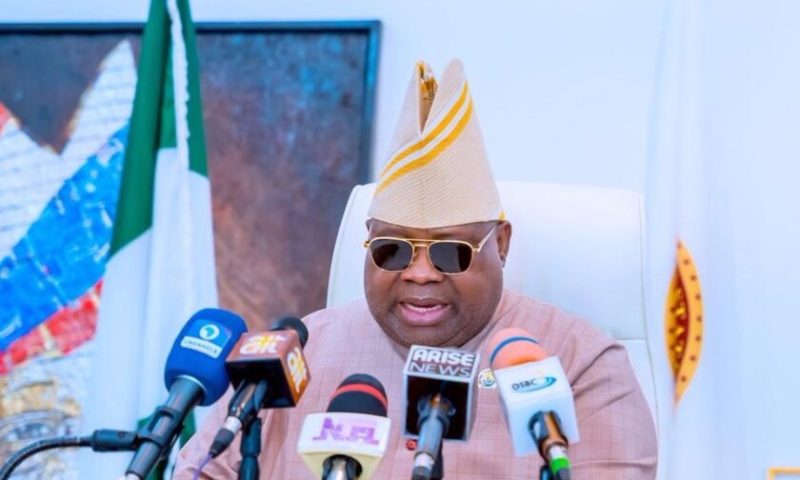
Governor Babajide Sanwo-Olu of Lagos State has approved the appointment of Muyiwa John Adetola as the state’s new Accountant-General and Permanent Secretary of the State Treasury Office.

The announcement was made in an official circular issued by the Office of the Head of Service and shared on the Lagos State Government’s Facebook page on Tuesday.

Adetola assumes the position following the statutory retirement of his predecessor, Abiodun Muritala.

Prior to this appointment, he served as the State Auditor-General, a role from which he was redeployed to lead the State Treasury Office.

The appointment took immediate effect from Monday, March 2, 2026.

In the statement, the Head of Service, Mr Bode Agoro, wished Adetola success in his new role and urged all stakeholders to facilitate a smooth transition by cooperating with the circular’s directives.

“The strategic redeployment demonstrates the State Government’s commitment to ensuring efficiency, accountability, and continuity in public financial management,” the statement added.

NAFDAC warns against underage drinking of sachet, small-bottle alcohol

The National Agency for Food and Drug Administration and Control, NAFDAC, has highlighted the risks of underage drinking and minors consuming alcoholic beverages sold in small sachets and small PET bottle packaging.

NAFDAC explained that underage drinking can lead to violence and injuries, noting that alcohol is a significant contributor to youth suicides, murders, and car crashes or accidents.

The agency said alcohol also plays a major role in kidnappings, banditry, terrorism, and other harmful activities occurring daily in the country.

It listed the associated dangers, insisting that there is no justification to reverse the ban on the production, sale, and use of sachet alcohol and small PET bottle packs.

During a press briefing in Abuja on Tuesday, the Director-General of NAFDAC, Prof. Mojisola Christianah Adeyeye, stated that alcohol is one of the most commonly used substances by young people and is becoming an increasingly serious public health issue in Nigeria.

She said that easy availability and accessibility of alcohol have contributed to more teenagers drinking.

Prof. Adeyeye cited findings showing that 54.3% of minors and underage individuals obtain alcohol on their own from various sources, while 49.9% purchase it from stores selling drinks in sachets and PET bottles.

She noted that smaller percentages of underage individuals obtain alcohol from liquor stores (15.4%), restaurants (12.6%), and supermarkets (7.9%). The results also show that young people under the legal drinking age acquire alcohol from friends and family (49.9%) and at parties or social events (45.9%).

Among those who purchase alcohol for themselves, 47.2% of minors and 48.8% of underage individuals buy drinks in sachets, 41.2% of minors and 47.2% of underage individuals buy drinks in plastic bottles, and 27.6% of underage individuals buy alcohol in glass bottles.

She added that the purchase of drinks in sachets and PET bottles was most commonly reported in Rivers (68.0% and 64.5%), Lagos (52.3% and 47.7%), and Kaduna (38.6% and 28.4%) states, compared to other states.

“The percentage of drinks bought in sachets is higher among males (51.4%) than females (41.5%), and more common in rural areas (50.1%) than in urban areas (45.3%),” she added.

Prof. Adeyeye also said that most young people and underage individuals (54.3%) buy alcohol on their own, 49.9% get it from friends or family, 45.9% get it at social events, and 21.7% obtain it from their parents’ homes.

She emphasized: “Of the minors and underage individuals who get alcohol for themselves, 47.2% of minors and 48.8% of underage people get it in sachets, 41.2% of minors and 47.2% of underage people get it in PET bottles, and 27.6% of underage people get it in glass bottles.”

She explained that “drinking alcohol before the age of 21 can harm health and may damage parts of the brain, such as the hippocampus, responsible for memory, and the prefrontal cortex, which helps with thinking and impulse control.

“This can lead to long-term problems with learning, memory, and decision-making. Early drinking can also damage the liver and kidneys, cause high blood pressure, disrupt hormone levels and growth, and increase the risk of cancer later in life. It also raises the likelihood of depression, anxiety, and low self-esteem. Youth who start drinking before age 15 are 41% more likely to develop alcohol dependence.

“Alcohol contributes significantly to youth suicides, violent deaths, and road accidents. It is also closely associated with unprotected sex, leading to unintended pregnancies and sexually transmitted infections. Drinking frequently affects academic performance, causing lower grades, absenteeism, and impaired cognitive function.”

NAFDAC stated that the Senate has directed it not to grant any further extensions to the current moratorium and to strictly enforce the ban on sachet alcohol and alcohol in small (<200 ml) PET bottles. The agency also urged the Federal Ministry of Health and Social Welfare to support enforcement of the ban.

“They also urge the Federal Ministry of Health and Social Welfare to release the National Alcohol Policy, which includes a ban on alcohol in sachets and small-volume (<200 ml) packaging,” the DG added.

“The Senate further urged the National Orientation Agency and NAFDAC to work together to increase nationwide awareness about the dangers of drinking alcohol from sachets and small bottles. Banning small pack sizes, like sachets and bottles under 200 ml, could help reduce underage drinking.”

Nigeria ports record 24.8% cargo growth – Report

Abubakar DantsohoNigeria’s maritime sector recorded a historic surge in activity in 2025, driven by increased cargo throughput, rising container traffic, and a growing export footprint, according to the 2025 Operational Performance Report released by the Nigerian Ports Authority.

The report stated that total cargo throughput rose by 24.8 per cent, increasing from approximately 103.6 million metric tonnes in 2024 to over 129.3 million metric tonnes in 2025.

The Managing Director of the Nigerian Ports Authority, Dr Abubakar Dantsoho, described the growth as one of the most significant annual increases in Nigeria’s maritime history, noting that the milestone strengthens the country’s position as a more competitive and strategic player in regional and global trade.

While imports continued to dominate overall cargo traffic, the report highlighted a steady rise in outward trade, with exports accounting for 39.0 per cent of total cargo throughput. Inward traffic represented 59.2 per cent, while transhipment contributed 1.8 per cent. Analysts said the growth in export volumes validates the Federal Government’s economic diversification initiatives aimed at reducing dependence on crude oil and promoting non-oil sector exports.

Containerised cargo, a key indicator of export trade activity, also grew significantly. Total container traffic increased by 25.7 per cent, surpassing 2.1 million Twenty-foot Equivalent Units. Of this figure, export containers grew by 3.1 per cent, while import-laden containers surged by 32.8 per cent. The report further noted a 205.8 per cent increase in transshipment containers, signalling Nigeria’s emergence as a pivotal regional logistics and trade hub.

Lekki Port emerged as the leading port in Nigeria, handling 40.6 per cent of the nation’s total cargo throughput. Onne Port followed with 19.1 per cent, while Apapa Port accounted for 16.7 per cent.

Beyond cargo volume, Lekki Port also attracted the largest vessels, with an average Gross Registered Tonnage of 55,712, slightly higher than Onne Port at 53,022 GRT. Apapa and Tin Can Island Port received ships averaging 33,251 GRT and 36,909 GRT, respectively, while Delta Ports handled vessels averaging 17,414 GRT.

The report underscored a structural shift in vessel traffic. Although Tin Can Island Port recorded the highest frequency of ship arrivals, accounting for 22.7 per cent of total ship calls, Lekki and Onne ports are increasingly receiving the industry’s “heavyweight” vessels, enhancing Nigeria’s capacity to handle larger and more valuable cargoes.

Overall, total ship calls rose by nearly 12 per cent to 4,477 vessels, reflecting broad-based growth across operational metrics. Liquid bulk cargo, including fuel and chemicals, remained the dominant commodity at 54.7 per cent, while containerised cargo accounted for 24 per cent. Analysts noted that the increasing size and sophistication of vessel traffic, coupled with container growth, indicate that the maritime sector is gradually aligning with global shipping standards.

The report also highlighted the rising importance of transshipment cargo, particularly containerised goods destined for other West and Central African ports. The 205.8 per cent surge in transshipment containers positions Nigeria as a strategic regional hub, attracting international shipping lines and boosting revenue for the Nigerian Ports Authority.

The 2025 NPA Operational Performance Report signals a transformative phase in Nigeria’s maritime industry. Export-led growth, rising container traffic, and the strategic role of Lekki Port illustrate that the country is not only handling more cargo but also diversifying the types of goods moving through its ports.

“This is a pivotal moment for Nigeria’s trade ecosystem,” maritime analysts said. “The growth in exports and transshipment reflects the success of policy reforms aimed at reducing reliance on oil revenues, while enhancing the competitiveness of Nigerian ports in regional trade.”

With the nation’s ports showing resilience and dynamism, the report reinforced the Federal Government’s efforts to expand non-oil exports, attract investment into port infrastructure, and integrate Nigeria more fully into global supply chains.

Looking ahead, Dantsoho expressed confidence that the next phase of growth will be driven by the Federal Government-approved port modernisation programme and the implementation of the National Single Window system.

The comprehensive port modernisation project is designed to overhaul ageing infrastructure, deepen berths, rehabilitate quays, expand cargo-handling capacity, and deploy advanced digital solutions across Nigeria’s port network. The initiative is expected to improve vessel turnaround time, reduce cargo dwell time, enhance safety standards, and significantly boost operational efficiency across all terminals.

Fuel price spike triggers fresh naira-for-crude supply calls

Petrol prices rose to N937 per litre on Tuesday amid escalating tensions in the Middle East, prompting oil marketers and refinery operators to urge the Federal Government to provide more crude oil to the Dangote Petroleum Refinery in naira to help stabilise domestic fuel prices.

The PUNCH reported on Monday that the Dangote refinery increased its gantry price from N774 to N874. The adjustment followed a jump in oil prices to $84 per barrel, up from below $70 days before the airstrikes involving the United States, Iran, Israel, and other countries.

“The new gantry price is now N874 per litre from N774. The review became necessary due to changes in global crude fundamentals and replacement costs,” an official of the Dangote refinery said.

Following the increment, filling stations on Tuesday raised their pump prices to N937 or N935, depending on the location. A survey by our correspondents confirmed that an MRS filling station in Obalende, Lagos, sold petrol at N937 on Tuesday.

The MRS and Petrocam stations in Mowe, Ogun State, dispensed petrol at N935, while Heyden offered N930. Similarly, SAO, SGR, and AP sold the product at N925. Matrix also dispensed the fuel at N937.

Before the Middle East crisis, some filling stations had already been selling premium motor spirit at prices ranging between N812 and N839, depending on the location. However, the crisis over the weekend disrupted the global fuel market, affecting Nigeria and other countries.

Reacting in a statement on Tuesday, the Petroleum Products Retail Outlet Owners Association of Nigeria emphasised the urgent need to consolidate and strengthen Nigeria’s domestic refineries, particularly the Dangote refinery, through the provision of adequate and consistent crude oil supply in naira.

According to PETROAN’s spokesperson, Joseph Obele, this “proactive approach” is essential to minimising the impact of external geopolitical shocks on the nation’s petroleum market.

The National President of PETROAN, Billy Gillis-Harry, expressed deep concern over the ongoing military escalation involving the United States, Iran, Israel, and allied nations, and its far-reaching implications for the global energy industry, particularly Nigeria’s petroleum sector.

According to him, recent geopolitical tensions have significantly disrupted global energy markets and supply chains.

PETROAN noted that hostilities in the Middle East, especially around the strategic Strait of Hormuz, through which approximately 20 per cent of the world’s crude oil supply passes daily, have triggered sharp volatility in international oil prices and heightened uncertainty regarding supply continuity.

It added that as the conflict intensified, global crude oil benchmarks had surged, with analysts projecting that prices could exceed $100 per barrel if disruptions persist, noting that the upward trend reflected growing concerns over potential supply shortages should shipping activities through the Strait of Hormuz remain restricted.

PETROAN stated that any sustained increase in crude oil prices would inevitably be reflected at petroleum retail outlets across Nigeria. “If the crisis continues, the impact will extend beyond pump prices to affect foreign exchange stability, domestic fuel pricing structures, and overall inflation levels within the country,” Gillis-Harry warned.

The association urged the Federal Government to encourage and prioritise local refineries by ensuring a steady crude oil supply in naira, particularly to the Dangote refinery, and by creating enabling policies that support optimal operations.

PETROAN also called on the government to sustain and strengthen the Naira-for-Crude policy to reduce pressure on foreign exchange and stabilise domestic fuel pricing.

“In view of these developments, PETROAN calls for urgent and strategic actions to safeguard Nigeria’s energy security: encourage and prioritise local refineries by ensuring a steady crude oil supply in naira, particularly to the Dangote refinery, and create enabling policies that support optimal operations. Sustain and strengthen the Naira-for-Crude policy to reduce pressure on foreign exchange and stabilise domestic fuel pricing.

“Urgently revamp the four government-owned refineries to restore them to full operational capacity and reduce dependence on imported petroleum products. Monitor global market developments and respond proactively to emerging risks. Advocate policies that strengthen domestic refining capacity and reduce reliance on imports. Support measures aimed at shielding consumers from excessive fuel price shocks,” the statement stated.

SAHCO procures equipment to boost aircraft handling

Skyway Aviation Handling Company Plc has strengthened its operational capacity with the acquisition of new ultra-modern Ground Support Equipment aimed at improving aircraft handling efficiency across Nigerian airports.

The company’s Public Relations Officer, Mrs Adetola Uansohia, said the investment underscores its commitment to safety, faster turnaround times, and world-class service delivery to airline partners operating within and outside the country.

As part of the upgrade, SAHCO said it took delivery of a high-tech Goldhofer F300 pushback tractor, manufactured by Goldhofer, a globally recognised German ground support equipment producer.

The Goldhofer F300, powered by a heavy-duty diesel engine, is designed to handle most wide-body aircraft and is built with rugged materials suited to Nigeria’s operating terrain and already deployed to one of SAHCO’s hub stations to bolster ramp operations.

In addition, the ground-handling firm also announced the procurement of five Ground Power Units manufactured in France by Guinault, a respected global aviation equipment manufacturer. Each unit delivers 45kVA at 115 volts and 28V DC output, providing stable electrical power to aircraft systems while on the ground.

The official explained, “The GPUs are powered by fuel-efficient gasoline engines and engineered for durability, portability, and optimal ramp performance.

“This investment reflects our unwavering commitment to operational excellence. The new equipment will significantly enhance safety standards, reduce aircraft turnaround time, and improve service reliability for our airline partners”.

She further explained that the advanced GPUs are capable of supporting most Class A aircraft and selected Class B aircraft, making them suitable for high-traffic airport environments. “Their compact design reduces fuel consumption while the rugged build guarantees long-term reliability and flexibility, especially in demanding operational conditions,” the official added.

SAHCO noted that the acquisition forms part of its broader strategy of continuous investment in cutting-edge technology to maintain leadership in Nigeria’s aviation ground handling sector. “We are intentional about staying ahead through equipment upgrades, technological advancement, and service innovation. Our goal is to consistently deliver world-class support to every airline we serve,” the company stated.

As the only aviation ground-handling company with an operational presence across all commercially operated airports in Nigeria, SAHCO said it remains focused on raising industry benchmarks through innovation and customer-focused solutions.

SanlamAllianz Nigeria Pays Over ₦77 Billion Claims In 2025 Reinforces Financial Strength, Customer Trust

SanlamAllianz Nigeria, comprising SanlamAllianz Life Insurance and its subsidiary, SanlamAllianz General Insurance, has announced total claims payments of ₦77 billion across its Life and General Insurance businesses for the 2025 financial year, reaffirming its financial strength and commitment to policyholders amid sustained macroeconomic pressures.
A statement by Group Head, Strategy, Marketing and Customer Relations, Chris Ekwonwa, stated that the performance underscores the company’s role as a reliable risk partner and reflects the strength of the Sanlam Allianz joint venture, which combines African market leadership with global insurance expertise.
The Company’s unaudited figures showed that the Life business recorded Net Claims Incurred of ₦57.06 billion in FY 2025, compared to ₦51.04 billion in FY 2024, representing an 11.8% year-on-year increase.
The increase reflects elevated claims costs driven by Nigeria’s 2025 macroeconomic environment, including inflationary pressures impacting benefit payouts and medical-related claims across the industry.
Despite this, the Life business delivered strong top-line growth, with Gross Written Premium (GWP) rising to ₦81.39 billion in 2025, up from ₦60.86 billion in 2024, a significant 33.7% year-on-year increase.
Commenting on the results, Tunde Mimiko, Chief Executive Officer, Life Business, said: “Our unaudited 2025 results reflect disciplined growth and an unwavering commitment to our policyholders. In a year defined by economic pressure, we honoured our obligations promptly and responsibly. The strong premium growth demonstrates increasing trust in our Life solutions and confidence in the SanlamAllianz value proposition. Our focus remains on protecting families and businesses so they can truly live with confidence.”
The General Insurance business, on the other hand, according to its unaudited results, paid ₦20.9 billion in claims in 2025, compared to ₦13.97 billion in 2024, marking a 47.6% year-on-year increase in claims settlement.
Gross Written Premium for the General business stood at ₦47.05 billion in 2025, reflecting sustained underwriting capacity and expansion across corporate and retail portfolios.
Jacqueline Agweh, Chief Executive Officer, General Insurance Business, stated: “The true measure of an insurance company is its ability to pay claims efficiently and transparently. Our unaudited 2025 performance demonstrates operational strength and financial resilience. As part of the SanlamAllianz joint venture, we leverage global underwriting standards, strong capital backing, and deep local expertise to ensure individuals and businesses remain protected against uncertainty.”
SanlamAllianz Nigeria operates under a strategic joint venture between Sanlam, Africa’s largest non-banking financial services group, and Allianz, one of the world’s leading global insurers. The alliance combines global risk management expertise, strong capital and governance frameworks, advanced technical underwriting capabilities, and deep local market understanding.
The company’s claims record reinforces its brand promise, “Live with Confidence.” By honouring over ₦77 billion in claims in 2025 alone, SanlamAllianz continues to provide financial security, stability, and peace of mind to individuals, families, and businesses across Nigeria.
Formed as a merger of Sanlam, Africa’s biggest non-banking financial services firm and Allianz, easily the world’s most recognizable insurance brand in a JV across 28 countries on the continent, SanlamAllianz has  become the clear leader in the non-banking financial services industry in Africa with strong commitments to be top two in every market in which they operate. Consummated in Nigeria as SanlamAllianz Nigeria in June 2025, the brand immediately embarked on a rebrand campaign which saw it dominate headlines to the delight of industry watchers.
2027: Zone ADC presidency to South – Obidient Movement

Ahead of the 2027 general elections, Regional Colligate Coordinator of the Obidient Movement, South-South, Onochie Osheokwu, has urged the African Democratic Congress, ADC, to zone its presidential ticket to the South.
Osheokwu made this call on Monday while fielding questions in an interview on Arise Television monitored by DAILY POST.

His remark is coming as political parties gather momentum for next year’s general elections.

According to him, Nigerians are well aware of who would be the strongest candidate, adding that the former Labour Party presidential candidate, Peter Obi, from the Southeast, also represents the South

He said, “We in the South-South want the ADC to zone it presidential ticket to the South.

“Among all the contenders, we in the Obidient movement believe the best candidate is clear. The one who embodies the conscience of the movement and the leadership that Nigerians are seeking.

“What happened at Chief John Odigie-Oyegun was a consultation. Like every other person is saying. But it’s so bad that the politics of Nigeria has been reduced to propaganda and not the basic issue confronting the country.”

APP dissolves Imo executive committee, sets up interim caretaker

The Action Peoples Party, APP, has dissolved its Imo State Executive Committee and set up an Interim Caretaker to manage the affairs of the party till further notice.

The party reached the resolution during an emergency meeting held by its National Working Committee, NWC, which was approved by the National Executive Committee, NEC.

Eight-member Interim Caretaker Committee was appointed to oversee the affairs of the party pending its congresses.

The Interim Caretaker Committee members include, Ernest Njesi as Chairman, Emeka Onwukwe as Secretary, Henry Alaribe, Deputy Chairman Owerri zone.

Others are: Ogemdi Ezemonye as Deputy Chairman, Orlu zone, Ernest Ezirim, Deputy Chairman, Okigwe zone, Cajethan Duke as Publicity Secretary and Peter Etoh as Treasurer.

Addressing the Interim Caretaker Committee members, the National Chairman of the party, Uchenna Nnadi, said that the decision taken was to restore internal harmony within party members and urged the newly appointed Caretaker Committee Executive to ensure every member is carried along in their schedule.

In a similar development, the party has officially, written to the Independent National Electoral Commission, INEC, notifying the Commission of its preparedness to conduct congresses at Ward, Local Government and State levels.

In a letter dated March 2, 2026, and addressed to the INEC Chairman, the APP National Chairman, Nnadi, and the National Secretary, Abu Ibrahim Bossan, conveyed the party’s notification in line with statutory requirements for a 21-day notice.

The congresses, according to the National Chairman, will hold on March, 24, 2026, at ward levels, March 26 at Local Government levels and

March 28 at the State levels.

FCTA to commence compliance enforcement on land use, ground rent

The Federal Capital Territory Administration has stated it will start enforcing compliance on residents who contravene land use and those defaulting with regard to ground rent as well.

This was part of the decisions taken at the FCT Executive Committee meeting on Monday, chaired by the FCT Minister, Nyesom Wike, at his official residence in Life Camp.

Speaking with journalists after the event, Director, Department of Lands Administration, Mr Chijioke Nwankwoeze pointed out that the administration had given defaulters ample time to comply with the Administration’s directive, hence the need to take action on non-compliance.

Mr. Nwankwoeze, further gave an update on the issuance of Certificates of Occupancy in the Federal Capital Territory. He announced that the process of issuing C of O had greatly improved.

“Unlike before when it took years or even decades, in the current dispensation, C of O issuance is possible in as short as one week. The Minister does not waste time in signing C of Os. Once we send the C of Os to him, within two days, they are back”, he revealed.

He went on to unravel the underlying causes of delay in C of O processing to include non-submission of passport photos and refusal to accept or decline the offer of Rights of Occupancy within the stipulated time of 21 days.

The Director Lands also identified other causes of C of O delay to include non-confirmation of Remita payments and the use of unverifiable addresses such as P. O. Box which are not actual physical locations.

Meanwhile a total of three memoranda were presented and ratified by the committee. TheY are, approval for the purchase of diesel for waste disposal and management plants at four districts in the FCT, ratification and procurement of food and non-food items for victims of flood-affected areas in the FCT and the approval and ratification of the contract for the supply of communication gadgets and other equipment for the support of FCT security agencies.

Elaborating on the memoranda, the Coordinator, AMMC, Chief Felix Obuah, said the purchase of diesel for waste disposal and management plants in Mabushi, Jabi, Durumi and Wuye districts was at the cost of N7,300,000,000.

On his part, Director, FCT Department of Procurement, Alhaji Musa Idris, revealed that the supply of communication gadgets and other equipment for FCT security agencies cost the administration N1,133,802,500.

He stated that the essence of the procurement was to support the agencies in their assignments of securing the FCT.

Also addressing journalists, Chief of Staff to the Minister, Chidi Amadi expressed appreciation to the media for its consistency in the reportage of the policies and programmes of the FCT Administration.

Court declines ex-commissioners’ bid to stop Kano gov’t from reclaiming official vehicles

The National Industrial Court of Nigeria sitting in Kano has rejected separate ex parte applications seeking to restrain the Kano State Government from retrieving official vehicles from former commissioners who recently resigned from the State Executive Council.

The ex-commissioners had asked the court to grant an interim injunction preventing the government from taking back the vehicles pending the hearing and determination of their motion on notice.

In their suits, the claimants joined the Attorney General of Kano State, the governor, and the Kano State Public Complaints and Anti-Corruption Commission as defendants.

Represented by Suraj Sa’ed (SAN) and five other lawyers, the former commissioners argued that their applications were filed pursuant to Order 17 Rule 1 of the National Industrial Court of Nigeria (Civil Procedure) Rules, 2017.

The applicants include former Commissioner for Science, Technology and Innovation, Dr Yusuf Ibrahim K/Mata; former Commissioner for Internal Security, AVM Ibrahim Umar (rtd); former Commissioner for Special Duties, Nasir Sule Garo; former Commissioner for Humanitarian Affairs and Poverty Alleviation, Adamu Aliyu Kibiya; and former Commissioner for Youth, Mustapha Rabi’u Musa Kwankwaso.

They contended that the vehicles were allocated to them as part of their conditions of service upon appointment and argued that, by convention and in line with the determination of the Revenue Mobilisation Allocation and Fiscal Commission, commissioners are entitled to retain such vehicles at the end of their tenure.

According to affidavits filed in support of their applications, the former commissioners resigned in January this year and urged the court to grant the interim reliefs in the interest of justice, maintaining that the balance of convenience favoured them.

In his ruling, Justice Mahmood Abba Namtari declined to grant the interim orders sought and instead directed that the defendants be put on notice.

The cases were adjourned to March 10 for hearing of the substantive applications.