Imo Govt bans frequent changing of textbooks in public, private schools

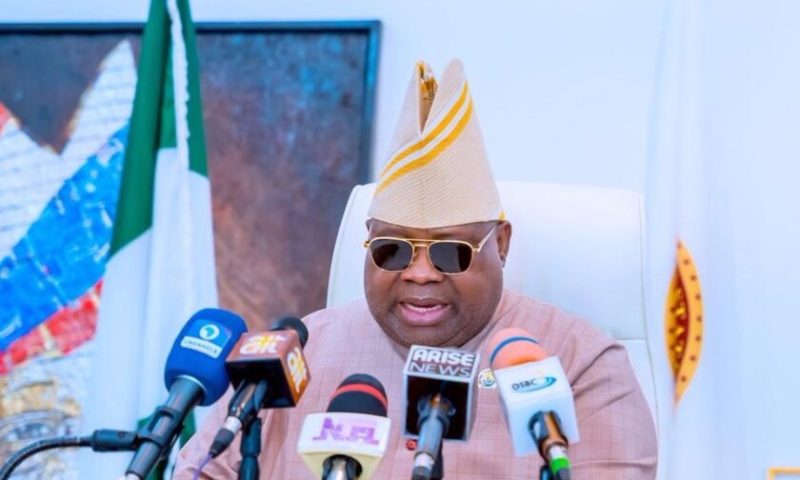
Imo State Government, through the Ministry of Education, Primary and Secondary, has banned frequent changing of textbooks both in private and public schools in the state.

It also banned graduation ceremonies for certain levels in both private and public schools.

The new policy, according to the Commissioner in charge of primary and secondary schools, Prof. BTO, Ikegwuoha, is to reduce financial burdens on parents and guardians who are saddled with the responsibility of training their wards in school amid economic hardship.

The Commissioner, in a press statement made available to journalists, stated that the ministry has issued a firm warning to private and public schools reaffirming its strict stand on the new policy.

He added that the State Government had directed all private school proprietors, head teachers, and principals to comply immediately or face severe consequences, which include license revocation.

“Under the existing policy, graduation ceremonies are completely prohibited for, Kindergarten, Nursery, Junior Secondary School 3, JSS 3.

“Only Primary 6 pupils and Senior Secondary School 3 students are allowed to hold graduation ceremonies; also, no levies for send-forth events.

“The Ministry also barred students in Primary 1–5, JSS 1–3, and SSS 1–2 from being forced to contribute money for any farewell or graduation celebrations organized for others.

“While Primary 6 and SSS 3 graduates can make personal or family arrangements, schools are forbidden from organizing, supervising, or collecting funds for such events,” the statement said.

Ikegwuoha also hinted that the ban on what he termed arbitrary and frequent changing of textbooks remained active till 2030, asserting that schools cannot force parents to buy new editions or entirely new titles every year solely for profit.

He maintained that henceforth, approved textbooks must stay stable for at least four years.

“A new list of State-approved textbooks will be introduced in August 2026 and remain valid until August 2030.

“Any private school found breaking these rules could face immediate license withdrawal, de-listing from the State’s approved schools register,” he warned.

Effurun shooting: IGP reacts as police officer kills suspect, assures justice

The Nigeria Police Force has condemned the fatal shooting of a suspect, Mene Ogidi, which occurred in Effurun, Delta State.

Reports indicate that operatives attached to the Effurun Area Command responded to credible information from Benin Motor Park along the Warri–Sapele Expressway regarding a suspect apprehended by members of a transport union while attempting to waybill a parcel containing a Beretta pistol with four rounds of ammunition.

While efforts were being made to take the suspect into lawful custody, the team leader, ASP Nuhu Usman, discharged his firearm in clear violation of extant regulations, resulting in the death of the suspect.

A statement signed by DCP Anthony Okon, Force Public Relations Officer, said the leadership of the Nigeria Police Force has directed the immediate transfer of the officer and his team to Force Headquarters, Abuja, where they would face the Force Disciplinary Committee for summary disciplinary measures and prosecution.

The statement added that the Inspector-General of Police extends his condolences to the family of the deceased and assures them that justice will be served in accordance with the law.

He further urges members of the public to remain calm and law-abiding as the disciplinary and legal processes take their course.

It said that the Nigeria Police Force maintains a zero-tolerance stance on extra-judicial actions, abuse of authority, and any conduct that undermines public trust.

Retract allegation of cybercrime against us – NANS cautions EFCC boss, Olukoyede

A claim attributed to the Chairman of the Economic and Financial Crimes Commission (EFCC), Ola Olukoyede, alleging that six out of ten university students in Nigeria are involved in cybercrime, also known as “yahoo yahoo”, has been rejected by the National Association of Nigerian Students (NANS).

A statement issued by its Senate President, Usman Adamu Nagwaza, on Tuesday, described the claim as misleading and damaging to the image of Nigerian students both within and outside the country.

NANS lamented that the assertion was unfounded and does not reflect the image of students across Nigerian universities, expressing concern over what it called a “fallacious and unfortunate assertion.”

The statement warned that such generalisations risk painting students in a negative light.

While the student body supports efforts to tackle financial crimes, it noted that it is wrong for public officials to make broad statements that suggest most students are involved in illegal activities.

It explained that such comments could erode trust in the education system and unfairly stigmatise young people, lamenting that the anti-graft agency appears to be placing more focus on cyber-related offences while allegedly giving less attention to corruption cases involving political figures.

The association insisted that Nigerian students are largely law-abiding and focusing on their academic and personal growth.

According to the statement, “Nigerian students are not defined by criminality. We are individuals striving to acquire knowledge, build capacity, and contribute meaningfully to national development.”

NANS called on the EFCC chairman, Ola Olukoyede to retract the statement, saying it is necessary in the interest of fairness and national integrity.

It warned that such remarks could harm the reputation of Nigerian students and weaken public confidence in higher education, while reiterating its support for the fight against financial crimes.

The student body stressed the need for accuracy, balance, and responsibility in public communication by government agencies.

Leadership crisis rocks Lagos TUC over delegates’ conference

Lagos State Council of the Trade Union Congress, TUC, of Nigeria is currently grappling with a leadership crisis following disagreements over the conduct and outcome of its recent delegates’ conference.

Speaking with journalists in Lagos, the council’s Public Relations Officer, Kabiawu Gbolahan, described the situation as a significant internal dispute that extends beyond a struggle for positions.

He explained that the contention revolves around differing interpretations of the role played by the TUC National Secretariat in the lead-up to the conference and in its aftermath.

According to Gbolahan, the National Secretariat had initially authorised the Lagos State delegates’ conference and issued guidelines to govern the exercise.

He said the conference was later held in Yaba under the supervision of a caretaker committee, with participation from affiliate unions and other stakeholders.

The process, he noted, produced an executive council led by Aladetan Abiodun Emmanuel, which he said represents the position of a segment of members within the state council.

However, he acknowledged the existence of rival claims over the legitimacy of the exercise, with another faction backing a different leadership structure.
Gbolahan warned that the unresolved disagreement could undermine unity within the union if not properly addressed.

Meanwhile, the National President of the TUC, Festus Osifo, maintained that the organisation’s constitution clearly outlines the procedures for conducting elections in state councils.

“Our process and constitution in TUC specify that the Secretary-General is responsible for conducting elections in all state councils, and Lagos State is no exception,” he said.

Osifo further noted that eligibility to contest positions is determined by compliance with union regulations, including financial obligations to affiliate unions.

He insisted that the national leadership recognises a duly elected executive for the Lagos State council, adding that the matter has been resolved in accordance with the union’s established procedures.

Optimus Bank’s PBT rises 70% to N24.14bn

Optimus Bank Limited, one of Nigeria’s fastest-growing national commercial banks, has released its audited financial results for the year ended 31 December 2025, revealing a Profit Before Tax of N24.14bn, representing a 69.94 per cent increase from the previous year.

The 2025 fiscal year was defined by a massive surge in gross earnings, which climbed 73.53 per cent to N50.67bn, up from N29.20bn in 2024. This performance was largely propelled by the bank’s core banking activities, rising asset yields, and a successful digital-first strategy that has gained rapid traction among Nigerian consumers. The bank’s operating income saw an even more dramatic rise, jumping 82.02 per cent to N42.75bn. This surge highlights Optimus Bank’s efficiency in translating its rising market share into tangible revenue.

Commenting on the results, the Managing Director and Chief Executive Officer of Optimus Bank, Ademola Odeyemi, expressed pride in the institution’s trajectory. He said, “Our 2025 performance reflects the strength of our execution and the resilience of our business model. We delivered strong growth across key financial indicators while maintaining discipline in risk management and operational efficiency.”

Odeyemi attributed much of this success to the bank’s technological infrastructure, stating, “These results reflect the continued success of our digital-first strategy, which is accelerating customer acquisition, deepening engagement and enhancing service delivery across our platforms, while positioning the Bank for sustainable scale.”

Beyond profitability, Optimus Bank demonstrated a massive commitment to credit expansion. Gross loans soared 137.19 per cent, reaching N118.16bn. This aggressive lending highlights the bank’s role in supporting Small and Medium-sized Enterprises and key productive sectors of the Nigerian economy. The bank’s balance sheet now stands at N286.02bn, supported by N114.12bn in customer deposits, a clear indicator of growing public trust. Despite the rapid expansion, the bank maintained a robust liquidity position with a liquidity ratio of 101.52 per cent.

Looking towards the future, Odeyemi noted, “As we look ahead, we remain focused on scaling our operations, deepening customer relationships and leveraging technology to deliver innovative financial solutions that support economic growth.”

With a solid capital base and rising earnings momentum, Optimus Bank appears well-positioned to continue its upward climb in the Nigerian banking hierarchy. The bank remains committed to its mission of deepening financial inclusion and providing digital-led financial services that meet the evolving needs of its diverse customer base. As the financial landscape continues to shift towards digital solutions, Optimus Bank’s FY 2025 results serve as a testament to its ability to compete effectively and deliver sustainable value to its stakeholders.

Strong assets, deposits lift UBA Q1 performance

United Bank for AfricaUnited Bank for Africa Plc, a leading Pan-African financial institution, has released its unaudited financial results for the first quarter ended 31 March 2026, showing resilient operating performance and continued balance sheet strength despite a moderated profitability environment.

Gross earnings increased five per cent to N801.5bn, driven by growth across key revenue lines. Interest income rose 6.9 per cent to N641.1bn, while non-interest income increased 17.3 per cent to N137.1bn, reflecting the Group’s expanding and diversified revenue base. Net interest income advanced 10.5 per cent to N383.7bn, supporting a 12.2 per cent rise in operating income to N520.8bn, underscoring sustained momentum in core banking operations. UBA recorded notable improvement in key profitability and efficiency indicators, reflecting a more sustainable earnings profile.

Return on average equity rose 13.7 per cent, while return on assets improved 1.77 per cent, indicating stronger earnings efficiency. The cost of risk declined significantly to 2.02 per cent, reflecting improved asset quality and disciplined risk management.

Cost of funds also moderated 3.73 per cent from 3.83 per cent in December 2025, indicating improved funding efficiency. Profit before tax moderated to N160.7bn, while profit after tax declined to N146.6bn, representing decreases of 21.4 per cent and 22.8 per cent, respectively, consistent with the Group’s guidance on earnings normalisation. The bank maintained a strong and resilient balance sheet, with total assets of N33.1tn and customer deposits of N26.2tn.

Commenting on the results, Group Managing Director/CEO, Oliver Alawuba said, “UBA’s Q1 2026 performance underscores the strength of our diversified Pan-African model and the resilience of our core banking franchises. While profitability has moderated in line with our expectations for a transition year, we are seeing strong underlying momentum across our markets, supported by improved earnings quality and disciplined risk management. Our continued investments in digital capabilities and regional expansion are enhancing revenue resilience and positioning the Group for sustainable long-term growth. We remain firmly committed to driving financial inclusion, enabling intra-African trade, and delivering superior value to our stakeholders.”

Also speaking, Executive Director, Finance & Risk Management, Ugo Nwaghodoh, said, “The Group’s Q1 performance reflects a deliberate shift towards a more sustainable and scalable earnings profile following our successful recapitalisation. Key profitability indicators, including return on equity and return on assets, show improvement on a year-to-date basis, despite the normalisation of headline earnings. Our balance sheet remains robust, supported by a diversified funding base and disciplined loan growth. With stable funding costs and improving asset quality, we are well-positioned to drive operating leverage and long-term value creation.”

UBA expects 2026 to remain a transition year characterised by continued investment in digital transformation and operational scalability, strengthened risk management and provisioning frameworks, enhanced focus on high-quality sustainable earnings, and deeper penetration across African markets. The Group said it remains strongly capitalised, highly liquid, and strategically positioned to execute its long-term growth agenda. United Bank for Africa Plc serves over 45 million customers through 1,000 business offices and customer touchpoints in 20 African countries. With operations in New York, London, Paris, and Dubai, UBA connects people and businesses across Africa through retail, commercial, and corporate banking, payments, trade finance, and cross-border solutions.

W’Bank commits $8.2bn to Africa’s power supply

World-Bank

The World Bank Group has committed $8.2bn to expand electricity access across Sub-Saharan Africa as part of a broader push to tackle one of the region’s most persistent development challenges, with nearly 600 million people still living without power.

The funding forms the backbone of “Mission 300”, a joint initiative with the African Development Bank Group aimed at connecting 300 million people to electricity by 2030. Under the plan, the World Bank targets 250m connections, while the African Development Bank is expected to deliver the remaining 50m.

The initiative, backed by a combination of public and private sector financing, has already mobilised an additional $1.2bn, with projects advancing across more than 40 countries and over 150 programmes underway, according to details published by the lender on its website.

Despite recent progress, access to electricity remains a major constraint on economic growth across the region. Without reliable power, hospitals struggle to function, agricultural productivity is limited, and businesses face high operating costs, undermining job creation and industrial development.

The World Bank said the programme is designed not only to expand access but also to drive broader economic transformation, linking electricity supply to job creation, digital connectivity, and industrial growth.

“Electricity is the bedrock of jobs, opportunity, and economic growth,” President of the World Bank Ajay Banga stated. “That’s why Mission 300 is more than a target; it is forging enduring reforms that slash costs, strengthen utilities, and draw in private investment.”

At the core of the initiative are National Energy Compacts, country-led reform frameworks intended to unlock investment, improve utility performance, and align policy with long-term energy goals. The programme also seeks to scale private sector participation through competitive procurement, regional power trade, and de-risking mechanisms.

The effort comes as development finance institutions intensify collaboration to address Africa’s energy deficit, widely seen as a critical barrier to inclusive growth. Access to electricity is expected to support small and medium-sized enterprises, agro-processing, manufacturing, and digital services, sectors seen as key to job creation across the continent.

“Reliable, affordable power is the fastest multiplier for small and medium enterprises, agro-processing, digital work, and industrial value-addition,” said African Development Bank Group President Sidi Tah. “Give a young entrepreneur power, and you’ve given them a pay cheque.”

Household access to electricity is also expected to improve living standards, enabling safer cooking, access to information, and better education outcomes, while strengthening healthcare delivery through reliable lighting and refrigeration for medicines.

The World Bank said connection rates under the programme are accelerating, running at about 1.5 times faster than previous efforts, as investments and reforms begin to take effect.

‘Mission 300’, the lenders say, is intended to lay the foundation for long-term energy systems capable of reaching even the most remote communities while supporting Africa’s transition towards more reliable and sustainable power infrastructure.

Capital, trust, tech to drive SME growth – Regent MfB CEO

The Managing Director of Regent Microfinance Bank, Idris Olugbesan, has emphasised that the future of Small and Medium-scale Enterprises in Nigeria will depend largely on three critical factors, including access to capital, trust within the financial ecosystem, and the strategic use of technology.

He made this known at a media interaction on Tuesday where he discussed the evolving landscape for small businesses in Nigeria and the role financial institutions must play in supporting sustainable enterprise growth.

According to him, while SMEs remain the backbone of Nigeria’s economy—contributing significantly to employment—many still struggle with limited access to funding and the financial tools required to scale.

“Small businesses are central to economic growth in Nigeria, but their ability to grow sustainably depends on how effectively they can access capital, build trust with financial institutions, and leverage technology,” he stated.

Olugbesan noted that access to affordable and structured financing remains one of the primary barriers faced by Nigerian entrepreneurs. He explained that many SMEs operate informally or lack the documentation required to secure funding through traditional banking systems. Consequently, he urged financial institutions to design more inclusive products that reflect the realities of small business operations.

“SMEs require financing models that reflect the nature of their businesses. When financial products are designed around the real needs of entrepreneurs, it becomes easier for businesses to grow and contribute meaningfully to the economy’,” he added.

Beyond funding, the Regent Microfinance Bank boss emphasised the importance of trust between financial institutions and business owners. He noted that trust is the bridge that encourages entrepreneurs to migrate from informal setups to formal financial systems.

“Trust is fundamental to financial inclusion. When entrepreneurs trust financial institutions, they are more willing to adopt formal banking solutions that support long-term business growth,” he further explained.

He added that building this rapport requires transparency, responsible lending, and consistent customer engagement from financial institutions.

Olugbesan also highlighted the role of technology in transforming SME operations. He explained that digital banking, mobile payments, and automated management tools are helping businesses operate with greater efficiency.

“Technology is redefining how businesses interact with financial services. Digital platforms are making it easier for entrepreneurs to access banking services, monitor transactions, and manage their businesses in real time,” he added.

The MD stressed that strengthening the SME ecosystem requires a synergy between financial institutions, regulators, and business support organisations. He argued that providing capital alone is insufficient; entrepreneurs also need financial education and supportive policies.

“Nigeria’s economic future will depend significantly on the success of its small businesses. By strengthening access to finance, building trust in financial systems, and embracing technology, we can unlock the full potential of SMEs across the country.” Olugbesan noted.

He further noted that financial institutions must continue to innovate to empower entrepreneurs to build resilient businesses in an increasingly competitive global economy.

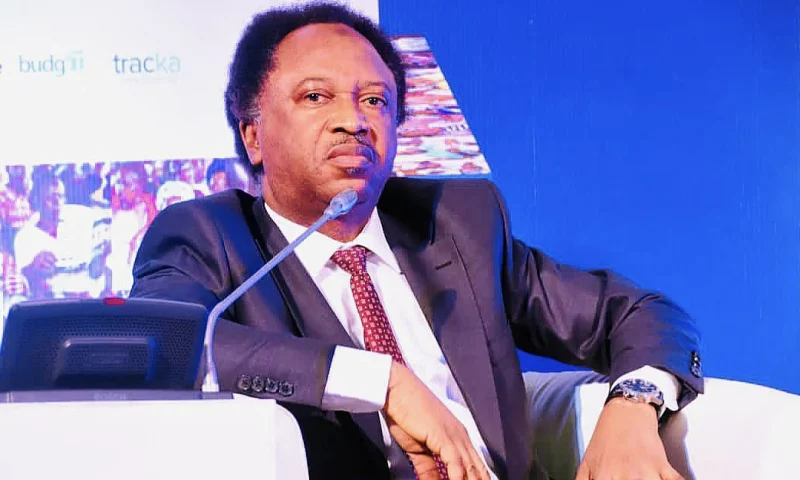
2027: Pin them down to MoU, record video of their promises – Shehu advises voters

A public affairs commentator, Mahdi Shehu, has advised Nigerians to be more careful and thoughtful in choosing their leaders ahead of the 2027 general elections.

In a post shared on X on Monday, Shehu urged voters not to be swayed by catchy campaign slogans, religious sentiments, or public displays of piety by politicians.

“As 2027 elections get closer, it will be important that voters are given a pro bono advisory,” he said.

He called on citizens to reflect deeply before deciding who to support.

He warned that many political slogans are misleading.

“Don’t be carried away by slogans, because almost all party slogans are deceptive and a trap to lure voters,” he said.

Shehu also cautioned against voting based on religion, noting that such appeals may not reflect the true character of candidates.

“Don’t be carried away by religious claims and sentiments,” he said, adding that such actions often contradict.

He further criticised politicians who suddenly become visibly religious during election periods, attending different mosques and churches with donations.

“Irrespective of party platforms, don’t be carried away by those politicians who begin to frequent Friday prayers in different mosques or Sunday services in different churches with donations,” he said

The commentator urged voters to investigate the background of candidates thoroughly before supporting them.

“Dig deep into their past history,” he said.

He stressed that aspirants should have no criminal convictions either in Nigeria or abroad.

He also advised Nigerians to check that candidates have no links to crimes such as human trafficking, organ harvesting, or drug trafficking, and that their sources of wealth are legitimate.

“Make sure that they have a clearly identified and verifiable family lineage and that their source of wealth is not rooted in fraud and such other crimes,” he added.

Shehu further warned against electing candidates who have a history of abandoning their constituencies after winning elections.

“Confirm that such an aspirant is not one of those who had in the past or who is likely in the future to abandon his constituency and relocate to Abuja after winning elections,” he said.

“Carry out a thorough personality and character audit. Don’t be carried away by their physical looks, mode of dressing and automobiles they parade,” he said.

In addition, he suggested that voters should demand written commitments from candidates.

“Pin them down to a written and enforceable Memorandum of Understanding and make a video recording of the same for rainy days,” he advised.

Frustrating, sabotaging opposition parties is self-destructive – Abdullahi warns APC govt

The National Publicity Secretary of the African Democratic Congress (ADC), Bolaji Abdullahi, has criticised the ruling All Progressives Congress (APC), describing it as the most shameless government in Nigeria’s history.

Referring to the latest crisis in the People’s Redemption Party, PRP, Abdullahi warned that, a political strategy that is anchored on sabotaging every opposition platform is self-destructive.

Abdullahi made the remarks in a post shared on his official X handle on Tuesday, where he accused the government of undermining opposition parties and shrinking Nigeria’s democratic space.

According to him, recent developments within the Peoples Redemption Party (PRP) point to a troubling pattern.

He explained that about three weeks ago, the PRP leadership, led by its National Chairman, Hakeem Baba-Ahmed, paid a courtesy visit to the ADC leadership.

However, shortly after the visit, rumours began to spread that a political coalition was considering the PRP as an option.

“Although this is not true, it took only that single whiff of speculation for a faction to emerge almost overnight in what had been a historically tranquil political party, challenging the leadership of Baba-Ahmed,” he said.

Abdullahi argued that the situation reflects a wider trend under the APC-led government.

“This is the reality of Nigeria’s shrinking democratic space under the APC,” he stated.

He said while the government may deny involvement in internal crises within opposition parties, the pattern is becoming increasingly clear.

“The government may continue to deny any involvement in the crises within other parties, insisting that these are merely internal failures, but the pattern is visible. The world can see what is happening. More importantly, they can see where this path leads,” he said.

The ADC spokesman questioned whether there were voices within the ruling party willing to caution against such actions.

“But here is the question: is there no one within the APC who can caution those engineering crises in opposition parties that they are, in fact, sowing the seeds of national instability?” he asked.

He warned that a political approach focusing on weakening all opposition platforms could backfire.

“A political strategy that is anchored on sabotaging every opposition platform is ultimately self-destructive. When people are left with no options, they are, in reality, left with no choice,” he added.