
Access Holdings Board approves H1 2026 financials

Access Holdings PlcThe Board of Directors of Access Holdings Plc has approved the Group’s audited interim consolidated and separate financial statements for the half-year ended 30 June 2026.

The decision was taken during the board’s meeting held on 27 August 2026, marking a significant step in the group’s financial reporting calendar.

“The financial statements were considered and approved by the Board at its meeting held on 27 August 2026 and will now proceed through the required regulatory process, including approval by the Central Bank of Nigeria,” the company announced in a statement following the meeting.

The approval clears the path for the financial institution to move into the final administrative phase of its mid-year audit process, as the group must secure statutory sign-off from the apex bank before the results can be released to the investing public.

“Following receipt of the CBN’s approval, Access Holdings will publish the audited financial statements through the Nigerian Exchange Limited and make them available to shareholders, investors and other stakeholders through the Group’s established communication channels,” the company added.

Outlining the core principles driving its financial disclosure, the group emphasised its commitment to regulatory compliance and operational transparency across its global operations.

“The process reflects Access Holdings’ commitment to strong governance, regulatory compliance and transparent engagement with its stakeholders as it continues to build a more connected and resilient financial services group serving Africa and its international markets,” the statement noted.

In adherence to capital market rules, Access Holdings confirmed that restrictions on share trading by internal stakeholders remain strictly in force.

“In accordance with the NGX Issuers’ Rules, Access Holdings will remain in a closed period until 24 hours after the audited financial statements have been released to the public,” the company stated.

The institution concluded with a clear directive regarding trading boundaries for key insiders: “During this period, directors, insiders and their connected persons are prohibited from dealing, directly or indirectly, in the securities of Access Holdings Plc.”

The public market release of the audited statements on the NGX is expected shortly following the completion of the CBN’s review process.

In the Nigerian banking sector, Tier-1 financial institutions like Access Holdings are subject to regulatory oversight by the CBN and the NGX, requiring commercial banks and holding companies to submit interim and annual financial statements to the apex bank for formal review and approval before public dissemination.

This vetting process ensures systemic risk management, compliance with capital adequacy standards and accurate representation of non-performing loans across multi-jurisdictional operations.

Capital market rules enforced by the NGX also require listed entities to observe a closed period prohibiting directors, key management personnel and connected insiders from trading the company’s shares to prevent insider trading and ensure market fairness while price-sensitive financial information awaits regulatory clearance.


Nigeria’s July Remittances Hit Record $947m, Near CBN’s $1bn Monthly Target

Nigeria’s remittance inflows through International Money Transfer Operators (IMTOs) rose to a record $947 million in July 2026, bringing the country within sight of the Central Bank of Nigeria’s (CBN) $1 billion monthly target.


The July inflow represents the highest monthly remittance recorded through formal channels and underscores the growing impact of reforms introduced by the apex bank to attract more diaspora funds into the formal financial system.


Cumulative remittance inflows through IMTOs stood at $3.8 billion in the first seven months of 2026, representing a 50.2 per cent increase compared with the corresponding period in 2025.


CBN Governor, Olayemi Cardoso, said the latest figures showed that the bank’s ambition to raise formal monthly remittance inflows to $1 billion was increasingly within reach.


“When we set a clear ambition to reach US$1 billion a month in remittance inflows through formal channels nearly two years ago, some people thought we were dreaming. At US$947 million in July, we are now approaching that milestone,” Cardoso said.


The increase has followed a series of measures by the CBN aimed at making formal remittance channels more competitive, transparent and accessible.


Among the reforms are the adoption of a more market-determined exchange rate, changes to the regulatory framework for IMTOs, and the introduction of the Non-Resident Bank Verification Number (NRBVN).


The apex bank has also intensified engagement with IMTOs, commercial banks and Nigerian diaspora communities while strengthening requirements for remittance transactions to be routed through designated settlement accounts with authorised dealer banks.


According to the CBN, the rise in formal remittance inflows goes beyond the increase in headline figures, as stronger diaspora flows can improve foreign exchange liquidity, enhance transparency and support household consumption and investment.
The increased inflows could also strengthen Nigeria’s external financing position by providing a more reliable source of foreign exchange.


The apex bank, however, said it was not placing emphasis on individual monthly figures, noting that remittance flows could naturally fluctuate from month to month.


Cardoso said the priority was to sustain the broader upward trend and deepen the shift from informal to formal remittance channels.
“July is an important marker, but our focus is not on a single month. It is on creating the conditions for sustained growth in formal remittances,” he said.


He added that the CBN expects the improvement to continue, expressing confidence that Nigeria could not only reach but ultimately sustain monthly formal remittance inflows above $1 billion.
The CBN said it would continue to deepen engagement with Nigerian diaspora communities and financial-sector stakeholders across major remittance corridors.


Through engagements in key global financial centres, the bank said it would work with diaspora groups, IMTOs, banks and other stakeholders to reduce transaction frictions, expand access and encourage a greater proportion of remittance flows to pass through formal channels.

2027 election will be won at grassroots, not through noise – Gov Abiodun’s aide

2027 election will be won at grassroots, not through noise – Gov Abiodun’s aideThe Special Adviser to the Ogun State Governor on Housing, OPIC and Special Projects, Farooq Adenugba, has said the 2027 general election will not be won by political noise, slogans or last-minute mobilisation but through sustained grassroots engagement, unity and effective organisation.
Adenugba stated this on Friday in Ago-Iwoye, Ijebu North Local Government Area, where he combined a youth mentorship programme with the inauguration of his political team ahead of the 2027 general elections.

The political mobilisation came shortly after Adenugba addressed secondary school students at a special counselling and mentorship session organised by the Prince Segun Kaka Foundation, PSK, in collaboration with the Academic Excellence Initiative, AEI, Ijebu Zone.

The programme, held at the Imososi Primary School Hall, Ago-Iwoye, was hosted by Segun Kaka, Member of the Ogun State House of Assembly representing Ijebu North State Constituency II, and themed, ‘Failing Forward’.

Speaking to the students, Adenugba urged them not to allow failure, setbacks or difficult circumstances to define their future, stressing that resilience, discipline, education and the courage to pursue opportunities were essential ingredients for success.

“A setback should never become a full stop in your life,” he told the students. “Failure can become a teacher if you are determined to learn from it and move forward.”

He encouraged the students to take their education seriously, discover and develop their talents, acquire useful skills and remain focused despite the challenges they might encounter.

According to him, young people require deliberate platforms through which they can interact with experienced leaders, acquire knowledge and develop the confidence needed to compete in an increasingly demanding society.

Adenugba also spoke about leadership, career development, perseverance, character and purposeful living.

He charged them to establish an effective grassroots network that can coordinate political activities ahead of the 2027 elections.

Adenugba said his structure was not intended to operate separately from the All Progressives Congress, APC, but to complement the party’s existing grassroots machinery through organised mobilisation, communication and sustained engagement.

“2027 will not be won by noise or slogans alone. It will be won through organisation, constant engagement, unity, and the ability to reach the people at the grassroots,” he said.

Members were consequently urged to avoid unnecessary divisions and personal interests, while working collectively towards the broader political objectives of the party.

2027: I’ll implement Oronsaye Committee Report – Atiku

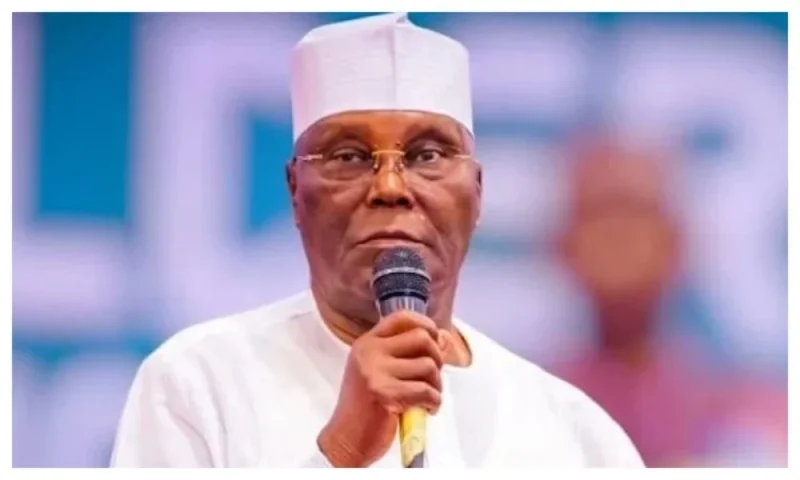
2027: I’ll implement Oronsaye Committee Report – AtikuThe African Democratic Congress, ADC, presidential candidate, Atiku Abubakar, has stated that he will implement the Oronsaye Committee Report if elected president in the forthcoming 2027 general elections.

Atiku, in a statement posted on Friday by his spokesman, Mr Kenneth Okonkwo, said the Oronsaye Report gave Nigeria a clear roadmap to reduce waste, duplication and the cost of governance.

According to him, President Bola Tinubu failed to implement the report even though he had promised to do so, noting that the president instead multiplied the agencies to include even fake ones.

He assured Nigerians that the Oronsaye Report would not remain on the shelf but would be implemented fully and transparently.

Former GOCOP President Dotun Oladipo Burial Arrangements Announced By Family

The family of The Eagle Online publisher, Dotun Oladipo, has announced September 10 and 11, 2026 as the dates for the funeral programmes of the journalist and media entrepreneur.

Oladipo died on Tuesday, August 25, at the age of 56.

According to the family, a service of songs will hold at DayStar Church, Oregun, Ikeja, on Thursday, September 10.

The burial service will take place at the same venue on Friday, September 11, followed by his interment.

Oladipo was president of the Guild of Corporate Online Publishers (GOCOP) from 2017 to 2021 and was among the foundational members who helped shape the association during its formative years.

GOCOP President, Danlami Nmodu, described his death as a painful loss to the Guild and recalled his contribution to the development of online publishing in Nigeria.

“Dotun played an important role in the development of GOCOP. He led the Guild for four years at a time when there was still a lot of work to be done to establish online publishers as an important part of the media. His contribution will always be remembered,” Nmodu said.

Nmodu said Oladipo brought his experience as a journalist and publisher to the leadership of the Guild.

“Dotun understood journalism and he understood the business of publishing. He was passionate about the place of online media in Nigeria and he gave his time to the growth of the Guild. We are saddened by his passing,” Nmodu said.

Oladipo was also a member of the Nigerian Guild of Editors (NGE) and the International Press Institute (IPI Nigeria), and was active in the development of Nigeria’s online publishing industry.

NYSC, JAMB Embarks On Strong Partnership

The National Youth Service Corps (NYSC) has reaffirmed its commitment to strengthening its collaboration with the Joint Admissions and Matriculation Board (JAMB) in the interest of the public.
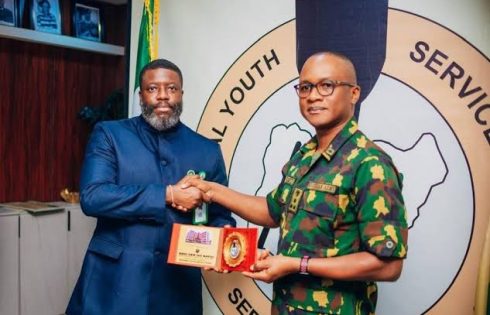
The NYSC Director General, Brigadier General Olakunle Nafiu, stated this when he received the JAMB Registrar/Chief Executive Officer, Professor Segun Aina in his office in Abuja.

General Nafiu congratulated Professor Aina on his appointment, noting that his experience as a former Corps Member who served with JAMB, coupled with his wealth of professional experience, would contribute significantly to his success in the new assignment.

He described JAMB as a foremost partner in the NYSC mobilisation process, which provides the Scheme primary data required for the online registration of prospective Corps Members.

“We thank the Management of JAMB for their support over the years. We believe so much in the credibility of JAMB, and we have enjoyed seamless API data sharing with JAMB,” the DG stated.

The JAMB Registrar, Professor Segun Aina, called for deeper collaboration with NYSC to optimise the services of Corps Members and add greater value to their service experience.

Professor Aina said his experience as a Corps Member had significantly influenced his career choices and prepared him for his current responsibility.

He explained that JAMB would continue to maintain strict standards on requests for changes to candidates’ data, while allowing flexibility in genuinely peculiar cases arising from the mobilisation process, without compromising the integrity of its records.

The Registrar disclosed that a new framework involving NYSC, the National Identity Management Commission (NIMC) and JAMB, aimed at making data changes more seamless, would soon be unveiled.

He also requested the deployment of Corps Members to JAMB offices to serve as customer service representatives.

“We want to speak directly to the young people, we want to speak the language of young people, and we need other young people to help us do it”.

“We want to build an army of customer service representatives by using Corps Members,” he added.

EFCC extradites two Nigerians wanted in US teen sextortion cases

EFCC extradites two Nigerians wanted in US teen sextortion casesThe Economic and Financial Crimes Commission, EFCC, has extradited two Nigerians wanted by the United States Federal Bureau of Investigation, FBI, over alleged sextortion schemes linked to the deaths of two American teenagers.


The suspects, identified as Mudashiru Afeez Olawale and Adebola Festus Adekunle, were extradited to the United States on Wednesday, August 26, 2026, according to EFCC spokesperson, Dele Oyewale.

Oyewale disclosed the development in a statement issued on Friday, saying the two men were extradited to face prosecution over allegations of sexually exploiting and extorting two teenage boys in separate cases in the US.

According to the commission, the FBI identified Olawale and Adekunle during separate investigations into sextortion networks targeting male minors, particularly teenagers between 13 and 17 years old.

Crude prices fall despite Hormuz tanker disruptions

Crude oilCrude oil prices are heading for a weekly decline despite weak tanker traffic through the Strait of Hormuz amid escalating tensions between Iran and the United States.
Brent crude was trading at $89.17 per barrel as of Friday, down 5.3 per cent for the week, while West Texas Intermediate stood at $83.19 per barrel, with the benchmark on course for a 4.3 per cent weekly decline, Reuters reported.

The decline came despite reports that tanker traffic through the strategic Strait of Hormuz remained significantly below pre-war levels.

According to preliminary data from vessel-tracking firm Kpler cited by Reuters, only seven commodity vessels passed through the Strait of Hormuz on Thursday, down from 17 vessels the previous day and below the 10-day average of 15 vessels.

Another vessel-tracking company, Windward, reported that only six tankers passed through the chokepoint on Thursday, with three operating in “dark mode” to avoid detection.

Four of the tankers entered the strait, while two exited, according to the report.

The Strait of Hormuz is a critical global oil chokepoint, making the reduced tanker movement potentially bullish for crude prices. However, oil prices have continued to decline as the market adapts to the disruption.

Bloomberg reported that oil flows through the strait had risen to between six million and eight million barrels per day, according to estimates from unnamed traders.

Goldman Sachs estimated that oil flows through Hormuz had recovered to about two-thirds of pre-war levels, while ING’s commodity analysts said producers in the Persian Gulf were increasingly finding ways to move crude outside the strait.

“More Persian Gulf oil producers seem to be shuttling their crude through the strait, while producers in the region are increasingly selling their crude outside the Strait of Hormuz,” ING analysts Warren Patterson and Ewa Manthey said.

The development came as the United States Treasury announced what it described as the “toughest sanctions in history” aimed at forcing Iran to reopen the Strait of Hormuz.

The Donald Trump administration has also ruled out returning to the terms of the ceasefire reached with Iran in June, which broke down less than a month after it was agreed.

“As the president said, there are no talks or conversations going on, or scheduled, with the Islamic Republic of Iran,” White House spokeswoman Anna Kelly said, according to the Wall Street Journal.

“The naval blockade remains in full force and effect, and Operation Economic Outcast is underway to sever every remaining economic lifeline sustaining the regime.”

Despite the intensifying tensions, the effectiveness of the US pressure campaign has been questioned, particularly because of China’s role as Iran’s biggest trading partner.

China has repeatedly opposed sanctions as a means of achieving political change, potentially limiting the impact of the US measures.

Meanwhile, ING said upward pressure on crude prices remained because of fading hopes for renewed peace talks between Tehran and Washington.

There were also expectations that Venezuela could leave OPEC following increased United States control over its oil industry.

Such an exit could eventually result in higher Venezuelan production, although analysts cautioned that a rapid increase in output was unlikely because the country would need time to reverse years of decline in its oil industry.

Manufacturers pay N74.5bn tax as reforms offer relief

Manufacturers paid N74.48bn in Company Income Tax in the first quarter of 2026 as the Federal Government and the organised private sector seek to balance increased tax compliance with stronger protection for businesses under the new tax regime.
Saturday PUNCH found that N74.48bn paid by manufacturers accounted for 13.82 per cent of the N538.91bn total local Company Income Tax collected during the period, according to data from the National Bureau of Statistics.

However, the sector’s tax remittance fell by 30.98 per cent year-on-year from N107.90bn in Q1 2025, highlighting the changing tax landscape as the four new tax laws introduced a simplified framework for businesses from January 1, 2026.

The Federal Government and the Manufacturers Association of Nigeria agree that the reforms should ensure that manufacturers meet their tax obligations without facing the multiple assessments, levies and administrative costs that previously burdened the productive sector.

Following a recent presentation to manufacturers, the Executive Secretary of the Joint Revenue Board, Olusegun Adesokan, said the new tax framework fundamentally changed manufacturers’ position within the tax system.

“The new law reframes the Nigerian manufacturer from an endlessly assessed target to a protected taxpayer. The law provides stronger safeguards than ever before. Our shared responsibility is to ensure these safeguards are consistently applied across every level of government,” Adesokan said.

He urged manufacturers to hold valid Tax Identification Numbers, maintain accurate records, file employees’ returns on time, pay undisputed assessments and raise valid objections where necessary.

Adesokan also urged manufacturers to comply with the Model Taxes and Levies Law, reject cash transactions for tax payments and use available dispute-resolution channels.

“The success of tax reform will ultimately be measured not by the taxes we impose, but by the businesses we enable to grow, the jobs we enable to create, and the prosperity we enable to share,” he said.

Under the new framework, the government has consolidated more than 100 taxes and levies into nine revenue heads at the sub-national level. They include income tax, stamp duty, property tax, road tax, haulage levy, economic development levy, harmonised levy, user charge and daily tickets.

The new Tax ID system also consolidates the taxpayer identification systems previously operated by the Joint Tax Board, the Federal Inland Revenue Service and state tax authorities. At the same time, the tier of government will have one recognised revenue administration authority.

The reforms prohibit the collection of taxes through roadblocks along transportation corridors and ban cash payments for taxes. They also prohibit associations, unions and other non-state actors from collecting taxes on behalf of the government.

The framework prescribes penalties of up to N5m, three years’ imprisonment or both for mounting revenue-collection roadblocks, while violations involving prohibited cash tax collection attract penalties of up to N2m, three years’ imprisonment or both.

The reforms also introduce a tax refund mechanism to enable taxpayers to recover tax overpayments and establish a centralised framework for haulage levy payments at designated loading and offloading points.

The Office of the Tax Ombud will review complaints against tax officials and authorities, mediate disputes, institute legal proceedings on behalf of taxpayers and escalate cases of non-compliance to the National Assembly or state Houses of Assembly.

Meanwhile, Director-General, Manufacturers Association of Nigeria, Segun Ajayi-Kadir, concurred that the tax contribution by manufacturers must be viewed alongside the need to create a tax system that supports production and investment.

He said the four new tax laws had created an opportunity to reposition taxation as a strategic tool for growing the productive sector.

“In more recent times, the issue of tax has generated a lot of attention, both from the government and the private sector. And the four new tax laws that took effect from 1st of January 2026 have so far been a bigger platform for engaging and for deciding whether tax should support productivity or it should continue to burden the productive sector,” Ajayi-Kadir said.

He said manufacturers previously paid between 120 and 160 taxes and levies, which increased operating costs and created uncertainty for businesses.

“It is evident that before now, we paid anywhere between 120 and 160 new taxes and levies. And for a manufacturer, that can be a lot. It’s too much, and it has actually affected the bottom line, wasted our time and created uncertainty,” he said.

Ajayi-Kadir said limiting the number of taxes and levies to nine would make compliance easier and give manufacturers greater certainty.

NCC pushes local tech investment to cut imports

NCCThe Nigerian Communications Commission has called for increased investment in locally developed technologies to reduce Nigeria’s dependence on foreign software and strengthen the country’s digital sovereignty.

The Executive Vice Chairman of the NCC, Dr Aminu Maida, made the call on Thursday at the closing ceremony of the fourth NCC Hackathon Live Show in Abuja, where innovators showcased technology solutions targeted at persons with disabilities and other digitally excluded Nigerians.

Maida, who was represented by the Executive Commissioner, Stakeholder Management, Rimini Makama, said Nigeria must move from being largely dependent on imported software to developing technologies tailored to local needs.

“Through this hackathon, we are transforming Nigeria from a passive importer of foreign software into a creator of locally engineered assistive technology that serves the ability of all its citizens,” he said.

He added that the solutions developed at the hackathon, ranging from artificial intelligence-powered speech-to-text technologies to voice-enabled public platforms, accessible USSD solutions and inclusive mobile applications, represented building blocks for technological self-reliance.

“By investing in a homegrown, universally accessible codebase, we guarantee Nigeria’s digital economy remains operational, secure, affordable, and responsive to Nigeria’s realities, immune to external shocks,” Maida said.

The NCC boss further urged venture capitalists, telecommunications operators and state governments to provide the investment and partnerships required to move the innovations beyond prototypes.

“We ask you not to view these innovators as contestants, but as future founders, future partners, and future vendors,” he said. “We encourage you to step forward, invest in these accessible prototypes, and help us remove digital exclusion.”

Maida said the need for locally relevant technologies had become more urgent because millions of Nigerians remained at risk of exclusion as economic and social activities increasingly moved online.

Citing World Bank estimates, he said about 25 million Nigerians experience at least one form of disability, while approximately 3.6 million experience significant difficulties in functioning.

He added that persons with disabilities could be excluded not only from connectivity but also from education, employment, financial services, healthcare and participation in society if digital products were not designed with accessibility in mind.

Representing MTN Nigeria, the Senior Manager, Strategy and Innovation, Chinyelu Chikwendu, pledged the telecom operator’s support for the innovators, saying the company was willing to provide infrastructure and explore partnerships with startups whose technologies aligned with its operations.

“We are happy to support your growth. We are happy to support these beautiful ideas that you are all working on, and we are here to help you with the various infrastructures that we have,” Chikwendu said.

She said MTN had infrastructure and platforms that startups could leverage to scale their products, including cloud services, its data centre and API marketplace.

Chikwendu also invited the 20 innovators who participated in the hackathon to apply for the company’s next Cloud Accelerator Programme, which provides startups with mentorship, funding and infrastructure support.

Also speaking, Amadi Kenneth of the Central Bank of Nigeria’s Consumer Protection and Financial Inclusion Department said the apex bank saw opportunities to deploy some of the innovations to expand financial inclusion.

“We want to see that the excluded Nigerians are brought into the financial system,” he said, identifying women, youths, persons with disabilities and people in remote communities as priority groups.

Kenneth said the CBN would collaborate with the NCC and could invite some participants to its Digital Channel Working Group to examine how their applications could support financial inclusion.

The NCC Director of Digital Economy, Helen Obi, said the commission expected the partnerships emerging from the event to help innovators scale their technologies beyond the competition.

She also urged financial institutions to consider dedicated funding for young innovators, saying, “Youths need to be encouraged. Let’s begin to have a huge fund projected for this sector of the economy.”

At the end of the competition, Sora emerged winner and received N3m, while ClearSignal won N2m in second place and Ikor received N1m for finishing third. The three were selected from five finalists, which also included Aditus and Axol.