Shettima arrives Lagos to brief Tinubu on Maiduguri security situation

Vice President Kashim Shettima on Sunday arrived in Lagos to brief President Bola Tinubu on the prevailing security situation in Maiduguri, Borno State.

His visit comes shortly after a presidential directive that took him to the Borno State capital for an on-the-spot assessment following a series of bomb explosions in the city.

During the trip, the Vice President met with victims, bereaved families, community leaders, and relevant authorities as part of a condolence visit aimed at evaluating the impact of the attacks.

He is expected to present his findings and observations to the President.

Maiduguri was recently shaken by multiple explosions suspected to have been carried out by Boko Haram insurgents, leading to casualties and injuries.

Following the briefing, Shettima is also expected to lead a delegation of serving governors on a courtesy visit to the President later in the day.

The meeting will serve as an opportunity to extend Eid-el-Fitr greetings to the President, while also providing a platform for discussions on enhancing collaboration between different levels of government to tackle emerging security challenges and improve rapid response strategies nationwide.

‘It’s misleading’ – IGP denies disbanding all police units, squads nationwide

The Inspector General of Police, Olatunji Disu, has clarified the report making the rounds over the alleged disbanding of all police units and squads in state commands.

In a statement by Police Spokesperson Anthony Placid, IGP Disu described the claim of disbanding units nationwide as misleading.

According to IGP Disu, the police under his leadership only directed the reduction of the tactical teams at the zonal and state command levels to a maximum of five and at the area command and divisional levels to a maximum of three to avoid proliferation and duplication.

“This report is a misrepresentation of the IGP’s directives. The IGP, a grassroots officer with a profound network across Nigerian society, is aware of public concerns about police tactical teams’ operations and the creation of multiple teams by Commissioners of Police and Heads of formations, with attendant backlash.

“Having held command positions nationwide and witnessed tactical teams in action, the IGP values their contribution to crime-fighting.

.”He is, however, uncomfortable with their proliferation, which drains Police Divisions and Posts of required manpower and brings issues that affect the Force’s integrity because of the excesses of the poorly supervised teams.

“To address these issues, the IGP directed the reduction of the tactical teams at the Zonal and State Command levels to a maximum of five and at the Area Command and Divisional levels to a maximum of three.

“This can be achieved by merging or disbanding teams, at the heads of formations’ discretion. The teams referred to exclude state government-created outfits like Lagos’ Rapid Response Squad, Oyo’s SRS, Bayelsa’s Operation DOO-AKPOR, and other similar outfits across the country. The IGP expects this move to free personnel for police stations, reducing complaints about tactical team excesses.

“Having emphasized accountability and a people-friendly force in his maiden address to Nigerians, the IGP took this step to enhance supervision of existing teams, strengthen police divisions, and remove causes of complaints against the force by members of the public,” the statement read.

State police: Nigerian governors submit proposal to National Assembly

The Nigeria Governors’ Forum, NGF, has announced that it has submitted a framework for the establishment of state police to the 10th National Assembly.

NGF’s chairman and Governor of Kwara State, Abdulrahman AbdulRazaq, disclosed this during a Sallah homage paid by 25 governors to President Bola Ahmed Tinubu at his Ikoyi residence in Lagos on Sunday.

He said the move is part of renewed and coordinated efforts under President Tinubu to address the nation’s persistent security challenges.

The governors further vowed to strengthen coordinated efforts to tackle insecurity while advancing infrastructure development and improving socio-economic outcomes for citizens, in alignment with the administration’s broader development agenda.

“On the issue of state police, discussions are ongoing among various security organizations, led by the National Security Adviser, and the NGF has made its contribution. That document will be taken to the National Assembly to see how we can have a legislative framework for state police.

“We commit to renewing our collaboration with security forces to defeat terrorism, to steadily expand infrastructure opportunities, and to improve the lives of our people. Together, we must see that breaches of security all over the country come to an end.”

Also, Kwara Governor, whose state battles insecurity, also lauded President Tinubu for the implementation of the Renewed Hope Agenda, which he said has deepened citizens’ sense of inclusion in national development and holds promise for improved security outcomes.

“Together, we must see that breaches of security all over the country come to an end,” he stressed.

Governors at the meeting were Sen. Hope Uzodinma, Imo State; Alex Otti, Abia State; Umo Eno, Akwa Ibom State; Douye Diri, Bayelsa State; Hyacinth Alia, Benue State; Bassey Otu, Cross River State; Sheriff Oborevwori, Delta State; Francis Nwifuru, Ebonyi State; Monday Okpebholo, Edo State; Peter Mbah, Enugu State; Mohammed Inuwa Yahaya, Gombe State; and Umar Namadi, Jigawa State.

Others: Abba Kabir Yusuf, Kano State; Dikko Umaru Radda, Katsina State; Ahmed Usman Ododo, Kogi State; Babajide Sanwo-Olu, Lagos State; Abdullahi Sule, Nasarawa State; Caleb Mufwang, Plateau State; Siminalayi Fubara, Rivers State; Agbu Keffas, Taraba State; Mai Mala Buni, Yobe State; and Lucky Aiyedatiwa, Ondo State.

DAILY POST reports the deputy governor of Borno State, Umar Usman Kadafur, was also at the meeting.

Recall that at different forums President Tinubu has reiterated commitment to state police. Recently there has been a resurgence of bombing in the Northeast, especially Borno State.

FX trades drive FMDQ turnover to N60.77tn in January

FMDQFMDQ Group recorded a massive total turnover of N60.77tn for the month of January as the Nigerian financial markets opened 2026 with a surge in liquidity.

The performance, detailed in the 136th edition of the FMDQ Spotlight newsletter, underscores a market increasingly driven by foreign exchange activity and high-level institutional participation.

Data reveals a market heavily weighted toward currency and short-term liquidity instruments. Foreign Exchange (Spot and Derivatives) remained the primary engine of growth, accounting for 31.81 per cent of the total turnover. Close behind was Repurchase Agreements, which contributed 23.15 per cent, while Open Market Operations Bills also saw significant action, recording over N19.33tn in turnover. In contrast, traditional FGN Bonds and Treasury Bills accounted for 7.48 per cent and 7.04 per cent of the market share, respectively.

A major highlight of the period was the Lagos State Government’s landmark listing. The state approved the listing of a N14.82bn five-year 16.00 per cent Series 3 Fixed Rate Green Bond alongside a massive N230.00bn ten-year 16.25 per cent Series 4 Fixed Rate Bond.

On the corporate front, Accion Microfinance Bank quoted a N2.02bn Commercial Paper to support small businesses, while other major players, including UAC of Nigeria PLC, Citibank Nigeria, and Johnvents Industries, successfully quoted CPs totalling over N100bn combined.

The report highlighted the strategic direction of the Exchange and the dominant players within the ecosystem.

Commenting on the performance, the Group Chief Operating Officer of FMDQ Group PLC, Ms Tumi Sekoni, stated, “Market activity remained steady in February 2026, supported by strong institutional participation and sustained operational efficiency. As the year progresses, we will continue to collaborate closely with our stakeholders to deepen market liquidity and promote sustainable market growth.”

The report further noted that the top ten Dealing Member (banks) accounted for 72.85 per cent (N44.27tn) of the overall turnover, while the top three alone accounted for 52.97 per cent of the secondary market turnover recorded by the top ten.

Regarding the state’s intervention, the report added, “FMDQ Exchange has approved the listing of Lagos State’s Green Bond… in a landmark demonstration of its steadfast commitment to advancing Nigeria’s debt capital markets and promoting sustainable finance.”

The competitive landscape for January 2026 saw Stanbic IBTC Bank Limited, Coronation Merchant Bank Limited, and First Bank of Nigeria Limited emerge as the top three most active dealers. Their combined dominance reflects the highly concentrated nature of the Nigerian secondary market, where the top ten players continue to facilitate the vast majority of trade volumes.

As FMDQ Clear and FMDQ Depository continue to stabilise clearing and settlement activities, the market appears poised for further expansion in the second quarter of 2026, particularly in the infrastructure and sustainable energy sectors.

NGX sees 8.761bn shares traded in three days

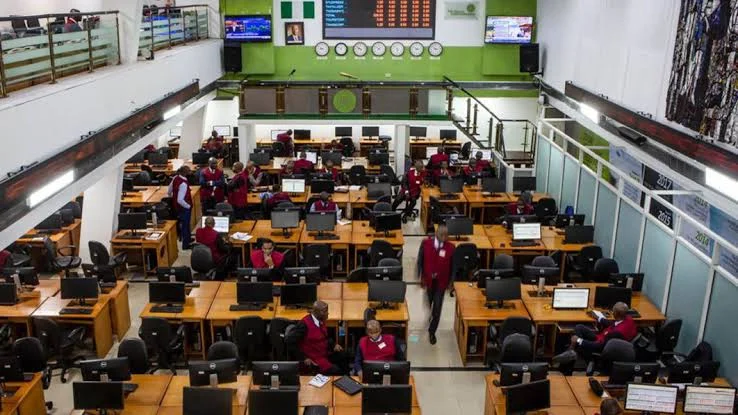
Nigerian Exchange LimitedThe Nigerian Exchange Limited witnessed an extraordinary surge in activity as investors traded 8.761 billion shares valued at N267.253bn in 193,473 deals, despite a shortened trading week.

This massive turnover, which occurred in just three business days due to the Federal Government declaring public holidays on 19 and 20 March to commemorate the Eid-el-Fitr celebration, stood in stark contrast to the previous week’s total of 3.321 billion shares valued at N164.845bn.

The ICT industry dominated the activity chart by volume, accounting for 5.330 billion shares worth N46.825bn and contributing a staggering 60.84 per cent to the total equity turnover. This momentum was largely driven by heavy trading in E-Tranzact International Plc, FCMB Group Plc, and Wema Bank Plc, which together represented nearly 70 per cent of the week’s total volume.

The market’s primary benchmarks reflected this bullish sentiment, with the NGX All-Share Index and Market Capitalisation both appreciating by 1.39 per cent to close the week at 201,156.86 points and N129.126tn respectively.

While the broader market flourished, sectoral performance was mixed; the NGX Insurance, Oil & Gas, and Commodity indices recorded depreciations, while the NGX Sovereign Bond index remained flat. Amidst this volatility, the exchange also expanded its offerings with the listing of NGX30U6 and NGXPENSIONU6 Futures Contracts, alongside new commercial paper issuances from NGN Gram Limited totalling billions in value.

Market analysts have noted that the rush into equities and the tightening of yields in the fixed-income space suggest a strategic shift among institutional players. In their weekly review, analysts at Meristem Securities observed that investors are moving with increased urgency to secure positions before market conditions shift further.

According to the firm’s perspective on the current climate, “As yields begin to trend lower, investors move quickly to lock in still-attractive rates before further declines materialise, a behaviour evident in the significant rise in subscriptions and the downward trend of average Treasury bill yields.”

This aggressive positioning indicates that despite the holiday-shortened window, the appetite for both high-volume equities and debt instruments remains at a peak for the first quarter of 2026.

The current surge in the ICT sector is not just a weekly anomaly; it represents a significant structural shift in the Nigerian Exchange that has been gaining momentum since 2024. Historically, the Financial Services industry has been the traditional heavyweight of the Nigerian market, often accounting for 50 per cent to 70 per cent of total trading activity.

However, the data from March 2026 shows the ICT sector contributing 60.84 per cent of total volume and 17.52 per cent of value, a stark contrast to its historical standing.

The dominance seen in the third week of March 2026 is driven by several critical factors, including the ‘Fintech’ surge. Companies like E-Tranzact have seen their market capitalisations nearly double in the last 12 months, hitting N180bn in March 2026, reflecting the massive adoption of digital payment infrastructure in Nigeria.

The growth is no longer limited to just telecom giants like MTN and Airtel; mid-cap technology firms specialising in cloud computing and data centres are seeing unprecedented trading volumes as Nigeria’s “Digital Public Infrastructure” expands.

The ICT sector’s 58 per cent year-on-year market capitalisation growth in 2025 set the stage for the high-conviction trading seen this month. While the Financial Services sector still leads in value with N95.892bn compared with ICT’s N46.825bn this week, the sheer volume of shares changing hands in ICT indicates that retail and institutional investors are increasingly viewing technology as the primary engine for future growth.

MTN Nigeria rebounds with N1.1tn profit

New-mtn-logoMTN Nigeria has reported a staggering N1.1tn profit for the 2025 financial year. This turnaround marks a significant departure from the fiscal headwinds of 2024, signalling a robust resurgence in the country’s digital economy.

Speaking on Channels Television, the Chief Financial Officer of MTN Nigeria, Modupe Kadri, broke down the numbers that defined the company’s “impressive” performance. He revealed that the firm achieved a 22.9 per cent increase in service revenue, reaching N392.2bn, fuelled by a surge in third-quarter activity.

The recovery was not a matter of chance but the result of aggressive capital expenditure. Kadri disclosed that the company’s investment in the sector has reached unprecedented levels. “We spent about N1tn in 2025, significantly higher than our 2024 investment levels. We will continue now that we have a business case to make this investment,” he explained.

Despite the massive profit and the deployment of over 2,850 new network sites, the CFO offered a grounded perspective on when consumers will feel the full impact of these billions.

He addressed the recurring question of whether increased income immediately equates to better service quality. “The telecommunications industry is capital-intensive. Even when the capital is available, improvements in network infrastructure take time to materialise. We are not out of the woods yet, but the impact of such investments will be fully realised in time,” he said.

Looking towards the future, MTN is shifting its focus toward the “unconnected” segments of the Nigerian population. With the industry’s total investment exceeding $1bn, the company is eyeing a 70 per cent broadband penetration rate through a mixture of traditional and frontier technologies.

“There is a growing need to expand connectivity as Nigeria’s population increases. Areas previously classified as rural require improved population coverage. Our goal is to exceed 2025 investment levels with the Bridge Project and a ‘satellite revolution’ aimed at closing the rural connectivity gap,” he added.

Fidelity Bank to proffer solutions to public sector revenue challenges at high level stakeholders’ Webinar

Leading financial institution, Fidelity Bank Plc, is set to host a high-level virtual webinar focused on helping public institutions to strengthen revenue systems, improve fiscal transparency, and build smarter digital structures for collections, oversight, and accountability.
Scheduled for Tuesday, March 24, 2026, the session, themed Digital Fiscal Transparency: Unlocking Sub-national Opportunities for International Partners, will bring together a cross-section of public sector leaders, development institutions, heads of parastatals and agencies, as well as financial experts to explore practical solutions for stronger public finance management.
“As public institutions seek ways to improve internally generated revenue and strengthen public trust, there has been a renewed focus on fiscal transparency. This is particularly important in the face of recent macro and micro economic developments with many public sector agencies under pressure to do more with limited resources.
“It is against this background that we have conceptualised this session with a particular focus on how digital platforms can support structured invoicing, seamless collections, payment automation, contractor disbursement transparency, real-time revenue oversight amongst other pertinent areas of revenue mobilization and administration in Nigeria”, commented Richard Madiebo, Divisional Head, Public Sector, Fidelity Bank Plc.
The event is expected to offer timely insights into how modern revenue infrastructure can help institutions improve efficiency, drive accountability, and support better fiscal outcomes.
The webinar will address key issues facing many public institutions today, including revenue leakages, fragmented collection channels, weak visibility into revenue performance, poor reconciliation processes, and the growing need for more transparent and technology-driven systems.
According to Madiebo, “The webinar forms part of our commitment to provide practical solutions that support public sector transformation and stronger sub-national development. This is in line with Fidelity Bank’s mandate to help individuals to grow, businesses to thrive and economies to prosper.”
Interested participants may register at www.fidelitybank.ng/publicsectorwebinar
2027: Lagos indigenes demand governorship slot from APC

A group under the banner of Lagos State Prominent Indigenes has called on the All Progressives Congress to reserve the state’s governorship position for qualified indigenous candidates in the 2027 elections, citing the need for fairness, equity and inclusiveness.

The call was made during a technical committee meeting held on March 18, 2026, where the group also declared its support for the re-election of President Bola Ahmed Tinubu for a second term.

At the meeting, members further resolved that key leadership positions in Lagos State, including the offices of Governor, Deputy Governor and Speaker of the House of Assembly, should, by 2027, be occupied by indigenes of the state.

In a communiqué issued at the end of the session, and signed by the Convener, Adesunbo Onitiri, the group explained that its position is rooted in the need to promote equity, preserve local identity, and strengthen stakeholder participation in governance.

According to the communiqué, aspirants seeking the governorship must meet clearly defined criteria, including verifiable Lagos ancestry, strong academic and professional credentials, and demonstrable experience in leadership across the public or private sectors.

The group also emphasised the importance of integrity, stating that prospective candidates must have a clean record, free from corruption or criminal allegations.

“They must exhibit sound character, discipline, and exemplary personal conduct, with proven achievements within and beyond Lagos State,” the communiqué stated.

It added that such individuals should demonstrate commitment to societal values, including family responsibility, while also possessing the ability to lead collaboratively with a focus on transformational governance.

The group further indicated its readiness to engage with all eligible aspirants, with the aim of identifying and supporting candidates capable of advancing the collective interests and future development of Lagos State.

Labour Party gets new chairman in Benue, interim executive members

The Labour Party (LP) in Benue State has appointed Hon. Ochonu Williams as its new State Chairman, along with an interim executive committee.

Prior to this appointment, Williams served as Chief of Staff to Hon. Chief Philip Agbese, the Deputy Spokesperson of the House of Representatives, representing the Ado/Okpokwu/Ogbadibo Federal Constituency.

In this capacity, he played a key role in legislative coordination, constituency engagement, and administrative leadership within the lawmaker’s office.

The appointment comes under the leadership of the Labour Party’s National Chairman, Dr. Nenadi Usman.

Eid-el-Fitr: Muslim community asks Fubara to build central mosque in Rivers

A delegation of the Muslim community in Rivers State, led by Nasir Uhor, has appealed to Governor Siminalayi Fubara to facilitate the construction of a central mosque in Port Harcourt, restore the Muslim section of a cemetery to the appropriate council, and allocate land for a mosque at Rivers State University.

The request was made during a courtesy visit to the governor in Port Harcourt on Friday as part of activities marking the Eid-el-Fitr celebrations.

The delegation comprised Islamic clerics and leaders of the Arewa community in the state.

Speaking on behalf of the group, Uhor expressed appreciation to the governor for his inclusive leadership style and for granting them an audience, while presenting their demands.

“We are grateful for the opportunity to engage with the government. However, we respectfully appeal for the establishment of a central mosque in Port Harcourt, the return of the Muslim cemetery section to the council, and allocation of land for a mosque within Rivers State University,” he said.

Responding, Governor Fubara reaffirmed his administration’s commitment to protecting the lives and property of all residents, irrespective of religious or ethnic background.

He emphasised that everyone residing in Rivers State should be regarded as a stakeholder in its development.

“Anyone who lives, works, and contributes to the growth of Rivers is, in essence, an indigene of the state, regardless of origin,” the governor said.

“Because you have made this place your home, it is the responsibility of government to ensure your safety and protect your interests,” he added.

Fubara also commended the Muslim faithful for their discipline and devotion throughout the Ramadan period.

Addressing concerns around farmer-herder tensions, he noted that the state has maintained relative peace through proactive engagement and coordination with security agencies.

He urged religious leaders to continue promoting peace and responsible conduct among their followers.

“As leaders, you have a duty to guide your people and ensure they conduct themselves in ways that promote harmony in our communities,” he added.

The governor assured the delegation that their requests would be carefully considered and addressed in line with available resources and government priorities.