CBN Outlines Priority Needs To Support Digital Financial Growth

The Central Bank of Nigeria (CBN) has released a comprehensive assessment of Nigeria’s fintech landscape, outlining the priorities needed to sustain innovation, strengthen system integrity, and support the next phase of digital financial growth.

The report examines the scale and maturity of Nigeria’s fintech ecosystem, highlighting the country’s leadership in real-time payments and the structural factors shaping recent growth. It positions fintech innovation as a complementary force within the financial system, expanding access, efficiency, and reach, while preserving stability and resilience.

Informed by surveys and extensive stakeholder engagement, the report outlines practical policy directions to improve regulatory coordination, strengthen supervisory capability, and support responsible innovation, including cross-border scale. It underscores interoperability, proportional regulation, and effective execution as critical enablers of sustainable ecosystem development.

This publication forms part of an ongoing series through which the CBN will continue to engage the financial sector, provide clearer regulatory direction, and support more coordinated execution. It is intended to serve as a shared reference point for banks, fintech firms, regulators, infrastructure providers, investors, and partners as Nigeria consolidates its position within the regional and global fintech landscape.

TotalEnergies Reaffirms Commitment To Local Content Development

TotalEnergies has reaffirmed its commitment to continuously improve initiatives that will improve on its local content delivery.
Speaking at the 9th Nigerian International Energy Summit, Mr. Cyprian Ojum, Deputy General Manager, Nigerian Content, TotalEnergies, emphasized that local content is a strategic priority, not just a compliance checkbox.

He stated that the Nigerian Oil and Gas Industry Content Development Act of 2010 is clear: every operator must treat local content as an operating philosophy, focusing on retaining value locally.

“This week, we are discussing content as a strategic priority. We are here to tell a story, one that centers on local consciousness. This is not about ticking a compliance checkbox or fulfilling a political obligation. It is about having a deliberate plan”

“The Nigerian Oil and Gas Industry Content Development Act of 2010 is very clear, every operator, alliance partner, project promoter, contractor, or any entity involved in monitoring the oil and gas industry in Nigeria must treat local content as an operating philosophy”

“From the moment a project is conceived, the key question becomes: what quantity of value will be retained locally at the end of this project? That is precisely how local content is defined under the 2010 Act. Project design must therefore be driven by value retention”.

“This is why, at the early stages of our projects, we engage in extensive iterations with the SDLD. We make multiple visits to the NCDMB and sit with the Project Certification and Operations Department to review and refine our Nigerian Content Plan.”

“As mentioned earlier, the Act covers 17 service categories and over 300 subsections, each with clearly defined minimum and maximum local content thresholds. Whether the activity involves fabrication, construction, procurement, installation, transportation, drilling, mud services, or other operations, there are specific percentages that must be achieved, he said.

Ojum emphasized that local content is not just about compliance, but about building expertise and retaining value in-country. He cited the Agena project as an example of successful capacity building and value creation.

“Beyond value retention, Sections 10, 27, 28, 29, and 30 of the Act emphasize training Nigerians and developing capacity. For us, performance-driven local content is anchored on capacity building”.

“Take the Agena project as an example. Capacity development was deliberately built into the project through infrastructure investment. When LADOL and the Samsung–LADOL collaboration were referenced earlier, that speaks directly to TotalEnergies’ commitment.The largest FSO in Nigeria was delivered through this project”

“Within the Agena project alone, about 200 Nigerians were trained in critical skills that are actively deployed across the industry today not only within TotalEnergies, but also across other companies.

“Today, Agena contributes nearly 10 per cent of TotalEnergies’ global production. That level of impact underscores the scale of value created in Nigeria”, he said.

He explained that Total Energies’ approach includes: Human Capacity Development, designed to respond to industry needs, focusing on sustainability.

Value retention, by prioritizing local value creation and retention, and collaboration, this is done by working with local contractors and NCDMB to meet local content thresholds.

Ojum said TotalEnergies has achieved significant success in local content development, with its IKAN project reaching 95 per cent Nigerian content.

Highlighting the company’s commitment to building expertise and retaining value in the country,Ojum emphasized that Nigerians can deliver complex oil and gas projects to international standards, citing the IKAN project’s success, adding that the Ubata project aims to further push local content boundaries.

Ojum’s remarks highlight the importance of local content in driving Nigeria’s energy industry growth and sustainability.

Sanwo-Olu seeks deeper World Bank partnership for development

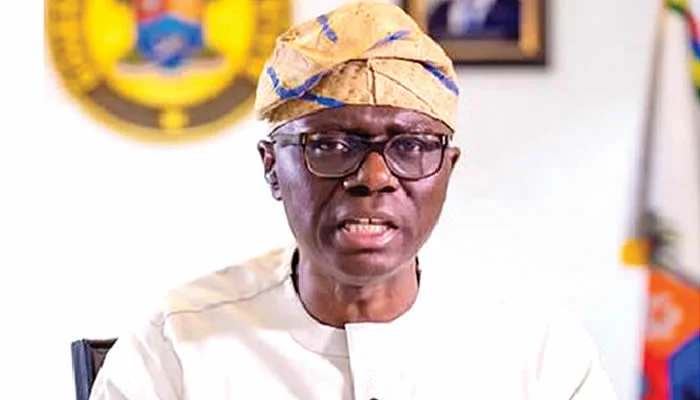
Lagos Gov., Sanwo-OluGov. Babajide Sanwo-Olu says Lagos State is ready to partner with the World Bank Group in energy, agriculture, tourism and human capital development.
He said the state was open to deeper collaboration and investment partnerships to improve infrastructure and raise living standards across Lagos.

Sanwo-Olu spoke on Sunday at Lagos House, Marina, while receiving a World Bank delegation led by Managing Director (Operations), Ms Anna Bjerde.

The delegation also included the International Finance Corporation (IFC) Regional Vice President for Africa, Mr Ethiopia Tafara.

The governor said Lagos remained committed to reforms that attract global support and was ready to meet requirements for increased World Bank assistance.

“Lagos is ready to do more to attract investments and partnerships that will positively impact our people.

“We are open to collaboration that strengthens infrastructure and accelerates inclusive growth,” he said.

Sanwo-Olu highlighted achievements under the THEMES+ agenda, saying its implementation had delivered measurable benefits to millions of residents.

He disclosed that Lagos moved from 29th to first position in the national Ease of Doing Business ranking within four years.

“We doubled our performance across critical areas through deliberate reforms and efficiency,” the governor said.

Earlier, Bjerde said the World Bank Group was keen to work with Lagos due to its strategic importance and reform-driven impact.

She described Lagos as a key World Bank stakeholder, citing stability created by recent economic and policy reforms.

“What Lagos is doing is demonstrative of national solutions. Nigeria’s policy consistency improves predictability, especially for investors,” she said.

Bjerde commended Lagos for reducing bureaucratic bottlenecks and improving the Ease of Doing Business environment.

She said the World Bank planned a five-year country review to assess progress at national and subnational levels, including Lagos.

Bjerde added that the institution was ready to leverage Lagos’ capacity to strengthen private sector financing across key sectors.

First HoldCo Records Major Impairment Charge, Grows Gross Earnings To ₦3.4tn

First HoldCo Plc has announced its unaudited financial results for the year ended 31 December 2025, reflecting a year of deliberate strategic actions aimed at strengthening its balance sheet, improving asset quality, and positioning the business for more resilient and sustainable growth amidst successful capital raise activities.
As stated in the unaudited Group financial statement, FirstHoldCo recorded a 4.8% year-on-year (y-o-y) increase in its Gross earnings to N3.4 trillion, supported by a 36.3% y-o-y growth in net interest income of N1.9 trillion on the back of enhanced earnings yield and margins of 17.11% and 11.0%, respectively. Similarly, net fees and commissions improved by 18.7% y-o-y to N290.7 billion. These are clear indications of the strength of the revenue generating capacity of the core business which continues to be solid.

 Earnings for the year were, however, lower than the prior year, primarily due to higher impairment charges in the commercial banking segment.
This is in line with a deliberate strategic decision to accelerate balance sheet clean-up and adopt more aggressive provisioning standards. Management views this as a prudent step that enhances transparency, strengthens investor confidence, and aligns fully with evolving regulatory expectations.

Additionally, increased regulatory costs affected profitability. These charges, while weighing on the results, underscore the Group’s compliance with Nigeria’s financial system stability framework and its commitment to ensuring systemic confidence. Despite these pressures, underlying performance of the Group remains strong.

Deposit liabilities grew by 10.0% y-o-y, driven by sustained deposit mobilisation and continued investment in digital banking platforms. This growth reflects strong customer confidence and deepening engagement across key segments.

The deposit mix also showed a deliberate reduction in foreign currency deposits, resulting from the repayment of expensive funding and the impact of naira appreciation. This shift supports improved funding efficiency and reduces foreign exchange risk.

Gross loans and advances declined marginally, reflecting a disciplined approach to credit growth, strengthened risk management, loan repayments, write-offs, and the translation impact of a stronger naira on foreign currency facilities.

The Group intensified its commitment to ensuring a high-quality, cleaner asset base, aiming to optimise the portfolio and enhance future earnings potential.

Furthermore, performance in earnings was impacted by a decline in non-interest income, mainly due to lower fair value gains on financial instruments following the naira appreciation in 2025. However, this was partially offset by stronger foreign exchange (FX) trading income and reduced FX revaluation losses.

Net fees and commission income also grew, supported by higher electronic banking fees, letters of credit commissions, custodian fees, and account maintenance income, reflecting the continued success of the Group’s digital-innovation strategy.

While impairment charges increased following the end of regulatory forbearance, management has intensified recovery initiatives and reinforced credit oversight.

Excluding impairment and fair value gains, pre-provision operating profit grew by 23.9% y-o-y to N973.3 billion demonstrating robust performance of the core business.

Apart from the commercial banking impairments, performance across the rest of the Group remained resilient, supported by steady customer activity and disciplined execution.

Looking ahead, the Group will continue to prioritise disciplined execution of its strategic objectives, with emphasises on enhancing efficiency and profitability, continuing to build on the Group’s digital and data capabilities, while sustaining a robust balance sheet to support increased value creation and returns for shareholders.

Alongside this, the Group will pursue selective growth initiatives, including new revenue streams, additional business verticals, and deeper participation in targeted African markets, in line with our strategy and risk appetite.

Further details and insights are to be provided when the audited full-year results are published and during the subsequent investor and analyst earnings call.

Dangote Group, NNPC Subsidiaries Seal Strategic Gas Agreements

Towards meeting the energy demands of their ongoing expansion projects, three subsidiaries of Dangote Industries Limited, Dangote Petroleum Refinery, Dangote Fertiliser Plant and Dangote Cement Plc have scaled up their Gas Sales and Purchase Agreements (GSPA) with subsidiaries of the Nigerian National Petroleum Company Limited (NNPC Ltd): Nigerian Gas Marketing Limited and NNPC Gas Infrastructure Company Limited (NGIC).
The upscaled Supply Agreements will help to drive the conglomerate’s Vision 2030, resulting in increased output, better and cleaner energy supply as well as support ongoing expansion projects. The Agreements were signed at the unveiling of the NNPC Gas Master Plan (GMP) 2026, tagged NGMP 2026 held at the NNPC Towers weekend in Abuja.
Managing Director and Chief Executive Officer of Dangote Petroleum Refinery, Mr. David Bird, signed on behalf of the refinery, while the Group Managing Director of Dangote Cement Plc, Mr. Arvid Pathak, signed on behalf of the cement company. Mr. Mustapha Matawalle signed on behalf of Dangote Fertiliser FZE.
CEO of Dangote Petroleum Refinery, David Bird speaking at the signing ceremony said that the agreement demonstrates the refinery’s bold steps to expand its capacity. According to him, the agreements mark a critical milestone in the expansion drive as well as a proactive measure to lock in vast energy requirements for the anticipated increase in its production capacity.
According to Pathak, the agreement signing serves as an enabler of DCP’s strategic objectives. The agreement guarantees the gas required to support the drive towards CNG adoption as Autogas and to meet the increasing gas demand as production capacities in Nigeria are expanded. It also promotes the adoption of cleaner fuel for both Autogas through CNG and gas to support increased production output.
For Dangote Fertiliser FZE, it is anticipated the agreement will support the company’s fertiliser capacity expansion projects, given that fertiliser is a product of natural gas.
Meanwhile, speaking at the event, the Minister of State for Petroleum Resources (Gas), Rt. Hon. Ekperikpe Ekpo, described the Gas Master Plan as a deliberate pivot from policy articulation to disciplined execution, anchored on commercial viability and integrated sector-wide coordination.
He said: “Today’s launch is not merely the unveiling of a document; it represents a deliberate shift towards a more integrated, commercially driven, and execution-focused gas sector, aligned with Nigeria’s development aspirations. Nigeria is fundamentally a gas Nation. With one of the largest proven gas reserves in Africa, our challenge has never been potential, but translation: translating resources into reliable supply, infrastructure into value, and policy into measurable outcomes for our economy and our people. The Gas Master Plan speaks directly to this challenge.”
Hon. Ekpo further noted that the Plan’s strong focus on supply reliability, infrastructure expansion, domestic and export market flexibility, and strategic partnerships aligns seamlessly with the Federal Government’s Decade of Gas Initiative, positioning natural gas as the backbone of Nigeria’s energy security, industrialisation, and just energy transition.
In his address, the Group Chief Executive Officer, NNPC Ltd, Engr. Bashir Bayo Ojulari, described the NNPC Gas Master Plan 2026 as a bold, effective execution-anchored roadmap designed to unlock Nigeria’s immense gas potential and elevate the country into a globally competitive gas hub.
Ojulari noted that with about 210 trillion cubic feet (Tcf) of proven gas reserves and an upside potential of up to 600 Tcf, Nigeria possesses one of the most consequential hydrocarbon basins in the world; one reinforced by the Petroleum Industry Act (PIA) and the Federal Government’s gas-centric energy transition agenda.
“The Plan is structured not just to deliver – but to exceed- the Presidential mandate of increasing national gas production to 10 billion cubic feet per day by 2027 and 12 billion cubic feet per day by 2030, while catalysing over 60 billion dollars in new investments across the oil and gas value chain by 2030.”
He explained that the Plan prioritises cost optimisation, operational excellence, and systematic advancement of resources from 3P to bankable 2P reserves, while strengthening gas supply to power generation, CNG, LPG, Mini-LNG, and critical industrial off-takers.
Reaffirming his personal commitment as Chief Sponsor of the initiative, the NNPC Ltd GCEO stressed that the Company has adopted a more collaborative, investor-centric approach in shaping the NGMP 2026, with strong alignment to industry stakeholders, partners, and investors.
Polaris Bank Strengthens MSMEs Export Ecosystem At NAHCO/NACCIMA Export Group Programme

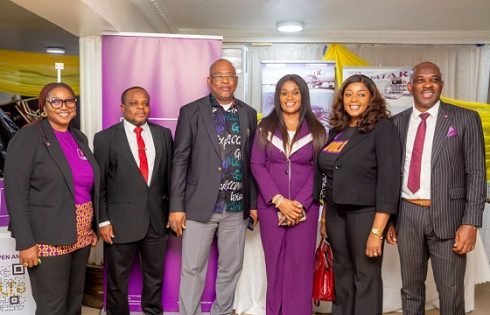
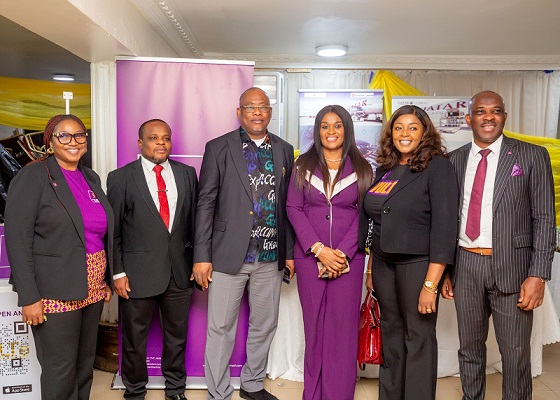
Polaris Bank has reaffirmed its strategic commitment to strengthening Nigeria’s non-oil export ecosystem and empowering micro, small and medium-sized enterprises (MSMEs) at the NAHCO and NACCIMA Export Group Programme themed *Breaking Barriers: Helping SMEs Navigate Export Procedures for Agro Products and Other Commodities.”
The one-day engagement brought together regulators, industry stakeholders, exporters and trade bodies to advance practical solutions for easing trade barriers, improving access to finance and building a more resilient and diversified Nigerian economy.
The programme also marked the formal introduction and launch of the NACCIMA Export Group and the NAHCO Export Support Centre for MSMEs in Nigeria, creating a structured platform for exporters to access trade facilitation services, logistics support, regulatory guidance and financial solutions across the export value chain.
Speaking at the programme, Polaris Bank’s Executive Director, Chris Ofikulu, underscored the national importance of export diversification and the central role of SMEs in building a resilient economy. He noted that reducing Nigeria’s dependence on oil revenues requires coordinated action across the public and private sectors to strengthen non-oil exports, particularly within agro-exports and commodity trade.
“Expanding non-oil exports is not optional; it is a strategic imperative for building a resilient, inclusive and competitive Nigerian economy. SMEs, particularly in agro-exports and commodity trade, hold the key to unlocking our true comparative advantage. Polaris Bank remains committed to providing the finance, advisory support and partnerships required to help them scale confidently and compete globally,” Ofikulu said.
The engagement also focused on addressing structural challenges confronting exporters, including infrastructure gaps, port inefficiencies, logistics constraints, standards and certification requirements, and policy consistency.
Participants emphasized the need for stronger public-private collaboration among government agencies, trade bodies, financial institutions and logistics partners to simplify export procedures and improve market access for Nigerian SMEs.
Also addressing stakeholders, Olaleye Arinola, Team Lead, Trade Services, Polaris Bank, highlighted the importance of removing trade and payment bottlenecks that limit exporter competitiveness and cash flow. He emphasized the Bank’s focus on building confidence and certainty into the export process through practical financial and advisory support.
“Exports cannot grow if finance and payments remain obstacles. At Polaris Bank, our focus is on removing friction from international trade by ensuring SMEs get paid faster, safer and with greater certainty through efficient trade finance, secure cross-border payments and hands-on guidance across documentation, FX and compliance,” Arinola said.
As part of its partnership with the business and trade community, Polaris Bank unveiled a Dedicated Help Desk for NACCIMA members, designed to provide direct access to trade finance and payment support, fast-track resolution of export-related enquiries, and personalized advisory services on FX documentation and regulatory compliance.
Polaris Bank reaffirmed its commitment to working closely with NAHCO, NACCIMA and other stakeholders to strengthen exporter capacity, promote value addition across agro-exports and commodities, and unlock sustainable growth opportunities for Nigerian businesses in regional and global markets.
As Nigeria advances its economic diversification agenda, Polaris Bank remains positioned as a trusted partner for SME exporters, providing the finance, knowledge and institutional support required to compete globally and contribute meaningfully to national development and long-term economic resilience.
Sanwo-Olu defends Makoko demolition, cites public safety concerns

Governor Babajide Sanwo-Olu of Lagos State has defended his administration’s demolition of waterfront shanties in parts of Makoko, saying the action was taken solely to protect lives and prevent what he described as an impending humanitarian disaster.
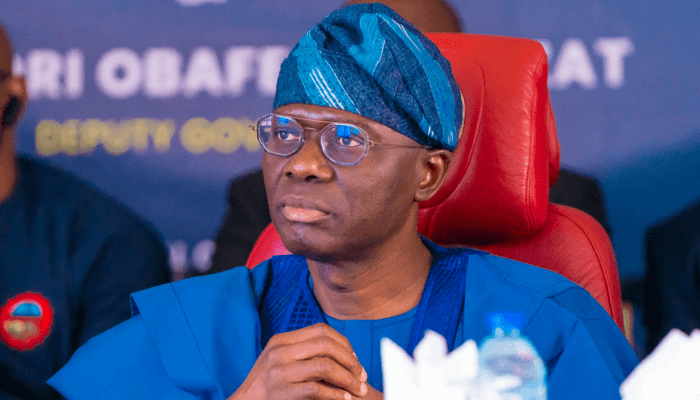
The governor spoke on Friday during a closed-door breakfast meeting with selected Managing Directors and Chief Executive Officers in Ikoyi.

The meeting was organised by the Lagos State Security Trust Fund, LSSTF, as part of efforts to mobilise resources for the state’s security needs in 2026.

Responding to public criticism and protests that followed the demolition of structures around the Third Mainland Bridge corridor, Sanwo-Olu said the settlement had expanded at an alarming pace and had encroached dangerously close to critical infrastructure.

“I have been accused of destroying Makoko. But the challenge is that the settlement was growing at an incredible speed and moving dangerously close to the bridge.

“There are high-tension power lines underneath. I am not going to sit down and allow a situation where, in one day, 100 to 500 people could die,” he said.

He stressed that the exercise was not politically motivated and was not intended to displace residents permanently, but to push them away from areas considered unsafe.

“Of what benefit would it be for the government to dislocate people?” Sanwo-Olu asked, adding: “It can only be for their own safety. We will not sit back, allow disaster to happen, and then be blamed for inaction.”

The governor disclosed that the state government had explored partnerships with international development agencies to redevelop Makoko in a sustainable manner, but said such efforts had yielded little progress.

“For six years, a United Nations agency said if I brought money, they would support development. I told them I already had my own money. Till today, they have not returned. Only last week they said they had no funds,” he said.

Sanwo-Olu also criticised some non-governmental organisations, accusing them of exploiting the Makoko situation to attract donor funding rather than offering lasting solutions.

Beyond the Makoko issue, the governor used the forum to call on the private sector to deepen its support for Lagos’ security architecture through the LSSTF.

He outlined priority security needs to include multipurpose helicopters and drones, armoured personnel carriers, water cannons, smart CCTV cameras, digital communication systems, patrol vehicles, tactical training and upgrades to police infrastructure.

According to him, the Lagos State Government currently shoulders more than half of the state’s annual security expenditure, adding that the LSSTF has continued to enjoy credibility due to transparency and accountability.

“We want to ensure Lagos remains secure. We are rebuilding the Command and Control Centre with state-of-the-art equipment and scaling up our Safe City CCTV initiative. Improving emergency response capacity remains a top priority,” Sanwo-Olu said.

The governor also announced plans to commission 35 junior and senior secondary schools in Tolu, Ajegunle, next month, noting that the facilities would accommodate about 22,000 students and help address education gaps in densely populated communities.

Drawing a comparison with the long-standing Okobaba sawmill challenge, Sanwo-Olu said his administration successfully relocated operators to Agbowa, ending years of recurrent fire incidents after investing billions of naira and providing over 500 housing units.

He emphasised that urban safety, security and social infrastructure must advance together if Lagos is to remain attractive to investors.

“We need to keep our people safe, secure the future and assure investors that Lagos remains the right environment for growth,” the governor added.

Alternative Bank urges stable policies to unlock private capital

Alternative BankThe Executive Director, Commercial and Institutional Banking for Lagos and the South-West at The Alternative Bank, Korede Demola-Adeniyi, has called for stronger public-private collaboration and predictable policies to accelerate blended finance and mobilise private capital for inclusive growth.
According to a press statement on Thursday, Demola-Adeniyi made the call at the Africa Social Impact Summit High-Level Policy Engagement held at the State House Conference Centre, Abuja.

The session was hosted by the Office of the Vice President in partnership with Sterling One Foundation and the United Nations Nigeria, under the theme Scaling Action Driving Inclusive Growth Through Policy and Innovation.

She said blended finance could deliver commercially sound outcomes while advancing development priorities when transactions are properly structured, and risks are transparently shared among government, development finance institutions, banks, and other stakeholders.

According to her, DFI-supported blended finance structures often record stronger repayment performance than conventional lending when risks are clearly allocated and execution is actively monitored.

“Blended finance works when the structure is clear, and the risk-sharing is real,” she said. “However, private capital will not be committed at scale when the rules can change halfway through execution. If we want investors to show up, policy has to be predictable.”

Demola-Adeniyi explained that the bank approaches transactions as partnerships rather than conventional interest-based lending, assessing viability through profitability, agreed profit-sharing structures, and the responsibilities of each party.

“If a project is viable, we evaluate how it makes money, how profit is shared, and what each party is responsible for,” she said. “Our model is that of a partnership built to deliver results.”

She cited the bank’s impact collaborations as proof that blended finance can move from policy conversations to measurable outcomes when execution is properly supported.

In Kano, she said the bank delivered an electric mobility initiative through the UK government’s FCDO-funded LINKS programme, while also working with women’s cooperatives and transport stakeholders to train about 100 women, certify 30 mechanics, and support operations with tools, a service centre arrangement, and battery recharging infrastructure.

She said the project showed how coordinated capital and implementation could expand economic participation. Demola-Adeniyi identified policy inconsistency as a major barrier that weakens investor confidence and can threaten transactions after capital has been mobilised.

“When a policy is introduced, stakeholders structure and fund projects around it, and then it changes midstream, the project is put at risk,” she said. “That is how capital gets stranded on the table.”

She urged policymakers to adopt a multi-year blended finance framework that protects already approved transactions from midstream policy changes through clear stabilisation provisions, noting that predictability is critical for long-term capital planning. “If the goal is a $1tn economy, then we need rules that investors can trust long enough to build,” she said.

The Vice President, Kashim Shettima, also called for a shift in development thinking beyond public spending to long-term investments in human capital, productive systems, climate resilience, digital infrastructure, and inclusive markets. He was represented by Hauwa Liman, Technical Adviser on Women, Youth Engagement and Impact.

“The future of this continent will not be financed by aid alone. It will be driven by patient capital, catalytic capital, blended finance, and private enterprise deployed with discipline and guided by impact,” Shettima said.

He reaffirmed the administration’s commitment to expanding opportunities for young people and women, warning that fragmentation among stakeholders could undermine progress. “The stakes are too high for disunity. Development is not done to people; it is built with them. Progress demands coalition,” he said.

Shettima urged African leaders and partners to close the gap between promise and performance, noting that leadership would ultimately be judged by systems built, institutions strengthened, and futures secured.

Transcorp hotels posts record revenue of N97.04bn

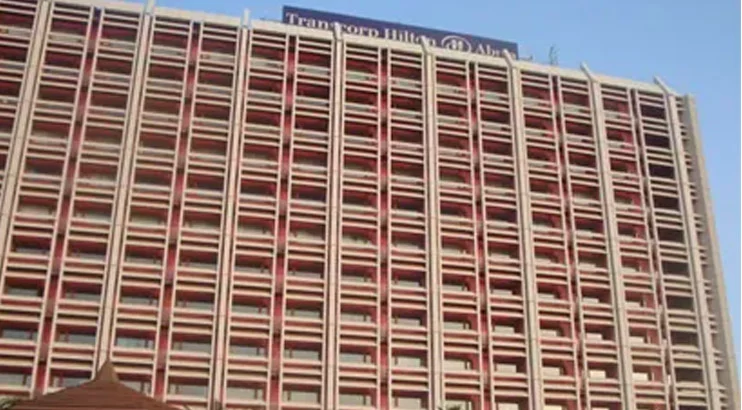
Transcorp HotelsTranscorp Hotels Plc, the hospitality subsidiary of Transnational Corporation Plc, has reported a historic revenue worth N97.04bn in 2025, which is 38 per cent higher than N70.13bn in the previous year.

This was indicated in the audited financial reports of the company filed with the Nigerian Exchange Limited on Friday.

The PUNCH reports that the hospitality business is one of the companies on the NGX with a market capitalisation in excess of N1tn.

In the period under review, the company’s record revenue of N97.04bn was driven by robust demand in room bookings, conferencing, food and beverage services, and other ancillary services offerings.

It’s Gross Profit margin expanded to 77 per cent, from 71 per cent in FY 2024, driven by increased volumes, effective cost management, and operational efficiencies.

Operating Profit hit N35.24bn, up 35 per cent from N26.03bn in 2024. Profit Before Tax rose by 45 per cent to N32.82bn, from N22.61bn in FY 2024.

Similarly, Profit After Tax rose to N21.85bn from N14.90bn, marking a 47 per cent appreciation year-on-year.

In a statement accompanying the report, the Board Chair, Transcorp Hotels Plc, Dr Awele Elumelu, said, “I am delighted with the FY 2025 performance of Transcorp Hotels Plc, led by Mrs Uzoamaka Oshogwe.

“We have continued to strengthen the foundation of our company, with our growing asset base and equity–increasing by 14 per cent & 18 per cent, respectively, positioning us for the future.

“We will continue to be focused on driving operational excellence and business growth, whilst exploring new avenues for sustainable long-term value creation for all.”

Managing Director/Chief Executive Officer, Transcorp Hotels Plc, Uzoamaka Oshogwe, added, “Our full-year 2025 performance represents a major milestone, with record revenue of N97.04bn and retained earnings rising sharply from N63.23bn in FY 2024 to N77.53bn, further enhancing our financial resilience and long-term growth capacity. Our success results from disciplined operational efficiency, strong cost management, and most importantly, our exceptional team’s commitment to service excellence.

“Guided by a bold, future-focused vision, we continue to invest in transformative infrastructure, notably the 5,000-seat world-class Transcorp Centre, positioning Nigeria as a premier global convening destination for high-profile events, including the Afreximbank Annual Meetings, ECOWAS Summits and many more. Looking ahead, we will continue to innovate and leverage cutting-edge technology to strengthen our brand and redefine hospitality standards across Africa.”

On its balance sheet, the total assets of Transcorp Hotels hit N159.91bn, representing a 14 per cent increase from N140.70bn in 2024, reflecting substantial investments in physical
facilities, supporting our future growth trajectory.

Its total equity increased to N95.23bn from N80.52bn.

Petrol to hit N1,000/litre as crude crosses $70 — Marketers

Petrol

The pump price of Premium Motor Spirit (petrol) may rise to N1,000 per litre in the coming days due to the surge in crude oil prices on the international market.

Fuel marketers told Saturday PUNCH that the sudden surge in the global crude prices to over $70 per barrel could trigger another increase in the pump prices of both imported and locally-produced petroleum products.

The increase in petrol prices came at a time when the Dangote Petroleum Refinery raised petrol prices from N739 to N839. Also, oil prices rose above $70 per barrel on Thursday, the highest in the past five months.

The commodity rose by three per cent on Thursday on rising concerns that global supplies could be disrupted if the United States attacks Iran, one of the biggest crude producers of the Organisation of Petroleum Exporting Countries.

According to Reuters, Brent futures rose $2.31, or 3.4 per cent, to settle at $70.71 a barrel, while US West Texas Intermediate gained $2.21, or 3.5 per cent, to trade at $65.42. As of Friday afternoon, oilprice.com reports that Brent settled at $70.89 while WTI was $65.80 a barrel, indicating a further rise in price.

It is worth stating that Brent crude is the global benchmark for crude oil, and a rise in its price affects the pricing dynamics of refined petroleum products globally.

Reuters reports that the US-Iran tension pushed both crude benchmarks ‌into technically overbought territory, with Brent closing at its highest since July 31 and WTI closing at its highest since September 26.

US President Donald Trump is weighing options against Iran that include targeted strikes on security forces and leaders to inspire protesters, multiple sources said, even as Israeli and Arab officials said air power alone would not topple Tehran’s clerical rulers.

In Iran, it was said that plainclothes security forces rounded up thousands of people in a campaign of mass arrests and intimidation to deter further protests.

“The immediate (market) concern is the collateral damage done if Iran takes a swing at its neighbours or, possibly even more tellingly, it closes the Strait of Hormuz to the 20 million barrels per day of oil that navigates it,” PVM analyst John Evans was quoted as saying.

Iran was the third-biggest crude producer in the Organisation of the Petroleum Exporting Countries, behind Saudi Arabia and Iraq, in 2025, according to US Energy Information Administration data.

Speaking with our correspondent, the National Publicity Secretary of the Independent Petroleum Marketers Association of Nigeria, Chinedu Ukadike, expressed worries that unless crude oil prices reduce, the pump price of petrol would be affected.

According to him, crude oil and condensate exchange rates are the major determinants of fuel prices, saying a change in either would affect how petroleum products would be sold in the domestic market.

Ukadike mentioned that petrol could hit N1,000 per litre if the crude price surge continues, especially in locations far from fuel depots.

“As an independent marketer, we don’t normally want the price of petroleum products to go up; any increase you see now will be because of this international manoeuvre and everything happening in the international community in terms of crude oil price.

“The crude surge will definitely affect our local market. The price of petroleum products will come down if the crude price goes down, that’s the common principle of the market,” Ukadike said, admitting that the price of petrol may rise to N1,000, especially “in some other places that are not closer to the refinery or depots. That’s the speculation”.

While emphasising the importance of the price of crude to that of PMS, Ukadike stressed that the increase in petrol prices is putting pressure on marketers, limiting their purchasing power.

“Crude oil is important in refining petroleum products; once it goes up, the prices of petroleum products will also go up. We are gearing towards that. The only problem is that it is also giving us pressure in terms of our purchasing power because too much naira is now pursuing a few litres of petroleum products,” he added.

With the increase in petrol prices, Ukadike said sales are becoming slow compared to the December festive period. According to him, many consumers are becoming conservative now, reducing their fuel consumption because of the price.

“The market is becoming slow now, unlike in the festive season when the prices were low. People were filling their tanks then, but now, people are becoming conservative because of the price increase,” the IPMAN spokesman stated.

Another dealer, a major oil marketer and PMS importer, confirmed that the cost of petrol was bound to rise, stressing that the landing cost of the commodity could cross N900/litre if the global prices of crude sustain a northward swing.