NiMet predicts dust haze in North, thunderstorms across South Friday

NiMet

The Nigerian Meteorological Agency has forecast moderate to slight dust haze across parts of the country, particularly in the northern states, on Friday, January 30, 2026.

NiMet said moderate dust haze with horizontal visibility of between two and five kilometres is expected in parts of Yobe, Katsina, northern Bauchi, Kano and Jigawa states during the morning hours.

This was contained in the agency’s Daily Weather Outlook for Friday, released via its X handle on Thursday.

“The remaining parts of the region (North) are expected to experience slight dust haze in the morning.

“Moderate to slight dust haze is expected to persist across the region throughout the afternoon and evening,” the agency said.

For the North Central states, NiMet forecasts slight dust haze in the morning, which is expected to continue through the afternoon and evening.

In the southern states, the agency predicted sunny skies with few patches of cloud during the morning hours.

“Sunny skies with cloud patches are expected, with slim prospects of isolated thunderstorms accompanied by light rainfall over parts of Bayelsa, Cross River, Akwa Ibom and Rivers states, while the remaining areas will experience sunny skies with few patches of cloud,” NiMet noted.

The agency warned that dust haze could lead to reduced visibility, especially during the early morning hours.

It advised people with respiratory ailments to take necessary precautions and urged motorists to exercise caution while driving under hazy conditions.

NiMet also encouraged airline operators to obtain airport-specific weather information from the agency to aid effective operational planning.

NGX market cap rises by N232b

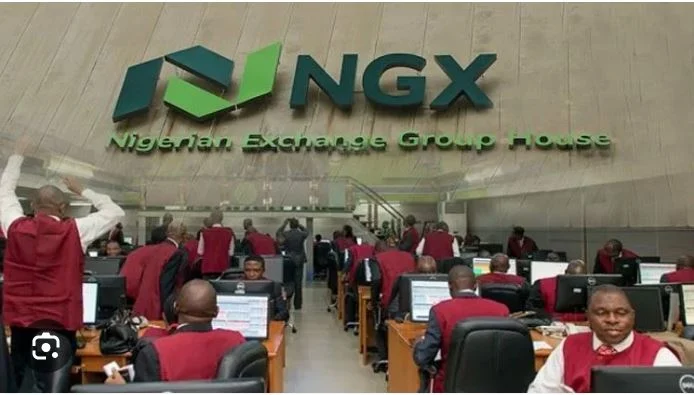
NGXThe Nigerian Stock Exchange closed higher on Thursday, 29 January 2026, as investors responded to positive market sentiment despite a slowdown in trading activity.

The total market capitalisation rose by N232bn, from N105.74tn on Wednesday, 28 January, to N105.97tn, representing a 0.22 per cent increase. Similarly, the All Share Index gained 362.93 points, moving from 165,164.38 to 165,527.31.

Trading activity, however, experienced a decline compared with the previous session. A total of 550.4 million shares were exchanged in 38,635 deals, with a turnover of N14.14bn, representing a 12 per cent decline in volume, a 14 per cent drop in turnover, and an 8 per cent decrease in deals. In total, 131 equities participated in the session, with 41 gainers and 27 losers.

Leading the gainers was RT Briscoe, which climbed 10 per cent to close at N7.15 per share, followed closely by SCOA Nigeria, up 9.91 per cent; Deap Capital Management & Trust, up 9.91 per cent; and Veritas Kapital Assurance, up 9.85 per cent. On the losing side, Haldane McCall led the laggards with a 9.84 per cent decline, closing at N3.94 per share, while Union Dicon Salt down 9.79 per cent, University Press down 8 per cent, and Legend Internet down 7.56 per cent also recorded significant losses.

In terms of volume, Veritas Kapital Assurance topped the chart with 56.6 million shares traded, followed by Guaranty Trust Holding with 26 million shares, Tantalizers with 26 million shares, and Japaul Gold and Ventures with 25.9 million shares.

FCMB posts N177bn profit

FCMBFCMB Group Plc has reported a profit after tax of N177bn for the year ended 31 December 2025, marking a 141 per cent increase from N73.3bn recorded in 2024. The performance underscores the bank’s earnings base, driven by higher interest income and improved non-interest revenue streams.

The group’s gross earnings rose sharply to N1.13tn in 2025 from N794.4bn in 2024, representing a 42 per cent growth year-on-year. This growth was largely powered by interest and discount income, which surged by 61 per cent to N1.0tn, reflecting strong lending activities across the group. Consequently, net interest income jumped to N503bn, more than double the N225.3bn posted in the previous year.

The Consolidated and Separate Statements of Profit or Loss and Other Comprehensive Income for the year ended 31 December 2025 revealed that non-interest income also contributed significantly to the bottom line. Fee and commission income increased by 29 per cent to N96bn, while net trading and other gains added further support despite some volatility. In total, the group’s other operating income and gains contributed N28bn, although this was lower than the N93.3bn recorded in 2024 due to market adjustments.


On the expense front, FCMB continued to invest in human capital and infrastructure. Personnel expenses rose to N106bn, up from N79.3bn, reflecting strategic hires and staff development programmes. General and administrative expenses increased to N127bn, while net impairment losses on financial instruments rose to N86bn, more than double the N41.2bn in 2024, highlighting proactive risk management amid a dynamic lending environment.

The bank’s total assets grew to N7.54tn,from N7.05tn in 2024, driven by growth in cash and cash equivalents, which rose to N1.3tn, and investment securities, which climbed to N2.06tn. Loans and advances to customers remained robust at N2.29tn, underscoring the group’s commitment to supporting businesses and households across Nigeria.

Moniepoint Celebrates A Decade Of impact, Microfinance Bank Disburses Over ₦1 Trillion In Credit To Empower Small Businesses in 2025

Moniepoint Inc., Nigeria’s definitive platform for small businesses and Africa’s all-in-one financial ecosystem, today released its 2025 Year in Review, marking a decade of “financial happiness” and a transformative year of growth. Highlighting its role as the backbone of Nigeria’s entrepreneurial economy with over 6 million active businesses, the company revealed that its microfinance bank has now disbursed over ₦1 trillion in credit to thousands of businesses from provision stores and supermarkets to building materials sellers.


It is worthy to note that on average these businesses experienced growth by more than 36% after accessing credit, signposting its primacy as a transformational growth level and instrument of deepening shared prosperity. Moniepoint uses alternative data points that include transaction histories, business patterns and payment behaviours in a bid to accommodate what traditional credit scoring misses to drive financial inclusion and access to credit. The company’s 2025 performance reinforces its role as a critical financial infrastructure which not only supports the Nigerian economy, but also impacts everyday lives, creating immense value.


Founded in 2015 by Tosin Eniolorunda and Felix Ike, Moniepoint Inc (formerly known as TeamApt Inc) has established itself as the leading financial platform for Nigeria’s vast network of small and medium-sized businesses (SMEs), offering an integrated suite of services, including digital payments, business bank accounts, credit, foreign exchange (FX), and management tools.


During the year, as Nigeria’s largest merchant acquirer, now powering 8 out of every 10 in-person payments made across the country, Moniepoint MFB, the banking and payments subsidiary, processed ₦412 trillion in transaction value handling more than 14 billion transactions. This clearly suggests that Moniepoint is well-positioned to play a greater role in Nigeria’s steady march towards a trillion dollar economy by 2030.


“Our journey has been one of intentional evolution,” said Tosin Eniolorunda, Group CEO and Founder of Moniepoint Inc. “What started as a passion to solve overlooked problems has evolved into a platform powering the dreams of millions. As 83% of employment in Africa exists in the informal economy, our mission to create financial happiness is an operational mandate that guides our product development, our market expansion, and our capital allocation decisions.”


Beaming with enthusiasm, Eniolorunda continues, “Yet for all we have accomplished, we approach our second decade with the clarity that our work remains unfinished. As we enter this next chapter, we do so with strengthened conviction in our strategy, deepened partnerships with world-class institutional investors, and an organisation scaled to deliver on Africa’s entrepreneurial potential. The infrastructure we have built over the past decade provides the foundation. The journey is far from over, but our resolve has never been stronger. To our partners, our customers, and our team: thank you for a decade of impact. We are just getting started.”


In 2025, Moniepoint Inc. reached a series of critical inflexion points, highlighted by the successful completion of its Series C funding round, which raised over $200 million in equity financing from leading institutional investors, including Development Partners International, Google’s Africa Investment Fund, Visa, the International Finance Corporation, and Verod Capital. The year also marked the launch of MonieWorld in the United Kingdom, extending Moniepoint’s platform to serve the African diaspora by strengthening key remittance corridors and laying the foundation for the delivery of comprehensive cross-border financial services.


Moniepoint MFB re-launched its savings product in a firm demonstration of the company’s commitment toward its’ oft stated mantra of providing financial happiness. Data reveals in terms of savings behavioral patterns, the majority of users choose to save on a daily basis, with focus across business operations (24%), rent (16.5%), and education (10%) representing top savings priorities. The launch of Moniebook and the acquisition of a national Microfinance Bank license for Moniepoint MFB further expand the company’s regulated capabilities and product depth.


TeamApt Ltd, the switching and processing subsidiary of Moniepoint Inc., also achieved major regulatory and operational milestones in 2025 that have solidified its position in the global payments landscape. After a rigorous certification process, the company successfully secured licenses from Mastercard and Visa to act as a processor and acquirer for these global card schemes.. This strategic move allows TeamApt to support international card payments directly and offer these critical switching services to other businesses across the continent. Monnify, the web payment gateway processed N25 trillion in the period under review, demonstrating remarkable resilience and industry confidence firmly positioning it for more business-to-business transactions.


Moniepoint’s impact extended beyond banking into critical social interventions even as the company partnered with the Federal Government to support the Rice Intervention Programme, reaching nearly 850,000 beneficiaries, and worked with the Kaduna State Government in grants disbursement to vulnerable citizens. Through these initiatives, Moniepoint continues to build the infrastructure required to unlock Africa’s entrepreneurial potential, positioning itself as a trusted partner for the delivery of large-scale economic empowerment programmes.


As Moniepoint Inc. enters its second decade, its well chronicled decade-long evolution from a backend technology provider to a household name, directly complements the Nigerian government’s vision of a more inclusive, data-driven, and productive financial landscape

FCT workers dare Wike, shun court order to suspend strike

The Federal Capital Territory, FCT, striking unions have continued their industrial action despite a court order compelling them to resume work.

DAILY POST reports that the Federal Capital Territory Administration, FCTA workers under the Joint Union Action Committee, JUAC  on January 19 began an indefinite strike over unresolved welfare concerns.

JUAC embarked on the industrial action to appeal for urgent action to resolve the welfare issues affecting their “morale and productivity”.

DAILY POST reports that the Nigeria Union of Teachers, NUT, and the Nigeria Union of Local Government Employees, NULGE, joined the strike on Monday in solidarity with their counterparts at the FCTA and the FCDA.

Among other things, the workers are demanding for the payment of five-month wage awards, outstanding 2023 and 2024 promotion arrears; full payment of 13 months’ hazard allowance and 22 months’ rural allowance for health workers.

Other demands include remittance of pension and National Housing Fund deductions; stoppage of intimidation of workers; improved staff welfare and working conditions.

The National Industrial Court in Abuja had on Tuesday ordered the FCTA workers to suspend the strike pending further hearing in a suit brought by the FCT authorities to stop the industrial action.

Judge Emmanuel Subilim issued the order in a ruling on an application filed by the Minister of the Federal Capital Territory, Nyesom Wike, and the FCTA.

A court document sighted by our correspondent on Wednesday shows that the suit has Wike and FCTA as claimants, while the leaders of the striking unions, Rifkatu Iortyer and Abdullahi Umar Saleh are defendants.

The document, dated Tuesday, 27th January, 2026, and signed by the Registrar, indicated that the application before the court was for “an Order of injunction to restrain the Defendants in the manner sought on the face of the Motion paper”.

Strike continues

DAILY POST reports that despite the order of the industrial court, the FCT workers are yet to resume work.

A check by DAILY POST on Wednesday showed that most healthcare facilities and schools across the Bwari Area Council are still under lock and key.

Students at the Government Day Secondary School, Dutse Alhaji, Junior Secondary School, Ushafa and LEA Primary School, Ushafa were asked to go home as early as 8 am.

An official at the Ushafa LEA Primary school told DAILY POST on condition of anonymity that there was no memo indicating that the strike has been called off.

According to him, the court order only mandated the union leaders to resume and not the entire workers.

“The order was only for Rifkatu Iortyer and Abdullahi Umar Saleh and I believe they have resumed”, he said.

Those who declared strike have resumed – Wike’s media aide, Olayinka

When contacted by DAILY POST on Wednesday, Lere Olayinka, the Senior Special Assistant on Public Communication and New Media to the FCT Minister said those who declared the strike have resumed.

According to him, workers who are yet to resume may not have been properly informed on suspension of the strike.

He said, “The strike was not declared by the NUT. Those who declared the strike have resumed. They were in their offices today.

“If other people have not resumed, maybe they have not gotten the correct information. I’m sure that by tomorrow (today) they should be at work”.

Multi-Trex gets NGX nod to increase public shareholding

Multi-Trex Integrated Foods PlcMulti-Trex Integrated Foods Plc has secured approval from the Nigerian Exchange to take steps aimed at increasing its public shareholding, following a recapitalisation that left its free float below the Main Board requirement.

According to a statement signed by the Company Secretary, Sogunle Adekunle, on Tuesday, NGX Regulation Company granted the company a 24-month moratorium, ending 14 January 2028, to restore its free float to at least 20 per cent of issued share capital or a market capitalisation of 20bn, whichever is lower. This extension provides the company with additional time to comply with regulatory requirements while implementing strategic plans to increase shareholder participation.

The recapitalisation, which followed a seven-year cessation of operations, involved Messrs N-Foods Universal Concept Limited injecting capital to settle obligations to the Asset Management Corporation of Nigeria.

As a result, N-Foods Universal Concept Limited now controls 70 per cent of Multi-Trex’s issued share capital, leaving the company’s public free float at 7.23 per cent, valued at N117.46m, according to the 2024 audited financial statements.

In a statement to shareholders, the company emphasised its commitment to maintaining its listing on the NGX and assured investors that it is actively exploring strategies to increase the public free float. The board warned that failure to meet the NGX threshold within the extension period could result in trading suspension or potential delisting of the company’s securities.

The management expressed appreciation to shareholders for their continued patience and support during the company’s recovery phase, highlighting the strategic measures undertaken to strengthen operations and compliance with market regulations.

Multi-Trex Integrated Foods’ NGX approval marks a milestone in its ongoing business recovery, giving the company a clear regulatory pathway to enhance public participation in its shareholding while ensuring compliance with market standards.

NCC reports improved telecom network quality in Q4

NCCThe Nigerian Communications Commission on Wednesday said its Q4 2025 industry performance data shows measurable improvements in network quality and service delivery across the country, as the regulator deepened efforts to promote transparency and accountability in the telecommunications sector.

At the virtual media engagement held to present the Q4 2025 Industry Performance Reports, the commission walked journalists through key insights, performance trends, and highlights from the report. The full document has also been published on the NCC’s website.

Speaking during the session, the Head of the Public Affairs Department, Mrs Nnenna Ukoha, said the quarterly data reflects the commission’s commitment to evidence-based regulation and improved consumer experience.

“The commission has, over time, affirmed its commitment to accountability, transparency, and a data-driven approach in implementing its mandate,” Ukoha said. “Part of this commitment is our responsibility to generate accurate, transparent, and timely data and to ensure that this data is properly understood, well interpreted, and correctly communicated to the Nigerian public.”

Ukoha described the media as critical partners in shaping public understanding of developments in the telecoms industry, noting that accurate reporting of industry data plays a key role in strengthening consumer trust, investor confidence, and policy direction.

“Our objective today is straightforward,” she said. “It is to deepen your understanding of the NCC’s quarterly performance data and to equip you with practical insights on how best to integrate these findings into your reporting.”

According to Ukoha, the engagement was designed not only to provide access to raw data but also to offer context that would prevent misinterpretation and improve the quality of information available to Nigerians.

She urged journalists to adopt what the commission terms “constructive framing” when reporting sector performance, stressing that this does not imply downplaying challenges but rather presenting them alongside progress, solutions, investments, and innovations shaping the industry.

“Constructive framing means highlighting improvements in quality of service and experience, recognising the work being done by stakeholders, and supporting industry resilience, while still addressing existing challenges,” she said.

Ukoha added that the quarterly performance reports offer material for daily news coverage, feature stories, investigative reporting, interviews, and sector monitoring tools used by newsrooms.

In separate remarks, the Executive Commissioner, Technical Services, Engr Abraham Oshadami, said the commission’s decision to consistently publish network performance data reflects its belief that transparency strengthens the telecoms ecosystem and reinforces accountability among operators.

“Transparency has become a guiding principle that underpins our regulatory approach,” Oshadami said. “We believe that open access to information strengthens the industry, builds public trust, and ensures that service providers remain accountable to consumers.”

Oshadami noted that the NCC has expanded its data-driven oversight in recent years, including a partnership with network intelligence firm Ookla to develop nationwide network coverage maps that allow consumers to compare network quality across locations and operators.

“As part of this same partnership, we commenced the publication of Quarterly Network Performance Reports to provide consistent, data-driven insights into how networks are performing across the country,” he said.

He recalled that the first report, covering Q3 2025, was published in October last year, adding that the Q4 2025 report builds on that foundation and highlights early gains from regulatory and industry interventions.

“Our collective efforts are beginning to yield positive results,” Oshadami said. “We are observing measurable improvements in network performance and, importantly, in the quality of experience delivered to consumers.”

He said the objective of the media engagement was to explain key findings from the report, clarify performance trends, and ensure stakeholders fully understand what the data reveals about the state of the industry.

The executive commissioner described the media as strategic partners in communicating progress and reform in the sector, urging journalists to engage critically with the data and help amplify stories that reflect both achievements and ongoing challenges.

“Your reporting shapes how Nigerians understand the technologies that power their daily lives,” he said. “It influences investor confidence, consumer trust, and the broader policy conversation.”

The NCC said it would continue to publish quarterly performance data as part of its broader push to strengthen service delivery, improve network quality, and ensure that consumers benefit from sustained improvements in Nigeria’s telecommunications sector

NUPRC opens 50 oil blocks for bidding

NUPRCThe Nigerian Upstream Petroleum Regulatory Commission has opened 50 oil and gas blocks across five sedimentary basins for bidding and exploration in the 2025 licensing round, warning that only technically competent and financially strong firms will be allowed to scale through the process.

The commission said the exercise is designed to eliminate speculative participation and reposition Nigeria’s upstream sector as a transparent, rules-based destination for long-term investment.

The Chief Executive of the NUPRC, Oritsemeyiwa Eyesan, made this known on Wednesday during the 2025 licensing round pre-bid webinar, where the regulator outlined the framework, evaluation criteria, and commercial terms guiding the bid process.

Eyesan said the licensing round should be viewed as a strategic intervention to grow reserves, improve production, and strengthen Nigeria’s energy security in a rapidly evolving global energy landscape.

“This upstream sector is serious business. It is for long-term investment, and it is an open invitation to partnership, transparency, and shared responsibility as we work together to shape the next phase of Nigeria’s upstream oil and gas industry,” she said.

According to her, the commission has adopted a strictly merit-based approach that places technical competence and financial capacity at the centre of the selection process.

“Only candidates with strong technical and financial credentials, professionalism, and credible plans will move forward. Winners will be chosen through a transparent, merit-based process that takes you from award to exploration, appraisal, and ultimately full production,” Eyesan stated.

She disclosed that the 50 oil and gas blocks on offer are spread across five of Nigeria’s seven sedimentary basins, giving investors access to both frontier and mature terrains.

“In this licensing round, 50 oil and gas blocks across Nigeria are available, allowing investors to access the country’s key basins and create long-term value,” she said.

Eyesan added that, with the approval of President Bola Tinubu, the Commission had reviewed the commercial structure of the bid round to lower entry barriers while discouraging unserious bidders.

She revealed that signature bonuses for the 2025 licensing round have been set within a $3m–$7m range, with greater emphasis placed on work programmes and speed to production.

The CCE said the new structure places greater emphasis on technical capability, credible work programmes, and speed to production, rather than aggressive cash bids, as Nigeria competes for mobile global capital amid tightening energy security and supply.

“With the approval of His Excellency, President Bola Tinubu, signature bonuses for the 2025 licensing round are now set within a value range of $3m–$7m that reduces entry barriers and places greater weight on what truly matters, technical capability, credible work programmes, financial strength, and the ability to deliver production within the shortest possible time,” she said.

According to her, the decision was informed by global capital mobility and the need to make Nigeria competitive in attracting serious, long-term upstream investors.

“This has been done deliberately to increase competitiveness and in response to capital mobility. The upstream sector is serious business. It is for long-term investment, and it is an open invitation to partnership, transparency, and shared responsibility,” Eyesan stated.

The NUPRC boss said the licensing round follows a five-stage process comprising registration and pre-qualification, data acquisition, technical bid submission, evaluation, and a commercial bid conference.

She stressed that the entire exercise would comply strictly with the Petroleum Industry Act 2021, with digital tools deployed to ensure transparency and public accountability.

“Let me emphasise clearly that the bid process will comply with the Petroleum Industry Act, promote the use of digital tools for smooth data access and remain open to public and institutional scrutiny through NEITI and other oversight agencies,” Eyesan said.

She added that all licensing materials had been uploaded on the commission’s portal since December 1, 2025, with dedicated support channels created to respond promptly to investor enquiries.

Eyesan reaffirmed that the entire process would comply fully with the PIA 2021, with extensive use of digital tools to ensure transparency and public scrutiny.

“The bid process will comply strictly with the PIA, promote the use of digital tools for smooth data access, and remain open to public, international, and institutional scrutiny through NEITI and other oversight agencies,” she said.

The NUPRC boss concluded that the 2025 licensing round represents a strategic signal to global investors that Nigeria’s upstream sector has been re-engineered for long-term value creation.

“Let me emphasise clearly that the Nigeria 2025 Licensing Round is not merely a bidding exercise. It is a clear signal of a re-imagined upstream sector, anchored on the rule of law, driven by data, aligned with global investment realities, and focused on long-term value creation,” Eyesan said.

In a technical presentation to participants, the Director of Lease Administration, Exploration and Acreage Management at NUPRC, Amber Ndoma-Egba, said the 2025 licensing round cuts across the Chad Basin, Benue Trough, Anambra Basin, Bida Basin, and the Niger Delta Basin.

He explained that the technical evaluation would focus on subsurface understanding, exploration work programmes, development concepts, sustainability, host community plans, and lifecycle management.

“We look at your understanding of the block, your subsurface evaluation, your exploration work programme, your development and production concept, sustainability, decarbonisation objectives, and host community development. Technically weak firms will not scale through this process.

“We have seven sedimentary basins in Nigeria. We have the Sokoto Basin, the Chad Basin. We have the Benin trough, Bida Basin, Anambra Basin, Benin Basin, and, of course, the mature Niger Delta Basin. This licensing round will take place across five of the seven sedimentary basins,” Ndoma-Egba said.

On commercial terms, Ndoma-Egba disclosed that the Commission, in a bid to support investment, had approved a minimum work performance security of one per cent, although bidders could voluntarily increase it to improve their technical score.

“The Commission Chief Executive, in the spirit of enablement and support for investment, has approved that the minimum work performance security should be one per cent. However, bidders may boost this if they want a higher weighting in their score,” he said.

He said bidders must clearly outline their exploration plans within the initial exploration period, three years for onshore assets and five years for deepwater and frontier blocks.

“We look at your understanding of the block, your subsurface evaluation, your exploration work programme, your development and production concept, evacuation and facilities planning, sustainability, decarbonisation objectives, and host community development

He also confirmed that final winners would emerge based on a weighted combination of technical and commercial scores, in line with the Petroleum Industry Act.

On December 1, 2025, the NUPRC announced the official commencement of the 2025 petroleum licensing round, targeting about $10 billion in new investments.


MAN Calls for Restraint as NAFDAC Enforces Sachet Alcohol Ban

MAN calls for restraint on NAFDAC's sachet alcohol ban - Businessday NGThe Manufacturers Association of Nigeria (MAN) has expressed concern over the recent enforcement actions by the National Agency for Food and Drug Administration and Control (NAFDAC), which it says are disrupting the operations of its members in the wines and spirits sector and threatening jobs and investments.

MAN noted that NAFDAC has begun implementing a ban on the production and sale of alcoholic beverages in sachets and small PET bottles, despite a directive from the Office of the Secretary to the Government of the Federation dated December 15, 2025, which suspended such action. The association described the move as harmful to business confidence and the broader economy.
According to MAN, the enforcement also contradicts a March 14, 2024 resolution of the House of Representatives, reached after a public hearing with stakeholders, which restrained NAFDAC from imposing the ban. Instead, NAFDAC relied on a Senate resolution that did not involve broad stakeholder engagement, creating confusion for operators faced with conflicting directives.
MAN explained that sachet and PET-bottled alcoholic drinks were introduced to provide affordable options for adult consumers with low incomes and could help limit excessive consumption due to smaller portions. It added that these products are produced under hygienic conditions and certified by regulatory agencies, including NAFDAC.
The association warned that banning regulated sachet alcohol could encourage the spread of illicit and unregulated products, posing greater health risks. It also rejected claims that the products promote underage drinking, citing independent research and over ₦1 billion spent by the industry on nationwide responsible consumption campaigns.
MAN reaffirmed its support for evidence-based regulation and appealed to the Federal Government to intervene and direct NAFDAC to halt enforcement of the ban, in order to protect jobs, revenues, and consumer choice while further stakeholder engagement continues.
CBN approves temporary use of expired NAFDAC licences for imports

Governor of the Central Bank of Nigeria, Olayemi CardosoThe Central Bank of Nigeria has approved a temporary window allowing importers to use expired National Agency for Food and Drug Administration and Control licences for import documentation, offering short-term relief to businesses affected by system changes in Nigeria’s trade processing framework.

In a circular issued on January 26, 2026, by its Trade and Exchange Department and published on the bank’s website on Tuesday, the CBN said authorised dealer banks may continue to process Form M applications with NAFDAC licences that expired on December 31, 2025.

The approval, which takes effect immediately, will run for two months and lapse on February 28, 2026.

The circular, signed by Aliyu M. Ashiru for the Director of the Trade and Exchange Department, read, “The Central Bank of Nigeria wishes to notify all Authorised Dealer Banks and the general public of a temporary dispensation offered by the National Agency for Food and Drug Administration and Control permitting the continued use of NAFDAC licences that expired on 31st December, 2025, for the processing of Forms M for a two-month temporary dispensation ending February 28, 2026.”

The apex bank explained that the approval followed a temporary dispensation granted by NAFDAC and applies strictly to Form M processing during the period. It said the measure was necessitated by operational challenges linked to the migration from the legacy Nigeria Integrated Customs Information System II platform.

According to the CBN, importers have been unable to validate or renew NAFDAC licences since the transition, particularly due to difficulties encountered on the B’Odogwu platform after December 2025.

To ease the bottlenecks and prevent delays in import documentation, the bank directed all authorised dealer banks to continue accepting the affected licences within the approved window.

The CBN stressed that the arrangement itime-bound and urged banks to comply strictly with its terms, noting that the approval would lapse automatically on February 28, 2026. It added that the move is intended to ensure continuity in trade transactions while NAFDAC completes the integration of its systems with the National Single Window.

Earlier in October 2025, The PUNCH reported that the Federal Government announced a decisive step toward digitalising and streamlining the nation’s import and export processes with the formal unveiling of the National Single Window and a new Trade Facilitation Portal.

The initiative, championed by the Minister of Industry, Trade, and Investment, Dr Jumoke Oduwole, is expected to drastically reduce bureaucracy, enhance transparency, and improve Nigeria’s global trade competitiveness.

The National Single Window is a single, centralised digital platform where all stakeholders, including customs and regulatory agencies, importers, and exporters, can submit standardised trade and regulatory documentation.

The government has set a firm target for the National Single Window to become fully operational by the first quarter of 2026, specifically in March 2026.