NNPC Discusses Refinery Overhaul With Chinese Company

The Nigerian National Petroleum Company Limited (NNPCL) has opened talks with a Chinese company over one of the state-owned oil firm’s refineries.

The NNPC, Chief Executive , Bayo Ojulari said the company was seeking experienced operators as equity partners to revive its four refineries after years of losses and underperformance.

He said an internal review carried out shortly after assuming his role last April showed the refineries were running at huge losses, with high operating costs and heavy spending on contractors while processing volumes remained low.

NNPC’s board has approved a strategy to bring in refinery operators with proven expertise rather than contractors, Ojulari said, adding that the company was in advanced talks with several interested parties.

“I’m just coming from a meeting with one of the potential investors,” Ojulari said, without giving a name. “They are going to the refinery tomorrow to inspect. It’s a Chinese company that has one of the biggest petrochemical plants in China.”

Nigeria has struggled for years to rehabilitate its aging refineries, which have operated far below capacity, forcing Africa’s largest crude oil producer to rely heavily on imported fuel. The government hopes new partnerships will help reverse that trend.

Ojulari said the plants have been halted to allow time to assess options for restoring them, coinciding with the launch of Dangote Refinery which offered “breathing space” for domestic fuel supply.

He said NNPC was not selling the refineries but would relinquish a portion of their equity to partners to enable the plants to self-finance their operations.

Dangote Refinery Producing Euro-Standard Fuels, Refutes Import Allegations

Dangote Petroleum Refinery & Petrochemicals (DPRP) has dismissed reports suggesting that it imports finished petroleum products.
The refinery’s management described the claims as false and rooted in a misunderstanding of standard refinery operations.


The DPRP is a modern, large-scale merchant refinery with the capacity to refine crude oil as well as process intermediate feedstocks into high-quality finished petroleum products and petrochemicals, it said.


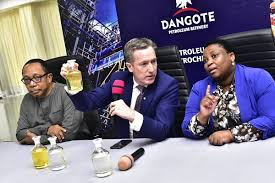
Speaking during a media briefing at the refinery, Chief Executive Officer and Managing Director of DPRP, David Bird, explained that it is standard industry practice for refineries to process intermediate or semi-processed materials into finished fuels. He stressed that this does not amount to importing finished petroleum products.


He noted that unlike conventional Nigerian refineries, the Dangote Petroleum Refinery operates on a European and Asian merchant refinery model, featuring a state-of-the-art refining, blending, and trading configuration designed to meet modern quality standards.


“DPRP produces high-quality fuels aligned with international environmental and health standards. Our gasoline is lead-free and MMT-free, with 50 parts per million sulphur, while our diesel meets ultra-low sulphur standards. These specifications help reduce emissions, protect engines, and safeguard public health,” Bird said.


According to him, the Dangote Petroleum Refinery produces only fully refined, market-ready fuels. “Dangote Petroleum Refinery offers high-quality finished products. We will never supply semi-finished products to the market. Semi-finished products should not be used in vehicles,” Bird said, while displaying samples of intermediate feedstocks and finished products to journalists.


He noted that while Nigerians had historically been exposed to substandard fuel, the refinery was established to reverse that trend and deliver fuels that meet the highest international standards. Bird added that the refinery’s products are now supplied to markets across the world, reflecting their quality and competitiveness.


Intermediate products, he explained, are semi-processed materials derived from crude oil and used as feedstock for further refining into finished fuels such as petrol and diesel, as well as petrochemicals. These include naphtha, straight-run gas oils, vacuum gas oil (VGO), reformate, alkylate and isomerate.


Bird emphasised that the refinery has remained transparent in its operations and engagements with regulators and urged the media to help educate the public on the distinction between intermediate and finished products.


“It is regrettable that some individuals are deliberately spreading false narratives about a refinery that has transformed Nigeria and the wider West African region from a dumping ground for substandard fuel into a refining hub with access to high-quality products,” he said.


He further noted that the refinery’s design flexibility allows it to process a wide range of crude oils and intermediate feedstocks into premium finished products.


Assuring of product availability to meet domestic demand, Bird said the refinery has played a significant role in easing fuel scarcity, stabilising the naira, and reducing pressure on foreign exchange.


Group Chief Brand and Communications Officer, Dangote Industries Limited, Anthony Chiejina, also urged journalists to exercise caution in their choice of words, warning that inaccurate terminology could misinform the public and create unnecessary panic.

NGX Group, SEC, Police To Promote Capital Market Integrity

The Securities and Exchange Commission (SEC, Nigerian Exchange Group Plc (NGX Group) and the Police have agreed to achieve Capital Market integrity, affirming collaboration to ensure sustainable operations.

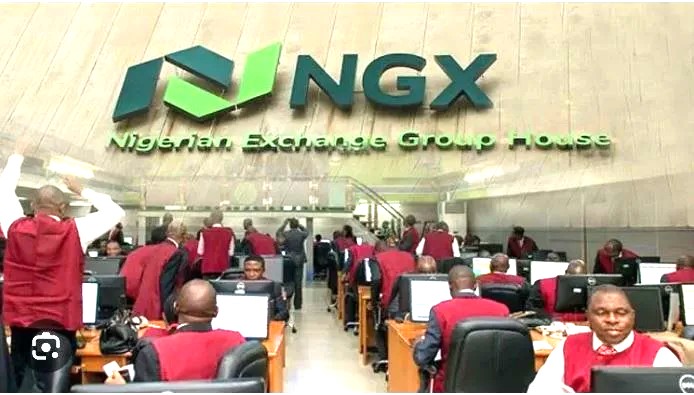
The NGX Group, on Wednesday took a decisive steps on this when it hosted a Closing Gong Ceremony in honour of the Inspector-General of Police, IGP Kayode Egbetokun, signaling a strengthened partnership between capital market regulators and law enforcement agencies.


The ceremony highlighted a shared commitment to investor protection, the prevention of financial crime, and the reinforcement of trust and confidence in Nigeria’s capital market.


Welcoming the IGP, Alhaji Umaru Kwairanga, Group Chairman of NGX Group, commended the leadership of the Nigeria Police Force in supporting market integrity. He said: “Market integrity is a shared responsibility. By honouring the Inspector-General of Police, we are reinforcing the importance of institutional alignment in protecting investors and preserving trust in our financial system. Strong collaboration between regulators, enforcement agencies, and market infrastructure institutions is essential to building a resilient and credible market that supports economic growth.”


The Director-General of the Securities and Exchange Commission (SEC), Dr. Emomotimi Agama, emphasized the importance of coordinated enforcement, noting: “Investor protection is at the core of market regulation, and today’s engagement highlights how critical collaboration with law enforcement is to achieving that mandate. This partnership strengthens our enforcement capacity, enhances deterrence against illegal investment activities, and reinforces confidence in the Nigerian capital market.”


In his response, IGP Kayode Egbetokun reaffirmed the commitment of the Nigeria Police Force, stating: “A transparent and well-regulated capital market is vital to Nigeria’s economic growth. The Nigeria Police Force remains committed to working with regulators and market operators to prevent financial crime, protect investors, and uphold the integrity of our financial system.”


Also speaking, Chairman of Nigerian Exchange Limited (NGX), Ahonsi Unuigbe, highlighted the role of the Exchange in promoting market discipline: “A transparent and orderly market can only thrive where rules are respected and misconduct is addressed decisively. The presence of the Nigeria Police Force in this collective effort sends a strong signal that safeguarding the market is a national priority.”


Similarly, Group Managing Director/Chief Executive Officer of NGX Group, Temi Popoola, stressed the importance of aligning innovation with oversight: “Technology and market growth must be supported by strong enforcement and investor protection frameworks. Our collaboration with the SEC and the Nigeria Police Force reflects a unified approach to preserving the credibility of Nigeria’s capital market.”


The event brought together key stakeholders across the capital market ecosystem, all reaffirming their commitment to accountability, transparency, and investor confidence. The ceremonial Closing Gong marked a collective resolve to strengthen Nigeria’s financial system through sustained collaboration.

NCAA Cracks Down on Ticket Charge Defaults, Gives Airlines 90-Day Window on Payment Guarantees

NCAA gives airlines 90-day grace period on advance payment guarantees -  Vanguard News
The Nigeria Civil Aviation Authority (NCAA) has begun formal consultations with the Airline Operators of Nigeria (AON) on the introduction of Advance Payment Guarantees (APGs) to strengthen enforcement of the statutory five per cent Ticket Sales Charge (TSC) remittance by airlines.
The high-level engagement, held on Monday, February 2, 2026, at the Authority’s headquarters in Abuja, followed a request by AON for clarification on the requirement for operators to provide bank-backed guarantees. The move forms part of the NCAA’s renewed drive to safeguard funds collected from passengers on behalf of Nigeria’s aviation system.
Speaking at the meeting, the Director-General of Civil Aviation (DGCA), Captain Chris Najomo, said the NCAA’s mandate to collect the five per cent TSC is backed by the Civil Aviation Act (CAA) 2022 (as amended). He explained that the charge is paid by passengers and held in trust by airlines before being remitted to the Authority for equitable distribution to aviation agencies responsible for safety, security and regulatory oversight.
Najomo expressed concern over persistent delays by some operators in remitting the charges, noting that such lapses weaken the financial base required for effective regulation of the sector.
According to him, the proposed APG framework is not designed to stifle airline operations, but to strengthen compliance, improve remittance timelines and guarantee predictable funding for the NCAA to carry out its statutory responsibilities.
After extensive deliberations with airline representatives, the DGCA approved a 90-day deferment of the APG requirement. The grace period is intended to give operators time to regularise outstanding remittances and align with the new compliance structure.
He urged airlines to take advantage of the window to settle their obligations, reiterating the Authority’s commitment to industry stability and ease of doing business, without compromising its legal mandate to protect public funds and regulate the sector effectively.
Responding on behalf of the AON, the Chief Executive Officer of Overland Airways, Captain Edward Boyo, commended the NCAA for the open and constructive dialogue. He assured that all Air Operator Certificate (AOC) holders would utilise the deferment period to meet their financial obligations and achieve full compliance with the remittance requirements.
The meeting was attended by senior NCAA officials, including the Director of Operations, Licensing and Training Standards, Captain Donald Spiff; Director of Air Transport Regulation, Mrs. Olayinka Babaoye-Iriobe; Director of Finance and Accounts, Mr. Olufemi Odukoya; and the Director of Legal Services and Company Secretary, Barrister Mary Tufano-Eche.
World Cancer Day: NOA urges early action awareness

The State Director of the National Orientation Agency, NOA, Osun Directorate, Adebiyi, Adefarasin Stephen, has called on the Osun populace to intensify efforts toward cancer prevention, early detection, and equitable access to care.
The plea formed part of a statement released on Wednesday as part of activities in the state to mark the world marks World Cancer Day 2026, observed annually on February 4.

In the statement issued by the Public Relations Officer of the agency, Bunmi Olaseinde, Adebiyi noted that “cancer remained a major public health challenge in Nigeria, with many cases diagnosed at advanced stages due to low awareness, stigma, myths, and limited access to screening services.”

He stressed that these factors significantly contribute to the high rate of cancer-related deaths in the country.

He also said the annual observance provided an opportunity to “draw attention to the persistent cancer care gap and the urgent need for early action.”

He explained that cancer continued to pose a significant public health burden in Nigeria, where many patients seek medical help only at advanced stages of the disease, largely due to limited awareness and access to screening services.

Mr Adebiyi stated that early detection improves survival outcomes, stressing that “cancer is not a death sentence when identified early and managed promptly through proper medical care.”

He added that several cancers commonly recorded in Nigeria include “breast, cervical, prostate, liver and colorectal cancers, which can be managed more effectively when diagnosed in their early stages.”

The agency also drew attention to symptoms that require prompt medical attention, such as unusual lumps, persistent pain, unexplained weight loss, abnormal bleeding, breast changes, prolonged cough and sores that do not heal.

As part of preventive measures, the NOA advised Nigerians to “avoid tobacco use and excessive alcohol intake, while maintaining a healthy diet, regular physical activity and appropriate body weight.”

Adebiyi urged citizens to protect themselves from prolonged sun exposure and to take advantage of available vaccinations against Hepatitis B and Human Papillomavirus, which are linked to certain cancers.

He described cancer control as a collective task, saying, “Closing the care gap begins with awareness, compassion and timely action from individuals, families and institutions.”

The NOA called on residents of Osun State and Nigerians generally to prioritise routine screening, seek credible health information and encourage open discussions about cancer within their communities.

The agency also reaffirmed its commitment to public enlightenment, noting that informed and healthy citizens remain essential to national development.

Standard Chartered outlines 2026 investment outlook for Nigeria

Standard_Chartered_Bank_254c8b7e2aStandard Chartered Bank Nigeria Limited hosted its clients at the 2026 Global Market Outlook event, bringing together industry experts to examine the evolving global financial landscape and its implications for Nigeria in 2026, where it revealed that the country’s growth outlook is optimistic.

A statement from the bank on Tuesday stated that the well-attended event featured presentations from speakers drawn from Standard Chartered, including Manpreet Gill, Chief Investment Officer, Africa, Middle East and Europe; Lanre Olajide, Head of Wealth and Retail Banking, Nigeria; Ernest Adejumo, Head of Wealth Solutions; Uche Ugboh, Head of Treasury Markets; and Chima Eboh, Head of Affluent Banking and Branches.

The speakers delivered insights on current market trends, economic shifts, and wealth-building strategies, followed by a question-and-answer panel session that offered attendees practical perspectives on navigating opportunities and challenges in the year ahead.

Speaking on the impact of the global outlook on Nigeria and the investment opportunities available to stakeholders, Gill said, “Clients took away three key messages from the 2026 global market outlook: (i) Stay overweight equities, (ii) continue to generate attractive yields through diversified bonds, but most importantly (iii) diversify, both within equities and across asset classes given valuations and continued uncertainty.”

Adejumo said the key takeaways from the bank’s 2026 Global Market Outlook highlighted the importance of discipline and diversification in an increasingly complex global environment.

“While short-term volatility may persist, investors who concentrate on long-term fundamentals, quality assets, and informed, advisory-led portfolio construction are best positioned to navigate uncertainty and seize emerging opportunities.

“Our GMO reinforced a clear message for investors: clarity comes from context, not noise. By understanding the global themes influencing growth, inflation, and interest rates, clients are better equipped to make confident and well-timed investment decisions. This approach focuses not on predicting markets but on preparing portfolios through diversification and discipline, aligned with their long-term financial goals,” he said.

The event hosted over 1,200 clients across Lagos, Abuja, and Port Harcourt and concluded with a networking lunch with the bank’s management team.

Nigeria’s economic outlook for 2026 remains cautiously optimistic, with GDP growth projections of 4.3 to 4.4 per cent, driven largely by the services sector, particularly ICT and finance, as well as a potential recovery in the oil sector. Efforts to diversify revenue sources beyond oil are ongoing.

However, challenges, including high inflation and fiscal pressures, persist, while poverty is expected to remain an issue despite reforms aimed at promoting inclusive growth.

Key focus areas include stabilising the naira, controlling inflation through effective monetary policy, improving infrastructure, and ensuring that government policies translate into tangible benefits for citizens. Achieving these goals will require strong fiscal discipline and comprehensive structural reforms.

Standard Chartered said it remains optimistic about Nigeria’s long-term economic potential, emphasising the importance of sustainable reforms, infrastructure development, and regional cooperation in driving growth in Nigeria and across Africa. The bank noted that by aligning global trends with regional strengths, it is well-positioned to support clients and communities in achieving their goals in 2026 and beyond.

Africa Losing $15 Billion Annually From Export Of Crude Oil And Gas

By exporting about 70 per cent of its crude oil and 45 per cent of natural gas, Africa annually loses $15 billion, says the Association of Petroleum Producers’ Organisation (APPO).
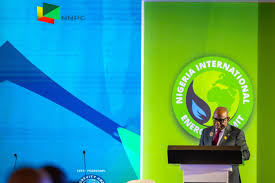
The APPO Secretary-General, Farid Ghezali, disclosed this on Tuesday in his remarks at the official opening of the 2026 edition of the Nigeria International Energy Summit (NIES), in Abuja.

Ghezali said in spite of the continent’s immense potential, Africa was facing a paradoxical and frustrating reality of making such significant export of its natural resources.

However, Ghezali, forecasts a turn around of the situation, with the operations of the African Energy Bank (AEB) which is being positioned to raise about $15 billion to finance oil and gas projects in the continent of Africa by 2030.

APPO said the bank, which would begin operation fully by June in Abuja was expected to create over 500,000 direct jobs in the local midstream.

African Energy Bank is a joint initiative of APPO member states and the African Export-Import Bank (Afreximbank), established with an initial capital of Five billion dollars.

Its core mandate is to mobilise domestic and regional capital for energy infrastructure, reduce Africa’s reliance on external financing, and align energy investments with the continent’s long-term development and industrialisation goals.

“The AEB will unify intra-African pricing for gas and oil, allowing our member countries to achieve savings of up to 30 per cent on their energy imports, a potential gain of 1.4 billion dollars for Africa,” he said.

He said financing remained the main bottleneck hindering the development of the continent’s strategic projects, adding that over 150 essential projects, from refineries to pipelines, such as the Ajeokuta-Kaduna-Kano (AKK) pipeline, to gas infrastructure remained blocked.

To address this anomaly, the APPO scribe, said the African Energy Bank was designed to unlock the 200 billion needed for the continent’s midstream-downstream projects by 2030.

Ghezali disclosed that the African Energy Bank would allow the listing of shares of the national oil companies in the continent and flagship projects, such as the Dangote Refinery or the AKK Gas Pipeline.

He explained that it would also connect Africa’s certified projects to the world’s largest sovereign wealth as well as to capital markets with structured equipment and public-private partnerships.

The Chairman, Independent Petroleum Producers Group (IPPG), Adegbite Falade, in his remarks said Nigeria must build an energy industry that could sustain itself, deliver lasting value to Nigerians through collaboration and consolidation rather than through fragmentation.

“The future of the industry lies not in the whole model of extraction and exports of the nation’s raw hydrocarbons, but it lies in creating in-country value that fuels the economy and increasingly contributes to Gross Domestic Product (GDP) growth,” he added.

Falade said since 2025 edition of the summit, Nigeria’s oil and gas industry had recorded notable progresses across the entire value chain, adding that the upstream scaled up in terms of liquid production while gas production had grown significantly.

“This growth in liquid has been supported by an increase in export pipeline availability, reduced crude losses, and stronger indigenous contribution to production.

For the first time, indigenous producers and independents now account for more than 50 per cent of national production.

“We continue to see sustained implementation of the PIA and strengthening of sales through the issuance of relevant and appropriate executive orders.

“However, a few things still remain by way of all kinds of process stakeholders if we are to build an energy industry that is truly self-sufficient and that consistently creates value for the nation.,” Falade said.

He,however, urged the Federal Government to continue to create an industry that could allow the driving and the envelope of private capital to build our industry infrastructure.

Falade said, “Without this, we will not be able to reach the massive gap in potential that we have to meet in our contribution to the nation’s GDP.

We must reduce bureaucracy, we must streamline industry fees and related charges, just to make sure that operators remain competitive.

Our industry today operates at a significantly elevated premium in cost relative to other non-share jurisdictions. We must address the issue of access to long-term and affordable capital.

“We must ensure policy stability and adopt competitive fiscal frameworks that support resource monetisation and stimulate interest rate growth.”

Nigeria To Utilise Gas To Power Africa’s Rise — NNPCL

As an emerging global energy powerhouse, Nigeria has the responsibility to utilise its abundant gas resources to power Africa’s rise and contribute meaningfully to global stability.

Group Chief Executive Officer of NNPC Ltd, Engr. Bashir Bayo Ojulari, disclosed this during an address at the opening ceremony of the Nigeria International Energy Summit (NIES) 2026 held at the Banquet Hall of the Presidential Villa, Abuja.

“Nigeria’s pathway to a prosperous future lies in our collective ability to leverage our resource abundance, especially as gas sits at the heart of our strategy. It is our bridge to a cleaner future, our engine for industrialization, and our foundation for export-led growth”, Ojulari stated.

Describing what he termed as Africa’s energy trilemma, Ojulari said though the African continent is endowed with vast energy resources, it still grapples with issues of accessibility, affordability, and sustainability, with over 600 million Africans living without access to electricity.

He said that with 37 billion barrels crude oil and 209 trillion cubic feet of gas reserves, Nigeria and the NNPC Ltd are ready to lead the charge in changing the narrative.

“With over 600 million Africans still lacking electricity, the continent’s priority cannot be a copy and paste. Ours must be a just, equitable, people-centered energy additions, one that lifts our people out of poverty, powers industries, supports agriculture, transforms transportation, and unleashes the creativity of Africa’s youth”, he stated.

He said NNPC Ltd was not just a commercial entity but also a peace and prosperity enabler.

On steps being taken to enhance access to gas as the primary fuel for driving industrialization and economic growth, the GCEO said NNPC Ltd has launched a new Gas Masterplan, while aggressively progressing strategic gas infrastructure projects such as the Obiafu-Obrikom-Oben (OB3), Ajaokuta-Kaduna-Kano (AKK) gas pipelines, and the Escravos-Lagos Pipeline System (ELPS) expansion.

“These projects are more than pipelines, they are highways for economic opportunity”, he explained.

EFCC Arrests 10 Suspects, Trucks For Suspected Illegal Mining Activities In Kwara

Operatives of the Ilorin Zonal Directorate of the Economic and Financial Crimes Commission, EFCC, have arrested ten individuals suspected of involvement in illegal mining activities along the Ilorin – Ogbomosho axis.

They were arrested on Sunday, February 1, 2026, following credible intelligence on unlawful mineral excavation and transportation in parts of Kwara and Oyo States.

The suspects, comprising nine truck drivers and one escort were intercepted and taken into custody in a well -coordinated sting operation. Solid minerals arrested with the suspects include lithium, tin, and lepidolite. The suspects have no requisite licences, permits, or regulatory approvals for their mining activities.

Other items recovered from the suspects are trucks loaded with the unlawfully mined materials.

The suspects will be charged to court upon the conclusion of investigations.

Regulatory gaps scaring African energy investors – NUPRC boss

The Commission Chief Executive of the Nigerian Upstream Petroleum Regulatory Commission, Oritsemeyiwa EyesanThe Commission Chief Executive of the Nigerian Upstream Petroleum Regulatory Commission, Oritsemeyiwa Eyesan, has warned that inconsistent regulatory frameworks across African countries remain one of the biggest obstacles to cross-border energy investments, calling for the strengthening of the African Petroleum Regulators’ Forum as a continent-wide platform for regulatory alignment.

Eyesan made the call in a keynote address at the Nigerian International Energy Summit held at the International Conference Centre, Abuja, on Monday.

She was represented at the event by the Director, NUPRC, Mr Edu Inyang.

Her remarks were contained in a statement issued on Monday by the Head, Media and Strategic Communication of the commission, Mr Eniola Akinkuotu.

Speaking on the theme “One Africa, One Regulator Voice: Aligned Policies for Continental Prosperity and Investment,” the NUPRC boss said Africa’s energy challenge is no longer about resource availability, but about regulatory fragmentation that raises costs, delays projects and scares away investors.

“Investors are not deterred by Africa’s geology; they are deterred by inconsistent rules,” Eyesan said.

According to her, AFRIPERF was created to address this gap by driving regulatory convergence, improving predictability and accelerating the execution of cross-border oil and gas projects that can deliver shared prosperity across the continent.

“AFRIPERF was established to institutionalise regulatory convergence, provide predictability and enable faster execution of cross-border projects that deliver shared prosperity,” she added.

Eyesan explained that the forum, launched in collaboration with petroleum regulators across Africa, is already making progress in aligning technical standards, developing shared data platforms, building regulatory capacity and projecting a unified African voice at global energy and climate engagements.

She noted that Africa’s prospects for industrialisation and inclusive growth remain immense if its resources are developed through coordinated policies and aligned regulatory frameworks.

“Africa holds about eight per cent of global oil and gas reserves, nearly 30 per cent of known critical mineral resources, and has a population exceeding 1.5 billion people, most of whom are youthful and economically active.

“When these advantages are harnessed through integrated infrastructure, coordinated policies and aligned regulations, they can drive industrialisation, strengthen regional value chains, enhance energy security and deliver inclusive growth” she said.

Despite the global energy transition, Eyesan reaffirmed that oil and gas will remain central to Africa’s development for decades, supporting electricity generation, clean cooking, fertiliser and petrochemical production, as well as public revenues required to fund infrastructure, healthcare and education.

She highlighted Africa’s growing success in speaking with one voice at international platforms, noting that coordinated advocacy at successive Conferences of the Parties helped secure recognition of gas as a transition fuel and culminated in the establishment of the Loss and Damage Fund at COP27 in Sharm el-Sheikh.

“These successes show what Africa can achieve when it speaks with one voice,” she said, adding that similar unity is required within the continent’s regulatory and investment frameworks.

Eyesan cited existing examples of policy alignment yielding results, including the African Continental Free Trade Area, regional power pools and cross-border gas infrastructure such as the West African Gas Pipeline.

However, she lamented that more than 180 trillion cubic feet of discovered natural gas across Africa remains undeveloped, largely due to fragmented markets and unaligned fiscal and regulatory regimes.

“This is a huge missed opportunity for energy access, industrial growth and economic transformation,” she said.

The NUPRC chief noted that Nigeria has taken deliberate steps to lead by example through the enactment of the Petroleum Industry Act 2021, transparent licensing rounds and the development of major gas infrastructure projects such as the Ajaokuta–Kaduna–Kano pipeline, the Nigeria–Morocco Gas Pipeline and the revived Trans-Saharan Gas Pipeline.

She also pointed to the establishment of the Africa Energy Bank, headquartered in Nigeria, as a major step towards mobilising African capital for African energy projects, especially at a time when global financing for fossil fuel investments is shrinking.

In her closing remarks, Eyesan urged African regulators and policymakers to deepen cooperation by strengthening AFRIPERF, expanding regional gas and electricity networks, adopting shared sustainability standards and maintaining a unified stance in global energy and climate discussions.

“Our voice must be one, our frameworks aligned, and our actions coordinated. Only then can we unlock the full transformative power of Africa’s resources for our people”, she said.

AFRIPERF, launched by African petroleum regulators, was conceived as a response to these challenges. The forum aims to harmonise regulatory standards, align fiscal and operational frameworks, share data and build capacity among regulators to support cross-border projects and improve Africa’s competitiveness as an investment destination.