

Marketers laud Dangote Sugar packs at Kano fair

Dangote sugarMarketers and participants at the just-concluded Kano International Trade Fair have endorsed the newly unveiled Dangote Sugar packs, describing them as convenient, consumer-friendly, and well-suited for both household use and retailing.

Dangote Sugar said in a statement on Tuesday that it recently introduced new pack sizes, including 100g sachets and 25kg bags, aimed at increasing affordability and market penetration.

“The Dangote new sugar packs will greatly make it more affordable to the average northern population,” a monarch who participated in the Fair, Alhaji Isyaku Umar Tofa, Makaman Bichi, told newsmen on the sidelines of the company’s Special Day, according to the statement.

According to him, the redesigned and reasonably priced packs will enable more households, small retailers, and food vendors to access quality sugar without financial strain, thereby supporting both daily consumption needs and small-scale commercial activities.

Reacting, prominent businessman and Chief Executive of Sambajo General Enterprises Limited, Alhaji Salisu Sambajo, said the 25kg pack is ideal for SMEs, bakeries, restaurants, and distributors who require bulk but affordable quantities, making it easier for them to access quality sugar without high upfront costs.

On the other hand, he said, the 100g pack targets low-income households, retail kiosks, and on-the-go consumers. “Together, these new pack sizes broaden our reach across all consumer segments, improve product visibility in open markets and retail outlets, and ultimately enhance our market share in the North.”

Dangote is one of the major sponsors of the Kano Trade Fair, with the theme: Empowering SMEs for Sustainable Growth. He said the Dangote Group’s continuous investment in critical sectors such as sugar, petroleum, cement, fertilizers, and more has tremendously supported national development and improved livelihoods.

Sambajo urged Dangote to maintain this commitment to quality, innovation, and local empowerment, especially across northern communities. “Alhaji Aliko’s contributions remain invaluable, and we look forward to more breakthroughs that will support Nigeria’s growth and self-reliance,” he said.

He added that the government should continue to create an enabling environment for large-scale industrialists like the Dangote Group. “We need a supportive policy on transportation, taxation, energy supply, and ease of doing business to allow these industries to operate optimally and remain competitive,” he said.

A female trader from Maiduguri, Hajiya Y’agana Babagana, who participated in the Kano International Trade Fair, described the company’s initiative to introduce affordable 100g and 25kg sugar packs as a welcome development for consumers.

“I sell locally made incense, known as turaren wuta, and sugar is an essential ingredient in producing it; you simply cannot make turaren wuta without sugar,” Y’agana explained. She spoke enthusiastically about the new range of Dangote Sugar, adding, “You can see why we flocked to the Dangote pavilion to buy, especially the 25kg pack.”

CBN moves to boost lending for farmers

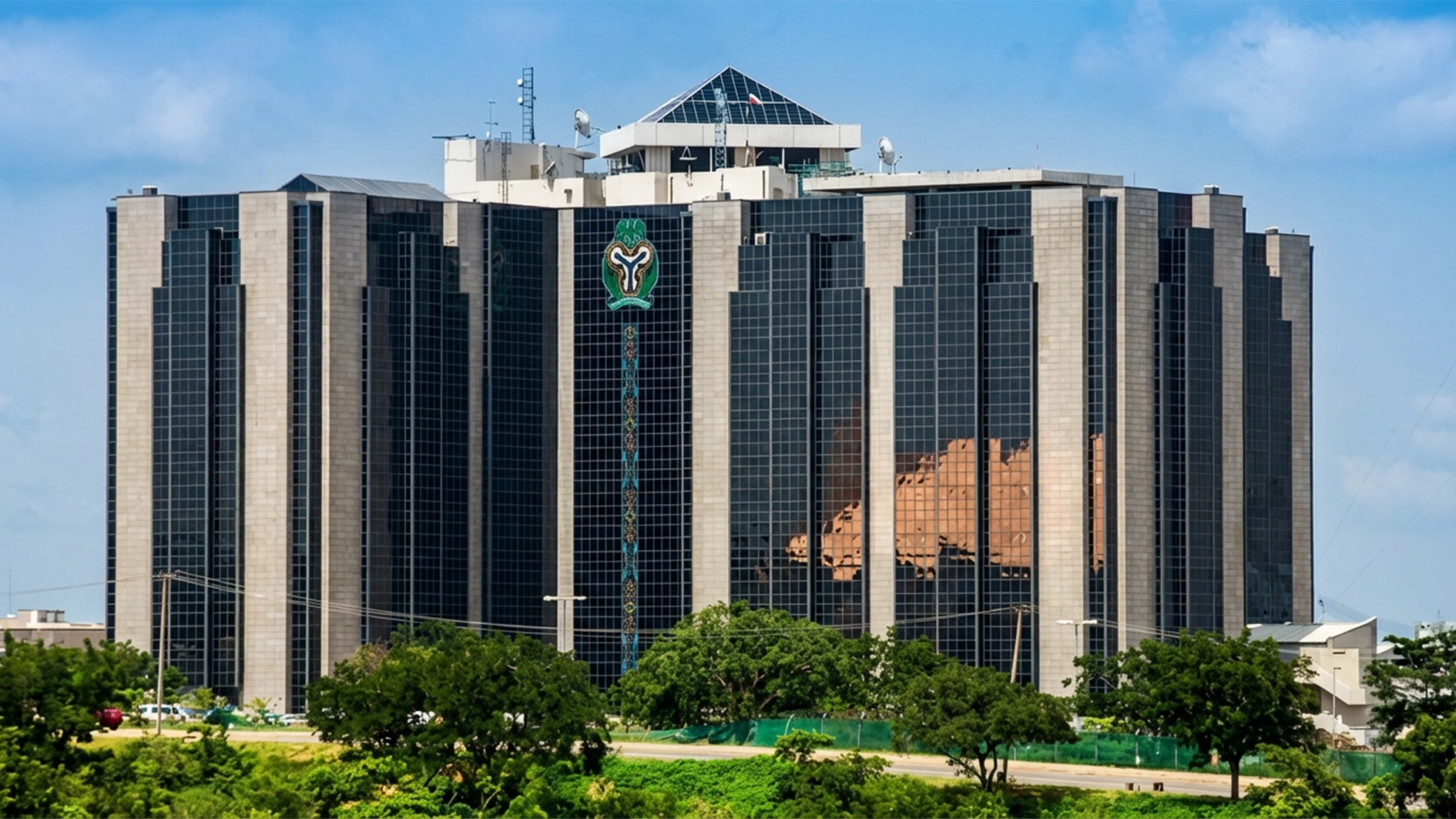
CBNThe Central Bank of Nigeria hopes to lift agricultural lending above the current level of less than five per cent of banks’ credit, with Governor Olayemi Cardoso declaring that agriculture must receive its “rightful place in our financial system and national priorities.”

Cardoso spoke in Abuja on Tuesday at the inauguration of the newly constituted Board of the Agricultural Credit Guarantee Scheme Fund. He told the audience that the event marked “a defining moment — a bold statement of intent that signals a new dawn for agricultural financing in Nigeria.”

He said agriculture remained the backbone of the economy, contributing more than one-fifth of GDP and employing most Nigerians, yet “it receives only a small fraction of formal credit — less than 5 per cent of banks’ lending goes to the agricultural sector.”

According to him, this chronic underfunding has stifled productivity and expansion for millions of farmers. “It is a reassessment of norms: we will no longer accept business-as-usual,” he said. “Instead, we embrace a future where agriculture is accorded its rightful place.”

Cardoso said the fund, which guarantees up to 75 per cent of the value of agricultural loans, had helped banks lend to farmers for decades, including those considered “unbankable.”

He noted that the scheme had been strengthened following a 2019 amendment that expanded its share capital from N3bn to N50bn and broadened its mandate. He said the reform was designed to deepen inclusivity, adding that the revised Act now provides for a board composed not only of government officials but also of farmers’ representatives.

“Such inclusivity is strategic: it enshrines partnership between policymakers, financiers, and the farming community in guiding the Scheme’s activities,” he said. Cardoso described the sector as standing at the “crossroads of unprecedented opportunity” under the Federal Government’s Renewed Hope agenda.

He said the vision was to build a resilient, technologically advanced, and inclusive agricultural economy that “ensures food security, reduces poverty, and creates wealth for millions of Nigerians.”

According to him, smallholder farmers constitute 80 per cent of Nigeria’s farmers and produce about 90 per cent of food, yet they continue to face high barriers to credit. “Many lack collateral or credit history — a situation we can no longer afford, given that these same smallholders feed our nation and drive our rural economy,” he said.

Also speaking, the chairman of the newly inaugurated board, Dr Olusegun Oshin, said the scheme must focus on the grassroots, where the majority of farmers struggle without credit or storage facilities.

He told the gathering that “those that feed us are those weak, poor farmers very far away in the villages and who don’t have access to credit,” adding that even when they manage to raise funds, “they don’t even store it properly because they don’t have the capacity for storage.”

PalmPay unveils digital tasks, prizes in December

PalmpayPalmPay, one of Nigeria’s fastest-growing fintech platforms, has announced the beginning of Purple December, its annual month-long digital activation created to celebrate, appreciate, and reward its vibrant community of users during the festive season and end-of-year period.


Running from December 1 to December 26, Purple December is a social media-led campaign that invites PalmPay users to participate in simple weekly online tasks for a chance to win exciting prizes, including smartphones, earbuds, airtime/data coupons, and branded gift items. Four winners will emerge each week as tasks go live across PalmPay’s social media channels, according to a statement on Monday.

Speaking on the campaign, the Head, Marketing and Communications at PalmPay, Olorunfemi Hanson, said the campaign builds on the brand’s tradition of rewarding loyalty while amplifying the real stories of Nigerians who rely on the platform for everyday financial transactions.

“Purple December is our way of saying thank you to the millions of people who trust PalmPay to power their daily payments. This year, the campaign is entirely digital, designed to meet our users where they already are on social media, online communities, and the spaces where they share, celebrate, and connect,” he commented. “We want to close the year by spotlighting the voices, stories, and memorable moments that shaped 2025 for our users.”

According to him, throughout the month, participants will engage with tasks that showcase PalmPay’s impact, from its CSR initiatives to the financial convenience it provides, to its international recognitions, and the personal experiences users have shared over the course of the year. The campaign culminates in a Christmas-themed challenge where users create and submit short videos using the hashtag #PalmPayPurpleDecember. The top-engaging videos will win major prizes, including an iPhone.

Hanson added that the initiative reinforces PalmPay’s commitment to a community-driven digital ecosystem:

“Every year, Nigerians tell us how we help them save more, spend smarter, or support their hustle. Purple December gives us a chance to celebrate those stories publicly. It is fun, it is inclusive, and it reflects the heart of who we are as a brand that not only cares and listens, but also engages and rewards customers for their loyalty.”

Purple December is now live across PalmPay’s digital platforms, including Facebook, Instagram, TikTok, X (Twitter), YouTube, and LinkedIn. PalmPay encourages all users to join the celebration, follow the weekly prompts, and participate for a chance to win.

For more information, visit PalmPay’s official social media pages and download the PalmPay app.

NUPRC denies withholding N283.3bn exploration funds from NNPC

The Nigerian Upstream Petroleum Regulatory Commission has disclosed that over $185m (about N268.4bn) and N14.9bn have so far been released to the Nigerian National Petroleum Company Limited from the Frontier Exploration Fund.

The commission’s Head of Media and Strategic Communication, Eniola Akinkuotu, made the revelation in a statement issued on Monday, addressing recent reports that the NUPRC had withheld the Frontier Exploration Fund from NNPC Ltd.

Akinkuotu’s disclosure confirms that the fund has been disbursed to NNPC Ltd as planned, countering the assertions that payments were being withheld by the regulator.

The disclosure provides fresh insight into the utilisation of the controversial fund, which has been at the centre of transparency concerns following the introduction of the Petroleum Industry Act that mandates a 30 per cent allocation of NNPC Ltd’s profit oil and gas to frontier exploration.

According to the commission, the fund, drawn from statutory allocations for the exploration of frontier basins, was made available to the national oil company to accelerate oil and gas discovery efforts, particularly in underexplored regions across the country.

Akinkuotu explained that the Frontier Exploration Fund was not domiciled in the Commission but in an account controlled by the Central Bank of Nigeria. The commission added that its role was simply to evaluate the Work Programme submitted by NNPCL after which an approval would be given for the release of the fund.

“The Nigerian Upstream Petroleum Regulatory Commission has dismissed reports that it is withholding the Frontier Exploration Fund from the Nigerian National Petroleum Company. $185,123,333 had been approved along with N14.9bn. We approve funds based on certified activities and contracts awarded. So, if a contract has not been awarded, we cannot approve payments” the statement read.

According to the statement, the NUPRC in a bid to promote transparency, had contracted PwC to evaluate NNPCL’s claims before the final approval of the fund.

“So far, there is no outstanding sum. The NUPRC approved the final release on November 27, 2025 to the tune of $140,000,000. We have documents to back this up. Earlier, N14.9bn and $45m were released.

“Anyone interested can also reach out to the NNPCL rather than rely on faceless individuals seeking to tarnish the image of the Commission,” the statement added.

The commission noted that the Frontier Fund was solely for the use of the NNPC and it would be absurd for any operator to make spurious claims.

The upstream regulator added that the Minister of State for Petroleum, Senator Heineken Lokpobiri, had earlier issued a statement denying investigating the NUPRC over the handling of the fund.

“The minister had issued a rebuttal on the so-called investigation on November 17, 2025. It amounts to mischief for anyone to reference a statement which has been denied by the purported author,” the Commission concluded.

CBN Names 82 Licensed BDCs, Warn Unlicensed Dealers Of Possible Penalties

The Central Bank of Nigeria (CBN), has granted Final Licenses to 82 Bureaux De Change (BDCs) to operate with effect from November 27, 2025.

This is in exercise of its powers conferred under the Bank and Other Financial Institutions Act (BOFIA) 2020, and the Regulatory and Supervisory Guidelines for Bureaux De Change Operations in Nigeria 2024.

While the CBN will continue to update the list of Bureaux De Change with valid operating licences for public verification on its website (www.cbn.gov.ng), the Bank advises the general public to avoid dealing with unlicensed Foreign Exchange Operators.

CBN warned, “For the avoidance of doubt, operating a Bureau De Change business without a valid licence is a punishable offence under Section 57(1) of the Banks and Other Financial Institutions Act (BOFIA) 2020.

“Members of the public are hereby advised to note and be guided accordingly.”

FG, SEC, NGX Group Forge Unified Direction On Capital Gains Tax Reform

The Federal Government has inaugurated the National Tax Policy Implementation Committee (NTPIC), marking a deliberate shift toward a more predictable and market-aligned rollout of the newly enacted capital-gains-tax (CGT) provisions.

The move follows extensive technical engagements with key capital-market institutions, including the Securities and Exchange Commission (SEC) and Nigerian Exchange Group (NGX Group), reflecting policymakers’ recognition of the market’s role in sustaining liquidity, price discovery and long-term capital formation.


Chaired by leading tax and fiscal-policy expert Joseph Tegbe, the committee has been tasked with steering the implementation process toward clarity, investor protection and policy coherence. Its mandate includes ensuring transparent guidelines, broad stakeholder consultation and an execution framework that minimizes market disruption while reinforcing confidence among domestic and foreign investors.


Tegbe said the government would avoid policies that risk disrupting market activity or business investment. “Implementation of the new tax laws will be fair, transparent and humane. We will not roll out these policies in a way that cripples businesses or investors. Stakeholder engagement will be central to this process,” he said at the inauguration.


The shift follows sustained engagements by NGX Group and the SEC, during which market operators outlined the potential implications of a rapid CGT rollout on liquidity, investor sentiment and the market’s competitiveness at a time when Nigeria is seeking deeper pools of domestic and foreign capital.


Temi Popoola, GMD and CEO of NGX Group, commended the government’s approach, noting that the group, in collaboration with the SEC, has consistently advocated for a data driven approach that balances fiscal objectives with the need to preserve market depth. “We support the modernisation of Nigeria’s tax system, but reforms of this scale must be carefully calibrated to protect liquidity, sustain participation and maintain competitiveness,” he said. “Our engagements with government have focused on ensuring that implementation supports the capital market’s role in long-term investment and economic growth”. Popoola added that global competitiveness hinges not only on policy intent but also on the precision of execution, particularly for emerging markets seeking cross-border flows.


The government’s consultations intensified after the Honorable Minister of Finance and Coordinating Minister of the Economy, Wale Edun, visited NGX Group, where market operators outlined the potential unintended consequences of an abrupt CGT rollout.


Analysts view the inauguration of the NTPIC as a constructive signal to investors, indicating that authorities intend to anchor fiscal reforms in evidence and consultation, rather than speed alone.


Both SEC and NGX Group have pledged continued collaboration with the committee to ensure that the eventual CGT implementation supports confidence, broadens participation and aligns with long-term capital-market development objectives

Analysts forecast 4.5% Q4 economic growth

Analysts at Afrinvest have projected that Nigeria’s economy could expand by 4.3 to 4.5 per cent in the fourth quarter of 2025, supported by seasonal factors, improved foreign exchange supply, and stronger consumer spending, according to macroeconomic projections.

According to its weekly update, this outlook follows the release of the third-quarter Gross Domestic Product report by the National Bureau of Statistics, which showed that the country’s real output grew by 4.0 per cent year-on-year in Q3 2025. While this represents a slight moderation compared with 4.2 per cent growth in Q2 2025, it outperformed the 3.9 per cent expansion recorded in Q3 2024.

“Looking ahead to Q4 2025, we estimate a base-case GDP growth range of 4.3 per cent to 4.5 per cent, underpinned by seasonal drivers, including a late harvest cycle and stronger consumer spending associated with year-end festivities, which should provide near-term support. Improved FX supply and gradual softening of price pressure are also expected to lift business sentiment. However, the operating environment remains challenging. Uncertain crude oil output, fiscal constraints, heightened security concerns, and still-restrictive monetary conditions could limit the extent of the expansion, particularly through their impact on credit growth and investor confidence.”

Nominal GDP reached N113.6tn, up from N96.2tn in the same period last year, reflecting an 18.1 per cent increase year on year, largely driven by price-level changes. Growth was supported by both the oil and non-oil sectors, although oil accounted for just 3.4 per cent of total GDP compared with 96.6 per cent from non-oil activities.

The oil sector expanded by 5.8 per cent year on year, aided by stable but slightly declining crude oil output. Average production stood at 1.64 million barrels per day in Q3 2025, down from 1.68mbpd in Q2 2025, but above 1.47mbpd in Q3 2024. Despite these gains, the sector’s contribution to total GDP remained modest at 3.4 per cent. Analysts noted that the performance reflects steady upstream production and continued efforts to curb crude oil theft.

Among the three main sectors, agriculture grew by 3.8 per cent year on year, benefiting from the main harvest season and rising export earnings for cash and food crops. The industrial sector, excluding oil, expanded by 3.2 per cent, showing a slowdown relative to previous quarters. Services led the non-oil economy with 4.2 per cent growth, driven by ICT, financial services, and real estate. Within these, trade grew 2.0 per cent, supported by FX stability and improved consumer purchasing power, while real estate eased to 3.5 per cent from 3.8 per cent in Q2 2025, reflecting weaker demand in the sector.

Economists said that while overall growth remains robust, the moderation in key sectors signals slower momentum, particularly in industry. “The non-oil economy continues to anchor growth, demonstrating resilience and structural diversification despite challenges in some sectors,” said a senior economist at a Lagos-based consultancy who spoke on condition of anonymity.

Mauritius team wins FirstBank Junior Achievement Award

First Bank of Nigeria Limited has presented its CEO Award to Team Mauritius at the grand finale of the 15th Junior Achievement Africa Company of the Year competition, which concluded over the weekend in Abuja.

The three-day event, held from December 3 to 5, 2025, brought together student entrepreneurs from eight African countries—Eswatini, Ghana, Mauritius, Nigeria, Rwanda, South Africa, Uganda, and Zambia—who showcased innovative, climate-focused business solutions under the theme Action for Climate Transformation.

In a statement on Sunday, it was stated that the annual contest provides a platform for young innovators to compete for a chance to represent Africa at the global finals, while accessing funding, scholarships, and long-term venture support.

Announcing the award, FirstBank said Team Mauritius distinguished itself across the five judging pillars: strength of business idea, financial management and sustainability, leadership and teamwork, stage pitch, and trade fair performance. The team’s company, Plantura, impressed the bank with its “plant and air-based purifier,” a climate-smart solution developed by four students described by the bank as “smart, agile, and intelligent.”

“We unanimously agreed that Mauritius had our vote for the FirstBank CEO Entrepreneurship Award,” the bank stated.

President and CEO of JA Africa, Simi Nwogugu, commended FirstBank for its continued support, noting that the bank’s contribution has strengthened entrepreneurship and financial literacy programmes across the continent.

“FirstBank has been an incredible supporter,” she said. “Usually, our headline sponsors are global organisations, so having FirstBank step up in that role was very exciting. We hope to further deepen the partnership—not just through funding, but also through FirstBank employees volunteering in classrooms.”

Nwogugu highlighted Africa’s urgent employment challenges, noting that while 11 million young people enter the labour market annually, only about 3 million jobs are created, leaving millions without work. She warned that without deliberate efforts to empower the continent’s youth, poverty and crime could worsen.

“Our solution is to raise young people who are not only job seekers but job creators,” she said. “We emphasise entrepreneurship education from an early age, teaching ethics, integrity, and problem-solving. When young people identify problems, they should think immediately of how to solve them.”

She added that the future of work is rooted in technology, underscoring the organisation’s commitment to digital skills training. JA Africa currently reaches 1.5 million youths and aims to double that number by 2028 and expand to 5 million by 2030.

Also speaking, President and CEO of Junior Achievement Worldwide, Asheesh Advani, urged more Nigerian institutions to emulate FirstBank’s leadership in supporting youth entrepreneurship.

“FirstBank is a great example of leadership in this regard, and we encourage other Nigerian companies to follow their lead,” he said. Dr Tobechi Enyioko and Nidi Sohotyep presented the award on behalf of FirstBank to the team from Mauritius.

Market gains N2.44tn as ICT, banking stocks drive surge

The Nigerian Exchange Limited closed the week on a high, with ICT and banking stocks driving the market up by N2.44tn. The All-Share Index gained 2.45 per cent to 147,040.08 points, while market capitalisation rose 2.67 per cent to N93.722tn.

Investor activity picked up sharply, with a total turnover of 6.617bn shares worth N113.224bn changing hands in 109,590 deals during the week, up from 4.140bn shares valued at N115.889bn exchanged in 102,351 deals the previous week. The ICT industry, measured by volume, led market activity with 3.500bn shares valued at N17.759bn traded in 11,184 deals, representing 52.89 per cent of total equity turnover volume and 15.68 per cent of turnover value.

The financial services industry was the next most active sector, recording 2.625bn shares worth N50.188bn in 42,574 deals, while the services industry ranked third with 104.524m shares valued at N1.166bn in 7,255 deals. Trading in the three most active stocks—E-Tranzact International Plc, Cornerstone Insurance Plc, and Access Holdings Plc—accounted for 4.871bn shares valued at N27.422bn in 6,438 deals, contributing 73.60 per cent of turnover volume and 24.22 per cent of turnover value.

Market breadth was positive, as 55 equities appreciated in price during the week, up from 38 a week earlier. Twenty-nine equities declined, down from 36 previously, while 63 stocks closed unchanged compared with 73 in the prior week. Sectoral indices were largely firmer: the industrial goods index led gains with a 7.38 per cent rise, and the premium index jumped 5.50 per cent. Conversely, the Oil and Gas and Commodity indices fell by 0.57 per cent and 0.30 per cent, respectively.

On the exchange-traded products market, investors traded 411,382 units valued at N105.657m in 1,022 deals, up from 214,478 units worth N54.458m in 761 deals the previous week. Leading ETPs by volume included VETINDETF (96,978 units, N5.79m), VETGRIF30 (82,739 units, N5.13m), and VETGOODS (78,049 units, N3.36m). The StanbicETF30 recorded the largest value traded at N82.45m on 53,752 units transacted.

Fixed income turnover also improved as bond trading amounted to 410,186 units valued at N443.071m across 54 deals, versus 117,523 units valued at N120.742m in 38 deals a week earlier.

Corporate and government listings during the week also shaped market activity. Ecobank Transnational Incorporated listed an additional 5,381,656,222 ordinary shares following conversion of preference shares, employee share option exercises, and loan conversions, increasing its issued share capital to 23,731,207,437 ordinary shares of $0.025 each.

Additionally, Industrial and Medical Gases Plc listed 181,621,214 ordinary shares arising from its rights issue, lifting its total issued shares to 731,064,226. The Federal Government’s November 2025 savings bonds, FGS202702 (13.565 per cent, two-year) and FGS202803 (14.565 per cent, three-year), were also admitted to trading; the issue sizes were N958.416m and N2.874664bn, respectively.

Trading in Champion Breweries Plc’s rights opened on Monday. The rights issue offers 994,221,766 ordinary shares at N16.00 per share on the basis of one new share for every nine held; the offer closes on 5 January 2026.

Analysts said the weekly gains reflected year-end portfolio rebalancing and renewed investor confidence, with aggressive positioning in the ICT and banking sectors amplifying volumes and lifting prices across the board. Market watchers will be monitoring liquidity flows and corporate actions as investors seek to lock in gains before the year closes.

Analysts at Afrinvest stated that, looking ahead, they expect the market to sustain the positive start to December, driven by bargain-hunting and the rebound in key sectors. However, intermittent profit-taking and year-end portfolio adjustments may temper positive sentiment.

Banks seek new revenue channels as FX gains fade

As the massive foreign exchange gains that banks enjoyed in the wake of the harmonisation of the FX market dry up, market watchers say lenders are actively seeking ways to open up other non-interest channels.

This was part of the outlook projected by experts at Meristem Securities in their monthly Banking Sector Highlights for November 2025.

President Bola Tinubu, weeks into his administration in 2023, harmonised segments of the FX market, which led to a significant depreciation in the value of the naira and resulted in a boon for banks in terms of FX revaluation gains. The National Assembly thereafter imposed a windfall tax following the amendment of the Finance Act 2023. The PUNCH reported that six banks paid about N205.59bn as windfall tax in the 2024 financial year.

On the outlook for the banking sector, Meristem said, “As the 2025 FY period wraps up in December, we expect the pace of growth in banks’ gross earnings to moderate further as the sector fully transitions into a normalised earnings environment. Growth will, however, remain largely driven by interest income, as banks continue to leverage the still-high interest rate (MPR at 27.00%).

This will be supported by the capacity for balance sheet expansion following the widening of the asymmetric corridor to +50/-450 bps from +250/-250 bps. This adjustment lowers banks’ effective borrowing cost at the CBN and strengthens their ability to extend credit to the real economy.

“Beyond interest income, we acknowledge that more banks are making efforts to grow their non-interest income, especially after the extraordinary FX gains made in the last two years as a result of the naira devaluation and depreciation. The ability to grow non-interest components like fees and commissions, hinged on increased demand and the impact of digitalisation, would help boost the non-interest revenue stream.”

The PUNCH had reported that at the end of the third quarter of 2025, nine financial institutions made about N2.81tn from account maintenance charges, commissions on collections, e-business, and other fees. This figure represents about a 24.10 per cent increase from the N2.27tn earned in the same period of the previous year.

A look at the nine-month results of the financial institutions filed with the Nigerian Exchange Limited indicated that Access Holdings recorded a slight dip in non-interest income by 2.32 per cent YoY to N996.86bn. FX revaluation loss (-53.43 per cent YoY to N255.40bn) weighed on non-interest income performance. However, strong growth in other operating income (+110.31 per cent YoY) and fees and commission income (+49.53 per cent YoY), as the bank continues to focus on core banking operations, provided support.

For Sterling Financial Holding Company, Meristem said that the growth recorded in its fees and commission income, which grew by +17.12 per cent YoY, and trading income, which expanded significantly (+78.19 per cent YoY), more than offset FX revaluation losses of N1.88bn that the company suffered. It was a similar scenario at United Bank for Africa, where non-interest income fell to N488.63bn from N599.11bn in 9M:2024, mainly due to an 83.34 per cent YoY decline in FX revaluation gains.

“This sharply suppressed trading performance, with net trading income down 77.34 per cent YoY, reversing last year’s FX-driven windfall,” said the analysts.

At Wema Bank, as of September 2025, FX revaluation gain declined by -70.21 per cent YoY to N4.23bn, contributing largely to the dip in other income, which fell by 58.03 per cent YoY.

Analysing the impact of the decisions of the Monetary Policy Committee of the Central Bank of Nigeria, which includes holding the benchmark rate at 27 per cent, the experts said, “The revised asymmetric corridor places the Standing Lending Facility at 27.50 per cent (down from 29.50 per cent), meaning banks now borrow from the CBN at a lower cost. At the lower band, the Standing Deposit Facility now stands at 22.50 per cent, offering less incentive for banks to park liquidity with the CBN. We believe that some banks may still opt to place funds with the CBN, as the SDF rate remains meaningfully above prevailing yields in the fixed-income market (c.16.00%). The removal of the N3.00bn cap further enhances its appeal, especially for banks prioritising risk-free returns.

“Although the liquidity expansion gives banks additional capacity to extend credit, it is unlikely to translate into a significant reduction in lending rates to the real sector. Loan pricing is expected to stay elevated as banks work to meet the 50 per cent loan-to-deposit ratio requirement while keeping non-performing loan levels in check. The high-interest-rate environment is expected to continue to bolster banks’ earnings through interest income, though at more normalised levels. In 9M:2025, banks like Access Holdings, Stanbic IBTC Holdings, and Zenith Bank maintained current account and savings account ratios above 60.00 per cent, providing a buffer for net interest margins against mild yield compression. This strong, low-cost funding base also enhances their flexibility to channel liquidity into additional lending or interbank placements amid the more accommodative policy corridor.”

Meanwhile, the CBN has confirmed that 16 banks have now met the recapitalisation requirements, higher than the 14 from the September meeting of the MPC.

The Managing Director of Financial Derivatives, Bismarck Rewane, has warned that the banking sector is experiencing a shift. Speaking at the recently held 2025 Parthian Economic Discourse in Lagos, Rewane said:

“The bargaining power of the banking system is getting weaker and weaker. You have this Chinese OPay and Moniepoint. If you look at advertising slots at peak hour, 10 and 11 o’clock news, you are more likely to see Victor Osimhen and Moniepoint than you see X bank. It tells you something. You are more likely to see MoMo and MTN, and it’s not coincidental. Nothing happens by accident. It’s because of the kind of money that’s being made, money to be made, and more money to be made. The banking sector is going through a change to make it more efficient. The banking system lives on rent, just like downstream petroleum, on rent extensively from allocating to round-tripping and all sorts of things. So, it’s now about efficiency and how to deliver value to the client, and the client has become very sophisticated and resistant to increases.”