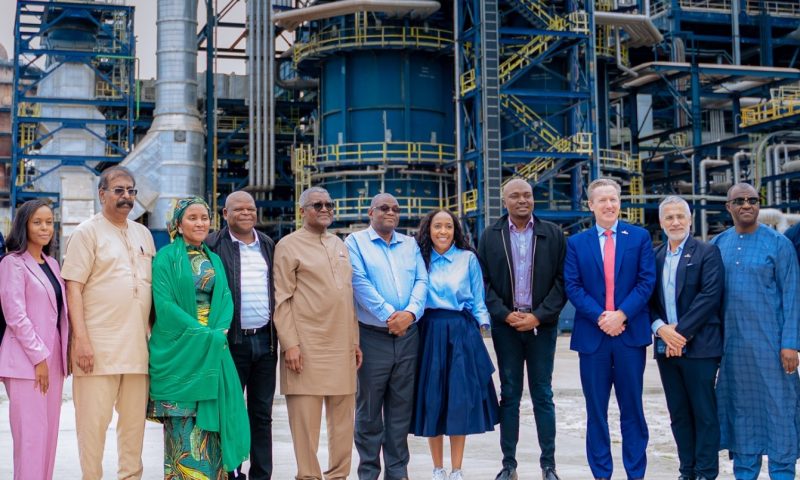
SEC DG, Agama Re-Elected AMERC Vice Chair

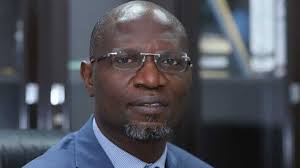
The Securities and Exchange Commission Nigeria (SEC Nigeria) is pleased to announce the re-election of its Director-General, Emomotimi Agama, as Vice Chair of the Africa/Middle-East Regional Committee (AMERC) of the International Organization of Securities Commissions (IOSCO) for a second term spanning 2026–2028.
IOSCO was established in 1983, serves as the global standard-setter for the securities industry and is recognised as the leading international policy forum for securities regulators. Its members regulate more than 95 per cent of the world’s securities markets across over 100 jurisdictions.


This appointment, confirmed by IOSCO, reflects the growing recognition of Nigeria’s capital market and its strategic importance within the Africa and Middle East region. It highlights the confidence of peer regulators in Nigeria’s leadership, regulatory progress, and continued commitment to strengthening capital market systems.


The re-election also presents a significant opportunity for SEC Nigeria to deepen its engagement at the highest level of global securities regulation. As AMERC Vice Chair, Nigeria will maintain a seat on the IOSCO Board, the organisation’s highest policy-making body, where critical decisions shaping global capital market standards, regulatory frameworks, and cross-border cooperation are made. This position ensures that Nigeria’s perspectives, experiences, and priorities are represented in key discussions that influence the direction of international financial markets.


According to Agama, “Beyond representation, this development enhances Nigeria’s ability to contribute meaningfully to global regulatory dialogue, particularly in areas such as enforcement cooperation, market integrity, and investor protection. It creates a stronger platform for collaboration with other jurisdictions on cross-border regulatory issues, including tackling illicit financial flows and strengthening supervisory frameworks. The role further supports ongoing efforts to align Nigeria’s capital market with international best practices, fostering greater investor confidence and facilitating increased participation in global financial markets.


“Ultimately, this milestone reinforces Nigeria’s position as a leading voice in regional and global capital market development. It is expected to contribute to building a more resilient, transparent, and robust capital market ecosystem, not only within Nigeria but across the broader Africa and Middle East region. SEC Nigeria remains committed to leveraging this opportunity to advance regulatory excellence, deepen market integration, and support sustainable economic growth”

Air Peace refutes tax evasion claims, seeks talks with Lagos govt

Air-peaceNigeria’s largest carrier, Air Peace, has expressed shock over reports alleging that its Chairman and Chief Executive Officer, Allen Onyema, and Vice Chairman, Alice Onyema, are facing a tax evasion suit instituted by the Lagos State Government, describing the claims as surprising and unsubstantiated.

The airline, in a statement on Monday, said neither the company nor its principal officers had been served with any court summons or official notification regarding the alleged suit, questioning the credibility of claims that legal proceedings had been ongoing since February without formal communication.

It recalled media reports alleging that the airline’s chairman became embroiled in a legal tussle instituted by the Lagos State Government over an alleged tax bill running into N94m.

According to the reports, the state revenue board initiated legal proceedings against the airline founder and his wife weeks after he publicly criticised federal tax reforms.

The airline said the development had raised concerns within the organisation, given its long-standing commitment to regulatory compliance and transparency.

Air Peace maintained that all its tax obligations, both corporate and personal, had been fully met and remain up to date in accordance with existing laws.

The airline, however, expressed willingness to engage with the Lagos State Government in the event of any discrepancies, emphasising that such engagement would be in the interest of due process, clarity, and accountability.

The statement read in part, “We wish to state unequivocally that neither the Onyemas nor Air Peace has been served with any court summons or official notification regarding the purported suit. The claim that legal proceedings have been ongoing since February, without service or formal communication, is quite surprising and shocking.

“We maintain that all personal and corporate tax obligations have been duly met and remain up to date, in full compliance with applicable laws and regulatory requirements. However, if there is any discrepancy in the computation of taxes, the Onyemas and Air Peace remain open to engaging the Lagos State Government to review and reconcile shortfalls, if any, in the interest of transparency, clarity, and due process.”

The carrier further highlighted the contributions of its leadership to the growth of Nigeria’s aviation industry, noting that the Onyemas have consistently demonstrated resilience and patriotism in sustaining operations despite challenging economic conditions.

It added that it remains focused on delivering safe and reliable services to passengers and would not be distracted by the allegations.

CBN targets single-digit inflation

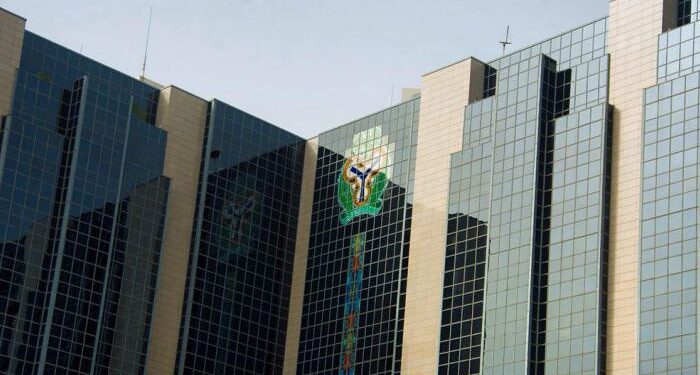
CBN headquartersThe Central Bank of Nigeria has said it is on course to reduce inflation to single digits as part of its transition to an inflation-targeting monetary policy framework.

This was disclosed in a statement issued by the apex bank on Sunday following an engagement with the Nigerian Economic Society and members of the academic community in Abuja.

Speaking at the session held on March 18, 2026, the CBN Deputy Governor in charge of Economic Policy, Dr Muhammad Abdullahi, said the shift to inflation targeting represents a major change in Nigeria’s monetary policy approach.

He described the engagement as timely and essential to Nigeria’s ongoing economic reforms, adding that the new framework would strengthen policy credibility and long-term price stability.

According to the statement, “the transition to an inflation-targeting framework marks a significant shift toward a transparent, forward-looking, and rules-based monetary policy system anchored in long-term price stability.”

Abdullahi said the framework would serve as a key anchor for the economy by shaping expectations and reducing the impact of external shocks.

He noted that inflation targeting would serve as a crucial nominal anchor for the Nigerian economy, adding that stabilising inflation expectations would help lower risk premia and support long-term investments.

The CBN noted that ongoing global uncertainties, including geopolitical tensions and volatile energy prices, make the need for a credible monetary anchor more urgent for emerging economies like Nigeria.

The statement highlighted several reforms already implemented by the bank to support the transition, including a return to orthodox monetary policy tools and a gradual withdrawal from quasi-fiscal interventions.

It added that foreign exchange market reforms, such as rate unification and the introduction of electronic trading platforms, have improved price discovery and reduced volatility.

The apex bank also cited improvements in banking sector stability through recapitalisation efforts and stronger prudential oversight, alongside better coordination with fiscal authorities.

According to Abdullahi, these measures are already producing results. “Headline inflation declined sharply from 34.8 per cent in late 2024 to 15.1 per cent by early 2026, driven by sustained monetary tightening and improved policy discipline,” the statement said.

Looking ahead, the CBN said it is firmly on track to achieve low and stable inflation in the medium term. “The medium-term target is to steer inflation into a single-digit range of 6–9 per cent, barring major external shocks,” the statement read.

Abdullahi further noted that achieving this target would depend on sustained policy discipline, well-anchored expectations, and strong institutional credibility.

Earlier, the Director of the Monetary Policy Department, Dr Victor Oboh, said collaboration with the academic community is critical to improving monetary policy effectiveness.

He noted that the success of inflation targeting depends not only on technical design but also on public trust and communication.

Oboh noted that academics, researchers, and thought leaders play a vital role in shaping narratives, influencing expectations, and building the evidence base for sound policy decisions.

In his remarks, the President of the Nigerian Economic Society, Dr Baba Yusuf Musa, commended the CBN’s reform direction and pledged continued support for its stabilisation efforts.

“Nigeria needs a credible Central Bank, and the Nigerian Economic Society needs a Central Bank worth standing with,” he said.

Participants at the session, drawn from universities and policy institutions, also expressed support for the bank’s transition to inflation targeting, describing it as a necessary step toward strengthening macroeconomic stability.

Nigeria’s headline inflation rate eased marginally to 15.06 per cent in February 2026, according to the Consumer Price Index report released by the National Bureau of Statistics

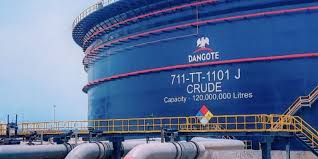
Dangote price hike fuels increase in cooking gas cost

Cooking gas cylindersFresh pressure is mounting on household energy costs as marketers on Monday warned that the price of Liquefied Petroleum Gas, popularly known as cooking gas, could rise further following a new price adjustment by the Dangote Petroleum Refinery and worsening global crude oil dynamics.

The Nigerian Association of Liquefied Petroleum Gas Marketers said retail prices have already climbed sharply to N1,000 per kilogramme, driven by higher ex-depot prices, surging logistics costs, and the ripple effects of rising crude oil prices.

This comes as the Dangote refinery increased its LPG ex-gantry price from N760 and N800 last week to N825 per kilogramme on Monday, a development seen by industry players as a key trigger for downstream price adjustments across the country.

Speaking in an interview on Monday, the association’s Publicity Secretary, Damilola Owolabi-Osinusi, confirmed that consumers should expect higher prices at retail outlets nationwi

She said, “Yes, definitely. The price of cooking gas will rise. The prices have already increased to N1,000 per kg at retail stations. This is because of the cost of logistics. It has increased too, haulage and other loading costs, particularly haulage. Even the Dangote refinery has increased its price. It’s N825 from Dangote as of today.”

Her comments signal a widening gap between ex-depot and retail prices, underscoring the cumulative impact of supply chain costs on final consumer pricing.

Operators explained that, beyond the refinery price adjustment, rising transportation costs, fuelled by higher diesel prices and operational bottlenecks, are significantly compounding the situation.

The latest hike is closely linked to the sustained increase in global crude oil prices, which directly influences LPG pricing, as both products are derived from hydrocarbon processing.

As crude prices climb in the international market, the cost of propane and butane, the primary components of LPG, also rises, leading to higher import parity prices and upward pressure on domestic supply.

Nigeria, despite being a major gas producer, still relies partly on imports and market-linked pricing, making local LPG prices vulnerable to global energy shocks.

The anticipated increase is expected to further strain Nigerian households already grappling with rising food and energy costs, as LPG remains a critical cooking fuel for urban and semi-urban populations.

Over the past year, the Federal Government has promoted LPG adoption as part of its clean energy transition strategy, encouraging a shift away from firewood and kerosene. However, recurring price spikes have continued to threaten affordability and slow adoption rates.

Marketers warned that unless there is a significant drop in crude prices or targeted interventions to ease logistics and distribution costs, the upward trend may persist in the near term.

Stakeholders attribute the situation to a combination of factors, including foreign exchange volatility, high vessel and terminal charges, and infrastructure gaps in the domestic gas distribution network.

With the Dangote refinery now playing a more prominent role in domestic LPG supply, its pricing decisions are increasingly shaping market trends. Despite the concerns, marketers insist that the current adjustments are market-driven and necessary to sustain supply.

For now, consumers may have to brace for higher cooking gas prices, as the interplay between crude oil markets and local supply realities continues to dictate the cost of clean cooking energy in Africa’s largest economy.

Meanwhile, Ukraine’s President, Volodymyr Zelenskyy, said on Monday that Ukraine is exploring plans to import liquefied natural gas from Mozambique, as it grapples with energy shortages caused by years of Russian attacks on its production infrastructure.

Before the war, Ukraine met almost all of its gas needs through domestic production. However, Russian strikes have meant that Ukraine has lost about half of its gas output, Central Bank Governor Andriy Pyshnyi said late last year.

Last autumn, Russia intensified its attacks on Ukrainian gas production facilities, most of which are located in frontline regions in northeast and central Ukraine.

Speaking on the Telegram messaging app after meeting with Mozambique’s President, Daniel Chapo, Zelenskyy suggested that Kyiv could offer the southern African nation—which is battling an Islamist insurgency—support in countering its security challenges.

“Ukraine is interested in additional energy supplies. Mozambique is interested in Ukraine’s experience and technologies to strengthen its internal security and protect people from terror,” Zelenskyy said, without providing details of the volumes of gas that might be involved in any deal.

Mozambique is a major African gas producer, and in January, the country and TotalEnergies announced that they would relaunch an LNG project previously halted by the insurgency.

With the capacity to produce 13 million metric tonnes of LNG annually, the project is expected to make Mozambique a major gas exporter. Ukraine has not imported Russian gas since 2015.

In recent years, Kyiv has also been expanding its LNG supplies, establishing access to U.S. LNG from terminals in Poland and the Baltic countries.

Ukraine also imports U.S. LNG via the so-called Vertical Corridor of pipelines from Greece. European AGSI official energy data showed last week that Ukraine had begun storing gas in its underground facilities in preparation for the next heating season.

Energy minister Denys Shmyhal has said that Ukraine intends to start the 2026–2027 heating season with at least 13 billion cubic metres of gas in underground storage, roughly the same volume as in the previous season. Since the start of the war with Russia, Ukraine has not disclosed full details of its gas imports.

FX trades drive FMDQ turnover to N60.77tn in January

FMDQFMDQ Group recorded a massive total turnover of N60.77tn for the month of January as the Nigerian financial markets opened 2026 with a surge in liquidity.

The performance, detailed in the 136th edition of the FMDQ Spotlight newsletter, underscores a market increasingly driven by foreign exchange activity and high-level institutional participation.

Data reveals a market heavily weighted toward currency and short-term liquidity instruments. Foreign Exchange (Spot and Derivatives) remained the primary engine of growth, accounting for 31.81 per cent of the total turnover. Close behind was Repurchase Agreements, which contributed 23.15 per cent, while Open Market Operations Bills also saw significant action, recording over N19.33tn in turnover. In contrast, traditional FGN Bonds and Treasury Bills accounted for 7.48 per cent and 7.04 per cent of the market share, respectively.

A major highlight of the period was the Lagos State Government’s landmark listing. The state approved the listing of a N14.82bn five-year 16.00 per cent Series 3 Fixed Rate Green Bond alongside a massive N230.00bn ten-year 16.25 per cent Series 4 Fixed Rate Bond.

On the corporate front, Accion Microfinance Bank quoted a N2.02bn Commercial Paper to support small businesses, while other major players, including UAC of Nigeria PLC, Citibank Nigeria, and Johnvents Industries, successfully quoted CPs totalling over N100bn combined.

The report highlighted the strategic direction of the Exchange and the dominant players within the ecosystem.

Commenting on the performance, the Group Chief Operating Officer of FMDQ Group PLC, Ms Tumi Sekoni, stated, “Market activity remained steady in February 2026, supported by strong institutional participation and sustained operational efficiency. As the year progresses, we will continue to collaborate closely with our stakeholders to deepen market liquidity and promote sustainable market growth.”

The report further noted that the top ten Dealing Member (banks) accounted for 72.85 per cent (N44.27tn) of the overall turnover, while the top three alone accounted for 52.97 per cent of the secondary market turnover recorded by the top ten.

Regarding the state’s intervention, the report added, “FMDQ Exchange has approved the listing of Lagos State’s Green Bond… in a landmark demonstration of its steadfast commitment to advancing Nigeria’s debt capital markets and promoting sustainable finance.”

The competitive landscape for January 2026 saw Stanbic IBTC Bank Limited, Coronation Merchant Bank Limited, and First Bank of Nigeria Limited emerge as the top three most active dealers. Their combined dominance reflects the highly concentrated nature of the Nigerian secondary market, where the top ten players continue to facilitate the vast majority of trade volumes.

As FMDQ Clear and FMDQ Depository continue to stabilise clearing and settlement activities, the market appears poised for further expansion in the second quarter of 2026, particularly in the infrastructure and sustainable energy sectors.

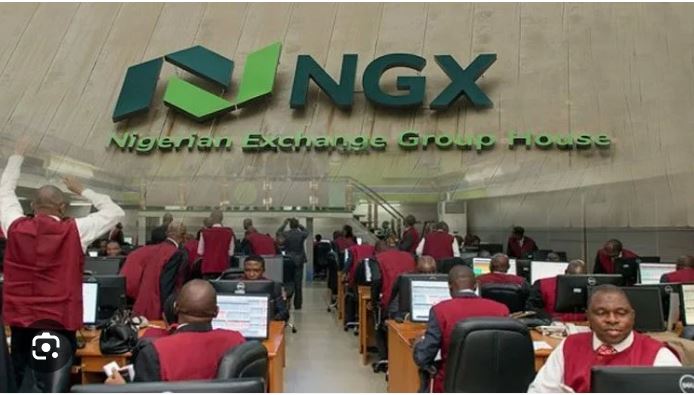
NGX sees 8.761bn shares traded in three days

Nigerian Exchange LimitedThe Nigerian Exchange Limited witnessed an extraordinary surge in activity as investors traded 8.761 billion shares valued at N267.253bn in 193,473 deals, despite a shortened trading week.

This massive turnover, which occurred in just three business days due to the Federal Government declaring public holidays on 19 and 20 March to commemorate the Eid-el-Fitr celebration, stood in stark contrast to the previous week’s total of 3.321 billion shares valued at N164.845bn.

The ICT industry dominated the activity chart by volume, accounting for 5.330 billion shares worth N46.825bn and contributing a staggering 60.84 per cent to the total equity turnover. This momentum was largely driven by heavy trading in E-Tranzact International Plc, FCMB Group Plc, and Wema Bank Plc, which together represented nearly 70 per cent of the week’s total volume.

The market’s primary benchmarks reflected this bullish sentiment, with the NGX All-Share Index and Market Capitalisation both appreciating by 1.39 per cent to close the week at 201,156.86 points and N129.126tn respectively.

While the broader market flourished, sectoral performance was mixed; the NGX Insurance, Oil & Gas, and Commodity indices recorded depreciations, while the NGX Sovereign Bond index remained flat. Amidst this volatility, the exchange also expanded its offerings with the listing of NGX30U6 and NGXPENSIONU6 Futures Contracts, alongside new commercial paper issuances from NGN Gram Limited totalling billions in value.

Market analysts have noted that the rush into equities and the tightening of yields in the fixed-income space suggest a strategic shift among institutional players. In their weekly review, analysts at Meristem Securities observed that investors are moving with increased urgency to secure positions before market conditions shift further.

According to the firm’s perspective on the current climate, “As yields begin to trend lower, investors move quickly to lock in still-attractive rates before further declines materialise, a behaviour evident in the significant rise in subscriptions and the downward trend of average Treasury bill yields.”

This aggressive positioning indicates that despite the holiday-shortened window, the appetite for both high-volume equities and debt instruments remains at a peak for the first quarter of 2026.

The current surge in the ICT sector is not just a weekly anomaly; it represents a significant structural shift in the Nigerian Exchange that has been gaining momentum since 2024. Historically, the Financial Services industry has been the traditional heavyweight of the Nigerian market, often accounting for 50 per cent to 70 per cent of total trading activity.

However, the data from March 2026 shows the ICT sector contributing 60.84 per cent of total volume and 17.52 per cent of value, a stark contrast to its historical standing.

The dominance seen in the third week of March 2026 is driven by several critical factors, including the ‘Fintech’ surge. Companies like E-Tranzact have seen their market capitalisations nearly double in the last 12 months, hitting N180bn in March 2026, reflecting the massive adoption of digital payment infrastructure in Nigeria.

The growth is no longer limited to just telecom giants like MTN and Airtel; mid-cap technology firms specialising in cloud computing and data centres are seeing unprecedented trading volumes as Nigeria’s “Digital Public Infrastructure” expands.

The ICT sector’s 58 per cent year-on-year market capitalisation growth in 2025 set the stage for the high-conviction trading seen this month. While the Financial Services sector still leads in value with N95.892bn compared with ICT’s N46.825bn this week, the sheer volume of shares changing hands in ICT indicates that retail and institutional investors are increasingly viewing technology as the primary engine for future growth.

MTN Nigeria rebounds with N1.1tn profit

New-mtn-logoMTN Nigeria has reported a staggering N1.1tn profit for the 2025 financial year. This turnaround marks a significant departure from the fiscal headwinds of 2024, signalling a robust resurgence in the country’s digital economy.

Speaking on Channels Television, the Chief Financial Officer of MTN Nigeria, Modupe Kadri, broke down the numbers that defined the company’s “impressive” performance. He revealed that the firm achieved a 22.9 per cent increase in service revenue, reaching N392.2bn, fuelled by a surge in third-quarter activity.

The recovery was not a matter of chance but the result of aggressive capital expenditure. Kadri disclosed that the company’s investment in the sector has reached unprecedented levels. “We spent about N1tn in 2025, significantly higher than our 2024 investment levels. We will continue now that we have a business case to make this investment,” he explained.

Despite the massive profit and the deployment of over 2,850 new network sites, the CFO offered a grounded perspective on when consumers will feel the full impact of these billions.

He addressed the recurring question of whether increased income immediately equates to better service quality. “The telecommunications industry is capital-intensive. Even when the capital is available, improvements in network infrastructure take time to materialise. We are not out of the woods yet, but the impact of such investments will be fully realised in time,” he said.

Looking towards the future, MTN is shifting its focus toward the “unconnected” segments of the Nigerian population. With the industry’s total investment exceeding $1bn, the company is eyeing a 70 per cent broadband penetration rate through a mixture of traditional and frontier technologies.

“There is a growing need to expand connectivity as Nigeria’s population increases. Areas previously classified as rural require improved population coverage. Our goal is to exceed 2025 investment levels with the Bridge Project and a ‘satellite revolution’ aimed at closing the rural connectivity gap,” he added.

Fidelity Bank to proffer solutions to public sector revenue challenges at high level stakeholders’ Webinar

Leading financial institution, Fidelity Bank Plc, is set to host a high-level virtual webinar focused on helping public institutions to strengthen revenue systems, improve fiscal transparency, and build smarter digital structures for collections, oversight, and accountability.
Scheduled for Tuesday, March 24, 2026, the session, themed Digital Fiscal Transparency: Unlocking Sub-national Opportunities for International Partners, will bring together a cross-section of public sector leaders, development institutions, heads of parastatals and agencies, as well as financial experts to explore practical solutions for stronger public finance management.
“As public institutions seek ways to improve internally generated revenue and strengthen public trust, there has been a renewed focus on fiscal transparency. This is particularly important in the face of recent macro and micro economic developments with many public sector agencies under pressure to do more with limited resources.
“It is against this background that we have conceptualised this session with a particular focus on how digital platforms can support structured invoicing, seamless collections, payment automation, contractor disbursement transparency, real-time revenue oversight amongst other pertinent areas of revenue mobilization and administration in Nigeria”, commented Richard Madiebo, Divisional Head, Public Sector, Fidelity Bank Plc.
The event is expected to offer timely insights into how modern revenue infrastructure can help institutions improve efficiency, drive accountability, and support better fiscal outcomes.
The webinar will address key issues facing many public institutions today, including revenue leakages, fragmented collection channels, weak visibility into revenue performance, poor reconciliation processes, and the growing need for more transparent and technology-driven systems.
According to Madiebo, “The webinar forms part of our commitment to provide practical solutions that support public sector transformation and stronger sub-national development. This is in line with Fidelity Bank’s mandate to help individuals to grow, businesses to thrive and economies to prosper.”
Interested participants may register at www.fidelitybank.ng/publicsectorwebinar
BREAKING: Dangote refinery hikes fuel price to N1,245/litre

DANGOTE REFINERYNigerians and Petroleum marketers are bracing for another round of price increases after the Dangote Petroleum Refinery announced a fresh hike in the price of Premium Motor Spirit (petrol), citing escalating global geopolitical tensions.

In a notice sent to marketers on Friday night and obtained by our correspondent, the refinery disclosed that its ex-depot (gantry) price had been raised from N1,175 per litre to N1,245 per litre, while the coastal price was also adjusted upward.

“Please be informed that due to the current global geo-political situation which has further escalated, the PMS gantry & coastal price has been reviewed and updated as outlined below,” the notice read.

The document showed that the gantry price increased by N70 per litre, while the coastal price rose from N1,512,648 per metric tonne to N1,606,518 per metric tonne.

According to the refinery, the new pricing regime will take effect from midnight on March 21, 2026.

“The refinery raised its coastal price from N1,512,648 per metric tonne to N1,606,518 per metric tonne, while the gantry price increased from N1,175 per litre to N1,245 per litre.

“Please note that the revised price will apply to all unloaded gantry and coastal volumes and is effective from 12am on the 21st of March 2026,” it stated.

The refinery also clarified that marketers with existing supply arrangements backed by bank guarantees would still be allowed to lift products under previous approvals, subject to certain conditions.

“For customers with a valid Bank Guarantee with DPRP, loading will continue with existing ATCs/PRN (if any) provided the BG credit balance covers the price change differential,” the notice added.

It further explained that the cost difference arising from the new pricing would be recovered from marketers.

“The corresponding debit note will be passed in your trading account with DPRP. Payment evidence for the price change differential will be required by Monday, 23-March-2026,” the company said.

The latest adjustment is expected to ripple across the downstream sector, with pump prices likely to rise in the coming days as marketers pass on the increased cost to consumers.

The hike underscores the continued vulnerability of Nigeria’s fuel market to international crude oil price volatility and supply chain disruptions, despite the coming on stream of the Dangote refinery, which was expected to stabilise domestic supply.

The development comes amid heightened global uncertainty driven by ongoing tensions in key oil-producing regions, particularly in the Middle East, which has pushed up crude oil prices and freight costs.

The refinery, however, maintained that the adjustment was necessary to reflect prevailing market realities, stressing that the pricing review was driven by external factors beyond its control.

Barge operators allege deliberate exclusion at Apapa port

The Barge Operators Association of Nigeria has decried what it described as a systematic and deliberate plot to push its members out of business at the Apapa Port by some terminal operators.

In a statement on Friday, the National President of BOAN, Olubunmi Olumekun, alleged that the terminal operators have effectively cornered barge operations at the Apapa Port by denying indigenous operators access to berthing windows.

“Some terminal operators are taking over the barge operations and not allowing local content to thrive. They are trying to determine the price by bringing their barges and taking over every aspect of business at the port. This would affect the common man on the streets and the price of goods at the market,” Olumekun said.

Olumekun mentioned that maritime law mandates that every terminal must leave 50 metres available for emergency evacuation or barge operations, a provision he said is being flagrantly violate

“According to international laws on port operations, 50 metres is designed for emergency evacuation. Every terminal must leave 50 metres for emergency operations or barge operations, and even in the concession agreement the terminal operators signed with the Federal Government, the clause is stated there,” Olumekun stated.

Olumekun accused the terminal operators of directly sabotaging President Bola Tinubu’s local content and blue economy agenda.

Also speaking, the Director of Enforcement and Operations at BOAN, Nura Wagani, drew a sharp contrast between the situation at Apapa and Tincan Island Port, noting that the crisis is largely localised at Apapa Port.

“We as barge operators have been thrown out of business; nobody is patronising us because of these exorbitant rates. This is only happening in Apapa Port. If you go to the Tincan Island Port, the cost is not the same; Tincan Island is far cheaper than Apapa,” he said.

Meanwhile, an official with one of the terminal operators, who requested not to be mentioned due to the sensitive nature of the matter, stated that terminal operators would not want to join issues with BOAN.

“We don’t want to join issues with the barge operators; when we want to speak on that, we will issue an independent statement,” the official stated.