W’Bank seeks $23bn private funding boost for Africa

World-Bank

The World Bank Group has unveiled an ambitious financial plan to mobilise about $23bn in private capital for Africa through a massive scaling up of its risk mitigation instruments over the next four years.

According to a statement issued by the Bretton Woods institution on Wednesday, the multi-billion-dollar capital drive will be powered by its newly consolidated Guarantee Platform, which aims to more than double its annual issuance of guarantees on the continent to $6.4bn by 2030. The bank projected that the developmental surge would significantly improve the lives of no fewer than 190 million Africans within the next four years.

The global lender noted that the strategic intervention comes at a critical time when Africa’s working-age population is projected to grow by 740 million over the next three decades, with up to 12 million young people entering the competitive labour force annually.

“Guarantees will play a critical role in attracting private capital into job-rich sectors including agribusiness, energy, infrastructure, healthcare, digital services, finance and trade,” the statement read in part.

The multilateral institution added that the initiative would directly support Africa’s long-term ambition to transform its economy into a global engine of growth.

To achieve this, the new funding framework will anchor key continental interventions, including AgriConnect, a programme targeting smallholder farming and global food security, and Mission 300, a joint energy project with the African Development Bank designed to connect 300 million Africans to electricity by 2030.

Breaking down the targeted impact, the World Bank stated that the guarantees could deliver access to electricity for 43 million people and provide improved financial inclusion for 50 million individuals and businesses, with a strong focus on women-owned enterprises.

“This initiative seeks to connect 300 million people in Africa to electricity by 2030, while creating more jobs,” the bank stated.

The deployment of these guarantees is also expected to connect 37 million people to broadband internet, extend digitally enabled services to 51 million people, and provide sustainable transport infrastructure for three million others.

Reacting to the deployment, the Managing Director of the Multilateral Investment Guarantee Agency, Tsutomu Yamamoto, expressed delight over the development, emphasising that the continent’s youth bulge represents an immense opportunity if matched with the right investments.

“Africa remains home to the world’s youngest and fastest-growing workforce, and guarantees will play a critical role in attracting the investment to create the jobs needed to secure their future,” Yamamoto said.

The MIGA boss further reiterated the readiness of the global institution to steer emerging economies away from systemic vulnerabilities through structured commercial de-risking mechanisms.

“We are delighted to announce these ambitious new commitments, which will ultimately help to build robust and stable economies that yield quality jobs in everything from agribusiness and healthcare to energy and infrastructure,” he concluded.

The World Bank Group Guarantee Platform was launched in 2024 as a centralised, “one-stop shop” hosting expertise from the World Bank, the International Finance Corporation, and MIGA. By consolidating these arms into a single-entry point, the platform streamlines review processes, eliminates redundant regulatory steps, and provides a predictable structure to encourage commercial lenders to fund vital projects across developing markets.

W’Bank flags skills deficit across African economies

World-Bank

A widening gap between the skills African workers possess and what employers require is emerging as a key constraint on business expansion, productivity and job creation across the continent, according to analysis highlighted in a World Bank blog post.

The assessment revealed that more than one in five young people in Africa are neither in education nor employment, reflecting deep structural weaknesses in education systems and labour market alignment. Employers across medium and large firms continue to report difficulty finding workers with adequate skills, a challenge that is increasingly shaping hiring decisions and slowing operational growth.

The blog argues against persistently weak foundational learning. Only a small proportion of children in the region are able to read and understand a simple sentence by age ten, a benchmark widely used as an early indicator of future learning and workforce readiness. These early deficits, it notes, compound over time and feed directly into later skills shortages in the labour market.

The World Bank analysis revisits findings from a 2019 report, The Skills Balancing Act in Sub-Saharan Africa: Investing in Skills for Productivity, Inclusivity, and Adaptability, which identified two core policy tensions: balancing skills for broad-based productivity gains against those for social inclusion and striking the right mix between foundational education and technical or vocational training.

Those trade-offs, the blog suggests, have become more difficult to manage as labour markets tighten and economic transformation slows in many countries across the region.

Technical and vocational education and training systems are singled out as a critical weak link. While TVET is designed to equip young people with job-ready skills, many programmes remain poorly aligned with employer needs, limiting their effectiveness in addressing unemployment and productivity gaps.

The blog highlighted the growing relevance of global skills partnerships as a potential solution. These arrangements involve cooperation between sending and receiving countries to jointly invest in training systems that align with industry demand while also supporting skilled labour mobility.

Examples cited include pilot programmes involving countries such as Germany working with Ghana and Senegal in sectors including construction, renewable energy and information technology. These initiatives typically offer dual training pathways, enabling participants to pursue employment either domestically or in international labour markets.

Advocates argue that such partnerships can help close skills gaps by directly linking training curricula to employer needs while also expanding employment opportunities for African workers in global markets facing demographic ageing and labour shortages.

Another major constraint identified is the lack of reliable data on labour market outcomes for training programmes. Many countries in the region do not systematically track the employment trajectories of technical and vocational education and training graduates, making it difficult for students to assess the value of different courses and for policymakers to evaluate programme effectiveness.

Some progress is being made. Rwanda’s graduate tracking system, for example, provides data on employment outcomes across different training programmes, offering insights into job placement rates and time-to-employment. Chile is also cited as a more advanced model, with comprehensive data that allows comparisons across institutions and fields of study.

The analysis also flags accelerating technological change as a growing pressure point. The rapid diffusion of digital technologies, automation and artificial intelligence is reshaping job requirements across sectors, increasing demand for both foundational and digital skills.

This shift is exposing further weaknesses in education systems, particularly where literacy, numeracy and digital competencies remain low. It also highlights a growing “usage gap” in digital access, especially among women, driven by constraints such as infrastructure deficits, affordability challenges and limited digital literacy.

The blog noted that without urgent reforms, Africa’s skills mismatch risks becoming a binding constraint on economic growth and job creation. It calls for stronger alignment between education systems and labour market needs, greater investment in foundational learning, improved labour market data, and expanded public-private partnerships to deliver demand-driven training.

Access Bank FX liquidity to service $1bn debt – Fitch

access-bankAccess Bank Plc possesses adequate foreign currency liquidity to comfortably service its looming $1bn external debt obligations maturing later this year.

Global credit rating agency Fitch Ratings disclosed this in its latest institutional credit assessment, where it also affirmed the bank’s Long-Term Issuer Default Rating at ‘B’ with a Stable Outlook.

The financial institution faces two significant hard-currency repayments in the third quarter of 2026, comprising a $500m Additional Tier 1 Eurobond callable in October and an additional $500m senior unsecured Eurobond maturing in September.

According to the rating agency, despite the macroeconomic headwinds and tight domestic liquidity parameters, Access Bank’s liquidity runway remains resilient enough to absorb these maturing obligations without triggering capital flight stresses.

Analysing the bank’s external balance sheet capacity, a senior credit analyst at Fitch pointed out that the bank’s diversified cross-border operations have provided the necessary buffers to absorb sovereign shocks.

“Fitch believes that the bank’s foreign currency liquidity is sufficient to meet the upcoming repayments,” the analyst said.

The analyst further explained that the financial institution’s recent aggressive international expansions have repositioned its operational baseline.

“The acquisition and consolidation of Mauritius-based AfrAsia Bank Limited in 2025 have improved our assessment of Access Bank’s operating environment, adding a large amount of investment-grade assets to its balance sheet,” he added.

However, the global agency noted that while foreign currency liquidity remains intact, Access Bank’s standalone Capital Adequacy Ratio settled at 17.4 per cent in the first quarter of 2026, leaving a relatively tight buffer over the 15 per cent regulatory minimum requirement.

Reflecting on the bank’s internal capitalisation strategies, an investment banking strategist observed that redeeming the $500m debt instruments could exert temporary pressure on core capital ratios due to historical foreign exchange adjustments.

“A redemption will reduce core capital because these notes are currently accounted for at a pre-devaluation exchange rate,” the strategist stated.

He maintained that the Tier 1 lender is already implementing remedial balance sheet measures to shore up its capital cushion against statutory benchmarks.

“Access Bank has already raised tier-two capital and actively plans to further strengthen its standalone CAR through internal capital generation and the planned sale of minority stakes in some foreign subsidiaries,” he said.

Meanwhile, the agency reported that the bank’s asset quality remained stable, with its impaired loans ratio holding firm at three per cent at the end of 2025, supported by a moderate oil and gas sector credit concentration of nine per cent of gross loans, which remains significantly lower than its domestic peer average.

Refinery Listing Will Democratize Africa’s Industrial Prosperity – Dangote

… South African investors eye investment opportunities


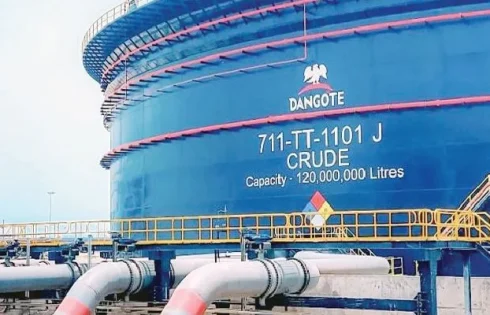
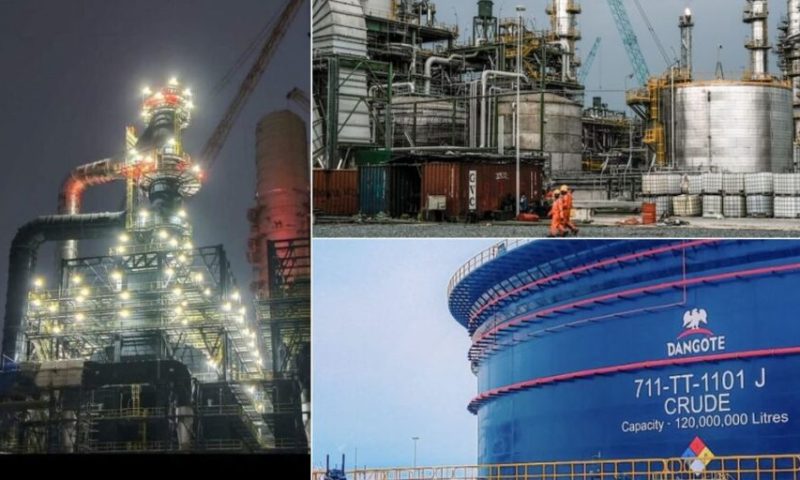
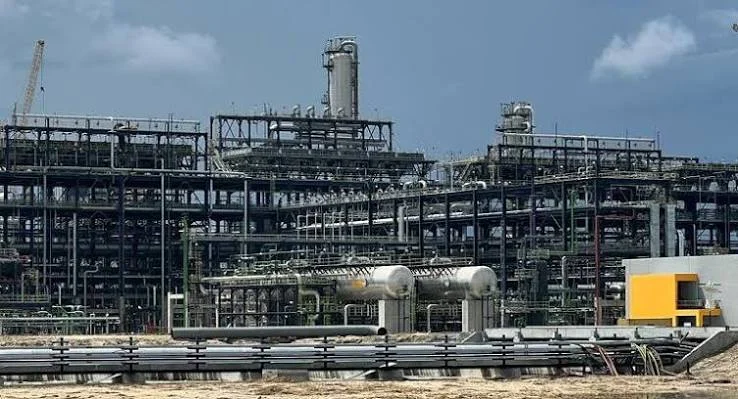
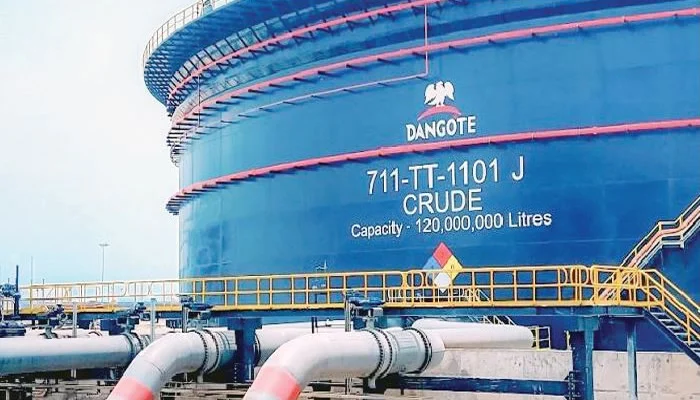
President/Chief Executive, Dangote Group, Aliko Dangote, has said the planned listing of the Dangote Petroleum Refinery & Petrochemicals on the Nigerian Exchange is designed to democratise wealth creation and give Africans direct access to participate in the continent’s industrial transformation.


Dangote spoke during the visit of the leadership of South Africa’s Government Employees Pension Fund (GEPF), alongside the Public Investment Corporation and Alterra Capital Partners, to the Dangote Petroleum Refinery & Petrochemicals and Dangote Fertiliser Limited in Lagos. The South African delegation included Chairperson of GEPF, Frans Baleni; Principal Executive Officer of GEPF, Musa Mabesa; Deputy Chairperson of PIC, Mongwena Maluleke; Chief Executive Officer of PIC, Patrick Dlamini; and Managing Partner of Alterra Capital Partners, Genevieve Sangudi.


The visit comes amid rising investor interest in Africa-led industrialisation and long-term infrastructure investments. GEPF is Africa’s largest defined benefit pension fund, managing the retirement and associated benefits of more than 1.8 million public sector workers in South Africa, while PIC is the continent’s largest asset manager.


Speaking on the planned refinery listing, Dangote said Africa’s next phase of economic growth must be anchored on large-scale industrial projects capable of creating jobs, strengthening domestic production capacity and generating broad-based prosperity.


“We are opening the doors for investors to participate directly in Africa’s industrial future and the prosperity it will create,” Dangote said.


According to him, the refinery project reflects the scale of untapped opportunities within Africa’s energy market, particularly as most African countries remain dependent on imported refined petroleum products despite growing industrial demand and rising consumption.


Dangote said the Group’s long-term investment strategy is driven by Africa’s expanding energy needs and the urgent requirement for regional refining capacity capable of serving multiple markets across the continent.


The billionaire industrialist noted that demand for products such as polypropylene, aviation fuel and refined petroleum products has exceeded earlier projections, reinforcing the commercial viability of the refinery and shaping future expansion plans.


“We thought about Nigeria first and then exports, but even with our current production, we are practically living hand to mouth because the market demand is extremely high,” he said.


Speaking after the tour of the Dangote facilities in Ibeju-Lekki, the Chairperson of GEPF, Frans Baleni, said that the refinery stands as evidence that Africa can execute transformational infrastructure projects when backed by visionary leadership, long-term investment and strong technical expertise.


“If it can be done anywhere else in the world, it can be done in Africa,” he said. “This project has shown that the continent is capable of achieving world-class industrialisation at scale.”


Baleni added that the significance of the project extends well beyond Nigeria’s borders. “What has been built here is reshaping how the world should think about African industrial capability — and it should reshape how Africa thinks about itself. For too long, projects of this magnitude have been associated with other parts of the world. The Dangote Refinery and Petrochemicals Complex is a powerful demonstration that, with visionary leadership and long-term capital, that perception no longer holds. This is the kind of African-led industrial scale that institutional investors on this continent should be backing.”


On his part, Chief Executive Officer of PIC, Patrick Dlamini, described the refinery as one of the most transformative industrial projects undertaken on the continent, saying it is reshaping global perceptions about Africa’s industrial capabilities and economic potential.


Quoting former South African President Nelson Mandela, Dlamini said: “It always looks impossible until it’s done. This project is redefining the story of Africa and the possibilities of Africa.”


He said PIC, which manages about $230 billion in assets largely on behalf of South Africa’s Government Employees Pension Fund, is actively seeking long-term partnerships aligned with infrastructure development, industrialisation and economic transformation across Africa.


“PIC’s mandate is to deploy long-term, patient capital in service of industrialisation, infrastructure and economic transformation across Africa,” Dlamini said. “What we have seen today reinforces our conviction that the next chapter of African prosperity will be written through partnership between African institutional capital and African industrial champions. There is real strategic alignment between Dangote’s industrial agenda and how we are positioning our portfolio, and we look forward to exploring meaningful avenues for collaboration.”


According to him, poverty, unemployment and economic exclusion remain major drivers of instability across Africa, making industrialisation and large-scale job creation critical to the continent’s long-term development.

T+1 Settlement Cycle Takes Off June 1- SEC

In furtherance to its mandate to promote an efficient, fair, and transparent capital market, the Securities and Exchange Commission has announced the transition to a T+1 settlement cycle for equities and commodities transactions with effect form Monday June 1, 2926.
This notice published by the by SEC on May 18, 2026, outlines a comprehensive framework that all capital market operators and relevant stakeholders are encouraged to adopt in preparation for this significant change.
The Commission stated that the migration to a T+1 settlement cycle forms part of the Commission’s ongoing market
modernization initiatives aimed at enhancing market efficiency, strengthening risk management,
reducing counterparty exposure, improving liquidity, and aligning the Nigerian capital market with
international standards and global best practices.
According to the notice,  with the new framework, all eligible trades executed in the Nigerian capital market will settle one business day after the trade date, effectively reducing the current two-business-day settlement period.
“Importantly, the final trading day under the existing T+2 cycle will be May 29, 2026.
Specifically, trades executed on both May 29 and June 1, 2026, will settle on the same date, June 2, 2026, creating a seamless convergence window that supports an efficient transition.
“From June 1 onward, all trades will operate under the T+1 framework, and it is essential for all capital market operators, securities exchanges, clearing and settlement infrastructure providers, custodians, registrars, issuers, and other stakeholders to ensure they are fully operationally ready by the commencement date.”
“Implementation Highlights are: Effective Monday, June 1, 2026, all eligible trades shall settle on a T+1 basis; Friday, May 29, 2026, shall be the final trading day under the existing T+2 settlement cycle; Trades executed on Friday, May 29, 2026, and Monday, June 1, 2026, shall both settle on Tuesday, June 2, 2026; and All trades executed from Monday, June 1, 2026, onward shall be subject to the T+1 settlement cycle”.
This strategic move further positions Nigeria on a trajectory of convergence with developed market standards, following in the footsteps of the United States, which migrated to T+1 in May 2024, along with Canada and Mexico. India has also made notable strides in compressing its settlement cycle and is piloting instantaneous settlement for select trades.
For retail investors, this means quicker access to proceeds from share sales. Meanwhile, institutional players and custodians must prioritize reconfiguring their back-office systems and reconciliation workflows to align with the T+1 cycle before June 1.
The recent reforms reflect Nigeria’s dedication to bridging the infrastructure gap with more developed markets and signify an attractive opportunity for foreign institutional investors.
The journey from T+3 to T+2 and now to T+1 in less than seven months highlights the SEC’s proactive approach toward fostering a more dynamic and robust capital market.
“Market participants are expected to review and align their systems, processes, controls, and operational workflows ahead of the implementation date.
“The Commission will continue to engage stakeholders and monitor the implementation process to ensure an orderly and seamless transition. We remain committed to strengthening market integrity, enhancing investor confidence, and fostering the development of a modern, resilient, and globally competitive Nigerian capital market. For further information, please contact: emidivision@sec.gov.ng” the Circular added.
Food inflation spikes above 20% in 11 states

National Bureau of StatisticsFood inflation remained above 20 per cent in 11 states in April 2026, even as national food inflation surpassed headline inflation for the first time in eight months, signalling renewed pressure on household purchasing power across the country.

Data from the latest Consumer Price Index report released by the National Bureau of Statistics showed that food inflation rose to 16.06 per cent in April 2026, slightly higher than the headline inflation rate of 15.69 per cent recorded in the same month.

The development marked the first time food inflation exceeded all-item inflation since August 2025, when food inflation stood at 25.30 per cent compared to headline inflation of 23.14 per cent.

Between September 2025 and March 2026, headline inflation consistently remained higher than food inflation, reflecting broader price pressures beyond food items, including transport, accommodation, energy, and services.

In September 2025, food inflation stood at 20.16 per cent against headline inflation of 20.98 per cent. The gap widened further in January 2026 when food inflation slowed sharply to 8.89 per cent while headline inflation remained elevated at 15.10 per cent.

Food inflation later rebounded steadily from 10.84 per cent in December 2025 to 12.12 per cent in February 2026 and 14.31 per cent in March 2026 before overtaking headline inflation again in April 2026.

The latest figures suggest that food prices are once again becoming the dominant driver of inflationary pressure in the economy after months in which non-food components accounted for a larger share of overall inflation.

The NBS stated that food inflation on a year-on-year basis was highest in Enugu at 32.7 per cent, followed by Kwara at 30.8 per cent and Adamawa at 30.1 per cent.

Other states with food inflation above 20 per cent were Rivers at 26.8 per cent, Delta at 23.9 per cent, Bauchi at 23.7 per cent, Edo at 23.0 per cent, Zamfara at 22.0 per cent, Gombe at 21.6 per cent, Anambra at 20.8 per cent, and Benue at 20.1 per cent.

The bureau said, “Food inflation on a year-on-year basis was highest in Enugu (32.67 per cent), Kwara (30.77 per cent), and Adamawa (30.14 per cent), while Borno (1.67 per cent), Jigawa (6.17 per cent), and Taraba (7.19 per cent) recorded the slowest rise in Food inflation on a year-on-year basis.”

According to the report, the rise in food prices was driven by increases in the average prices of millet, yam flour, fresh ginger, beef, garri, yam tubers, fresh pepper, crayfish, cassava tubers, beans, Irish potatoes, tomatoes, wheat grain, soybeans, guinea corn, plantain, and carrots.

The report also showed worsening month-on-month food inflation pressures in some states. Niger recorded the highest monthly food inflation increase at 8.5 per cent, followed by Bauchi at 6.8 per cent and Kogi at 6.7 per cent. Benue and Plateau also recorded strong monthly increases of 6.6 per cent and 6.2 per cent, respectively.

Conversely, Kebbi recorded the slowest monthly food inflation increase at 0.2 per cent, while Katsina and Bayelsa posted 0.5 per cent and 1.3 per cent, respectively.

At the national level, headline inflation rose marginally to 15.69 per cent in April 2026 from 15.38 per cent in March 2026, representing a 0.31 percentage point increase. The NBS said the Consumer Price Index increased to 138.3 points in April from 135.4 points in March.

However, month-on-month headline inflation slowed to 2.13 per cent in April from 4.18 per cent in March, indicating that the pace of overall price increases moderated compared to the previous month.

The bureau added that rural inflation remained higher than urban inflation, with rural inflation at 16.36 per cent and urban inflation at 15.40 per cent year-on-year. Food and non-alcoholic beverages remained the largest contributor to headline inflation, accounting for 6.40 percentage points of the overall inflation rate.

The worsening food inflation trend also aligns with a new warning by the Famine Early Warning Systems Network, which projected that between 16 million and 16.99 million Nigerians could require urgent humanitarian food assistance by November 2026.

The report placed Nigeria among the countries expected to record the highest number of people in need of food assistance globally, alongside Sudan, the Democratic Republic of Congo, and Yemen.

FEWS NET stated that Nigeria’s projected food assistance needs in November 2026 would be higher than last year’s levels and above the five-year average due to persistent conflict, weak purchasing power, and below-average agricultural production.

According to the report, “In northern Nigeria, needs in November will likely remain elevated despite some seasonal improvements with the September main harvest and declining food prices. However, below-average production, persistent conflict, and constrained purchasing power will continue to limit food access, sustaining widespread Crisis (IPC Phase 3), with some inaccessible areas of North East facing Emergency (IPC Phase 4).”

The report added that Nigeria is expected to account for between five and 10 per cent of total projected global humanitarian food assistance needs across FEWS NET-monitored countries in November 2026.

FEWS NET classifies Crisis, also known as IPC Phase 3, as a condition where households face food consumption gaps or can only meet minimum food needs by depleting essential livelihood assets or adopting crisis-level coping strategies. Emergency, classified as IPC Phase 4, reflects severe food consumption gaps, high acute malnutrition, and excess mortality.

Commenting on the inflation trend, the Chief Executive Officer of the Centre for the Promotion of Private Enterprise, Dr Muda Yusuf, said the latest figures reflected a fragile disinflation process amid persistent pressure from food, transport, and energy costs.

Yusuf noted that although headline inflation rose marginally from 15.38 per cent in March to 15.69 per cent in April, the moderation in month-on-month inflation indicators suggested weakening short-term inflationary momentum.

He said, “Nonetheless, inflation conditions remain severe from a welfare and business cost perspective. Food inflation stood at 16.06 per cent, while core inflation remained elevated at 15.86 per cent. The dominant inflation drivers continue to be food, transportation, energy products, healthcare, and restaurant services, which together accounted for about 87 per cent of the inflation pressure recorded in April.”

According to him, the pressure on essential household spending items was worsening the cost-of-living crisis for many Nigerians, particularly low-income households.

Yusuf also warned that rising geopolitical tensions involving Iran, Israel, and the United States could further worsen inflationary pressures through higher global oil prices and rising domestic energy costs.

He stated, “Rising petrol, diesel and gas prices are fuelling transportation, logistics and production costs across sectors, with significant pass-through effects on food prices and overall consumer inflation.”

The economist argued that Nigeria’s inflation challenge remained largely structural and supply-driven, warning that tighter monetary policy alone would not resolve inflation caused by high energy costs, weak infrastructure, logistics bottlenecks, and food supply disruptions.

He added that further monetary tightening could worsen financing costs for businesses, weaken investment, and constrain productivity growth.

Yusuf called on the Federal Government and state governments to prioritise supply-side reforms aimed at reducing energy and transportation costs, strengthening food supply systems, improving trade facilitation, and boosting domestic productivity.

In an earlier statement, the Director-General of the Lagos Chamber of Commerce and Industry, Dr Chinyere Almona, said the continued rise in food, transportation, energy, and logistics costs was worsening pressure on businesses and households despite signs of moderation in inflation trends.

She noted that inflation continued to erode purchasing power, weaken consumer demand, and compress business margins, particularly for manufacturers, traders, Micro, Small, and Medium Enterprises, and low-income households.

Almona said, “The chamber observes that inflation continues to weigh heavily on manufacturers, MSMEs, traders, and consumers, through rising costs of food, transportation, energy, and logistics.”

She added that the higher rural inflation rate of 16.36 per cent reflected deeper structural challenges, including insecurity in food-producing communities, weak transportation networks, poor storage systems, and persistent supply chain disruptions.

According to her, “The higher rural inflation rate also highlights ongoing supply chain disruptions, insecurity in food-producing areas, and weak distribution infrastructure.”

The LCCI boss stated that although inflation had moderated significantly from the 26.82 per cent recorded in April 2025, many Nigerians were yet to experience meaningful relief due to lingering economic pressures and declining purchasing power.

She called for stronger policy coordination, exchange rate stability, improved energy supply, and deliberate support for local production to sustain the current moderation in inflation.

Almona maintained that long-term price stability would depend on reforms aimed at boosting productivity, improving infrastructure, strengthening food security, and creating a more business-friendly operating environment.

Investors lose N81bn as bears dominate NGX trading

NGXThe Nigerian equities market opened the week on a marginally bearish note on Monday, as mild profit-taking activity dragged key performance indicators lower on the Nigerian Exchange Limited.

At the close of trading, the market capitalisation of listed equities declined slightly by N81bn or 0.05 per cent to close at N160.362tn, down from the N160.443tn recorded in the previous session.

Similarly, the benchmark All-Share Index eased by 126.09 points to close at 250,204.83 points from 250,330.92 points, reflecting a broadly cautious trading session.

Market breadth closed negative, with 33 gainers against 36 decliners, indicating a slight tilt towards selling pressure across listed equities as investors locked in profits from recent rallies.

On the local bourse, energy firm Oando Plc led the top gainers, advancing 10.00 per cent to close at N51.70 per share, up from N47.00 in the previous session. Educational publisher UPL Plc followed closely with a 10.00 per cent gain, closing at N5.50 from N5.00.

Deap Capital Management & Trust Plc appreciated 9.96 per cent to close at N5.96, while pharmaceutical manufacturer May & Baker Nigeria Plc rose 9.94 per cent to settle at N52.00. Hospitality counter Transcorp Hotels Plc completed the top five gainers’ list with a 9.92 per cent growth, closing at N7.76.

Conversely, NCR Nigeria Plc topped the laggards’ chart, shedding 9.99 per cent to close at N161.20 per share from its previous close of N179.10. Zichis Agro Allied Industries Plc also declined 9.99 per cent to settle at N26.49, while international marketing firm IMG Plc dropped 9.93 per cent to close at N38.10.

Sovereign Trust Insurance Plc lost 9.93 per cent to close at N2.65, and media firm Daar Communications Plc shed 9.78 per cent of its value to close the day at N2.03.

Meanwhile, high-capitalisation blue-chip stocks, including MTN Nigeria Communications Plc, Dangote Cement Plc, Julius Berger Nigeria Plc, Guinness Nigeria Plc, and Cadbury Nigeria Plc, closed flat for the session. The stall reflected a cautious stance among institutional investors holding positions in heavyweight counters.

Overall, trading activity maintained a balanced but slightly negative tone, as market participants continued to engage in selective positioning amid profit-taking in recent gainers and strategic rotation into defensive consumer and industrial plays.

Reviewing previous market drivers, the Head of Research at GTI, Abiodun Ogunniyi, noted that sector-specific momentum had largely anchored market volumes.

“Last week, robust activity in Finance, ICT, and Services drove market turnover, with FBN Holdings, UBA, and Chams as the top three traded equities,” Ogunniyi said.

Looking ahead to trading expectations for the rest of the week, the research head pointed towards emerging bargain-hunting opportunities on specific tickers despite the initial downswing.

Ogunniyi added, “This week, we expect selective interest in The Initiates PLC, ZICHIS, and ARADEL following recent profit-taking pressures, alongside a potential rerating of Meyer. Overall sentiment should remain cautiously positive as investors continue to track selective names for early-week positioning.”

Market analysts added that overall investor sentiment remains stable, with market participants expected to closely monitor upcoming corporate quarterly earnings releases and macroeconomic signals for clearer directional cues in subsequent sessions.

Sterling Financial crosses N4tn asset threshold in Q1 2026

Sterling Financial Holdings Company PlcSterling Financial Holdings Company Plc has sustained its aggressive growth trajectory, with its total assets crossing the historic N4tn threshold for the first time in the first quarter ended 31 March 2026.

According to the group’s latest financial statements, total assets hit N4.07tn in Q1 2026, building on the N3.91tn closed at the end of the 2025 financial year.

The holding company also published its audited full-year 2025 results, revealing an 89.2 per cent surge in profit before tax to N86.8bn, up from the previous year.

Profit after tax for FY2025 similarly grew 74.8 per cent to close at N76.3bn, driven by a historic 44.4 per cent rise in gross earnings to N486.8bn.

The strong performance trickled directly into Q1 2026, where gross earnings rose 41.6 per cent year-on-year to N134.8bn, while profit before tax climbed 52.8 per cent to N27.9bn.

Additionally, the successful completion of the group’s recapitalisation programme pushed shareholders’ funds up to N542.5bn during the quarter.

Commenting on the milestone and the underlying drivers of the group’s performance, the Group Managing Director of Sterling Financial Holdings Company Plc, Yemi Odubiyi, said, “Our FY2025 and Q1 2026 results reflect continued growth across the Group’s core businesses, supported by disciplined execution, improved operating efficiency, and a strengthened capital position.

“The successful completion of our recapitalisation programme positions the Group for the next phase of growth across our commercial banking, non-interest banking, and wealth-management businesses.”

Looking toward the remaining quarters of the year, he added, “We remain focused on sustaining growth, strengthening our balance sheet and delivering long-term value across our diversified platform.”

The growth period highlights a critical phase in the holding company’s evolution, as the synchronised expansion of Sterling Bank Limited, The Alternative Bank Limited, and SterlingFI Wealth Management positions the group to effectively capture market share across multiple financial segments under a unified corporate framework.

The Nigerian Exchange Group Plc has intensified its investor education drive through a digital engagement initiative aimed at improving financial literacy and deepening retail participation in the Nigerian capital market.

The group recently hosted an X Space session themed ‘Follow the Fundamentals: A Beginner’s Guide to the Stock Market’, which reached over 5,000 users. The audience was largely composed of young Nigerians, first-time investors, and retail market participants seeking to better understand investment opportunities.

The session featured social media investment influencer Omiete Inko-Tariah, alongside representatives from Nigerian Exchange Limited and NGX Regulation Limited. It demystified key concepts around market operations, investor protection, and safe participation.

Beyond education, the event served as an open forum where retail investors engaged directly with market stakeholders on issues of confidence, transparency, and accessibility.

Speaking on the initiative, the Head, Group Communications and Partnerships at NGX Group, Clifford Akpolo, said, “Deepening retail participation is critical to building a more resilient, inclusive, and sustainable capital market.

“At NGX Group, we believe financial literacy is not just an educational responsibility; it is a strategic imperative for strengthening investor confidence, improving market accessibility, and expanding long-term wealth creation opportunities for Nigerians. Through digital platforms like this, we are leveraging innovation to connect with the next generation of investors and democratise access to market knowledge.”

The initiative forms part of NGX Group’s broader sustainability agenda under its Community pillar, which focuses on advancing financial literacy, inclusion, and economic empowerment through education-driven and stakeholder-focused programmes.

Following the success of this edition, NGX Group plans to sustain similar engagements as part of its ongoing commitment to strengthening investor confidence, deepening retail participation, and building a more resilient and inclusive investment ecosystem.

Dangote Refinery Reduces Jet Fuel Price To N1,650

Dangote Petroleum Refinery & Petrochemicals has reduced the price of aviation fuel (Jet A1) to N1,650 per litre from N1,750 per litre, in a move aimed at easing cost pressures on airlines and ensuring uninterrupted fuel supply across the country.
This is in addition to a 30-day interest-free credit facility backed by bank guarantees (BG) for marketers and airline operators and a shift from a dollar-denominated pricing structure to a naira-based model.
These interventions come amid growing concerns over the rising operational costs faced by domestic carriers, with aviation fuel accounting for a significant portion of airline expenses. Industry stakeholders have repeatedly warned that escalating Jet A1 prices were placing severe financial strain on operators and threatening the sustainability of flight operations.
The refinery’s decision is expected to provide relief to airline operators by lowering fuel procurement costs, improving operational stability, and supporting efforts to moderate airfares.
63% of Nigerians want interest rates reduced – CBN

CBN-VUILDING-700×375The Central Bank of Nigeria says 63.3 per cent of Nigerians want interest rates reduced ahead of the Monetary Policy Committee meeting scheduled for May 19 and 20, 2026.

The apex bank disclosed this in its April 2026 Inflation Expectations Survey Report, released by its Statistics Department under the Economic Policy Directorate on its website and obtained by The PUNCH on Sunday.

The report found that most respondents preferred lower borrowing costs despite persistent inflationary pressures across the economy. It stated, “The survey revealed high public engagement with CBN communications (92.1 per cent), a general perception of transparency (93.3 per cent), and a strong desire for a reduction in interest rates (63.3 per cent).”

According to the report, 26.0 per cent of respondents wanted interest rates retained at current levels, while 10.7 per cent supported a further rate hike. The development comes as the MPC prepares to take another decision on the Monetary Policy Rate amid concerns over inflation, exchange rate pressures, insecurity, and rising energy costs.

The survey showed that inflation perception worsened in April 2026, with 67.2 per cent of respondents describing inflation as high, up from 56.4 per cent recorded in March 2026.

The CBN noted that the Inflation Perception Index stood at 40.5 points in April, indicating that respondents still considered inflation elevated. It stated, “The Inflation Perception Index stood at 40.5 points in April 2026, suggesting that respondents still perceive inflation as high.”

The report further showed that inflation concerns were more pronounced among households than businesses. It stated that the proportion of households that perceived inflation as high increased from 61.7 per cent in March to 68.8 per cent in April, while the figure for businesses rose from 51.9 per cent to 65.9 per cent within the same period.

Analysis by business size showed that micro businesses recorded the highest inflation perception at 69.9 per cent, while medium businesses had the lowest at 63.2 per cent. The survey also revealed a sharp disparity across income groups.

According to the report, households earning below N70,000 monthly recorded the highest inflation perception at 77.9 per cent, while respondents earning between N250,001 and N350,000 reported the lowest perception of high inflation at 46.6 per cent.

Rural households were also more affected, with 70.4 per cent reporting high inflation perception compared to 67.6 per cent among urban households. On the major drivers of inflation, respondents identified energy costs, transportation, exchange rate pressures, insecurity, and infrastructure challenges as the top factors fuelling rising prices.

The report stated, “Business and household respondents identified energy, transportation, exchange rate, and infrastructure as the major drivers of their perceptions of inflation.”

Despite the current inflation concerns, respondents expressed optimism that inflationary pressures could moderate over the next six months.

Further analysis showed that 58.5 per cent of respondents expected inflation to increase next month, while 56.7 per cent and 54.4 per cent expected inflation to rise over the next three and six months, respectively. However, the proportion expecting inflation to decline increased steadily from 11.0 per cent for next month to 20.4 per cent over the next six months.

On expenditure outlook, the report showed that 67.9 per cent of respondents expected spending to rise in the current month, with businesses recording slightly higher expenditure expectations at 69.0 per cent compared to 66.7 per cent for households.