NAHCO posts N24bn profit, eyes airport concessions

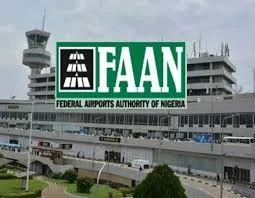
The Nigerian Aviation Handling Company Plc has recorded a profit before tax of N24.28bn for the 2025 financial year, while signalling interest in the Federal Government’s planned concession of major airport terminals across the country.

The company disclosed this at its 45th Annual General Meeting held in Lagos over the weekend, where shareholders urged management to leverage its strong financial position and operational capacity to bid for airport ownership and management under the Federal Government’s privatisation programme.

The Federal Government is currently pursuing the concession of five major international airport terminals through a Public-Private Partnership arrangement supervised by the Bureau of Public Enterprises and the Ministry of Aviation and Aerospace Development. The initiative, according to shareholders, is aimed at improving infrastructure, efficiency, and service delivery in the aviation sector.

Speaking at the AGM, President of the Association for the Advancement of Rights of Nigerian Shareholders, Farouk Umar, said NAHCO has attained the financial and operational strength required to compete for airport concessions within and outside Nigeria.

Umar commended the company’s market performance, noting that shareholders have continued to enjoy strong returns on investment.

He said, “NAHCO has now reached a level that they can even provide the same services in other African countries. When I was on board, I tried to take the business to the Morocco Airport, but we did not get there.

“Secondly, the government is trying to privatise the airport. I call on NAHCO to bid because they have the capability and financial position to win the bid.”

“They have done very well. Last year, the share price was N80; today, it is over N200, and that is more than 250 per cent. They are giving bonuses of one for seven, which is very commendable. And they have now won the business of Fly Gabon, Saudi Arabia, and Qatar. This will increase revenue and bring more profit to shareholders,” he stated.

Financial results presented at the meeting showed that the company’s total revenue rose by 22.93 per cent from N53.54bn in 2024 to N65.82bn in 2025. Profit before tax increased by 29.83 per cent from N18.70bn to N24.28bn, while profit after tax grew by 36.02 per cent from N12.87bn to N17.5bn. Earnings per share also rose from N6.60 in 2024 to N8.99 in 2025.

Chairman of NAHCO Group, Seinde Fadeni, attributed the strong performance to operational excellence and disciplined cost management despite prevailing economic challenges.

“We know it should delight you as owners of the company that in 2025, NAHCO recorded impressive growth across key performance indicators, combining a strong push for market share with disciplined cost management,” Fadeni said.

He disclosed that the board had recommended a dividend payment of N6.25 per share alongside a bonus issue of one share for every seven shares held for the 2025 financial year.

“In the few years that the present board has overseen the affairs of the company, our business has experienced significant growth. We are committed to accelerating this growth by sustaining leadership in existing markets and exploring new opportunities,” he added.

Fadeni, however, noted that rising fuel prices and inflation remain major operational concerns, stressing that “Fuel price is affecting our books. The commodity market is not smiling at us at all, but we are managing the situation.”

Group Managing Director and Chief Executive Officer of NAHCO, Olumuyiwa Olumekun, said the company has continued to expand despite economic headwinds, maintaining its leadership position in aviation services.

“Our stock performance was stellar, with a 188 per cent year-to-year gain and a market cap exceeding N200bn. We unveiled a five-year strategic diversification plan to push revenue beyond N300bn, focusing on new ventures and collaborations,” Olumekun said.

He further disclosed that the company has acquired more than 271 new ground support equipment units over the last three years as part of efforts to modernise operations and improve efficiency.

Recapitalisation: Insurers scramble for N132bn as deadline stands

Olusegun OmosehinWith the July 31 deadline firmly in place, several insurance companies are intensifying efforts to raise fresh capital through rights issues, private placements, mergers, and acquisitions in a bid to avoid regulatory sanctions and possible licence withdrawal, reports JIDE AJIA

Across Lagos, Abuja, and other commercial centres, anxiety is rising within the Nigerian insurance industry as operators confront one of the sector’s most defining transitions in decades. Inside corporate boardrooms, executives are spending long hours reviewing financial records, holding discussions with potential investors, and considering merger opportunities as they battle to comply with new regulatory capital requirements.

The urgency follows the implementation of the Nigeria Insurance Industry Reform Act 2025, which introduced a fresh recapitalisation framework aimed at strengthening the financial capacity of insurance operators. While the reforms are expected to create a stronger and globally competitive industry, they have also placed enormous pressure on operators, particularly medium-sized and smaller firms with weak capital buffers.

Industry estimates suggest insurers collectively need about N132.5bn to meet the new minimum capital thresholds before the deadline expires. With regulators insisting that the timeline will not be adjusted, the scramble for fresh capital has intensified, turning recapitalisation into a struggle for survival.

“The July 31 deadline is sacrosanct,” the Commissioner for Insurance, Olusegun Omosehin, recently declared during a high-level industry engagement.

He stressed that the deadline is no longer an administrative decision that can easily be adjusted but a statutory requirement embedded within the NIIRA 2025 framework.

“Any attempt to change the deadline would require a fresh legislative process and presidential assent. We believe the deadline is doable, and we are moving forward with full implementation,” he said.

Under the new framework, life insurance firms are expected to maintain a minimum paid-up capital of N10bn, general insurance companies must meet N15bn, while reinsurers are required to maintain N35bn. For many operators, especially those with fragile balance sheets, this means raising billions of naira in fresh capital in an economy characterised by high interest rates and weak investor sentiment.

The challenge has been worsened by Nigeria’s difficult macroeconomic environment. Persistent inflation, elevated borrowing costs, and cautious investor appetite have made fundraising increasingly difficult. Access to investment capital has tightened significantly, forcing insurers to compete aggressively for limited market attention.

At the same time, confidence within the market is beginning to tilt in favour of stronger operators. Insurance brokers and large corporate clients are becoming more selective about the firms with which they place risks, preferring companies that have already demonstrated financial strength and readiness for the new regime.

Industry stakeholders say this trend is widening the divide between well-capitalised insurers and weaker operators struggling to survive. Larger firms with stronger balance sheets and established brands are attracting more business, while smaller companies face the risk of losing market share amid growing uncertainty over their future.

“Trust is the currency of insurance,” a veteran insurance broker in Lagos noted. “If an underwriter cannot prove they will be here after July 2026, we cannot, in good conscience, place our clients’ risks with them. We are already seeing business redistribute itself toward the large-cap players who have demonstrated resilience. The brokers are looking for stability, not just certificates.”

As a result, the recapitalisation exercise is gradually reshaping competition within the industry. Operators perceived to be financially stable are consolidating their market positions, while weaker firms face mounting pressure from both regulators and customers.

Several insurers have already approached the capital market to raise fresh funds. Companies such as Sovereign Trust Insurance, International Energy Insurance, and Guinea Insurance are pursuing rights issues and private placements to bridge their funding gaps.

Some firms are also considering mergers and acquisitions as a quicker and more practical route to compliance. Analysts believe consolidation may become unavoidable for operators unable to independently secure the required funds before the deadline.

Despite these efforts, investor appetite for insurance stocks remains relatively weak compared to sectors such as banking and telecommunications. Historically, many insurance firms have struggled with poor profitability, low dividend yields, and inconsistent corporate performance, factors that continue to affect investor confidence.

Nevertheless, regulators insist the recapitalisation exercise is not intended to cripple the industry but rather to reposition it for sustainable growth. The National Insurance Commission has repeatedly stated that its objective is to create a leaner but stronger insurance market capable of supporting Nigeria’s long-term economic ambitions.

Regulatory officials have also signalled their willingness to support struggling operators through restructuring arrangements, mergers, and acquisitions to ensure policyholders remain protected during the transition process.

“We have made it clear that no insurance company will be allowed to fail in a way that hurts the public,” a Deputy Commissioner for Insurance stated during a recent industry forum. “We are engaging weaker firms and supporting them through restructuring, mergers, or acquisitions to ensure continuity. The goal is a stronger industry capable of underwriting complex risks and driving national development. If you cannot stand alone, you must find a partner.”

The broader objective of the reform, according to regulators, is to create a more resilient insurance sector capable of underwriting large and sophisticated risks within Nigeria’s economy. Operators unable to independently meet the new thresholds are expected to seek strategic alliances through mergers or acquisitions.

Among industry insiders, particular attention has focused on a group unofficially referred to as the “Motionless 12”, firms believed to have made little meaningful progress toward recapitalisation. These operators are considered to face the highest regulatory risk if they fail to secure fresh funding or conclude merger arrangements before the deadline.

For such companies, the coming months are expected to be decisive. Failure to comply could result in licence suspension or outright revocation, potentially ending decades of participation within the Nigerian insurance market.

The recapitalisation drive is also closely linked to Nigeria’s broader economic aspirations. Policymakers believe a stronger insurance industry is necessary to support the Federal Government’s ambition of building a $1tn economy by 2030.

Large-scale investments in infrastructure, aviation, oil and gas, and manufacturing require strong insurance backing to effectively manage risk. However, Nigeria’s insurance sector has historically lacked the financial capacity to independently underwrite major projects, forcing substantial portions of risk to be transferred abroad.

Insurance penetration in Nigeria currently remains below one per cent, one of the lowest rates globally. Industry experts argue that weak capitalisation, poor public confidence, and a fragmented market structure have contributed significantly to the sector’s underperformance over the years.

The Nigeria Insurance Industry Reform Act 2025 seeks to reverse this trend by introducing stronger capital standards alongside a risk-based capital framework designed to improve operational discipline and financial stability.

“The scale of our economic ambition requires insurers that can sign off on billion-dollar risks without running to foreign reinsurers for every kobo,” an investment banker familiar with ongoing recapitalisation deals observed. “The N132.5bn gap is the price we must pay for local capacity. If we don’t pay it now, we will keep losing billions in premium flights to London and Dubai.”

Still, the journey toward the 31 July 2026 deadline remains challenging. The prevailing economic environment continues to create significant obstacles for firms seeking new investments. High borrowing costs and inflationary pressures have weakened investor appetite, making fundraising exercises more difficult than many operators initially anticipated.

Analysts say investors are increasingly focusing on companies with strong governance structures, transparent operations, and clear growth prospects. This trend has naturally favoured larger insurers such as AIICO Insurance, AXA Mansard Insurance, and Leadway Assurance, which are widely viewed as financially stable.

Consequently, smaller operators are coming under growing pressure as capital increasingly gravitates toward stronger firms. Industry observers describe the situation as one where stronger players continue to strengthen further while weaker operators struggle to attract meaningful investor support.

“The era of having over 50 players with thin capital bases is ending,” an industry consultant observed. “We expect to see a market of about 25 to 30 well-capitalised giants after the dust settles. This recapitalisation is the great cull that will ultimately professionalise the Nigerian insurance landscape. It is painful, yes, but it is a necessary surgery for a sector that has been under-performing for decades.”

For now, activities within insurance company boardrooms remain intense as operators continue their aggressive search for fresh capital. Discussions surrounding mergers, acquisitions, rights issues, and private placements are expected to accelerate further as the deadline approaches.

The message from regulators remains clear: there will be no extension, and operators unable to meet the requirements must either secure fresh capital or seek strategic partners.

As 31 July 2026 draws closer, the Nigerian insurance industry stands on the brink of a major transformation. By the time the deadline expires, the sector is expected to emerge leaner, more consolidated, and significantly different from its current structure.

For many insurers, the coming months will determine whether they evolve into stronger institutions capable of competing in a modern financial system or disappear as casualties of one of the most ambitious regulatory reforms ever introduced into Nigeria’s insurance industry.

FirstBank, Visa Launch Naira Visa Debit Card To Accelerate Nigeria’s Cashless Payments Drive

First Bank of Nigeria Limited has launched its Naira Visa Debit Card, in partnership with Visa to extend accessible, reliable electronic payment capabilities to a broader segment of the Nigerian population.

The card is targeted at everyday consumers who require a dependable payment instrument for routine domestic and international transactions. Accepted across POS terminals, ATMs, and online platforms through Visa’s payments network, the Naira Visa Debit Card is designed to reduce friction for customers transitioning from cash to electronic payments across retail, utilities, and digital commerce.

The launch aligns with Nigeria’s ongoing drive toward a cashless economy, a policy direction that has gained significant momentum following successive Central Bank of Nigeria directives encouraging the adoption of electronic payment channels. The card is intended to serve customers across the country’s diverse economic segments.

Speaking on the launch, Chuma Ezirim, Group Executive, eBusiness & Retail Products, FirstBank, said: “Everyday transactions should be simple, secure, and rewarding. The Naira Visa Debit Card is designed to make life easier for our customers, whether they are paying for groceries, settling utility bills, or shopping online. By extending reliable electronic payment access across Nigeria, we are helping more people transition confidently from cash to digital payments, supporting the nation’s cashless policy and empowering communities with greater financial inclusion.”

Commenting on the strategic importance of the partnership, Andrew Uaboi, Vice President and Cluster Head, West Africa, Visa, noted: “A strong payments ecosystem is one that works for everyone. The Naira Visa Debit Card extends reliable electronic payment access to everyday Nigerian consumers, and this in addition to the cards in our portfolio continues to demonstrate what a truly comprehensive card portfolio looks like for the Nigerian market. Visa is proud to power this offering with FirstBank.”

The launch of the Naira Visa Debit Card broadens Visa card portfolio at FirstBank that already includes products spanning credit cards and High-end premium lifestyle spending cards. The addition completes its offering across customer segments, ensuring that cardholders at every income level have access to a product suited to their needs.

The Naira Visa Debit Card is available to all eligible FirstBank account holders through any of the bank’s branches nationwide.

S&P upgrades Nigeria’s credit rating to ‘B’, cites economic reforms

SP-Global-RatingsS&P Global Ratings has upgraded Nigeria’s long-term foreign and local currency sovereign credit ratings to “B” from “B-”, citing improvements in the country’s macroeconomic profile, external position, and ongoing economic reforms.

The US-based global ratings agency announced the upgrade on Friday while affirming Nigeria’s short-term ratings at “B” with a stable outlook.

According to S&P, higher oil production and prices, increased domestic refining capacity, and the liberalisation of the foreign exchange market in 2023 have strengthened Nigeria’s economic growth and balance of payments position.

“On May 15, 2026, S&P Global Ratings raised its long-term foreign and local currency sovereign credit ratings on Nigeria to ‘B’ from ‘B-‘ and affirmed our ‘B’ short-term rating

“At the same time, we raised our long- and short-term Nigeria national scale ratings on the sovereign to ‘ngA+/ngA-1’ from ‘ngBBB+/ngA-2’. The outlook is stable.,” the agency stated.

S&P said Nigeria’s improved creditworthiness followed “three years of sustained structural reforms,” particularly the liberalisation of the exchange rate, which it said had improved access to foreign currency and supported investor confidence.

The agency noted that reforms aimed at broadening the tax base and increasing petroleum revenue transfers to the Federal Government had also strengthened fiscal performance.

It projected that Nigeria’s debt-to-revenue ratio would decline to 338 per cent in 2026 from about 500 per cent in 2023.

The ratings agency said the Federal Government’s decision not to reintroduce fuel subsidies had helped prevent wider budget deficits and preserve foreign exchange liquidity.

However, it warned that rising fuel prices linked to global oil market pressures and the Middle East conflict were contributing to inflationary pressures ahead of the 2027 general elections.

S&P projected inflation to average 17.7 per cent in 2026 before declining to below 10 per cent by 2028.

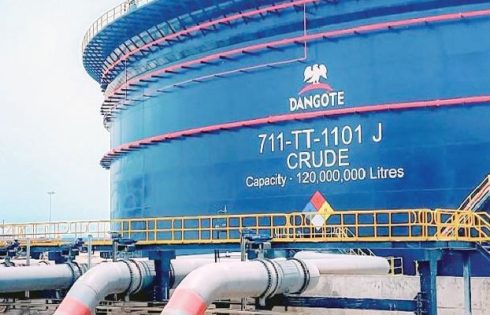
The agency also highlighted the impact of the Dangote Refinery and increased domestic refining capacity on Nigeria’s economy, saying the development would strengthen the country’s current account position and reduce dependence on imported refined petroleum products.

It forecast Nigeria’s current account surplus to rise to 5.8 per cent of GDP in 2026 from 4.8 per cent in 2025.

The agency said the stable outlook reflected a balance between Nigeria’s improved external position and growth prospects and persistent structural challenges such as low tax revenue, inflation, poverty, unemployment, and security concerns.

NCAA fines Xejet Airways over passenger rights violations

NCAAThe Nigeria Civil Aviation Authority has sanctioned a domestic carrier, XEJET Airways, over alleged violations of passenger rights, imposing a fine of N2m on the airline for consumer protection-related infractions.

The sanction, according to the Director of Public Affairs and Consumer Protection of the NCAA, Michael Achimugu, forms part of ongoing efforts to compel airlines to improve service delivery and ensure that passengers are treated fairly within Nigeria’s aviation sector.

Although details of the specific infractions were not disclosed, the NCAA spokesperson said the penalty was connected to breaches of consumer protection regulations designed to safeguard passengers against poor treatment, operational lapses, and service failures by airlines.

Speaking with our correspondent on the development, Achimugu confirmed that the airline had indeed been penalised by the authority. “Yes, it’s true, we are imposing sanctions on XEJET to the tune of N2m over violations of consumer protection,” Achimugu said.

He explained that while the regulatory body remained committed to enforcing standards, it was also conscious of the fragile operating environment facing domestic airlines and therefore tried to ensure that sanctions did not cripple their operations.

“Much as we are trying and ensuring that airlines are not regulated out of operations, we ensure that the sanction is minimal so airlines can continue to fly in Nigeria,” he stated.

Achimugu further stressed that the objective of the penalty was not revenue generation but to compel compliance and improve passengers’ experiences across the aviation industry.

“N2m is manageable. You should already know that sanctions are not to make money for us but to correct wrongdoings and improve the quality of their service, that’s all,” he added.

The development comes amid growing complaints from air travellers over flight delays, cancellations, poor communication, and inadequate customer care by some domestic carriers.

Many passengers have repeatedly called on the NCAA to adopt tougher measures against erring airlines to restore confidence in the sector.

A traveller, Adeniran Jones, who claimed she had suffered delays at airport terminals in Nigeria, viewed the sanction as a good way of restoring passengers’ confidence in the industry’s regulatory framework.

“This is what passengers have been asking for. When airlines know there are consequences for poor treatment, they will sit up and do the right thing.”

When contacted, the spokesperson of the airline, Juliet Atikpekpe, confirmed the development, adding that the sanction was being handled by the authority. “I can’t really speak further now. Let’s continue the conversation tomorrow. That is the only thing I can say for now,” she said.

Sterling Financial Holdings sustains growth momentum as assets cross ₦4 Trn mark in Q1, 2026

…Group profit rises 89% in FY2025, 53% in Q1 2026
Sterling Financial Holdings Company Plc (“Sterling Financial” or “the
Group”) has announced its audited financial results for the year ended December 31,
2025, alongside its unaudited results for the first quarter ended March 31, 2026,
delivering strong earnings growth, balance sheet expansion, and improved capital
strength across the Group.
According to statement by Group CFO, Sterling Financial Holdings Company PLC, Adebimpe Olambiwonnu, Gross Earnings for FY2025 increased by 44.4% to ₦486.8 billion, representing the strongest performance in the Group’s modern history. Profit Before Tax rose by 89.2% to ₦86.8 billion, while Profit After Tax increased by 74.8% to ₦76.3 billion.
The Group’s balance sheet also strengthened significantly during the year. Total Assets reached ₦3.91 trillion, Customer Deposits grew to ₦2.98 trillion, and Loans and Advances closed at ₦1.41 trillion while Shareholders’ Funds expanded by 40.5% to ₦428.7 billion.
Sterling Financial sustained this momentum into the first quarter of 2026, with Total
Assets crossing the ₦4 trillion threshold for the first time, reaching ₦4.07 trillion.
Gross Earnings for Q1 2026 rose by 41.6% year-on-year to ₦134.8 billion, supported by
a 36.8% increase in Net Interest Income to ₦64.9 billion.
Operating income reached ₦93.4 billion during the quarter, while Profit Before Tax
increased by 52.8% to ₦27.9 billion and Profit After Tax rose to ₦23.4 billion.
Shareholders’ Funds strengthened further to ₦542.5 billion following the successful
completion of the Group’s recapitalisation programme.
Commenting on the Group’s performance, Yemi Odubiyi, Group Managing Director
of Sterling Financial Holdings Company Plc, said: “Our FY2025 and Q1 2026 results reflect continued growth across the Group’s core businesses, supported by disciplined execution, improved operating efficiency, and a strengthened capital position.
The successful completion of our recapitalisation programme positions the Group for the next phase of growth across our commercial banking, non-interest banking, and wealth-management businesses. We remain focused on sustaining growth, strengthening our balance sheet and delivering long-term value across our diversified platform.”
This period represents an important phase in Sterling Financial’s evolution, as the
continued growth of Sterling Bank and The Alternative Bank, alongside the expansion
of SterlingFI Wealth Management, positioned the Group to compete across multiple segments under a unified Group structure and shared strategic agenda.
The Group enters the rest of 2026 with stronger capital, expanded operating capacity and continued momentum across its banking and wealth-management businesses.
Sterling Financial Holdings Company PLC (Sterling Financial) is a leading Nigerian financial services group committed to enriching lives through innovation and impact. It’s diversified portfolio includes Sterling Bank Limited, The Alternative Bank Limited and SterlingFI WealthManagement among other businesses.
As a holding company, Sterling provides strategic direction, governance, and shared
capabilities across its subsidiaries, enabling each to focus on its core mandate while benefiting from group-wide expertise, technology, and oversight.
With a heritage of trust built over six decades, Sterling Financial is committed to financial innovation, advancing inclusion, and shaping sustainable growth in Nigeria’s economy. The group continues to champion customer-focused solutions and socially responsible initiatives while creating long-term value for shareholders, employees and the communities it serves.
PenCom begins free healthcare scheme for low-income pensioners

National Pension Commission PENCOMThe National Pension Commission has commenced the pilot phase of a free healthcare initiative for low-income pensioners under the Contributory Pension Scheme, with registration now open for 30,000 retirees nationwide.

The commission, in a notice issued on Friday, said the initiative, known as PenCare, is designed for retirees aged 60 years and above who earn monthly pensions of not more than N70,000 from Pension Fund Administrators.

PenCom stated that the programme would operate on a first-come, first-served basis and urged eligible retirees to register through its website or the websites of Pension Fund Administrators. “The National Pension Commission invites retirees under the CPS to enrol in the free healthcare initiative, PenCare,” the commission stated.

It added, “If you are at least 60 years old and receive a monthly pension not more than N70,000 from a Pension Fund Administrator, you qualify for this pilot phase.

The commission disclosed that registration had commenced for up to 30,000 eligible retirees, directing applicants to visit the PenCom website or PFA platforms for enrolment. According to the notice, the programme is being introduced as a Corporate Social Responsibility initiative to ease healthcare costs for pensioners.

“PenCare is a CSR project dedicated to preserving your dignity and well-being by reducing the burden of medical expenses,” PenCom stated.

The development comes amid growing concerns about the welfare of retirees in Nigeria, particularly pensioners facing rising medical bills and inflation that has eroded purchasing power.

The PUNCH earlier reported that the National Pension Commission inaugurated the Board of Trustees for PenCare, the Pension Industry Healthcare Initiative, with the pioneer Director-General of the Commission, Muhammed Ahmad, named chairman.

According to PenCom, PenCare is a healthcare programme created to ensure retirees under the Contributory Pension Scheme have access to quality healthcare.

Heirs Insurance Group ranks among Africa’s fastest-growing firms

Heirs Insurance Group has secured double recognition, with its member companies, Heirs Life Assurance and Heirs General Insurance, earning spots on the 2026 Financial Times ranking of Africa’s fastest-growing companies.

The ranking, regarded as one of the continent’s most authoritative benchmarks for business performance and expansion, featured 130 companies across various sectors. According to the ranking, Heirs Life Assurance placed seventh, while Heirs General Insurance ranked 41st, positioning both firms among Africa’s leading growth companies.

The ranking, compiled with research company Statista, measures compound growth rate in revenues between 2021 and 2024.

Heirs Insurance Group, in a statement on Thursday, said the dual recognition reflected “exceptional growth” recorded during the assessment period, driven by what it called consistent financial strength, customer-centric innovation, an expanded product portfolio and operational excellence

It added that the recognition validated its long-term vision of redefining insurance in Africa.

Commenting on the achievement, the Sector Head of Heirs Insurance Group, Niyi Onifade, said, “We are immensely proud that both Heirs Life Assurance and Heirs General Insurance have been recognised among Africa’s fastest-growing companies. This ranking is a validatin of our unwavering commitment to delivering exceptional value to our customers and our focus on sustainable, technology-driven growth.

“As proud pioneers of digital transformation in the Nigerian insurance sector, we continue to reflect the spirit of excellence defined by our parent company, Heirs Holdings. We are committed to building financial resilience, not just in Nigeria but across the entire African continent.”

According to the company, the recognition comes shortly after the group launched PrinceAI, a multi-language generative artificial intelligence assistant designed to improve access to insurance services across Africa. According to the group, the platform enables real-time customer engagement and addresses challenges that have historically limited access to insurance coverage.

Heirs Insurance Group, the insurance arm of Heirs Holdings, operates through Heirs General Insurance Limited, Heirs Life Assurance Limited and Heirs Insurance Brokers, serving corporate and individual customers across Nigeria. The company said it remained committed to promoting financial inclusion and expanding digital access to insurance services in the country.

Findings by our correspondent confirmed that Nigeria had 16 companies on the 2026 Financial Times ranking of Africa’s Fastest-Growing Companies, cutting across different sectors including technology, finance, manufacturing, retail, healthcare, logistics and telecommunications. The Nigerian firms on the list are Sabi Holdings, Haul247 Technology, Heirs Life Assurance, Remedial Health, Currenzo Nigeria Ltd, Rank Capital, Comercio Partners Ltd, McNichols Consolidated Plc, Termii Inc, OmniRetail Inc, i-Fitness Centre Ltd, Redtech Ltd, BUA Foods Plc, Sundry Markets Ltd, Heirs General Insurance Ltd and My Credit Investment Ltd.

According to Statista, the 2026 edition of Africa’s Growth Champions ranks companies according to percentage growth in revenues between 2021 and 2024.

To be included in the list, companies had to be independent and have primarily organic revenue growth from at least $100,000 generated in 2021, rising to $1.5m by 2024. Companies also had to have their operational headquarters in Africa.

SEC raises alarm over shady online investment platforms

SEC

The Securities and Exchange Commission has warned Nigerians against the growing number of unregistered online investment schemes being promoted across social media platforms, describing many of them as Ponzi operations designed to defraud unsuspecting investors.

In a public notice dated 8 May 2026, and shared via its official X handle on Thursday, the Commission said several platforms offering guaranteed or unrealistic returns are not registered or authorised to operate in Nigeria’s capital market. According to the SEC, the schemes are being aggressively marketed on WhatsApp, Instagram, TikTok, Telegram, Facebook, and other digital platforms to lure members of the public with promises of quick profits.

“The attention of the Securities and Exchange Commission has been drawn to the increasing promotion of unregistered online investment schemes on social media applications and websites,” the regulator stated.

The Commission noted that many of the operators exhibit characteristics of Ponzi or prohibited investment schemes, while some also provide unauthorised investment advisory services.

It urged Nigerians to avoid investment platforms promising unrealistic returns, warning that such schemes often expose investors to fraud and severe financial losses, stressing that only entities registered with the Commission are legally permitted to offer investment and advisory services in Nigeria.

The regulator advised members of the public to verify the registration status of any investment company or platform through its official fintech and capital market operator databases before committing funds.

Stock market sheds N170bn as investors dump mid-caps

Nigerias-Stock-MarketThe Nigerian equities market retreated on Thursday as a wave of mild profit-taking in several mid-cap stocks dampened the recent rally, resulting in a total loss of N170bn for investors. This downward movement saw the market capitalisation decline from N161.839tn at the start of the session to N161.669tn by the close of trading. In tandem with the drop in market value, the All-Share Index eased  0.11 per cent, moving from 252,508.19 points to 252,243.11 points.

Despite the marginal weakness in the broader index, market breadth remained technically positive as 37 equities managed to advance against 28 decliners. This suggests that while selling pressure in previously strong-performing mid-cap counters weighed on the valuation, buying interest was still distributed across a wide range of stocks.

On the performance board, Learn Africa emerged as the top gainer with a 10.00 per cent surge to close at N9.90, followed closely by Fidson, which rose 9.97 per cent to N124.60. Other significant gainers included Austin Laz, Berger Paints, and Deap Capital, all of which recorded appreciations of over 9.9 per cent.

Conversely, the market was dragged lower by Zichis, which shed 9.99 per cent to close at N32.69, and FTN Cocoa, which declined 9.87 per cent to N9.95. Other notable laggards included Meyer, RT Briscoe, and Neimeth, as investors locked in profits following their recent price appreciations.

Investor sentiment throughout the session was characterised by a rotation between sectors, with bargain hunting in the pharmaceutical and industrial categories partially offsetting the exit from agro-allied and services stocks. Market analysts noted that this selective approach indicates that participants are becoming more cautious and strategic after the index crossed the 250,000-point threshold earlier in the week. As the session concluded, the activity suggested a period of consolidation as investors rebalance their portfolios in anticipation of upcoming corporate earnings and macroeconomic data.