Hamzat meets GAC ahead of 2027 Lagos governorship race

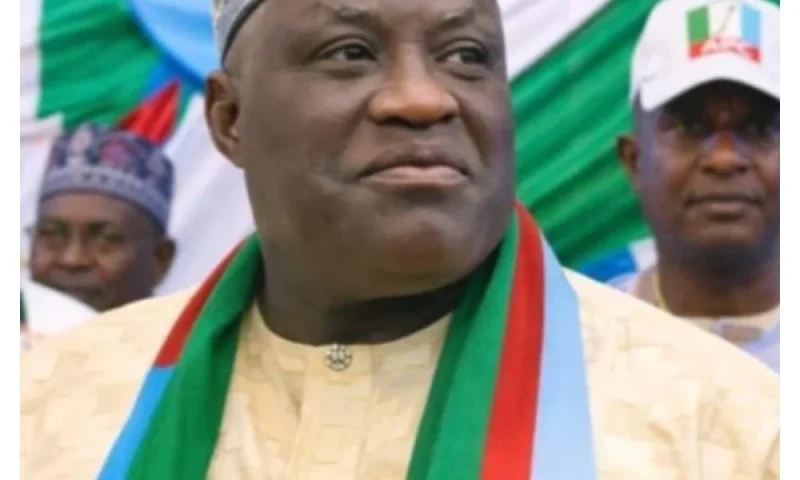
Deputy Governor of Lagos State, Obafemi Hamzat, has commenced preliminary political consultations with the Governance Advisory Council, GAC, in what observers see as early positioning ahead of the 2027 governorship contest in the state.

Hamzat revealed via his X account that he met with members of the influential council on Monday, describing the engagement as a platform for meaningful dialogue on the future direction of Lagos.

“I had thoughtful conversations about the future of Lagos and the kind of leadership it requires. I value the experience and guidance shared. This is about listening, learning and working with others to build a stronger Lagos,” he wrote.

The development has drawn renewed focus on succession politics within Lagos, where the ruling All Progressives Congress, APC, is known for its structured internal consultation process, which often shapes candidate emergence well before formal primaries.

The GAC remains a key decision-influencing body within the party’s Lagos chapter. Led by Tajudeen Olusi, the council comprises veteran politicians and major stakeholders, including President Bola Ahmed Tinubu and Senator Oluremi Tinubu. It plays a significant role in strategic decisions such as succession planning, zoning arrangements and endorsements within the state’s political framework.

Hamzat’s meeting with the council is widely viewed as part of the customary early consultations that precede major political contests in Lagos, where aspirants typically engage key stakeholders years ahead of elections.

Meanwhile, reactions on social media have begun to frame the engagement as a potential endorsement, with some unverified claims suggesting that consensus may already be forming within the party.

A Lagos-based political commentary platform alleged that the meeting was marked by emotional moments, claiming that a GAC member from Lagos East, Otunba Alebiosu, popularly known as Bush, was visibly moved after Hamzat purportedly secured the council’s backing as the APC’s preferred candidate for the 2027 governorship election.

However, these claims remain unconfirmed.

Wike threatened to revoke license of facility owner – ADC gives update on national convention venue

The African Democratic Congress (ADC) led by David Mark has accused authorities in the Federal Capital Territory (FCT) led by Nyesom Wike of attempting to frustrate its planned National Convention scheduled for Tuesday in Abuja.
In a statement posted on X, the faction’s spokesperson, Bolaji Abdullahi, alleged that the management of the Rainbow Event Centre informed the party of external pressure to withdraw the venue.

According to Abdullahi, the venue owner claimed he had been threatened with the revocation of his license by officials of the Federal Capital Development Authority (FCDA) and the FCT Minister, Nyesom Wike, if the facility was used for the ADC gathering.

He noted that the party had already fulfilled all financial obligations and formalized an agreement with the venue prior to the development.

Despite the alleged pressure, Abdullahi insisted that the faction would proceed with the convention as scheduled at the Rainbow Event Centre.

He added that the group would not be deterred, describing the situation as an attempt to undermine democratic processes.

“After paying all the fees required and setting up for our convention tomorrow, the owner of Rainbow Event Centre has just informed us that he has come under pressure from the FCDA and the minister of the FCT, Nyesom Wike, that if he allows the ADC the use of his facilities, his license will be revoked.

“But we have already signed the contract with him. We will hold our convention tomorrow as planned at the Rainbow Event Center.

‘We will not bow to this creeping tyranny. And definitely not to this petty tyrant,” he wrote on X Monday.

However, the minister of FCT, Nyesome Wike, had earlier dismissed claims that he denied ADC access to Eagles Square for its planned national convention.

No prayer call against INEC chair – Shari’ah Council

SCSNThe Supreme Council for Shari’ah in Nigeria has dismissed as false and misleading reports circulating on social media claiming that it directed Muslims to embark on prayers for the removal of the Chairman of the Independent National Electoral Commission, Prof. Joash Amupitan.

In a statement issued on Monday in Kaduna, the Secretary-General of the council, Nafiu Baba-Ahmad, said the organisation had been inundated with enquiries following what it described as “a series of misleading and unsubstantiated reports” attributed to anonymous and unofficial sources.

He stated unequivocally that the council never issued such a directive at any time, urging the public to disregard the claims in their entirety.

“The council categorically dissociates itself from these claims. At no time did it issue any directive, statement, or call on Muslims to embark on prayers specifically calling for the removal of the chairman of INEC,” the statement read.

Ahmad noted that the reports were not only false but appeared to be a deliberate attempt to mislead the public and draw the religious body into partisan political controversies.

“These fabrications are clearly intended to create unnecessary tension and drag the council into the murky and often divisive waters of political contestation,” he added.

The council stressed that it remained a reputable religious organisation committed to promoting justice, equity, moral rectitude, and peaceful coexistence, adding that it operated strictly through recognised communication channels.

It warned against reliance on information from unverified social media accounts, which it said were being used to spread misinformation and cause confusion.

“The council urges the general public, particularly members of the Muslim Ummah and the media, to disregard these false narratives and rely only on official communications issued through recognised channels,” Ahmad said.

While distancing itself from the alleged prayer directive, the council, however, reaffirmed its earlier stance on the leadership of the electoral body, insisting that the INEC chairman should either resign or be removed from office.

It explained that its position was based on concerns about neutrality and integrity, rather than political or sectarian considerations.

“Our position is not driven by political bias or sectarian interests but by serious concerns arising from actions and dispositions that have demonstrated a clear prejudice against Islam and Muslims,” the statement added.

The council further argued that such alleged sentiments, if established, would be inconsistent with the expectations of a holder of a sensitive national office in a plural society like Nigeria.

Despite the controversy, the SCSN reiterated its commitment to remaining above partisan interests and resisting attempts to use it as a tool for political manipulation.

It maintained that it would not be distracted from its core objectives by what it described as the antics of mischief-makers.

“The council will not allow itself to be used for political manipulation, nor will it be distracted from its mission of fostering a just, peaceful and prosperous society,” Ahmad said.

The organisation also called for restraint among Nigerians, warning that the spread of false information could undermine national stability and deepen divisions.

Jilli market airstrike: We’ll deal with anyone supporting terrorists – Nigeria’s Defense Minister

Nigeria’s minister of defense, Christopher Musa, has issued a stern warning to individuals accused of supporting criminal elements, declaring that anyone found aiding bandits or terrorists will be treated as a combatant.

Musa made the remarks following his visit to Uba Sani at the Sir Kashim Ibrahim House in Kaduna, ahead of the Kaduna State Expanded Security Council meeting.

Reacting to the recent airstrikes on Jilli Market, the defense minister emphasized that security forces would not spare those providing any form of assistance to criminal groups.

“A friend of a thief is a thief. Anybody who is doing any trading or providing any support to them, we will find you together and we will deal with you like bandits, like terrorists,” he said.

The statement underscores the federal government’s hard-line stance on tackling insecurity, particularly against networks suspected of aiding armed groups operating in parts of the country.

Musa reiterated the military’s commitment to intensifying operations against banditry and terrorism, warning that both perpetrators and their collaborators would face decisive action.

His comments come after at least 50 civilians were reportedly killed in Jilli Market, located between Gubio in Borno State and Geidam in Yobe State, during an anti-insurgent operation.

The killing had stirred controversy, with former Vice President Atiku Abubakar condemning the airstrike.

However, the presidency tackled Atiku for politicizing the operation targeted at dislodged insurgents.

EFCC warns banks against unsecured loans

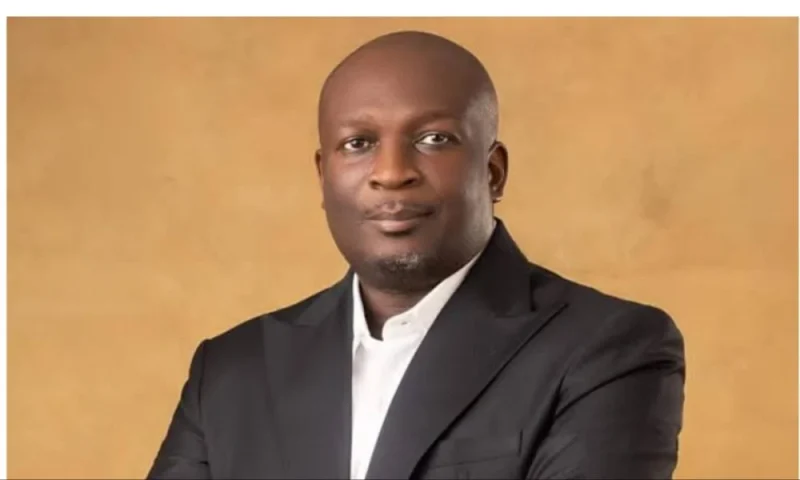
The Economic and Financial Crimes Commission (EFCC) has warned Nigerian banks to desist from granting loans without credible collateral, citing concerns over insider abuse and threats to financial stability.

The commission’s chairman, Ola Olukoyede, gave the warning during a courtesy visit by officials of First Bank of Nigeria Plc to the Lagos Zonal Directorate 2 office in Ikoyi.

Speaking through the acting Zonal Director, Assistant Commander Bawa Usman Kaltungo, Olukoyede expressed concern over lending practices in the banking sector, particularly loans backed only by personal guarantees, which he said expose depositors’ funds to significant risk.

“We have issues with banks’ mode of giving loans. The process often shows insider abuse,” he stated.

He criticised the practice of “top-down loans”, noting that they lack proper security and should be discouraged.

“You cannot give a loan based solely on the personal guarantee of the Chief Executive. This is not security. Banks must not issue loans without verifiable collateral,” he said.

Olukoyede maintained that enforcing strict collateral requirements would help reduce the rising level of non-performing loans within the financial system.

He also stressed that banks act as custodians of depositors’ funds and must exercise due diligence in their operations.
“Giving loans without adequate collateral amounts to tampering with depositors’ funds,” he warned.

The EFCC boss further called for stronger due diligence frameworks, insisting that accountability must be ensured even when such processes are outsourced.

“Even in situations where you outsource due diligence, there must be a clause of liability,” he added.

Reaffirming the Commission’s commitment to collaboration, Olukoyede urged banks to cooperate fully with investigations, especially in cases involving suspected insider collusion.

“When we invite your staff, you must release them so we can jointly fight economic and financial crimes. We must work together to stay ahead of criminals,” he said, noting that cases may be escalated to foreign agencies when necessary.

Earlier, the Chief Audit Executive of First Bank, Mufutau Olawale Abiola, said the visit was aimed at strengthening collaboration with the EFCC.

He also called for expedited handling of cases involving the bank’s personnel and disclosed that a dedicated team has been established to manage requests from the commission.

The development highlights increasing regulatory pressure on Nigeria’s banking sector to strengthen risk management systems amid concerns over loan defaults and governance challenges.

NDLEA, NDE partner to rehabilitate drug addicts in Abia

The Commander of the National Drug Law Enforcement Agency, NDLEA, Abia State Command, CN Chilee Chigbu says the Command operates one of the largest and most effective rehabilitation centres in Nigeria, where rehabilitation of individuals affected by drug abuse is handled.

The Commander, who stated this during her visit to the State Coordinator of National Directorate of Employment, NDE, Mrs Nwachukwu Tessy, emphasized the need for sustained support in the recovery process of rehabilitated drug addicts.

She stressed that rehabilitation alone is not enough without proper reintegration into society and appealed to the NDE to introduce skill acquisition programmes for individuals currently undergoing treatment at the NDLEA rehabilitation centre.

According to CN Chilee, equipping the rehabilitated drug users with practical skills will help them cope better during and after their recovery from addiction.

He further urged the NDE to consider providing employment opportunities for rehabilitated individuals, noting that gainful engagement is key to preventing relapse and ensuring they remain productive members of society.

In her response, the State Coordinator of the NDE, Abia State, assured the NDLEA of the agency’s readiness to collaborate effectively.

She stated that the NDE has professional trainers spread across the State who are well-equipped to support skill acquisition programmes covering over eighty different vocational skills.

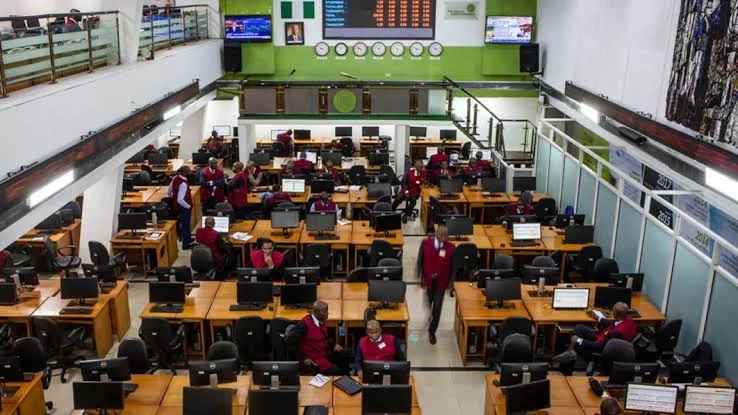
NGX hits N131.6tn as 31 stocks record gains

Nigerian Exchange LimitedThe Nigerian equities market kicked off the trading week on a bullish note as sustained buying interest in medium- and large-cap stocks drove the total market capitalisation up by N443bn.

The All-Share Index gained 688.43 points, representing a 0.34 per cent growth to close at 204,458.86 points. Consequently, the total market capitalisation rose to N131.609tn, reflecting strengthened investor confidence despite broader macroeconomic headwinds.

Market sentiment remained positive as 31 advancers outpaced 24 decliners. The rally was largely anchored by gains in high-profile tickers, including Guinness Nigeria, Nigerian Exchange Group, Stanbic IBTC Holdings, Nigerian Breweries, and CWG.

The Nigerian Exchange Group emerged as the session’s top performer, recording a maximum price gain of 10 per cent to close at N153.45 per share. Trans-Nationwide Express followed closely with a 9.81 per cent jump to N4.14, while McNichols Consolidated climbed 9.74 per cent to end the day at N7.10.

Other notable gainers included VFD Group and Chams Holding Company, which rose 9.71 per cent and 8.96 per cent, respectively.

Conversely, the bears exerted pressure on select counters, led by Berger Paints, which shed 9.95 per cent to close at N68.35. Academy Press declined by 9.71 per cent to N7.90, while Caverton Offshore Support Group dipped 5.98 per cent. Honeywell Flour Mills and CAP also saw depreciations of 4.92 per cent and 3.81 per cent.

Trading activity showed a slight cooling in terms of participation, as total volume traded dipped 14.33 per cent to 470.008 million units, valued at N32.449bn. The banking sector dominated the activity chart, with Access Holdings leading the pack at 54.914 million shares, followed by GTCO and Zenith Bank.

Market experts at United Capital Plc noted that the market is likely to remain “selectively constructive” throughout the week. Analysts point to an ongoing rotation into high-quality, dividend-paying stocks as investors prioritise income and balance-sheet resilience.

However, the path forward remains nuanced. High bond yields and lingering inflation risks continue to compete for capital, suggesting that future gains may be concentrated in defensive, cash-generative names rather than across the entire index.

Nigeria crude output misses OPEC quota eighth straight month

OPECNigeria’s average daily crude production is still below the 1.5-million-barrel quota set for the country by the Organisation of the Petroleum Exporting Countries.

According to the OPEC Monthly Oil Market Report released in April, Nigeria’s crude production in March was 1.38 mbpd. While there was a 69,000 bpd increase from the 1.31 mbpd recorded in February, the figure is still 117,000 bpd below the OPEC quota.

The figures for February indicate a month-on-month decline of 146,000 barrels per day, widening the country’s shortfall from its OPEC production allocation. This is the eighth consecutive month the country has failed to meet the OPEC quota since July 2025.

It could be recalled that although Nigeria recorded a marginal improvement in January, when production rose from 1.422 mbpd in December 2025 to 1.459 mbpd, the rebound was short-lived as output fell significantly in February.

Earlier data from the Nigerian Upstream Petroleum Regulatory Commission had also shown that crude oil production weakened at the end of 2025. Production declined from 1.436 mbpd in November 2025 to 1.422 mbpd in December, before recovering slightly in January.

In 2025, Nigeria’s crude oil production fell below its OPEC quota in nine months of the year, meeting or slightly exceeding the target only in January, June, and July. Nigeria opened 2025 strongly, producing 1.54 mbpd in January, about 38,700 barrels per day above its OPEC allocation.

However, production slipped below the quota in February at 1.47 mbpd and weakened further in March to 1.40 mbpd, marking one of the widest shortfalls during the year.

Although output recovered modestly in April (1.49 mbpd) and May (1.45 mbpd), Nigeria remained below its OPEC ceiling until June, when production edged up to 1.51 mbpd, slightly exceeding the quota.

The country sustained the momentum in July with 1.51 mbpd before falling below the benchmark again in subsequent months.

Our correspondent reports that the figures recorded in the first quarter of 2026 are below the government’s budget benchmark.

Recently, the Chief Executive Officer of the Nigerian Upstream Petroleum Regulatory Commission said oil production (crude and condensate) reached 1.8 mbpd in March.

However, an official of the commission told The PUNCH that the recovery started in mid-March after all assets on turnaround maintenance resumed operations. The official expressed optimism that crude production would meet the OPEC quota in April.

The PUNCH reports that Nigeria’s inability to meet its OPEC production quota is not only affecting its oil export earnings but also adversely impacting domestic refineries that are starved of feedstock for their operations.

Recall that The PUNCH exclusively reported on March 9, 2026, that the Federal Government, through the Nigerian National Petroleum Company Limited, had begun moves to secure crude oil supply for the Dangote Petroleum Refinery through third-party international traders in a bid to sustain domestic refining operations.

“Leveraging our global crude trading network, we are sourcing third-party crude for the refinery at prices that are competitive with prevailing international market rates,” a senior official at NNPC, who spoke in confidence due to the lack of authorisation to speak on the matter, had told The PUNCH.

The report showed that several heavyweight OPEC producers implemented sharp cuts. Saudi Arabia’s output plunged by 2.35 mbpd to 7.76 mbpd, while Iraq slashed production by 2.23 mbpd to 1.9 mbpd.

The United Arab Emirates and Kuwait also posted steep declines of 1.48 mbpd and 1.380 mbpd, respectively.

Venezuela increased production by 75,000 bpd to 1.1 mbpd, Congo added 16,000 bpd to reach 307,000 bpd, and Libya gained 15,000 bpd to 1.3 mbpd. Algeria recorded a marginal drop of 2,000 bpd.

The report noted that totals for the entire OPEC group were not available due to independent rounding and incomplete data for some members. It also clarified that Saudi Arabia’s supply to the market in March stood at 7.76 mbpd, while its actual production was 6.97 mbpd. Nothing was recorded for Gabon and the crisis-ridden Iran.

SAHCO Becomes The Sole Ground Handling Service Provider At Ogun State Airport 

Skyway Aviation Handling Company (SAHCO) Plc has reaffirmed its leadership in Nigeria’s aviation industry as the sole ground handling service provider at the commissioning of the newly completed Gateway International Airport at Iperu, Ogun State Airport by the President of the Federal Republic of Nigeria, His Excellency Bola Ahmed Tinubu (GCFR).
The historic commissioning marks a significant milestone in the development of aviation infrastructure in Nigeria, positioning Ogun State as a strategic hub for passenger and cargo operations.
SAHCO’s appointment as the exclusive ground handler underscores its reputation for operational excellence, safety standards, and world-class service delivery.
Speaking on the development, the Chairman of SAHCO, Barr Dr Taiwo Afolabi (CON), expressed pride in the Company’s role in supporting the successful launch of the airport. He noted that the opportunity to serve as the sole ground handling partner reflects the trust placed in SAHCO’s capabilities and its consistent track record in delivering efficient and reliable aviation services across the country.
“This milestone further reinforces SAHCO’s commitment to supporting the growth of Nigeria’s aviation sector through continuous investment in modern equipment, skilled personnel, and innovative service solutions. Being selected as the sole ground handler at such a landmark event highlights our readiness to deliver seamless operations at new and existing airports nationwide,” he stated.
Barr. Dr Afolabi also went on to emphasize that with partnership with Allied Air, a Nigerian owned Cargo Airline of repute, SAHCO is poised to provide efficient cargo operations to boost seamless cargo processing, particularly for time-sensitive and high value goods at the modern warehouse complex for both Import and Export. This is expected to significantly drive capacity, especially for agriculture, manufacturing and e-commerce.
SAHCO played a critical role during the commissioning, providing comprehensive ground handling services including ramp handling, passenger facilitation, cargo handling and operational support, ensuring a smooth and successful event.
The commissioning of the Ogun State Airport is expected to boost regional connectivity, stimulate economic activities, and open new opportunities for trade and investment. With SAHCO as the exclusive ground handling partner, the airport is well-positioned to deliver efficient and high-quality aviation services from inception.

As the aviation industry continues to expand, SAHCO remains committed to driving operational excellence and contributing meaningfully to the development of Nigeria’s air transport ecosystem


Fidelity Bank Takes Lead In Banking Recapitalisation Drive

As the Central Bank of Nigeria’s (CBN) recapitaliSation exercise came to an end March 31, 2026, most banks operating in the country rose to the challenge and met the requirement ahead of time.

However, Fidelity Bank’s proactive approach paid off, and it continued to demonstrate its commitment to growth and innovation. In a remarkable display of investor confidence, Fidelity Bank opened and concluded a private placement in just one day on December 31, 2025. Leading institutions, including AFREXIM Bank and its subsidiaries, invested in the bank, showcasing their faith in Fidelity’s vision and leadership.

With the CBN’s verification process complete, Fidelity Bank’s capital base now exceeds the required N500 billion threshold. This milestone positions the bank to expand its footprint, drive growth, and deliver returns to investors.

Market analysts stated that the successful completion of the private placement underscores strong investor confidence in the bank’s growth strategy, governance framework and long-term fundamentals, even amid tightening regulatory standards and evolving macroeconomic conditions.

The lender had announced to the investing public that it has surpassed the N500billion regulatory capital threshold following the successful completion of a N259billion private placement of ordinary shares.

The Company Secretary, Fidelity Bank, Ezinwa Unuigboje in a signed statement on Nigerian Exchange Limited (NGX) disclosed that the private placement, conducted with the approval of the Central Bank of Nigeria (CBN) and the Securities and Exchange Commission (SEC), was opened and closed on December 31, 2025.

According to her, the proceeds from the exercise lifted Fidelity Bank’s eligible capital from N305.5billion to N564.5billion, subject to final regulatory approvals.

The latest capital raise positions the lender comfortably above the new minimum capital requirement of N500billion for commercial banks with international authorisation, as stipulated by the apex bank under its banking sector recapitalisation programme. According to the bank, the private placement was carried out pursuant to the mandate granted by shareholders at its Extraordinary General Meeting held on February 6, 2025.


At the meeting, shareholders authorised the board to issue up to 20 billion ordinary shares through a private placement as part of measures to strengthen the bank’s capital base and enhance its capacity to support economic growth. The N259billion raised through the private placement builds on earlier capital-raising efforts by the bank. Fidelity Bank had stolen the show by taking a bold step in June 2024, launching a Public Offer and Rights Issue to raise capital.

Fidelity Bank successfully raised N175.85billion via a combination of a public offer and rights issue, which had increased its eligible capital to N305.5billion at the time. That exercise left a capital shortfall of N194.5billion relative to the new regulatory benchmark, a gap now fully covered by the latest transaction. Fidelity Bank’s strategic moves have set it up for success, and the stage is set for the bank to make significant strides in the Nigerian banking sector.


Fidelity Bank noted that the strengthened capital position will enhance its balance sheet resilience, support business expansion, and enable it to play a more robust role in financing key sectors of the Nigerian economy, in line with regulatory expectations. The bank added that it remains focused on value creation for shareholders, prudent risk management and sustained profitability as it navigates the post-recapitalisation phase of the banking sector. Meanwhile, the stock price of Fidelity Bank closed trading April 10, 2026 at N19.50 per share on the NGX.