DHQ reviewing rehabilitation program for repentant insurgents – Onoja

The Defence Headquarters (DHQ) has commenced a review of its rehabilitation and reintegration programme for repentant insurgents, known as Operation Safe Corridor, as part of efforts to strengthen Nigeria’s counter insurgency strategy.

The Director of Defence Media Operations, Maj. Gen. Micheal Onoja, disclosed this on Friday while briefing journalists on ongoing military operations nationwide. He said the review was informed by emerging challenges and public concerns regarding the Federal Government’s de radicalisation and rehabilitation initiative.

Onoja explained that Operation Safe Corridor was introduced by the Defence Headquarters in collaboration with the Borno State Government and relevant federal ministries to provide a pathway for insurgents who voluntarily surrendered to abandon violence and reintegrate into society.

“For a period of time, that system achieved some significant success. As with everything, any human activity has some point of challenges. We do not deny that there are challenges, and we also acknowledge that there is a need for a review,” he said.

He noted that the ongoing reassessment was aimed at strengthening the programme and ensuring it remains effective in addressing current security realities.

The military spokesman added that while insurgents would be held accountable for their actions, the opportunity for rehabilitation remains an important component of national security efforts.

“We are also as concerned as you and other members of the public. We have heard a lot of things the public is saying. I can assure you that the review will be done and you will hear our new operational directives for Operation Safe Corridor,” he said.

Onoja also addressed concerns over peace initiatives involving insurgents at the state level, noting that governors have a responsibility to protect their states but must operate within the framework of federal security policies.

“Some states have the rights and the powers to take every action that will secure their states. However, I can tell you confidently that they will not be able to do that without the authorisation of the Office of the National Security Adviser,” he said.

He reaffirmed that the Armed Forces of Nigeria remain committed to implementing federal government policies and supporting authorised measures aimed at restoring peace and stability in affected areas.

Court sentences Orient Petroleum MD, Nwawka, others to 14 years for N25 billion fraud

Justice O. M. Anyachebelu of the Anambra State High Court has convicted and sentenced Nnaemeka Nwawka, Managing Director of Orient Petroleum Resources Plc, alongside Jude Anniekwe Cyril and Sage Nebefeife Foundation, to 14 years’ imprisonment each for fraud involving about N25 billion.

The court found them guilty of stealing, conversion, and gratification after a lengthy trial that lasted a decade.

The defendants were convicted on a ten-count charge relating to financial crimes. Part of the charge stated: “that you, Nnaemeka Cyril, and the registered trustees of Sage Nebefeife Foundation, fraudulently converted to your personal use the aggregate sum of N29,620,733.”

Another count accused them of converting “the aggregate sum of N29,620,733” in similar transactions within Anambra State between 2012 and 2013.

They had pleaded not guilty when the charges were read, prompting the Economic and Financial Crimes Commission (EFCC), through its counsel, to proceed with full prosecution.

During the trial, the commission presented four witnesses and several documents, detailing how contracts were allegedly awarded to associates’ companies, with funds later traced to the foundation linked to Nwawka for personal use.

In his ruling, the judge held that the prosecution proved its case beyond reasonable doubt and ordered Nwawka and his foundation to refund N140.9 million to Orient Petroleum Resources Plc.

The court concluded that the evidence showed a pattern of diversion of company funds through questionable contract awards and financial transfers.

The case followed a petition by investor Cletus Ibeto, who alleged that he invested N25 billion in the company but suspected that large sums were diverted through “suspicious and bogus contracts” awarded to linked firms.

REA plans 500 power projects in N170bn 2026 budget

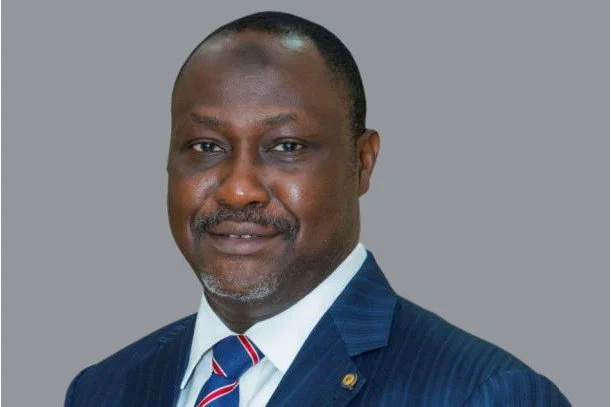
Abba AliyuThe Rural Electrification Agency has unveiled plans to execute more than 500 electrification projects in the 2026 fiscal year, as part of a N170bn budget proposal aimed at expanding reliable power supply to public institutions and underserved rural communities across the country.

The Managing Director of the agency, Abba Aliyu, disclosed this while briefing journalists on the sidelines of the 2026 budget defence session organised by the House Committee on Rural Electrification in Abuja on Friday.

Aliyu said the agency’s total budget proposal for 2026 stands at N170bn, out of which N100bn has been approved for the National Public Sector Solarisation Initiative, a flagship programme designed to provide sustainable and cost-effective electricity to government institutions.

He said, “N100 billion has been earmarked and approved for the National Public Sector Solarisation Initiative — a flagship programme designed to provide sustainable and cost-effective electricity to government institutions.”

He explained that the allocation will fund the deployment of hybrid mini-grids for Ministries, Departments and Agencies within and outside Abuja, reducing dependence on the national grid and cutting energy costs in public facilities.

Citing the National Hospital Abuja as an example, the REA boss noted that solar-based infrastructure has already been deployed to ensure uninterrupted electricity supply, significantly lowering operational costs while improving service delivery.

Giving a breakdown of the proposed interventions, Aliyu said the 2026 budget captures a mix of solutions tailored to the energy needs of different communities.

He added, “A significant number of the projects involve grid extension to communities located near existing power infrastructure.

“In such cases, the agency will extend distribution lines and install transformers to connect households and businesses to the national grid.”

For agrarian settlements and communities with cottage industries, the agency plans to deploy renewable-powered mini-grids to stimulate economic productivity. Mini-grids are also earmarked for agricultural processing clusters to enhance value addition, reduce post-harvest losses and support rural enterprise development.

In less populated and hard-to-reach areas, the REA intends to deploy solar home systems to provide standalone renewable electricity to households that are not economically viable for grid or mini-grid connectivity.

“What we presented to the National Assembly are the comprehensive details of these over 500 projects scheduled for execution in 2026,” Aliyu stated.

On budget implementation, the Managing Director disclosed that the agency achieved an 85 per cent execution rate for the 2024 budget.

He added that despite low releases in 2025, the agency has so far recorded 32 per cent performance for the current fiscal year, expressing optimism that implementation would improve as additional funds are released.

Earlier, the Chairman of the House Committee on Rural Electrification, Mohammed Bukar, said the committee was satisfied with the agency’s submissions after detailed scrutiny.

Bukar noted that the REA has made measurable progress in expanding access to electricity through off-grid and renewable energy interventions across rural communities, federal institutions and public sector establishments nationwide.

He commended the agency’s compliance with procurement regulations, fiduciary safeguards and development partner frameworks guiding its operations, but stressed that the committee would conduct oversight visits to project sites.

“Legislative oversight is a critical pillar of accountability, and we will continue to ensure that the Rural Electrification Agency remains aligned with its statutory mandate and national development priorities.

“However, at this stage, we are satisfied that the agency is operating within its mandate and delivering tangible impact. We encourage the agency to sustain this momentum as Nigeria advances its rural electrification and energy transition objectives,” Bukar said.

PUNCH Online reports that in recent years, REA has emerged as a key driver of Nigeria’s rural electrification and energy transition agenda, particularly through off-grid renewable solutions. The agency has implemented major programmes such as the Energising Education Programme, which has delivered solar hybrid power plants to federal universities and teaching hospitals, and the Energising Economies Initiative, targeting markets and small business clusters.

Through partnerships with development partners, including the World Bank and the African Development Bank, the agency has deployed hundreds of mini-grids and solar home systems under the Nigeria Electrification Project, bringing electricity to millions of Nigerians in previously unserved communities.

TotalEnergies hands OLO Trust to Aradel

TotalEnergies Marketing Nigeria PlcThe Nigerian Upstream Petroleum Regulatory Commission has presided over the formal handover of the OLO Oilfield Host Community Development Trust from TotalEnergies to Aradel Holdings, in what officials described as a major milestone in the implementation of the Petroleum Industry Act and the protection of host community interests during operator transitions.

The ceremony, held at the commission’s headquarters in Abuja, brought together senior officials of the regulator, executives of both companies, and representatives of the OLO host communities to formally complete the transfer of settlor responsibilities under the trust.

A statement issued by the NUPRC Head, Media and Strategic Communication, Eniola Akinkuotu, on Friday said the move is expected to ensure continuity in community development programmes despite the change in operator of the Olo/Olo West marginal field.

The OLO Host Community Development Trust was established in line with the provisions of the Petroleum Industry Act, which mandates operators to contribute three per cent of their previous year’s operating expenditure to support sustainable development in host communities.

Between 2023 and 2025, the trust has enabled the completion of more than 100 projects covering water supply, electricity, road construction, education, and healthcare. About 40 additional projects are currently ongoing, with over 25,000 residents across the host communities said to have benefited directly from the interventions.

TotalEnergies previously operated the Olo/Olo West marginal field within the former OML 58 in the Eastern Niger Delta before its acquisition by Aradel Holdings, making the transfer of responsibilities under the trust a statutory and operational requirement.

The oil major confirmed that all obligations up to the date of transfer had been fully met and that there were no outstanding liabilities. Aradel has now formally assumed full responsibility following the Commission’s regulatory consent.

Speaking at the ceremony, the Commission Chief Executive of the NUPRC, Oritsemeyiwa Eyesan, who was represented by the Executive Commissioner, Health, Safety, Environment and Community, Capt John Tonlagha, said the transition demonstrates the effectiveness of the PIA framework in safeguarding host community interests.

He said the trust’s structure and governance have been preserved, ensuring that ongoing projects will continue without disruption.

“The Olo Oilfield Host Community Development Trust remains intact. Its governance structure has been preserved, and its statutory funding obligations are transitioning seamlessly to the new settlor, exactly as envisioned by the Petroleum Industry Act,” Tonlagha said.

He added, “The commission will continue to provide firm and consistent oversight to ensure full compliance with the provisions of the Act for the benefit of both the host communities and the industry. This is a critical component of building trust and stability in Nigeria’s upstream sector.”

In his remarks, the General Manager, Community Affairs, Projects and Development at TotalEnergies, Dornu Kogam, urged the new operator to sustain the transparent and inclusive engagement model that had guided the implementation of projects.

“We encourage Aradel Holdings to maintain the same transparent, community-centred approach. The success recorded so far is the result of sustained dialogue, mutual respect, and shared development goals,” he said.

Responding, the Community Affairs Manager of Aradel Holdings, Blessyn Okpowo, assured stakeholders of the company’s commitment to fulfilling its obligations and sustaining the development momentum.

“We want to assure the host communities and the Commission that, in line with the Petroleum Industry Act, we will honour all commitments and duties required of the settlor. We also intend to work very smoothly and continue the engagement model established by TotalEnergies,” he said.

The Chairman of the Board of Trustees of the OLO Host Community Development Trust, Wale Godwin, commended the progress recorded so far, noting that 118 projects had already been delivered out of 160 planned.

He also praised the regulator’s oversight role, particularly its approval of the Community Development Plan before the commencement of projects.

“We appreciate the commission for ensuring proper regulatory guidance and approval processes. This has strengthened transparency and confidence among stakeholders and ensured that projects are aligned with the real needs of the communities,” he said.

The host community framework under the Petroleum Industry Act is widely regarded as one of the most significant reforms in Nigeria’s oil and gas sector. It was introduced to address longstanding grievances in oil-producing communities over environmental degradation, poverty, and perceived neglect despite decades of resource extraction.

Under the law, operators are required to set up Host Community Development Trusts and contribute three per cent of their annual operating expenditure to fund sustainable development initiatives.

This model is designed to reduce conflicts, curb pipeline vandalism, and promote stability in the Niger Delta by ensuring that communities derive measurable benefits from oil operations.

The successful transition of the OLO trust signals growing confidence in the new regulatory regime and highlights the importance of continuity and accountability in community development amid asset divestments and acquisitions across Nigeria’s upstream sector.

MTN invests N1tn on fibre rollout, network upgrade

New-mtn-logoMTN Nigeria said it invested N1tn in 2025 to expand fibre infrastructure, roll out additional base stations and strengthen network capacity nationwide, as the country’s biggest telco returned to profitability after a choking financial year marked by foreign exchange pressures and negative equity.

The capital expenditure, more than double the prior year’s spending, formed part of a broader recovery that saw the company post a profit after tax of N1.1tn for the year ended December 31, 2025. The rebound followed a difficult 2024 in which MTN suspended dividend payments and grappled with balance sheet strain.

Chief Executive Officer Dr Karl Toriola described 2025 as a defining year for the company, linking the improved earnings position to renewed long-term infrastructure investment.

“During the year, we invested N1tn in network expansion and modernisation, more than double the prior year’s capital expenditure. This investment translates to additional base stations, deeper fibre rollout, expanded capacity and improved network resilience across the country because sustaining critical digital infrastructure requires disciplined capital allocation and a deliberate long-term approach,” the executive said.

The telcos’ total subscriber base increased to 87.3 million, up 7.9 per cent, while active data subscribers rose to 53.2 million. Data traffic grew by 34 per cent during the year. These figures reflect sustained demand for digital services across the country and underscore the need for continued investment in network capacity and resilience.

“We are mindful that in a period of economic pressure, expectations from customers are heightened. When Nigerians purchase data or rely on our network for work, education, financial services or daily communication, they expect reliability, fairness and continuous improvement. That expectation is both legitimate and central to our responsibility, Toriola noted.

MTN’s service revenue rose 55.1 per cent to N5.2tn in 2025, while earnings before interest, tax, depreciation and amortisation more than doubled to N2.7tn. Earnings per share improved to N53.07 from a negative N19.05 a year earlier, reflecting the sharp turnaround in operational performance.

Chief Financial Officer Modupe Kadiri said the company’s financial recovery was built on deliberate balance sheet repair, disciplined capital allocation and reduced foreign exchange exposure.

“A year ago, MTN Nigeria was in negative equity. Today, we are declaring a N20 total dividend for the 2025 financial year,” Kadiri stated.

The board approved a final dividend of N15 per share, subject to shareholder approval at the annual general meeting, bringing the total dividend for the year to N20 per share, including an interim dividend of N5 already paid in the fourth quarter.

According to its report, MTN generated N1.2tn in free cash flow during the year and rebuilt shareholders’ equity to N548.7bn, with retained earnings standing at N400.4bn at year-end, signalling restored financial stability after the previous year’s market volatility.

Toriola said profitability would continue to underpin infrastructure expansion, noting that profit enables sustained reinvestment in network quality and broader coverage rather than serving as an end in itself.

“Profit, in our context, is not an end in itself. It is the mechanism that enables continued investment in network quality, broader coverage and enhanced customer experience. As Nigeria’s digital ecosystem continues to expand across fintech, small businesses, education and public services, resilient and future-ready telecommunications infrastructure remains foundational to national development,” he added.

Industries lose 15% energy to weak maintenance – MAN

The Manufacturers Association of Nigeria has found that maintenance lapses account for between 10 and 15 per cent of energy waste in factories, while most facilities lack sub-metering systems needed to track consumption.

The findings emerged from a Cleaner Production Assessment conducted in 42 industries across four geopolitical zones and presented at the National Stakeholders’ Sensitisation Workshop on ISO 50001 and 14001 standards in Lagos on Tuesday.

The assessment, carried out under the GEF-UNIDO Industrial Energy Efficiency and Resource Efficiency Cleaner Production Project, covered sectors including food and beverages, basic metals, wood and wood products, textiles and leather, and petrochemicals.

Presenting the technical findings, IEE and RECP National Expert Obafemi Adejumo said the study exposed a wide gap between current practices and global best standards. He noted that the study uncovered significant industrial energy efficiency gaps across the country.

“What I have noticed is that there is a big gap between where we should be and where we are at the moment. Not all parts of the industry are doing well with energy efficiency. Some industries are already doing well, but a lot of other industries have not really plugged into it”, Adejumo said.

The CPA identified compressed air systems as a major source of electricity waste, accounting for about 25 per cent of losses, largely due to leaks and improper use. In some plants, optimising the system enabled operators to shut down one compressor entirely.

Steam systems accounted for 30 per cent of losses, while lighting contributed 18 per cent. The assessment also found significant thermal losses from poor insulation and flue gases in boilers and furnaces, inefficient motor systems running at partial loads, and a lack of Variable Speed Drives.

The report highlighted that most facilities lack sub-metering, making it difficult to manage energy use effectively.

“Data gaps are a serious issue. Most facilities lack sub-metering, making it difficult to manage what isn’t measured,” the assessment noted.

The study also found that idle equipment in textile and leather factories and a weak maintenance culture contributed to avoidable losses of up to 15 per cent.

The assessment revealed that grid unreliability in Kano and Anambra amplified energy losses, while thermal inefficiencies were more pronounced in the basic metal and petrochemical sectors.

However, it recorded successes in the food and beverage sector, where a Lagos-based plant reduced compressed air leaks by 20 per cent after optimisation.

Overall, the CPA estimated that industries could achieve between 20 and 25 per cent energy reduction, translating to about 500 megawatt-hours of savings per plant annually, if integrated industrial energy-efficiency measures were implemented.

The association urged manufacturers to adopt ISO 50001 and ISO 14001 standards to institutionalise energy management and cleaner production.

National Project Coordinator, GEF-UNIDO IEE/RECP Project, Jacob Oladipo, said ISO 50001 focuses on energy efficiency, while ISO 14001 addresses resource efficiency and cleaner production.

“Today, we are looking at feedback from the exercise conducted under this project, mainly the exposure of the project components to ISO standards 50001 and 14001. The 50001 has to do with energy efficiency, while the 14001 has to do with resource efficiency and cleaner production,” Oladipo said.

He said the CPA exposed poor water management practices across industries, stating, “We discovered that industries extract their water from boreholes and attach no importance to the usage of water. They use fresh water and discard it without knowing the volume used per day. If you are producing and you don’t know the volume of water you are using, how will you know the volume of water that you are wasting?”

He added that recycling water reduces overall consumption and improves resource efficiency. “One of the cardinal principles of resource efficiency is that you produce with less waste. If you recycle your water, it reduces the amount of water you use at the end of the day because water is not going out into the drain,” he said.

Adejumo stressed that awareness and top management commitment remain critical to closing the efficiency gap.

“One thing that will be needful is that the top management in the industry needs to be equipped with the right knowledge of this concept. If the top management doesn’t buy into it, the ordinary facility manager will not be able to do it”, Adejumo said.

He explained that the campaign’s core message rests on cost savings and competitiveness. “If you can reduce energy consumption, then your cost of production will be reduced. When you save energy costs in your facility, you boost the sustainability of your organisation and make it competitive,” Adejumo said.

He warned that inefficiencies also increase carbon emissions, stating, “If you burn more fuel because of inefficiencies, then you have more emissions into the atmosphere. We must work on that on a national scale.”

Meanwhile, the Chief Executive Officer of Spectra Industries Ltd, Duro Kuteyi, said the initiative exposed hidden financial leakages in factories.

“The IEE and RECP initiative is an innovative system that shows industrialists where they are losing money, and now they can prevent it,” Kuteyi said.

He said factories could recover waste heat from generators and commercialise waste streams. “Even in the use of a generator, the heat coming from the generator can be converted to do other things in the factory. From the waste generated, we had already put energy into that waste, so it should not be trashed. The waste should be commercialised to compensate for part of the energy used”, Kuteyi said.

He urged industrial leaders to personally undergo ISO training. “It is better for the industrialist himself to understand this so that he can pass it down. Everybody stands to benefit if he wants to”, he said.

In his welcome address, the Director-General of MAN, Segun Ajayi-Kadir, represented by National Technical Coordinator Dr Oluwasegun Osidipe, described the project as a defining moment for the sector.

“The implementation of the GEF-UNIDO Industrial Energy Efficiency, Resource Efficiency and Cleaner Production Project marks a defining moment in our collective journey towards sustainability,” Ajayi-Kadir said.

He asserted that manufacturers must champion sustainable practices to enhance competitiveness and resilience, stating, “As we embrace the principles of energy efficiency, we will not only be reducing our carbon footprint but also saving on energy costs. In return, the efficiency, competitiveness and resilience of operations will be enhanced to meet the increasing demand of our global marketplace.”

He urged policymakers to create an enabling environment that supports energy management systems and cleaner production, adding that Nigeria can safeguard its environment and foster sustained economic growth by optimising resource use and investing in energy-efficient technologies.

APC reveals why opposition leaders are angry about Electoral Act

​The National Publicity Secretary of the ruling All Progressives Congress, APC, Felix Morka, has revealed why opposition leaders are angry over the recently passed and signed Electoral Act.

Fielding questions in an interview on ‘Politics Today’, a programme on Channels Television, Morkas said they are angry because the Electoral Act amendment frustrates what he described as a plan to use real-time transmission of results as grounds to challenge the 2027 general elections.

He added that key opposition figures were upset because the amendment removed a ‘game plan’ to invalidate elections where real-time electronic transmission of results is not possible.

“So, let me tell you very quickly why Peter Obi, Galadima and his friends in the opposition are livid about this amendment.

“They were hoping to sell this dummy to the National Assembly and to Nigerians: that unless results are transmitted in real time, that becomes grounds to invalidate the election in 2027. That was it – it was a game plan,” he said.

The APC national mouthpiece further stated that opposition figures were fully aware that internet connectivity remains uneven across the country.

“Buba Galadima knows, Atiku Abubakar knows, Peter Obi knows, and David Mark knows that connectivity is not universal in all the territories and voting districts of Nigeria,” Morka said.

His comments followed the signing of the Electoral Act (Amendment) Bill 2026 into law on Thursday by President Bola Ahmed Tinubu.

However, leaders of the African Democratic Congress and the New Nigeria Peoples Party rejected the new law, insisting it is anti-democratic and tilted in favour of the ruling party ahead of the 2027 elections.

2027: APC govt should be cut into pieces over insecurity — Galadima

A chieftain of the New Nigeria Peoples Party, NNPP, Buba Galadima, says if the Nigerian people could remove former President Goodluck Jonathan from office in 2015 over insecurity, the All Progressives Congress can be cut into pieces.

Speaking during an interview on Channels Television’s Politics Today on Thursday monitored by DAILY POST, Galadima warned that Nigerians could react strongly at the ballot box if current economic and security challenges continue.

He lambasted the policies of the ruling APC and dismissed claims that living conditions have improved.

Speaking on political dissent and governance, the elder statesman stated that authorities should not underestimate public sentiment, citing incidents of arrests over public commentary.

He lamented the arrest and imprisonment of young people who go on the radio to air their own opinion about the happenings in Nigeria.

The NNPP stalwart told the APC-led Federal Government that they should not presume that Nigerians were gullible and that they cannot react.

“Now things start small, small. You don’t know how they can blossom and become something else. They shouldn’t play.

“If you can remove Jonathan’s government for a simple insecurity in the Northeast, what would you be doing to the APC government? I think we have to cut them into pieces,” he said.

See journalists as allies, not enemies – Mojeed Musikilu tells Nigeria Police

President of the International Press Institute Nigeria, Mojeed Musikilu, has called on the Nigeria Police to see journalists as allies during elections and not enemies.

Musikilu made the call on Thursday when he appeared as a guest in an interview on Arise Television, lamenting the rate of attacks on journalists during elections.

He questioned why the police should continue to use the cybercrime law against journalists for doing their legitimate constitutional duties.

“The rate of attacks on journalists is high during elections. The police must see journalists as allies

“The media is a critical institution in a democratic setting. Recent years have seen journalists harassed, detained, assaulted, and even shot while performing their duties.

“This led to the former Inspector General of Police, Kayode Egbetokun, being placed on an infamy list for failing to address these issues.

“An early warning is now being issued to his successor, especially with upcoming elections, as attacks on journalists tend to increase during these periods.

“It is crucial for authorities to view journalists as allies in national development, as journalism is not a crime, nor are journalists enemies or criminals,” he said.

Lagos airport fire: National Assembly awaits FAAN probe, withholds verdict

Members of the National Assembly have said they will withhold comment on the cause of Monday’s fire outbreak at the Murtala Muhammed International Airport until investigations being conducted by the Federal Airports Authority of Nigeria, FAAN, are concluded.

The lawmakers stated this after a joint delegation from the Senate and the House of Representatives Committees on Aviation carried out an on-the-spot inspection of the damaged Terminal 1 wing of the airport.

The visit followed public concern triggered by the inferno, which caused extensive damage to part of the facility.

The delegation arrived at the airport at about 3:07 p.m., toured the affected areas, and later held a closed-door meeting with FAAN’s management team led by the Managing Director, Olubunmi Kuku.

Speaking after the inspection, Chairman of the Senate Committee on Aviation, Abdulfatai Buhari, said the lawmakers were encouraged by the swift response of airport authorities and the fact that no lives were lost.

He explained that the visit was aimed at firsthand assessment rather than speculation, noting that the lawmakers had earlier been engaged in budget defence sessions.

“We thank God that there was no loss of life, which is the most important thing. Despite the scale of the incident, FAAN and other agencies rose to the occasion,” Buhari said.

He added that emergency measures were promptly activated, allowing flight operations to continue with limited disruption.

“Flights were diverted appropriately. Some landed in Malabo and Accra, while others, including Emirates and Lufthansa, still arrived in Lagos later that night. This shows the level of preparedness and response,” he noted.

Buhari stressed that the National Assembly would not draw conclusions while investigations were ongoing.

“The investigation is still in progress, and we do not want to pre-empt the outcome. Issues such as sabotage or otherwise will only be addressed after the relevant authorities complete their work,” he said.

Also speaking, Chairman of the House of Representatives Committee on Aviation, Abdullahi Garba, said the legislature would rely strictly on official findings before taking any further steps.

“Just like my senior colleague said, the investigation is ongoing, and we will wait for the same before anything can be done on this development.

“For the MD, she has done very well because within just three hours she was able to achieve stability; that is a very good one,” he stated.

Meanwhile, the Chairman of FAAN’s Board, Abdullahi Ganduje, praised the airport management for what he described as a timely and effective emergency response, saying it helped prevent casualties and ensured continuity of operations at the nation’s busiest airport.