NSCDC removes Niger commandant over deaths of 30 illegal miners, begins investigation

NSCDC removes Niger commandant over deaths of 30 illegal miners, begins investigation The Commandant General of the Nigeria Security and Civil Defence Corps (NSCDC), Prof. Ahmed Abubakar Audi, has ordered the removal of the Niger State Commandant of the corps and directed a full-scale, transparent and unhindered investigation into the circumstances surrounding the deaths of illegal miners in the custody of the Niger State Command.

The heads of Operations, Mining, Legal, Intelligence and Investigation have also been invited for thorough investigation.

DAILY POST recalls that over 30 arrested illegal miners in the custody of the Niger State Command died mysteriously.

Assistant Commandant of Corps, Babawale Afolabi, National Public Relations Officer of the NSCDC, in a statement on Friday morning, said the order followed a directive by the Minister of Interior, Tunji Ojo.

Afolabi added that the CG had directed a new Commandant to proceed to Niger State and assume immediate command of the State Command.

The CG assured the Minister of Interior that no stone would be left unturned in the investigation process, adding that any officer or personnel found to have acted contrary to the law, established procedures or professional standards would face appropriate administrative, disciplinary and, where applicable, criminal sanctions in accordance with extant laws and regulations.

“The NSCDC remains committed to upholding the dignity, safety and fundamental rights of every person in its custody and will continue to ensure that the enforcement of its statutory mandate, including the fight against illegal mining and the protection of Nigeria’s critical national assets, is carried out in accordance with the law and established professional standards,” the statement said.

Kebbi Assembly passes harmonised taxes, levies collection bill

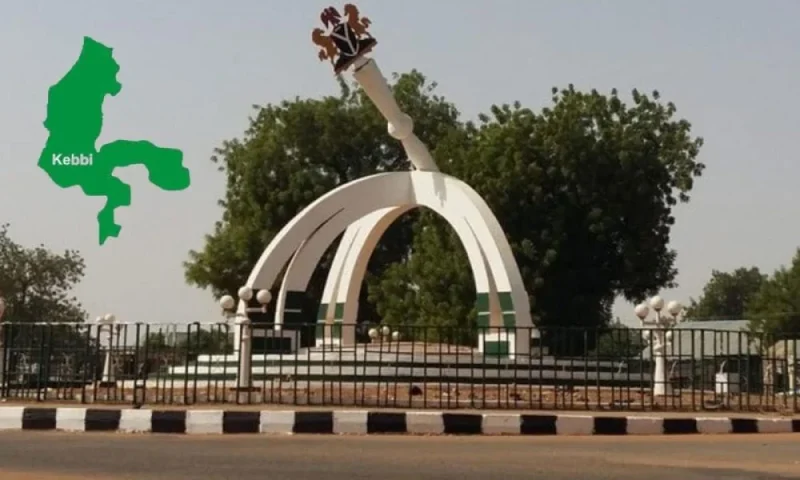
Kebbi Assembly passes harmonised taxes, levies collection billKebbi State House of Assembly has passed the Kebbi State Harmonised Taxes and Levies Collection Bill following deliberations and consideration by the House.

The bill was passed on Thursday after debate and adoption by the Committee of the Whole, presided over by the Speaker, Rt. Hon. Salihu Maikasuwa Dangoje, who was represented by the House Leader, Hon. Faruk Aliyu Nasarawa Jega.

If assented to by the governor, the bill is expected to strengthen the state’s tax administration system, improve revenue collection, harmonise the collection of taxes and levies, and address leakages in internally generated revenue.

Speaking to newsmen shortly after the passage, the Chairman of the House Committee on Finance and Appropriation, Hon. Adamu Muhammad Birnin Yauri, said the legislation would introduce a modern and efficient system of tax collection in the state.

According to him, the bill would help eliminate revenue leakages, reduce cash-based collections, promote transparency and accountability, and provide a harmonised framework for the collection of taxes and levies across the state.

Dangote refinery got 60% crude supply locally – Report

Dangote refineryThe Dangote Petroleum Refinery sourced an estimated 116 million barrels of crude oil from Nigeria in the 12 months ended June 30, 2026, with supplies coming from NNPC Limited, international oil companies, and domestic producers, according to the refinery’s initial public offering prospectus.

The prospectus stated that approximately 60 per cent of the refinery’s crude feedstock was sourced from Nigeria through term contracts with the Nigerian National Petroleum Company Limited, including under the Federal Government’s crude-for-naira programme, as well as spot purchases from international oil companies and domestic producers.

During the 12-month period, the refinery processed approximately 26.4 million metric tonnes of crude feedstock.

Using a standard conversion factor of 7.33 barrels per metric tonne, the 26.4 million tonnes translates to approximately 193.5 million barrels. Applying the prospectus’ 60 per cent Nigerian sourcing figure gives an estimated 116.1 million barrels sourced locally from July 2025 to June 2026.

The prospectus, however, did not provide a breakdown showing how much of the estimated 116.1 million barrels came specifically from NNPC, IOCs or domestic producers.

It stated, “The Issuer sources crude feedstock from a combination of domestic and international suppliers.

Approximately 60 per cent of the Issuer’s crude feedstock is sourced from Nigeria through term contracts with NNPC Limited, including under the Federal Government’s crude-for-naira programme, as well as spot purchases from international oil companies and domestic producers.”

The company added that the crude-for-naira programme could help reduce its foreign exchange requirements by allowing eligible crude purchases to be settled in local currency.

“Pursuant to the DCSO framework and the terms of the Issuer’s agreement with NNPC Limited, the Issuer has access to crude supply volumes of up to 350,000 barrels per day, subject to availability,” the prospectus stated.

The disclosure provides fresh details of the refinery’s feedstock strategy amid continuing concerns over the availability of sufficient Nigerian crude to support its operations.

Rather than depending entirely on domestic crude, the refinery sourced the remaining 40 per cent of its requirements internationally.

“The balance of the Issuer’s crude oil requirements is sourced through purchases in the international spot market and under various supply arrangements with international counterparties,” the prospectus stated.

The refinery said the international sourcing arrangement allowed it to broaden its feedstock options and respond to changing market conditions.

“The Issuer’s procurement model enables it to source crude oil of multiple domestic and international origins and to select from a broad range of crude grades based on prevailing market conditions and refinery economics.

“This flexibility supports feedstock diversification and reduces reliance on any single supplier, source or delivery route,” it stated.

The prospectus disclosed that the refinery had processed 36 different crude grades as of June 30, 2026, sourced from Africa, South America, the United States and the Middle East.

It did not, however, identify the individual countries from which the crude grades originated. The refinery said its choice of crude was determined partly by the economics of processing each grade rather than simply by availability.

“Crude grades are evaluated using the Issuer’s proprietary linear programming model, which is managed by its economics and planning team.

“The LP model assesses the expected gross refining margin associated with each crude grade based on the refinery’s configuration, anticipated product yields, operating constraints and prevailing market prices for refined products,” the prospectus said.

It added that the results were used to determine the economic value of individual crude grades and guide negotiations with suppliers. The prospectus also revealed that Dangote could pay more for some grades when their characteristics were expected to produce higher refining margins.

“Accordingly, certain crude grades may be purchased at a premium when their refining characteristics are expected to generate superior refining margins, while other grades may be acquired at a discount when their economic value to the refinery is lower,” it stated.

The refinery’s sourcing model also reduces its dependence on physical pipelines directly connecting it to oil-producing fields.

The Issuer said it does not rely on a dedicated upstream pipeline connection to oilfields for the delivery of crude oil and has, therefore, reduced its exposure to disruptions in upstream pipeline operations, saying, “Crude oil is delivered through marine vessels using the Issuer’s offshore SPMs and associated onshore pipeline infrastructure.”

The prospectus further stated that about 60 per cent of the refinery’s crude feedstock in 2025 was sourced from Nigerian grades, with international suppliers accounting for the balance. It was received through marine delivery infrastructure.

On its relationship with NNPC, the refinery said it had established arrangements to access domestic crude, although the supply was subject to availability and the terms of its agreements.

“The Issuer has established crude oil supply arrangements with NNPC Limited, including under the DSCO framework. These arrangements provide access to domestic crude supply, subject to availability and the terms of the relevant agreements,” the prospectus stated.

The company said it also relied on international oil companies, domestic producers and other international suppliers. “In addition, the Issuer sources crude oil through spot purchases from international oil companies and domestic producers, as well as through various agreements with international suppliers.

“These arrangements support diversification of feedstock sources and access to global crude markets,” it stated.

Despite having multiple sources, the refinery warned investors that its supply arrangements did not guarantee uninterrupted access to crude.

It identified several risks, including suppliers failing or refusing to honour delivery commitments, operational disruptions at upstream production facilities, restrictions imposed by oil-producing countries and security incidents affecting oil infrastructure in the Niger Delta.

“Although the Issuer has entered into supply arrangements and may source crude from multiple suppliers, there can be no assurance that such arrangements will ensure uninterrupted supply of crude oil to the Refinery,” the prospectus stated.

The refinery said it could also be forced to change the type of crude it processes if its preferred grades became unavailable.

“The Issuer may be required to source alternative crude blends if its preferred grades become unavailable. Prolonged reliance on alternative feedstock may affect refinery yields, operating efficiency or refining margins,” it stated.

The company warned that inadequate crude supplies could ultimately affect its production costs and profitability.

“If the Issuer is unable to secure adequate volumes of crude oil at competitive prices, or if supply disruptions result in operations below design capacity, this could lead to reduced throughput, increased per-unit production costs and reduced refining margins,” the prospectus stated.


Banks’ capital raise reinforces balance sheet transparency – UBA GMD

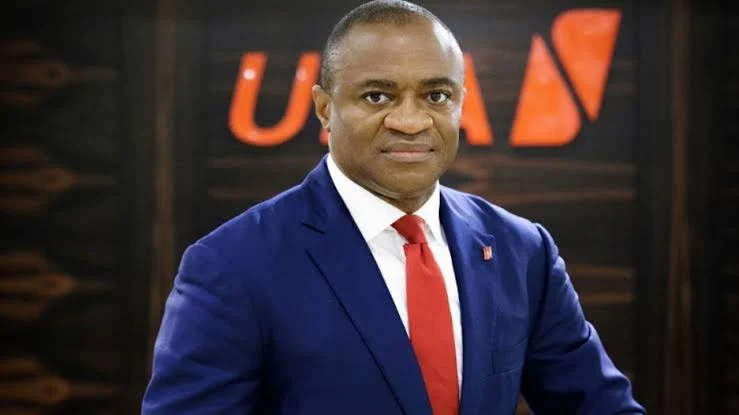
Oliver AlawubaThe Group Managing Director of United Bank for Africa Plc and Chairman of the Body of Bank CEOs in Nigeria, Oliver Alawuba, has outlined a blueprint for building a resilient Nigerian economy, calling for deliberate policies and stronger public-private collaboration to transform economic stability into inclusive prosperity.
Alawuba made the call while delivering a goodwill address at the 19th Annual Banking and Finance Conference of the Chartered Institute of Bankers of Nigeria in Abuja on Tuesday.

Speaking on the theme, ‘Building a Resilient Economy in an Era of Disruptions: Imperatives for the Banking and Financial Services Industry,’ he noted that resilience must be intentionally embedded across national policies, institutions, infrastructure, supply chains, energy systems, and human capital.

According to him, a resilient economy is not one immune to shocks, but one capable of absorbing, adapting to, and advancing through disruptions without shifting the financial burden onto vulnerable citizens.

He highlighted ongoing global macroeconomic headwinds, including geopolitical tensions, shipping market volatility, and persistent inflationary pressures, as factors underscoring the need for proactive structural buffers.

Alawuba commended the Federal Government and the Central Bank of Nigeria for improved fiscal and monetary policy coordination, noting that positive trends in key economic indicators represent vital steps toward stabilisation.

He, however, stressed that macroeconomic recovery must translate into broader commercial opportunities and improved living standards for citizens.

Describing commercial banks as the country’s primary financial shock absorbers, the UBA boss disclosed that 33 banks successfully mobilised N4.65tn during the recent recapitalisation exercise. He stated that the capital raise significantly reinforced balance-sheet transparency, capital adequacy, and liquidity required to finance large-scale infrastructure and real-sector projects.

He added that operational resilience within the banking sector is being deepened through heavy technology investments, noting that four tier-one banks deployed over N119bn into digital infrastructure and cybersecurity in the first quarter of 2026, marking a 43.2 per cent year-on-year increase.

Also speaking at the conference, President Bola Tinubu, represented by the Minister of Finance and Coordinating Minister of the Economy, Wale Edun, urged financial institutions to look beyond profit margins and channel patient capital toward job-creating enterprises.

The President stressed that the next phase of ongoing reforms centers on transitioning from basic financial intermediation to real economic transformation through accessible credit and technology-driven financial inclusion.

On his part, the Governor of the CBN, Olayemi Cardoso, represented by the Deputy Governor, Economic Policy Directorate, Mr Philip Ikeazor, reaffirmed the central bank’s commitment to maintaining financial system stability to anchor recovery.

Similarly, the World Bank Country Director for Nigeria, Mathew Verghis, tasked commercial lenders with expanding credit facilities to productive micro, small, and medium-scale enterprises.

Earlier in his opening address, the President and Chairman of Council, CIBN, Prof. Pius Olanrewaju, noted that the ultimate benchmark of economic reform lies in lower living costs, expanded job opportunities, and affordable single-digit credit for businesses.

Nigeria’s textile imports rise slightly to N578.5bn in H1

nbs, tradeNigeria imported textiles and textile articles worth N578.51 billion in the first six months of 2026, reflecting continued pressure on the domestic textile industry as stakeholders push for stronger support for local production.


Latest data released by the National Bureau of Statistics in the second quarter of 2026 showed that textile imports rose by 2.2 per cent from N565.95bn recorded in the first half of 2025.

The latest figure also extended a long-term increase in Nigeria’s dependence on imported textiles. Textile and textile article imports stood at N365.46bn in 2022 before rising to N377.47bn in 2023, N726.18bn in 2024 and N1.06tn in 2025.

Year-on-year, textile imports increased by 3.3 per cent in 2023, surged by 92.4 per cent in 2024 and climbed by 46.1 per cent in 2025. The 2.2 per cent increase recorded in the first half of 2026, however, points to a much slower growth pace than the sharp increases in the preceding two full years.

Speaking at the Industrial Revolution Work Group Technical Session II held in Lagos on 10 September, the Director-General of the Manufacturers Association of Nigeria, Segun Ajayi-Kadir, said the decline of the textile industry had severely affected employment and production capacity.

“Textiles are an important area. During my first assignment in the Manufacturers Association of Nigeria, I was coordinating seven states from Abuja to Kaduna, which had seven textile industries. Today there is zero. So it tells the story,” Ajayi-Kadir said.

He added that the industry previously employed about 25,000 workers, stressing that the demand for clothing provided a strong market for domestic textile production. “But the fact remains that everybody must wear something. So there is no need for us to overemphasise the fact that it is important and it is an area that we play,” the MAN DG remarked.

Ajayi-Kadir noted that manufacturers needed to revive the cotton-textile-garment value chain and strengthen domestic demand for locally produced goods. “It has suffered negative growth,” he affirmed.

Ajayi-Kadir hinted at recovery, adding, “What we need to do is revive the cotton-textile-garment value chain input supply. And this is already being done.”

The MAN director-general also pointed to the Federal Government’s efforts to increase the uptake of locally manufactured products through its procurement policies. “We must sign on to export facilitation and Made-in-Nigeria public uptake. To give effect to this, we’ve had the Made-in-Nigeria Executive Order, and it’s now supported by ‘Nigeria First’ (policy),” he said.

Other stakeholders have also highlighted the potential for the domestic industry to recover and expand beyond the Nigerian market.

In an earlier report, the President of the Association of Women in Fashion Tech, Bukola Ajani, told The PUNCH that the local textile industry was being reinvigorated and could increasingly serve markets in other African countries and Europe.

The focus on textiles also forms part of the work of thematic group four of the Industrial Revolution Work Group, which is dedicated to Made-in-Nigeria Patronage and Anti-Counterfeit.

The group is addressing issues including public perception, standard laboratories, smuggling, procurement misalignment and the decline of the textile, pharmaceutical and steel sectors.

The IRWG, co-chaired by the Minister of State for Industry, Sen. John Enoh, and the President of the Manufacturers Association of Nigeria, Francis Meshioye, is, among others, expected to support measures aimed at strengthening domestic production and increasing patronage of Nigerian-made goods.

As the Federal Government moves to implement the Nigeria First policy, more consumers are also turning to locally produced textile brands, including Merok, produced by Onchek, a brand founded in 2016.

MTN’s proposed Mafab deal sparks spectrum debate

MTNTalks over the possible transfer of Mafab Communications’ 5G spectrum to MTN Nigeria are reopening debate over the value of the $273.6m spectrum holding and its implications for competition and investment in Nigeria’s next-generation mobile market.
Industry sources who spoke to The PUNCH on Thursday confirmed that discussions over a possible sale had taken place, although no concrete deal had been reached and any transfer would require regulatory approval and engagement with other stakeholders.

If Mafab’s spectrum moves to MTN, the operator, which already controls half of Nigeria’s mobile market, would potentially have more frequency resources to deploy alongside its existing network infrastructure.

“The potential deal creates a difficult balance for the regulator. Additional spectrum could enable an established operator like MTN to improve service quality and deploy capacity more efficiently, while greater concentration of spectrum could alter the competitive position of operators that do not have comparable network infrastructure or financial resources,” Telecom consultant Ejikeme Onyeaso told The PUNCH.

Mafab and MTN each paid $273.6m for 100MHz blocks in the 3.5GHz band after emerging as winners of the Nigerian Communications Commission’s 2021 5G spectrum auction.

MTN subsequently paid an additional $15.9m at the assignment stage to secure the 3500–3600MHz block, while Mafab was assigned the 3700–3800MHz block without an additional payment.

The auction was designed to support the introduction of 5G while widening the number of operators with access to high-capacity spectrum. MTN, Mafab and Airtel submitted bids for the two available 100MHz lots before MTN and Mafab emerged as the winners.

The potential combination of Mafab’s spectrum with MTN’s extensive network and tower infrastructure could significantly strengthen the operator’s ability to expand capacity and coverage, according to an industry executive.

“The deal could benefit MTN subscribers if the additional spectrum enabled the operator to improve network capacity and coverage, particularly as demand for mobile data continued to rise. It could also make the operator more attractive to investors,” the executive argued, adding that the move could increase pressure on competing networks.

Nearly five years after the auction, Nigeria’s mobile market is developing at different speeds, with 5G adoption growing from its early stages while 4G continues to account for more than half of mobile connections. The divergence leaves operators balancing investment in newer networks with the immediate demands of their existing customer base.

An industry executive familiar with the telecoms market, who requested anonymity because of the sensitivity of the discussions, questioned why Mafab had not developed a stronger independent ecosystem around the spectrum it acquired.

The executive argued that the industry needed to understand the reasons for Mafab’s experience before assessing the implications of a potential transfer to MTN, while also questioning how the transaction could affect the spectrum position of other major operators, particularly Airtel and Globacom.

“From a spectrum standpoint, we need to understand what position MTN put in, vis-a-vis other operators,” the executive, who also owns a telecoms firm, told The PUNCH.

Our correspondent reached out to MTN Nigeria and Mafab Communications for comments on the deal but had not received responses as of the time of filing this report.

Dino Melaye opposes move to reopen Atiku’s alleged financial crimes case

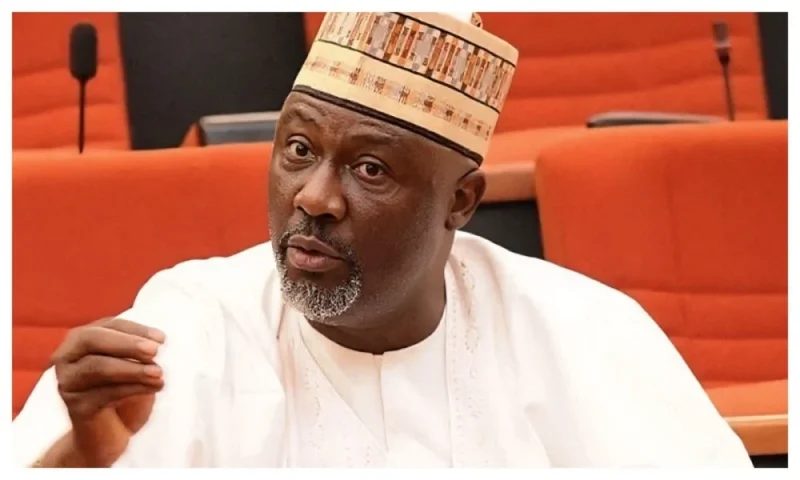
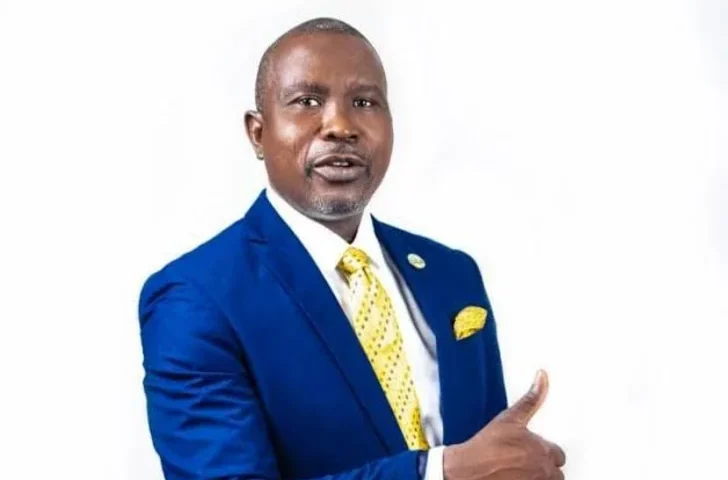
Dino Melaye opposes move to reopen Atiku’s alleged financial crimes caseFormer federal lawmaker, Senator Dino Melaye, has expressed disappointment over a petition calling on the Economic and Financial Crimes Commission, EFCC, to reopen and investigate alleged financial crimes involving the 2027 presidential candidate of the African Democratic Congress, ADC, Atiku Abubakar, during his tenure as Nigeria’s Vice President.
DAILY POST reports that a former member of the House of Representatives, Ehiozuwa Agbonayinma, recently petitioned the anti-graft agency to reopen the case within 14 days.

The petitioner vowed that if, at the expiration of the 14-day ultimatum, the commission refuses or neglects to act, he would instruct his lawyers to take legal action against the EFCC.

In the petition, Agbonayinma alleged that sometime between 2005 and 2006, the EFCC investigated and made a report on allegations of grand corruption involving Atiku, who was then the sitting Vice President.

The petition was signed on behalf of Agbonayinma by the Principal Counsel, Hannibal Egbe Uwaifo, SAN, of Sagitarian Law Firm.

Reacting, Dino Melaye, in a video clip posted on his official X handle, described the move as shameful, stating that the petition was thrown out more than 10 years ago.

He said, “It is very shameful that an unstable character like E.J. will be writing a petition to the EFCC against Atiku Abubakar to resurrect the dead.

“A petition that was thrown out over 10 years ago is what he is trying to resurrect. What is the integrity of the commercial petitioner?

“He left APC in an elaborate press conference in Edo. Within one month, he left APC, went to ADC and then NDC, and now back to APC.

“Is that a stable character? Is that a man who can pen a petition? Of course, he is myopic and disorganised.”

Wike: Musa-Ododo backs APC governors against Rainbow Coalition

Wike: Musa-Ododo backs APC governors against Rainbow CoalitionChairman of the National Policy Dialogue, Abdulrahaman Musa-Ododo, has defended the Progressive Governors Forum, PGF, for rejecting the Minister of the Federal Capital Territory, Nyesom Wike’s Rainbow Coalition.
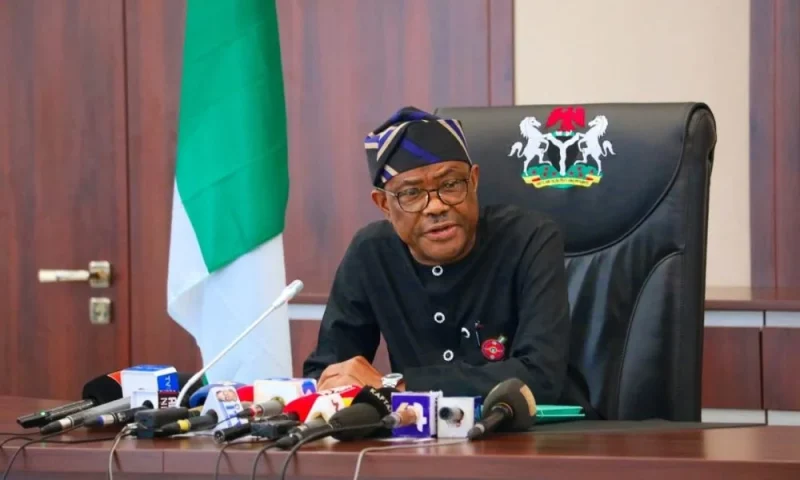
He said the Governor Hope Uzodinma-led Progressive Governors Forum did the right thing by stating its position on the Rainbow Coalition, adding that the issue was not about one person but an institution.

Wike and governors elected on the platform of the All Progressives Congress, APC, are currently at daggers drawn over the Rainbow Coalition, which has produced over 100 candidates for the senatorial election and many more for other elective positions ahead of the 2027 general elections.

The APC governors had recently distanced themselves from the coalition, a move that further laid bare the rift between Wike and Uzodinma ahead of the 2027 presidential election.

For Musa-Ododo, who spoke on Arise News, Uzodinma and his colleagues have taken the right decision and should maintain their stance on the coalition.

He said, “So, what is the essence of your coalition if it’s coming to whittle down the very foundation on which a party stood? So, that is why we have to interrogate it.

“We must not pursue power for power’s sake. You see, we pursue power for power, but without thinking that wisdom must direct power, principle must guide politics, and we must focus knowledge on national development.

“This is the best way to go about it. Because PGF is an institution. It’s an established institution of the APC. They did the right thing constitutionally.

“They met and issued a communiqué that this is their stand. So, it’s enough. That is the best way to do it. This is not one personality against another personality. No. It’s against an institution, an established, formidable one, which Mr Hope Uzodinma is leading.”

Education is not scam, it’s your only passport – Ogun Senator charges students

Education is not scam, it’s your only passport – Ogun Senator charges studentsThe Senator representing Ogun Central and Chairman, Senate Committee on ICT and Cybersecurity, Shuaib Afolabi Salisu, has charged students in the state to embrace education and courage, saying it remains the only passport to development.
Salisu frowned at the growing notion among youths that education is a scam, noting that it has produced great men and women in society, especially in Ogun State.

He said his passion for education was shaped by his parents’ counsel 46 years ago, noting that shortly after his mother’s death, he realised that education was the only way to be part of society.

The lawmaker spoke on Wednesday at the annual SAS Omoyayi Educational Support Programme held at the June 12 Cultural Centre, Kuto, Abeokuta, with the theme, “Investing in Education, Empowering Tomorrow’s Leaders.”

Reaffirming his commitment to promoting education, digital literacy and ICT skills, Salisu urged the students to see themselves as future senators, saying they now have better schools and enough examples to inspire them.

“You must focus on your education. Whenever you’re convinced that you’re doing the right thing, don’t be afraid to be different. Keep on doing it. The only passport to development, to be part of society, is education,” he said.

In his remarks, the Commissioner for Education, Science and Technology, Prof. Abayomi Arigbabu, reaffirmed the commitment of the Governor Dapo Abiodun-led administration to improving the quality of education in the state.

Arigbabu urged the senator to continue to support learners to excel, stressing that education is the best empowerment anyone can receive.

Also speaking, the Speaker of the Ogun State House of Assembly, Oludaisi Elemide, likened the gesture to planting, saying its value would only be appreciated when the children become great in the future.

He noted that empowering people with education gives them 95 percent of what they need in life and urged the students to make good use of the opportunity and reciprocate when they become successful.

Meanwhile, the State Chairman of the Nigeria Union of Teachers, NUT, Comrade Noah Sewakanu, urged the students to make judicious use of the materials distributed, adding that they must study hard and remain good ambassadors of the state to become great in future.

Stop ripening fruits with chemicals – Kano govt warns sellers

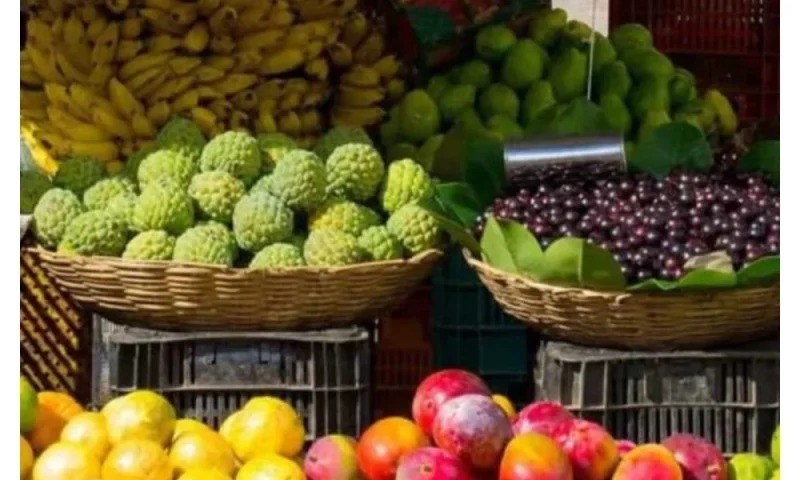
The Kano State Government has warned fruit sellers and citrus dealers against using chemicals or other substances to artificially ripen fruits or make them more attractive to consumers.

The warning was issued by the Kano State Consumer Protection Council (KCPC) during an inspection of fruit markets across the state.

The inspection was carried out to check how fruits were being stored and sold before they reached consumers.

Speaking during the exercise, the Executive Secretary of the Council, Dr Ibrahim Garba Muhammad, said the agency would continue to protect consumers and take action against practices that could endanger public health.

Ibrahim said the council had received information that some chemicals could be used to improve the appearance of fruits or speed up their ripening to attract buyers.

He warned sellers against such practices and said the council would continue to carry out regular inspections of fruit markets.

The Executive Secretary said appropriate action would be taken whenever the council discovered fruits or substances considered harmful to consumers.

“We urge fruit sellers and dealers to comply with safety regulations and avoid any practice that could put the health of consumers at risk.”

Responding, the Chairman of the Fruit Sellers and Citrus Dealers Association, Alhaji Safiyanu Abdullahi C.K., said the association was educating its members on the need to follow relevant regulations.

He said members were being encouraged to avoid practices that could harm consumers.