Bank recapitalisation: Local investors provide 72% of N4.6tn

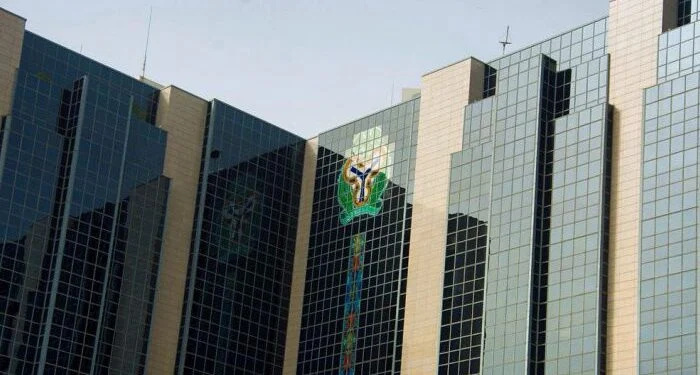
CBN-VUILDING-700×375The Central Bank of Nigeria on Wednesday said domestic investors accounted for the bulk of funds raised under its banking sector recapitalisation programme, contributing 72.55 per cent of the N4.65tn total capital secured by lenders.

The apex bank disclosed this in a statement marking the conclusion of the exercise, which began in March 2024 and saw 33 banks meet the new minimum capital requirements.

The statement was jointly signed by the Director of Banking Supervision, Olubukola Akinwunmi, and the Acting Director of Corporate Communications, Hakama Sidi-Ali.

According to the CBN, Nigerian investors provided about N3.37tn of the total capital raised, underscoring strong domestic confidence in the banking sector, while foreign investors accounted for the remaining 27.45 per cent.

So This Happened (EP 383) review: Tensions rise in South Africa as anti-foreigner protests resurface

“Over the 24-month period, Nigerian banks raised a total of N4.65tn in new capital, strengthening the resilience of the financial system and enhancing its capacity to support the economy,” the statement said.

Commenting on the outcome, the CBN Governor, Olayemi Cardoso, said, “The recapitalisation programme has strengthened the capital base of Nigerian banks, reinforcing the resilience of the financial system and ensuring it is well-positioned to support economic growth and withstand domestic and external shocks.”

The bank confirmed that 33 lenders had met the revised capital thresholds, while a few others were still undergoing regulatory and judicial processes.

“The CBN confirms that 33 banks have met the revised minimum capital requirements established under the programme,” it stated.

“A limited number of institutions remain subject to ongoing regulatory and judicial processes, which are being addressed through established supervisory and legal frameworks.

“All banks remain fully operational, ensuring continued access to banking services for customers.”

The regulator stressed that the recapitalisation exercise was completed without disrupting banking operations nationwide, noting that key prudential indicators, particularly capital adequacy ratios, had improved and remained above global Basel benchmarks.

Minimum capital adequacy ratios were pegged at 10 per cent for regional and national banks and 15 per cent for banks with international licences.

The CBN added that the exercise coincided with a gradual exit from regulatory forbearance, a move it said improved asset quality, strengthened balance sheet transparency, and enhanced overall system stability.

To sustain the gains, the apex bank said it had strengthened its risk-based supervision framework, including periodic stress tests and requirements for adequate capital buffers.

It added that supervisory and prudential guidelines would be reviewed regularly to improve governance, risk management, and resilience across the sector.

“The successful completion of the programme establishes a stronger and more resilient banking system, better positioned to support lending, mobilise savings, and withstand domestic and global shocks,” the statement added.

Meanwhile, data from the National Bureau of Statistics showed that foreign capital inflows into the banking sector rose by 93.25 per cent year-on-year to $13.53bn in 2025 from $7.00bn in 2024, reflecting strong investor interest during the recapitalisation drive.

However, the Centre for the Promotion of Private Enterprise has cautioned that despite the strengthened banking system, credit to small businesses remains weak, warning that the benefits of the reforms are yet to fully impact the real economy.


Oil prices drop amid US withdrawal from Iran

FUEL PUMPOil prices slumped on Wednesday amid reports that the United States would be “out of Iran pretty quickly” and could return for “spot hits” if needed.


President Donald Trump told Reuters on Wednesday about the planned withdrawal of troops from Iran to end a war that started on February 28.

According to Reuters, Trump and his top officials have offered a variety of timelines for ending the war. He said on Tuesday that the US could end its military campaign against Iran within two to three weeks. In the Reuters interview, he declined to provide a precise timeline.

“I can’t tell you exactly … we’re going to be out pretty quickly,” he said, adding that once a US exit is achieved, “we’ll come back to do spot hits” on Iranian targets as needed.

Following the report, Brent crude fell from about $115 on Tuesday to $101 on Wednesday evening. WTI traded at $99.32 at the same time. According to oilprice.com, oil prices eased in Wednesday’s session on hopes of a quick de-escalation of the conflict.

Brent crude for May delivery was down 1.9 per cent.

However, oil prices remained more than 40 per cent above late February levels when the war broke out.

It remains uncertain whether the region will return to its pre-crisis state any time soon, as tensions are still very high. Iran’s Islamic Revolutionary Guard Corps (IRGC) has issued a direct threat to target 18 American technology and industrial companies in the Middle East, including Microsoft, Google, Intel, Tesla, IBM, Apple, and Boeing.

The IRGC has labelled these firms as “legitimate targets,” alleging they are “spy companies” involved in designing and tracking targets for US and Israeli military operations.

Meanwhile, as the war continues to disrupt traffic through the Strait of Hormuz, Brazilian state-run oil firm Petrobras hiked jet fuel prices by about 55 per cent on Wednesday, according to data on the company’s website.

Petrobras, the largest oil producer in Brazil and responsible for most refining activity, adjusts jet fuel prices at the beginning of each month based on factors such as international oil prices and foreign exchange rates.

In Nigeria, the Dangote Refinery is shipping aviation fuel and diesel to other countries due to escalating tensions in the Middle East. The refinery assured Nigerians that its fuel export would not affect the domestic supply of petroleum products.

Court freezes N448m assets in Keystone Bank debt recovery suit

Federal High Court, Lagos

The Federal High Court in Lagos has ordered the freezing of funds and assets valued at N448,263,172.41 in a debt recovery suit instituted by Keystone Bank Limited against five defendants.

The order was made on March 26, 2026, by Justice Chukwujekwu Aneke following an ex parte application moved by Keystone Bank’s counsel Mofesomo Tayo-Oyetibo (SAN), against Relic Resources, Olufunmilayo Emmanuella Alabi, Uwadiale Donald Agenmonmen, The Magnificent Multi Services Limited, and Raedial Farms Limited.

In his ruling, Justice Aneke granted a Mareva injunction restraining the defendants, whether by themselves, their agents, privies, or assigns, from withdrawing, transferring, dissipating, or otherwise dealing with funds, shares, dividends, and other financial instruments standing to their credit in any bank or financial institution in Nigeria, up to the sum in dispute.

The court further directed all banks and financial institutions within the jurisdiction to forthwith preserve any funds belonging to the defendants upon being served with the order.

The said institutions were also ordered to depose to affidavits within seven days of service, disclosing the balances in all accounts maintained by the defendants, together with the relevant statements of account.

In addition, the court granted a preservative order restraining the defendants from disposing of, alienating, or otherwise encumbering any movable or immovable property, including any future or contingent interests, up to the value of the alleged indebtedness.

The court also granted leave for substituted service of the originating and other court processes on the second and third defendants by courier delivery to their last known addresses.

The matter was adjourned to April 9, 2026, for mention.

According to the originating processes before the court, the suit arises from a N500 million overdraft facility granted by the claimant to the first defendant on March 28, 2023, for a tenure of 365 days at an interest rate of 32 per cent per annum.

The claimant averred that the facility, initially secured by a $200,000 cash collateral and subsequently by a mortgaged property located at Itunu City, Epe, Lagos, expired on March 27, 2024, leaving an outstanding indebtedness of N448,263,172.41 as at October 31, 2024.

In the affidavit in support of the application, the claimant alleged that the facility was diverted for personal use by the third defendant and channelled through the fourth and fifth defendant companies.

It further contended that the first defendant is no longer a going concern and has failed, refused, and neglected to liquidate the outstanding indebtedness despite several demands made between May and October 2025.

The claimant also expressed apprehension that the defendants may dissipate or conceal their assets, thereby rendering nugatory any judgment that may be obtained in the suit, and consequently urged the court to grant the reliefs sought in the interest of justice.

After considering the application and submissions of learned silk, Justice Aneke granted all the reliefs sought and adjourned the matter to April 9, 2026, for further proceedings.

GTCO posts N1.23tn profit before tax in 2025

GTCOGuaranty Trust Holding Company Plc has reported a profit before tax of N1.23tn for the financial year ended December 31, 2025, driven by strong growth in its core earnings despite a decline in profit after tax.
The Group disclosed this in its audited consolidated and separate financial statements released to the Nigerian Exchange Group and the London Stock Exchange.

According to the results, interest income and fee income rose year-on-year by 23.2 per cent and 25.9 per cent, respectively, supporting the Group’s earnings performance. The outcome builds on the momentum recorded in 2024, when GTCO posted a record profit before tax of N1.27tn, boosted by N517.5bn in fair value gains that did not recur in 2025.

Profit after tax for the 2025 financial year stood at N865.75bn, compared to N1.02tn recorded in 2024. The decline was attributed to recent fiscal policy changes affecting the taxation of investment securities, particularly the introduction of withholding tax on short-term instruments.

Despite this, the Group noted that its underlying earnings remained strong, supported by sustained growth in core operating income. GTCO also reported a robust balance sheet position, with total assets rising to N17.8tn and shareholders’ funds closing at N3.4tn at the end of the period.

Key prudential ratios showed improvement, with the Capital Adequacy Ratio remaining strong at 43.8 per cent. Asset quality also improved, as IFRS 9 Stage 3 loans declined to 3.4 per cent at the bank level and 5.0 per cent at the Group level, compared to 3.5 per cent and 5.2 per cent, respectively, in December 2024.

The Group’s cost of risk improved significantly to 2.2 per cent from 4.9 per cent in the previous year, reflecting better risk management and loan performance.

Loan growth remained steady, with the Group’s net loan book increasing by 12.4 per cent from N2.79tn in December 2024 to N3.13tn in December 2025. Deposit liabilities also grew by 23.8 per cent, rising from N10.40tn to N12.87tn within the same period.

Commenting on the results, the Group Chief Executive Officer of Guaranty Trust Holding Company Plc, Segun Agbaje, said the performance highlighted the resilience of the Group’s earnings base.

“Our 2025 result underscores the resilience and depth of our earnings capacity. Following a record 2024, which included significant fair value gains, our focus has been on strengthening the sustainability of our earnings by driving growth across our core banking and ecosystem businesses,” he said.

Agbaje noted that the strength of the Group’s underlying earnings, despite a stronger naira and tighter regulatory conditions, reflected the quality of its franchise and disciplined execution of its strategy.

“The strength of our underlying earnings, despite a stronger naira and tighter regulatory parameters, reflects the quality of our franchise and the discipline with which we execute our strategy. Importantly, this strong core earnings performance underpins our capacity to sustain and grow shareholder returns,” he added.

He also highlighted the Group’s dividend payout, describing it as a reflection of both current profitability and confidence in long-term earnings prospects. “Our record dividend payout this year is not only a reflection of our current profitability but also of our confidence in the Group’s long-term earnings potential,” Agbaje said.

Looking ahead, he stated that the Group would continue to focus on expanding its ecosystem, driving innovation, and delivering consistent returns. “Looking ahead, we remain focused on scaling our ecosystem, driving innovation across our financial services platform, and delivering consistent, high-quality earnings that support superior value creation for our shareholders,” he said.

GTCO maintained strong performance across key financial metrics, recording a post-tax return on equity of 28.3 per cent and a post-tax return on assets of 5.3 per cent. Its cost-to-income ratio stood at 27.9 per cent, reflecting operational efficiency.

The Group, which operates across Africa and the United Kingdom, provides a range of banking and non-banking services, including payments, funds management, and pension administration, and continues to position itself for long-term growth across its markets.

NNPC boosts Dangote refinery crude supply to seven cargoes – Sources

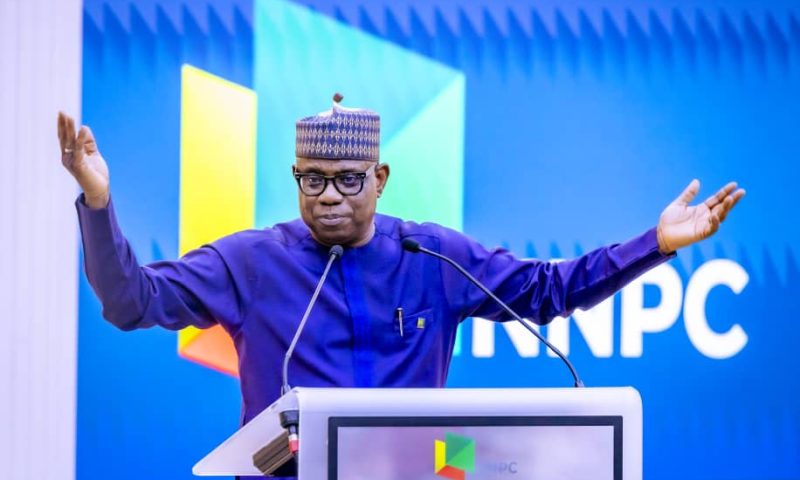
GCEO NNPC Ltd, Mr Bashir Bayo Ojulari addresses the staff of the company during his inaugural town hall meeting held at the NNPC Towers, on Thursday. CREDIT: NNPCLThe Nigerian National Petroleum Company Limited has increased crude oil supply to the Dangote Petroleum Refinery and Petrochemicals, allocating seven cargoes for May loading in a move aimed at boosting domestic fuel production.
Two trader sources told Reuters on Tuesday that the latest allocation marks an increase from the five cargoes the refinery had been receiving in previous months. However, this means the refinery will continue to receive five cargoes in April.

The development comes amid mounting pressure on fuel supply and rising petrol prices across Nigeria, as the refinery struggles to secure sufficient crude locally.

The report read, “The Nigerian National Petroleum Company is allocating seven crude cargoes for May loading to Nigeria’s Dangote refinery, up from the five it received in previous months, two trade sources told Reuters.

“Fuel prices in Nigeria have reached record highs, and Dangote has previously said the company could source only about five crude cargoes a month locally, far short of the 13–15 it requires, forcing it to import the rest at prices dictated by the impact of war in the Middle East.”

Officials of the national oil company and the refinery did not respond to requests for comments as of the time of filing this report.

The development aligns with earlier reports by The PUNCH that the Federal Government, through the NNPC, was working to increase crude supply to the Dangote refinery under ongoing arrangements aimed at strengthening local refining capacity.

Multiple industry sources and officials from both NNPC and the Dangote refinery told our correspondent exclusively in early March that the national oil company is leveraging its global crude trading network to source third-party supply for the Dangote refinery at competitive international market rates.

“Leveraging our global crude trading network, we are sourcing third-party crude for the refinery at prices that are competitive with prevailing international market rates,” a senior official at NNPC, who spoke in confidence due to a lack of authorisation to speak on the matter, said.

The official further explained, “As the national oil company entrusted with safeguarding Nigeria’s energy security, NNPC Limited remains fully committed to supporting domestic refining, including the Dangote Petroleum Refinery. Within the framework of our existing agreements, we continue to facilitate crude supply to DRP in the face of temporary availability constraints.”

Despite the increase, the 650,000-barrels-per-day refinery still faces a significant shortfall in crude supply. The facility requires between 13 and 15 cargoes monthly to operate at optimal capacity, but has continued to receive far less from domestic sources.

This has forced the refinery to rely on imported crude, exposing it to volatile global prices driven by geopolitical tensions, particularly conflicts in the Middle East. The refinery had earlier warned that limited domestic supply was constraining its operations and increasing costs.

Nigeria’s fuel prices have climbed to record levels in recent months, driven by supply constraints and high import costs. Although the Dangote refinery has ramped up petrol supply to the domestic market, it is currently meeting just over two-thirds of the country’s estimated daily demand of 60 million litres.

In response to rising costs, the refinery recently increased petrol depot prices by about 13 per cent, further adding to price pressures in the downstream sector.

FCMB Capital Markets tops FMDQ Fixed Income league

FCMBFCMB Capital Markets Limited, the investment banking division of FCMB Group Plc, has officially been crowned the leader of the FMDQ Securities Exchange Limited’s Fixed Income Primary Markets Sponsors’ League Table for the full year 2025.


The firm cemented its dominance by raising a staggering N1.53tn in corporate debt capital, outperforming 47 other active institutions throughout the fiscal year ending 31 December 2025.

According to the official FMDQ report, the firm’s performance was driven by a strong showing in both the bond and commercial paper markets. FCMB Capital Markets secured the top spot in bond listings, accounting for 11.66 per cent of the total market volume. It also commanded the highest share of commercial paper quotations, capturing 7.68 per cent of the segment.

Reflecting on this market-leading position, the Executive Director, Coverage and Investment Banking at FCMB Group Plc, Femi Badeji, stated, “Our ranking reflects the confidence issuers place in our ability to structure and execute capital market transactions. Mobilising more than N1tn in a single year demonstrates the depth of demand for capital market funding and the role we play in connecting issuers with long-term investors.”

The achievement highlights the firm’s pivotal role in Nigeria’s financial ecosystem, particularly in supporting sectors ranging from oil and gas and telecommunications to power and infrastructure. This recent success follows the firm’s recognition as “Corporate Bond House of the Year” by the Association of Issuing Houses of Nigeria earlier in 2025.

The Chief Executive Officer of FCMB Capital Markets Limited, Ikechukwu Omeruah, emphasised the firm’s ongoing dedication to its clientele, saying, “Achieving this position reflects the work of our team and the trust of our clients. We remain committed to structuring financing solutions that enable businesses to raise capital efficiently while contributing to the continued development of Nigeria’s fixed-income market.”

As the firm continues to provide expert advisory on debt, equity, and mergers and acquisitions, its 2025 performance stands as a benchmark for investment banking excellence within the Nigerian capital market.

ASUU opposes FG-UK Coventry University campus agreement

Christopher PiwunaThe Academic Staff Union of Universities has kicked against agreements reached between the federal government and the United Kingdom on education, including plans to establish Coventry University in Nigeria.
ASUU President, Christopher Piwuna, made the union’s position known at a public lecture organised by the Academic Staff Union of Universities, Sa’adu Zungur University branch.

Piwuna described the proposed establishment of Coventry University campus in Nigeria as unacceptable, alleging that it was part of a broader agenda that could undermine Nigeria’s university system.

He expressed concern that while Nigerian students face visa restrictions to study in the UK, British institutions are seeking to operate within Nigeria.

My Brother Was Wrongly Accused of Selling Hemp at POS Stand – Sister

According to him, “They have denied Nigerians visas to study in the UK, yet they are coming here to establish universities and take our money. This is another form of colonialism, and ASUU will strongly oppose it.”

The ASUU president further alleged that some foreign universities were facing financial challenges and declining international student enrolment, prompting their expansion into countries like Nigeria.

He insisted that Nigerian universities must be strengthened internally rather than allowing foreign institutions to dominate the sector.

Piwuna also emphasised the need to preserve the committee system in Nigerian universities, warning against excessive concentration of powers in the office of vice-chancellors.

On welfare, the ASUU leader issued a four-day ultimatum to the federal government to implement the agreed new salary structure for university lecturers.

He warned that failure to meet the deadline would attract a response from the union.

“We can not continue to wait indefinitely for the implementation of the new salary structure. If at the end of this month nothing is done, they will hear from us,” he said.

In her remarks, the Vice-Chancellor of Sa’adu Zungur University, Fatima Tahir, reaffirmed the institution’s commitment to staff welfare and productivity.

She noted that the university had taken steps to implement agreements reached with the federal government and ensure that the ASUU branch was not financially indebted.

Tahir urged academic staff to reciprocate management’s efforts by remaining committed to their duties and contributing to the growth of the institution.

Dangote promises adequate domestic fuel supply

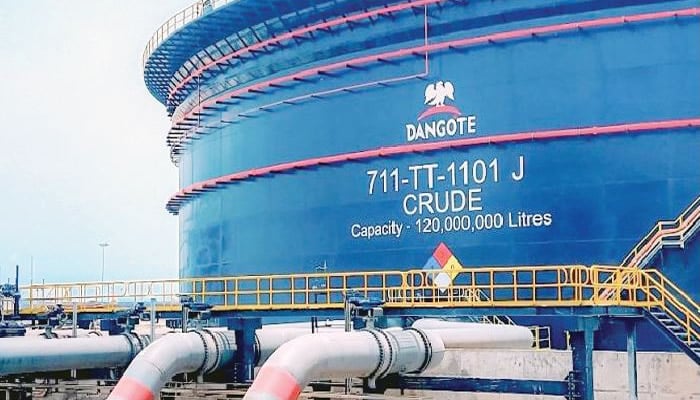
DANGOTE REFINERYThe Dangote Petroleum Refinery has said it will make enough fuel available to Nigerians, as it urged the government to provide adequate crude oil to the Lekki-based plant.

Otherwise, the company said it would have to export its products if it keeps importing crude oil for its production.

The President of the Dangote Group, Alhaji Aliko Dangote, told Al Jazeera that the facility was almost running out of aviation fuel and diesel but had petrol in excess.

As the US-Iran war disrupted the global supply of petroleum products, African countries are relying more on the 650,000-capacity refinery in Lekki, Lagos State.

“The demand is so high, I can tell you for nothing. Today, we have almost sold out our jet fuel. We have almost sold out our gas oil. What we have is just the gasoline (petrol), which is the PMS; we call it Premium Motor Spirit. That’s the only one that we have in excess,” Aliko Dangote said.

The revelation by Dangote was seen as a source of concern for those in the aviation sector and manufacturers who rely on diesel for power generation and transportation.

However, speaking with our correspondent, a senior management official of the Dangote Group, who did not want his name in print because of the sensitivity of the matter, said the refinery would not starve Nigeria even as global fuel demand surged.

The official stated that this would depend on the availability of domestic crude for the refinery. “No! We will not starve Nigeria, as long as they keep giving us crude,” the official said.

Following the company’s complaint that it was getting less than five million barrels of crude instead of the 19.7 million barrels needed monthly by the refinery, the official confirmed to our correspondent that talks are currently ongoing with the Nigerian National Petroleum Company Limited and other oil producers.

He warned that the refinery would export its products if it imports crude oil for refining. “Yes, we are talking with them. If we have to import the crude, we will have to export the products,” he stressed.

The Dangote refinery pumps out 75 million litres of petrol, 25 million litres of diesel, and 20 million litres of aviation fuel daily. The refinery recently sold 12 cargoes, totalling 456,000 tonnes of fuel, to Côte d’Ivoire, Cameroon, Tanzania, Ghana, and Togo.

According to Al Jazeera, African countries are not the only ones lobbying to buy fuel from Dangote. Europe, Asia, and South America are also bidding for the cargoes. But the refinery is currently battling crude shortages, forcing it to seek alternatives outside the country.

During a live television programme on Arise News last week, the Chief Executive Officer of the Dangote refinery, David Bird, said the facility was buying Nigerian crude in foreign markets at a premium after it had earlier requested the product locally before being shipped abroad.

According to Bird, the company receives far below its agreed crude oil supply under the Federal Government’s naira-for-crude deal. Bird stated that the refinery currently gets only five cargoes of crude monthly instead of the expected 13 to 15 cargoes.

He said the shortfall has been affecting the refinery’s ability to optimise local crude as it keeps importing feedstock from other countries. “What we see under that agreement, we should be getting about 13 to 15 cargoes a month. And that’s what we could process to meet the domestic fuel requirements of Nigeria. Currently, we’re only getting five. So, that’s an underperformance against that pre-agreed volume contract,” he said.

Diesel prices surge

Meanwhile, Nigeria has recorded one of the sharpest increases in diesel prices globally following tensions linked to Iran, ranking second among countries with the highest surge.

According to new data by InvestorSight, diesel prices in Nigeria rose by 78.3 per cent since the US-Iran war started, placing the country just behind the Philippines, which recorded the highest increase of 81.6 per cent.

The data, which compared price movements across major economies, indicated that several Asian countries experienced the steepest increases, with Malaysia and Vietnam also posting significant rises of 57.9 per cent and 45.9 per cent, respectively.

Nigeria’s surge was higher than increases recorded in advanced economies such as the United States at 41.2 per cent, Germany at 30.9 per cent, and the United Kingdom at 18.0 per cent.

Oil-producing nations in the Middle East recorded comparatively modest changes, with Saudi Arabia and India showing no increase, while the United Arab Emirates and Qatar posted 7.9 per cent increases each.

Zenith Bank, Visa unveil premium card

Adaora UmeojiZenith Bank Plc has officially launched the Visa Signature Card in collaboration with global payments leader Visa, in a move aimed at redefining the premium banking landscape for Nigeria’s affluent and globally mobile population.
The new product, unveiled during a press conference in Lagos on Monday, is designed to offer a seamless bridge between local and international financial services. It addresses the rising cross-border transaction needs of high-net-worth individuals by combining Zenith Bank’s market expertise with Visa’s expansive global infrastructure.

Speaking on the initiative, the Group Managing Director of Zenith Bank Plc, Dame Dr Adaora Umeoji, OON, said, “This partnership with Visa reflects Zenith Bank’s commitment to delivering premium, globally relevant solutions that meet the lifestyle and financial needs of our affluent customers.

“The Zenith Visa Signature card will ensure that our customers enjoy greater convenience, flexibility, and value wherever they are in the world.”

The card is packed with high-end features tailored for frequent travellers and international consumers. Benefits include access to global airport lounge programmes, travel insurance, concierge support, and exclusive privileges through the Visa Luxury Hotel Collection.

Beyond travel, the card incorporates robust security features, such as online shopping fraud coverage and extended warranty protection, designed to provide peace of mind for both domestic and international transactions.

Also speaking at the event, the Vice President and Cluster Head of Visa West Africa, Andrew Uaboi, highlighted that the product launch is a direct response to the evolving habits of modern consumers.

“Consumers are increasingly operating across borders, whether for business, travel, or everyday transactions,” Uaboi noted. “Our role is to ensure that payments remain seamless and secure, regardless of location, by providing the infrastructure that connects them to global commerce.”

He added, “As digital adoption continues to grow, there is a clear shift towards solutions that combine convenience with global acceptance. This collaboration supports that transition by enabling broader access through trusted payment technology.”

The launch of the Signature Card marks a significant development in Nigeria’s financial sector, where competition for the premium customer segment is intensifying. By moving beyond traditional banking products to offer lifestyle-integrated payment solutions, Zenith Bank aims to strengthen its position as the primary financial partner for the globally connected elite.

Recapitalisation: ACAMB hails banks’ resilience ahead of deadline

Governor of the Central Bank of Nigeria, Olayemi CardosoThe Association of Corporate Affairs Managers of Banks has formally commended the Nigerian banking sector for its robust performance in meeting the Central Bank of Nigeria’s stringent new capital requirements ahead of the 31 March 2026 deadline.

With over 96 per cent compliance recorded across the industry, the umbrella body for corporate communications professionals in the sector hailed the milestone as a testament to the strength and adaptability of Nigerian financial institutions.

The recapitalisation exercise, which began in March 2024, set aggressive new benchmarks for banks, ranging from N50bn for regional licences to N500bn for banks with international affiliations.

According to the CBN, 32 banks have successfully met these requirements, positioning the sector to play a critical role in the country’s economic roadmap.

In a statement on Monday, the president of ACAMB, Jide Sipe, indicated, “The Nigerian banking industry has once again demonstrated its innate strength and resilience. Achieving over 96 per cent compliance ahead of the recapitalisation deadline is no small feat; it is an indication of the capacity of our financial institutions to adapt and overcome.”

The recapitalisation programme is viewed as a vital pillar for Nigeria’s transition toward a $1tn economy. By strengthening the capital base, the CBN aims to enhance the industry’s capacity to mobilise long-term capital and support high-impact investments.


“The banking sector recapitalisation programme has recorded commendable progress, with 32 banks having already met the revised capital requirements.

This achievement has significantly strengthened the resilience and capacity of the Nigerian banking system, positioning it to effectively mobilise long-term capital, support productive investment, and play its critical role in enabling the transition towards a $1tn economy,” stated the Governor of the Central Bank of Nigeria, Olayemi Cardoso.

The industry’s success comes on the heels of major international recognition for the apex bank. ACAMB extended special praise to Governor Cardoso for his disciplined regulatory oversight, noting that the CBN was recently named ‘Central Bank of the Year 2026’ by the London-based Central Banking Awards Committee.

“We commend the CBN for its visionary leadership, particularly under Governor Cardoso, whose bold reforms are reshaping the financial landscape,” Sipe added. “As we celebrate this progress and the well-deserved ‘Central Bank of the Year’ award, we respectfully urge the regulator to continue its support for all institutions, ensuring that no one is left behind and that the stability and interconnectedness of our financial system remain unbroken.”

As the March 31 deadline concludes, the focus now shifts toward leveraging this enhanced capital base to drive inclusive growth, transparency, and sustainable development across Nigeria’s financial ecosystem.