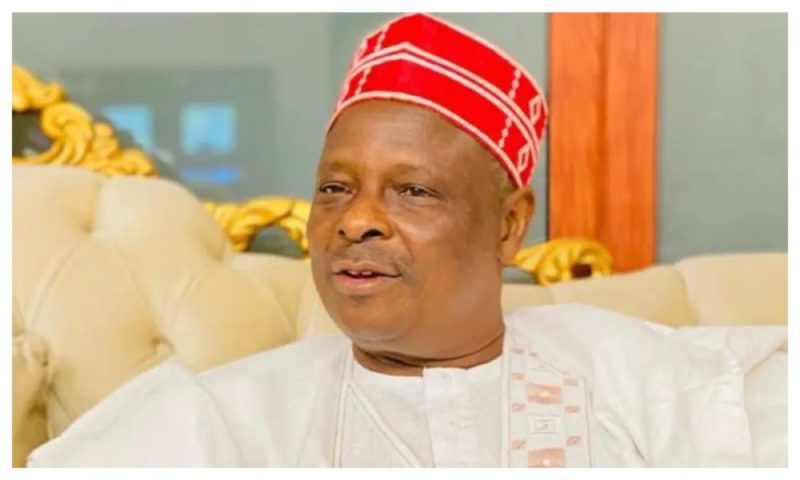
Sokoto unveil security plan to end banditry

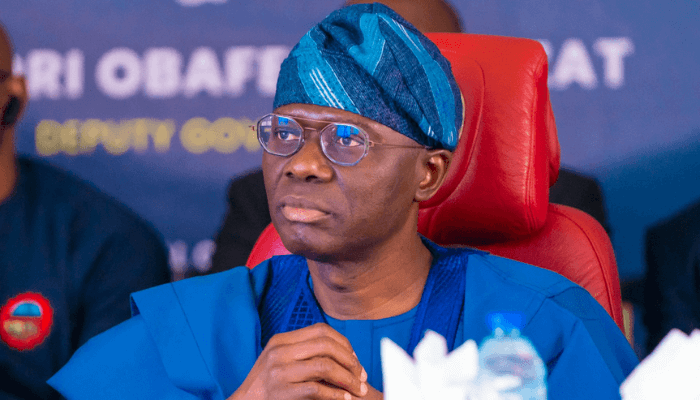
Sokoto State Governor, Ahmad Aliyu, has announced a renewed security strategy aimed at decisively ending banditry across the state.

He reaffirmed his administration’s commitment to restoring peace and ensuring that residents can go about their daily lives without fear.

The governor made the disclosure on Wednesday while declaring open the 17th regular meeting of the Sokoto State Executive Council, which also marked the council’s final session for 2025.

He used the occasion to outline new measures being introduced to strengthen security operations in the state.

Banditry remains one of Sokoto’s most pressing challenges, particularly in rural areas, where repeated attacks have led to loss of lives, displacement of communities, cattle rustling, kidnappings, and disruption of farming and other economic activities.

Aliyu explained that the fresh measures are designed to complement ongoing security efforts, with a strong emphasis on enhanced intelligence gathering and improved coordination among security agencies.

He noted that existing strategies were already yielding positive results.

According to the governor, his administration has consistently supported security agencies since assuming office by providing logistics, operational backing, and other critical resources to formations operating in the 13 local government areas most affected by banditry.

“Intelligence is key to checkmating criminal elements, and we are confident that these new initiatives will further strengthen our ability to tackle banditry head-on,” he said.

He stressed that security is a shared responsibility and called on residents to remain vigilant and cooperate with security agencies by providing timely and credible information to help prevent attacks and dismantle criminal networks.

“As a government, we are ready to do all it takes to ensure that banditry becomes history in Sokoto State, but we cannot do it alone,” he added.

Aliyu also commended members of the State Executive Council for their unity and dedication, attributing the progress recorded so far to teamwork and collective responsibility.

He thanked the people of Sokoto State for their patience, prayers, and continued support, assuring them of his administration’s resolve to deliver more dividends of democracy.

House begins tax law probe, Ndume pushes for suspension

Ali NdumeThe House of Representatives Committee investigating alleged discrepancies in Nigeria’s gazetted tax laws has pledged to submit its report as soon as its work is concluded.

The Chairman of the Committee, Muktar Betara, gave the assurance on Wednesday following the inaugural meeting of the panel, which was held in Abuja on Tuesday.

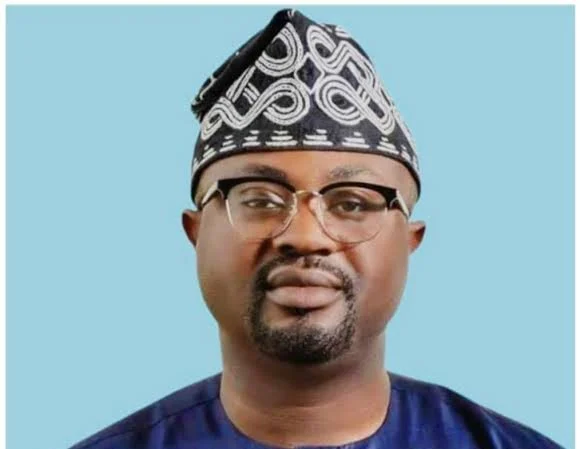
Betara chairs the seven-member committee constituted by the House after the adoption of a matter of privilege raised two weeks ago by a lawmaker from Sokoto State, Abdussamad Dasuki.

Dasuki had drawn the attention of the Green Chamber to what he described as troubling inconsistencies between tax laws passed by the National Assembly and versions subsequently gazetted and circulated, including copies within government offices

He alleged that some provisions in the gazetted laws differed materially from what lawmakers approved, arguing that any such alterations, if established, would amount to a breach of legislative procedure and the rule of law.

In a statement issued on Wednesday by the committee’s media unit, Betara said members were united in their resolve to complete the assignment without delay.

“The committee has resolved to conclude its assignment and submit its report to the House within the shortest possible time. At the meeting, members resolved to conclude the investigation and report back to the House within the shortest time for legislative integrity, due process, and public confidence,” the statement quoted Betara as saying.

Reaffirming the panel’s commitment to openness and diligence, the chairman assured that its findings and recommendations would be laid before the House immediately after the investigation is concluded.

The probe comes against the backdrop of heightened public and institutional scrutiny of Nigeria’s tax laws, particularly those amended or introduced through recent Finance Acts.

Over the years, successive Finance Acts have been used to amend multiple tax statutes, including the Companies Income Tax Act, Value Added Tax Act, Customs and Excise Tariff laws, and other fiscal legislation, as part of efforts to reform revenue administration and align tax policy with economic realities.

Lawmakers say the alleged alterations raise concerns about the integrity of the legislative process, the authenticity of laws being implemented by executive agencies, and the potential legal and financial consequences for taxpayers who rely on officially gazetted statutes.

The House has stressed that only laws duly passed by the National Assembly and assented to by the President can have legal force, and that any post-passage changes outside this process would undermine constitutional governance.

The committee’s findings are expected to clarify whether discrepancies exist, how they occurred, and who may be responsible, as well as recommend measures to safeguard the sanctity of future legislative enactments.

Meanwhile, former Senate Leader, Ali Ndume, has urged President Bola Tinubu to suspend the implementation of the disputed Tax Reform Acts, scheduled to take effect in January, amid growing controversy over their passage.

Ndume made the call in a statement on Wednesday in Abuja, following claims and counterclaims over alleged alterations to the tax laws after their passage by the National Assembly.

The appeal comes amid protests by opposition politicians and civil society organisations, including the Nigerian Bar Association, which have demanded that the Federal Government halt the implementation of the laws.

Reacting, Ndume, who represents Borno South Senatorial District, urged President Tinubu to set up an ad hoc committee to verify the authenticity of the laws and investigate the alleged alterations.

The former Senate Chief Whip warned that implementing the laws without resolving the allegations would create legitimacy challenges and undermine public trust.

He said, “With the controversy surrounding it, the President should constitute a team to verify the veracity of the claim and act accordingly. As a responsive leader that he has always been, he should look into it to find out whether the claim of alterations was genuine so that he will do the needful to bring the controversy to rest.

“If not, the controversy will continue. That is to say, the tax law will not be implemented, because you can’t build on nothing. So, Mr. President should suspend the implementation until the issues are resolved because so many civil society organisations, the Arewa Community, the Nigerian Bar Association, are saying that he should withdraw the Tax Law and investigate the allegation of forgery. Therefore, Mr. President should get to the root of the allegation of forgery. The small committee that will be set up should look into it while the House of Representatives does its own.”

On Tuesday, the NBA President, Mazi Afam Osigwe (SAN), warned that the controversies surrounding the tax laws threaten the integrity and credibility of Nigeria’s legislative process. Osigwe said the issues strike at the core of constitutional governance and called for an open and transparent investigation to restore public confidence.

The controversy was further fuelled last week when Dasuki alleged that the version of the tax laws gazetted by the Federal Government differed from the final copy passed by the National Assembly and forwarded to the President for assent.

Christmas: CAN urges security consciousness, Kukah decries killings

The Christian Association of Nigeria has called on churches across the country to mark the Christmas season with hope, wisdom, and heightened security consciousness amid Nigeria’s lingering economic and security challenges.

This was as the  Catholic Bishop of Sokoto Diocese, Most Rev. Matthew Hassan Kukah, decries killings and violence against children in the country.

In a Christmas message issued on Wednesday and signed by its President, Archbishop Daniel Okoh, CAN urged churches, particularly those in conflict-prone areas, to take practical steps to ensure the safety of worshippers.

“As we mark the celebration of the birth of our Lord and Saviour, Jesus Christ, I warmly extend Christmas greetings to Christians across Nigeria and to all people of goodwill,” Okoh said.

He encouraged Christian leaders and congregations to exercise vigilance and a deep sense of responsibility during worship, stressing that “the protection of human life is sacred and must remain paramount.”

Churches in areas with inadequate security presence were advised to consider holding services in safer locations or organising smaller gatherings that can be better protected.

“This counsel is offered in love and care, not in fear, as we are called to be wise stewards of the lives God has entrusted to us,” Okoh said.

In December 2023, gunmen killed over 140 Plateau State villagers in a Christmas Even attack.

Okoh, on Wednesday, appealed to security agencies to step up their presence around churches and other places of worship during the Christmas period, encouraging closer collaboration between religious bodies and law enforcement authorities to ensure peaceful celebrations.

He noted that the birth of Jesus Christ remains a reminder of God’s abiding love and the triumph of light over darkness, urging Christians to live out core values such as love, peace, patience, sacrifice, and compassion.

“Even in the face of economic difficulties and security concerns confronting our nation, the birth of Christ reassures us that God has not abandoned His people and that hope remains alive,” Okoh said.

The CAN president also called on Nigerians to remember those grieving, displaced, or affected by violence and hardship across the country, urging citizens to renew their commitment to peace, justice, and unity.

“United by our shared humanity and common destiny, we must renew our commitment to peaceful coexistence, mutual respect, and national cohesion, mindful that Nigeria is our only home,” he added.

Okoh concluded by praying for renewed faith, healing, and lasting peace for Nigeria in the coming year, wishing Christians and all Nigerians a Merry Christmas and a blessed New Year.

In his own  Christmas message, Catholic Bishop of Sokoto Diocese,  Kukah, delivered a sobering verdict on Nigeria’s state of affairs, describing the country as a “theatre of death” where violence, poverty, and moral collapse overshadow the joy of the season.

In his 2025 Christmas message titled “Joy and Hope in a Time of Tribulation,” Kukah said Nigeria’s persistent insecurity has turned the festive season into a period of anxiety, grief, and national reflection.

“Nigeria is stuck in a valley of violence and sorrow,” the bishop said, warning that citizens are being pushed to the brink by killings, kidnappings, and widespread fear.

Kukah accused the political elite of deepening the crisis through greed and selfish governance, insisting that scarcity is artificial.

“We may not have enough to feed the greed of our elite, but there is enough to feed our people,” he said, calling on leaders to urgently address hunger, inequality, and insecurity.

The bishop placed children at the centre of his message, lamenting the “ongoing crucifixion of innocence” in Nigeria, where schoolchildren have become easy targets for criminals. He recalled the abductions of the Chibok and Dapchi girls, as well as more recent cases in Maga and Papiri, noting that nearly 2,000 Nigerian children have suffered kidnapping, abuse, and exploitation.

“Our children are paying the highest price for our failures as a nation,” he said, warning that insecurity, early marriage, slavery, and sexual abuse are destroying Nigeria’s future.

Kukah stressed that the perpetrators of violence are products of systemic neglect, poverty, and miseducation, noting that northern Nigeria has become an epicentre of bloodshed due to high levels of illiteracy, disease, and unemployment. “We must either renovate, educate, or perish,” he said.

Rejecting calls for violent retaliation, Kukah urged Nigerians, especially Christians, to maintain moral restraint. “Violence cannot defeat violence,” he said, insisting that faith, prayer, and ethical leadership remain the most powerful tools against evil. He reminded believers that Christianity was born during persecution and has survived empires without resorting to arms.

Despite the grim assessment, Kukah expressed cautious hope, noting that Nigerians continue to mourn and endure together across religious and ethnic lines. He welcomed the safe return of abducted children, praising government and community efforts, while warning that the country cannot afford “one ordeal too many.”

He concluded by urging Nigerians not to reduce Christmas to mere festivity but to embrace it as a call to rebuild the nation through peace, justice, and reconciliation.

“Christmas is a vocation. Our duty is to make Christ visible through our lives. As Nigeria marks Christmas under the shadow of insecurity, this message stands as both an indictment of failed leadership and a call for national rebirth,” Kukah said.

Solar systems save NIPCO N44.4m annually, says JMG

JMG LimitedJMG Limited, a hybrid and integrated electromechanical energy provider, says it has successfully installed solar power systems at three major NIPCO Plc fuelling stations, delivering dependable clean energy, eliminating diesel reliance, and unlocking over N44m in annual energy cost savings.

According to a statement by JMG, the installations, located in Abuja and Lagos Lekki, feature advanced hybrid systems that combine solar arrays, lithium battery storage, and smart inverters to provide 24/7 power for fuel pumps, lighting, and office operations, saying each site has reported zero use of electricity or generator power since the systems were installed.

“We are proud to help NIPCO lead the energy transition at the retail level. The three NIPCO stations now run on an advanced hybrid solar system that combines high‑efficiency PV panels, intelligent lithium‑battery storage and smart inverters. Since commissioning, the sites have operated with zero grid or generator power, providing silent, clean, uninterrupted electricity for pumps, lighting and administration,” said the Head of JMG’s Hybrid Solar Division, Abbass Hussein.

Hussein added that this development demonstrates that fuel‑retail and other high‑energy sectors can shift to clean, cost-effective and resilient energy without sacrificing performance.

“The scalable architecture can be sized to each location and has already delivered significant savings: about 88,535 kWh/year, N44.4m in annual cost savings and a 43.8‑tonne reduction in CO₂ emissions. Collaborating with NIPCO on this initiative demonstrates a practical pathway for other firms to reduce both emissions and energy expenses,” he said.

Completed between May and June 2025, the project, it was said, incorporates high-efficiency solar panels, premium hybrid inverters, and scalable lithium battery banks designed to provide stable and uninterrupted power for fuel dispensing, LPG systems, lighting, and office operations.

According to Mr Idoko Jacob, who is NIPCO’s Station Manager at Gwagwalada, “The stations have not relied on electricity or generator power on bright-weather days since commissioning. The solar systems fully meet our daily energy needs during such periods. On days with poor weather, we supplement the solar system with generator power to ensure uninterrupted operations.”

The solar systems across the three stations in Gwagwalada, Mpape and Lekki have delivered substantial benefits, generating a total of 88,535 kWh per year, saving N44.4m annually, avoiding 43.8 tonnes of CO₂ emissions, and covering 80–100 per cent of daily energy demand with hybrid solar systems backed by lithium batteries.

“These systems allow NIPCO stations to operate independently of the grid for most of the day, with batteries absorbing excess solar production and smart inverters managing seamless transitions. Generator use has been reduced to near zero, only occasionally supporting loads during extended cloudy weather,” the report added.

Customs moves to end physical cargo checks at Apapa port

BrandEconomy » BRAND REPORT » Apapa Port Goes Digital as Customs Nears End  of Physical Cargo Checks

The Nigeria Customs Service (NCS) is edging closer to ending physical cargo examination at Apapa Port as preparations intensify for the full deployment of the FS6000 cargo scanner at APM Terminals, Lagos.

The move is move expected to significantly reshape cargo clearance at the country’s busiest maritime gateway.

The scanner, with a throughput capacity of about 200 containers per hour, has completed final test runs and simulation exercises, signalling readiness for operational rollout and a transition to non-intrusive, technology-driven inspections.

The development followed a working visit to the scanning site by the Deputy Comptroller-General in charge of Information and Communication Technology (ICT), Oluyomi Adebakin, to assess pre-operational readiness and alignment with Customs’ trade modernisation agenda.

The Command’s Public Relations Officer, Chief Superintendent of Customs Isah Sulaiman, in a statement, said the initiative was part of a broader strategy to migrate to a paperless clearance environment in line with international best practices and improved trade facilitation.

According to Sulaiman, the FS6000 scanner has successfully undergone all required simulations, marking a major milestone in Customs’ push to reduce manual intervention in cargo processing at Apapa Port.

Speaking during the inspection, Adebakin said the visit was aimed at ensuring a smooth transition to scanner-based examination. She described the deployment as “a critical step in modernising customs operations and improving efficiency at the nation’s busiest port.”

She disclosed that operational preparedness had reached about 80 per cent, noting that outstanding components required for full take-off were being addressed. Adebakin stressed that scanner deployment was a collective responsibility involving the Nigeria Customs Service, APM Terminals, and the Trade Modernisation Project.

Assuring port users of tangible business benefits, she said the scanner would deliver faster cargo clearance, reduced demurrage, improved compliance and enhanced ease of doing business across the port ecosystem.

“The FS6000 scanner has a throughput capacity of about 200 containers per hour,” Adebakin said, highlighting its suitability for high-volume port operations. She added that non-intrusive inspection would eliminate delays and cargo damage associated with physical examinations while also strengthening revenue protection.

On his part, the Area Controller, Comptroller Emmanuel Oshoba, reaffirmed the command’s commitment to ICT-driven reforms and sustained stakeholder collaboration. He said the deployment underscored Customs’ resolve to modernise port operations, strengthen trade facilitation and improve transparency at Apapa Port.

For maritime operators, the imminent deployment signals a structural shift in cargo handling—one expected to decongest terminals, cut transaction costs and reposition Apapa Port for more competitive regional trade flows.

Nasarawa APC adopts consensus for congresses

The All Progressives Congress (APC) in Nasarawa State has agreed to use consensus to choose party officials at ward, local government, state and national levels ahead of its congresses.

The decision was taken at an expanded State Executive Council meeting held on Tuesday at the Government House in Lafia.

At the meeting, the party’s legal adviser moved a motion, which Governor Abdullahi Sule supported, allowing non-executive members to take part in the discussions.

This widened participation in the decision-making process.

State APC Chairman, Dr Aliyu Bello, then invited Hon. Hassan Abubakar Nalaraba, who represents Awe/Doma/Keana Federal Constituency and is also a member of the state executive, to formally move the motion.

“I rise to move that this expanded State Executive Council resolves to adopt consensus as the preferred mode for selecting party officials at ward, local government, state, and national congresses, provided it is transparently and voluntarily achieved by all stakeholders. I so move,” Hon. Nalaraba said.

The Deputy National Secretary of the APC, Prof. Abdulkarim Abubakar Kana (SAN), seconded the motion.

Former Nasarawa State governor and ex-APC National Chairman, Senator Abdullahi Adamu, conducted a voice vote, and the decision was approved unanimously.

In his opening remarks, Dr Bello said the meeting was meant to brief party leaders and stakeholders on recent changes within the APC, especially under the new national leadership.

He noted that the party was enjoying wider acceptance and continued to receive defectors.

Governor Sule welcomed the decision, describing the adoption of consensus as a step that would promote peace within the party.

“You’ve reduced potential challenges. Our congresses will now proceed by consensus, decided by you and brought back to us,” the governor said.

He also restated his support for zoning, saying it played a key role in his emergence as governor and has helped maintain peace in the state.

Governor Sule further highlighted some achievements of his administration, describing 2025 as the most resource-rich year for Nasarawa State so far.

Those present at the meeting included Senator Abdullahi Adamu, former Speaker of the Nasarawa State House of Assembly, Rt. Hon. Ibrahim Balarabe Abdullahi, members of the National and State Assemblies, serving and former government officials, and other key party stakeholders.

INEC failed to register us after meeting requirements – ADA

The All Democratic Alliance, ADA, has accused the Independent National Electoral Commission, INEC, of failing to register it despite meeting registration requirements.

“The All Democratic Alliance has provided INEC with all the documents they require for registration.

“INEC did not register any of the associations, not one. And incidentally, virtually every Thursday when INEC meets and comes up with a decision, they usually give out a press release, updating Nigerians, but incidentally, in this situation, it was mute, it never made the press release.

“It never posted anything on his website, because it knows that public opinion will be highly against it. Why? Because, out of the 172 that applied with letter of intent, they screened down to 14, and out of the 14, they sold the administrative fee of 2 million naira we paid, and then we went into its dedicated portal for the purpose of applying and we applied.

“Out of the 14, INEC pre-qualified eight and wrote us and said that we are ready for the next stage, which is the last stage for physical verification.

“INEC conducted our office verification, and our office is as well-equipped as any other political party’s office in terms of infrastructure. We ought to have at least 24 states and the FCT by law, but we have 36 states and the FCT represented.

“Now in acknowledging our application, there is a clause where INEC said that if there is any other any need for any information, they will contact us but they did not contact us,” he said.

Gov Yahaya sacks four aides over alleged assault on Councillor

Gov. Inuwa YahayaGombe State Governor, Muhammadu Inuwa Yahaya has ordered the immediate removal of four of his aides following their alleged roles in the assault of a serving councillor.

The decision followed the conclusion of investigations into the attack on Abdulrahman Abubakar Sheriff, who represents Shamaki Ward in Gombe Local Government Area.

In a statement, the governor’s spokesperson, Ismaila Uba Misilli, said the directive was communicated by the Secretary to the State Government, Professor Ibrahim Abubakar Njodi, after a special committee set up by the state government submitted its findings.

The statement explained that the committee’s report, which was backed by information from security agencies, formed the basis for the governor’s action.

Those affected by the dismissal are Adamu Abdullahi Danko, Senior Special Assistant II (Domestic), Garba Mohammed Mai Rago, Senior Special Assistant II (Political), Rabiu Sulaiman Abubakar, Senior Special Assistant II (Social Media), and Ali Ibrahim Baban Kaya, Senior Special Assistant II (Community Relations).

Governor Yahaya directed that the dismissal should take effect immediately and instructed the former aides to return all government-owned items in their custody to the relevant authorities.

According to Misilli, the governor restated his administration’s firm stance against violence, misconduct and the misuse of public office, warning that such actions will not be tolerated under any circumstances.

Atiku, NBA ask Nigerian govt to halt new tax laws over alleged alterations

The Nigerian Bar Association (NBA) and former Vice President, Atiku Abubakar have asked the Federal Government to stop the implementation of the new Tax Reform Acts, following claims that the laws were altered after they were passed by the National Assembly.

In a statement on Tuesday, NBA President, Mazi Afam Osigwe (SAN), said the controversy around the tax laws threatens the credibility of Nigeria’s law-making process and raises serious constitutional concerns.

He called for a full and transparent investigation, stressing that public trust in the legislature must be protected.

“The Nigerian Bar Association considers it imperative that a comprehensive, open, and transparent investigation be conducted to clarify the circumstances surrounding the enactment of the laws and to restore public confidence in the legislative process. Until these issues are fully examined and resolved, all plans for the implementation of the Tax Reform Acts should be immediately suspended,” Osigwe said.

The NBA warned that uncertainty caused by the dispute could scare investors, disrupt businesses, and create confusion for individuals and institutions expected to obey the new laws.

Similarly, Atiku criticised the alleged changes, describing them as a “grave assault on legislative supremacy.”

He accused the executive arm of government of adding harsh enforcement powers and heavier financial obligations without the approval of lawmakers.

According to him, some of the alleged insertions include arrest powers for tax officials, seizure of property without court orders, and enforcement actions without judicial oversight.

“These provisions transform tax collectors into quasi-law enforcement agencies, stripping Nigerians of due process protections that the National Assembly deliberately included,” Atiku said.

He also raised concerns about increased financial pressure on citizens, including a compulsory 20 per cent deposit before appealing tax assessments and tougher reporting requirements for businesses.

The controversy began after a lawmaker from Sokoto State, Abdussamad Dasuki, told the House of Representatives that the version of the tax laws signed and gazetted by the Federal Government was different from what lawmakers approved.

In response, the House set up a seven-member committee to investigate the allegation.

The tax laws are scheduled to take effect from January 1, 2026.

Both Atiku and the NBA said the rollout should be suspended until the investigation is completed.

They urged the National Assembly to correct any illegal changes and ensure those responsible are held accountable.

Atiku also called on the judiciary to strike down any unconstitutional sections and asked Nigerians and civil society groups to resist what he described as an attack on democracy.

“This draconian overreach by the executive branch undermines the foundational principle of legislative supremacy in the making of laws,” he said.

Court seizes land linked to Goodluck Jonathan estate

A Federal High Court in AbujaThe Federal High Court in Abuja has ordered the final forfeiture of two expansive parcels of land earmarked for the Goodluck Jonathan Legacy Model Housing Estate.

Justice Mohammed Umar made the order while ruling on a motion on notice filed by the Independent Corrupt Practices and Other Related Offences Commission, which was moved by its counsel, Osuobeni Akponimisingha.

Justice Umar made the order as the defence counsel,  Hassan Liman (SAN), raised no objection.

In his ruling, Justice Umar directed the ICPC, on behalf of the Federal Government, to supervise the completion of the proposed 962 housing units on the forfeited land.

He ordered that the exercise be carried out in collaboration with the Federal Mortgage Bank of Nigeria, the sole respondent in the suit, to ensure that the housing units are ultimately allocated to intended end users.

The judge ordered the final forfeiture of Plot No. 5, Cadastral Zone D12, Kaba District, Abuja, measuring approximately 122,015.80 square metres and valued at N1.94bn, as well as Plot No. 4 in the same zone, measuring about 157,198.30 square metres and valued at N3.34bn.

The properties were declared suspected proceeds of unlawful activity.

Justice Umar further directed the ICPC to facilitate the handover of the forfeited properties to the FMBN, which he identified as the victim of the alleged unlawful activity.

He also ordered the ICPC and FMBN to constitute a joint committee to oversee the completion and implementation of the housing project.

The court recalled that on July 9, it had granted an interim forfeiture of the lands following an ex parte application by the ICPC, pending the hearing and determination of the substantive suit marked FHC/ABJ/CS/1124/2025.

In documents before the court, the ICPC stated that the lands were freely allocated by the Federal Capital Territory Administration for the construction of 962 residential housing units under the National Housing Fund Scheme through the FMBN.

An affidavit deposed to by an ICPC officer, Iliya Marcus, revealed that the commission acted on intelligence reports indicating that the FMBN had engaged a private developer, Good Earth Power Nigeria Limited, to execute the project.

The project, approved on July 30, 2012, was to be known as the “Goodluck Jonathan Legacy Model Housing Estate.”

According to the affidavit, FMBN entered into a framework agreement with the developer and secured a $65m loan facility from Ecobank for the project, which was intended to benefit low-income earners and was expected to be completed within 18 months.

However, investigations showed that FMBN allegedly paid the full $65m project sum to the developer, including a N3.78bn drawdown made in November 2012, without evidence of progress on site or compliance with regulatory requirements.

The ICPC further alleged that no single housing unit was constructed despite full disbursement of funds.

The commission also told the court that the developer was allegedly making moves to sell off the land to unsuspecting members of the public, a development it said could frustrate recovery efforts.

Justice Umar, while granting the interim forfeiture earlier, questioned why the entire project sum was paid upfront without corresponding work on the ground, stressing the need to protect public assets and ensure that the project ultimately serves its intended beneficiaries.