ADC crisis: APC does not want viable opposition – Kola Ologbondiya

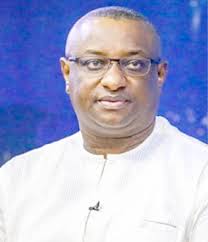
Kola Ologbondiya, Media Adviser to embattled National Chairman of the African Democratic Congress, ADC, David Mark, says the party is having issues with the Independent National Electoral Commission, INEC, because the ruling All Progressives Congress, APC, does not want a viable opposition.

Ologbondiya made this allegation on Wednesday when he featured in an interview on Arise Television’s ‘Prime Time’.

Recall that the ADC has recently been brewed with new crisis resulting in the stripping of former Senate President David Mark as national chairman.

Airing his own opinion, Ologbondiya said, “ADC’s issues with INEC and the divisions within parties are because the APC does not want a viable opposition.

“The supposed crises in political parties are being sponsored. The protest by the ADC leaders is simply to tell the president and those encouraging division that they will have a day of reckoning.

“This democracy started in 1999 precisely, and we have come this far to 2026, so what we should be expecting is growth, not a decapitation.

“Unfortunately, what is happening now is a movement, and a shift towards a one-party state instead of a multi-party democracy.”

2027: Intense political maneuvering as Niger APC scraps guber zoning

The political landscape in Niger State is shifting dramatically as the All Progressives Congress (APC) officially scrapped its long-standing zoning arrangement for the governorship, opening the door for a wider contest in the 2027 elections.

The party, through a statement dated 3 April 2026, signed by State Publicity Secretary, Musa D. Sarkinkaji, stated that the system is a political convention as neither the party’s constitution nor Nigeria’s Constitution recognises zoning as binding.

“Zoning is a political arrangement, not a constitutional provision. All qualified aspirants from any zone are free to contest, ” he said.

For over 26 years, zoning had guided the rotation of power among Niger’s three senatorial districts, creating predictability and a semblance of inclusiveness.

But critics say it also bred mediocrity, allowing leadership to be determined by geography rather than competence.

The APC decision was welcomed by some as a long-overdue step toward merit-based leadership.

Party insiders, however, warn that it could also intensify competition and strain relationships within its fold.

Musa–Bago Relationship Under Scrutiny

The perceived tension between Governor Mohammed Umaru Bago and Senator Mohammed Sani Musa (313) has drawn significant attention following Musa’s April 1, 2026 comments at the flag-off of a scholarship programme in Bosso area of the state, hinting he might have contested the governorship if not for zoning.

Posters portraying Musa as a gubernatorial aspirant soon surfaced across the state, feeding further political tension.

Political insiders suggest the remarks were triggered by perceived pressure from the governor, particularly over his alleged support for his long-time ally, Barrister Bello Bawa Bwari (BBB), also from Niger East for the same senatorial seat Musa currently holds.

Analysts say this development has strained a relationship built over years of collaboration, as Musa and Bago had previously teamed up during the 2023 APC governorship primaries and election, a partnership that helped Bago secure victory.

However, in a statement issued by his media office on 4 April 2026, Musa categorically denied any gubernatorial ambition, emphasizing his legislative duties and respect for the governor,

“Distinguished Senator Mohammed Sani Musa (313) has consistently and publicly stated that he is not a gubernatorial aspirant.

“The Distinguished Senator holds the office of the Governor in high regard, and recognizes His Excellency Mohammed Umaru Bago as a leader, brother, and partner in progress in the #NewNiger project.

“The Distinguished Senator remains focused on his legislative responsibilities and his mandate to effectively represent the people of Niger East Senatorial District at the National Assembly.”

The Media office further maintained that,” the posters and narratives suggesting otherwise did not come from us and clearly out to mislead the public.”

Party sources and analysts say Musa’s denial may have been influenced by pressure from party stakeholders and community elders, who sought to prevent escalation and maintain unity ahead of the 2027 elections.

Governor’s Alleged Backing of BBB

Sources within the party say that instead of supporting Musa, Governor Bago allegedly appears to favour his long-time ally, Barrister Bello Bawa Bwari (BBB) who both hail from Niger East zone for the senatorial seat in the forthcoming general election, a move said to have deepened the strain between the two leaders.

Party insiders confirm that this perceived support for BBB in the Niger East political space created unease, causing tension in the previously cooperative alliance between the two top political figures.

Analysts believe Musa’s subsequent denial may have been prompted by pressure from party stakeholders and community elders seeking to prevent further escalation.

Party insiders also say the alleged support for Bwari created unease, contributing to the strain between the two leaders.

Abolition of Zoning Changes Political Equation

Historically, zoning in Niger State started with the People’s Democratic Party (PDP) in 1999, introducing a rotation among the three senatorial districts.

Under PDP, the late Abdulkadir Abdullahi Kure (Niger South) governed from 1999 to 2007, followed by Dr. Mu’azu Babangida Aliyu (Niger East) from 2007 to 2015.

When APC took power in 2015, Abubakar Sani Bello from Niger North served two terms until 2023. Governor Bago, from Niger South, assumed office in 2023.

This means PDP spent 16 years under zoning, while APC has governed for 11 years following the same formula.

Critics argue that zoning prioritized rotation over performance, preventing the state from benefiting from the best leadership.

Impact on Niger East and Musa

The abolition of zoning by APC has a direct impact on Niger East, the zone from which Senator Mohammed Sani Musa hails.

Under the old formula, power would have rotated to Niger East after Governor Bago completed his second term in 2031, potentially positioning Musa as a natural contender for the governorship.

But with zoning scrapped, the rotation is no longer guaranteed, opening the race to aspirants from all zones and altering the political calculations for leaders from Niger East.

Voices from the Party

In an interview with DAILY POST, an APC chieftain, Jonathan Vatsa a former Publicity Secretary of the party, argued that the long-standing zoning formula has “imprisoned and enslaved the state for over 26 years as it promotes mediocrity instead of producing the best to lead the state”.

He added that those behind the arrangement had caged the people to favour the minority who could not win elections, insisting that removing the zoning formula is a welcome development for Niger State.

“It is only Niger State in the North Central that operates zoning.

“Look at Benue and Kogi states; they don’t do it. This move is long overdue ,” he said.

Vatsa, a former Commissioner for Information and Culture, urged both Bago and Musa to reconcile, noting their long history of collaboration.

I don’t really know what is happening between them. They have come a long way. If they allow differences to divide them, people will mock and laugh at them,” he said.

He added: “When two elephants fight, it is the ground that suffers,” cautioning party members against taking sides.

April Comment Sparks Speculation

Observers say the timing of Musa’s outburst contributed to heightened speculation around his political intentions.

Analysts caution that the political stakes for Niger East have never been higher, given the potential reshuffling caused by the end of zoning.

The APC’s decision has created a new political environment where competence, alliances, and grassroots support will play a stronger role than geographic rotation.

Suleja Emirate First Agenda Raises Concerns

The governor received leaders of the Suleja Emirate First Agenda group at the Niger State Liaison Office in Abuja on 25 March 2026, where he listened to their concerns and advocated a review of the zoning formula after the 2027 general elections.

The group, composed of 67 organizations from Suleja, Gurara, and Tafa LGAs, argued that their zone has been politically marginalized since 1979–1983, when it produced Alhaji Awwal Ibrahim as governor, now the Emir of Suleja.

They called for equitable political inclusion and voiced concerns over long-term exclusion from power.

Responding, Governor Bago stressed the importance of fairness and inclusiveness, urging the people to be patient while emphasizing that leaders must be held accountable for their performance.

In a Hausa-language video circulating after the meeting, the governor told the constituents:

“It’s a must for Sani Musa to serve you well. If he does not serve you well, we will change him. But if he does well, we will leave him alone.”

This statement reinforced expectations for performance while signaling that continued support depends on results, adding context to Musa’s political position in Niger East.

Political Analysis and Implications

Insiders say internal party management will be crucial to prevent open conflicts and maintain unity.

Observers also warn that the fallout between Musa and Bago, if not managed, could dominate headlines more than the 2027 elections themselves.

Despite these tensions, Musa remains committed to his legislative duties and has publicly emphasized respect for party structures.

The end of zoning has intensified discussion on the balance between merit, regional representation, and political loyalty.

For APC aspirants across all zones, the abolition signals both opportunity and uncertainty.

The coming months are expected to test the ability of party leaders to manage ambitions, perceptions, and expectations.

Political analysts predict that the APC governorship contest in 2027 will be one of the most competitive in Niger’s recent history.

Grassroots advocacy, historical grievances, and personal alliances will all shape the narrative leading to the polls.

As the state prepares for 2027, the interplay between historical rotation, local demands, and emerging ambitions will define political strategies.

The collapse of zoning is seen by some as a chance to correct long-standing inequities in leadership selection.

At the same time, it has exposed personal and political fault lines within the ruling party.

For Niger East, the stakes are particularly high given the governor’s alleged backing of BBB and Musa’s prominence.

Observers say managing these dynamics carefully will be critical for APC unity and electoral success.

With all the forces at play, Niger State’s political stage is set for a tense, high-stakes contest that will capture national attention.

Gov Mutfwang clarifies Tinubu’s no electricity comment during Jos visit

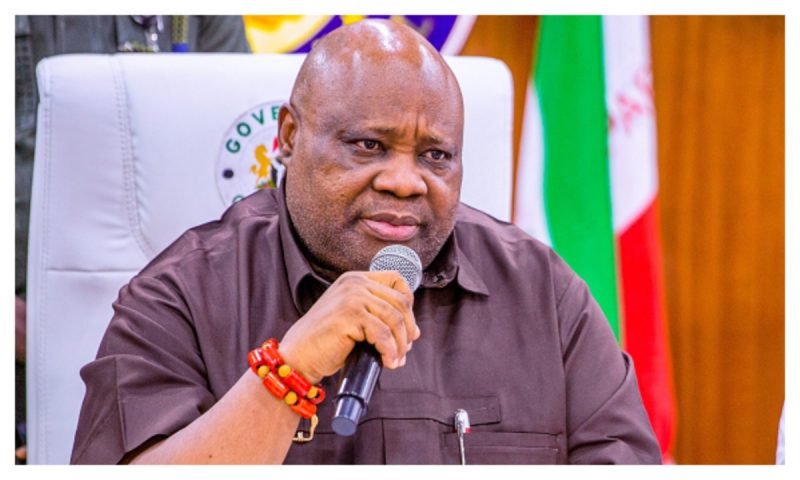
Governor Mutfwang of Plateau State has said that it is only the runway of the Jos airport that does not have electricity, noting that it is not the entire Plateau State.

Mutfwang made this clarification on Wednesday while fielding questions in an interview on Arise Television.

This comes after President Bola Tinubu visited the state over the killing of many residents. He stopped at the airport, complaining that they had no electricity.

Reacting, the governor said, “The President said the airport runway has no light. No one can say Plateau State has no light.

“He didn’t say there was no light in Plateau State. By the way, Plateau state is part of the national grid. But apart from the national grid, we are privileged as a state to also have the first hydro electric station in Nigeria.

“It is a known fact that the Federal Airport Authority of Nigeria, FAAN, which owns the airport, knows that the Jos airport does not have lights on its runway. This is a conversation we are having with FAAN at the moment.

“Last year, we signed a Memorandum of Understanding on how to upgrade the airport to an international cargo airport, and I’m sure that when this is fully done, all these issues will be addressed and this will be a thing of the past.”

Zamfara Assembly suspends two LG chairmen over alleged misappropriation

Zamfara State House of Assembly has suspended two local government council chairmen over alleged financial misappropriation, in a move it described as a step toward strengthening accountability in the state.

The affected officials are Mannir Mu’azu Haidara of Kaura Namoda Local Government Area and Umar A. Faru of Bukkuyum LGA.

Their suspension followed the presentation of a report by the House Committee on Local Government and Chieftaincy Affairs during plenary on Wednesday.

The report was delivered by the Deputy Speaker, Adamu Aliyu Gumm, who also serves as the committee’s vice chairman.

According to the House spokesperson, Bello Kurya, the lawmakers unanimously adopted the committee’s recommendation after deliberations presided over by the Speaker, Bilyaminu Moriki.

Kurya explained that the two chairmen were suspended for failing to honour invitations extended by the committee to explain the expenditure of funds allocated to their respective councils.

“The invitations were issued to enable them to provide explanations regarding the expenditure of funds,” he said, adding that their refusal to appear before the committee was considered a serious breach.

He noted that the suspension takes immediate effect and will remain in place pending the outcome of an ongoing investigation into the financial activities of the state’s 14 local government councils for the 2025 fiscal year.

The Assembly directed the affected chairmen to hand over to their respective vice chairmen without delay.

Kurya further stated that the disciplinary action was based on findings of “disrespect to the legislative institution” as well as a lack of transparency and accountability.

He added that the Assembly had transmitted its resolutions to the executive arm of government for implementation, reiterating its commitment to prudent management of public resources and good governance in the state.

108 Ogun residents arrested, prosecuted for indiscriminate waste disposal

The Ogun State Waste Management Authority, OGWAMA, has arrested and prosecuted 108 residents in Abeokuta for the indiscriminate dumping of waste products.

The offenders were apprehended while dumping refuse on roadsides, public places and on medians, in different parts of the state capital.

Recall that DAILY POST had reported the piles of trash sitting on major roads and blocking the gutters.

However, the OGWAMA enforcement team arrested the offenders while they were dumping the refuse, an offence against the state’s waste management law.

Speaking on the arrest on Wednesday, the Special Adviser to the Governor on OGWAMA, Farook Akintunde, said the waste offenders have been prosecuted in different customary courts in the state capital and fined to serve as a deterrent to others.

He lamented that despite government efforts at picking up waste from residents’ doorsteps, they are still in the habit of dumping waste in inappropriate places, thereby defacing the aesthetic beauty of the environment and the state capital.

Akintunde said, “Its just unfortunate that we have to go this route to stop some of our people from dumping waste indiscriminately on roadsides and in public places. We have sensitized, appealed and even encouraged them to handover their waste to Waste PSP assigned to their areas for proper waste disposal but to no avail.

“We are determined to continue this exercise until they see the need to stop dumping waste indiscriminately, especially now that the state is wearing a new look in terms of proper waste management.

“Aside from this, dumping waste indiscriminately is not safe, as it can lead to flooding and contaminate ground water during this rainy season, which the state government will not allow” Akintunde warned.

He insisted that the state government through OGWAMA, will not fold its hands and allow a few individuals deface the environment through unlawful environmental practices.

Akintunde urged those still in such habit to stop or get prepared to face the law.

IPAC reacts to death of Zamfara NRM Chairman, Alhaji Moriki

The Inter-Party Advisory Council, IPAC, says it is deeply saddened by the sudden demise of its Zamfara State chapter Chairman who doubles as the Chairman National Rescue Movement, NRM, Isah Ahmad Moriki.

Moriki passed away on Monday, 6th April 2026.

INEC described his passing as a great loss not only to his immediate family and loved ones but also to the entire political community in Zamfara State and Nigeria at large.

IPAC, in a statement signed by Egbeola Wale Martins, the National Publicity Secretary, said that Moriki was a committed democrat and a dedicated leader who worked tirelessly for the growth of multi-party democracy and political inclusiveness in Zamfara State.

The umbrella body of all registered political parties in Nigeria commiserated with his family, friends, the National Rescue Movement and the Zamfara State chapter of IPAC over this painful and irreparable loss.

“We pray that Almighty Allah grants his soul eternal rest and gives all those he left behind the strength and fortitude to bear the loss,” the statement added.

“May Allah accept his soul and grant him Aljannatul Firdaus.”

ADC raises alarm over alleged political persecution of opposition members in Kaduna

The Kaduna State chapter of the African Democratic Congress (ADC) has accused authorities of orchestrating a sustained pattern of political pressure against opposition party members.

Briefing journalists on Tuesday in Kaduna, ADC chieftain and ex-Commissioner for Education, Professor Muhammad Sani-Bello, expressed “grave concern” over what it described as politically motivated actions undermining democratic norms.

The ADC alleged that recent developments surrounding El-Rufai were not isolated incidents but part of a broader strategy to weaken his political influence. Among the issues cited were his exclusion from a ministerial position, proceedings by the Kaduna State House of Assembly, and the arrest and detention of several of his associates.

The party specifically mentioned individuals, including Bashir Saidu, Ja’afar Ibrahim Sani, Jimi Lawal, and Aisha Galadima, as among those affected.

The ADC further alleged that anti-corruption and security agencies, including the Independent Corrupt Practices Commission (ICPC), the Economic and Financial Crimes Commission (EFCC), and the Department of State Services (DSS) were being used in ways that create the perception of selective enforcement.

According to the party, prolonged detention, altered bail conditions, and questioned judicial processes point to potential abuse of institutions and erosion of public trust.

The opposition party also highlighted what it described as violations of human rights and due process, citing El-Rufai’s extended detention and repeated transfers across locations.

It stressed that such actions raise concerns about fairness, proportionality, and adherence to the rule of law

Beyond El-Rufai, the ADC claimed there is a widening clampdown on opposition voices across Kaduna State. It pointed to reported arrests, intimidation, and interference in party structures, as well as alleged restrictions on the establishment of party offices.

The party also referenced controversies at the national level involving party leadership, including issues linked to former Senate President, David Mark, which it said further complicate concerns about institutional neutrality.

It called for the immediate end to what it described as harassment and politically motivated prosecutions, as well as the release of individuals it considers unlawfully detained. It also urged authorities to uphold due process, maintain institutional independence, and ensure a free and competitive democratic space.

The ADC called on relevant authorities, civil society groups, and the international community to closely monitor developments in Kaduna State.

It warned that continued pressure on opposition figures could undermine democratic pluralism and public trust in governance if not addressed.

2027: Oyo SDP lures APC gubernatorial aspirant

Prominent chieftains and leaders of Social Democratic Party (SDP) in Oyo State have paid a visit to one of the gubernatorial aspirants on the platform of All Progressives Congress (APC), Chief Saheed Oladele.

The meeting was held in Ibadan on Tuesday ahead of the 2027 general elections.

It was attended by 26 local government chairmen of the party and state executive members of the party.

DAILY POST gathered that the leader of 10 local government areas in Oke Ogun geopolitical zone, Alhaji Ibrahim Durojaiye was also in attendance at the meeting.

SDP State Chairman, Hon. Michael Okunlola, while speaking, said that Oladele has all it takes to be the next governor of the state.

Although, details of the meeting were still sketchy as at the time of filing this report on Wednesday, our correspondent gathered that both the leaders of SDP and Oladele are finalising the process for his defection to the party.

Ogun renames key highway after Tinubu, strengthens power, governance structure

The Ogun State Executive Council has approved the renaming of the Sagamu–Iperu–Sapade Expressway as the Bola Ahmed Tinubu Expressway, in honour of President Bola Ahmed Tinubu.

The decision followed an earlier announcement to rename the Artery Bypass during the commissioning of the Gateway International Airport and other landmark projects last Saturday.

In a related development, the former Aviation Village in Iperu has been renamed after the late Oba Adeleke Idowu Basibo, in recognition of his contributions to the community.

The Council also approved the procurement of 50 electricity transformers to improve power supply across the state under the Light Up Ogun Project.

Additionally, the Council approved the purchase of 20 Suzuki Grand Vitara and 12 Toyota Fortuner vehicles to support the administrative operations of public officials.

Further decisions include traditional leadership appointments and recognitions across various communities. The Council approved the declaration of the Olu of Odeda stool in Odeda Local Government Area.

It also ratified the appointment of Prince Adeyemi Ibikunle Opeaye as the Oludotun of Idotun in Ikenne Local Government Area, Chief Yaya Oriyomi as the Olu of Mowe, and Bashorun Peter Oluwole Ogunbayo as the Odemo of Ishara.

The approvals reflect the state government’s continued focus on infrastructure development, strengthened local governance, and community leadership.

Access Bank applauds Ogun’s investor-friendly policies, backs airport vision

The Chief Executive Officer of Access Bank Plc, Roosevelt Ogbonna, has commended the Ogun State Government for creating a business-friendly environment that continues to attract investors.

Ogbonna gave the commendation during a visit to Governor Dapo Abiodun, where he led a delegation of senior executives from the bank.

He said Ogun’s policies have gone beyond driving investment inflows, noting that they foster partnerships focused on long-term development and shared vision for the state’s future.

The Access Bank CEO also lauded the development of the Gateway International Airport, describing it as a landmark project that reflects bold leadership and strategic planning.

“I am extremely proud. Ogun State is making it a habit of showing Nigerians what a working democracy looks like,” he said, adding that the transformation of ideas into tangible infrastructure underscores the government’s commitment to excellence.

Ogbonna expressed satisfaction with the bank’s role in supporting the airport project, noting that Access Bank remains committed to financing initiatives that drive economic growth and development.

In his remarks, Governor Abiodun described Access Bank as a reliable development partner, praising its willingness to support the state’s vision from conception to execution.

“They saw the vision from the outset and backed it. A vision without funding is merely a hallucination,” the governor said.

He added that the collaboration highlights the importance of strong public-private partnerships in delivering impactful infrastructure and sustaining economic progress