37 miners’ death: I’m just chief security officer by mouth – Gov Bago

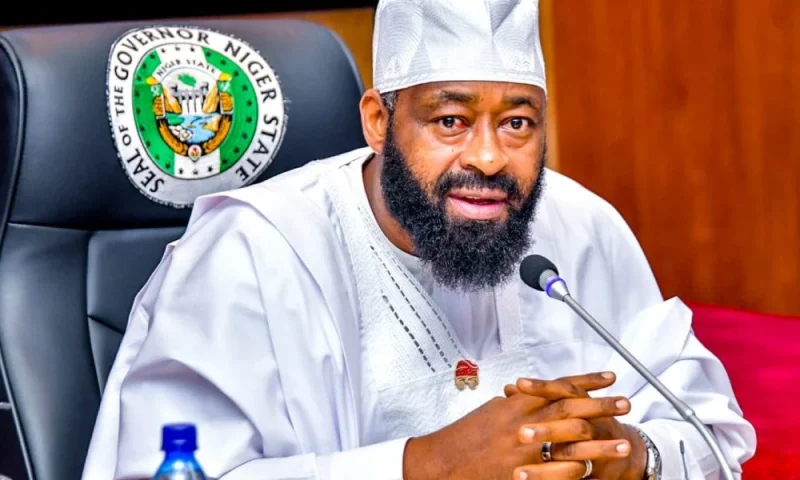
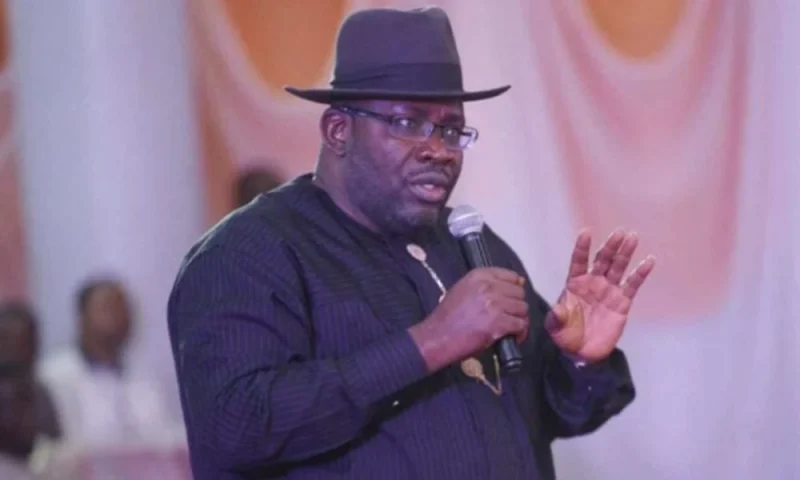
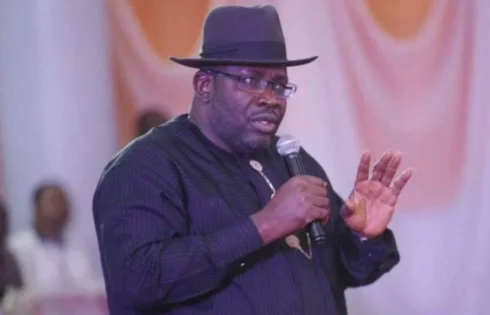
37 miners’ death: I’m just chief security officer by mouth – Gov BagoNiger State Governor, Umar Bago, has said he has limited control over security agencies in the state despite being constitutionally designated as the chief security officer.

Bago stated this while responding to questions on whether the Niger State Government shared responsibility for the deaths of 37 suspected illegal miners and whether the incident could have been prevented.

Speaking on Channels Television’s Sunday Politics, the governor said security agencies such as the Nigeria Security and Civil Defence Corps, NSCDC, the police and other federal institutions do not report directly to him.

“Yes, definitely. You know, I’m just a chief security officer of the state by mouth. The NSCDC don’t report to me. The police don’t report to me. The ministry don’t report to me. They report to the centre, so we don’t have much control about federal government facilities, especially detention centres, and there are also police stations and even civil defence stations,” Bago said.

He, however, said the state government intervenes when complaints are brought before it by civil society organisations or members of the public.

“But when we have issues or complaints by civil society organisations, we step in and we try to intervene. But most of the times, nobody even knows who is arrested unless there are complaints that are brought in before Ministry of Justice or Ministry of Women Affairs on unlawful detention or otherwise, or the Court of Laws to give order,” he added.

The governor’s comments came amid concerns over the deaths of 37 suspected illegal miners in NSCDC custody, with questions being raised over the roles of state and federal authorities in preventing the incident and addressing security challenges surrounding mining activities in Niger State.

NSCDC detains, parades 24 personnel over deaths of 37 illegal miners in Niger

NSCDC detains, parades 24 personnel over deaths of 37 illegal miners in NigerThe Nigeria Security and Civil Defence Corps (NSCDC) has detained 24 of its personnel over the deaths of 37 suspected illegal miners in Niger State.

The officers include the suspended Niger State Commandant, Commandant Subaru Siyaka Aniviye, and 23 other personnel. They were paraded at the NSCDC headquarters in Abuja on Sunday.

The Corps said the number of personnel under investigation had increased from 21 to 24 after three additional officers were identified and suspended.

NSCDC spokesman, Assistant Commandant Babawale Afolabi, said all the affected officers and men from the Niger State Command had been taken into protective custody at the Corps headquarters since September 17.

He said they were being questioned and subjected to administrative disciplinary procedures ahead of further investigations by the Presidential Independent Investigation Committee and other panels.

The spokesman said the NSCDC Commandant General, Professor Ahmed Abubakar Audi, had ordered the Corps’ flag to be flown at half-mast in all commands and formations for three days from Sunday, September 20, as a mark of mourning.

The Corps said the move was also intended to show its disapproval of the incident and its determination to remove personnel found guilty of misconduct.

Afolabi quoted the Corps as saying, “as a Corps built on integrity, professionalism, discipline, and absolute respect for the rule of law, we do not condone unprofessional conduct, high-handedness, or any action that undermines the fundamental rights of citizens or the sacred trust reposed in us.”

The NSCDC said the Commandant General had directed that due process, transparency and accountability must guide the investigation. It added that any officer found responsible would face disciplinary action and prosecution where necessary.

The Corps also linked the inclusion of DCC Ajayi Philips, Head of Intelligence and Investigation, and DCC John Agrahau Chagwa, Head of Operations, to “lack of supervision” in their respective departments.

The 37 miners died days after they were arrested during anti-illegal mining operations carried out by the NSCDC in the M.I. Wushishi and Lukoto areas of Niger State on September 15 and 16.

The NSCDC had initially said the deaths might have been caused by a suspected disease outbreak, adding that medical examinations would determine the actual cause of death.

The Corps said it would continue to inform the public about the outcome of the investigation.

2027: Gov Radda calls for unity as former SSG, Mustapha Inuwa, supporters return to APC

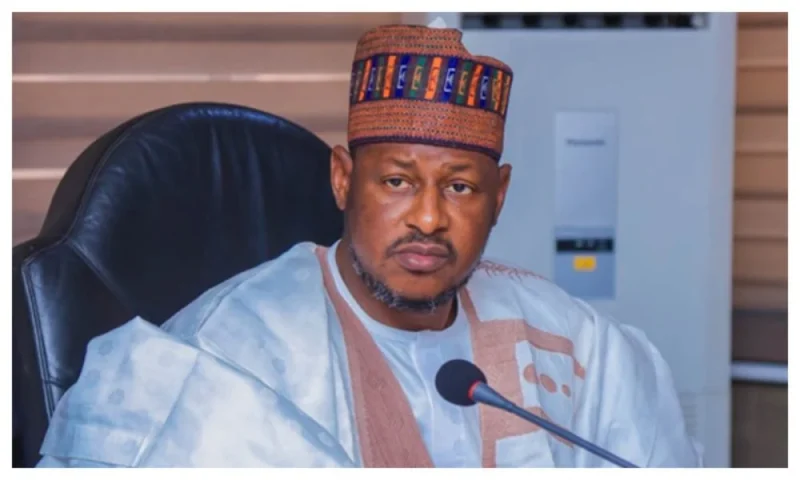
2027: Gov Radda calls for unity as former SSG, Mustapha Inuwa, supporters return to APCKatsina State Governor, Dikko Umaru Radda has urged All Progressives Congress, APC, leaders and members to accommodate politicians returning to the party and avoid disputes over positions and responsibilities.

Radda made the call on Friday while receiving former Secretary to the State Government, Mustapha Muhammad Inuwa, and members of his political structure from the 34 local government areas at the Government House in Katsina.

The governor said political differences should not prevent stakeholders from working together for peace and development in the state.

“This gathering should teach us that good leadership and politics do not have to be about fighting. People can disagree politically and still come together in peace and work for the progress of the state,” Radda said.

He urged APC local government chairmen, members of the State Executive Council and other party stakeholders to create an environment where returning members could contribute without unnecessary tension.

“We must give them the opportunity to contribute to the progress of our party and our state,” he said.

Inuwa said the political structure he led comprised about 220 groups across the state and had maintained its grassroots connections through different political platforms over the years.

He said many members of the structure had decided to align with the Radda administration and return to the APC.

Also speaking, former Katsina State Governor Aminu Bello Masari described Inuwa’s return as an opportunity for political stakeholders to rebuild relationships and work together in the interest of Katsina State.

APC state chairman, Bishir Gambo Saulawa, welcomed Inuwa and his supporters, saying their political experience and grassroots connections would contribute to the party’s structures across the state.

Appeal Court upholds NDC registration, overturns Lokoja ruling

The Nigeria Democratic Congress, NDC, has announced that it will participate in the 2027 general elections following a Court of Appeal judgment setting aside a Federal High Court ruling that ordered its deregistration.

The party’s National Leader, Henry Seriake Dickson, disclosed this in a statement reacting to the appellate court’s decision in Abuja.

Dickson said the Court of Appeal set aside the judgment delivered by Justice Isah Dashen of the Federal High Court in Lokoja a few months ago.

The statement reads in full:

“Today, the Court of Appeal, sitting in Abuja, has set aside the judgment of the Federal High Court, Lokoja, delivered by Justice Isah Dashen a few months ago, which purported to order the deregistration of our party, the Nigeria Democratic Congress (NDC).

“In a judgment delivered by the presiding Justice, Mohammed Danjuma, and read by Justice Hassan, the Court ruled in favour of allowing our appeal, which challenged the faulty ruling of the Federal High Court, Lokoja, and accordingly, set aside Justice Dashen’s judgment.

“We want to use this opportunity once again to commend the Nigerian judiciary, and in particular, Hon. Justice Danjuma and Hon. Justice Hassan, for upholding the integrity of the Nigerian judiciary and, by their decisions, expanding the sphere of multiparty democratic participation in Nigeria.

“We have said repeatedly that the NDC was set up to expand the frontier of multiparty democracy in Nigeria. Justice Dashen’s judgment a few months ago was an unexpected assault on our constitutional right to participate and an attempt to narrow the democratic space.

“Happily, Today, by the decision of the Court of Appeal, the Nigerian democratic space has been protected, and the NDC’s right to participate in all political activities as a registered political party has been upheld.

“I congratulate all members and candidates of our great party, the NDC, and thank Nigerians for their prayers and support.

“When the unexpected judgment of the Lokoja Federal High Court was delivered, we were bombarded with several calls for sympathy, support and prayers. Today, our collective prayers have been answered.

“The NDC continues to exist. Our registration remains valid and subsisting, and we and all our candidates will participate in all elections in 2027 and beyond, by the grace of God.

“Everyone should now focus on the campaigns, prepare for the elections, and focus on the task ahead to face the APC and defeat them at the polls.

“A resort to arm-twisting, inducing or intimidating the judiciary will not work. We remain confident in the strength of our message, the commitment of our members, the viability of our candidates, and the support of Nigerians.

“With this conviction, we look forward to the forthcoming elections and are confident that the NDC will emerge victorious at the polls, by the grace of God.

“The fight for Nigeria’s multiparty democracy continues and, by the grace of God, we will emerge victorious.”

Anambra: Soludo witch-hunting Peter Obi – Dickson Iroegbu

Anambra: Soludo witch-hunting Peter Obi – Dickson IroegbuA political analyst, Dickson Iroegbu, has accused Anambra State Governor Chukwuma Soludo of witch-hunting the Nigeria Democratic Congress, NDC, presidential candidate, Peter Obi, over the ongoing debt controversy.

Iroegbu made the accusation on Friday while fielding questions during an interview on Arise Television’s Prime Time.

Recall that the Anambra State Government had released what it described as the public debt records of Obi during his tenure as governor.

In a swift response, Obi released his handover document to counter claims by the government that his administration left behind loans and other financial liabilities.

Reacting to the development, Iroegbu said Peter Obi’s administration did not hand over directly to Soludo, stressing that all records and claims were documented.

“We know this is a political witch-hunt by Governor Chukwuma Soludo. It’s unfortunate, and we call it the crab mentality.

“It’s unfortunate, and I hope he’s going to face it when history reminds him of these events that are unfolding.

“The facts are there, and we challenge the government to stop playing to the gallery and release the documents that can be presented as evidence,” he said.

Mambilla: ‘Ex-AGF, Malami acted against Nigeria’s interest’ — ICC tribunal

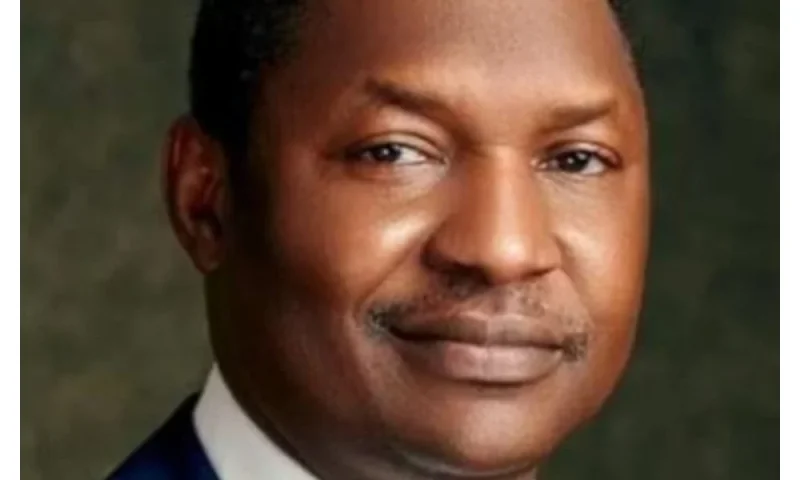
Mambilla: ‘Ex-AGF, Malami acted against Nigeria’s interest’ — ICC tribunalThe International Chamber of Commerce, ICC, arbitration tribunal has found that former Attorney-General of the Federation and Minister of Justice, Abubakar Malami, and Leno Adesanya, promoter of Sunrise Power and Transmission Company Limited, reached a corrupt deal over the Mambilla Hydroelectric Power Project.

The tribunal also found that Malami acted against Nigeria’s interests while handling a settlement agreement with Sunrise and was “motivated by other incentive(s).”

The findings were contained in the tribunal’s 616-page final award delivered in Paris on September 16, 2026, in a case arising from disputes over the Mambilla project in Taraba State.
The tribunal rejected Sunrise’s claims against Nigeria, ruling that the settlement agreement and its addendum were not binding on the Federal Government because they lacked the required presidential approval.

It also held that the agreements were unenforceable because they were products of corruption and violated Nigerian public policy.

The dispute centred on a January 2020 settlement under which Nigeria was to pay Sunrise $200 million. An addendum signed in March 2020 split the payment into two instalments and introduced an additional $200 million default provision, potentially increasing Nigeria’s exposure to $400 million, with interest.

The tribunal said the revised terms significantly worsened Nigeria’s position while providing no corresponding benefit to the country, and concluded that Malami had not negotiated the terms on Nigeria’s behalf.

It also examined evidence concerning Malami’s interactions with Adesanya, including WhatsApp exchanges between the two while Nigeria and Sunrise were opposing parties in arbitration proceedings.

According to the tribunal, Adesanya testified that Malami solicited a bribe during discussions over the settlement and that he had audio and video recordings of the alleged conversation. The recordings were not produced before the tribunal.

The tribunal said Malami repeatedly sought former President Muhammadu Buhari’s approval for the settlement despite his refusal to approve it. It said Buhari rejected the proposed settlement in April 2020 and again in January 2021, writing, “Not approved.”

The tribunal further found that Malami provided Buhari with incorrect information about the financial implications of the settlement, including the potential liability created by the addendum.

It said Malami failed to appear before the tribunal to give evidence during the hearing and consequently accorded limited weight to his witness statement.

The tribunal also found that Malami and former Minister of Power, Saleh Mamman, lacked the authority to bind the Federal Government to the settlement agreements without presidential approval.

As a result, it rejected Sunrise’s claim that Nigeria had breached its contractual obligations and dismissed its request for an order compelling Nigeria to pay $400 million plus interest.

It also ordered Sunrise and Adesanya to reimburse Nigeria $11.82 million in legal fees and $414,125 in arbitration costs.

Mass death of NSCDC detainees: What we’ve discovered – Amnesty International

Mass death of NSCDC detainees: What we’ve discovered – Amnesty InternationalCountry Director of Amnesty International, Isa Sanusi, has stated that it is prejudicial to describe the 37 miners who died in the custody of the Nigerian Security and Civil Defence Corps, NSCDC, in Niger State as illegal miners, especially when they are not alive to defend themselves.

DAILY POST earlier reported the shocking news of the deaths of the detainees, who had been described as suspected illegal gold miners, while in NSCDC custody.

However, some of the survivors have narrated their ordeals inside the cell where they were detained.

One of them, while recounting his experience, said 17 people were initially locked inside a small room before additional detainees were brought in.

According to him, the detainees complained about the size of the room and the intense heat but were still kept inside.

He equally alleged that an unidentified substance, which he described as looking like perfume, was sprayed inside the room.

Speaking on Arise News, Sanusi said, “Based on the investigation we have conducted so far, the cell where they were held was designed to accommodate no more than 10 people, yet 67 people were detained there.

“Between Tuesday, the 15th, and Wednesday, the 16th, Minna was experiencing extremely hot weather.

“These are serious human rights issues that we need to be talking about, particularly the decision to detain 67 people in a facility meant to accommodate no more than 10.”

NCC empowers over 100 persons with disabilities, digital skills in Lagos

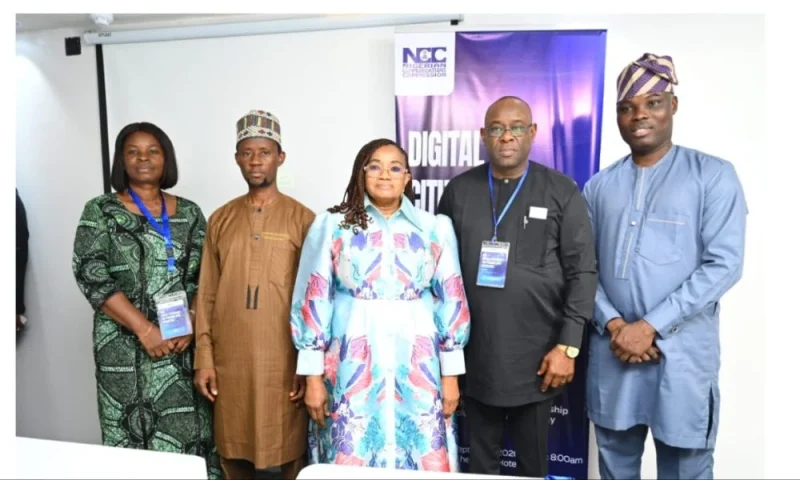
NCC empowers over 100 persons with disabilities, digital skills in LagosThe Nigerian Communications Commission (NCC) has trained over 100 Persons with Disabilities (PWDs) in Lagos State on digital citizenship, cybersecurity, data protection and assistive technologies, as part of its drive to ensure that disability does not exclude Nigerians from opportunities in the digital economy.

The participants received the training during a two-day Digital Citizenship Training for Persons with Disabilities held on September 9 and 10, 2026, in Lagos, under the theme, “Empowering Persons with Disabilities Through Digital Citizenship for an Inclusive Digital Economy.”

The programme exposed participants to digital foundations, internet and digital communication, cybersecurity basics, data protection, assistive technologies and responsible participation in the digital space.

For many of the participants, however, the training went beyond learning how to operate digital tools. It changed how they understood their safety, independence and place in an increasingly digital society.

Participants spoke about learning to protect their personal data, identify giveaway and other online scams, and avoid disclosing sensitive information to unknown persons online. Others discovered accessibility features, including speech-to-text tools, that could make everyday use of their mobile devices easier and more independent.

The programme also addressed the social realities faced by Persons with Disabilities, including discrimination, helping participants understand that some negative attitudes towards disability stem from ignorance and should not define their confidence, abilities or participation in society.

The Executive Vice Chairman and Chief Executive Officer (EVC/CEO), NCC, Dr Aminu Maida, said the initiative reflects the Commission’s commitment to creating a digital Nigeria in which Persons with Disabilities have the skills and confidence to participate fully in the digital economy.

Maida, who was represented by the Director, Digital Economy Department, Helen Obi, said digital inclusion must go beyond providing internet connectivity.

“Digital citizenship goes beyond operating a smartphone or computer; it encompasses the knowledge, skills and responsible behaviours required to participate safely and meaningfully online, protect personal information, recognise scams and misinformation, safeguard one’s digital identity, and understand digital rights and responsibilities,” Maida said.

He noted that technology could be particularly transformative for Persons with Disabilities by removing barriers to education and employment, supporting entrepreneurship and remote work, improving access to information and public services, and promoting greater independence through assistive technologies.

According to him, the Commission’s objective is ultimately to build a Nigeria where disability does not determine whether an individual can obtain an education, access public services, secure employment, start a business or contribute productively to society.

“You are not merely beneficiaries; you are important participants and contributors to Nigeria’s digital economy. Your talents, ideas, businesses and aspirations have value, and technology can help take them further,” Maida told the participants.

The Lagos programme forms part of a broader NCC initiative to provide digital skills training for Persons with Disabilities across the country’s geopolitical zones.

Maida said the initiative builds on the Commission’s existing interventions to expand digital access and inclusion, including its E-Accessibility Project, which provides ICT tools and assistive technologies to institutions supporting Persons with Disabilities.

He also highlighted the NCC’s support for research into assistive technology, including an assistive walking-stick prototype for blind and visually impaired persons, as well as the fourth NCC Hackathon, themed “Technology Without Barriers,” which encouraged innovators to develop solutions promoting accessibility and inclusion.

For the Commission, these interventions are guided by a simple principle: digital technology should create opportunities, not new barriers.

Maida said connectivity alone would not deliver meaningful inclusion unless Nigerians also possessed the knowledge and confidence to use technology safely, responsibly and productively.

“The NCC remains committed to promoting connectivity, digital skills, accessibility, online safety and meaningful participation, with the goal of building a digital Nigeria where Persons with Disabilities can learn, work, do business, communicate and access services with dignity and confidence,” he said.

He called for stronger collaboration among government institutions, regulators, technology companies, service providers, development partners, civil society and Organisations of Persons with Disabilities to ensure accessibility is incorporated from the outset in the design and deployment of digital products and services.

The EVC also acknowledged the Lagos State Government, National Commission for Persons with Disabilities, Lagos State Office for Disability Affairs and other stakeholders supporting the programme.

For the more than 100 participants trained in Lagos, the intervention translated the often, broad concept of digital inclusion into practical everyday skills: knowing how to protect their personal information, recognising a potential scam, communicating through assistive technology and navigating the digital world with greater confidence and independence. Adoyi

Why I refused to join APC – Seriake Dickson

The national leader of the Nigeria Democratic Congress, NDC, Seriake Dickson, has attributed his refusal to join the ruling All Progressives Congress, APC, to his unwillingness to support a political arrangement that could turn Nigeria into a one-party state.
Speaking when the management of Leadership Newspaper paid him a visit on Thursday, Dickson said the crisis and decline within his former party, the Peoples Democratic Party, PDP, made him decide to establish a new political platform.

Reflecting on the political developments that led to the formation of the NDC, the former Bayelsa State governor stated that the decision was taken at a difficult period when the possibility of building a strong opposition party appeared uncertain.

According to him, the situation within the PDP influenced his decision to seek another political direction rather than move to the APC.

“I did not believe Nigeria should become a one-party state,” he said.

The lawmaker further attributed his decision to the need to preserve political competition and provide Nigerians with another platform through which they could participate in the democratic process.

He said that instead of joining an existing party, he and his political associates chose to build a new organisation that could compete with the ruling party, adding that the NDC had made considerable progress since its emergence.

“Months down the line, we have built a formidable party and a major opposition platform in Nigeria,” he added.

Kano bye-election: ADC, NDC opted out of Saturday’s Dawakin Kudu poll, give reasons

Kano bye-election: ADC, NDC opted out of Saturday’s Dawakin Kudu poll, give reasons The African Democratic Congress (ADC) and the Nigeria Democratic Congress (NDC) will not participate in Saturday’s bye-election for the Kano State House of Assembly seat for Dawakin Kudu.

‎The election, scheduled for September 19, 2026, will be contested by six candidates from six political parties, according to the final list released by the Independent National Electoral Commission (INEC).

‎The parties are ADP, APP, APC, LP, PDP and PRP.

‎The absence of the two opposition parties comes amid internal disputes in many parties in Kano as political activities intensify ahead of the 2027 general elections.

‎Speaking on why the ADC did not field a candidate in the bye-election, the party’s Kano State chairman, Musa Shu’aibu Ungogo, said the leadership crisis currently before the courts prevented the party from participating.

‎He said the party had candidates ready to contest the election but was unable to proceed because of the ongoing dispute over control of the party.

‎“INEC called me on the issue of the candidate, and I told them to leave it. We are watching to see how they will manage it, since they have not been able to run the party,” Ungogo told DAILY POST.

‎“We have our candidates who have been there since when we were the only ones in the party, before these people came in, and by God’s grace, we will reclaim our party,” he added.

‎The ADC has been divided over its leadership and its choice of candidate for the 2027 Kano governorship election, with different factions backing Ibrahim Khalil and Ibrahim Ali-Amin, popularly known as Ibrahim Little.

‎NDC focusing on 2027

In the case of the NDC, the party’s Kano State chairman, Hussain Isa Mairiga, said its decision not to participate was deliberate and was based on the approaching 2027 general elections.

‎Mairiga told DAILY POST that the party had decided to concentrate its resources and political structure on the 2027 election rather than contesting the Dawakin Kudu seat, which he said came too late for the party to meaningfully prepare for.

‎He said the decision was reached after consultations with the party’s leader, Senator Rabiu Musa Kwankwaso.

‎“We discussed with the leader of the NDC, Senator Rabiu Musa Kwankwaso, and we decided that we would not participate in the election. We are only waiting for the general election, when we will take the Kano government from the APC. That is what is before us,” Mairiga said.

‎The decision by the ADC and NDC to stay out of the Dawakin Kudu bye-election leaves six parties in the contest, while both opposition parties focus on resolving their internal issues and preparing for the 2027 elections.

‎INEC said it has completed preparations for the bye-election and urged voters, candidates and political parties to comply with electoral laws and maintain peace before, during and after the poll.