Coastal logistics may drive petrol prices to N1,000/litre – Dangote

Dangote_Group_Logo.svgDangote Petroleum Refinery has warned that continued reliance on coastal delivery of petroleum products could push petrol prices close to N1,000 per litre in Nigeria.

The company stressed that its preferred gantry loading remains the most efficient and cost-effective method to ensure price stability for consumers.

The refinery, in a statement on Thursday, explained that its position is supported by sustained investments in critical infrastructure, including a “world-class gantry facility” with 91 loading bays capable of loading up to 2,900 tankers daily.

Operating on a 24-hour basis, it said the facility can evacuate over 50 million litres of premium motor spirit, 14 million litres of diesel, and other refined products each day.

While acknowledging that coastal loading is an option where logistics require, the refinery emphasised that gantry evacuation eliminates additional costs.

“Direct gantry evacuation eliminates port charges, maritime levies and vessel-related costs that do not add value to end users, helping to optimise costs, improve distribution efficiency and support price stability,” the company stated.

It also clarified that marketers are free to choose their preferred mode of evacuation, with PMS and other refined products available at competitive gantry prices.

“However, reliance on coastal delivery, particularly within Lagos, may introduce avoidable costs with material implications for fuel pricing, consumer welfare, and overall economic well-being. In our opinion, coastal logistics can add approximately N75 per litre to the cost of petrol, which, if passed on to consumers, would push the pump price of PMS close to N1,000 per litre,” the refinery said.

The company further estimated that sustained dependence on coastal logistics could impose an additional annual cost of roughly N1.75tn, based on Nigeria’s average daily consumption of about 50 million litres of PMS and 14 million litres of diesel.

It warned that this cost would ultimately be borne by producers or Nigerian consumers.

Dangote refinery also renewed calls for coordinated investment in pipeline infrastructure nationwide. It argued that functional pipelines linking refineries to depots would significantly cut distribution costs, improve supply reliability, and strengthen national energy security.

Addressing allegations that it imports finished petroleum products, the refinery described such claims as misleading.

“While our Residue Fluid Catalytic Cracking Unit is currently undergoing maintenance, we only import intermediate feedstock in line with global industry practice. We challenge anyone with credible evidence of finished product importation to present it to the appropriate regulatory authorities. Such claims are often driven by interests seeking to justify continued dependence on fuel imports,” the refinery reiterated.

Explaining the benefits of domestic refining, the company noted that since operations began, diesel prices have fallen from about N1,700 per litre to between N980 and N990, while PMS prices have dropped from around N1,250 per litre to between N839 and N900.

It added that increased local supply has sharply reduced fuel importation, eased foreign exchange pressures, and contributed to a stronger naira, recently trading at about N1,385 to the dollar.

The refinery concluded by urging marketers, regulators, and policymakers to support logistics and distribution decisions that align with national economic interests, protect consumers, and sustain the long-term benefits of domestic refining.

Savannah Energy Revenue In Nigeria Hit $278 Million

Savannah Energy Plc, has released its financial and operational update on its Nigerian operations and other markets in Africa, including up-to-date cash collections in its Nigerian business.

The report also shows that its cash collections in Nigeria increased by over 12 per cent to US$278.0 million, compared to the previous year’s US$248.5 million, with the trend continuing into 2026 with cash collections during January 2026 at over US$64.4 million, compared to US$20.4 million in January 2024.

The update shows that its gross production in Nigeria averaged 18.8 Kboepd for 2025, of which 83 per cent was gas.

Following the completion of the SIPEC Acquisition in March 2025, it had commenced an 18-month expansion programme that saw it Stubb Creek average gross daily production increase to 3.0 Kbopd in 2025, approximately 13 per cent above the 2024 average.

According to the report, Savannah’s Total Revenues for FY 2025 stood at US$235.0 million, compared to US$258.9 million in FY 2024. As at 31 December 2025, its cash balances stood at US$39.5 million, compared to US$32.6 million in FY 2024, with a net debt US$655.9 million, compared to US$636.9 million as at 31 December 2024.

It also reported a Gross debt US$698.4 million as at 31 December 2025, of which only US$39.0 million (6%) was recourse to the Company, with the balance sitting within subsidiary companies on a non-recourse basis. Its Trade Receivables balance as at 31 December 2025 stood at US$507.2 million, a 6 per cent improvement on year-end 2024’s US$538.9 million.

Savannah also reported that it has made significant progress in refinancing its debt facilities.

It reports that following the previously announced increase in the Accugas debt facility from NGN340 billion to up to approximately NGN772 billion as at 31 December 2025, there was a remaining principal balance under the US$ Facility of approximately US$2 million, which has been repaid in early 2026.

Savannah also provided new updates on its Uquo NE development well, the Uquo South exploration well, and the new compression system at the Uquo Central Processing Facility, It reports that site construction on the Uquo NE development well is expected to be completed this month, with the rig ready for deployment, and mobilisation scheduled over the next few weeks, with first gas from the facility targeted by the end of Q2 2026. Well site preparation has also commenced on the Uquo South exploration well.

According to the company, the newly completed and fully commissioned compression system at the Uquo Central Processing Facility which was delivered safely and approximately 10 per cent under the original US$45 million budget, will enable it to maximise production from its existing and future gas wells.

It also announced signed a gas contract extension agreement with the Central Horizon Gas Company Limited to end December 2026 for up to 10 MMscfpd.

On the renewable energy front, Savannah, which had in 2025 repositioned its power sector business model to pursue operating asset opportunities in both the thermal and renewable energy spaces alongside interests in large scale renewable energy development projects, said it has set itself the target of completing its proposed acquisition of indirect interests in three East African hydropower projects by H1 2026. The assets include the 255 MW Bujagali power plant, with a 13-year operating and payment track record, and two advanced-stage development projects, marking Savannah’s potential for entry into five new countries – Uganda, Burundi, the Democratic Republic of the Congo, Malawi and Rwanda.

It is also continuing to progress its existing priority Power Division projects, including the up to 250 MW Parc Eolien de la Tarka wind farm project in Niger and the up to 95 MW Bini a Warak hybrid hydroelectric and solar project in Cameroon.

In Niger, its subsidiary is considering commencing a four-well testing programme and/or a return to exploration activity in the R1234 PSC contract area in 2026/27, subject to a satisfactory agreement being reached with the country’s government.

Andrew Knott, CEO of Savannah Energy, said, “2025 was a year of execution for Savannah with good progress delivered across the nine focus areas we set out at the start of the year. In Nigeria, we increased our rate of cash collections year-on-year by 12%, a trend which we hope to continue into 2026, and have made significant progress in refinancing our debt facilities.

In our Hydrocarbons Division, the completion of the SIPEC acquisition in March enabled us to commence an expansion programme at Stubb Creek, increasing 2025 production materially above 2024 levels. At Uquo we delivered the new compression system under budget and advanced site construction ahead of the planned commencement of drilling of the new Uquo NE well. During the year, we also announced a 21% 2P Reserves upgrade at the Uquo gas field and a 29% upgrade to Stubb Creek oil field 2P Reserves. In Niger, we remain actively engaged with the Government on future activity, with the R3 East development plan significantly enhanced during the year.

In the power sector, we repositioned our business model and advanced both operating and development opportunities, including the proposed acquisition of interests in three East African hydropower projects, which is targeted for completion in H1 this year. We have also continued to progress on our wind, solar and hydro portfolio. Alongside this, we continue to pursue further value-accretive acquisitions across both hydrocarbons and power, with several other opportunities under active discussion.

We also continued to progress our arbitration claims, with the Savannah Chad Inc (“SCI”) and Savannah Midstream Investment Limited (“SMIL”) proceedings currently expected to be concluded in the first half of 2026.

Overall, this progress provides a strong platform for continued delivery in 2026.”

Aradel Holdings Plc Wins Best Full-Field Integrated Operator Award At  NIES 2026

Aradel Holdings Plc has been selected as the recipient of the Best Full-Field Integrated Operator Award at the 9th edition of the Nigeria International Energy Summit (NIES 2026), hosted by the Federal Ministry of Petroleum Resources, Nigeria.

The award recognises energy companies whose operations span upstream production, midstream infrastructure, and downstream delivery, and reflect a fully integrated approach to value creation across Nigeria’s energy value chain. The award was presented after a rigorous selection process and voting by key stakeholders across the energy industry.

As acknowledged by the Management of NIES, ‘Aradel’s operations demonstrate coordinated asset development, infrastructure integration, and market delivery that support production efficiency, domestic supply, and delivery of long-term value across the sector.’

This award marks the second time Aradel has received this recognition for its integrated operating model at this prestigious industry forum. Previously, at the 7th edition of NIES, as part of the 2024 Energy Industry Awards, Aradel was honoured with the Best Fully Integrated Energy Company of the Year Award, underscoring the consistency and depth of its integrated approach across upstream, midstream, and downstream operations.

Speaking on this recognition, Adegbite Falade, MD/CEO, Aradel Holdings Plc commented:

“This recognition reflects Aradel’s commitment to integration, scale, and long-term growth across the energy value chain. We are proud of our contribution to Nigeria’s energy development through operational excellence and strategic infrastructure investment. Building on the strong foundation laid by our founders, and having recently attained 20 years of continuous production, we remain focused on long-term value creation for our stakeholders.”

The Nigeria International Energy Summit is one of Africa’s foremost energy platforms, convening government leaders, regulators, industry operators, investors, and global partners to advance dialogue on policy, investment, and innovation in the energy sector. The award was presented during the Gala Dinner and Award Night at NIES 2026, at the State House Banquet Hall, Aso Villa, Abuja.

NNPC Discusses Refinery Overhaul With Chinese Company

The Nigerian National Petroleum Company Limited (NNPCL) has opened talks with a Chinese company over one of the state-owned oil firm’s refineries.

The NNPC, Chief Executive , Bayo Ojulari said the company was seeking experienced operators as equity partners to revive its four refineries after years of losses and underperformance.

He said an internal review carried out shortly after assuming his role last April showed the refineries were running at huge losses, with high operating costs and heavy spending on contractors while processing volumes remained low.

NNPC’s board has approved a strategy to bring in refinery operators with proven expertise rather than contractors, Ojulari said, adding that the company was in advanced talks with several interested parties.

“I’m just coming from a meeting with one of the potential investors,” Ojulari said, without giving a name. “They are going to the refinery tomorrow to inspect. It’s a Chinese company that has one of the biggest petrochemical plants in China.”

Nigeria has struggled for years to rehabilitate its aging refineries, which have operated far below capacity, forcing Africa’s largest crude oil producer to rely heavily on imported fuel. The government hopes new partnerships will help reverse that trend.

Ojulari said the plants have been halted to allow time to assess options for restoring them, coinciding with the launch of Dangote Refinery which offered “breathing space” for domestic fuel supply.

He said NNPC was not selling the refineries but would relinquish a portion of their equity to partners to enable the plants to self-finance their operations.

Dangote Refinery Producing Euro-Standard Fuels, Refutes Import Allegations

Dangote Petroleum Refinery & Petrochemicals (DPRP) has dismissed reports suggesting that it imports finished petroleum products.

The refinery’s management described the claims as false and rooted in a misunderstanding of standard refinery operations.


The DPRP is a modern, large-scale merchant refinery with the capacity to refine crude oil as well as process intermediate feedstocks into high-quality finished petroleum products and petrochemicals, it said.


Speaking during a media briefing at the refinery, Chief Executive Officer and Managing Director of DPRP, David Bird, explained that it is standard industry practice for refineries to process intermediate or semi-processed materials into finished fuels. He stressed that this does not amount to importing finished petroleum products.


He noted that unlike conventional Nigerian refineries, the Dangote Petroleum Refinery operates on a European and Asian merchant refinery model, featuring a state-of-the-art refining, blending, and trading configuration designed to meet modern quality standards.


“DPRP produces high-quality fuels aligned with international environmental and health standards. Our gasoline is lead-free and MMT-free, with 50 parts per million sulphur, while our diesel meets ultra-low sulphur standards. These specifications help reduce emissions, protect engines, and safeguard public health,” Bird said.


According to him, the Dangote Petroleum Refinery produces only fully refined, market-ready fuels. “Dangote Petroleum Refinery offers high-quality finished products. We will never supply semi-finished products to the market. Semi-finished products should not be used in vehicles,” Bird said, while displaying samples of intermediate feedstocks and finished products to journalists.


He noted that while Nigerians had historically been exposed to substandard fuel, the refinery was established to reverse that trend and deliver fuels that meet the highest international standards. Bird added that the refinery’s products are now supplied to markets across the world, reflecting their quality and competitiveness.


Intermediate products, he explained, are semi-processed materials derived from crude oil and used as feedstock for further refining into finished fuels such as petrol and diesel, as well as petrochemicals. These include naphtha, straight-run gas oils, vacuum gas oil (VGO), reformate, alkylate and isomerate.


Bird emphasised that the refinery has remained transparent in its operations and engagements with regulators and urged the media to help educate the public on the distinction between intermediate and finished products.


“It is regrettable that some individuals are deliberately spreading false narratives about a refinery that has transformed Nigeria and the wider West African region from a dumping ground for substandard fuel into a refining hub with access to high-quality products,” he said.


He further noted that the refinery’s design flexibility allows it to process a wide range of crude oils and intermediate feedstocks into premium finished products.


Assuring of product availability to meet domestic demand, Bird said the refinery has played a significant role in easing fuel scarcity, stabilising the naira, and reducing pressure on foreign exchange.


Group Chief Brand and Communications Officer, Dangote Industries Limited, Anthony Chiejina, also urged journalists to exercise caution in their choice of words, warning that inaccurate terminology could misinform the public and create unnecessary panic.

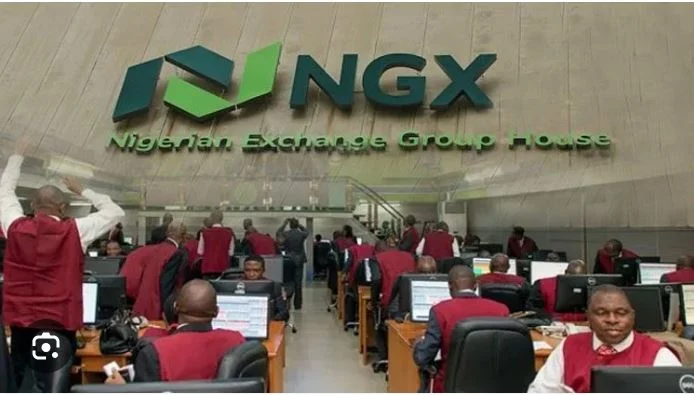
NGX Group, SEC, Police To Promote Capital Market Integrity

The Securities and Exchange Commission (SEC, Nigerian Exchange Group Plc (NGX Group) and the Police have agreed to achieve Capital Market integrity, affirming collaboration to ensure sustainable operations.

The NGX Group, on Wednesday took a decisive steps on this when it hosted a Closing Gong Ceremony in honour of the Inspector-General of Police, IGP Kayode Egbetokun, signaling a strengthened partnership between capital market regulators and law enforcement agencies.


The ceremony highlighted a shared commitment to investor protection, the prevention of financial crime, and the reinforcement of trust and confidence in Nigeria’s capital market.


Welcoming the IGP, Alhaji Umaru Kwairanga, Group Chairman of NGX Group, commended the leadership of the Nigeria Police Force in supporting market integrity. He said: “Market integrity is a shared responsibility. By honouring the Inspector-General of Police, we are reinforcing the importance of institutional alignment in protecting investors and preserving trust in our financial system. Strong collaboration between regulators, enforcement agencies, and market infrastructure institutions is essential to building a resilient and credible market that supports economic growth.”


The Director-General of the Securities and Exchange Commission (SEC), Dr. Emomotimi Agama, emphasized the importance of coordinated enforcement, noting: “Investor protection is at the core of market regulation, and today’s engagement highlights how critical collaboration with law enforcement is to achieving that mandate. This partnership strengthens our enforcement capacity, enhances deterrence against illegal investment activities, and reinforces confidence in the Nigerian capital market.”


In his response, IGP Kayode Egbetokun reaffirmed the commitment of the Nigeria Police Force, stating: “A transparent and well-regulated capital market is vital to Nigeria’s economic growth. The Nigeria Police Force remains committed to working with regulators and market operators to prevent financial crime, protect investors, and uphold the integrity of our financial system.”


Also speaking, Chairman of Nigerian Exchange Limited (NGX), Ahonsi Unuigbe, highlighted the role of the Exchange in promoting market discipline: “A transparent and orderly market can only thrive where rules are respected and misconduct is addressed decisively. The presence of the Nigeria Police Force in this collective effort sends a strong signal that safeguarding the market is a national priority.”


Similarly, Group Managing Director/Chief Executive Officer of NGX Group, Temi Popoola, stressed the importance of aligning innovation with oversight: “Technology and market growth must be supported by strong enforcement and investor protection frameworks. Our collaboration with the SEC and the Nigeria Police Force reflects a unified approach to preserving the credibility of Nigeria’s capital market.”


The event brought together key stakeholders across the capital market ecosystem, all reaffirming their commitment to accountability, transparency, and investor confidence. The ceremonial Closing Gong marked a collective resolve to strengthen Nigeria’s financial system through sustained collaboration.

FBNQuest Merchant Bank renamed Quest Merchant Bank

Afolabi OlorodeFBNQuest Merchant Bank Limited has announced the completion of its change of name and will now operate as Quest Merchant Bank Limited, following the receipt of all required corporate and regulatory approvals.

This was disclosed in a statement released by the firm on Monday.

The PUNCH reports that FBN Holdings Plc announced the sale of its 100 per cent equity stake in FBNQuest Merchant Bank Limited to EverQuest Acquisition LLP in 2024.

With the receipt of regulatory approval for the name change, the company said that the development does not affect the bank’s legal or going-concern status, management, or the nature of its business.

“Quest Merchant Bank Limited remains a duly licensed merchant bank, regulated by the Central Bank of Nigeria and the Securities and Exchange Commission, and continues to deliver its full suite of merchant banking, advisory, and capital markets services to clients,” read part of the statement.

Commenting on the development, the Acting Managing Director/Chief Executive Officer, Afolabi Olorode, said, “This name change represents a pivotal milestone in the rich history of the bank and a deliberate strategic repositioning that reflects our resilience, strong track record, and long-term growth ambitions. While our name has evolved, our commitment to our clients, stakeholders, and regulators remains unwavering.”

As part of the transition, the bank is updating its branding, communications, and digital platforms to reflect the new name. During this period, some legacy references may remain visible across select touchpoints as updates are progressively completed. All existing contracts, client relationships, and obligations of the bank remain valid, binding, and fully enforceable following the name change.

Standard Chartered outlines 2026 investment outlook for Nigeria

Standard_Chartered_Bank_254c8b7e2aStandard Chartered Bank Nigeria Limited hosted its clients at the 2026 Global Market Outlook event, bringing together industry experts to examine the evolving global financial landscape and its implications for Nigeria in 2026, where it revealed that the country’s growth outlook is optimistic.

A statement from the bank on Tuesday stated that the well-attended event featured presentations from speakers drawn from Standard Chartered, including Manpreet Gill, Chief Investment Officer, Africa, Middle East and Europe; Lanre Olajide, Head of Wealth and Retail Banking, Nigeria; Ernest Adejumo, Head of Wealth Solutions; Uche Ugboh, Head of Treasury Markets; and Chima Eboh, Head of Affluent Banking and Branches.

The speakers delivered insights on current market trends, economic shifts, and wealth-building strategies, followed by a question-and-answer panel session that offered attendees practical perspectives on navigating opportunities and challenges in the year ahead.

Speaking on the impact of the global outlook on Nigeria and the investment opportunities available to stakeholders, Gill said, “Clients took away three key messages from the 2026 global market outlook: (i) Stay overweight equities, (ii) continue to generate attractive yields through diversified bonds, but most importantly (iii) diversify, both within equities and across asset classes given valuations and continued uncertainty.”

Adejumo said the key takeaways from the bank’s 2026 Global Market Outlook highlighted the importance of discipline and diversification in an increasingly complex global environment.

“While short-term volatility may persist, investors who concentrate on long-term fundamentals, quality assets, and informed, advisory-led portfolio construction are best positioned to navigate uncertainty and seize emerging opportunities.

“Our GMO reinforced a clear message for investors: clarity comes from context, not noise. By understanding the global themes influencing growth, inflation, and interest rates, clients are better equipped to make confident and well-timed investment decisions. This approach focuses not on predicting markets but on preparing portfolios through diversification and discipline, aligned with their long-term financial goals,” he said.

The event hosted over 1,200 clients across Lagos, Abuja, and Port Harcourt and concluded with a networking lunch with the bank’s management team.

Nigeria’s economic outlook for 2026 remains cautiously optimistic, with GDP growth projections of 4.3 to 4.4 per cent, driven largely by the services sector, particularly ICT and finance, as well as a potential recovery in the oil sector. Efforts to diversify revenue sources beyond oil are ongoing.

However, challenges, including high inflation and fiscal pressures, persist, while poverty is expected to remain an issue despite reforms aimed at promoting inclusive growth.

Key focus areas include stabilising the naira, controlling inflation through effective monetary policy, improving infrastructure, and ensuring that government policies translate into tangible benefits for citizens. Achieving these goals will require strong fiscal discipline and comprehensive structural reforms.

Standard Chartered said it remains optimistic about Nigeria’s long-term economic potential, emphasising the importance of sustainable reforms, infrastructure development, and regional cooperation in driving growth in Nigeria and across Africa. The bank noted that by aligning global trends with regional strengths, it is well-positioned to support clients and communities in achieving their goals in 2026 and beyond.

Africa Losing $15 Billion Annually From Export Of Crude Oil And Gas

By exporting about 70 per cent of its crude oil and 45 per cent of natural gas, Africa annually loses $15 billion, says the Association of Petroleum Producers’ Organisation (APPO).

The APPO Secretary-General, Farid Ghezali, disclosed this on Tuesday in his remarks at the official opening of the 2026 edition of the Nigeria International Energy Summit (NIES), in Abuja.

Ghezali said in spite of the continent’s immense potential, Africa was facing a paradoxical and frustrating reality of making such significant export of its natural resources.

However, Ghezali, forecasts a turn around of the situation, with the operations of the African Energy Bank (AEB) which is being positioned to raise about $15 billion to finance oil and gas projects in the continent of Africa by 2030.

APPO said the bank, which would begin operation fully by June in Abuja was expected to create over 500,000 direct jobs in the local midstream.

African Energy Bank is a joint initiative of APPO member states and the African Export-Import Bank (Afreximbank), established with an initial capital of Five billion dollars.

Its core mandate is to mobilise domestic and regional capital for energy infrastructure, reduce Africa’s reliance on external financing, and align energy investments with the continent’s long-term development and industrialisation goals.

“The AEB will unify intra-African pricing for gas and oil, allowing our member countries to achieve savings of up to 30 per cent on their energy imports, a potential gain of 1.4 billion dollars for Africa,” he said.

He said financing remained the main bottleneck hindering the development of the continent’s strategic projects, adding that over 150 essential projects, from refineries to pipelines, such as the Ajeokuta-Kaduna-Kano (AKK) pipeline, to gas infrastructure remained blocked.

To address this anomaly, the APPO scribe, said the African Energy Bank was designed to unlock the 200 billion needed for the continent’s midstream-downstream projects by 2030.

Ghezali disclosed that the African Energy Bank would allow the listing of shares of the national oil companies in the continent and flagship projects, such as the Dangote Refinery or the AKK Gas Pipeline.

He explained that it would also connect Africa’s certified projects to the world’s largest sovereign wealth as well as to capital markets with structured equipment and public-private partnerships.

The Chairman, Independent Petroleum Producers Group (IPPG), Adegbite Falade, in his remarks said Nigeria must build an energy industry that could sustain itself, deliver lasting value to Nigerians through collaboration and consolidation rather than through fragmentation.

“The future of the industry lies not in the whole model of extraction and exports of the nation’s raw hydrocarbons, but it lies in creating in-country value that fuels the economy and increasingly contributes to Gross Domestic Product (GDP) growth,” he added.

Falade said since 2025 edition of the summit, Nigeria’s oil and gas industry had recorded notable progresses across the entire value chain, adding that the upstream scaled up in terms of liquid production while gas production had grown significantly.

“This growth in liquid has been supported by an increase in export pipeline availability, reduced crude losses, and stronger indigenous contribution to production.

For the first time, indigenous producers and independents now account for more than 50 per cent of national production.

“We continue to see sustained implementation of the PIA and strengthening of sales through the issuance of relevant and appropriate executive orders.

“However, a few things still remain by way of all kinds of process stakeholders if we are to build an energy industry that is truly self-sufficient and that consistently creates value for the nation.,” Falade said.

He,however, urged the Federal Government to continue to create an industry that could allow the driving and the envelope of private capital to build our industry infrastructure.

Falade said, “Without this, we will not be able to reach the massive gap in potential that we have to meet in our contribution to the nation’s GDP.

We must reduce bureaucracy, we must streamline industry fees and related charges, just to make sure that operators remain competitive.

Our industry today operates at a significantly elevated premium in cost relative to other non-share jurisdictions. We must address the issue of access to long-term and affordable capital.

“We must ensure policy stability and adopt competitive fiscal frameworks that support resource monetisation and stimulate interest rate growth.”

Nigeria To Utilise Gas To Power Africa’s Rise — NNPCL

As an emerging global energy powerhouse, Nigeria has the responsibility to utilise its abundant gas resources to power Africa’s rise and contribute meaningfully to global stability.

Group Chief Executive Officer of NNPC Ltd, Engr. Bashir Bayo Ojulari, disclosed this during an address at the opening ceremony of the Nigeria International Energy Summit (NIES) 2026 held at the Banquet Hall of the Presidential Villa, Abuja.

“Nigeria’s pathway to a prosperous future lies in our collective ability to leverage our resource abundance, especially as gas sits at the heart of our strategy. It is our bridge to a cleaner future, our engine for industrialization, and our foundation for export-led growth”, Ojulari stated.

Describing what he termed as Africa’s energy trilemma, Ojulari said though the African continent is endowed with vast energy resources, it still grapples with issues of accessibility, affordability, and sustainability, with over 600 million Africans living without access to electricity.

He said that with 37 billion barrels crude oil and 209 trillion cubic feet of gas reserves, Nigeria and the NNPC Ltd are ready to lead the charge in changing the narrative.

“With over 600 million Africans still lacking electricity, the continent’s priority cannot be a copy and paste. Ours must be a just, equitable, people-centered energy additions, one that lifts our people out of poverty, powers industries, supports agriculture, transforms transportation, and unleashes the creativity of Africa’s youth”, he stated.

He said NNPC Ltd was not just a commercial entity but also a peace and prosperity enabler.

On steps being taken to enhance access to gas as the primary fuel for driving industrialization and economic growth, the GCEO said NNPC Ltd has launched a new Gas Masterplan, while aggressively progressing strategic gas infrastructure projects such as the Obiafu-Obrikom-Oben (OB3), Ajaokuta-Kaduna-Kano (AKK) gas pipelines, and the Escravos-Lagos Pipeline System (ELPS) expansion.

“These projects are more than pipelines, they are highways for economic opportunity”, he explained.