Unity, Providus Banks Merger a Done Deal as Integration Progresses

Following the recently held Court-Ordered Meeting and subsequent overwhelming endorsement, the merger and business combination between Unity Bank Plc and Providus Bank Limited remains firmly on course.

Analysts appraising the ongoing recapitalisation programme believe that the regulatory backing and shareholders’ support for the merger represent the most important milestones for meeting the recapitalisation requirements within the stipulated timeline.

Recall that the Central Bank of Nigeria (CBN) backed the merger between the two lenders, with a pivotal financial accommodation to support the transaction. The merger also received a further boost with a “no objection” nod from the Securities and Exchange Commission (SEC). The regulatory approvals form part of broader efforts to strengthen the resilience of Nigeria’s banking system, reinforce capital adequacy across the sector, and mitigate potential systemic risks.

The development positions the combined entity among the 21 banks that have satisfied the apex bank’s new capital threshold for national banking operations.

Through the proposed merger, the combined capital base of Unity Bank and Providus Bank exceeds N200 billion, which is the minimum requirement to retain a national banking licence under the CBN’s recapitalisation framework. The transaction marks a significant milestone in strengthening the financial stability and long-term competitiveness of the enlarged institution.

Following the CBN’s approval, shareholders of both banks overwhelmingly endorsed the merger at their respective Extraordinary General Meetings held in September 2025, where the scheme of merger was formally adopted. The transaction has since progressed with additional regulatory clearances from the Securities and Exchange Commission (SEC) and other relevant authorities. Integration activities between the two institutions are currently underway, with the final court sanction expected to conclude the process.

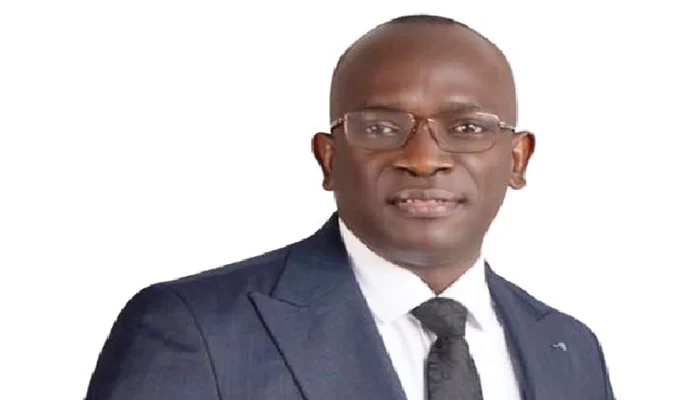
Managing Director and Chief Executive Officer of Unity Bank, Ebenezer Kolawole, described the development as a defining moment for the institution, adding that the complementary strengths and unique advantages of the Unity Bank and Providus Bank merger place the new entity on a strong footing to create and leverage opportunities in the market.

“This milestone underscores our commitment to building a stronger, more resilient bank that can deliver greater value to our customers and stakeholders. The merger with Providus Bank significantly enhances our capital base, operational capacity, and strategic positioning. We are confident that the combined institution will be better equipped to support economic growth and deliver innovative financial solutions across Nigeria.”

The Bank further clarified that, contrary to reports in certain sections of the media suggesting that the merger process had stalled, the transaction remains firmly on track. The necessary regulatory steps have been completed, with a few other steps only a matter of formality.

When completed, the Unity-Providus merger is expected to deliver a stronger, more competitive, and customer-centric financial institution — one with the scale, innovation, and reach to redefine the retail and SME banking landscape in Nigeria.

Sterling HoldCo Commences Allotment Of Public Offer Shares … Achieves 109.8% Subscription

 Sterling Financial Holdings Company Plc (“Sterling HoldCo” or “the Group”) has announced the commencement of the allotment process for its 2025 Public Offer of 12,581,000,000 ordinary shares of 50 kobo each at ₦7.00 per share.
This follows the earlier receipt of final approval from the Central Bank of Nigeria (CBN) and the recent clearance by the Securities & Exchange Commission.
The allotment process, which begins
immediately, marks the continuation of a disciplined, multi-year capital-raising programme that has positioned the Group as one of the fastest-growing financial institutions in the region.
The Public Offer, which opened on September 15, 2025, attracted strong participation from the investing public, with the Company receiving 18,280 applications for 16,839,524,401 ordinary shares valued at approximately ₦117.88 billion.
Following a thorough verification process, valid applications were received from 18,276 shareholders for a total of 13,812,239,000 ordinary shares. This represents a subscription level of 109.79% and reflects
sustained confidence in Sterling HoldCo’s strategic direction, governance, and long-term growth prospects.
In line with the guidelines set out in the offer prospectus, the Group confirmed that all valid applications will be allotted in full. Every investor who complied with the terms of the offer will receive all the shares for which they applied. A very small number of applications were not processed or were partially rejected due to non-compliance with the offer terms, including duplicate payments and failure to meet the minimum subscription requirement of 1,000 units or its multiples, as stipulated in the offer documents.
The Public Offer forms part of a broader capital-raising programme designed to enable Sterling HoldCo expand credit responsibly, accelerate innovation, and provide sustained support to businesses and households across Nigeria.
In addition to strengthening the
capital buffers of its banking subsidiaries, Sterling HoldCo will inject ₦10 billion into SterlingFI Wealth Management Limited, its asset management subsidiary, in line with the revised minimum capital requirements for Capital Market Operators issued by the SEC in January 2026.
The capital injection will support the commencement of full operations and contribute to the Group’s revenue diversification objectives.
The Group ensures a seamless post-offer process, with refunds for excess or rejected
applications, along with applicable interest, to be remitted via Real Time Gross Settlement or NIBSS Electronic Funds Transfer directly to the bank accounts detailed in the application forms.
These payments will be processed by the Registrars, Pace Registrars Limited, not later
than Tuesday, 17 February 2026.
Simultaneously, the electronic allotment of shares will be credited to successful shareholders’ accounts with the Central Securities Clearing System (CSCS) by the same date.
For applicants who do not currently have CSCS accounts, their allotted shares will be
temporarily held in a registrar-managed pool account pending the submission of their completed account opening documentation to Pace Registrars Limited, after which the shares will be transferred to their personal CSCS accounts.
The Offer attracted significant participation from a new generation of investors, with data from the application process showing that a substantial proportion of successful applicants were first-time shareholders in a financial services company. This broadening of the ownership base reflects growing retail investor belief in Sterling HoldCo’s vision and strengthens the Group’s connection to the communities it serves.
The allotment announcement follows a period of strong financial momentum for Sterling HoldCo. In its FY25 interim results, the Group reported a 99% increase in profit before tax, building on the 102% growth achieved in 2024. Gross earnings rose 46% to ₦476.5 billion, driven by growth across both interest and non-interest income streams, while total assets expanded to ₦3.92 trillion. Customer deposits grew by 18% to ₦2.98 trillion, and shareholders’
funds increased by 39% to ₦424.0 billion, reflecting sustained profitability and balance-sheet expansion.
The Group’s cost-to-income ratio improved to 63% from 72% in the prior year,
underscoring the scalability of the Group’s platforms and the resilience of its business model.
This performance is supported by a diversified financial services structure that spans multiple segments of the market. Its core businesses include Sterling Bank Limited, its conventional banking subsidiary; The Alternative Bank Limited, its non-interest banking arm; and SterlingFI
Wealth Management, which provides investment and wealth advisory services.
This diversified structure enables the Group to serve a broader customer base, reduce
concentration risk, and generate income across multiple revenue streams.
The recapitalisation of the Group’s core banking subsidiaries is already complete. Sterling Bank Limited and The Alternative Bank Limited are fully compliant with the CBN’s revised minimum capital requirements, having received final regulatory approvals in January 2026.
The Alternative Bank, in particular, has emerged as a national non-interest bank with aphysical network now surpassing 150 points, deploying capital to solve real-world
challenges through initiatives such as the Mata Zalla project, which trains women as electric tricycle drivers and mechanics, and an agricultural programme in Plateau State designed to secure economic futures.
These outcomes demonstrate that the capital raised is already being put to work in ways that create tangible impact.
Sterling Financial Holdings Company Plc warmly welcomes its new shareholders and thanks all investors for their participation.
With a strengthened capital base, increasing deposits, a diversified earnings mix, and residual capacity for further investment, the Group is wellpositioned to sustain growth across its subsidiaries, deploy capital responsibly, and support sustainable economic activity.
Cardoso Tasks Central Banks, DFIs on Africa’s Growth


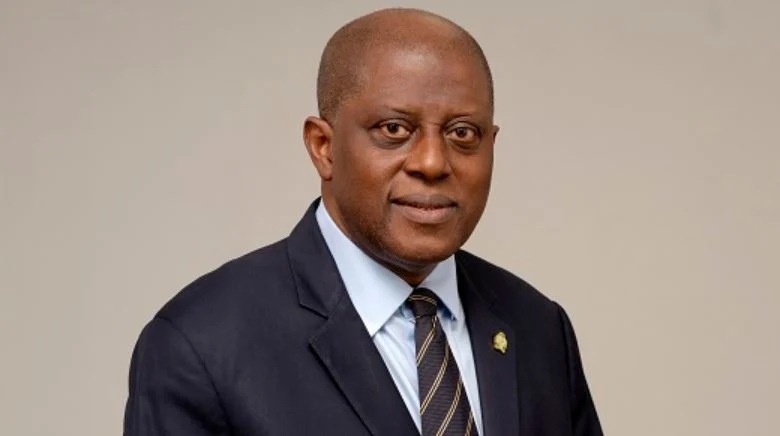
CAIRO – The Governor of the Central Bank of Nigeria, Mr. Olayemi Cardoso, has
stated that Africa must grow, industrialise, create jobs, expand opportunities, and lift
millions out of poverty, while also decarbonising and building climate resilience.
Mr. Cardoso recently stated in his keynote speech at the Egypt 30by30 Programme
organised by the Central Bank of Egypt and the International Finance Corporation
(IFC), that the collaborative ambition behind the 30by30 initiative embodies a shared
continental vision that Africa’s future must be resilient, climate-aware, and
economically sustainable.
Through closer collaboration with the Central Bank of Egypt and partners across the
World Bank Group, he said the CBN remains dedicated to building a resilient, risk-
aware financial framework, advancing green finance, strengthening cross-border
cooperation, and positioning Africa not just to withstand shocks, but to thrive in a
changing global economy.
Governor Cardoso also emphasised that resilience begins with credibility, adding
that “In Nigeria, disciplined and transparent reforms are strengthening
macroeconomic fundamentals and boosting confidence in the financial system,
laying the groundwork for sustainable growth.
“To build resilient financial systems, we must anchor our economies on trustworthy
institutions, credible policies, transparent markets, and risk-aware innovation,” he
added.
Furthermore, Governor Cardoso noted that “Climate risk is financial risk. It affects
sovereign ratings, cost of capital, inflation dynamics, food security, insurance
markets, and fiscal sustainability.”
He argued that Africa contributes the least to climate change yet bears some of its
highest costs. He, however, noted that Africa also offers some of the world’s greatest
opportunities in renewable energy capacity, biodiversity, a young population, and
rapidly evolving financial markets.
“To seize these opportunities, we must innovate for resilience, not as isolated
nations, but as a continent. By working together deliberately, transparently, and with
unwavering commitment, we can build the resilient, sustainable, and inclusive
financial systems that Africa needs not only to withstand future shocks but also to
thrive in the decades ahead,” Governor Cardoso noted.
The engagement underscored a defining imperative for the continent: Africa’s
financial future depends on a dual commitment to stability and sustainability.

Ecobank Nigeria fully repays tendered US$300m Eurobond notes

Ecobank completes early repayment of tendered US$300m Eurobond Notes |  APAnews - African Press Agency

Ecobank Nigeria has announced the successful repayment of the outstanding principal and accrued interest on its original US$300 million Eurobond due 16 February 2026, marking a significant milestone in its liability management strategy and overall balance sheet strengthening efforts.

Following the full repayment of the Eurobond obligations, the Bank stated that it will now focus its funding initiatives primarily on the domestic capital markets. This strategic shift reflects growing confidence in Nigeria’s local debt market and aligns with Ecobank Nigeria’s long-term objective of optimising funding costs while deepening its participation in the domestic financial ecosystem.

“Going forward, Ecobank Nigeria will prioritise domestic credit ratings and local debt issuance to achieve its funding objectives,” stated Ogorchukwu Okwechime, Financial Controller, Ecobank Nigeria, in Lagos. He added that the successful repayment reinforces the Bank’s commitment to maintaining a resilient balance sheet and sustaining investor confidence.

The tender offer was conducted with Renaissance Capital Africa (Renaissance Securities Nigeria Limited) acting as financial adviser and dealer manager, while Sodali & Co Limited served as tender agent. The notes were originally issued by EBN Finance Company B.V., with limited recourse to the issuer, for the sole purpose of financing the purchase of the US$300 million 7.125 per cent Senior Note due 2026 issued by Ecobank Nigeria.

The transaction underscores Ecobank Nigeria’s proactive approach to liability management, prudent capital planning, and strategic alignment with evolving market conditions. It further positions the Bank to leverage domestic funding opportunities while maintaining financial flexibility and operational stability.

Data privacy issues threaten Nigeria’s financial inclusion

2Growing concerns over data privacy and security are emerging as a significant barrier to Nigeria’s financial inclusion drive, despite years of investment in connectivity and digital infrastructure.

While policymakers and industry stakeholders have long focused on expanding broadband access, mobile penetration, and fintech innovation, experts now argue that trust — particularly around how personal data is collected, stored, and used — may determine whether millions of Nigerians join the formal financial system.

In 2012, the Central Bank of Nigeria set a target to reduce the country’s adult financial exclusion rate to 20 per cent by 2020 under its National Financial Inclusion Strategy. However, the exclusion rate stood at 36 per cent in 2020, according to the regulator’s 2022 report, underscoring persistent gaps in access and adoption.

Industry leaders say the challenge is no longer primarily about infrastructure.

“Increasing connectivity is essential, but it is only a prerequisite,” the Chief Commercial Officer at Optasia, Uchenna Agbo, said. “True inclusion requires meaningful participation, and that depends on trust.”

Across major commercial hubs such as Balogun Market, traders who rely heavily on cash transactions often remain hesitant to adopt digital financial services. Although many own mobile phones and are aware of mobile money platforms, concerns about fraud, account hacking, and misuse of personal information continue to discourage uptake.

Stories of compromised accounts and data leaks have circulated widely, reinforcing fears among small business owners that using digital systems could expose sensitive personal and financial information

For many low-income earners, privacy risks are seen not as abstract regulatory issues but as threats to livelihoods.

The issue has gained renewed prominence following the enactment of the Nigeria Data Protection Act and the establishment of the Nigeria Data Protection Commission, which is tasked with enforcing data protection standards and promoting responsible data practices across sectors.

Analysts say regulatory frameworks are necessary but insufficient on their own. They argue that financial service providers must move beyond compliance and embed privacy protections into the design of products and services, a model often referred to as “privacy-by-design”.

“Data privacy should not be treated as a compliance obligation or a technical feature added at the end of development,” Agbo said. “It must be seen as core infrastructure, as fundamental as the networks and platforms that deliver the services.”

Optasia, which operates in 38 countries and serves more than 120 million monthly active users globally, says lessons from other markets show that trust directly influences digital adoption rates, particularly among underbanked populations.

Consumer advocates note that for low-income users, the consequences of privacy breaches can be severe. Misuse of biometric data, unauthorised sharing of financial histories, or predatory lending practices enabled by data analytics can undermine confidence and deter participation in formal systems.

Aviation experts again raise concerns over charges

FAANFresh concerns have emerged in Nigeria’s aviation sector as industry experts warn that rising airport and ticket charges could further strain already struggling operators.

A former Commandant of the Murtala Muhammed International Airport, Grp. Capt. John Ojikutu (retd), cautioned that the introduction of new levies by the Federal Airports Authority of Nigeria could shorten the lifespan of many aviation companies.

It will be recalled that both operators and stakeholders have been lamenting multiple taxation in the industry, expressing fears that if such continues, the industry may be brought to its knees.

Speaking in Lagos, Ojikutu argued that before imposing additional charges, FAAN must critically evaluate its existing revenue streams from passenger traffic, flight operations and cargo movements across its 22 airports.

“Unless all these are factored rationally into FAAN earnings before new charges are introduced, unnecessary and irrational charges will be shortening the lifespans of many aviation operators,” he said.

He estimated that based on 2024 traffic figures alone, revenue from Passenger Service Charges, aircraft landing and parking fees should not be less than N400bn annually, excluding earnings from cargo terminals, car parks, toll gates, land rentals and airport concessions.

Ojikutu also faulted FAAN’s spending priorities, saying, “Most of the earnings are not used on the critical services in airports, especially the perimeter and security fences.” The FAAN management since 2004 has not been able to separate the security fence from the perimeter fences, as the International Civil Aviation Organization indicated in its 2004 audit report.

“There are no regular checks or reviews on background checks on airport staff, particularly those working in security control areas.”

He described as excessive the recent capital expenditure figures, including N712bn for the reconstruction of MMIA Terminal One and N535bn for the Abuja second runway.

“These capital expenditures are not just a complete waste but fraudulent spending,” he said, questioning the sharp rise from earlier runway estimates.

Ojikutu advocated structural reforms, including concessioning non-aeronautical services, transferring runways and landing aids to the Nigerian Airspace Management Agency and restructuring FAAN into a holding company model to avoid regulatory overlaps with the Nigeria Civil Aviation Authority.

Similarly, the President of the Aircraft Owners and Pilots Association of Nigeria, Dr Alex Nwuba, criticised what he described as non-transparent passenger and cargo charges.

He pointed to the five per cent Ticket Sales Charge, Value Added Tax on domestic tickets and multiple security and passenger service charges embedded in airfares.

“Although consultations were eventually held on the new cargo charges and the fee was reduced to N15 per kg, the charge still remains arbitrary because no cost study or operational breakdown has been presented to show what specific service the N15 actually pays for,” Nwuba said.

“The argument that the fee has not been increased from the old N7 per kg collected decades ago does not satisfy ICAO’s requirement for cost-relatedness. Historical pricing is not a valid basis for aviation charges. Even with stakeholder engagement, a fee without a transparent cost foundation is treated by ICAO as a tax, not a legitimate service charge,” he added.

Nwuba noted that under ICAO principles, aviation charges must be directly linked to the cost of providing defined services, with transparency and stakeholder consultation.

He referenced a recent resolution by the Economic Community of West African States aimed at reducing non-cost-based aviation charges across the sub-region from January 2026 but expressed doubts about its implementation.

According to him, publishing detailed cost studies and clear service allocations would help restore confidence and ensure that aviation fees reflect service delivery rather than revenue generation.

SAHCO secures ISO certificate

sifax-sahco-logo-brand-1Skyway Aviation Handling Company has secured the ISO/IEC Information Security Management System certification.

According to the company, the achievement puts the company as the first aviation ground handling company in Nigeria and one of the few in Africa to attain the globally recognised standard.

ISO/IEC 27001:2022, as it is called, is regarded as the international benchmark for information security management. It provides a comprehensive framework for protecting sensitive data, managing cybersecurity risks and ensuring the confidentiality, integrity and availability of information.

In the technology-driven aviation industry, the certification is seen as critical to safeguarding operational systems and customer data. It followed a rigorous audit and compliance assessment conducted by a globally accredited certification body, during which the company met all requirements.

The milestone, SAHCO said, reflects its commitment to cyber resilience, operational excellence and world-class service delivery.

Speaking on the achievement, Executive Director Dr Babatunde Afolabi said information security must be embedded across the organisation.

He said, “Information security is not just an IT function; it is an organisational responsibility.” Every employee plays a role in protecting our systems and customer data.

“Through structured training, strict policies and continuous monitoring, we have built a proactive security culture that supports safe, secure and reliable aviation operations.”

He noted that in aviation ground handling, robust information security is fundamental to business continuity and safety.

“By attaining ISO/IEC 27001:2022, SAHCO has demonstrated industry-leading capability in identifying security risks, implementing preventive controls and maintaining business continuity in the face of evolving cyber threats,” he added.

The certification covers SAHCO’s core operational areas, including cargo handling, customer information management, operational systems and key corporate support services.

Implementation involved extensive risk assessments, deployment of security controls, staff awareness programmes, incident response planning and continuous monitoring aligned with international best practices.

The company said the latest feat adds to its existing certifications, including ISAGO and other regulatory and quality standards, further positioning it as a trailblazer in Africa’s aviation ground handling sector.

“With this milestone, SAHCO becomes part of an elite group of global aviation ground handling service providers operating under internationally certified information security management standards.

“We are setting a new benchmark for excellence in Nigeria and across the African continent,” Afolabi stated.

No power, no growth, Dangote warns govt

Aliko DangoteThe President and Chairman of Dangote Industries Limited, Aliko Dangote, on Tuesday called on the Federal Government to urgently convene a national retreat to resolve Nigeria’s persistent electricity crisis, warning that widespread power outages could undermine the country’s industrialisation drive and economic growth.

Dangote made the appeal at the official national launch of the National Industrial Policy 2025 in Abuja, themed “From Policy to Productivity: Implementing Nigeria’s Industrial Future.”

The policy emerged against the backdrop of a weak manufacturing sector, which, due to poor electricity supply, high production costs, limited access to finance, infrastructure deficits, and heavy reliance on imports, has been constrained.

The event was attended by top government officials, captains of industry, and development partners, with President Bola Tinubu represented by Vice President Kashim Shettima

In his goodwill message, Dangote stressed that without stable electricity, Nigeria would struggle to create jobs, drive industrial productivity, or achieve sustainable economic growth.

“One of the things that I want to advise Your Excellency, Mr Vice President, is to call a national forum where we will have a one- or two-day retreat and resolve the issues of power. Because without power, Mr Vice President, there is no way in any country you can create growth or create jobs. So, power means growth. No power, no growth. So we must make sure that we tackle this issue,” he said.

His comments were greeted with applause from participants, including the Vice President. Dangote noted that while government policies to support industrialisation were commendable, the electricity challenge remained the single most critical constraint to manufacturing and job creation.

“We know what you call industrial policy; it is actually very, very important because the government cannot create jobs. They can only facilitate. And I think they have already given us whatever we need to create jobs. The policies that they have put in place are very good. Nigeria is a very big market. Not only that, this is a market where we are supposed to be serving other African nations,” he added.

However, he stressed that policy incentives alone were insufficient without strong infrastructure and protection of domestic industries.

“But one thing that we need is not only the policy. The policy is there. If you look at the incentives that we have for people to invest in Nigeria, actually, they are even more than what we need. The only thing that is remaining is the protection of industries.”

According to him, excessive importation remained a major threat to local manufacturing. “Even if you give us zero-interest loans, free land and power, if there is no protection, there is no way any industry will thrive here. Importation of anything is importation of poverty and exportation of jobs,” Dangote stated.

The billionaire industrialist lamented that many manufacturers now spend more on power generation than on production due to erratic electricity supply.

“So, people who are buying diesel, I would have loved to sell more diesel, but that is not the right way. The right way is to make sure there is power. Some factories spend more money generating electricity than producing goods. You have to set up your own power plant and also a standby. That does not make sense. There is nowhere you can get prosperity that way,” he added.

Dangote’s remarks came amid a recent five-day power supply disruption linked to gas maintenance activities, which triggered widespread blackouts across several parts of the country and heightened concerns among manufacturers and businesses.

Seven power plants across Nigeria experienced gas supply constraints between February 12 and 15, 2026, as Seplat Energy shut down a major facility for scheduled maintenance, lading to nationwide generation shortfalls.

His comments reflected ongoing concerns in the organised private sector following the recent gas supply maintenance shutdown that affected power generation and led to load shedding across the country.

Stakeholders have repeatedly warned that frequent outages are forcing companies to rely on diesel and alternative energy sources, significantly raising production costs and contributing to inflation.

Dangote also highlighted the dominance of the private sector in Nigeria’s economy, urging stronger collaboration between government and businesses. “Nigeria is the only country in Africa where the private sector is bigger than the government. When you look at GDP, the private sector contributes almost 90 per cent, compared to the government’s 10 per cent,” he said. “We have what it takes to create massive consumption, massive industry, and disposable income.”

He added that entrepreneurs must also support national development by paying taxes and complying with regulations. “When we do our business, we must pay our taxes. It is a joint venture. The government is the major shareholder in every business. Today, the government makes more money in our cement business than anybody. But that is okay, so far they allow us to expand and prosper.”

Dangote further said recent economic reforms had improved investor confidence and currency stability. “With the policies that this government has implemented, people are beginning to see the results. Manufacturers are happy. The stability of the currency is encouraging investors to come into Nigeria,” he said.

He projected that the naira could strengthen further if import dependence is reduced. “We should manufacture what we consume. That is the only way to create jobs. If we block unnecessary imports and support local production, the naira will get stronger,” he said.

NCS rejects claims of forex rate manipulation

Abdullahi MaiwadaThe Nigeria Customs Service on Monday clarified that it does not determine or manipulate foreign exchange rates used for import and export valuation, stressing that all rates applied on its digital clearance platform are officially transmitted by the Central Bank of Nigeria.

The Service made the clarification in a statement issued by the Deputy Comptroller of Customs and National Public Relations Officer, Abdullahi Maiwada, titled, “Nigeria Customs Service clarifies exchange rate application in customs valuation.” The agency said the explanation became necessary following recent public commentary on foreign exchange pricing, investor behaviour, and customs valuation practices.

According to the statement, the NCS recognised the importance of informed public discourse in deepening understanding of Nigeria’s trade and revenue environment, but stressed that factual clarification was required to prevent misinformation.

Maiwada said, “The Nigeria Customs Service acknowledges recent public commentary regarding foreign exchange pricing, investor behaviour, and Customs valuation practices.

The Service recognises the value of informed public discourse in deepening understanding of Nigeria’s trade and revenue environment.

“In this regard, it is important to provide factual clarification on how exchange rates are received, processed, and applied within the NCS digital clearance system, B’Odogwu, a Unified Customs Management System which serves as the sole official platform for Customs declarations, clearance, and valuation.

“For the avoidance of doubt, the Nigeria Customs Service does not independently determine, generate, alter, or apply margins to foreign exchange rates used for import and export valuation. All exchange rates applied within the B’Odogwu platform are official rates electronically transmitted by the Central Bank of Nigeria, which remains the competent authority for exchange rate determination under Nigeria’s monetary framework.”

He explained that the rates are automatically integrated and uniformly applied across all Customs formations nationwide. “These rates are automatically integrated and uniformly applied across all Customs formations, ensuring transparency, predictability, audit integrity, and full compliance with statutory provisions and national fiscal and monetary policy directives,” he added.

The NCS said the B’Odogwu platform, a Unified Customs Management System, serves as the sole official system for Customs declarations, clearance, and valuation in Nigeria.

Maiwada said the system operates on structured data integration protocols that automatically ingest and apply exchange rate information as transmitted by the apex bank.

“Under no circumstance does the system generate, substitute, or alter exchange rates. Where data transmission formats change, the system is designed to retain the last valid Central Bank-provided rate until the updated feed is successfully processed, thereby preserving continuity, accuracy, and valuation integrity,” he said.

He disclosed that the Service was currently working with the CBN to enable seamless Application Programming Interface-based integration in order to strengthen real-time exchange rate transmission.

“As part of its ongoing system governance and enhancement processes, the Nigeria Customs Service is collaborating with the Central Bank of Nigeria to enable seamless API-based integration, further strengthening operational reliability, system resilience, and real-time exchange rate transmission,” he said.

The Customs also dismissed reports that it applied an exchange rate of N1,451.63 to the dollar on February 6, 2026, saying the figure did not originate from its system.

Dangote signs $400m equipment deal to fast-track refinery expansion

Dangote-3-688×460The Dangote Group says it has signed a $400 million construction equipment agreement with XCMG Construction Machinery Company Limited, one of China’s leading manufacturers of construction machinery, in a move set to accelerate the expansion of the Dangote Petroleum Refinery & Petrochemicals from 650,000 barrels per day to 1.4 million barrels per day, positioning it to become the largest refinery in the world.

The agreement, it was stated, will enable the group to acquire an additional wide range of advanced construction equipment to support ongoing and forthcoming projects across refining, petrochemicals, agriculture and large-scale infrastructure development.

In a statement on Monday, the Dangote Group said the new equipment will complement existing assets deployed for the refinery expansion, which is expected to be completed within three years.

In the statement, the group described the agreement as a strategic investment aimed at deepening its construction footprint and accelerating its ambition to build a $100bn enterprise by 2030.

“The additional equipment we are acquiring under this partnership will significantly enhance execution across our projects. With this investment, we are positioning ourselves to become the number one construction company in the world,” the statement partly read.

Dangote Group added that it is currently accelerating expansion and regional market development as it advances toward its long-term vision of building a $100bn enterprise by 2030.

“Beyond refining, the expansion programme will see polypropylene production increase from 900,000 metric tonnes per annum to 2.4 million metric tonnes per annum. Urea capacity in Nigeria will be tripled from 3 million to 9 million metric tonnes per annum, in addition to the 3 million metric tonnes per annum capacity in Ethiopia, strengthening the Group’s position as the largest urea producer globally.

“Production capacity for Linear Alkyl Benzene will also be increased to 400,000 metric tonnes per annum, positioning the Group as the largest producer in Africa and strengthening supply to the detergent and cleaning agents manufacturing industry. Additional base oil production capacity also forms part of the broader expansion programme,” the group said.

Recall that the Dangote refinery recently announced that it had reached its current nameplate capacity of 650,000 barrels per day, saying it now has the capacity to pump 75 million litres of petrol per day.

In January, the refinery outpaced importers, supplying over 40 million litres of petrol daily, taking 62 per cent of the market share last month.