NCAA fines Xejet Airways over passenger rights violations

NCAAThe Nigeria Civil Aviation Authority has sanctioned a domestic carrier, XEJET Airways, over alleged violations of passenger rights, imposing a fine of N2m on the airline for consumer protection-related infractions.

The sanction, according to the Director of Public Affairs and Consumer Protection of the NCAA, Michael Achimugu, forms part of ongoing efforts to compel airlines to improve service delivery and ensure that passengers are treated fairly within Nigeria’s aviation sector.

Although details of the specific infractions were not disclosed, the NCAA spokesperson said the penalty was connected to breaches of consumer protection regulations designed to safeguard passengers against poor treatment, operational lapses, and service failures by airlines.

Speaking with our correspondent on the development, Achimugu confirmed that the airline had indeed been penalised by the authority. “Yes, it’s true, we are imposing sanctions on XEJET to the tune of N2m over violations of consumer protection,” Achimugu said.

He explained that while the regulatory body remained committed to enforcing standards, it was also conscious of the fragile operating environment facing domestic airlines and therefore tried to ensure that sanctions did not cripple their operations.

“Much as we are trying and ensuring that airlines are not regulated out of operations, we ensure that the sanction is minimal so airlines can continue to fly in Nigeria,” he stated.

Achimugu further stressed that the objective of the penalty was not revenue generation but to compel compliance and improve passengers’ experiences across the aviation industry.

“N2m is manageable. You should already know that sanctions are not to make money for us but to correct wrongdoings and improve the quality of their service, that’s all,” he added.

The development comes amid growing complaints from air travellers over flight delays, cancellations, poor communication, and inadequate customer care by some domestic carriers.

Many passengers have repeatedly called on the NCAA to adopt tougher measures against erring airlines to restore confidence in the sector.

A traveller, Adeniran Jones, who claimed she had suffered delays at airport terminals in Nigeria, viewed the sanction as a good way of restoring passengers’ confidence in the industry’s regulatory framework.

“This is what passengers have been asking for. When airlines know there are consequences for poor treatment, they will sit up and do the right thing.”

When contacted, the spokesperson of the airline, Juliet Atikpekpe, confirmed the development, adding that the sanction was being handled by the authority. “I can’t really speak further now. Let’s continue the conversation tomorrow. That is the only thing I can say for now,” she said.

Sterling Financial Holdings sustains growth momentum as assets cross ₦4 Trn mark in Q1, 2026

…Group profit rises 89% in FY2025, 53% in Q1 2026
Sterling Financial Holdings Company Plc (“Sterling Financial” or “the
Group”) has announced its audited financial results for the year ended December 31,
2025, alongside its unaudited results for the first quarter ended March 31, 2026,
delivering strong earnings growth, balance sheet expansion, and improved capital
strength across the Group.
According to statement by Group CFO, Sterling Financial Holdings Company PLC, Adebimpe Olambiwonnu, Gross Earnings for FY2025 increased by 44.4% to ₦486.8 billion, representing the strongest performance in the Group’s modern history. Profit Before Tax rose by 89.2% to ₦86.8 billion, while Profit After Tax increased by 74.8% to ₦76.3 billion.
The Group’s balance sheet also strengthened significantly during the year. Total Assets reached ₦3.91 trillion, Customer Deposits grew to ₦2.98 trillion, and Loans and Advances closed at ₦1.41 trillion while Shareholders’ Funds expanded by 40.5% to ₦428.7 billion.
Sterling Financial sustained this momentum into the first quarter of 2026, with Total
Assets crossing the ₦4 trillion threshold for the first time, reaching ₦4.07 trillion.
Gross Earnings for Q1 2026 rose by 41.6% year-on-year to ₦134.8 billion, supported by
a 36.8% increase in Net Interest Income to ₦64.9 billion.
Operating income reached ₦93.4 billion during the quarter, while Profit Before Tax
increased by 52.8% to ₦27.9 billion and Profit After Tax rose to ₦23.4 billion.
Shareholders’ Funds strengthened further to ₦542.5 billion following the successful
completion of the Group’s recapitalisation programme.
Commenting on the Group’s performance, Yemi Odubiyi, Group Managing Director
of Sterling Financial Holdings Company Plc, said: “Our FY2025 and Q1 2026 results reflect continued growth across the Group’s core businesses, supported by disciplined execution, improved operating efficiency, and a strengthened capital position.
The successful completion of our recapitalisation programme positions the Group for the next phase of growth across our commercial banking, non-interest banking, and wealth-management businesses. We remain focused on sustaining growth, strengthening our balance sheet and delivering long-term value across our diversified platform.”
This period represents an important phase in Sterling Financial’s evolution, as the
continued growth of Sterling Bank and The Alternative Bank, alongside the expansion
of SterlingFI Wealth Management, positioned the Group to compete across multiple segments under a unified Group structure and shared strategic agenda.
The Group enters the rest of 2026 with stronger capital, expanded operating capacity and continued momentum across its banking and wealth-management businesses.
Sterling Financial Holdings Company PLC (Sterling Financial) is a leading Nigerian financial services group committed to enriching lives through innovation and impact. It’s diversified portfolio includes Sterling Bank Limited, The Alternative Bank Limited and SterlingFI WealthManagement among other businesses.
As a holding company, Sterling provides strategic direction, governance, and shared
capabilities across its subsidiaries, enabling each to focus on its core mandate while benefiting from group-wide expertise, technology, and oversight.
With a heritage of trust built over six decades, Sterling Financial is committed to financial innovation, advancing inclusion, and shaping sustainable growth in Nigeria’s economy. The group continues to champion customer-focused solutions and socially responsible initiatives while creating long-term value for shareholders, employees and the communities it serves.
PenCom begins free healthcare scheme for low-income pensioners

National Pension Commission PENCOMThe National Pension Commission has commenced the pilot phase of a free healthcare initiative for low-income pensioners under the Contributory Pension Scheme, with registration now open for 30,000 retirees nationwide.

The commission, in a notice issued on Friday, said the initiative, known as PenCare, is designed for retirees aged 60 years and above who earn monthly pensions of not more than N70,000 from Pension Fund Administrators.

PenCom stated that the programme would operate on a first-come, first-served basis and urged eligible retirees to register through its website or the websites of Pension Fund Administrators. “The National Pension Commission invites retirees under the CPS to enrol in the free healthcare initiative, PenCare,” the commission stated.

It added, “If you are at least 60 years old and receive a monthly pension not more than N70,000 from a Pension Fund Administrator, you qualify for this pilot phase.

The commission disclosed that registration had commenced for up to 30,000 eligible retirees, directing applicants to visit the PenCom website or PFA platforms for enrolment. According to the notice, the programme is being introduced as a Corporate Social Responsibility initiative to ease healthcare costs for pensioners.

“PenCare is a CSR project dedicated to preserving your dignity and well-being by reducing the burden of medical expenses,” PenCom stated.

The development comes amid growing concerns about the welfare of retirees in Nigeria, particularly pensioners facing rising medical bills and inflation that has eroded purchasing power.

The PUNCH earlier reported that the National Pension Commission inaugurated the Board of Trustees for PenCare, the Pension Industry Healthcare Initiative, with the pioneer Director-General of the Commission, Muhammed Ahmad, named chairman.

According to PenCom, PenCare is a healthcare programme created to ensure retirees under the Contributory Pension Scheme have access to quality healthcare.

Heirs Insurance Group ranks among Africa’s fastest-growing firms

Heirs Insurance Group has secured double recognition, with its member companies, Heirs Life Assurance and Heirs General Insurance, earning spots on the 2026 Financial Times ranking of Africa’s fastest-growing companies.

The ranking, regarded as one of the continent’s most authoritative benchmarks for business performance and expansion, featured 130 companies across various sectors. According to the ranking, Heirs Life Assurance placed seventh, while Heirs General Insurance ranked 41st, positioning both firms among Africa’s leading growth companies.

The ranking, compiled with research company Statista, measures compound growth rate in revenues between 2021 and 2024.

Heirs Insurance Group, in a statement on Thursday, said the dual recognition reflected “exceptional growth” recorded during the assessment period, driven by what it called consistent financial strength, customer-centric innovation, an expanded product portfolio and operational excellence

It added that the recognition validated its long-term vision of redefining insurance in Africa.

Commenting on the achievement, the Sector Head of Heirs Insurance Group, Niyi Onifade, said, “We are immensely proud that both Heirs Life Assurance and Heirs General Insurance have been recognised among Africa’s fastest-growing companies. This ranking is a validatin of our unwavering commitment to delivering exceptional value to our customers and our focus on sustainable, technology-driven growth.

“As proud pioneers of digital transformation in the Nigerian insurance sector, we continue to reflect the spirit of excellence defined by our parent company, Heirs Holdings. We are committed to building financial resilience, not just in Nigeria but across the entire African continent.”

According to the company, the recognition comes shortly after the group launched PrinceAI, a multi-language generative artificial intelligence assistant designed to improve access to insurance services across Africa. According to the group, the platform enables real-time customer engagement and addresses challenges that have historically limited access to insurance coverage.

Heirs Insurance Group, the insurance arm of Heirs Holdings, operates through Heirs General Insurance Limited, Heirs Life Assurance Limited and Heirs Insurance Brokers, serving corporate and individual customers across Nigeria. The company said it remained committed to promoting financial inclusion and expanding digital access to insurance services in the country.

Findings by our correspondent confirmed that Nigeria had 16 companies on the 2026 Financial Times ranking of Africa’s Fastest-Growing Companies, cutting across different sectors including technology, finance, manufacturing, retail, healthcare, logistics and telecommunications. The Nigerian firms on the list are Sabi Holdings, Haul247 Technology, Heirs Life Assurance, Remedial Health, Currenzo Nigeria Ltd, Rank Capital, Comercio Partners Ltd, McNichols Consolidated Plc, Termii Inc, OmniRetail Inc, i-Fitness Centre Ltd, Redtech Ltd, BUA Foods Plc, Sundry Markets Ltd, Heirs General Insurance Ltd and My Credit Investment Ltd.

According to Statista, the 2026 edition of Africa’s Growth Champions ranks companies according to percentage growth in revenues between 2021 and 2024.

To be included in the list, companies had to be independent and have primarily organic revenue growth from at least $100,000 generated in 2021, rising to $1.5m by 2024. Companies also had to have their operational headquarters in Africa.

SEC raises alarm over shady online investment platforms

SEC

The Securities and Exchange Commission has warned Nigerians against the growing number of unregistered online investment schemes being promoted across social media platforms, describing many of them as Ponzi operations designed to defraud unsuspecting investors.

In a public notice dated 8 May 2026, and shared via its official X handle on Thursday, the Commission said several platforms offering guaranteed or unrealistic returns are not registered or authorised to operate in Nigeria’s capital market. According to the SEC, the schemes are being aggressively marketed on WhatsApp, Instagram, TikTok, Telegram, Facebook, and other digital platforms to lure members of the public with promises of quick profits.

“The attention of the Securities and Exchange Commission has been drawn to the increasing promotion of unregistered online investment schemes on social media applications and websites,” the regulator stated.

The Commission noted that many of the operators exhibit characteristics of Ponzi or prohibited investment schemes, while some also provide unauthorised investment advisory services.

It urged Nigerians to avoid investment platforms promising unrealistic returns, warning that such schemes often expose investors to fraud and severe financial losses, stressing that only entities registered with the Commission are legally permitted to offer investment and advisory services in Nigeria.

The regulator advised members of the public to verify the registration status of any investment company or platform through its official fintech and capital market operator databases before committing funds.

Stock market sheds N170bn as investors dump mid-caps

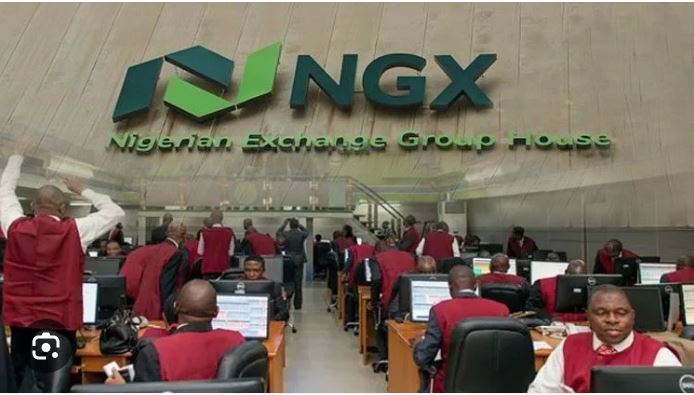
Nigerias-Stock-MarketThe Nigerian equities market retreated on Thursday as a wave of mild profit-taking in several mid-cap stocks dampened the recent rally, resulting in a total loss of N170bn for investors. This downward movement saw the market capitalisation decline from N161.839tn at the start of the session to N161.669tn by the close of trading. In tandem with the drop in market value, the All-Share Index eased  0.11 per cent, moving from 252,508.19 points to 252,243.11 points.

Despite the marginal weakness in the broader index, market breadth remained technically positive as 37 equities managed to advance against 28 decliners. This suggests that while selling pressure in previously strong-performing mid-cap counters weighed on the valuation, buying interest was still distributed across a wide range of stocks.

On the performance board, Learn Africa emerged as the top gainer with a 10.00 per cent surge to close at N9.90, followed closely by Fidson, which rose 9.97 per cent to N124.60. Other significant gainers included Austin Laz, Berger Paints, and Deap Capital, all of which recorded appreciations of over 9.9 per cent.

Conversely, the market was dragged lower by Zichis, which shed 9.99 per cent to close at N32.69, and FTN Cocoa, which declined 9.87 per cent to N9.95. Other notable laggards included Meyer, RT Briscoe, and Neimeth, as investors locked in profits following their recent price appreciations.

Investor sentiment throughout the session was characterised by a rotation between sectors, with bargain hunting in the pharmaceutical and industrial categories partially offsetting the exit from agro-allied and services stocks. Market analysts noted that this selective approach indicates that participants are becoming more cautious and strategic after the index crossed the 250,000-point threshold earlier in the week. As the session concluded, the activity suggested a period of consolidation as investors rebalance their portfolios in anticipation of upcoming corporate earnings and macroeconomic data.

NNPC urged to revive refineries after Dangote snub

The National Publicity Secretary of the Independent Petroleum Marketers Association of Nigeria, Chinedu Ukadike, has tackled the Nigerian National Petroleum Company Limited over its attempt to increase its stake in the Dangote Petroleum Refinery despite the poor state of government-owned refineries.

Ukadike stated this while reacting to comments by the President of the Dangote Group, Aliko Dangote, that the refinery rejected requests by the NNPC to increase its 7.25 per cent stake in the $20bn facility.

Dangote had disclosed this during an interview with the Chief Executive Officer of the Norwegian Sovereign Wealth Fund, Nicolai Tangen, monitored by our correspondents on Wednesday.

Reacting to the development, Ukadike questioned why the national oil company was seeking to invest more funds in the privately-owned refinery when the Port Harcourt, Warri, and Kaduna refineries under its control had remained largely inactive despite billions of dollars spent on rehabilitation.

“Why is NNPC trying to invest money in the Dangote refinery when it has three refineries that are not working? Why is NNPC not investing that money in those ones?” Ukadike asked.

He added, “The NNPC did not revive our refineries, but they want to look for where the refinery is already working to put money into it. Does that make sense?”

The IPMAN spokesman said Dangote had the right to reject the offer from the NNPC if he considered it unsuitable for his business interests.

“If Dangote refused to sell more stakes to NNPC, he must have his reasons. Dangote is a businessman. He doesn’t want issues, unnecessary crises, and nepotism. He knows what he wants, and I also think he has enough cash to fund his business,” he stated.

Ukadike further urged the national oil company to focus on reviving critical oil infrastructure across the country instead of pursuing additional ownership of the refinery. “The NNPC should repair the pipelines and revive the refineries instead of eyeing the Dangote refinery,” he said.

Dangote had stated during the interview that the NNPC was interested in acquiring more shares in the refinery after previously purchasing a 7.25 per cent stake for $1bn in 2021. According to him, the request was rejected because the company planned to list the refinery publicly and allow more Nigerians to own shares in the project.

“The other biggest risk is government inconsistencies in policies, and we are addressing that one because if you look at our refinery, the national oil company already owns 7.25 per cent, and they are trying to buy more. We are the ones that said no; we want to now spread it and have everybody be part of it,” Dangote said.

The NNPC had initially planned to acquire a 20 per cent stake in the refinery, but later reduced its ownership to 7.25 per cent after failing to pay the balance before the June 2024 deadline.

Dangote had explained this in 2024, saying, “The agreement was actually 20 per cent, which we had with NNPC, and they did not pay the balance of the money up until last year; then we gave them another extension up until June (2024), and they said that they would remain where they had already paid, which is 7.2 per cent. So NNPC owns only 7.2 per cent, not 20 per cent.”

However, a stakeholder in the petroleum sector who pleaded for anonymity because of the sensitivity of the matter held that the interest of the nation is well served by NNPC having a 20 per cent stake in the Dangote refinery.

“I think Nigeria is better served by NNPC being a shareholder. If NNPC could have taken 20 per cent of that refinery, Nigeria as a country would be better served,” the stakeholder said.

According to him, the fact that the NNPC failed to get the 20 per cent take before does not mean it could not get it again. He said Dangote refused NNPC’s offer because he wants to remain in control.

“You know Dangote is planning to value his company at $50bn. I think he’s going to sell 10 per cent only, so he remains in control, making a lot of money for himself. Selling only 10 per cent means he has 90 per cent. If NNPC were there with 20 per cent, then NNPC would have two directors. These two directors would have some say,” he said.

The stakeholder added that such an important asset cannot exist in a country without the government’s involvement.

“You can’t have such a big asset in the country, and then the government or the government’s agent has no say in the decisions of that company. It can’t happen. It’s wrong. I’m not saying the government must have a say in all the big companies, but in a company that is so big that it can influence whether the sun rises or falls in that country, the government must have a say.

“The refinery is big. In any case, NNPC is also the supplier of last resort. It’s the national oil company. That has some meaning. I think that in the best interest of the country, if we all agree that Dangote is too big to fail, then it means that Nigerians as a people need to be inside the Dangote refinery to make sure it does not fail,” the operator said.

Meanwhile, a senior official of the NNPC said the NNPC is proud of its current stake in the Dangote refinery.

“The NNPC is proud and happy that we own a 7.2 per cent stake in Dangote. And whatever we own as a stake in Dangote as a national oil company is on behalf of the entire Nigeria. So, when the opportunity presents itself in the long term, yes.

“But right now, we are proud of the 7.2 per cent stake we own in the Dangote refinery. Apart from that, the quality and level of collaboration that is currently going on between NNPC and Dangote is in the interest of the entire Nigeria,” the official said, begging not to be mentioned because he was not authorised to speak on the matter.

Strong 2025 earnings lift NEM Insurance assets to N186bn

NEM Insurance Plc has released its audited financial results for the year ended 31 December 2025, showing strong growth in assets and revenue across its group and parent operations.

At the Group level, total assets rose significantly by N61.81bn to N186.04bn in 2025, up from N124.23bn recorded in 2024. This growth reflects the company’s continued expansion and strengthened investment base.

Group liabilities also increased to N101.58bn from N58.79bn, in line with higher underwriting activities and obligations, while total equity climbed to N84.46bn, compared to N65.44bn in the previous year, underscoring improved shareholder value.

The Group recorded a strong rise in total revenue, which grew to N173.04bn from N121.6bn in 2024, representing a substantial increase driven by enhanced premium income and investment performance.

However, profitability moderated during the period, with Profit Before Tax declining to N27.98bn from N33.7bn, while Profit After Tax stood at N23.9bn, down from N29.24bn in the prior year.

At the Parent Company level, NEM Insurance Plc also posted notable growth in key balance sheet indicators.


Total assets increased to N178.59bn in 2025 from N121.93bn in 2024, while total liabilities rose to N94.59bn, compared to N56.49bn recorded in the previous year.

Revenue for the parent company grew to N165.72bn, up from N119.88bn, reflecting sustained business expansion and improved operational performance.

Similar to the Group, profitability declined, with PBT falling to N27.56bn from N33.52bn and PAT decreasing to N23.55bn from N29.08bn in 2024.

Commenting on the results, the company noted, “The performance demonstrates resilience and strong market positioning, driven by revenue growth and asset expansion, despite prevailing economic and industry challenges that impacted margins.”

The company reaffirmed its commitment to delivering value to shareholders, strengthening underwriting capacity, and sustaining growth through innovation and customer-focused insurance solutions.

Union Bank bags ASBON award

Union-Bank-logoUnion Bank of Nigeria has bagged the Best SME Growth Banking Initiatives Award for 2025, reaffirming its reputation as a premier supporter of local commerce.

The accolade was presented by the Association of Small Business Owners of Nigeria at the Nigeria National SME Business Awards recently held in Lagos.

The award recognises the Bank’s strategic leadership in advancing the growth and resilience of small and medium-sized enterprises through a differentiated suite of solutions designed to enable business expansion and long-term value creation.

Receiving the award on behalf of the bank, Head of the SME Segment at Union Bank, Ayokunnumi Abraham, described the recognition as a strong endorsement of the institution’s commitment to the sector.

“We are honoured to receive this recognition, which reflects Union Bank’s continued commitment to helping SMEs grow by making banking simpler, faster, and more accessible,” Abraham said.

“Through enhancements to our specialised platforms, such as Union360, we have meaningfully reduced the time it takes for businesses to come on board and begin transacting,” he added.

He further noted that these digital improvements have shortened onboarding times, increased digital adoption among SME customers, and accelerated the acquisition of new business clients.

“Our focus remains on delivering practical solutions that help Nigerian businesses thrive,” he added.

ASBON, in partnership with the Lagos State Government through the Ministry of Commerce, Cooperatives, Trade, and Investment, brought together public and private sector stakeholders to celebrate organisations making meaningful impact across Nigeria’s SME ecosystem.

Established in 1917, Union Bank remains a leading provider of financial services in Nigeria, guided by its “Simpler, Smarter Banking” philosophy. With more than 300 branches and a digital suite, including mobile banking, trade finance, and equipment leasing, the Bank helps public and private sectors achieve lasting success.

Dangote rejects NNPC offer to increase stake in refinery

Dangote-3-688×460The President of the Dangote Group, Alhaji Aliko Dangote, has said the group rejected requests by the Nigerian National Petroleum Company Limited to increase its 7.25 per cent stake in the Dangote Petroleum Refinery.

Dangote stated this in an interview with the Chief Executive Officer of the Norwegian Sovereign Wealth Fund, Nicolai Tangen. The interview was monitored by one of our correspondents on Wednesday.

This came as findings by The PUNCH showed that petrol supply from the $20bn Lekki-based refinery rose to 3.18 billion litres in the first quarter of 2026, while imports fell sharply to 965.52 million litres.

Further findings indicated that the average domestic ex-depot petrol price from the Dangote refinery across January to March 2026 was about ₦1,000 per litre. This implies that the multi-billion-dollar plant supplied over N3.2tn worth of petrol domestically during the review period.

Also, the war between the United States and Iran, and its resultant disruption of the oil sector and other sectors, has led to increased revenue for the Dangote refinery, as the plant has raised its refined petroleum products export.

According to Dangote during the interview, the NNPC’s offer to increase its 7.25 per cent stake in the refinery was rejected because the company is planning to go public and give other Nigerians the opportunity to own shares in the plant.

It was reported that in 2021, the NNPC acquired the 7.25 per cent stake in the refinery for $1bn, with an option to acquire the remaining 12.75 per cent stake by June 2024. But the national oil firm reneged on its decision.

During the interview with the Norwegian Sovereign Wealth Fund CEO, Dangote revealed that the national oil company had made attempts to acquire more stakes in the refinery, but this was turned down.

Responding to questions about what could be the biggest risks to his businesses, Dangote mentioned civil war and government policy inconsistencies, saying, “Actually, if there are civil wars, which is not in the offing at all.

“The other biggest risk is government inconsistencies in policies, and we are addressing that one because if you look at our refinery, the national oil company already owns 7.25 per cent, and they are trying to buy more. We are the ones that said no; we want to now spread it and have everybody be part of it.”

Recall that the NNPC, under the former Group Chief Executive Officer, Mele Kyari, reduced its stake in the refinery from 20 per cent to 7.25 per cent. Aliko Dangote made this public in 2024. He disclosed that the NNPC had only a 7.2 per cent stake in the refinery and not 20 per cent as many Nigerians believed.

“The agreement was actually 20 per cent, which we had with NNPC, and they did not pay the balance of the money up until last year; then we gave them another extension up until June (2024), and they said that they would remain where they had already paid, which is 7.2 per cent. So NNPC owns only 7.2 per cent, not 20 per cent,” Dangote stated in 2024, to the surprise of many Nigerians.

Speaking further during the latest interview, the billionaire businessman said shareholders can get their dividends in dollars. “What we are announcing is that when you invest in any of our businesses going forward, in cement or in the refinery, in petrochemicals, in fertiliser, we guarantee to pay you a dividend in dollars because we are very well into exports. 80 per cent of our revenue will be in dollars,” he said.

To raise funds for building the refinery, Dangote said he got a lot of support from various financial institutions, including Nigerian banks.

According to him, the initial plan was to fund most of the construction work “from our internally generated funds”, but because of naira devaluation, the group “had to rely on Afreximbank, Africa Finance Corporation, Zenith Bank, Access Bank, UBA and a couple of the local banks, but of course we also have a very good relationship with the Standard Bank of South Africa and, at the beginning, Standard Chartered Bank of the UK”.

He maintained that the company was lucky and what happened when the plant was completed “turned out to be much more than our own expectations”.

In the interview, Dangote disclosed how he sold his properties in the United States and the United Kingdom to settle in Nigeria.

“When I decided to go into the industry, you know what I did? I sold all my properties in the US. I had two houses in the US, big mansions, and I had a house in the UK. I wanted to really sit in Nigeria and concentrate.

“You know, sometimes when you own a holiday home anywhere, you have to create that time to go and use that property. So, now my life is very simple. Wherever I go, I use hotels; I pay. When I leave, nobody will call me and say I have a burst pipe or something is wrong. So I’m committed to what I do, and I just don’t do things; I always create a vision.

“It’s just like now; we created a vision for 2030. So, I know I have a target to meet. I just don’t do business. All my businesses are targeted,” he said.

On how he decides which business to venture into, the business mogul replied, “I first of all look at what we need as a people? What is it that we are supposed to be producing, and we’re importing? So we do what you call ‘backward integration’. We produce what the people need, and we are now producing things that when you wake up as a human being every morning, you must use part of what we produce,” he said.

While defending why the NNPC reduced its planned stake in the Dangote refinery in 2024, the NNPC’s former spokesman, Olufemi Soneye, said it was to invest in compressed natural gas stations.


N3.2tn petrol supply

Petrol supply from local refineries rose to 3.18 billion litres in the first quarter of 2026, while imports fell sharply to 965.52 million litres, according to data from official documents of the Nigerian Midstream and Downstream Petroleum Regulatory Authority analysed by The PUNCH.

Although the NMDPRA documents did not directly name Dangote refinery in the first-quarter supply table, industry records show that it is the only refinery in Nigeria currently known to be producing Premium Motor Spirit on a commercial scale.

The agency’s fact sheet also listed Dangote among Nigeria’s active refineries and separately tracked its PMS performance. The figures showed that Nigeria’s total petrol supply stood at 4.14 billion litres between January and March 2026, with local refinery supply accounting for 76.7 per cent, while imports contributed 23.3 per cent.

This marked a major shift from the first quarter of 2025, when domestic refineries supplied 1.99 billion litres, while oil marketers imported 2.43 billion litres. Total supply in Q1 2025 stood at 4.42 billion litres.

For a proper year-on-year comparison, The PUNCH converted the 2025 figures from the average daily supply provided by the NMDPRA into monthly volumes by multiplying each month’s million litres per day by the number of days in the month and then by one million. This became necessary because the 2026 report provided actual monthly litre volumes, while the 2025 data was presented as daily averages.

The analysis showed that local refinery supply jumped by 59.2 per cent from 1.99 billion litres in Q1 2025 to 3.18 billion litres in Q1 2026. Importation, however, dropped by 60.2 per cent from 2.43 billion litres to 965.52 million litres.

Despite the increase in local refining, total petrol supply declined by 6.2 per cent year-on-year from 4.42 billion litres in Q1 2025 to 4.14 billion litres in Q1 2026.

In January 2026, local refinery supply stood at 1.24 billion litres, importation was 698.19 million litres, while total supply reached 1.94 billion litres. This translated to a daily average of 40.07 million litres from local refining, 22.52 million litres from imports, and 62.59 million litres in total supply.

Compared with January 2025, local refinery supply rose by 109.8 per cent from 19.1 million litres per day, while imports fell by 8.8 per cent from 24.7 million litres per day. Total daily supply also increased by 43.2 per cent from 43.7 million litres per day.

In February 2026, local refinery supply dropped to 824.45 million litres, while imports collapsed to 85.10 million litres. Total supply fell to 909.55 million litres. On a daily basis, local refinery supply averaged 29.44 million litres, imports averaged 3.04 million litres, and total supply averaged 32.48 million litres.

This showed that while local refinery supply was 18.7 per cent higher than the 24.8 million litres per day recorded in February 2025, imports crashed by 88.9 per cent from 27.5 million litres per day. Total supply also fell by 37.9 per cent from 52.3 million litres per day in the same month of 2025.

In March 2026, local refinery supply recovered to 1.11 billion litres, while importation rose to 182.24 million litres. Total supply stood at 1.29 billion litres. This amounted to daily averages of 35.87 million litres from local refining, 5.88 million litres from imports, and 41.75 million litres in total supply.

Compared to March 2025, local refinery supply increased by 56.6 per cent from 22.9 million litres per day, while importation fell by 79.5 per cent from 28.7 million litres per day. Total supply declined by 19.1 per cent from 51.6 million litres per day.

Month-on-month, total petrol supply fell by 53.1 per cent from 1.94 billion litres in January 2026 to 909.55 million litres in February, before rising by 42.3 per cent to 1.29 billion litres in March.

Local refinery supply also fell by 33.6 per cent between January and February, before rising by 34.9 per cent in March. Imports declined by 87.8 per cent in February but increased by 114.2 per cent in March.

The NMDPRA’s April 2026 FAAC report showed that PMS supply rose from 909.55 million litres in February to 1.29 billion litres in March, representing a 42.29 per cent increase. It also showed that PMS distribution through truck-out fell from 1.59 billion litres in February to 1.47 billion litres in March.

The figures indicate that Nigeria’s petrol market is becoming less dependent on imports, with domestic refining now providing the bulk of the national supply.

However, the decline in total Q1 supply suggests that increased local refinery output has not fully translated into higher overall petrol availability compared with the same period of 2025.

The PUNCH earlier reported that Nigerians consumed about 4.93 billion litres of Premium Motor Spirit (petrol) to fuel various economic activities in the first quarter of 2026, according to an analysis of the Nigerian Midstream and Downstream Petroleum Regulatory Authority’s downstream fact sheet monthly data.

It revealed that this amount represents a 7.4 per cent increase from the 4.59 billion litres recorded in the corresponding period of 2025.

The PUNCH also reported that the Dangote Petroleum Refinery exported about 434 million litres of Premium Motor Spirit (petrol) in March 2026, as the facility diversified its customer base after significantly outpacing domestic consumption.

The report indicated that the refinery, owned by Aliko Dangote, operated at an average capacity utilisation of 93.62 per cent, reinforcing its position as the dominant supplier of refined petroleum products in Nigeria.

In earlier remarks reported in 2025, the Dangote group chairman, Aliko Dangote, asserted that the refinery had sufficient refined products in storage to meet domestic needs, saying:

“Right now, we have more than half a billion litres in storage. The refinery is producing enough refined products, gasoline, diesel, and kerosene to meet all of Nigeria’s needs.”

Commenting in an earlier report, renowned energy economist Professor Wumi Iledare, noted that Nigeria’s reliance on imported petrol has declined but has not been eliminated. He also warned against claims that fuel importation has ended following increased domestic supply from the Dangote Petroleum Refinery.

In a personal note titled “Dangote Refinery, Petrol Imports, and Market Reality,” Iledare said recent assertions that Nigeria no longer imports petrol reflect “understandable optimism” but overstate the economic reality of the downstream oil market.

“Recent claims that petrol importation into Nigeria has ended because Dangote Refinery now meets domestic demand reflect understandable optimism, but they overstate economic reality.

“Dangote Refinery has significantly improved domestic supply conditions and reduced Nigeria’s marginal reliance on imported petrol. However, neither Dangote refinery nor petroleum marketers determines national supply outcomes,” he said.

The Chief Executive Officer of petroleumprice.ng, Jeremiah Olatide, recently said that Nigeria’s domestic refining capacity has grown significantly.

Olatide described the development as a major milestone in the country’s long-standing quest to reduce dependence on imported petroleum products.