Access Holdings posts N1tn PBT, equity hits N4.33tn

Access-Holdings-Plc

Access Holdings Plc’s audited financial results for the year ended 31 December 2025 revealed a fortress-like balance sheet, with shareholders’ funds climbing 15 per cent to N4.33tn, signalling a definitive shift in its corporate evolution, moving away from a decade of aggressive expansion towards a model centred on “value over scale”.

The Group’s Profit Before Tax crossed the N1tn threshold for the first time, settling at N1.01tn. This 16.2 per cent increase from the previous year highlights a resilient performance despite a transitional and often volatile global operating environment.

While the banking subsidiary remains the primary engine, contributing 97 per cent of total revenue, the 2025 results highlight a significant deepening of the Group’s ecosystem. Net fees and commission income surged 40.9 per cent to N585.1bn, a testament to the success of its non-banking verticals.

The Group also demonstrated sharper operational teeth, successfully driving down its cost-to-income ratio from 56.7 per cent in 2024 to 51.7 per cent in 2025.

The leadership team and the report itself offer a clear narrative of an institution transitioning from “growth at all costs” to “disciplined value creation”.

Commenting on the results, Group Managing Director/CEO of Access Holdings, Innocent Ike, said, “We have now entered a more deliberate optimisation phase, with a stronger emphasis on returns on capital, earnings quality, and long-term value creation. Our 2025 performance reflects both the resilience of the Access franchise and the strength of the institution we have built over time.”

“This growth highlights not only the scale of the Group’s operations but also the deepening trust of customers, counterparties, and investors. Total assets increased 24.3 per cent to N51.57tn, while customer deposits grew 53.4 per cent to N34.56tn,” an official statement, Access Holdings 2025 Audited Report, stated.

It further read, “Africa remains one of the most compelling long-term growth frontiers globally. Our role is not only to participate in that growth but also to help shape and finance it. At Access Holdings, we have built an institution designed to endure, anchored on strong governance, disciplined execution, and a clear strategic direction. Our focus remains on delivering consistent, high-quality, risk-adjusted returns while building a financial institution that will stand the test of time.”

The Group’s performance was bolstered by an improving Nigerian economy. With national GDP growth strengthening to 3.9 per cent and foreign exchange reserves rising above $45bn, the environment provided a fertile ground for credit expansion and capital market activity. This was mirrored in the NGX All Share Index, which gained over 51 per cent during the period.

As Access Holdings looks towards the 2026 fiscal year, the mandate is clear: maintain the N1tn momentum while ensuring that every naira of capital deployed returns maximum value to the shareholders who have now built a N4.33tn equity base.

OPEC To Engage Africa Oil Producers At 2026 AEW, As Global Oil Market Shifts Focus On Supply Chain

As global oil markets undergoes fundamental transformation characterized by a reduced reliance on Middle East supply due to intense regional conflict and a shift in market power away from traditional OPEC structures, African oil producers are set to engage Leadership of the Organization at the African Energy Week (AEW), holding in South Africa.

The OPEC’s medium-term outlook into 2026–2027 continues to emphasize the need for sustained upstream investment to offset natural field decline and ensure long-term supply adequacy. While oil demand growth is increasingly concentrated in Asia and emerging markets, Africa’s role as both a producing region and a demand growth frontier is becoming more pronounced in global energy forecasts.

The organization is also placing greater emphasis on the role of gas and integrated energy systems in supporting long-term energy security.

This aligns with Africa’s own LNG expansion trajectory, with major developments underway in Mozambique, Mauritania-Senegal and across West and North Africa, where new projects are gradually reshaping the continent’s export capacity.

The OPEC Secretary General Haitham Al Ghais will address AEW 2026 in Cape Town, bringing one of the most influential voices in global oil governance into direct engagement with Africa’s leading producers, investors and policymakers.

At AEW 2026, Al Ghais is expected to engage in high-level discussions around market stability, investment requirements and Africa’s long-term production outlook, as global producers seek to balance security of supply with capital discipline in a more complex geopolitical environment.

His participation comes as global oil markets continue to adjust to evolving geopolitical dynamics, OPEC+ supply management decisions and shifting demand patterns across emerging economies. With spare capacity closely managed and production discipline remaining a central feature of market coordination, OPEC continues to play a stabilizing role in global energy markets.

OPEC+ – which accounts for roughly 45 per cent of global crude oil supply – has maintained a cautious production approach into 2026, prioritizing market stability alongside broader considerations of global demand trends and economic growth trajectories. At the same time, energy security has returned to the forefront of policy discussions across both producing and consuming countries, reinforcing the importance of predictable and well-coordinated supply frameworks.

Within this environment, Africa remains structurally important to OPEC’s evolving outlook. The continent is home to key member states including Nigeria, the Republic of Congo, Equatorial Guinea, Algeria, Gabon and Libya, each playing a distinct role in the organization’s broader production and investment framework.

Nigeria, OPEC’s largest African producer, continues to pursue upstream reforms under the Petroleum Industry Act, alongside efforts to revitalize key assets such as the Niger Delta Joint Venture portfolio and deepwater developments like Bonga North, aimed at stabilizing output and improving investment conditions after years of volatility.

The Republic of Congo is steadily expanding offshore production through developments in the Moho Nord extension and Marine XII projects in partnership with international operators, while Equatorial Guinea is advancing LNG and gas monetization anchored by the Punta Europa LNG complex and the Gas Mega Hub strategy.

In Libya, production recovery efforts continue around key fields in the Sirte Basin as operators work to restore output stability, while Algeria is maintaining investment momentum through gas developments led by Sonatrach, particularly around its Hassi R’Mel expansion and LNG export infrastructure. Gabon, meanwhile, is focusing on sustaining offshore production through redevelopment of mature fields and broader partnerships aimed at improving recovery rates and extending asset life.

“Africa is not operating at the margins of global energy markets – it is central to their stability, resilience and future balance,” said NJ Ayuk, Executive Chairman of the African Energy Chamber. “Having Secretary General Haitham Al Ghais at African Energy Week reflects the reality that today’s energy challenges cannot be solved without Africa at the table, shaping the conversation on supply, investment and long-term security.”

Guinea Insurance Announces Q1, 2026 Result, Revealing Details Of Major Growth Trajectory

Foremost underwriting firm, Guinea Insurance Plc has announced its unaudited financial results for the period ended 31 March 2026, reflecting a resilient top line performance, a strengthened asset base, and a deliberate strategic response to industry wide claims pressure.


Net Expenses on Reinsurance Contracts stood at ₦109.3 million, representing a decline of approximately 162.6% from ₦174.7 million recorded in March 2025. This movement reflects a more conservative risk transfer approach, as the Company strengthened its reinsurance cover to mitigate exposure to emerging risks and high value claims within the market.


Insurance Service Expenses rose significantly by about 803% to ₦850.1 million, compared to ₦94.1 million in March 2025. This sharp increase was largely driven by the settlement of a cluster of high value industry claims, which the Company honoured promptly and responsibly. These claims, arising from unforeseen risk events, placed considerable pressure on earnings, affecting both top line efficiency and bottom line performance, and resulting in a loss for the period. Total Assets grew by 6.9 per cent to ₦7.75 billion, supported by strong investment performance. Investment Properties increased by 29.5 per cent to ₦1.11 billion, driven by favourable revaluations and portfolio optimisation.


Ademola Abidogun, Managing Director/Chief Executive Officer, Guinea Insurance PLC commented: “While the period under review reflects a temporary setback in profitability, it is important to emphasise that the fundamentals of our business remain sound. The claims experience recorded is reflective of broader industry trends rather than isolated to Guinea Insurance. We made a conscious decision to settle all valid claims promptly, reinforcing our commitment to trust, reliability, and customer confidence. We are confident that our strengthened risk management framework, disciplined underwriting approach, and enhanced reinsurance programme will position the Company for a strong rebound in subsequent quarters. Our focus remains on delivering sustainable value to shareholders while upholding our promise to policyholders.”


Looking ahead, the Company remains cautiously optimistic. Management has initiated targeted recovery measures, including tighter cost management, portfolio rebalancing, and a renewed focus on profitable business segments. These actions are expected to restore earnings momentum and reinforce the Company’s competitive position within the Nigerian insurance market.

Amid Middle East Conflict ExxonMobil Posts $4.2 Billion Earnings In Q1, 2026

Oil major Exxon Mobil Corp. has reported first-quarter 2026 earnings of $4.2 billion.

According to the results earnings totaled $4.9 billion excluding identified items, and $8.8 billion when also excluding unfavorable estimated timing effects.

First-quarter earnings declined from $7.7 billion in the same period of 2025. However, earnings excluding identified items and timing effects were up from $7.6 billion a year earlier.

Unfavorable estimated timing effects totaled $3.9 billion, reflecting the mismatch between the valuation of financial derivatives and the associated physical transactions, resulting in a timing difference in earnings that unwinds in subsequent periods. Identified items of $0.7 billion were attributed to losses on settled financial hedges that were not offset by the associated physical shipments due to Middle East supply disruptions.

Cash flow from operations was $8.7 billion, or $13.8 billion excluding margin postings, which primarily fluctuate with the fair value of underlying derivatives. Free cash flow totaled $2.7 billion.

Shareholder distributions reached $9.2 billion, including $4.3 billion in dividends and $4.9 billion in share repurchases, in line with plans to repurchase $20 billion of shares in 2026, assuming reasonable market conditions.

Exxon’s cash capital expenditures totaled $6.2 billion for the quarter, consistent with the company’s full-year guidance of $27-29 billion.

The Company’s Chairman and chief executive officer Darren Woods emphasized the company’s underlying performance, stating that results excluding timing effects reflect the strength of the company’s advantaged portfolio.

During the earnings call, Woods said markets have not yet fully reflected the impact of Middle East supply disruptions, as inventories and strategic reserves have temporarily offset losses. He said even if the Strait reopens, it could take 1-2 months for flows to normalize, with additional demand from inventory rebuilding likely to support prices.

He added that ExxonMobil expects most curtailed production capacity to return relatively quickly once conditions stabilize, although some damage will take longer to repair. In Qatar, two affected LNG production lines could take 3-5 years to fully restore, potentially impacting about 3% of the company’s global output.

Operationally, Exxon reported net production of 4.6 MMboe/d during the quarter, compared with 4.55 MMboe/d a year earlier and nearly 5 MMboe/d in the fourth quarter, with the sequential decline largely reflecting disruptions tied to the Strait of Hormuz. Guyana set a new quarterly oil production record of more than 900,000 b/d.

Middle East assets represent about 20 per cent of ExxonMobil’s global oil-equivalent production, but a smaller share of upstream earnings. According to a recent filing with the US Securities and Exchange Commission (SEC), certain assets in Qatar and the UAE in which the company holds ownership interests experienced production disruptions beginning in March.

Meantime, the Golden Pass LNG project reached a milestone at the end of March with first production from Train 1 at its Sabine Pass terminal, followed by its first LNG export cargo loading and departure in April.

Access Holdings Plc Profit Before Tax Crosses N1 Trillion Mark

Access Holdings has demonstrated significant growth as its earnings at the end of 2025 shows strong results surpassing market expectations and forecasts.

Its Profit Before Tax (PAT) crossed the ₦1 trillion mark for the first time, rising to ₦1.01 trillion, a 16.2 per cent increase compared to the previous year as contained in its audited results for the financial year ended December 31, 2025.

This which marks a significant turning point in its corporate journey as it shifts from a growth model defined by scale to one increasingly anchored on value creation, efficiency, and earnings quality.

The Group delivered a resilient performance during the year, navigating a transitional operating environment while demonstrating the strength of its franchise and the robustness of the governance structures it has built over time.

This milestone underscores the Group’s steady progression toward becoming a high-performing and resilient financial institution.

Net interest income rose to ₦1.36 trillion, while net fees and commission income recorded a particularly strong growth of 40.9 per cent to ₦585.1 billion, reflecting increasing diversification in revenue streams. Overall operating income after impairment grew by 23.9 per cent to ₦3.17 trillion. At the same time, the Group improved its cost discipline, with its cost-to-income ratio declining to 51.7 per cent from 56.7 per cent in 2024. Returns also remained solid, with return on average equity at 18.4 per cent and return on average assets at 1.6 per cent, reinforcing the quality of earnings delivered during the year.

Commenting on the results, Group Managing Director/Chief Executive Officer, Innocent C. Ike, said: “Our 2025 performance reflects both the resilience of the Access franchise and the strength of the institution we have built over time. Despite a dynamic operating environment, we delivered strong earnings supported by diversified income streams, disciplined execution, and a continued focus on balance sheet optimisation.”

“We have now entered a more deliberate optimisation phase, with a stronger emphasis on returns on capital, earnings quality, and long-term value creation,” he added.

The balance sheet also recorded significant expansion, driven by strong deposit mobilisation and sustained customer confidence. Total assets increased by 24.3 per cent to ₦51.57 trillion, while customer deposits grew by 53.4 per cent to ₦34.56 trillion. Shareholders’ funds rose by 15 per cent to ₦4.33 trillion, reflecting both retained earnings and continued investor confidence in the institution. This growth highlights not only the scale of the Group’s operations but also the deepening trust of customers, counterparties, and investors.

The operating environment during the year showed signs of gradual improvement, which supported performance. Nigeria’s economic growth strengthened to about 3.9 per cent, inflation moderated from elevated 2024 levels, and foreign exchange reserves rose above $45 billion. The NGX All Share Index gained over 51 per cent during the year, reflecting renewed investor confidence and stronger capital market activity. These developments contributed to improved capital flows and a more supportive backdrop for financial institutions.

While banking remains the core earnings driver, contributing about 97 per cent of total revenue, the Group continues to make measured progress in diversifying its income base. Its investment management and insurance businesses, including Access ARM Pensions and Access Insurance Brokers, provide stable and recurring income streams, while technology-led platforms such as Oxygen X Finance and Hydrogen Payment Services are strengthening its position in the digital financial services landscape.

The Group’s strategic direction is now increasingly defined by a shift from scale to value. Having built scale across markets and segments, management is focusing more deliberately on improving returns on capital, enhancing earnings quality and deepening cost discipline. This transition reflects a clear objective to build a more valuable institution capable of delivering consistent and resilient returns over the long term.

Looking ahead, Access Holdings expects macroeconomic conditions to continue stabilising, creating opportunities for credit expansion, increased transaction volumes, and higher levels of activity across the financial system. The Group intends to maintain its focus on disciplined execution, improved capital efficiency, and sustainable growth across its diversified platform.

Ike noted: “Africa remains one of the most compelling long-term growth frontiers globally. Our role is not only to participate in that growth, but to help shape and finance it.

“At Access Holdings, we have built an institution designed to endure, anchored on strong governance, disciplined execution, and a clear strategic direction. Our focus remains on delivering consistent, high-quality, risk-adjusted returns while building a financial institution that will stand the test of time.”

FCMB, BHM champion alternative media revenue streams

First City Monument Bank and BHM have led a renewed push for alternative revenue models in Nigeria’s media industry amid declining traditional advertising income.

The organisations hosted the pilot edition of The Monetised Content Masterclass on 20 April in Lagos, bringing together reporters, content creators and editors to address growing concerns over the sustainability of newsrooms and media platforms.

The session comes as traditional advertising revenues continue to decline for publishers, even as Nigeria’s entertainment and digital media market expands and is projected to hit $4.9bn by 2026.

Participants at the masterclass examined practical strategies for diversifying income streams, strengthening financial resilience and sustaining editorial independence.

They explored opportunities beyond advertising, including brand partnerships, digital content monetisation and audience-led revenue models, during panel discussions, question-and-answer sessions and peer exchanges.

The Divisional Head, Corporate Affairs, FCMB Group, Diran Olojo, said, “Traditional models are under pressure, and attention is more fragmented than ever. The focus now is on building structured, sustainable platforms that can deliver both impact and long-term value.”

Also, the Chief Executive Officer and Founder of BHM, Ayeni Adekunle, said, “The economics of media have changed. For journalism to remain independent, it must also become financially resilient. That shift requires new thinking and deliberate action.”

The session, moderated by the Founder and Chief Executive Officer of Big Tech This Week, Fatu Ogwuche, featured notable speakers, including investigative journalist Fisayo Soyombo, storyteller and producer Chris Ihidero, executive and storytelling expert Jennifer Mairo, and digital media entrepreneur Peter Oluka.

The organisers said the initiative reflects a shared commitment by FCMB and BHM to strengthen the long-term sustainability of Nigeria’s media ecosystem through capacity building and industry collaboration.

Investors gain N3.2tn as bulls dominate NGX

NGX-750×375Investors gained N3.26tn at the close of trading on Thursday as the Nigerian equities market extended its bullish run, driven by sustained buying interest in large-cap and consumer-linked stocks.

Market capitalisation, which represents the total value of listed shares, opened the session at N152.728tn and rose significantly to close at N155.994tn, reflecting a robust renewal of investor appetite. This upward momentum was further mirrored in the All-Share Index, which advanced from an opening of 237,205.59 to close at 242,277.81.

The day’s performance was characterised by positive market breadth, with 46 gainers emerging against 40 losers, highlighting the dominance of the bulls across several key sectors.

Leading the pack of gainers were major blue-chip companies, including CAP, FTN Cocoa, UACN, Unilever, and Seplat, all of which appreciated by the maximum daily limit of 10.00 per cent. Specifically, Seplat recorded a massive rally to close at N11,495.00, while Unilever and UACN climbed to N137.50 and N181.50, respectively.

Conversely, the market recorded some laggards led by Alex, which declined by 9.95 per cent to close at N9.50, followed by Royal Exchange and Legend Identity, which shed 9.93 per cent and 9.32 per cent, respectively.

Other stocks, such as Austin Laz and Neimeth, also featured on the losers’ chart as some investors engaged in profit-taking to moderate the general market advance.

Meanwhile, heavyweight counters like Dangote Cement, Julius Berger, and Custodian Investment remained flat, closing the session with no price change.

Investor sentiment remained broadly positive throughout the day as market participants strategically positioned themselves ahead of upcoming corporate disclosures and anticipated macroeconomic shifts.

The strong demand for select large-cap stocks suggests a high level of confidence in the market’s near-term trajectory. Financial analysts noted that the current surge in valuation is a testament to the resilience of the market, which continues to provide significant returns for investors despite selective selling in mid-cap categories.

NNPC completes OB3 pipeline crossing River Niger

NNPC LimitedThe Nigerian National Petroleum Company Limited has completed the long-anticipated River Niger crossing of the Obiafu-Obrikom-Oben gas pipeline, unlocking a key segment of the country’s gas transmission network and paving the way for increased supply to power plants and industries.

The feat, delivered by the NNPC Gas Infrastructure Company, a subsidiary of NNPC Ltd, involved drilling approximately two kilometres beneath the River Niger using advanced horizontal directional drilling technology, a method reserved for complex engineering terrains.

Announcing the development in a statement on Thursday, the Chief Corporate Communications Officer of NNPC Ltd, Andy Odeh, said the milestone effectively activates the full capacity of the 130-kilometre OB3 pipeline, which is designed to transport up to two billion standard cubic feet of gas per day.

The statement read, “The NNPC Gas Infrastructure Company, a wholly owned subsidiary of NNPC Limited, has successfully completed the River Niger Crossing of the 130-kilometre Obiafu-Obrikom-Oben Gas Pipeline, marking a major milestone in the expansion of Nigeria’s national gas transmission network.

“The successful crossing unlocks the full potential of the OB3 Pipeline, a strategic infrastructure designed to transport up to 2 billion standard cubic feet of gas per day, significantly strengthening energy availability, enhancing supply reliability, and accelerating national economic development.”

The firm noted that the completion would, in the near term, unlock over 500 million standard cubic feet of additional gas supply for the domestic market, with implications for electricity generation, manufacturing, and exports.

The Group Chief Executive Officer of NNPC Ltd, Bayo Ojulari, described the crossing as a turning point for Nigeria’s gas infrastructure drive.

He said, “The completion of the OB3 River Niger Crossing is a defining milestone for Nigeria’s gas infrastructure and a clear demonstration of what disciplined execution and sustained commitment to excellence can deliver.

“By successfully traversing one of the most technically challenging sections of the project, we have unlocked a critical link that will enhance gas supply reliability, deepen domestic utilisation, and support power generation and industrial growth across the country.”

Ojulari explained that the achievement was built on recent engineering successes, particularly the earlier River Niger crossing on the Ajaokuta-Kaduna-Kano pipeline project, completed in 2025.

“This achievement is not incidental. It is the result of deliberately leveraging and upscaling our AKK engineering and execution excellence through rigorous project governance, innovative engineering solutions, adaptive problem-solving, and the unwavering commitment of our teams and PCE Nig. Limited,” he said.

He added, “The OB3 Pipeline is central to our ambition of building an integrated and resilient gas network that underpins Nigeria’s energy security and economic development. I commend everyone involved for their doggedness and for staying the course to deliver this strategic national asset.”

The NNPC boss also linked the development to the Federal Government’s broader energy targets, including plans to raise crude oil production to three million barrels per day and gas output to 12 billion standard cubic feet per day by 2030.

According to him, “The successful River Niger Crossing ensures that Nigeria’s gas-producing regions are now physically interconnected with the rest of the country, a critical requirement for achieving our long-term production and supply aspirations.”

He further acknowledged the role of the Federal Government and other stakeholders in delivering the project. “We sincerely appreciate the continued support of the Federal Government under the leadership of President Bola Ahmed Tinubu, whose Gas-to-Prosperity agenda and commitment to a conducive business environment have been instrumental in making this achievement possible.

“NNPC Limited could also not have achieved this feat without the trust and guidance of its Board of Directors,” he added.

Ojulari reaffirmed the company’s commitment to expanding energy access and economic growth. “At NNPC Limited, we remain fully committed to translating Nigeria’s oil and gas resources into a better standard of living for all citizens. We will continue to collaborate with our partners to deliver projects that expand energy availability, stimulate industrialisation, and improve the overall well-being of Nigerians,” he said.

He also commended host communities, project contractors, and staff of the gas infrastructure company for their persistence in overcoming technical and environmental challenges.

The OB3 pipeline is regarded as a backbone project in Nigeria’s gas master plan, linking eastern gas fields to western demand centres and further connecting to the northern corridor through the AKK pipeline.

For years, the OB3 pipeline faced delays, particularly at the River Niger crossing, widely considered the most difficult segment due to geological and environmental constraints in the Niger Delta region.

The inability to complete the crossing had limited gas flow between eastern supply hubs and western industrial markets, contributing to supply bottlenecks and underutilisation of installed power generation capacity.

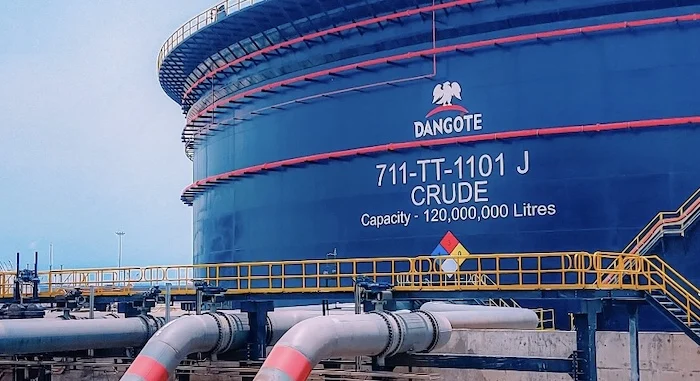
Dangote refinery recalls engineers after union face-off

DANGOTE REFINERYAfter months of blackouts, President Bola Tinubu has begun a fresh restructuring of Nigeria’s power sector with the nomination of a new minister of power and the appointment of a special adviser to head a presidential task force on sector reforms.

In a move aimed at accelerating reforms in the electricity value chain, the President nominated Mr Joseph Tegbe as Minister of Power, subject to Senate confirmation, while also appointing a former power minister, Mr Lanre Babalola, as Special Adviser on Power and Chairman of the Presidential Task Force on Power Sector Reset and Restoration.

The developments were contained in separate State House press releases issued on Wednesday by the Special Adviser to the President on Information and Strategy, Bayo Onanuga.

According to the presidency, Tegbe’s nomination follows the resignation of the former Minister of Power, Adebayo Adelabu, who stepped down to pursue his governorship ambition in Oyo State.

Tegbe, another indigene of Oyo State, is described by the presidency as a fiscal and economic reform expert with more than 35 years of experience across both the public and private sectors.

He was said to have previously served as senior partner and head of advisory services at KPMG Africa, where he led assignments in fiscal policy reform, governance restructuring, institutional transformation, and investment advisory.


He has also worked closely with government institutions and private sector operators on regulatory frameworks and strategic reforms.

At present, he serves as Director-General and Global Liaison for the Nigeria-China Strategic Partnership, where he coordinates bilateral development cooperation between Nigeria and China, particularly in line with the Forum on China-Africa Cooperation objectives.

The presidency also noted that Tegbe has had significant engagement within the power sector, especially in areas relating to regulatory and institutional reforms involving agencies such as the Nigerian Electricity Regulatory Commission and the Nigerian Bulk Electricity Trading Company.

His nomination, according to the statement, is expected to strengthen ongoing efforts to stabilise the national grid, improve sector efficiency, and attract long-term investment into the electricity value chain.

“The President expects the Minister-Designate, upon confirmation, to bring his extensive expertise to bear to advance critical reforms and deliver improved outcomes for Nigerians in the power sector,” Onanuga stated.

In a separate development, Tinubu appointed Babalola as his Special Adviser on Power and Chairman of the Presidential Task Force on Power Sector Reset and Restoration.

Babalola, a former minister of power, is returning to a sector he once supervised, with the presidency describing him as bringing deep sectoral expertise and a proven understanding of the structural and operational challenges within the electricity value chain.

“Mr Babalola, a former minister for power, brings deep sectoral expertise and a proven understanding of the structural and operational challenges within the electricity value chain. His appointment underscores the President’s determination to undertake a decisive and results-driven reset of Nigeria’s power sector,” the statement said.

The presidency also announced a redesignation within the energy governance structure, stating that the Office of the Special Adviser (Energy), currently held by Olu Verheijen, has been renamed Special Adviser (Oil & Gas) in a move aimed at clarifying roles and reducing duplication of responsibilities.

“The President has also redesignated the Office of the Special Adviser (Energy) as the Special Adviser (Oil & Gas) to clarify roles and avoid duplication of functions within the energy governance framework,” Onanuga said.

According to the statement, the newly created task force will serve as a high-level delivery platform with a direct presidential mandate to drive urgent reforms across the electricity sector.

Its responsibilities include resetting the structure of the power sector, enforcing a ‘performance before expansion’ framework, reducing technical, commercial, and collection losses, and strengthening tariff discipline and cost recovery mechanisms.

The task force is also expected to improve revenue assurance, restore grid discipline, enhance market efficiency, promote productive electricity usage across key sectors, and develop electricity growth zones aimed at boosting industrial demand.

Onanuga added that it will further focus on reducing fiscal exposure to the power sector and is expected to deliver a 90-day implementation blueprint for immediate reforms.

Tinubu sacks NMDPRA boss amid jet fuel pricing row

Four months after his appointment, President Bola Tinubu has sacked the Chief Executive of the Nigerian Midstream and Downstream Petroleum Regulatory Authority, Saidu Mohammed.

Mohammed’s removal is coming at a time when members of the Airline Operators of Nigeria are threatening to shut down operations over the high cost of aviation fuel.

Similarly, his sack comes amid complaints by the Dangote Petroleum Refinery that the NMDPRA was issuing licences for fuel importation despite claiming that no licence had been issued since the beginning of the year.

In a statement announcing Mohammed’s removal on Wednesday, the Special Adviser to the President on Information & Strategy, Bayo Onanuga, said he would be replaced by Rabiu Umar.

“President Bola Tinubu has approved the removal of Mr Saidu Mohammed as the Authority Chief Executive of the Nigerian Midstream and Downstream Petroleum Regulatory Authority, in the public interest.

“The President has also approved the nomination of Mr Rabiu Abdullahi Umar as the new Chief Executive of the NMDPRA. The appointment is subject to Senate confirmation,” the statement read partly.

Onanuga explained that the decision, made pursuant to the Petroleum Industry Act 2021, is aimed at strengthening regulatory effectiveness in the midstream and downstream petroleum sector, in line with the Renewed Hope Agenda.

“Mr Umar is a seasoned executive with over 25 years of experience across the energy, manufacturing, and infrastructure sectors, and a proven track record in strategic leadership, operational transformation, and large-scale project delivery. He is a graduate of Accounting from Bayero University and an alumnus of Harvard Business School,” it was stated.

Pending Senate confirmation of the new nominee, the presidency said the most senior official of the NMDPRA would oversee operations in an acting capacity.

While appreciating the outgoing chief executive for his service and wishing him well in his future endeavours, the President said he remains committed to ensuring capable leadership in key regulatory institutions to advance energy security, sector reform, and sustainable economic growth.

Checks by The PUNCH revealed that Umar has been the Group Sales and Marketing Director at Dangote Cement. He has over 20 years of experience in senior and executive functions within the downstream petroleum and cement manufacturing sectors. Rabiu started his career in Oando Plc and rapidly rose to hold different management roles within the marketing business.

Our correspondent reports that Mohammed was asked to step aside as the Federal Government struggles to resolve the fuel crisis in the aviation industry.

Earlier, in a letter dated April 14, 2026, and addressed to the Executive Secretary of the Major Energies Marketers Association of Nigeria, Clement Isong, the President of AON, Abdulmunaf Sarina, said the surge in the price of Jet A1 had become unbearable for operators.

The PUNCH reports that AON had in its letter said “the price of Jet A1 as sold by marketers has risen significantly from the initial N900/litre as at February 28, 2026, to N3,300/litre. This represents an increase of over 300 per cent. This astronomical and artificial increase is not commensurate with the rise in crude oil prices and is well above international market benchmarks, which reflect approximately a 30 per cent increase in crude oil cost”.

But MEMAN disputed the prices quoted by AON, asking the airlines to seek alternative suppliers. “We would therefore strongly encourage any operators currently being charged at those levels to exercise their commercial right to seek alternative suppliers,” MEMAN said.

Since April 16, the situation has remained the same as airlines threatened to shut down their operations due to higher fuel costs. But on Monday, an NMDPRA report was quoted to have said that “the indicative end-user price should range between N1,760 – N1,988 per litre in Lagos and N1,809 – N2,037 per litre in Abuja”.

Recall also that the President of the Dangote Group, Aliko Dangote, in March disagreed with the outgoing chief executive of the NMDPRA over issues about the issuance of fuel import licences by the downstream regulator.

Dangote said licences were issued to six firms to import petrol into the country. With petrol vessels coming into the country, the agency has since remained silent whenever efforts were made to get its reaction.

Recall that Farouk Ahmed, the pioneer chief executive of the NMDPRA, resigned his appointment after Dangote accused him of spending over $5m to send his children to school abroad.

Dangote had, in December 2025, petitioned the Independent Corrupt Practices and Other Related Offences Commission, alleging that Ahmed spent about $7m on the secondary education of his children in Switzerland.

In the petition, Dangote accused Ahmed of abusing his office in violation of the Code of Conduct for Public Officers, alleging unlawful spending of public funds running into millions of dollars.