NGX market cap rises by N232b

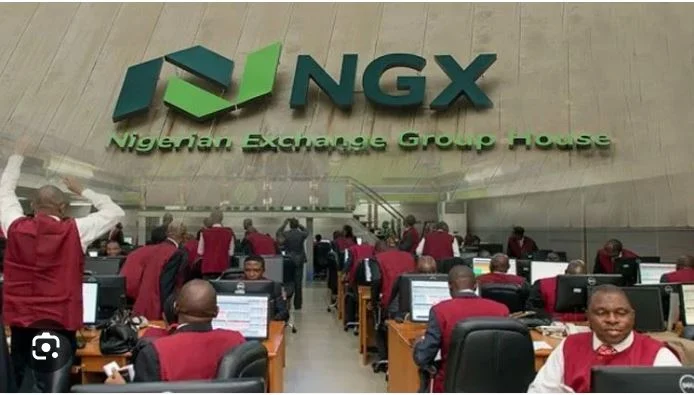
NGXThe Nigerian Stock Exchange closed higher on Thursday, 29 January 2026, as investors responded to positive market sentiment despite a slowdown in trading activity.

The total market capitalisation rose by N232bn, from N105.74tn on Wednesday, 28 January, to N105.97tn, representing a 0.22 per cent increase. Similarly, the All Share Index gained 362.93 points, moving from 165,164.38 to 165,527.31.

Trading activity, however, experienced a decline compared with the previous session. A total of 550.4 million shares were exchanged in 38,635 deals, with a turnover of N14.14bn, representing a 12 per cent decline in volume, a 14 per cent drop in turnover, and an 8 per cent decrease in deals. In total, 131 equities participated in the session, with 41 gainers and 27 losers.

Leading the gainers was RT Briscoe, which climbed 10 per cent to close at N7.15 per share, followed closely by SCOA Nigeria, up 9.91 per cent; Deap Capital Management & Trust, up 9.91 per cent; and Veritas Kapital Assurance, up 9.85 per cent. On the losing side, Haldane McCall led the laggards with a 9.84 per cent decline, closing at N3.94 per share, while Union Dicon Salt down 9.79 per cent, University Press down 8 per cent, and Legend Internet down 7.56 per cent also recorded significant losses.

In terms of volume, Veritas Kapital Assurance topped the chart with 56.6 million shares traded, followed by Guaranty Trust Holding with 26 million shares, Tantalizers with 26 million shares, and Japaul Gold and Ventures with 25.9 million shares.

FCMB posts N177bn profit

FCMBFCMB Group Plc has reported a profit after tax of N177bn for the year ended 31 December 2025, marking a 141 per cent increase from N73.3bn recorded in 2024. The performance underscores the bank’s earnings base, driven by higher interest income and improved non-interest revenue streams.

The group’s gross earnings rose sharply to N1.13tn in 2025 from N794.4bn in 2024, representing a 42 per cent growth year-on-year. This growth was largely powered by interest and discount income, which surged by 61 per cent to N1.0tn, reflecting strong lending activities across the group. Consequently, net interest income jumped to N503bn, more than double the N225.3bn posted in the previous year.

The Consolidated and Separate Statements of Profit or Loss and Other Comprehensive Income for the year ended 31 December 2025 revealed that non-interest income also contributed significantly to the bottom line. Fee and commission income increased by 29 per cent to N96bn, while net trading and other gains added further support despite some volatility. In total, the group’s other operating income and gains contributed N28bn, although this was lower than the N93.3bn recorded in 2024 due to market adjustments.


On the expense front, FCMB continued to invest in human capital and infrastructure. Personnel expenses rose to N106bn, up from N79.3bn, reflecting strategic hires and staff development programmes. General and administrative expenses increased to N127bn, while net impairment losses on financial instruments rose to N86bn, more than double the N41.2bn in 2024, highlighting proactive risk management amid a dynamic lending environment.

The bank’s total assets grew to N7.54tn,from N7.05tn in 2024, driven by growth in cash and cash equivalents, which rose to N1.3tn, and investment securities, which climbed to N2.06tn. Loans and advances to customers remained robust at N2.29tn, underscoring the group’s commitment to supporting businesses and households across Nigeria.

Moniepoint Celebrates A Decade Of impact, Microfinance Bank Disburses Over ₦1 Trillion In Credit To Empower Small Businesses in 2025

Moniepoint Inc., Nigeria’s definitive platform for small businesses and Africa’s all-in-one financial ecosystem, today released its 2025 Year in Review, marking a decade of “financial happiness” and a transformative year of growth. Highlighting its role as the backbone of Nigeria’s entrepreneurial economy with over 6 million active businesses, the company revealed that its microfinance bank has now disbursed over ₦1 trillion in credit to thousands of businesses from provision stores and supermarkets to building materials sellers.


It is worthy to note that on average these businesses experienced growth by more than 36% after accessing credit, signposting its primacy as a transformational growth level and instrument of deepening shared prosperity. Moniepoint uses alternative data points that include transaction histories, business patterns and payment behaviours in a bid to accommodate what traditional credit scoring misses to drive financial inclusion and access to credit. The company’s 2025 performance reinforces its role as a critical financial infrastructure which not only supports the Nigerian economy, but also impacts everyday lives, creating immense value.


Founded in 2015 by Tosin Eniolorunda and Felix Ike, Moniepoint Inc (formerly known as TeamApt Inc) has established itself as the leading financial platform for Nigeria’s vast network of small and medium-sized businesses (SMEs), offering an integrated suite of services, including digital payments, business bank accounts, credit, foreign exchange (FX), and management tools.


During the year, as Nigeria’s largest merchant acquirer, now powering 8 out of every 10 in-person payments made across the country, Moniepoint MFB, the banking and payments subsidiary, processed ₦412 trillion in transaction value handling more than 14 billion transactions. This clearly suggests that Moniepoint is well-positioned to play a greater role in Nigeria’s steady march towards a trillion dollar economy by 2030.


“Our journey has been one of intentional evolution,” said Tosin Eniolorunda, Group CEO and Founder of Moniepoint Inc. “What started as a passion to solve overlooked problems has evolved into a platform powering the dreams of millions. As 83% of employment in Africa exists in the informal economy, our mission to create financial happiness is an operational mandate that guides our product development, our market expansion, and our capital allocation decisions.”


Beaming with enthusiasm, Eniolorunda continues, “Yet for all we have accomplished, we approach our second decade with the clarity that our work remains unfinished. As we enter this next chapter, we do so with strengthened conviction in our strategy, deepened partnerships with world-class institutional investors, and an organisation scaled to deliver on Africa’s entrepreneurial potential. The infrastructure we have built over the past decade provides the foundation. The journey is far from over, but our resolve has never been stronger. To our partners, our customers, and our team: thank you for a decade of impact. We are just getting started.”


In 2025, Moniepoint Inc. reached a series of critical inflexion points, highlighted by the successful completion of its Series C funding round, which raised over $200 million in equity financing from leading institutional investors, including Development Partners International, Google’s Africa Investment Fund, Visa, the International Finance Corporation, and Verod Capital. The year also marked the launch of MonieWorld in the United Kingdom, extending Moniepoint’s platform to serve the African diaspora by strengthening key remittance corridors and laying the foundation for the delivery of comprehensive cross-border financial services.


Moniepoint MFB re-launched its savings product in a firm demonstration of the company’s commitment toward its’ oft stated mantra of providing financial happiness. Data reveals in terms of savings behavioral patterns, the majority of users choose to save on a daily basis, with focus across business operations (24%), rent (16.5%), and education (10%) representing top savings priorities. The launch of Moniebook and the acquisition of a national Microfinance Bank license for Moniepoint MFB further expand the company’s regulated capabilities and product depth.


TeamApt Ltd, the switching and processing subsidiary of Moniepoint Inc., also achieved major regulatory and operational milestones in 2025 that have solidified its position in the global payments landscape. After a rigorous certification process, the company successfully secured licenses from Mastercard and Visa to act as a processor and acquirer for these global card schemes.. This strategic move allows TeamApt to support international card payments directly and offer these critical switching services to other businesses across the continent. Monnify, the web payment gateway processed N25 trillion in the period under review, demonstrating remarkable resilience and industry confidence firmly positioning it for more business-to-business transactions.


Moniepoint’s impact extended beyond banking into critical social interventions even as the company partnered with the Federal Government to support the Rice Intervention Programme, reaching nearly 850,000 beneficiaries, and worked with the Kaduna State Government in grants disbursement to vulnerable citizens. Through these initiatives, Moniepoint continues to build the infrastructure required to unlock Africa’s entrepreneurial potential, positioning itself as a trusted partner for the delivery of large-scale economic empowerment programmes.


As Moniepoint Inc. enters its second decade, its well chronicled decade-long evolution from a backend technology provider to a household name, directly complements the Nigerian government’s vision of a more inclusive, data-driven, and productive financial landscape

Multi-Trex gets NGX nod to increase public shareholding

Multi-Trex Integrated Foods PlcMulti-Trex Integrated Foods Plc has secured approval from the Nigerian Exchange to take steps aimed at increasing its public shareholding, following a recapitalisation that left its free float below the Main Board requirement.

According to a statement signed by the Company Secretary, Sogunle Adekunle, on Tuesday, NGX Regulation Company granted the company a 24-month moratorium, ending 14 January 2028, to restore its free float to at least 20 per cent of issued share capital or a market capitalisation of 20bn, whichever is lower. This extension provides the company with additional time to comply with regulatory requirements while implementing strategic plans to increase shareholder participation.

The recapitalisation, which followed a seven-year cessation of operations, involved Messrs N-Foods Universal Concept Limited injecting capital to settle obligations to the Asset Management Corporation of Nigeria.

As a result, N-Foods Universal Concept Limited now controls 70 per cent of Multi-Trex’s issued share capital, leaving the company’s public free float at 7.23 per cent, valued at N117.46m, according to the 2024 audited financial statements.

In a statement to shareholders, the company emphasised its commitment to maintaining its listing on the NGX and assured investors that it is actively exploring strategies to increase the public free float. The board warned that failure to meet the NGX threshold within the extension period could result in trading suspension or potential delisting of the company’s securities.

The management expressed appreciation to shareholders for their continued patience and support during the company’s recovery phase, highlighting the strategic measures undertaken to strengthen operations and compliance with market regulations.

Multi-Trex Integrated Foods’ NGX approval marks a milestone in its ongoing business recovery, giving the company a clear regulatory pathway to enhance public participation in its shareholding while ensuring compliance with market standards.

Nigeria earns N55.5tn from crude oil sales in 2025

Nigeria earned an average of N55.5tn from crude oil sales in 2025, an analysis of official production figures released by the Nigerian Upstream Petroleum Regulatory Commission and crude price data published by the Central Bank of Nigeria has shown.

The 2025 figure is higher when compared to the N50.88tn earned in 2024.

NUPRC data indicate that Nigeria produced a total of 530.41 million barrels of crude oil between January and December 2025, with output fluctuating throughout the year amid outages, operational disruptions, and a gradual recovery in some producing fields.

The N55.5tn was obtained by multiplying 530.41 million barrels by the average crude oil price of $72.08 in 2025, and converting the result with N1,450 to a dollar.

Crude oil production opened the year strongly at 47.70 million barrels in January, before falling to 41.02 million barrels in February. Output recovered modestly in March to 43.42 million barrels and rose further in April to 44.57 million barrels. Production remained relatively stable through the second quarter, increasing slightly to 45.04 million barrels in May and 45.16 million barrels in June.

In the third quarter, crude output climbed to 46.73 million barrels in July, but dipped again in August to 44.47 million barrels and fell further in September to 41.69 million barrels, one of the lowest levels recorded during the year. Production rebounded in the final quarter, reaching 43.44 million barrels in October, 43.08 million barrels in November, and 44.08 million barrels in December, according to the NUPRC.

While output remained below Nigeria’s OPEC quota for most of the year, crude oil prices helped support revenue. Data from the CBN show that Bonny Light, Nigeria’s flagship crude grade, traded at elevated levels in the early part of the year before easing in the second quarter.

Bonny Light crude sold at an average of $80.76 per barrel in January 2025, before declining to $77.08 in February and $74.44 in March. Prices dropped further in April to $69.07 and reached a low of $65.90 in May, reflecting softer global oil market conditions.

Prices recovered in June to $73.50 and remained largely stable in the third quarter, averaging $73.18 in July, $70.55 in August, and $70.20 in September, before falling again to $66.15 in October, the latest month for which CBN data were available.

Using the simple average of the 10 monthly Bonny Light prices published by the CBN, crude prices averaged $72.08 per barrel over the period under review.

Applying this average price to Nigeria’s total crude oil production of 530.41 million barrels, estimated gross crude oil revenue for 2025 stood at approximately $38.23bn. Converted at an exchange rate of N1,450 to the dollar, this translates to about N55.5tn in crude oil earnings for the year.

Industry analysts noted that the figure represents gross revenue, not actual government receipts, as it does not account for production costs, joint venture cash calls, production-sharing contract cost recovery, oil theft, domestic crude supply obligations, or deferred liftings.

Nonetheless, the analysis provides a clear picture of the scale of crude oil inflows generated during the year, based strictly on official production data from the NUPRC and price benchmarks from the CBN, highlighting the continued importance of both output stability and price performance to Nigeria’s oil-dependent economy.

It should be noted that the N55tn was the amount expected to have been generated by the Nigerian National Petroleum Company Limited, the international oil companies, and their indigenous counterparts for the sale of crude produced in Nigeria.

In 2024, it was noted that Nigeria produced 408.68 million barrels of crude oil, generating approximately N50.88tn.

Crude for loan

The PUNCH reports that the government-owned Nigerian National Petroleum Company Limited serviced part of its $3bn forward-sale loan from the African Export-Import Bank with crude oil worth N991bn in 2024.

According to its 2024 financial statement report, the repayment was tied to Project Gazelle, a forward crude oil supply agreement signed in 2023.

On August 17, 2023, The PUNCH reported that the NNPC announced it had secured a $3.3bn emergency loan to repay crude oil obligations from Afreximbank. It explained that the loan would be used by the oil company to support the Federal Government in stabilising Nigeria’s exchange rate.

Under the deal, NNPC committed to deliver 90,000 barrels of crude oil per day from Production Sharing Contract assets to back a funding facility. According to the 2023 financial statement, a drawdown of $2.25bn had already been achieved by 31st December 2023, with principal repayment scheduled to begin in June 2024.

The funding carried an interest rate of 3-month LIBOR plus 6.5 per cent, with a 6 per cent margin and 0.5 per cent liquidity premium. According to the financial statement, the drawdown on the facility had reached N4.9tn out of a total available N5.1tn, while N991bn worth of crude oil had been lifted in repayment, leaving an outstanding balance of N3.8tn at the end of 2024.

It could not be ascertained yet how much crude the NNPC committed to the repayment of the N3.8tn outstanding loan in the whole of 2025.

OPEC quota

It was reported that Nigeria’s crude oil output dipped in December 2025 by 14,000 barrels per day, defying government efforts to ramp up production.

According to data from NUPRC, instead of rising to meet the 1.5 million barrels per day quota set for Nigeria by the Organisation of the Petroleum Exporting Countries, crude oil production fell from 1.436 mbpd in November to 1.422 mbpd in December, representing 95 per cent of the OPEC quota.

The data show that in 2025, Nigeria’s crude oil production fell below its OPEC quota in nine months of the year, meeting or slightly exceeding the target only in January, June, and July. A review of the average daily crude oil output indicates that Nigeria opened the year strongly, producing 1.54 mbpd in January, about 38,700 bpd above its OPEC allocation.

Output, however, dipped below the quota in February at 1.47 mbpd and weakened further in March, when production averaged 1.40 mbpd, representing one of the widest shortfalls of the year.

Although output recovered modestly in April (1.49 mbpd) and May (1.45 mbpd), Nigeria remained under its OPEC ceiling until June, when crude production edged up to 1.51 mbpd, marginally exceeding the quota.

The country sustained this momentum in July, producing 1.51 mbpd, before slipping back below the threshold in the following months.

Production declined notably in the third quarter, averaging 1.43 mbpd in August and falling to a yearly low of 1.39 mbpd in September, leaving a deficit of more than 110,000 barrels per day against the OPEC target.

The NUPRC data reveal that output remained subdued in the final quarter, with daily crude production standing at 1.40 mbpd in October, 1.436 mbpd in November, and 1.422 mbpd in December.

Missed target

In the 2025 budget, Nigeria planned to produce at least 2.1 million barrels of oil (crude oil and condensate) per day. This would amount to 766.5 million barrels if multiplied by the 365 days in the year.

However, in the whole of 2025, the country struggled to pump 599.64 million barrels of oil — 530.41mb of crude and 69.23mb of condensate. This means the country was 166.86 million barrels below its oil production target in 2025.

As a result, the 2026 benchmarks for oil were seen to be deliberately conservative to account for uncertainties in the global oil market and ongoing domestic challenges, including security issues and infrastructure constraints affecting crude oil production.

Instead of the ambitious 2.1 million barrels for 2025, the 2026 revenue estimate is anchored on a daily production of 1.84 million barrels, a benchmark crude oil price of $64.85 per barrel, and an average exchange rate of N1,400 to the dollar.

Experts speak

A professor of economics, Segun Ajibola, said the crude production volume is dependent on several factors, many of which are beyond the immediate control of the government itself.

According to him, the government can deploy resources towards oil exploration, but the overall impact depends on technical cooperation by partners, the joint ventures, happenings in the global oil market, and the environmental conditions, among others.

Ajibola maintained that the Nigerian situation is somehow complex, as the key agency in charge, the NNPC, has been enmeshed in controversies over the period.

The don stated that of particular concern are the unsettled problems in host communities, incessant pipeline vandalisation, activities of bunkerers with alleged loss of about 30 per cent of potent production annually, the state of insecurity in the country, corruption in high places, and others.

Ajibola submitted, “The government can be more decisive in addressing those problems that are right on its table to jack up production levels and meet planned targets. It does not appear that the government is doing enough at the moment.”

Speaking, the Chief Executive Officer, Centre for the Promotion of Private Enterprise, Muda Yusuf, remarked that oil production has suffered from two major limitations or challenges—the challenges of insecurity and policy, saying those are the two factors that have affected investment in oil exploration and exploitation in the upstream sector.

“On insecurity, the government has committed a lot of resources to protect pipelines and protect investors, and we can see some results, but we are not exactly where we should be. So, insecurity is still a kind of issue affecting oil production. The government continues to commit resources to tackle insecurity; it engaged private community-based security agencies to support the efforts of the military. Some progress has been made, but we are not yet where we expect to be,” he stressed.

Yusuf stressed the challenge of policy, adding that it took the country a long time to come up with the Petroleum Industry Act, and even the act itself still requires some fine-tuning.

“So there is still the need to review the fiscal terms to encourage more investors to come because attracting capital to the oil sector is a very competitive thing. We are competing with many other oil-producing countries that are offering far better incentives to investors.

“The good news is that the President has committed to attracting those investors into the oil sector. The latest we saw in this regard was the meeting between the President and the Global Executive of Shell, where a promise of $20bn investment was made.

“So these are the kind of things that we expect to see. If we see more of these, we are likely to see more investments in oil production. So it’s a question of improving the fiscal terms, ensuring policy sustainability and stability, so that the problem of uncertainty or unpredictability will no longer be there. We should ensure we have security of investments and assets of investors in the Niger Delta,” Yusuf stressed.

A professor of energy, Dayo Ayoade, said the government knows what to do to ramp up oil production.

“If you want to fix production targets in the oil and gas industry, you have to ensure that you have good governance in the sector. Your sector must have a well-implemented programme. You must adhere to your own laws. And when you do this, you boost confidence among your investors, and then the investors would want to bring in their US dollars to invest in your country. If you don’t do this, then that could be a problem,” Ayoade said.

He posited that there’s still the issue of oil, even though the government no longer makes much noise about it.

Despite the N55.5tn made in 2025, the don said, “The facts are that there are reasons why we’re not producing enough. You have to give people the confidence to invest over the long term. What has happened to the fact that we’ve successfully ended oil theft because we don’t talk about it anymore? Was that the case? No more pipeline breaches?

“What about the cost of production in Nigeria? I think it’s one of the highest in the world. The cost of doing business in Nigeria is very high. You can’t compare it to any of our competitors. So, we still have a very long way to go. I think that if the government wants to achieve its 2026 oil targets, it must address the cost of doing business in the oil industry,” he added.

The professor commended the government for some of the recent investment decisions.

“There are lots of good things also. I don’t want to be too negative. I think there are lots of good things the government has done that will take time to achieve its objectives. For instance, Shell’s continuing huge investments into Bonga will be highly profitable; that will increase our numbers, helping our indigenous producers open up marginal fields and get to production quickly.

“All those sitting on oil wells and sitting on licences should show the government their work programmes. If you don’t do your work programme effectively, we’ll remove the lock from you and give it to someone else. So, there are good things also. It’s not all bad news. But the government can do more to ensure that we meet our targets,” he said.

NCC reports improved telecom network quality in Q4

NCCThe Nigerian Communications Commission on Wednesday said its Q4 2025 industry performance data shows measurable improvements in network quality and service delivery across the country, as the regulator deepened efforts to promote transparency and accountability in the telecommunications sector.
At the virtual media engagement held to present the Q4 2025 Industry Performance Reports, the commission walked journalists through key insights, performance trends, and highlights from the report. The full document has also been published on the NCC’s website.

Speaking during the session, the Head of the Public Affairs Department, Mrs Nnenna Ukoha, said the quarterly data reflects the commission’s commitment to evidence-based regulation and improved consumer experience.

“The commission has, over time, affirmed its commitment to accountability, transparency, and a data-driven approach in implementing its mandate,” Ukoha said. “Part of this commitment is our responsibility to generate accurate, transparent, and timely data and to ensure that this data is properly understood, well interpreted, and correctly communicated to the Nigerian public.”

Ukoha described the media as critical partners in shaping public understanding of developments in the telecoms industry, noting that accurate reporting of industry data plays a key role in strengthening consumer trust, investor confidence, and policy direction.

“Our objective today is straightforward,” she said. “It is to deepen your understanding of the NCC’s quarterly performance data and to equip you with practical insights on how best to integrate these findings into your reporting.”

According to Ukoha, the engagement was designed not only to provide access to raw data but also to offer context that would prevent misinterpretation and improve the quality of information available to Nigerians.

She urged journalists to adopt what the commission terms “constructive framing” when reporting sector performance, stressing that this does not imply downplaying challenges but rather presenting them alongside progress, solutions, investments, and innovations shaping the industry.

“Constructive framing means highlighting improvements in quality of service and experience, recognising the work being done by stakeholders, and supporting industry resilience, while still addressing existing challenges,” she said.

Ukoha added that the quarterly performance reports offer material for daily news coverage, feature stories, investigative reporting, interviews, and sector monitoring tools used by newsrooms.

In separate remarks, the Executive Commissioner, Technical Services, Engr Abraham Oshadami, said the commission’s decision to consistently publish network performance data reflects its belief that transparency strengthens the telecoms ecosystem and reinforces accountability among operators.

“Transparency has become a guiding principle that underpins our regulatory approach,” Oshadami said. “We believe that open access to information strengthens the industry, builds public trust, and ensures that service providers remain accountable to consumers.”

Oshadami noted that the NCC has expanded its data-driven oversight in recent years, including a partnership with network intelligence firm Ookla to develop nationwide network coverage maps that allow consumers to compare network quality across locations and operators.

“As part of this same partnership, we commenced the publication of Quarterly Network Performance Reports to provide consistent, data-driven insights into how networks are performing across the country,” he said.

He recalled that the first report, covering Q3 2025, was published in October last year, adding that the Q4 2025 report builds on that foundation and highlights early gains from regulatory and industry interventions.

“Our collective efforts are beginning to yield positive results,” Oshadami said. “We are observing measurable improvements in network performance and, importantly, in the quality of experience delivered to consumers.”

He said the objective of the media engagement was to explain key findings from the report, clarify performance trends, and ensure stakeholders fully understand what the data reveals about the state of the industry.

The executive commissioner described the media as strategic partners in communicating progress and reform in the sector, urging journalists to engage critically with the data and help amplify stories that reflect both achievements and ongoing challenges.

“Your reporting shapes how Nigerians understand the technologies that power their daily lives,” he said. “It influences investor confidence, consumer trust, and the broader policy conversation.”

The NCC said it would continue to publish quarterly performance data as part of its broader push to strengthen service delivery, improve network quality, and ensure that consumers benefit from sustained improvements in Nigeria’s telecommunications sector

NUPRC opens 50 oil blocks for bidding

NUPRCThe Nigerian Upstream Petroleum Regulatory Commission has opened 50 oil and gas blocks across five sedimentary basins for bidding and exploration in the 2025 licensing round, warning that only technically competent and financially strong firms will be allowed to scale through the process.

The commission said the exercise is designed to eliminate speculative participation and reposition Nigeria’s upstream sector as a transparent, rules-based destination for long-term investment.

The Chief Executive of the NUPRC, Oritsemeyiwa Eyesan, made this known on Wednesday during the 2025 licensing round pre-bid webinar, where the regulator outlined the framework, evaluation criteria, and commercial terms guiding the bid process.

Eyesan said the licensing round should be viewed as a strategic intervention to grow reserves, improve production, and strengthen Nigeria’s energy security in a rapidly evolving global energy landscape.

“This upstream sector is serious business. It is for long-term investment, and it is an open invitation to partnership, transparency, and shared responsibility as we work together to shape the next phase of Nigeria’s upstream oil and gas industry,” she said.

According to her, the commission has adopted a strictly merit-based approach that places technical competence and financial capacity at the centre of the selection process.

“Only candidates with strong technical and financial credentials, professionalism, and credible plans will move forward. Winners will be chosen through a transparent, merit-based process that takes you from award to exploration, appraisal, and ultimately full production,” Eyesan stated.

She disclosed that the 50 oil and gas blocks on offer are spread across five of Nigeria’s seven sedimentary basins, giving investors access to both frontier and mature terrains.

“In this licensing round, 50 oil and gas blocks across Nigeria are available, allowing investors to access the country’s key basins and create long-term value,” she said.

Eyesan added that, with the approval of President Bola Tinubu, the Commission had reviewed the commercial structure of the bid round to lower entry barriers while discouraging unserious bidders.

She revealed that signature bonuses for the 2025 licensing round have been set within a $3m–$7m range, with greater emphasis placed on work programmes and speed to production.

The CCE said the new structure places greater emphasis on technical capability, credible work programmes, and speed to production, rather than aggressive cash bids, as Nigeria competes for mobile global capital amid tightening energy security and supply.

“With the approval of His Excellency, President Bola Tinubu, signature bonuses for the 2025 licensing round are now set within a value range of $3m–$7m that reduces entry barriers and places greater weight on what truly matters, technical capability, credible work programmes, financial strength, and the ability to deliver production within the shortest possible time,” she said.

According to her, the decision was informed by global capital mobility and the need to make Nigeria competitive in attracting serious, long-term upstream investors.

“This has been done deliberately to increase competitiveness and in response to capital mobility. The upstream sector is serious business. It is for long-term investment, and it is an open invitation to partnership, transparency, and shared responsibility,” Eyesan stated.

The NUPRC boss said the licensing round follows a five-stage process comprising registration and pre-qualification, data acquisition, technical bid submission, evaluation, and a commercial bid conference.

She stressed that the entire exercise would comply strictly with the Petroleum Industry Act 2021, with digital tools deployed to ensure transparency and public accountability.

“Let me emphasise clearly that the bid process will comply with the Petroleum Industry Act, promote the use of digital tools for smooth data access and remain open to public and institutional scrutiny through NEITI and other oversight agencies,” Eyesan said.

She added that all licensing materials had been uploaded on the commission’s portal since December 1, 2025, with dedicated support channels created to respond promptly to investor enquiries.

Eyesan reaffirmed that the entire process would comply fully with the PIA 2021, with extensive use of digital tools to ensure transparency and public scrutiny.

“The bid process will comply strictly with the PIA, promote the use of digital tools for smooth data access, and remain open to public, international, and institutional scrutiny through NEITI and other oversight agencies,” she said.

The NUPRC boss concluded that the 2025 licensing round represents a strategic signal to global investors that Nigeria’s upstream sector has been re-engineered for long-term value creation.

“Let me emphasise clearly that the Nigeria 2025 Licensing Round is not merely a bidding exercise. It is a clear signal of a re-imagined upstream sector, anchored on the rule of law, driven by data, aligned with global investment realities, and focused on long-term value creation,” Eyesan said.

In a technical presentation to participants, the Director of Lease Administration, Exploration and Acreage Management at NUPRC, Amber Ndoma-Egba, said the 2025 licensing round cuts across the Chad Basin, Benue Trough, Anambra Basin, Bida Basin, and the Niger Delta Basin.

He explained that the technical evaluation would focus on subsurface understanding, exploration work programmes, development concepts, sustainability, host community plans, and lifecycle management.

“We look at your understanding of the block, your subsurface evaluation, your exploration work programme, your development and production concept, sustainability, decarbonisation objectives, and host community development. Technically weak firms will not scale through this process.

“We have seven sedimentary basins in Nigeria. We have the Sokoto Basin, the Chad Basin. We have the Benin trough, Bida Basin, Anambra Basin, Benin Basin, and, of course, the mature Niger Delta Basin. This licensing round will take place across five of the seven sedimentary basins,” Ndoma-Egba said.

On commercial terms, Ndoma-Egba disclosed that the Commission, in a bid to support investment, had approved a minimum work performance security of one per cent, although bidders could voluntarily increase it to improve their technical score.

“The Commission Chief Executive, in the spirit of enablement and support for investment, has approved that the minimum work performance security should be one per cent. However, bidders may boost this if they want a higher weighting in their score,” he said.

He said bidders must clearly outline their exploration plans within the initial exploration period, three years for onshore assets and five years for deepwater and frontier blocks.

“We look at your understanding of the block, your subsurface evaluation, your exploration work programme, your development and production concept, evacuation and facilities planning, sustainability, decarbonisation objectives, and host community development

He also confirmed that final winners would emerge based on a weighted combination of technical and commercial scores, in line with the Petroleum Industry Act.

On December 1, 2025, the NUPRC announced the official commencement of the 2025 petroleum licensing round, targeting about $10 billion in new investments.

CBN approves temporary use of expired NAFDAC licences for imports

Governor of the Central Bank of Nigeria, Olayemi CardosoThe Central Bank of Nigeria has approved a temporary window allowing importers to use expired National Agency for Food and Drug Administration and Control licences for import documentation, offering short-term relief to businesses affected by system changes in Nigeria’s trade processing framework.
In a circular issued on January 26, 2026, by its Trade and Exchange Department and published on the bank’s website on Tuesday, the CBN said authorised dealer banks may continue to process Form M applications with NAFDAC licences that expired on December 31, 2025.

The approval, which takes effect immediately, will run for two months and lapse on February 28, 2026.

The circular, signed by Aliyu M. Ashiru for the Director of the Trade and Exchange Department, read, “The Central Bank of Nigeria wishes to notify all Authorised Dealer Banks and the general public of a temporary dispensation offered by the National Agency for Food and Drug Administration and Control permitting the continued use of NAFDAC licences that expired on 31st December, 2025, for the processing of Forms M for a two-month temporary dispensation ending February 28, 2026.”

The apex bank explained that the approval followed a temporary dispensation granted by NAFDAC and applies strictly to Form M processing during the period. It said the measure was necessitated by operational challenges linked to the migration from the legacy Nigeria Integrated Customs Information System II platform.

According to the CBN, importers have been unable to validate or renew NAFDAC licences since the transition, particularly due to difficulties encountered on the B’Odogwu platform after December 2025.

To ease the bottlenecks and prevent delays in import documentation, the bank directed all authorised dealer banks to continue accepting the affected licences within the approved window.

The CBN stressed that the arrangement itime-bound and urged banks to comply strictly with its terms, noting that the approval would lapse automatically on February 28, 2026. It added that the move is intended to ensure continuity in trade transactions while NAFDAC completes the integration of its systems with the National Single Window.

Earlier in October 2025, The PUNCH reported that the Federal Government announced a decisive step toward digitalising and streamlining the nation’s import and export processes with the formal unveiling of the National Single Window and a new Trade Facilitation Portal.

The initiative, championed by the Minister of Industry, Trade, and Investment, Dr Jumoke Oduwole, is expected to drastically reduce bureaucracy, enhance transparency, and improve Nigeria’s global trade competitiveness.

The National Single Window is a single, centralised digital platform where all stakeholders, including customs and regulatory agencies, importers, and exporters, can submit standardised trade and regulatory documentation.

The government has set a firm target for the National Single Window to become fully operational by the first quarter of 2026, specifically in March 2026.

Nigeria Customs Deepens Trade Reforms with Strategic Leadership Training on Ease of Doing Business

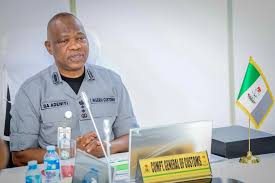
Nigeria Customs Concludes Strategic Leadership Training on Trade Reforms  The Nigeria Customs Service (NCS) has concluded a high-level, two-day  management workshop aimed at accelerating trade facilitation reforms and  streamlining the ease of
The Nigeria Customs Service (NCS) has concluded a high-level, two-day management workshop designed to accelerate trade facilitation reforms and enhance the ease of doing business across the country.
Organised in partnership with Reverso Business Services Limited, the training programme, held from 22 to 23 January 2026, reaffirmed the Service’s commitment to digital modernisation, institutional capacity building, and the elimination of bureaucratic bottlenecks along Nigeria’s trade corridors.
The engagement forms part of the broader reform agenda under the leadership of the Comptroller General of Customs, Adewale Adeniyi, focused on aligning NCS operations with global best practices and positioning Customs as a strategic driver of Nigeria’s economic growth.
The final day of the workshop examined emerging trends in global trade, digital transformation, and the evolving role of modern Customs administrations. Senior officers participated in in-depth sessions on adaptive strategies, operational efficiency, and stakeholder collaboration, underscoring the Service’s determination to remain responsive in a rapidly changing trade environment.
Addressing participants, CGC Adeniyi highlighted the dynamic nature of international commerce and stressed that Customs must stay ahead of change to effectively support national development.
“Our environment will continue to be very dynamic. What will not change, however, is Nigeria’s expectation that Customs will contribute meaningfully to economic prosperity, public health and national security. When these elements come together, we are better positioned to facilitate trade”, he said.
He further charged officers to uphold professional excellence, noting that the Service’s transformation drive is a deliberate move to become a reference Customs administration known for accountability, responsiveness, and performance.
“These are standards we voluntarily hold ourselves to. We want to be that reference organisation — responsive to our commitments and obligations and supportive of government efforts to create an environment where the economy can prosper”, Adeniyi added.
Also speaking, the Founder and Chief Executive Officer of Reverso Business Services Limited, Ayokunnu Ojeniyi, praised the NCS for embracing innovation and continuous improvement, stressing the need to institutionalise change through sustained capacity development.
“If you don’t take change by the hand, it will seize you by the throat. The environment is changing, and Customs must continue to manage that change proactively”, he said, urging officers to convert lessons from the workshop into measurable operational improvements across their commands.
The workshop aligns with the Nigeria Customs Service’s ongoing modernisation programme, which features process automation, enhanced stakeholder engagement, and strategic partnerships aimed at improving service delivery, trade efficiency, and Nigeria’s competitiveness in the global marketplace.
SIFAX Marine Charts Asset-Driven Expansion to Capture Bigger Share of Energy Market in 2026

SIFAX Marine Services Limited has unveiled an ambitious expansion roadmap for 2026, anchored on asset-led growth and a stronger push into Nigeria’s offshore and oil and gas marine services space.
The strategy signals a major shift from revenue growth driven largely by pricing adjustments to a more sustainable, scalable model based on vessel ownership, fleet expansion, and operational capacity building.
Speaking on the plan, Executive Director of SIFAX Marine, Afolabi Olayinka, said the company’s recent performance underscored the need for deliberate investment in owned marine assets as the foundation for long-term competitiveness.
“Our experience over the past year has shown that sustainable and exponential growth can only come from deliberate investment in assets that we own and control. While rate adjustments supported revenue in the last financial year, the future of SIFAX Marine lies in building a strong market for offshore and energy logistics services.
Looking ahead, industry observers say SIFAX Marine’s asset-led strategy aligns with broader shifts in Nigeria’s marine and offshore economy, where operators are increasingly judged not just by pricing but by capacity, compliance strength, and reliability of owned equipment.
As oil and gas activities rebound and offshore projects become more technically complex, service providers with modern, compliant fleets are better positioned to support exploration, production, and logistics operations efficiently.
For SIFAX Marine, the 2026 expansion drive is therefore not merely a business growth plan, but a strategic repositioning — from a service operator dependent on hired capacity to an integrated marine logistics player with controlled assets and deeper operational influence.
The Management believes the combination of fleet expansion, regulatory readiness, partnerships, and service diversification will strengthen revenue stability, improve margins, and enhance the company’s profile with international oil companies and indigenous operators alike.
With these initiatives, SIFAX Marine is setting the stage to compete more aggressively in Nigeria’s offshore and oil and gas marine services market, reinforcing its role as a dependable partner in supporting the country’s energy and maritime value chain in the years ahead.