TotalEnergies Reaffirms Commitment To Local Content Development
 TotalEnergies has reaffirmed its commitment to continuously improve initiatives that will improve on its local content delivery.
Speaking at the 9th Nigerian International Energy Summit, Mr. Cyprian Ojum, Deputy General Manager, Nigerian Content, TotalEnergies, emphasized that local content is a strategic priority, not just a compliance checkbox.
He stated that the Nigerian Oil and Gas Industry Content Development Act of 2010 is clear: every operator must treat local content as an operating philosophy, focusing on retaining value locally.
“This week, we are discussing content as a strategic priority. We are here to tell a story, one that centers on local consciousness. This is not about ticking a compliance checkbox or fulfilling a political obligation. It is about having a deliberate plan”
“The Nigerian Oil and Gas Industry Content Development Act of 2010 is very clear, every operator, alliance partner, project promoter, contractor, or any entity involved in monitoring the oil and gas industry in Nigeria must treat local content as an operating philosophy”
“From the moment a project is conceived, the key question becomes: what quantity of value will be retained locally at the end of this project? That is precisely how local content is defined under the 2010 Act. Project design must therefore be driven by value retention”.
“This is why, at the early stages of our projects, we engage in extensive iterations with the SDLD. We make multiple visits to the NCDMB and sit with the Project Certification and Operations Department to review and refine our Nigerian Content Plan.”
“As mentioned earlier, the Act covers 17 service categories and over 300 subsections, each with clearly defined minimum and maximum local content thresholds. Whether the activity involves fabrication, construction, procurement, installation, transportation, drilling, mud services, or other operations, there are specific percentages that must be achieved, he said.
Ojum emphasized that local content is not just about compliance, but about building expertise and retaining value in-country. He cited the Agena project as an example of successful capacity building and value creation.
“Beyond value retention, Sections 10, 27, 28, 29, and 30 of the Act emphasize training Nigerians and developing capacity. For us, performance-driven local content is anchored on capacity building”.
“Take the Agena project as an example. Capacity development was deliberately built into the project through infrastructure investment. When LADOL and the Samsung–LADOL collaboration were referenced earlier, that speaks directly to TotalEnergies’ commitment.The largest FSO in Nigeria was delivered through this project”
“Within the Agena project alone, about 200 Nigerians were trained in critical skills that are actively deployed across the industry today not only within TotalEnergies, but also across other companies.
“Today, Agena contributes nearly 10 per cent of TotalEnergies’ global production. That level of impact underscores the scale of value created in Nigeria”, he said.
He explained that Total Energies’ approach includes: Human Capacity Development, designed to respond to industry needs, focusing on sustainability.
Value retention, by prioritizing local value creation and retention, and collaboration, this is done by working with local contractors and NCDMB to meet local content thresholds.
Ojum said TotalEnergies has achieved significant success in local content development, with its IKAN project reaching 95 per cent Nigerian content.
Highlighting the company’s commitment to building expertise and retaining value in the country,Ojum emphasized that Nigerians can deliver complex oil and gas projects to international standards, citing the IKAN project’s success, adding that the Ubata project aims to further push local content boundaries.
Ojum’s remarks highlight the importance of local content in driving Nigeria’s energy industry growth and sustainability.


 Petroleum product marketers have argued that the only way to shield Nigerians from the shock of a sudden surge in petrol prices is for the Federal Government to sell crude oil to the Dangote Petroleum Refinery and other local refineries at subsidised rates.
 First HoldCo Plc has announced its unaudited financial results for the year ended 31 December 2025, reflecting a year of deliberate strategic actions aimed at strengthening its balance sheet, improving asset quality, and positioning the business for more resilient and sustainable growth amidst successful capital raise activities.
 Towards meeting the energy demands of their ongoing expansion projects, three subsidiaries of Dangote Industries Limited, Dangote Petroleum Refinery, Dangote Fertiliser Plant and Dangote Cement Plc have scaled up their Gas Sales and Purchase Agreements (GSPA) with subsidiaries of the Nigerian National Petroleum Company Limited (NNPC Ltd): Nigerian Gas Marketing Limited and NNPC Gas Infrastructure Company Limited (NGIC).
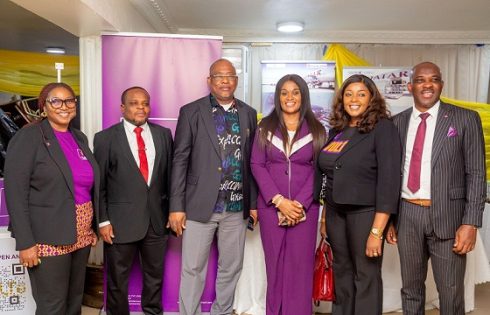 Polaris Bank has reaffirmed its strategic commitment to strengthening Nigeria’s non-oil export ecosystem and empowering micro, small and medium-sized enterprises (MSMEs) at the NAHCO and NACCIMA Export Group Programme themed *Breaking Barriers: Helping SMEs Navigate Export Procedures for Agro Products and Other Commodities.”
 The Nigeria Civil Aviation Authority has given a seven-day ultimatum to all domestic airlines to integrate a mandatory special needs assistance option on their ticket reservation platforms to improve access for passengers with disabilities and persons with reduced mobility.
 The Executive Director, Commercial and Institutional Banking for Lagos and the South-West at The Alternative Bank, Korede Demola-Adeniyi, has called for stronger public-private collaboration and predictable policies to accelerate blended finance and mobilise private capital for inclusive growth.
 Transcorp Hotels Plc, the hospitality subsidiary of Transnational Corporation Plc, has reported a historic revenue worth N97.04bn in 2025, which is 38 per cent higher than N70.13bn in the previous year.