





Ogun Govt issues warning on indiscriminate waste disposal

The Ogun State Government has warned residents against the indiscriminate dumping of refuse in drainages, streets and other unapproved locations, declaring that violators risk two million naira fine or possible imprisonment.

The warning was issued on Monday by the Special Adviser to the Governor on Waste Management, Hon. Abayomi Hunye, who expressed concern over what he described as a growing culture of environmental abuse, particularly in markets across the state.

According to Hunye, the government has, in recent weeks, observed that “most people in markets dump waste indiscriminately, polluting the environment and creating a climate of filth,” a development he said poses serious risks to public health and safety.

He reminded residents of the provisions of the Ogun State Waste Management Authority Law, 2020, which criminalises improper waste disposal. Quoting Section 34(1) of the law, the government stated that “any person who contravenes any of the provisions of this law commits an offence and on arrest shall pay a penalty of twenty-five thousand naira (₦25,000) to the Authority.”

The law further provides that failure to pay the initial penalty, upon conviction by a court, attracts “a maximum fine of two million naira (₦2,000,000) or three months’ imprisonment or both.”

The government noted that despite the availability of designated waste bins and disposal points in all approved markets, many traders and residents still engage in illegal dumping.

“All the approved markets in the state have designated areas and containers for refuse disposal, but many people habitually dump refuse anywhere they choose, putting public health in jeopardy,” the statement read.

Hunye stressed that the state would no longer tolerate what he described as a “pernicious practice,” adding that enforcement would now be carried out strictly.

“There’s a law against this and henceforth, the State Government will not hesitate to implement the provisions and bring sanity to the state,” he said.

The government urged residents to cooperate with environmental officials and comply with waste disposal regulations in order to promote a cleaner and healthier Ogun State.

TikTok restricts Nigerian users from going live at night

TikTok has announced a temporary restriction on access to its live feature during late-night hours for users in Nigeria.

The social media platform has issued an in-app notice to creators to inform them.

According to the notice, their decision is a part of an ongoing safety investigation.

At midnight Nigerian time on Sunday, the platform sent a system notification to users stating, “LIVE Notices.

“TikTok LIVE Update in Nigeria: We’re temporarily limiting LIVE late at night in Nigeria as part of our investigation to ensure our platform remains safe and our community stays protected.”

Live sessions, which were active earlier in the night, became inaccessible between 11pm and 5am, with affected accounts displaying a “No Access” label.

The restriction also prevented creators from viewing live broadcasts from other countries.

Niger school abduction: We aren’t officially aware of 100 students release – CAN

The Christian Association of Nigeria, CAN, Niger State chapter, said it has not received any official confirmation regarding reports that 100 of the students abducted from St. Mary’s Private Catholic Primary and Secondary School in Papiri have been released.

In a statement issued on Monday, the state chairman of CAN, Bishop Bulus Yohanna, said the association and affected communities have not been formally notified of any release.

“It will be a thing of joy if some of our children have been released. We have been praying and waiting for their return,” Yohanna said.

“If it is true, then it is cheering news. However, we are not officially aware and have not been duly notified. We hope and pray it’s true and look forward to when the remaining will be released,” he added.

DAILY POST recalls that the abduction occurred on November 21, 2025, when bandits attacked the school and kidnapped 315 people, including 303 students and 12 teachers.

However, about 50 pupils escaped within the first 24 hours and were reunited with their families.

Last week, the National Security Adviser, Nuhu Ribadu, visited the school and assured parents that the remaining abductees were safe and would soon return home.

Reacting to reports of the release during a Channels Television programme on Sunday, former Director of Media Operations at the Defence Headquarters, Major General John Enenche (retd.), commended the Federal Government and security agencies for what he described as a significant breakthrough.

“My take is that the government and the security agencies have done a lot, and I believe that Nigerians will be happy for this.

“I can tell you that it is not easy, whichever way or means were used to get these children out,” Enenche said.

Dino Melaye cautioned against attacking other leaders

A grassroots forum of voters in Kogi State, under the aegis of the Ijumu Voters Forum, IYF, has cautioned former Senator Dino Melaye, urging him to desist from attacking leaders in the state.

This followed the former lawmaker’s recent outburst against some persons holding political offices at the federal level.

According to the group, Melaye did not significantly impact the lives of the people of Kogi West to have the moral ground to criticise others.

The grassroots voters’ forum in Kogi West, in a statement signed by its coordinator, Hon. Eleta Kelvin Oluseyi, on Monday, said the former Senator lacks the moral authority and public record required to criticise other public office holders.

According to the forum, Melaye’s years in public office were marked by noise rather than results, drama rather than development, and controversy instead of service.

“Leadership is measured by impact, and by that standard, his record falls short of what the people of Kogi West deserved,” the statement said.

“Melaye became more widely known for public stunts and political quarrels than for meaningful contributions to his constituency.

“The former Senator earned national nicknames that turned him into a spectacle rather than a statesman.”

Coup: Beninese army chiefs regain freedom

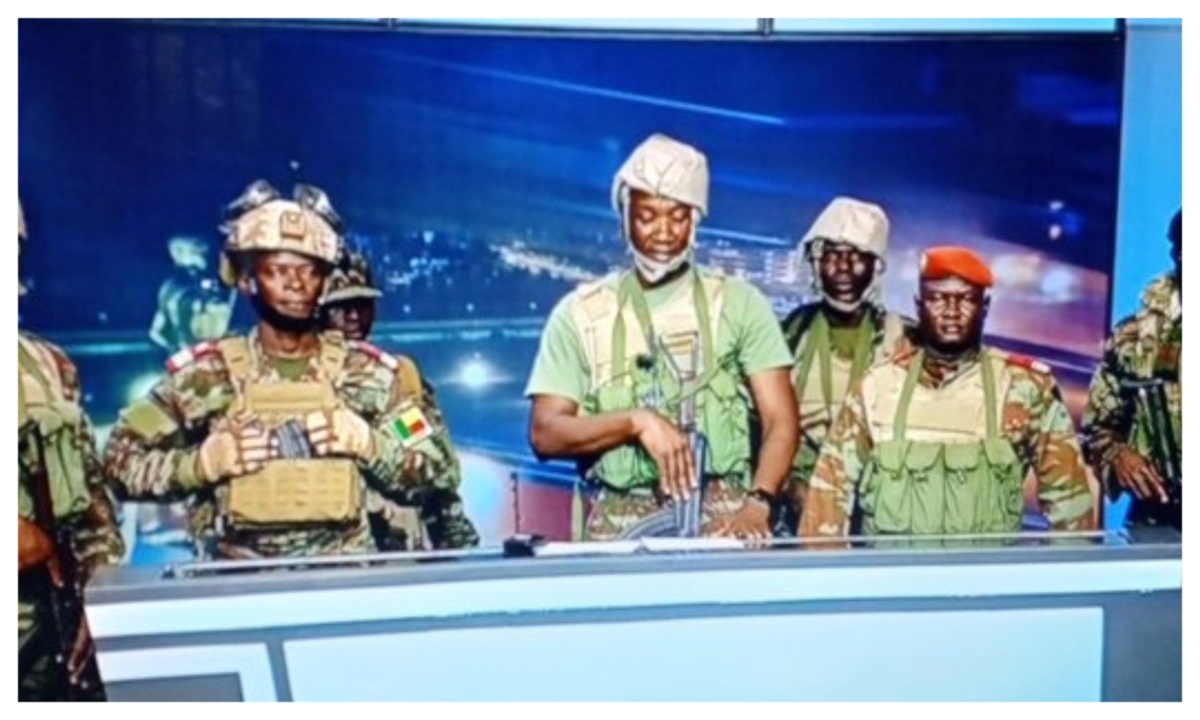
The Chief of Army Staff of Benin Republic and the Chief of the National Guard have been released after being held hostage during Sunday’s failed coup attempt.

Security analyst Brant Grant confirmed their freedom in a statement posted on X on Monday.

“The Beninese Chief of Army Staff and the Chief of Staff of the National Guard have been freed after they were taken hostage by the mutineers during the coup yesterday,” he wrote.

Their release comes as President Patrice Talon, in a nationwide broadcast, announced that his government had restored full control following the unrest.

Talon and several senior military officials were earlier seized in Cotonou by mutinous soldiers led by Lieutenant Colonel Pascal Tigri.

The incident adds to a series of recent coups and attempted takeovers recorded in West Africa, including in Niger, Burkina Faso, and Guinea-Bissau.

Step-by-step guide on how to register for 2026 UTME

The Joint Admissions and Matriculation Board has released a detailed guide for candidates preparing to register for the 2026 Unified Tertiary Matriculation Examination.

This is as the board outlines the required steps, important warnings, and common challenges encountered during profile code generation.

The update was published on the Board’s official X handle on Sunday.

In the announcement, JAMB emphasised that candidates must ensure all personal information—especially those linked to the National Identity Management Commission (NIMC)—are accurate before registration begins.

Profile Code Generation

“Ensure your details on NIMC and others, i.e., O’Level/A-Level results, are the same. Send: NIN (leave one space) your 11-digit NIN number to 55019 or 66019. For example, NIN 00000011111 to 55019/66019,” it stated.

JAMB further warned that once a profile code is generated, it cannot be changed, as the candidate’s biodata is automatically retrieved from NIMC’s database.

Here is the step-by-step registration procedure.

The Board outlined the following steps:

1. Visit an approved centre:

Candidates are to proceed to the nearest JAMB office or an accredited CBT centre to begin registration.

2. E-PIN vending:

Candidates should only purchase e-PINs from authorised channels such as banks, approved vendors, and recognised online platforms.

3. Use the correct template:

JAMB stressed: “Ensure that you are given the correct registration template to fill out.”

4. Final submission:

All applicants must cross-check and confirm every detail before final submission at the centre.

Important Tips for Candidates

JAMB also issued several precautionary guidelines:

1. Candidates should make all necessary corrections with NIMC early (name, date of birth, gender, state of origin) and confirm that the updates reflect on their NIMC portal.

2. GSM numbers and email addresses used for registration are unique identifiers—they must be functional, correct, and not shared.

3. Candidates experiencing biometric issues must visit the nearest JAMB office.

4. A dual-screen system must be used during registration so candidates can verify their photographs and biometric data in real time.

Common Challenges in Profile Code Generation, Solution

JAMB also addressed the most frequent errors students face:

1. “Record Not Found”

Solution: Visit the nearest NIMC office for validation.

2. “Wrong Parameter”

This means the message format was incorrect.

Solution: Resend using the correct format: NIN 00000011111.

3. “Your NIN has already been registered with GSM number…”

This indicates a previous profile code request.

Solution: Retrieve the SIM card originally used and resend the request.

4. “Unable to verify your NIN at the moment [NIMC: UNKNOWN]”

Solution: Wait and try again later.

The 2026 JAMB UTME form will be on sale from January to March 2026.

Analysts forecast 4.5% Q4 economic growth

Analysts at Afrinvest have projected that Nigeria’s economy could expand by 4.3 to 4.5 per cent in the fourth quarter of 2025, supported by seasonal factors, improved foreign exchange supply, and stronger consumer spending, according to macroeconomic projections.

According to its weekly update, this outlook follows the release of the third-quarter Gross Domestic Product report by the National Bureau of Statistics, which showed that the country’s real output grew by 4.0 per cent year-on-year in Q3 2025. While this represents a slight moderation compared with 4.2 per cent growth in Q2 2025, it outperformed the 3.9 per cent expansion recorded in Q3 2024.

“Looking ahead to Q4 2025, we estimate a base-case GDP growth range of 4.3 per cent to 4.5 per cent, underpinned by seasonal drivers, including a late harvest cycle and stronger consumer spending associated with year-end festivities, which should provide near-term support. Improved FX supply and gradual softening of price pressure are also expected to lift business sentiment. However, the operating environment remains challenging. Uncertain crude oil output, fiscal constraints, heightened security concerns, and still-restrictive monetary conditions could limit the extent of the expansion, particularly through their impact on credit growth and investor confidence.”

Nominal GDP reached N113.6tn, up from N96.2tn in the same period last year, reflecting an 18.1 per cent increase year on year, largely driven by price-level changes. Growth was supported by both the oil and non-oil sectors, although oil accounted for just 3.4 per cent of total GDP compared with 96.6 per cent from non-oil activities.

The oil sector expanded by 5.8 per cent year on year, aided by stable but slightly declining crude oil output. Average production stood at 1.64 million barrels per day in Q3 2025, down from 1.68mbpd in Q2 2025, but above 1.47mbpd in Q3 2024. Despite these gains, the sector’s contribution to total GDP remained modest at 3.4 per cent. Analysts noted that the performance reflects steady upstream production and continued efforts to curb crude oil theft.

Among the three main sectors, agriculture grew by 3.8 per cent year on year, benefiting from the main harvest season and rising export earnings for cash and food crops. The industrial sector, excluding oil, expanded by 3.2 per cent, showing a slowdown relative to previous quarters. Services led the non-oil economy with 4.2 per cent growth, driven by ICT, financial services, and real estate. Within these, trade grew 2.0 per cent, supported by FX stability and improved consumer purchasing power, while real estate eased to 3.5 per cent from 3.8 per cent in Q2 2025, reflecting weaker demand in the sector.

Economists said that while overall growth remains robust, the moderation in key sectors signals slower momentum, particularly in industry. “The non-oil economy continues to anchor growth, demonstrating resilience and structural diversification despite challenges in some sectors,” said a senior economist at a Lagos-based consultancy who spoke on condition of anonymity.

Mauritius team wins FirstBank Junior Achievement Award

First Bank of Nigeria Limited has presented its CEO Award to Team Mauritius at the grand finale of the 15th Junior Achievement Africa Company of the Year competition, which concluded over the weekend in Abuja.

The three-day event, held from December 3 to 5, 2025, brought together student entrepreneurs from eight African countries—Eswatini, Ghana, Mauritius, Nigeria, Rwanda, South Africa, Uganda, and Zambia—who showcased innovative, climate-focused business solutions under the theme Action for Climate Transformation.

In a statement on Sunday, it was stated that the annual contest provides a platform for young innovators to compete for a chance to represent Africa at the global finals, while accessing funding, scholarships, and long-term venture support.

Announcing the award, FirstBank said Team Mauritius distinguished itself across the five judging pillars: strength of business idea, financial management and sustainability, leadership and teamwork, stage pitch, and trade fair performance. The team’s company, Plantura, impressed the bank with its “plant and air-based purifier,” a climate-smart solution developed by four students described by the bank as “smart, agile, and intelligent.”

“We unanimously agreed that Mauritius had our vote for the FirstBank CEO Entrepreneurship Award,” the bank stated.

President and CEO of JA Africa, Simi Nwogugu, commended FirstBank for its continued support, noting that the bank’s contribution has strengthened entrepreneurship and financial literacy programmes across the continent.

“FirstBank has been an incredible supporter,” she said. “Usually, our headline sponsors are global organisations, so having FirstBank step up in that role was very exciting. We hope to further deepen the partnership—not just through funding, but also through FirstBank employees volunteering in classrooms.”

Nwogugu highlighted Africa’s urgent employment challenges, noting that while 11 million young people enter the labour market annually, only about 3 million jobs are created, leaving millions without work. She warned that without deliberate efforts to empower the continent’s youth, poverty and crime could worsen.

“Our solution is to raise young people who are not only job seekers but job creators,” she said. “We emphasise entrepreneurship education from an early age, teaching ethics, integrity, and problem-solving. When young people identify problems, they should think immediately of how to solve them.”

She added that the future of work is rooted in technology, underscoring the organisation’s commitment to digital skills training. JA Africa currently reaches 1.5 million youths and aims to double that number by 2028 and expand to 5 million by 2030.

Also speaking, President and CEO of Junior Achievement Worldwide, Asheesh Advani, urged more Nigerian institutions to emulate FirstBank’s leadership in supporting youth entrepreneurship.

“FirstBank is a great example of leadership in this regard, and we encourage other Nigerian companies to follow their lead,” he said. Dr Tobechi Enyioko and Nidi Sohotyep presented the award on behalf of FirstBank to the team from Mauritius.

Market gains N2.44tn as ICT, banking stocks drive surge

The Nigerian Exchange Limited closed the week on a high, with ICT and banking stocks driving the market up by N2.44tn. The All-Share Index gained 2.45 per cent to 147,040.08 points, while market capitalisation rose 2.67 per cent to N93.722tn.

Investor activity picked up sharply, with a total turnover of 6.617bn shares worth N113.224bn changing hands in 109,590 deals during the week, up from 4.140bn shares valued at N115.889bn exchanged in 102,351 deals the previous week. The ICT industry, measured by volume, led market activity with 3.500bn shares valued at N17.759bn traded in 11,184 deals, representing 52.89 per cent of total equity turnover volume and 15.68 per cent of turnover value.

The financial services industry was the next most active sector, recording 2.625bn shares worth N50.188bn in 42,574 deals, while the services industry ranked third with 104.524m shares valued at N1.166bn in 7,255 deals. Trading in the three most active stocks—E-Tranzact International Plc, Cornerstone Insurance Plc, and Access Holdings Plc—accounted for 4.871bn shares valued at N27.422bn in 6,438 deals, contributing 73.60 per cent of turnover volume and 24.22 per cent of turnover value.

Market breadth was positive, as 55 equities appreciated in price during the week, up from 38 a week earlier. Twenty-nine equities declined, down from 36 previously, while 63 stocks closed unchanged compared with 73 in the prior week. Sectoral indices were largely firmer: the industrial goods index led gains with a 7.38 per cent rise, and the premium index jumped 5.50 per cent. Conversely, the Oil and Gas and Commodity indices fell by 0.57 per cent and 0.30 per cent, respectively.

On the exchange-traded products market, investors traded 411,382 units valued at N105.657m in 1,022 deals, up from 214,478 units worth N54.458m in 761 deals the previous week. Leading ETPs by volume included VETINDETF (96,978 units, N5.79m), VETGRIF30 (82,739 units, N5.13m), and VETGOODS (78,049 units, N3.36m). The StanbicETF30 recorded the largest value traded at N82.45m on 53,752 units transacted.

Fixed income turnover also improved as bond trading amounted to 410,186 units valued at N443.071m across 54 deals, versus 117,523 units valued at N120.742m in 38 deals a week earlier.

Corporate and government listings during the week also shaped market activity. Ecobank Transnational Incorporated listed an additional 5,381,656,222 ordinary shares following conversion of preference shares, employee share option exercises, and loan conversions, increasing its issued share capital to 23,731,207,437 ordinary shares of $0.025 each.

Additionally, Industrial and Medical Gases Plc listed 181,621,214 ordinary shares arising from its rights issue, lifting its total issued shares to 731,064,226. The Federal Government’s November 2025 savings bonds, FGS202702 (13.565 per cent, two-year) and FGS202803 (14.565 per cent, three-year), were also admitted to trading; the issue sizes were N958.416m and N2.874664bn, respectively.

Trading in Champion Breweries Plc’s rights opened on Monday. The rights issue offers 994,221,766 ordinary shares at N16.00 per share on the basis of one new share for every nine held; the offer closes on 5 January 2026.

Analysts said the weekly gains reflected year-end portfolio rebalancing and renewed investor confidence, with aggressive positioning in the ICT and banking sectors amplifying volumes and lifting prices across the board. Market watchers will be monitoring liquidity flows and corporate actions as investors seek to lock in gains before the year closes.

Analysts at Afrinvest stated that, looking ahead, they expect the market to sustain the positive start to December, driven by bargain-hunting and the rebound in key sectors. However, intermittent profit-taking and year-end portfolio adjustments may temper positive sentiment.

Banks seek new revenue channels as FX gains fade

As the massive foreign exchange gains that banks enjoyed in the wake of the harmonisation of the FX market dry up, market watchers say lenders are actively seeking ways to open up other non-interest channels.

This was part of the outlook projected by experts at Meristem Securities in their monthly Banking Sector Highlights for November 2025.

President Bola Tinubu, weeks into his administration in 2023, harmonised segments of the FX market, which led to a significant depreciation in the value of the naira and resulted in a boon for banks in terms of FX revaluation gains. The National Assembly thereafter imposed a windfall tax following the amendment of the Finance Act 2023. The PUNCH reported that six banks paid about N205.59bn as windfall tax in the 2024 financial year.

On the outlook for the banking sector, Meristem said, “As the 2025 FY period wraps up in December, we expect the pace of growth in banks’ gross earnings to moderate further as the sector fully transitions into a normalised earnings environment. Growth will, however, remain largely driven by interest income, as banks continue to leverage the still-high interest rate (MPR at 27.00%).

This will be supported by the capacity for balance sheet expansion following the widening of the asymmetric corridor to +50/-450 bps from +250/-250 bps. This adjustment lowers banks’ effective borrowing cost at the CBN and strengthens their ability to extend credit to the real economy.

“Beyond interest income, we acknowledge that more banks are making efforts to grow their non-interest income, especially after the extraordinary FX gains made in the last two years as a result of the naira devaluation and depreciation. The ability to grow non-interest components like fees and commissions, hinged on increased demand and the impact of digitalisation, would help boost the non-interest revenue stream.”

The PUNCH had reported that at the end of the third quarter of 2025, nine financial institutions made about N2.81tn from account maintenance charges, commissions on collections, e-business, and other fees. This figure represents about a 24.10 per cent increase from the N2.27tn earned in the same period of the previous year.

A look at the nine-month results of the financial institutions filed with the Nigerian Exchange Limited indicated that Access Holdings recorded a slight dip in non-interest income by 2.32 per cent YoY to N996.86bn. FX revaluation loss (-53.43 per cent YoY to N255.40bn) weighed on non-interest income performance. However, strong growth in other operating income (+110.31 per cent YoY) and fees and commission income (+49.53 per cent YoY), as the bank continues to focus on core banking operations, provided support.

For Sterling Financial Holding Company, Meristem said that the growth recorded in its fees and commission income, which grew by +17.12 per cent YoY, and trading income, which expanded significantly (+78.19 per cent YoY), more than offset FX revaluation losses of N1.88bn that the company suffered. It was a similar scenario at United Bank for Africa, where non-interest income fell to N488.63bn from N599.11bn in 9M:2024, mainly due to an 83.34 per cent YoY decline in FX revaluation gains.

“This sharply suppressed trading performance, with net trading income down 77.34 per cent YoY, reversing last year’s FX-driven windfall,” said the analysts.

At Wema Bank, as of September 2025, FX revaluation gain declined by -70.21 per cent YoY to N4.23bn, contributing largely to the dip in other income, which fell by 58.03 per cent YoY.

Analysing the impact of the decisions of the Monetary Policy Committee of the Central Bank of Nigeria, which includes holding the benchmark rate at 27 per cent, the experts said, “The revised asymmetric corridor places the Standing Lending Facility at 27.50 per cent (down from 29.50 per cent), meaning banks now borrow from the CBN at a lower cost. At the lower band, the Standing Deposit Facility now stands at 22.50 per cent, offering less incentive for banks to park liquidity with the CBN. We believe that some banks may still opt to place funds with the CBN, as the SDF rate remains meaningfully above prevailing yields in the fixed-income market (c.16.00%). The removal of the N3.00bn cap further enhances its appeal, especially for banks prioritising risk-free returns.

“Although the liquidity expansion gives banks additional capacity to extend credit, it is unlikely to translate into a significant reduction in lending rates to the real sector. Loan pricing is expected to stay elevated as banks work to meet the 50 per cent loan-to-deposit ratio requirement while keeping non-performing loan levels in check. The high-interest-rate environment is expected to continue to bolster banks’ earnings through interest income, though at more normalised levels. In 9M:2025, banks like Access Holdings, Stanbic IBTC Holdings, and Zenith Bank maintained current account and savings account ratios above 60.00 per cent, providing a buffer for net interest margins against mild yield compression. This strong, low-cost funding base also enhances their flexibility to channel liquidity into additional lending or interbank placements amid the more accommodative policy corridor.”

Meanwhile, the CBN has confirmed that 16 banks have now met the recapitalisation requirements, higher than the 14 from the September meeting of the MPC.

The Managing Director of Financial Derivatives, Bismarck Rewane, has warned that the banking sector is experiencing a shift. Speaking at the recently held 2025 Parthian Economic Discourse in Lagos, Rewane said:

“The bargaining power of the banking system is getting weaker and weaker. You have this Chinese OPay and Moniepoint. If you look at advertising slots at peak hour, 10 and 11 o’clock news, you are more likely to see Victor Osimhen and Moniepoint than you see X bank. It tells you something. You are more likely to see MoMo and MTN, and it’s not coincidental. Nothing happens by accident. It’s because of the kind of money that’s being made, money to be made, and more money to be made. The banking sector is going through a change to make it more efficient. The banking system lives on rent, just like downstream petroleum, on rent extensively from allocating to round-tripping and all sorts of things. So, it’s now about efficiency and how to deliver value to the client, and the client has become very sophisticated and resistant to increases.”