Field experienced candidates like Peter Obi, Amaechi to challenge Tinubu – Akande urges ADC

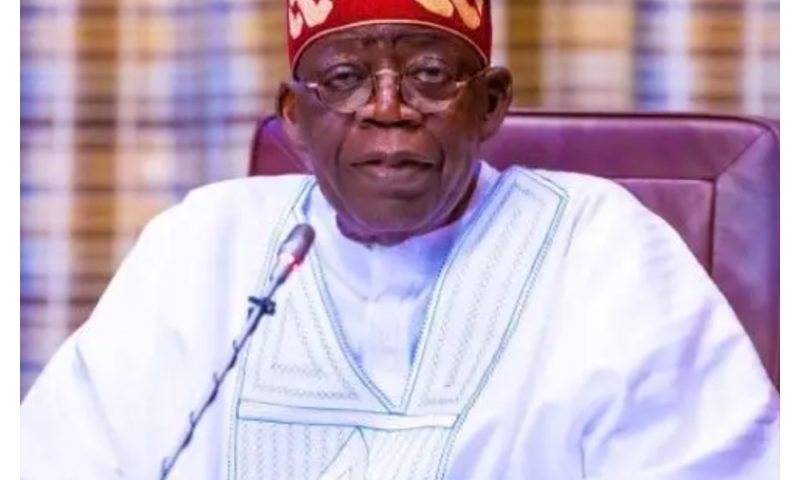
Former media aide to ex-Vice President Yemi Osinbajo, Laolu Akande, has urged the African Democratic Congress, ADC, to “push forward” experienced southern politicians like Rotimi Amaechi and Peter Obi as presidential candidates.

Akande said Amaechi and Obi are Southern candidates capable of challenging President Bola Tinubu in the 2027 elections.

He spoke on Friday during an appearance on Sunrise Daily, a programme on Channels Television.

Akande said credible and experienced leaders from the South should be positioned if opposition parties are serious about mounting a strong challenge.

“If they were serious, people like Rotimi Amaechi, people like Peter Obi ought to be the ones to be pushed forward,” he said.

He highlighted Amaechi’s long career in public service, noting his experience across several levels of government.

“Look at Amaechi. Amaechi has been a speaker, he’s been a governor, he’s been a minister. He was second in the APC,” Akande said.

“Tremendous career in politics, opportunities in service. And he was the guy that was in charge of infrastructure development.”

According to him, the opposition needs a southern candidate with strong governance credentials who can stand “head-to-head against President Tinubu.”

Akande also warned that without a strong alternative candidate, former vice president Atiku Abubakar could continue to dominate opposition politics ahead of the next election.

“As things stand now, if you keep on getting the vibes that Atiku wants to do it by his means, he will probably be able to forge his way through by some means, because he seems to be the strongest politician in the party. The shadows of Atiku are still hanging heavily,” he said.

Taraba PDP elders reject parallel groups, rally support for leadership

The Elders Forum of Taraba state chapter of the Peoples Democratic Party, PDP, alongside the party’s Like-minds Forum, has reaffirmed its support for the existing leadership structure of the party in the state while urging members to actively participate in the ongoing electronic membership registration.

The positions, as noticed by DAILY POST was contained in a communiqué issued at the end of a joint meeting of the two groups held over the weekend in Jalingo, the Taraba State capital.

The meeting attended by senior party members and key stakeholders, deliberated on developments within the party and strategies for strengthening its internal structure.

In the communiqué jointly signed by the Chairman of the PDP Elders Forum in the state, John Mamman, and the Chairman of the Like-minds Forum, Hilkiah Bubajoda Mafindi, the forum declared that it does not recognize any faction or group operating outside the legally constituted leadership of the party in Taraba State.

According to the resolution, the forum affirmed its recognition of the established leadership structure of the party from the ward level up to the State Working Committee, urging members to respect the existing party hierarchy and work together to promote unity within the PDP.

The elders and party stakeholders also called on members across the state to mobilize and register en masse in the party’s ongoing E-registration exercise, describing the process as critical to strengthening the party’s membership base and organizational capacity.

They further appealed to stakeholders at the ward and local government levels to support and facilitate the registration process in their respective areas to ensure wider participation among party faithful.

While acknowledging ongoing discussions at the national level, the forum appealed to members to remain calm and law abiding as they await the outcome of deliberations by the PDP Board of Trustees on issues affecting the party.

The meeting, according to participants, underscored the need for unity, discipline, and collective commitment among party members as the PDP continues efforts to consolidate its structure and strengthen internal cohesion in the state.

Popular gospel singer, Toun Soetan is dead

Veteran Nigerian gospel singer and songwriter, Toun Soetan, popularly known as Evangelist Shouet, has passed away at the age of 73.

The respected evangelist and gospel music icon, was widely recognised as the original composer of the popular Christian chorus ‘Darling Jesus’, a song that has remained a verse in churches across Nigeria.

Reacting to her passing, former Secretary of the Oyo State chapter of the Entertainment Writers Association of Nigeria, Alhaji Kunle Bakare, described the late musician as a divinely gifted minister whose songs carried powerful spiritual messages.

“The late gospel music player will also be remembered for her music college, where she trained so many gospel music players, most of whom are reigning today,” Bakare said.

Also confirming the incident, gospel musician Peters Olaniyi Olusegun shared the news in a Facebook post.

“We just lost another legend this morning, Mummy Toun Soetan. May the Lord be with the family and Daddy Titus Soetan,” he wrote.

Beyond ‘Darling Jesus’, the late evangelist was also known for other notable songs such as ‘Ke Pe Jesu’ and ‘Cast Your Burdens’, which became widely used in Christian worship gatherings.

Amnesty International accuses DSS of targeting critics of US, Israel

Amnesty International has called on Nigerian authorities to immediately stop what it described as a growing crackdown on individuals who criticise the governments of the United States and Israel.

In a statement released on Friday, the rights organisation said it was seriously worried about the actions of the Department of State Services (DSS), particularly over how people expressing opinions on social media about the ongoing conflict in the Middle East are being treated.

According to Amnesty, the situation has already led to the detention of at least two individuals in Kaduna.

“At least two people, both residents of Kaduna, have been detained, and one of them is reportedly facing what appears to be a sham trial based on questionable charges,” the organisation said.

Amnesty International also revealed that it had received reports indicating that several other Nigerians who publicly criticised the policies of the United States and Israel had been invited or summoned by the DSS for questioning.

The organisation warned that such actions could weaken respect for human rights and damage public trust in state institutions.

“These increasingly authoritarian practices undermine fundamental rights and erode confidence in the neutrality of state institutions, while also creating an atmosphere of fear,” the statement noted.

Amnesty stressed that criticising the actions or policies of any government is part of the fundamental right to freedom of expression and should never be treated as a criminal offence.

“Criticising the policies of any government or its leaders is a legitimate exercise of the right to freedom of expression,” the organisation said, adding that this right is protected under Nigeria’s Constitution as well as international human rights agreements.

The group specifically referred to the 1999 Constitution of the Federal Republic of Nigeria and international instruments such as the African Charter on Human and Peoples’ Rights, which guarantee citizens the right to express opinions and share ideas without fear of punishment.

Amnesty International therefore urged Nigerian authorities to end what it described as the growing repression of individuals who are peacefully exercising their rights.

“Nigerian authorities must put an end to attacks and repression against people who are simply exercising their human rights in a peaceful manner,” the organisation said.

It further warned that targeting individuals for criticising the policies of the United States or Israel could send a dangerous signal that peaceful dissent is not tolerated in the country.

“Targeting people for criticising the governments of the United States or Israel sends a chilling message that peaceful dissent is not welcome in Nigeria,” the statement added.

The organisation concluded by calling on Nigerian authorities to ensure that everyone in the country enjoys their rights without fear.

“The authorities must respect and protect the human rights of all people in Nigeria, including the right to freedom of expression both online and offline,” Amnesty said.

They urged the government to refrain from actions that could silence critics.

Court grants 4-year tenure for Plateau LG chairmen

Plateau State High Court has ruled in favour of local government chairmen, granting their demand for a four-year tenure.

It nullified the present two-year tenure as contained in the laws of the state.

The 17 local council chairmen had dragged the state government and the Plateau State Independent Electoral Commission, PLASIEC, to court seeking an extension of their tenure from two years to four years, citing a breach of the Nigerian Constitution.

In a landmark judgement delivered on Friday by the state Chief Judge, Justice David Gwong Mannin, the court declared that the two-year tenure provided by the laws of the state and PLASIEC is inconsistent with Section 7(1) of the 1999 Constitution of Nigeria (as amended).

The judgment also affirmed that the two-year tenure of the council chairmen contradicts constitutional provisions guaranteeing a democratically elected local government system.

While delivering the ruling, Justice Maninn held that the two-year tenure contradicts sections of the Nigerian Constitution that guarantee a democratically elected local government system, noting that the shorter tenure undermines the constitutional framework for local government administration and therefore cannot stand in the face of the constitutional provision.

The judge declared that the four-year tenure granted the elected local government chairmen in the state, aligns their position with the broader constitutional expectations for democratic governance at the grassroots level.

Osun: Police declare two suspects wanted over killing of FRSC officer

The Osun State Police Command has declared two men wanted in connection with the killing of a Federal Road Safety Corps, FRSC, officer, Mrs Lasisi Funmilayo, and her daughter, Sewa.

The police, in a public notice issued on Friday by the Commissioner , CP Ibrahim Gotan and signed by Police Public Relations Officer, DSP Abiodun Ojelabi identified the suspects as Faturoti Kehinde, also known as Fagorite, and Adumati Idowu, urging members of the public to assist with information that could lead to their arrest.

DSP Ojelabi stated that the suspects were linked to the alleged murder of the 38 year old FRSC officer and her 10-year-old daughter, whose disappearance was reported in November 2025.

According to the police, “the victims were last seen on the morning of Sunday, November 2, 2025, after leaving their residence at Obasanjo Hilltop Estate in the Oke-Mosan area of Abeokuta, Ogun State.”

It was gathered that the mother and her daughter failed to return home after leaving the house, prompting concerns from relatives and eventually leading to a police investigation into their disappearance.

Also, during the course of the investigation, the police arrested Victor Fajemirokun, identified as the deceased officer’s boyfriend, along with two herbalists, Gboyega Daramola and Sunday James.

Petrol import ban divides marketers after Dangote hikes price

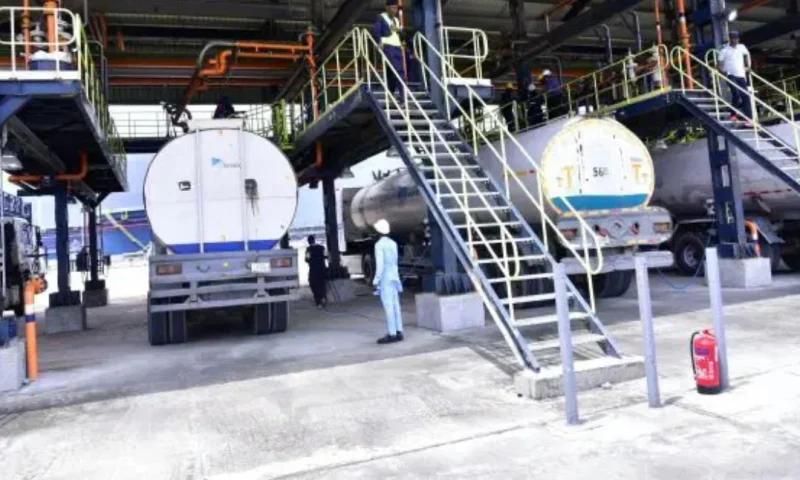
petrol price hike1Nigeria’s downstream petroleum sector is witnessing growing disagreement among oil marketers following the Federal Government’s suspension of petrol import licences, even as the Dangote Petroleum Refinery on Friday raised its depot price of Premium Motor Spirit (petrol) to N1,175 per litre amid rising global crude oil prices.

Dangote reversed an earlier reduction of N100 announced earlier in the week, as a fresh surge in global crude oil prices pushes up refining costs. The price adjustment also affected the refinery’s coastal supply price, which rose from N1,378,548 per metric tonne to N1,512,648 per metric tonne, according to an official notice issued to petroleum marketers on Friday.

A senior official who spoke with one of our correspondents anonymously because he was not authorised to speak confirmed on Friday that the refinery adjusted the price upward after briefly reducing the ex-depot price to N1,075 per litre on March 10, 2026, a move that had triggered increased buying activity among depot operators.

The official confirmed the latest adjustment during a telephone conversation. “Yes, it is true,” the official said when asked about the upward price review. The new pricing structure was formally communicated to marketers in a notice signed by the refinery’s Group Commercial Operations Department.

The notice read, “Dear esteemed customer, please be informed that due to the current global geo-political situation, which has further escalated, the PMS gantry and coastal price has been reviewed and updated.”

According to the notice, the gantry price, which represents the cost of petrol loaded directly into trucks at the refinery depot, has increased from N1,075 per litre to N1,175 per litre. Similarly, the coastal supply price was adjusted upward from N1,378,548 per metric tonne to N1,512,648 per metric tonne.

The change represents a N134,100 increase per metric tonne, equivalent to about 9.7 per cent. “Please note that this new gantry and coastal price, as detailed above, will be applied to all unloaded PMS allocation effective 1 pm today, March 13, 2026,” the notice stated.

The price increase comes just days after the refinery reduced the ex-depot price of petrol by N100 or about 8.5 per cent, from N1,175 per litre to N1,075 per litre earlier in the week. Checks on Petroleumprice.ng also confirmed the development, indicating that the price revision had disrupted trading activities across several petroleum depots.

According to market sources quoted by the platform, the sudden upward adjustment prompted depot operators in multiple hubs to temporarily suspend sales as they awaited clarity on the new pricing structure.

“Depot owners across multiple hubs have temporarily halted transactions following the refinery’s upward review of the ex-depot price,” a market source familiar with the development said.

Similarly, loading operations at the refinery were also temporarily suspended to allow for stock reconciliation and alignment with the new pricing framework. A refinery source explained that the decision was largely driven by rising global crude prices, which directly affect refining costs.

“The revision reflects the surge in global crude oil prices. Brent crude moved from around $91 per barrel to about $100 per barrel, and that increase feeds directly into the cost of refining,” the source said.

Marketers disagree

Amidst this, stakeholders, including energy experts, economists, and Nigerian workers, have raised alarm over the suspension of petrol imports by the Federal Government, urging urgent price regulation as the Dangote Petroleum Refinery takes command of Nigeria’s N14.4tn petrol market, signalling a major shake-up in the nation’s energy sector.

Oil marketers have also expressed divergent views over the impact of the halt in petrol import licences and the production capacity of the Dangote refinery to satisfy local fuel needs, following claims that the facility now supplies the bulk of the country’s fuel demand.

The disagreement comes after the Nigerian Midstream and Downstream Petroleum Regulatory Authority indicated that local production accounted for a significant share of petrol supply in February. As a result, the regulator said it refused to grant import licences in the first quarter of 2026.

While the Independent Petroleum Marketers Association of Nigeria backed the ban on fuel imports and acknowledged the capacity of the 650,000-barrel Dangote refinery to supply the petrol needed by the country, many major petrol dealers and importers said the country still needed imports to make up for the shortfalls.

Speaking with one of our correspondents, the Vice President of the Independent Petroleum Marketers Association of Nigeria, Ahmed Fashola, supported the regulator’s decision to halt the issuance of petrol import licences, saying the country should prioritise domestic refining.

Fashola said the regulator’s figures should be trusted, noting that the authority has access to accurate data on fuel supply and consumption. “Well, we support and agree with the NMDPRA and their report because they have the information and the data. So there is no need for anybody to doubt that,” he said.

According to him, Nigeria’s growing reliance on local supply represents progress for the downstream petroleum sector. “If today we are able to achieve 90 or 92 per cent of our supply locally, I think we are doing well. We should give it to Dangote,” he stated.

Fashola added that the emergence of the refinery has helped shield Nigerians from potential spikes in fuel prices amid global geopolitical tensions in the Middle East. With the fight among the US, Iran, and Israel, Fashola argued that the price of petrol would have risen to N3,000 or N4,000 per litre.

Dangote refinery raises petrol price to N1,175/litre as crude spikes

DANGOTE REFINERYThe Dangote Petrochemical Refinery has raised the ex-depot price of Premium Motor Spirit to N1,175 per litre, reversing an earlier reduction of N100 announced earlier in the week, as a fresh surge in global crude oil prices pushes up refining costs.

A senior official who spoke with our correspondent anonymously because he was not authorised to speak, confirmed on Friday that the refinery adjusted the price upward after briefly reducing the ex-depot price to N1,075 per litre on March 10, 2026, a move that had triggered increased buying activity among depot operators.

The official confirmed the latest adjustment during a telephone conversation.

“Yes, it is true,” the official said when asked about the upward price review.

Checks on Petroleumprice.ng also confirmed the development, indicating that the price revision had disrupted trading activities across several petroleum depots.

According to market sources quoted by the platform, the sudden upward adjustment prompted depot operators in multiple hubs to temporarily suspend sales as they awaited clarity on the new pricing structure.

“Depot owners across multiple hubs have temporarily halted transactions following the refinery’s upward review of the ex-depot price,” a market source familiar with the development said.

Similarly, loading operations at the refinery were also temporarily suspended to allow for stock reconciliation and alignment with the new pricing framework.

A refinery source explained that the decision was largely driven by rising global crude prices, which directly affect refining costs.

“The revision reflects the surge in global crude oil prices. Brent crude moved from around $91 per barrel to about $100 per barrel, and that increase feeds directly into the cost of refining,” the source said.

PUNCH Online reports that global oil prices have risen sharply in recent hours following escalating tensions in the Middle East involving the United States, Iran and Israel.

The geopolitical crisis has heightened fears of disruptions to global crude supply, particularly around the strategic Strait of Hormuz, one of the world’s most critical oil transit routes through which roughly 20 per cent of global oil shipments pass daily.

Concerns about possible disruptions in the chokepoint have pushed global oil benchmarks higher, with Brent crude trading above $100 per barrel during the week.

Nigeria’s flagship crude grade, Bonny Light, also surged above the psychological $100 per barrel threshold amid the volatility in global energy markets.

The rally reflects a growing “war premium” in global oil prices as traders factor in the risk of supply disruptions in the Middle East.

At the peak of the market rally earlier in the week, Nigerian crude prices briefly climbed to about $120 per barrel before easing to around $100 per barrel as markets entered a consolidation phase.

NUPRC enforces drill-or-drop rule for oil blocks

NUPRCThe Nigerian Upstream Petroleum Regulatory Commission has declared that the era of oil companies holding on to exploration licences for years without developing the assets is officially over, as new provisions under the Petroleum Industry Act compel operators to either develop their fields or relinquish them.

The Commission Chief Executive of the NUPRC, Oritsemeyiwa Eyesan, disclosed this while receiving a delegation from the Petroleum Directorate of Sierra Leone at the commission’s headquarters in Abuja.

Eyesan also expressed satisfaction with the level of investor interest recorded so far in Nigeria’s 2025 oil licensing round, describing the number of applicants as encouraging despite stricter bidding conditions introduced by the regulator.

This was contained in a statement issued on Friday by the Head of Media and Corporate Communications at the commission, Eniola Akinkuotu.

According to Eyesan, the response from investors to the licensing round has demonstrated renewed confidence in Nigeria’s upstream petroleum sector following regulatory reforms introduced by the Petroleum Industry Act.

She said the ongoing exercise involves 50 oil blocks currently on offer, adding that the strong level of participation was recorded despite a rule limiting companies to a maximum of two blocks, whether bidding individually or as part of a consortium.

“For the 2025 licensing round, we have 50 oil blocks on offer. And the outcome of the pre-qualification submission was a demonstration that there is indeed a very good appetite for the bid round,” Eyesan said.

She explained that the commission deliberately introduced restrictions on the number of blocks that companies can bid for in order to prevent asset hoarding and encourage wider participation from investors.

According to her, the policy ensures that exploration assets are allocated to companies that are genuinely ready to invest and develop them. Eyesan also disclosed that the commission had taken additional steps to strengthen transparency and investor confidence in the licensing process.

She said the regulator engaged an independent audit firm to review the digital bidding system and validate its integrity.

“In order to ensure total transparency in the licensing round, the commission added an extra layer of validation by partnering with a reputable audit firm to interrogate the system and validate that the system is foolproof. The result of that exercise will be made public just to boost investor confidence,” she stated.

The NUPRC boss said the introduction of the “drill or drop” provision under Section 94 of the Petroleum Industry Act has fundamentally changed the way exploration licences are managed in Nigeria.

She noted that the provision compels operators to either commence exploration and development activities within a specified timeframe or surrender the licence to the government.

According to her, the reform has eliminated the longstanding practice where companies held on to oil blocks for decades without developing them.

Eyesan said, “One of the beauties of the PIA is Section 94, which compels operators to either commence work or relinquish the licence, what we call the drill or drop provision.

“The PIA also opened opportunities for both small and big players because there is now a drill or drop provision in the Act. So we have cured the problem of uncertainties.”

She explained that prior to the reform, some operators retained prospecting licences for as long as 20 years without carrying out meaningful exploration work, thereby slowing down Nigeria’s efforts to expand its petroleum reserves.

“In the past, we had operators who had 20-year licences and sat on these blocks and did absolutely nothing.

“Now we have moved from that era to drill or drop. So we have more assets in the basket, which has given us the impetus to even consider holding bid rounds more frequently, possibly on an annual basis,” the CCE noted.

She added that the policy shift has helped return more dormant assets to the government’s portfolio, thereby creating new opportunities for investors in the ongoing licensing round.

According to the commission, the renewed interest in the bid round could also support Nigeria’s long-term goal of increasing its proven crude oil reserves and sustaining upstream investments.

Nigeria currently holds some of the largest hydrocarbon reserves in Africa, but exploration activity has slowed in recent years due to regulatory uncertainty, security challenges, and global energy transition pressures.

The enactment of the Petroleum Industry Act in 2021 has helped restore investor confidence by introducing clearer fiscal terms, improved regulatory frameworks, and stricter accountability requirements for operators.

Meanwhile, the Director-General of the Petroleum Directorate of Sierra Leone, Foday Mansaray, said his country was seeking to learn from Nigeria’s regulatory experience in developing its own hydrocarbon sector.

Mansaray explained that the delegation’s visit to the NUPRC was aimed at deepening bilateral cooperation and gaining insights into Nigeria’s petroleum governance framework.

“We are here to collaborate with the NUPRC at a bilateral level and learn from Nigeria, our big brothers in the industry,” he said. “We are a small country of just eight million people, but very ambitious, and we believe there is a lot we can learn from Nigeria’s experience in managing the petroleum sector.”

He also called for stronger energy collaboration between both countries and proposed the signing of a Memorandum of Understanding to formalise cooperation in regulatory capacity building and petroleum sector development.

The 2025 oil licensing round was formally launched in December 2025 following approval by President Bola Tinubu as part of efforts to attract fresh investment into the country’s upstream petroleum sector.

The bid round offers 50 oil and gas blocks located across several sedimentary basins, including the Niger Delta, Anambra, Bida, Benue Trough, and Chad basins, with the objective of boosting exploration activity, increasing reserves, and supporting long-term crude production growth.

As of now, the process has completed the pre-qualification stage, with the submission window closing on February 27, 2026, after which qualified companies are expected to proceed to the technical and commercial bidding phase, where bids will be evaluated before final awards are announced

Overall, the licensing round is expected to run for about eiht months, from November 2025 to July 2026, when the commercial bid conference and final approvals are scheduled to conclude the process.

Shell resumes Production At Bonga As it Completes Turnaround Maintenance On FPSO


Ronald Adams, Managing Director, Shell Nigeria Exploration and Production Company Limited (SNEPCo)

Shell Nigeria Exploration and Production Company Limited (SNEPCo) has completed the turnaround maintenance on the Bonga Floating Production, Storage and Offloading (FPSO) vessel, leading to resumption of production at Nigeria’s premier deepwater field on March 6, 2026.


The project was delivered 11 days ahead of schedule and without any safety incident, reinforcing SNEPCo’s longstanding commitment to operational excellence and asset integrity.


“Completing the turnaround safely and ahead of schedule is a testament to the dedication and professionalism of our Nigerian workforce and the helpful support of our partners,” SNEPCo Managing Director Ronald Adams said. “The achievement not only secures the long‑term integrity of the Bonga FPSO but also positions us strongly for the successful delivery of the Bonga North project, which will leverage the improved reliability of the FPSO.”


The exercise which began on February 1, 2026, highlights SNEPCo’s leading role in advancing deep‑water expertise in Nigeria. Of the 55 companies involved in the execution, 43 were wholly Nigerian. Additionally, eight of the 12 international service providers maintain operational bases in Nigeria, contributing to knowledge transfer and increased local investments.


More than 1,000 personnel worked offshore during the turnaround, with over 95% being Nigerians involved in maintenance, engineering, operations, inspection and construction. Thousands more supported activities from onshore locations, reflecting the depth of Nigerian capability in offshore oil and gas operations.


Adams added: “We acknowledge the support of several stakeholders towards the successful execution of the exercise, including the NNPC Upstream Investment Management Services (NUIMS), the Nigerian Upstream Petroleum Regulatory Commission (NUPRC), the Nigerian Content Development and Monitoring Board (NCDMB) and our partners.”