
Kano deputy governor explains resignation

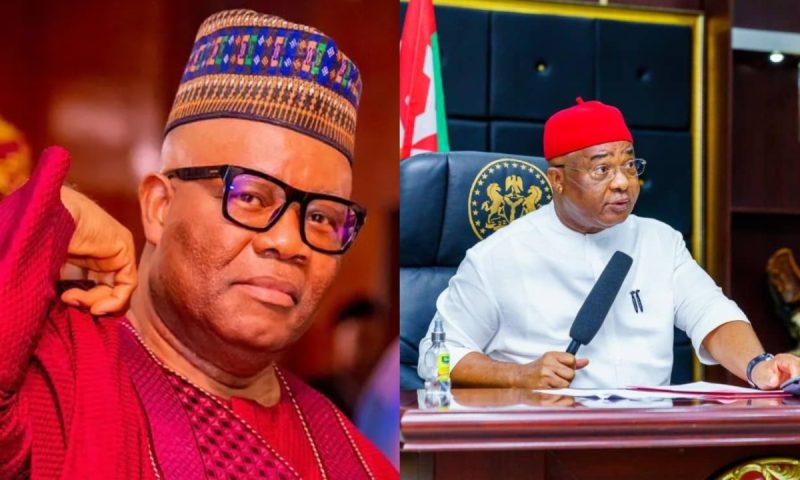
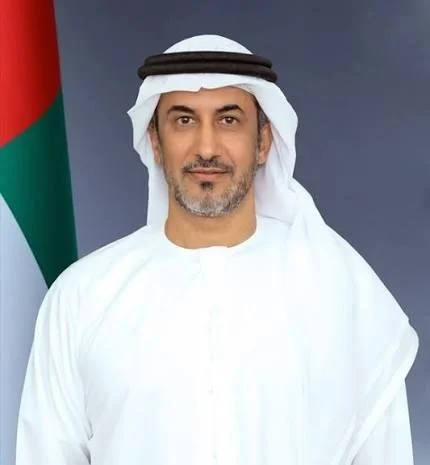
Former Deputy Governor of Kano State, Aminu Abdussalam Gwarzo, has explained why he stepped down from his position.

In a resignation letter addressed to Governor Abba Kabir Yusuf, Gwarzo said he chose to leave office voluntarily so the government could continue its work without distractions.

“I hereby tender my voluntary resignation from office, with effect from 27th March 2026. This decision has been reached after careful consultations and deep reflection,” he said.

He explained that his action was guided by his commitment to peace, stability, and the overall interest of the people of the state.

Gwarzo stressed that his resignation should not be misunderstood as an admission of guilt.

“In view of the prevailing circumstances, I have taken this step in the spirit of responsibility and statesmanship, to allow the government and the State to move forward without undue distractions,” he added.

“This resignation is made voluntarily and in good faith. It should not be construed as an admission of any wrongdoing, but rather as a conscious decision in the interest of institutional integrity, democratic values, and public service.”

The former deputy governor said his priority remains the progress of Kano State, noting that stepping aside at this time would help maintain focus on governance.

What El-rufai’s sudden release from ICPC custody means – Wakili

Imran U. Wakili, a popular social media commentator has claimed that the sudden release of former Kaduna State Governor, Nasir El-Rufai from the custody of the Independent Corrupt Practices and Other Related Offences Commission, ICPC means he was unfairly detained.

DAILY POST reports that shortly after reports of the death of El-Rufai’s mother, Hajiya Umma on Friday, ICPC released the former governor.

Reacting, Wakili in a post shared on X, claimed that the prolonged detention of the firmer governor was not based on any proven wrongdoing, stating that the authorities only wanted to humiliate him.

According to the social media influencer, the timing of the release shows that there were ulterior motives behind the arrest and detention.

“The sudden release of Nasir Ahmad El-Rufai shows that they were only keeping him to humiliate him, not because he committed any crime,” Wakili wrote.

He added that though the release may indicate “a little conscience,” it also underscores what he described as unjust treatment.

WASSCE records 32.72% pass rate

WAEC studentsThe West African Examinations Council has released the results of the Computer-Based West African Senior School Certificate Examination for Private Candidates, 2026 – First Series, recording a 32.72 per cent pass rate.

This was contained in a statement released on Friday by the Head of Public Affairs at the WAEC National Office, Moyosola Adesina.

According to the statement, out of 10,523 candidates who sat the examination, 3,429 candidates representing 32.72 per cent obtained credit and above in a minimum of five subjects, including English Language and Mathematics.

The statement read, “3,429 candidates representing 32.72 per cent obtained credit and above in a minimum of five subjects, including English Language and Mathematics.

“The percentage of candidates in this category in the WASSCE for Private Candidates, 2024 and 2025 – First Series, that is, those who obtained credit and above in a minimum of five (5) subjects, including English Language and Mathematics, were 30.95 per cent and 26.96 per cent respectively. Thus, there is a marginal increase of 5.76 per cent in performance in this regard.

This is the highest pass rate in three years, compared to 30.95 per cent in 2024 and 2025 First Series of the CB-WASSCE, according to the statement.

Meanwhile, 4,598 candidates (43.87 per cent) obtained credit and above in a minimum of five subjects (with or without English Language and Mathematics).

Of those who achieved credit in the core subjects, 1,847 (53.86 per cent) were male, while 1,582 (46.14 per cent) were female, reflecting a slight male lead.

Meanwhile, WAEC indicated that while 8,418 (80.32 per cent) candidates had their results fully processed, 2,062 (19.68 per cent) had a few subjects still under processing due to errors.

WAEC also noted that 75 candidates (0.72per cent) had their results withheld over reported cases of examination malpractice. Investigations are ongoing, and affected candidates will be informed directly of the Council’s decisions.

The examination, conducted nationwide between January 28, and February 14, 2026, saw 10,523 candidates register, an 11.49 per cent increase from the 9,438 candidates in 2025.

Of these, 10,480 candidates sat the examination across 166 centres in the country.

WAEC disclosed that among the candidates, 43 candidates with varying degrees of special needs were registered, including 11 visually impaired, four hearing impaired, and four albino candidates, all of whom were adequately accommodated during the examinations.

The gender distribution of candidates showed that 5,106 were males (48.72 per cent) and 5,374 were females (51.28 per cent).

FG, GenCos disagree over electricity debt reconciliation

Adebayo AdelabuThe Federal Government and power generation companies have disagreed over the reconciliation of debts in Nigeria’s electricity market, with both sides offering differing accounts of the actual liabilities owed to the GenCos.

The Minister of Power, Adebayo Adelabu, said the actual debt owed to generation companies may be significantly lower than widely reported, as ongoing reconciliation efforts continue to clarify obligations within the sector. He said the government’s liabilities to generating companies could settle at about N4tn, rather than the N6.3tn figure often cited in industry discussions.

Adelabu made this known during a recent question-and-answer session at a press conference in Abuja, where he also apologised to Nigerians for the persistent power outages across the country.

“You asked how much we owe suppliers. I can tell you that the amount we owe GenCos is estimated and is still being reconciled,” the minister said. “When we said N4tn as at the end of 2024, it was audited and agreed at about N2.8tn because of the interest elements and the foreign exchange components embedded in it.

“A number of the GenCos have agreed, while some are still discussing back and forth. But now that we are talking about N6tn for the generating companies, by the time reconciliation is concluded, it will probably be around N4tn total.”

He further explained that a large portion of the obligations relates to gas supply, which underpins electricity generation in the country. “What I can tell you is that a proportion of this, which is not less than 60 per cent, is being owed to gas suppliers. So I hope that is clear,” Adelabu added.

However, power generation companies faulted the government’s position, insisting that the reconciliation process must involve all stakeholders and reflect agreed figures.

Responding to the minister’s comments, the Executive Secretary of the Association of Power Generation Companies, Joy Ogaji, called for more clarity on how the figures were derived, while reaffirming the need for a comprehensive reconciliation involving all parties.

She insisted that the last reconciliation meeting between all parties was in March 2025. “We are talking about a bilateral agreement, which means reconciliation of figures should be done by all parties,” Ogaji said in a chat with our correspondent on Friday.

“We want the government to publish how they arrived at their figures and what components formed them. The last time all parties had a reconciliation meeting was in March 2025. So it is important to confirm when another reconciliation was done.”

She noted that discussions with generation companies indicated that no subsequent reconciliation had taken place after the March meeting, stressing that accurate figures could only emerge through a joint verification process. “I spoke with the GenCos, and they confirmed that after the March reconciliation, no other reconciliation has been done. So how did the government get its figures from?” she asked.

Ogaji also questioned the reliance on the Nigerian Bulk Electricity Trading Plc as a sole source of data. “How can NBET be the only source? Invoice settlement is done by market operations; NBET only pays. The true figures can only emerge after a proper reconciliation. What are we turning the sector into?” she asked.

She explained that GenCos’ claims are based on contractual agreements and include multiple cost components often overlooked in public discourse. According to her, the outstanding liabilities cover unpaid invoices for electricity generated since 2015, capacity payments, deemed capacity, foreign exchange differentials, and supplementary charges arising from frequent plant start-ups and shutdowns.

Other components include interest on outstanding payments pegged at NIBOR plus four per cent, Value Added Tax on gas supplied between 2013 and 2021, and losses incurred due to low plant utilisation caused by gas shortages and transmission constraints.

“The GenCos supply power via a PPA with all the terms as approved by GENCOS contract; the outstanding falls into different categories – unpaid invoices for power generated and consumed from 2015 till date – capacities made available and tested by NBET annually – deemed capacity – difference between declared and actual – forex differentials – supplementary charges associated with start-ups and shutdowns, which have moved from 20 per annum to over 365 times a year – interest on outstanding, NIBOR plus 4 – VAT on gas from 2013 till Sept 2021 when it was stopped.”

She further noted that generation companies also incur costs from providing ancillary services such as spinning reserve and black start capabilities, as well as operating in Free Governor Mode, conditions that impose additional wear on equipment without corresponding compensation.

“Quantification of losses from low plant utilisation and stranded capacity; because of problems with gas supply and transmission evacuation, the generating plant is being run significantly below its design utilisation.

“In turn, this incurs additional costs which are not covered by tariffs nor by the draft PPAs; quantification of tariff for ancillary services; the generating plant is being used to provide a range of ancillary services (spinning reserve, black start, etc.), which carry significant costs but for which no tariff exists nor provision in the market rules and draft PPAs; quantification of tariff for FGMO; the system operator has instructed each generator to run their plant in Free Governor Mode of Operation, which is outside the design parameters of the equipment and leads to excessive wear and maintenance which is presently not compensated.”

The disagreement comes amid broader efforts by the Federal Government to sanitise the electricity market and address longstanding liquidity challenges that have affected the sector.

It also follows an earlier report that President Bola Tinubu approved N2.8tn as the verified portion of legacy debts owed to generation companies, based on an audit of subsidy obligations accumulated since 2010.

A senior government official familiar with the development said the approved amount reflects what has been duly validated, noting that further discussions are ongoing to reconcile outstanding claims.

Dangote refinery refutes listing reports, cautions public

DANGOTE REFINERYDangote Petroleum Refinery and Petrochemicals has clarified that it has not announced any Initial Public Offering for its listing, warning the public against relying on speculative reports circulating across media and social platforms.

In a statement issued by its management, the company said it had observed the “recent circulation of unauthorised information across various media and social platforms regarding a potential Initial Public Offering.”

The firm stressed that the reports were not from it and should be treated with caution. “DPRP further notes that several online platforms and unofficial sources have published unverified, and in some instances, inaccurate information relating to a potential offering. Such reports do not originate from DPRP and should be treated with caution,” the refinery stated.

The refinery added that any decision regarding a possible listing would only be communicated through official channels and in compliance with regulatory requirement

“All official updates regarding any potential transaction will be communicated strictly through DPRP’s formal public disclosures and announcements issued by its appointed advisers, in line with applicable laws and regulatory requirements,” the company said.

It advised investors and the public to ignore speculation and rely only on authorised information. “Accordingly, the public, investors, and all market participants are strongly advised to disregard speculative commentary and rely solely on verified information formally issued by DPRP or its authorised representatives,” it added.

The company also emphasised that the communication did not constitute an offer of securities, saying, “This communication is for information purposes only and does not constitute, or form part of, an offer to sell or a solicitation of an offer to buy any securities.”

The clarification comes amid previous indications by the President of Dangote Group, Aliko Dangote, that the refinery could eventually be listed on the stock market.

In an earlier report, Dangote disclosed plans to list a portion of the refinery to attract investors and deepen participation. He said the company intended to sell a minority stake, noting, “We don’t want to keep more than 65 to 70 per cent. Shares will be offered incrementally, depending on investor appetite and market depth.”

Dangote had also previously expressed a broader commitment to listing companies within his conglomerate. Similarly, capital market stakeholders had earlier indicated that the refinery would be listed, with the Chairman of the Nigerian Exchange Group, Umaru Kwairanga, quoting Dangote as saying the refinery would be brought to the stock market.

The refinery’s latest clarification suggests that no official IPO process has been announced, urging stakeholders to await formal disclosures before drawing conclusions, even as a purported IPO document went viral on social media.

CBN signals economic reset as inflation drops, reserves hit $50bn

Governor of the Central Bank of Nigeria, Olayemi CardosoThe Central Bank of Nigeria has signalled a gradual economic reset, attributing improvements in inflation, foreign reserves, and investor confidence to its monetary and financial sector reforms.

Speaking at the CBN Special Day during the 37th Enugu International Trade Fair on Friday, the Acting Director of Corporate Communications and Investor Relations, Sidi Hakama, said the bank’s policies were yielding tangible results.

“Headline inflation has declined from a peak of 34.8 per cent in late 2024 to 15.06 per cent by the end of February 2026,” she said, highlighting the apex bank’s efforts in stabilising prices.

Hakama added that the reforms have also spurred capital inflows and strengthened external reserves, with reserves rising from less than $10 billion to $50.45 billion.

Capital and investment inflows, she noted, increased nearly 200 per cent between 2023 and 2025.

“These gains are driven by reforms under CBN Governor Mr Olayemi Cardoso, including a more transparent foreign exchange regime.

“The new FX manual removes restrictive capital controls and simplifies trade and investment procedures, increasing liquidity in the market,” she explained.

She further disclosed that the bank is transitioning to an inflation-targeting framework designed to sustain price stability.

“This represents a significant shift toward a forward-looking, rules-based monetary policy system anchored in long-term price stability. It will help shape market expectations and cushion the economy from shocks,” Hakama said.

On the banking sector, Hakama reported progress in the ongoing recapitalisation exercise ahead of the March 31, 2026 deadline.

“As of March 17, 32 banks have met new capital requirements, with about 28 per cent of recapitalisation investments coming from foreign sources. This reflects renewed confidence in Nigeria’s financial system,” she noted.

The reforms have also earned international recognition, with the CBN receiving the Central Bank of the Year 2026 Award.

The President of the Enugu Chamber of Commerce, Industry, Mines and Agriculture, Nnanyelugo Onyemelukwe, commended the CBN for restoring confidence in the financial system but cautioned that high interest rates could undermine the gains.

“Although the Monetary Policy Rate was recently reduced from 27.0 per cent to 26.5 per cent, borrowing costs remain high. Interest rates need to reach single digits to improve access to credit and boost productivity and GDP,” Onyemelukwe said.

The CBN’s reforms, according to Hakama, demonstrate a clear commitment to stabilising the economy, enhancing investor confidence, and ensuring sustainable growth for Nigeria.

Middle-East tensions threaten pharma export earnings – MAN

Nigeria’s chemical and pharmaceutical manufacturers face the highest risk from the ongoing US–Israel–Iran conflict, the Manufacturers Association of Nigeria has warned, citing their heavy exposure to global oil price shocks and export dependence on the United States market.

In a position paper made available to Saturday PUNCH on Friday on the implications of the crisis, MAN said the Chemical and Pharmaceuticals Sector remained the most vulnerable, noting that in 2023, chemical products accounted for $136.45m out of Nigeria’s $154.11m manufactured exports to the US.

The association said, “This group is at the highest risk. In 2023, out of the $154,107,280 total Nigerian-manufactured exports to the US, chemical products alone accounted for a staggering $136,446,180 (approximately 88 per cent).”

It added that petrochemical derivatives, which dominate the sector, are highly sensitive to fluctuations in crude oil prices, warning that disruptions in global petroleum markets would have immediate cost implications.

“Petrochemical derivatives are highly sensitive to crude oil price shocks. Any disruption in global petroleum markets will immediately inflate the cost of APIs (Active Pharmaceutical Ingredients) and chemical base materials, squeezing margins and threatening the export dominance of operators within the Sectoral Group,” MAN stated.

The manufacturers’ body explained that the escalating tensions in the Middle East had already triggered volatility in global energy markets, with crude oil prices rising sharply and shipping routes facing disruptions.

MAN said, “For the Nigerian manufacturer, global geopolitics is no longer a television spectacle; it is a direct tax on the cost of production.” It warned that rising crude oil prices, increased freight costs, and higher insurance premiums on global shipping would significantly inflate input costs for local manufacturers, particularly those dependent on imported raw materials.

It noted that the United States remains a critical trading partner, with Nigeria exporting $5.91bn worth of goods to the country in 2024, representing 9.3 per cent of total exports, adding that any disruption to this trade flow would directly affect manufacturing output.

It stated, “We anticipate immediate spikes in global freight forwarding costs, prolonged lead times for imported raw materials, and an imported inflation surge.”

Beyond the chemical and pharmaceutical segment, MAN said other sectors, including basic metals, iron and steel, as well as food, beverage and tobacco, would also face significant pressure from rising energy costs and imported inflation.

It stressed that the broader manufacturing sector was already vulnerable despite recent macroeconomic improvements, warning that the crisis could reverse gains such as easing inflation and improved capacity utilisation.

The association noted that “this sudden geopolitical shock could reverse the hard-won macroeconomic gains.” Drawing lessons from the US–Iraq War, the association warned that similar conflicts in the past had triggered severe downturns in Nigeria’s manufacturing performance.

It stated, “Total manufacturing exports plummeted from $901.35m in 2002 to a dismal $496.87m in 2003, while manufacturing GDP growth collapsed from 17.74 per cent to -10.8 per cent.”

The association called on the Federal Government to take urgent steps to shield manufacturers, including fast-tracking energy transition initiatives, guaranteeing foreign exchange for critical imports, and prioritising domestic supply of refined petroleum products.

MAN said, “We cannot control the geopolitics of the Gulf, but we can and must control our domestic policy responses.”

Rivers APC suspends Fubara over alleged anti-party activities

The All Progressives Congress (APC) in Rivers State has suspended Fubara Dagogo, a prominent member from Bonny Local Government Area.

The decision was taken by the Ward 4 Executive Committee after allegations of anti-party activities and gross misconduct were levelled against the party chieftain.

The crisis arose after Dagogo took legal action against the APC over its upcoming national convention.

He approached a Federal High Court in Abuja, requesting an order to halt the party’s planned event.

In his suit, Dagogo alleged that he was unjustly prevented from contesting for the position of National Vice-Chairman (South-South).

Although Dagogo reportedly paid N5.1 million for the nomination form, he claimed the party refused to provide the required documents to formalize his candidacy.

He subsequently petitioned the court to suspend the South-South zonal congress and recognize his eligibility for the position.

Additionally, he sought the nullification of any election conducted without his participation and demanded N100 million in damages for what he described as marginalization.

However, the leadership of his ward in Bonny viewed this legal move as a direct violation of the party’s internal discipline.

The Ward Chairman, Richard Ibani, announced the suspension, stating that the resolution was passed during a committee meeting held on March 16.

The document confirming his removal was signed by the Ward Secretary, Donald Jumbo, and 21 other executive members.

The ward leaders maintained that Dagogo’s actions were an embarrassment to the party and a breach of the APC Constitution 2022 as amended. Specifically, they cited Article 21.2 (I), (II), and (VII), which deal with party discipline and the conduct of members.

In a strongly worded statement, the committee noted that they had previously cautioned members against acts that could ridicule the party.

​They stated: “The ward exco has always advised its members to desist from actions capable of ridiculing our party, but your recent actions have shown that you are not willing to respect and abide by the constitution and actions of our great party.”

The suspension is indefinite and took effect immediately.

The ward leadership has also called on the state secretariat to uphold the resolution and apply further necessary actions.

ADC has demonstrated readiness to become formidable national platform – Ogbodo

An opposition leader in Enugu State, Ray Kene Ogbodo has declared that the African Democratic Congress, ADC, stands as a viable national platform to rescue Nigeria from bad leadership.

Ogbodo, in a press statement made available to journalists on Friday, expressed optimism that the Senator David Mark-led ADC will restore the lost hopes of Nigerians.

The ADC chieftain spoke through his media aide, Mr. Azubuike Akam, noting that the recent NEC meeting that rectified the released timetable for the nationwide congresses and national convention of the African Democratic Congress was a significant milestone in the party’s journey to rebuild Nigeria’s democratic foundations.

Ogbodo described it as a demonstration of commitment to internal democracy and institutional discipline.

“The congress timetable beginning with polling unit/ward congresses and culminating in the national convention scheduled for April 14, 2026 reflects the party’s determination to strengthen its structures from the grassroots to the national level.

“This transparent process is not merely about electing party officials.

“It is about renewing hope, deepening participation, and positioning the ADC as the credible vehicle through which Nigerians can reclaim their future.

“Across Nigeria today, citizens are grappling with unprecedented hardship.

“Families struggle daily with the rising cost of living, collapsing infrastructure, and economic policies that appear disconnected from the realities of the people.

“What we are witnessing is not simply economic difficulty; it is the result of years of leadership failure, policy inconsistency, and a troubling disconnect between those in power and the citizens they claim to serve,” he stated.

Ogbodo further stated that the situation in Enugu State was particularly concerning.

The 2023 gubernatorial candidate of the AAC in Enugu State said the time had come for a new political culture, one built on integrity, compassion, competence, and service for the people.

“The congresses announced by the party leadership represent more than an administrative exercise.

“They are the foundation of a movement to rescue Nigeria from the grip of outdated political thinking and to replace it with a new generation of leadership that listens, learns, and leads with courage.

“The ADC has already demonstrated its readiness to become a formidable national platform, strengthening its grassroots structures and mobilizing citizens ahead of future elections.

“Our party stands today as a broad coalition of Nigerians who believe that the country can, and must do better.

“The message we send through this process is clear: Nigeria does not lack resources or talent; what has been lacking is leadership that puts the people first.

“The suffering of Nigerians must end. Economic sabotage, corruption, and governance driven by narrow political interests must give way to policies that empower citizens, stimulate productivity, and restore dignity to the Nigerian people.

“To Ndi Enugu and Nigerians across the federation, I say this: the journey to national renewal has begun. The ADC is ready to provide the leadership and platform required to rebuild trust in governance and restore hope in our democracy.

“The congresses and convention ahead will further consolidate our resolve, deepen participation, and prepare our party to offer Nigerians a credible alternative,” he declared.

Military probes ‘Sallah returnee’s’ death amid alleged terror links

The Headquarters Theatre Command of Operation HADIN KAI has launched an investigation into the controversial killing of a man, Abdulrahman Mustapha, in Maiduguri, following widespread allegations of extrajudicial action by troops.

The incident, which reportedly occurred on March 22 near the Polo axis close to the Federal High Court, has sparked outrage on social media.

It was alleged that Mustapha, also known as Abchin, was unarmed and returning from a Sallah visit when he was shot dead by military personnel.

In a statement issued on Thursday, the Media Information Officer of the Joint Task Force (North East), Lieutenant Colonel Sani Uba, described the allegations as serious, confirming that an investigation was underway to determine the circumstances surrounding the incident.

According to the statement, Mustapha might have attempted to snatch a soldier’s rifle, an act the military described as a direct threat to troops.

However, the military indicated that initial findings suggest the situation may be more complex than portrayed.

According to the Theatre Command, preliminary operational indicators point to possible security concerns, including suspicions that the deceased may have been linked to a Boko Haram or ISWAP reconnaissance group or sleeper cell.

“Initial findings indicate the possibility that troops may have encountered individuals consistent with a Boko Haram/ISWAP reconnaissance element or a sleeper cell operating within the area. This assessment is based on several factors, including reports that the individual in question allegedly attempted to snatch a soldier’s rifle, an action indicative of hostile intent and a direct threat to troops’ safety.

“Additionally, the individual was reportedly found in possession of multiple identification cards bearing different names from that cited in the petition, including a foreign identification card from the Niger Republic, which may suggest cross-border movement, possible infiltration, or the use of a decoy identity,” part of the statement read.