Union Bank’s endless possibilities campaign wins Bronze at 2026 Pitcher Awards

Union Bank of Nigeria’s Endless Possibilities campaign has won Bronze in the Heritage category at the 2026 Pitcher Awards, one of Africa’s foremost platforms for creative excellence.
The   campaign   was   also   shortlisted   in   the   Craft   category   for   Film   Craft,   a recognition of the artistry and technical quality behind the work. These recognitions were awarded following adjudication alongside qualifying entries from across the African continent.
The Heritage win carries a particular resonance. It recognises the bank’s ability to honour its rich heritage while maintaining relevance with contemporary audiences.
For more than a century, Union Bank has been woven into the fabric of Nigeria’s economic and social progress, and Endless Possibilities continues that story rather than departing from it.
Built to celebrate the ambition and resourcefulness of Nigerians who dream and create against the  odds,   the   campaign   mirrors   the  very   qualities  that   have   sustained  the   Bank  across generations. To be honoured in a category defined by history, identity and cultural continuity, is to have that legacy recognised on a continental stage.
Commenting on the award, Olufunmilola Aluko, Chief Brand and Marketing Officer at Union Bank of Nigeria, said: “We are honoured to be recognised at the 2026 Pitcher Awards for  Endless Possibilities. This achievement reflects our commitment to telling authentic stories  that resonate with the Nigerian spirit and reinforce our promise to support the dreams and  progress of the communities we serve. We are equally proud of the Film Craft shortlist, which speaks to the talent and collaboration behind the work.”
This recognition on the African stage, adds to Union Bank’s growing reputation for storytelling that is locally grounded and broadly resonant.
As the Bank deepens its connections with audiences  across   the   country   and   continent,  it   remains   committed  to   work  that   inspires confidence, possibility and progress.
Established in 1917, Union Bank is a leading provider of financial services in Nigeria, renowned for its “Simpler, Smarter Banking” philosophy. With a nationwide network and a strong focus on digital innovation, Union Bank continues to empower individuals, businesses, and the public sector to achieve lasting success.
The Bank is a trusted and recognisable brand with an extensive network of over 300 branches across Nigeria. The Bank offers a range of banking services to individual and corporate clients, including current, savings, and deposit account services, funds transfer, foreign currency domiciliation, loans, overdrafts, equipment leasing, and trade finance. The Bank also offers customers convenient electronic banking channels and products, including Online Banking, Mobile Banking, Debit Cards, ATMs, and POS Systems.
Kano lawmaker Muhammad Tomas dumps NDC, returns to APC

A member of the Kano State House of Assembly representing Makoda Constituency, Hon. Muhammad Ahmad Tomas, has left the Nigerian Democratic Congress (NDC) and returned to the All Progressives Congress (APC).

Tomas made his return known on Monday during a visit to the Deputy President of the Senate, Senator Barau I. Jibrin, at his residence in Abuja.

He was accompanied by the chairmen of Makoda and Dambatta local government areas, Alhaji Isa Currency and Alhaji Jamilu Abubakar Dambatta.

Receiving the lawmaker, Senator Barau described his return to the APC as a welcome development, saying it aligns with efforts to strengthen governance and political stability.

“This is a timely and commendable decision. It shows commitment to development and good governance,” Barau said.

The Deputy Senate President also assured Tomas of fair treatment within the APC, adding that the party remains open to returning members and committed to equal opportunities for all.

He further expressed confidence that Tomas’ return would boost the party’s strength in Kano North and across Kano State.

In a post shared on his Facebook page, Barau said he was optimistic that the development would further consolidate the APC’s presence in the region.

Tomas’ defection comes after he recently lost the NDC ticket to contest for a second term in the Kano State House of Assembly, a decision that was reportedly reached through consensus within the party.

The lawmaker had earlier left the APC for the NDC, where he was received by party leaders, including Senator Rabiu Musa Kwankwaso, before returning to the ruling party.

Benue: Idoma’s greatest challenge is lack of unity, not talent — Ochai

The President-General of the Idoma Association USA, Edwin Ochai, has said that the greatest challenge confronting the Idoma nation is not a lack of education, intelligence or human capacity, but the absence of unity and a collective vision.

Ochai stated this on Saturday during the 2026 Idoma Centenary Plus Lecture held in Otukpo, Benue State.

Reflecting on the presentations and discussions at the event, he said the lecture broadened his understanding of the current realities facing the Idoma people and the path they must take to secure a better future.

According to him, one of the most striking lessons from the centenary lecture was that despite producing numerous professors, military generals, technocrats, public servants and other distinguished professionals, the Idoma nation has not translated its vast human resources into the level of political, economic and social development it deserves.

“The greatest challenge facing us today is not a lack of education, intelligence or human capacity. Rather, it is the absence of unity and a collective vision,” he said.

Ochai noted that the achievements of individual Idoma sons and daughters across various sectors demonstrate that the nation is not lacking in talent, knowledge or leadership potential.

He, however, lamented that personal interests, political divisions and clan loyalties often take precedence over the collective good, thereby limiting the community’s ability to harness its full strength for development.

“The Idoma people continue to excel, but their collective strength remains underutilised. A people united by a shared purpose can achieve far more than even the most brilliant individuals working separately,” he stated.

The Idoma Association USA leader said the centenary celebration should serve not only as a reflection on the achievements of the past century but also as a call to action for greater unity and purposeful leadership.

As the country approaches another election cycle, Ochai urged the Idoma people to rise above sentiments, personal relationships and short-term gains when choosing their leaders.

According to him, voters should focus on candidates with proven competence, integrity, vision and a genuine commitment to advancing the interests of the Idoma nation.

He said the people must critically evaluate every aspirant seeking public office by examining their track record of service, ability to unite the people and commitment to development, education, youth empowerment, security and economic growth.

“The future of our people depends not on who speaks the loudest or spends the most money, but on who possesses the vision, competence, integrity and commitment to advance the interests of the Idoma nation,” he said.

Ochai further stressed the need for leaders who can mobilise professionals, entrepreneurs, traditional institutions, women and youths towards a common developmental agenda.

He described the election season as an opportunity for the Idoma people to make informed decisions that would benefit both the present and future generations.

According to him, the centenary celebration should inspire the Idoma nation to embrace unity, collective purpose and visionary leadership capable of transforming the area into a model of progress, influence and development.

“The time to act is now. The time to unite is now. Now is the time to make a wise choice,” he added.

Court sentences seven to death for murder of Rivers clergyman

A High Court in Port Harcourt, Rivers State, has sentenced seven men to death by hanging after finding them guilty of the kidnapping and murder of Reverend Edwin Isaiah Dokubo-Harry more than a decade ago.

The judgment, delivered by Justice Boma Diepiri on Thursday, concluded a long-running case arising from the killing of the clergyman in Abalama, Asari-Toru Local Government Area, in December 2013.

Those convicted are Precious Jack Opara, Answer Dick, Osaki Fubara, Prince Mikado Philip, Tienabeso George, Seleipri Fubara, and Alaboeriya Fubara.

The court found them guilty of conspiracy, kidnapping, murder, unlawful possession of firearms, and related offences.

Justice Diepiri held that the prosecution successfully established the charges against the defendants and consequently imposed the death sentence on all seven convicts.

The court heard that the victim was allegedly lured into a forest in Abalama, where he was abducted by members of the group.

He was reportedly blindfolded and restrained before being killed, after which his body was abandoned in a creek in the area.

The judge further ordered that the firearm recovered during the investigation, along with other exhibits tendered in evidence, be released to the Nigeria Police Force.

Meanwhile, Emmanuel Israel and Nephew Philemon, who were also standing trial in connection with the matter, were cleared of all allegations.

The court discharged and acquitted both men of the 25-count charge after determining that the evidence presented was insufficient to link them to the offences.

The verdict triggered emotional reactions in the courtroom, with some of the convicts and their relatives shedding tears as the sentences were pronounced.

A High Court in Port Harcourt, Rivers State, has sentenced seven men to death by hanging after finding them guilty of the kidnapping and murder of Reverend Edwin Isaiah Dokubo-Harry more than a decade ago.

The judgment, delivered by Justice Boma Diepiri on Thursday, concluded a long-running case arising from the killing of the clergyman in Abalama, Asari-Toru Local Government Area, in December 2013.

Those convicted are Precious Jack Opara, Answer Dick, Osaki Fubara, Prince Mikado Philip, Tienabeso George, Seleipri Fubara, and Alaboeriya Fubara.

The court found them guilty of conspiracy, kidnapping, murder, unlawful possession of firearms, and related offences.

Justice Diepiri held that the prosecution successfully established the charges against the defendants and consequently imposed the death sentence on all seven convicts.

The court heard that the victim was allegedly lured into a forest in Abalama, where he was abducted by members of the group.

He was reportedly blindfolded and restrained before being killed, after which his body was abandoned in a creek in the area.

The judge further ordered that the firearm recovered during the investigation, along with other exhibits tendered in evidence, be released to the Nigeria Police Force.

Meanwhile, Emmanuel Israel and Nephew Philemon, who were also standing trial in connection with the matter, were cleared of all allegations.

The court discharged and acquitted both men of the 25-count charge after determining that the evidence presented was insufficient to link them to the offences.

The verdict triggered emotional reactions in the courtroom, with some of the convicts and their relatives shedding tears as the sentences were pronounced.

Niger Govt defends over 1,000km road contracts, rejects executive fiat allegations

The Niger State Government has defended the award of road contracts covering more than 1,000 kilometres across the state, dismissing allegations that the projects were approved through executive fiat without due process.

The Permanent Secretary, Ministry of Works and Infrastructural Development, Engr. Hassan Baba Etsu, said all contracts awarded by the administration of Governor Umaru Mohammed Bago complied with the Public Procurement Law and followed established procurement procedures.

Speaking during a press briefing to mark the governor’s third year in office, Etsu described reports of arbitrary contract awards as false and misleading.

He said the state government is currently undertaking some of its largest infrastructure projects, including the construction of six flyover bridges, one underpass, and 100 kilometres of roads within Minna metropolis.

According to him, construction is also progressing on the 45-kilometre Bida Ring Road, while road projects spanning 556 kilometres are ongoing across the state’s 25 local government areas.

He noted that each local government area is benefiting from at least five kilometres of road construction, adding that about 40 per cent of the projects have reached advanced stages and are close to completion.

Etsu further disclosed that the government has extended intervention to key federal roads by funding the reconstruction of the Kontagora-Rijau and Wawa-Babanana roads to improve connectivity and economic activities.

He also announced the recent approval of a 13-kilometre road project linking Mararaba Dandaudu and Kuta in Shiroro Local Government Area.

The Permanent Secretary maintained that the Ministry of Works remains fully accountable for all contracts awarded and challenged claims that procurement guidelines were bypassed.

Savannah Energy revenue hits $104m in four months

British independent energy firm Savannah Energy Plc has reported a strong financial and operational performance for the first four months of 2026, driven by a significant boost in its Nigerian operations and a massive surge in cash collections.

In a trading update released ahead of its Annual General Meeting on 1 June 2026, the company revealed that its total revenues for the four months ended 30 April 2026 jumped 17 per cent year-on-year to hit $104.1m, up from the $89.1m recorded during the corresponding period in 2025.

The primary catalyst for the company’s financial liquidity during the period was a stellar 48 per cent increase in cash collections, which reached $183.5m compared to $124.1m in the first four months of 2025.

This intensive cash recovery strategy successfully drove down the company’s trade receivables balance by 22 per cent, shrinking it to $395.2m from the $507.2m left on the books at year-end 2025.

Reacting to the performance, the Chief Executive Officer of Savannah Energy, Andrew Knott, expressed satisfaction with the firm’s strict financial positioning.

“Savannah continues to deliver against the nine core focus areas we set out for the business at the start of 2025. In Nigeria, we have seen a significant improvement in cash collections, alongside a 17 per cent year-on-year increase in revenues and a 22 per cent reduction in our trade receivables balance since year-end 2025. This reflects our ongoing focus on disciplined cash collections and receivables management, which remains a key priority for the business this year,” Knott stated.

The company’s balance sheet showed increased flexibility, with cash balances rising to $64.7m from the $42.8m recorded as of 31 December 2025. Concurrently, Savannah’s net debt bucked the industry trend by declining to $641.7m, down from $658.6m at the end of 2025.

To further anchor its medium-term financial position, Savannah announced it has secured a new £32m unsecured loan facility from NIPCO Plc, its largest shareholder. The facility is structured in two tranches, with £20m available immediately and £12m unlocking on 1 July. The loan carries a 4.5 per cent annual interest rate over a 36-month term and includes an optional conversion mechanism allowing Savannah to repay the debt through the issuance of new shares at 8p per share.

Knott noted that the NIPCO facility would strengthen the firm’s financial flexibility as it navigates operational timelines through 2026 and 2027.

Operationally, the energy firm reported strong progress on the ground in Nigeria, particularly following the integration of its March 2025 SIPEC acquisition. An ongoing production expansion programme at the Stubb Creek field successfully delivered an eight per cent increase in average gross daily production, lifting output to 3.1 kbopd compared to 2.8 kbopd in the same period last year.

However, group average gross daily production for the four months sat lower at 15.7 kboepd compared to the full-year 2025 average of 18.8 kboepd. The company attributed this dip to artificial constraints on gas production volumes resulting from heavy, ongoing drilling activities and localised customer gas demand.

Relief is, however, on the horizon for the company’s gas infrastructure. Savannah confirmed that drilling and completion activities at the Uquo NE well location have been concluded. Tie-in activities are currently entering their final stages at the Uquo Central Processing Facility, with first gas explicitly targeted for early July 2026 to support an expected surge in production for the second half of the year. Furthermore, site construction at the Uquo South exploration well is progressing rapidly and is expected to be fully ready for rig mobilisation by early June 2026.

Beyond its core oil and gas business in Nigeria, Savannah reported substantial milestones within its greenfield renewable power division across West and Central Africa. In the Niger Republic, the firm’s flagship Parc Eolien de la Tarka wind project received a major policy boost, with the country’s Minister of Energy confirming its inclusion on the government’s official list of priority infrastructure projects. Further developmental sequencing for the wind farm will run concurrently with Savannah’s ongoing discussions with the Nigerien government regarding the R1234 PSC and the potential resumption of wider oil operations.

Meanwhile, in Cameroon, negotiations with the state government have reached an advanced stage for a formal Joint Development Agreement regarding the 95 MW Bini a Warak hybrid hydroelectric and solar project. The upcoming agreement is slated to replace the initial April 2023 Memorandum of Agreement, legally securing Savannah’s commercial terms for the greenfield project.

Looking ahead, management indicated it remains on the hunt for more value-accretive assets, actively reviewing multiple acquisition opportunities across both traditional hydrocarbons and renewable power sectors over the next 24 months.


NGX turnover slips to 2.39bn shares in short week

NGX. Nigerian Exchange marketThe Nigerian capital market ended the week on a resilient note despite a sharp 38 per cent decline in turnover caused by the two-day Eid al-Adha public holidays. Although trading activity across major asset classes was significantly weakened by the break, the All-Share Index still posted a modest gain as investors conducted system checks ahead of the transition to the T+1 settlement cycle, JIDE AJIA reports

The Nigerian Exchange experienced a sharp contraction in trading activity for the week ended 29 May 2026. This retraction was primarily driven by a compressed trading timeline, as the Federal Government declared Wednesday, 27 May, and Thursday, 28 May, as public holidays to commemorate the Eid al-Adha celebrations.

Despite the lost momentum in total volume, underlying market sentiment remained quietly resilient. The benchmark All-Share Index managed a minor gain, while the markt prepared for a major regulatory milestone.

Volume, value realitie

The footprint of the two-day pause was starkly visible in the week’s trading statistics. Investors exchanged a total turnover of 2.398 billion shares worth N111.480bn in 241,313 deals. This represents a significant 38.12 per cent drop in volume and a 31.08 per cent decline in financial value compared to the preceding week, which had seen 3.875 billion shares valued at N161.757bn change hands across 334,745 deals.

Even with the shortened week and lower participation, buying interest in select heavyweights managed to push the NGX All-Share Index up by 0.27 per cent, closing the week at 250,385.47 points. Concurrently, aggregate market capitalisation closed at a robust N160.509tn.

Sector performance

As is typical on the local bourse, liquidity is concentrated heavily inside institutional banking and financial tickers. The Financial Services Industry anchored the week’s activity chart, clearing 1.656 billion shares valued at N48.229bn across 94,812 deals. This sector single-handedly accounted for 69.07 per cent of the total equity turnover volume and 43.26 per cent of the overall value.

The Services Industry secured a distant second place, recording a turnover of 265.448 million shares worth N4.530bn. The Information and Communications Technology Industry took third place, tracking 101.848 million shares worth N9.163bn.

On an individual stock level, the trio of Fidelity Bank Plc, Access Holdings Plc, and The Initiates Plc dominated order books. Together, they accounted for 903.681 million shares worth N19.227bn, commanding 37.69 per cent of the week’s total traded volume.

Shifting equities

Market breadth leaned negative for the week, signalling selective profit-taking as investors repositioned their portfolios. Overall, 34 equities closed higher, 51 ended lower, and 61 maintained their previous valuations.

International Energy Insurance Plc led the appreciation chart with a stellar 32.55 per cent surge, closing at N4.52 per share. It was followed closely by Sovereign Trust Insurance Plc, which climbed 20.61 per cent to finish at N2.75, and Tantalizers Plc, jumping 18.40 per cent to close at N4.89.

Conversely, Dangote Sugar Refinery Plc took a heavy hit, plunging 18.22 per cent to top the losers’ table at N71.15 per share. The Initiates Plc also pulled back after its high-volume sessions, shedding 15.98 per cent to close at N28.40.

Beyond secondary trading, the final week of May featured highly consequential updates for corporate funding and the fixed-income ecosystem, including Dangote Sugar’s Rights Issue. The exchange officially activated the trading code (RR26DANGSU) for Dangote Sugar Refinery Plc’s massive capital raise.

The company is offering over 8.09 billion ordinary shares at N60.00 per share based on two new ordinary shares for every three held. The trading window for these rights will remain open until 24 June 2026.

The debt market received an additional liquidity layer as the NGX listed supplementary units of existing Federal Government of Nigeria Bonds issued earlier in May. This expanded the outstanding units for both the 16.2499 per cent FGN APR 2037 and the 22.60 per cent FGN JAN 2035 tranches, providing institutional investors with deepened fixed-income depth.

The share prices of ABC Transport Plc, AIICO Insurance Plc, and Haldane McCall Plc were officially adjusted by the exchange following their respective ex-dividend dates, reflecting their cash distribution payouts to shareholders.

Migration to T+1

While the shortened week felt subdued on the surface, Friday, 29 May, marked a historic bookend for the Nigerian capital market. It was the final session operating under the legacy T+2 post-trade settlement timeline.

TAJBank grows assets to N1.34tn, maintains lead

TAJBank Limited, Nigeria’s innovation-driven non-interest bank, has maintained its lead position as the country’s largest ethical bank, based on the statements of financial position approved by regulatory authorities at the end of the 2025 financial year.

The latest data from the bank’s FY2025 financial statement showed that the non-interest lender consolidated its frontline position in the subsector across gross assets, profit values, and other key performance indicators during the year.

Specifically, in the year under review, TAJBank’s total assets grew 41 per cent to N1.34tn from N953bn in the preceding year. Gross earning assets surged 81 per cent to N847.71bn from N467.38bn in FY2024, while total equity surged to N149.23bn, reflecting a 144 per cent growth over the N61.25bn recorded in FY2024.

A further analysis of the approved financial statement indicated that the bank posted N132.56bn in gross earnings, representing a 71 per cent growth over the N77.55bn in the previous year

Its profit before tax surged 74 per cent to N31.56bn in FY2025 from N18.17bn in FY2024, while its capital adequacy ratio stood robustly at 30 per cent.


Commenting on the bank’s performance, a chartered banker and former Director-General of the Chartered Institute of Bankers of Nigeria, Uju Ogubunka, said the financial metrics between 2024 and 2025 indicated massive progress.

Ogubunka, who is also the President of the Bank Customers Association of Nigeria, stated, “The bank’s performance is excellent evidence that it is aggressively penetrating its targets, especially in the rural areas, and thus contributing to the level of financial inclusion nationwide. It is also a testament to the profitability and viability of the non-interest banking sector in Nigeria.”

In his remarks, the Managing Director/Chief Executive Officer of TAJBank, Hamid Joda, said the stellar performance was a reflection of corporate dedication.

“The improving performance of our bank is a clear demonstration of the board and management’s strong commitment to making TAJBank the best ethical bank in Nigeria by all assessment parameters,” Joda said. “We owe our shareholders, customers, regulatory authorities, and workers a lot of gratitude for supporting our efforts targeted at transforming TAJBank into a global brand in the ethical banking space in the years ahead,” he added.

Similarly, the bank’s Executive Director, Sherif Idi, assured stakeholders of sustained value creation in line with the bank’s long-term business model. Idi said, “The FY2025 performance of TAJBank is in furtherance of its corporate vision and mission, and I want to assure all our stakeholders, particularly the shareholders and customers, that our bank shall continually promote their interest in line with our corporate shared values always.”

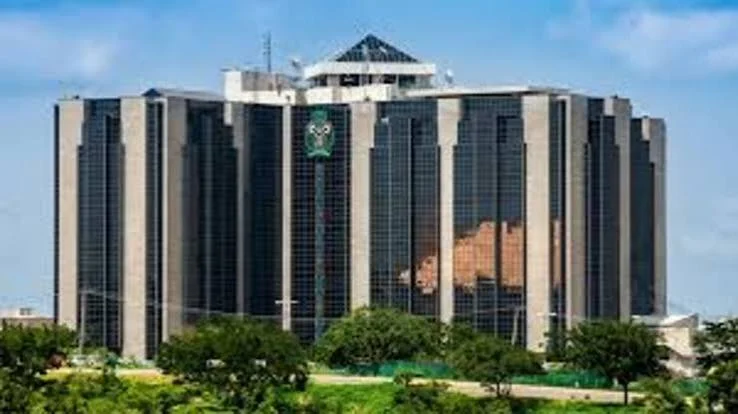
2027 polls: CBN targets N2.83tn cash in private hands

CBN Governor, Olayemi Cardoso. Photo: CBN / XThe Central Bank of Nigeria has unveiled an ambitious plan to bring about N2.83tn currently held outside the banking system into formal financial channels and expand financial inclusion by onboarding 50 million additional Nigerians by 2028.

The targets form part of the Nigeria Payments System Vision 2028 unveiled by the Governor of the Central Bank of Nigeria, Olayemi Cardoso, on Monday in Abuja, as the apex bank seeks to deepen digital payments, strengthen trust in financial services, reduce cash dependence, and position Nigeria as a leading payments hub in Africa.

The target is coming a few months before Nigeria’s 2027 general elections, with the Independent National Electoral Commission scheduling the presidential and National Assembly polls for January 16, 2027, and governorship and state assembly elections for February 6, 2027, amid renewed concerns over cash-driven campaigns, vote-buying, and higher legal spending limits for candidates.

The launch brought together regulators, banks, fintech operators, telecommunications firms, development partners, and other stakeholders in the financial services ecosystem.

Cardoso said the initiative was not merely about technology or financial transactions but about creating economic opportunities, reducing poverty, and accelerating growth. According to him, efficient payment systems remain among the fastest ways to lift large numbers of people out of poverty.

“One of the fastest ways to take a large number of people out of poverty is through an efficient payments system. It’s through an efficient payment system. So let us not look at it lightly,” Cardoso said.

The governor described the Payments System Vision 2028 as a strategic roadmap that would shape how Nigerians transact, save, invest, trade, and participate in the digital economy over the next three years.

“Today, we unveil more than a payment strategy. We unveil a vision for how Nigerians will transact, trade, save, invest, and participate in an increasingly digital economy,” he said.

N2.83tn cash target

The new vision comes at a time when cash remains heavily concentrated outside the banking system despite years of financial inclusion efforts. Latest figures from the CBN’s money and credit statistics show that currency outside banks stood at N5.08tn in April 2026, representing about 90.03 per cent of the N5.65tn currency in circulation during the period.

Cardoso disclosed that the apex bank intends to reduce cash outside the banking system to less than 40 per cent of money in circulation by 2028. “I would like to see a situation where we will reduce cash outside the banking system to less than 40 per cent of money in circulation,” he said.

Using the April 2026 figures as a benchmark, achieving that target would imply reducing cash outside banks from N5.08tn to about N2.26tn, potentially returning roughly N2.83tn to the formal banking system.

Such a shift could significantly improve monetary policy transmission, increase banking sector liquidity, enhance financial intermediation, and strengthen lenders’ ability to support economic activity.

The effort comes as Nigeria prepares for the 2027 elections, when concerns over cash-intensive campaign activities and vote-buying are expected to place renewed focus on the amount of currency held outside formal financial channels.

The Governor of the CBN and members of the Monetary Policy Committee earlier warned that rising political and election-related spending ahead of the 2027 general elections could undermine the country’s disinflation gains and trigger fresh inflationary pressures. The warnings were contained in the personal statements of MPC members released by the apex bank.

At the launch of the Nigeria Payments System Vision 2028, the governor linked the target to broader efforts to build confidence in digital payments and reduce reliance on cash transactions. “Cash should no longer be king,” he said.

He recalled being concerned after watching a programme in which traders refused to accept cash payments due to concerns about the reliability of payment channels. “We need to do a lot more work to build trust and to ensure that people have no doubt that they are dealing with a strong and reliable payments system,” Cardoso said.

50 million new users

Alongside the cash target, the CBN is seeking to expand participation in the formal financial system dramatically. Cardoso said financial inclusion under the vision would rise to 95 per cent by 2028, bringing an estimated 50 million additional Nigerians into the banking and digital payments ecosystem.

“Under Vision 2028, I would like to see this reaching 95 per cent inclusion. That means 50 million more market women, farmers, and young people will have a bank account or wallet in their name, with their name and BVN protecting them,” he said.

The target represents one of the most ambitious financial inclusion drives undertaken by the apex bank in recent years and reflects the government’s broader efforts to formalise economic activity and expand access to financial services.

According to Cardoso, financial inclusion is not an end in itself but a tool for economic transformation. “The journey is to impact the lives of the poor. That’s part of it and a major part of it. The journey is to lift people out of poverty, and the journey is to have an impact on GDP,” he stated.

The governor added that a modern payment system was indispensable to economic growth, innovation, financial inclusion, and national competitiveness. The CBN governor said the new framework was designed to strengthen infrastructure, deepen inclusion, encourage innovation, improve resilience, and increase integration with regional and global payment systems.

He noted that payment systems had evolved beyond simple money transfer channels and had become strategic economic infrastructure. “In a modern economy, payment infrastructure is not simply a financial utility. It is a strategic national asset,” Cardoso said.

He explained that efficient payment systems reduce the cost of doing business, improve productivity, support trade, strengthen transparency, and broaden economic participation.

The vision also aims to help Nigeria take advantage of opportunities presented by the African Continental Free Trade Area, expanding digital commerce and increasingly interconnected global markets. “This is not merely about technology or transactions. It is about opportunity,” he said.

According to him, entrepreneurs, traders, and small businesses across the country stand to benefit from faster settlement systems, broader market access, and increased participation in regional and global commerce.

“For the entrepreneur in Aba, the trader in Zaria, the fashion designer in Ilesha, or the small business owner in Kano, efficient and interoperable payment systems can mean access to new markets, faster settlement of transactions, and greater participation in regional and global commerce,” Cardoso added.

Despite the ambitious targets, Cardoso stressed that the success of the programme would depend on implementation rather than policy declarations. “The success of PSV 2028 will not be measured by the quality of this document. It will be measured by execution,” he said.

He challenged regulators, banks, fintech firms, telecom operators, and other stakeholders to work together to ensure the vision translates into measurable economic outcomes. “As the Federal Government of Nigeria builds roads, schools, and hospitals, we here must also build the invisible roads that move money,” Cardoso said.

He added, “Vision 2028 is not a government project. It is a Nigerian project. Together, we will build a payments system that is fast, inclusive, secure, and proudly Nigerian.”

Providing further details of the framework, the CBN’s Deputy Governor, Economic Policy Directorate, Dr Muhammad Abdullahi, said the Payments System Vision 2028 was built around five strategic pillars. According to him, the pillars include payment infrastructure and interoperability, digital financial inclusion, innovation and emerging technologies, cross-border payments, and regulation and cybersecurity.

Abdullahi described modern payment systems as critical economic infrastructure that supports trade, investment, innovation, productivity, and financial inclusion. “Every successful payment represents more than a financial transaction. It enables commerce, supports enterprise, facilitates trade, connects markets, and creates opportunities for economic participation,” he said.

The deputy governor explained that the first pillar focuses on modernising payment infrastructure, strengthening interoperability among banks and fintechs, deploying open APIs, and expanding real-time payments. “Efficient payment infrastructure lowers transaction costs, improves business productivity, and enables firms of all sizes to participate competitively in the digital economy,” he stated.

The second pillar centres on financial inclusion, consumer protection, and financial literacy, while the third seeks to leverage emerging technologies such as artificial intelligence, blockchain, digital assets, and open banking.

The fourth pillar focuses on cross-border payments and integration with the Pan-African Payment and Settlement System as well as the African Continental Free Trade Area framework.

According to Abdullahi, reducing payment friction across borders would strengthen trade, lower settlement costs, improve remittance efficiency, and position Nigeria as a regional settlement hub.

The fifth pillar emphasises regulation, cybersecurity, fraud prevention, and consumer trust. “No system scales without trust, and no trust exists without security,” he said.

In his opening remarks, the Director of Payments System Policy at the CBN, Musa Jimoh, traced the country’s payment transformation journey to 2007, when the apex bank launched the Payment System Vision 2020.

He recalled that Nigeria’s financial system at the time was heavily dependent on cash and had limited electronic payment infrastructure. “It started in 2007, when the Central Bank decided to set up a roadmap to modernise the payment system,” he said.

According to Jimoh, the CBN identified three major barriers to financial inclusion at the time: high banking costs, limited access to financial institutions, and stringent account-opening requirements.

To address the challenges, the bank introduced policies, including agent banking and the cashless policy. “Today, we are proud to announce that we have over two million agents spread across the country,” he said.

Jimoh said the growth of agent networks had expanded financial access while creating employment opportunities across the country.

Regulators back vision

The Director-General of the Securities and Exchange Commission, Dr Emomotimi Agama, said collaboration among financial regulators would be critical to the success of the initiative.

“For us in the capital market, it’s delivery versus payment. Delivery speaks to securities and payment means having to pay the cash,” he said.

Agama argued that Nigeria had already become a global reference point in digital payments and urged stakeholders to tell the country’s story more effectively on the global stage.

The Executive Vice Chairman of the Nigerian Communications Commission, Dr Aminu Maida, also endorsed the framework, describing it as an important step towards achieving the Federal Government’s goal of building a $1tn economy.

Maida noted that fraud and cybersecurity challenges increasingly cut across sectors and borders, making collaboration essential. “Collaboration has to be what guides us moving forward towards achieving that goal of a trillion-dollar economy,” he said.

He added that the NCC was expanding fibre infrastructure and broadband connectivity nationwide to support digital payments and financial inclusion.

PDP guber candidate, Archibong faults Otu over alleged threat to crush opposition

The governorship candidate of the Peoples Democratic Party, PDP, in Cross River State, Sir Arthur Jarvis Archibong, has condemned an alleged statement by Governor Bassey Otu that opposition politicians in the state would be “crushed” ahead of the 2027 general elections.

In a statement issued on Sunday night, Archibong described the reported remark as reckless, disappointing and unbecoming of a democratic leader, arguing that it reflects intolerance for dissenting voices and an attempt to intimidate political opponents.

The PDP flagbearer expressed particular concern that the statement was attributed to Governor Otu, who is widely known for his Christian faith and often identified as an apostle.

He accused the governor of embracing political intimidation rather than demonstrating the moral values expected of a man of faith.

Citing Proverbs 22:22-23, Archibong urged the governor to refrain from actions or comments capable of suppressing opposition voices, stressing that democratic governance thrives on accountability and constructive criticism.

He maintained that the opposition would not be intimidated by threats, pledging instead to pursue a peaceful, issue-based campaign focused on the interests and welfare of Cross River people.

According to him, the period leading to the 2027 elections would provide an opportunity for a thorough assessment of the performance of the current administration, insisting that any government that has delivered on its promises should have nothing to fear from public scrutiny.

Archibong argued that the administration had itself provided the basis for criticism through its policies and actions, adding that a truly successful government would be judged by its achievements rather than attempts to silence opponents.

He said the governor should focus on “crushing” poverty, unemployment and underdevelopment through purposeful governance, strategic investments and visionary leadership, rather than targeting opposition figures.

The PDP candidate also challenged the administration to address issues highlighted in the recent SBM Intelligence report, which he said had negatively affected the state’s image.

Reaffirming his commitment to a peaceful campaign, Archibong insisted that no amount of intimidation would deter the opposition from holding the government accountable, adding that Cross River people deserved sustainable wealth creation and tangible development, not merely the signing of memoranda of understanding.