NGX sheds N137bn as banking, insurance stocks slide

NGX sheds N137bn as banking, insurance stocks slideThe Nigerian equities market extended its bearish trend on Monday as investor sell-offs pushed key indicators further into negative territory. The All-Share Index dropped by 265.99 points to close at 239,085.17, representing a decline from Friday’s benchmark of 239,351.16.

Correspondingly, overall equity market capitalisation shed N137.12bn during the trading session, contracting to N154.40tn compared with N154.53tn recorded at the close of the previous week.

Over the five-day trading period, the benchmark index fluctuated between a high of 241,611.23 points on Tuesday and a low of 239,085.17 points on Monday, recording an average of 240,167.17 points for the week.

Trading activity across the Exchange yielded a total turnover of 668.68m shares exchanged across 45,817 deals in the equities sector.

Sectoral performance reflected broad selling pressure across multiple market segments. The NGX Banking Index dipped to 2,458.04 points, driven down by notable losses in tier-one and tier-two lenders, including Fidelity Bank Plc, which dropped 6 per cent to close at N18.80, and United Bank for Africa Plc, which lost 1.44 per cent to settle at N44.45.

Additional pressure came from First Holdco Plc, falling 1.58 per cent to N127.90, and Wema Bank Plc, declining 1.19 per cent to N28.95.

However, some financial counters bucked the downward trend, led by Access Holdings Plc, which advanced 1.85 per cent to N27.50, and Guaranty Trust Holding Company Plc, which added 0.55 per cent to close at N127.70. The insurance sector also experienced noticeable contraction, with the NGX Insurance Index falling to 1,080.69 points.

International Energy Insurance Plc posted the heaviest sectoral loss, plunging 9.82 per cent to N3.49, closely followed by Guinea Insurance Plc, which sank 5.19 per cent to N0.73. Coronation Insurance Plc and Prestige Assurance Plc also registered declines of 3.85 per cent and 3.47 per cent respectively.

Conversely, Sunu Assurances Nigeria Plc provided a bright spot within the insurance space, gaining 3.33 per cent to close at N3.10.

Despite the prevailing market downturn, several individual equities managed to record notable price advances. Red Star Express Plc topped the gainers chart, surging 9.86 per cent to finish at N16.15. University Press Plc followed closely with a 9.38 per cent increase to N5.25, while UPDC Plc rose 5.97 per cent to close at N3.55. Haldane McCall Plc and Japaul Gold & Ventures Plc also posted positive performances, appreciating 3.90 per cent and 2.76 per cent to settle at N4.00 and N2.98 respectively.

On the flip side, Neimeth International Pharmaceuticals Plc joined the top losers list after shedding 9.38 per cent to end the day at N7.25. Beyond the main equities market, activity in derivative and fixed-income products remained mixed.

Exchange Traded Funds recorded 1,430 trades with a volume of 368,055 units, led by price gains in Vetiva Industrial ETF and NewGold ETF.

NNPC, partners advance $21bn Bonga offshore project

NNPC LimitedNigeria’s push to revive investment in its deepwater oilfields gained fresh momentum on Monday as the Nigerian National Petroleum Company Limited and its partners signed agreements expected to move the proposed Bonga Southwest/Aparo project, estimated to attract up to $21bn in investment, closer to a Final Investment Decision.

The project, located in Oil Mining Lease 118, is expected to become one of Nigeria’s biggest new deepwater developments, with a projected peak production of about 175,000 barrels of oil per day and 140 million standard cubic feet of gas per day.

The NNPC Ltd and the OML 118 Contractor Parties, Shell Nigeria Exploration and Production Company Limited, Esso Exploration and Production Nigeria (Deepwater) Limited and Nigerian Agip Exploration Limited, executed an Addendum to the OML 118 Production Sharing Contract and an Addendum to the Dispute Settlement Agreement.

The agreements give effect to new fiscal and commercial terms approved by the Federal Government to support the development of the Bonga Southwest/Aparo project. The development is particularly significant for Nigeria, which has struggled in recent years to secure major new investments in its deepwater petroleum sector despite possessing some of Africa’s largest offshore oil and gas resources

Unlike onshore and shallow-water operations, deepwater projects require huge upfront capital and long-term fiscal certainty, making the competitiveness of a country’s tax and commercial framework a major consideration for international investors.

The NNPC, in a statement issued by its Chief Corporate Communications Officer, Andy Odeh, said the latest agreements demonstrated the practical impact of the Federal Government’s recent reforms aimed at restoring Nigeria’s attractiveness as a destination for deepwater investment.

The statement read, “The Nigerian National Petroleum Company Limited, and the OML 118 Contractor Parties, Shell Nigeria Exploration and Production Company Limited, Esso Exploration and Production Nigeria (Deepwater) Limited, and Nigerian Agip Exploration Limited, today executed the Addendum to the OML 118 Production Sharing Contract and the Addendum to the Dispute Settlement Agreement, marking a major milestone in the advancement of the deepwater Bonga Southwest/Aparo project towards Final Investment Decision.

“The execution gives effect to the fiscal and commercial terms approved by the Federal Government to support the development of BSWAp, and it reinforces Nigeria’s commitment to creating a competitive, stable and attractive environment for large-scale deepwater investment.”

The milestone followed President Bola Tinubu’s approval of the Deep Offshore Oil and Gas Projects Incentives (Tax Remission) Order, 2026, which was designed to improve the competitiveness of Nigeria’s deepwater fiscal regime and unlock fresh investments.

The NNPC said the execution of the addenda showed how the policy reforms were beginning to translate into concrete project development.

Speaking on the development, the Group Chief Executive Officer of NNPC Ltd, Bayo Ojulari, said the agreements provided evidence that the Federal Government’s reforms were beginning to create a pathway for major investments that had remained uncertain.

Ojulari said, “The execution of the BSWAp PSC and DSA Addenda demonstrates the effectiveness of President Tinubu’s reforms in translating policy into investment. This is about unlocking a major deepwater project and demonstrating that Nigeria has a competitive fiscal framework and a clear pathway for sustainable investment in its energy sector.

“NNPC Ltd will continue to work closely with the Federal Government, our partners and other stakeholders to ensure that this project delivers maximum value for the Federation and the Nigerian people.”

The project partners also announced the successful completion of the project’s Pre-Front End Engineering Design phase, another step towards taking the proposed development into the more detailed Front End Engineering Design stage.

According to the statement, the completion of the Pre-FEED work had helped to mature the technical and commercial scope of the project and positioned it for further engineering activities, subject to approvals and other governance requirements.

In another indication that preparations for the project are advancing, the partners said a bidder had emerged as the preferred contractor for the Floating Production Storage and Offloading vessel planned for the Bonga Southwest/Aparo development.

The FPSO is expected to be the central offshore facility for processing, storing and exporting crude oil from the field. However, the NNPC and its partners stressed that the identification of the preferred bidder did not amount to a final contract award.

The statement said the selection was still subject to the completion of “applicable partner, regulatory, assurance and governance processes,” while any eventual Engineering, Procurement, Construction and Installation contract would require further approvals.

The preferred bidder’s emergence, however, provides a basis for the FPSO concept to progress into the FEED stage and for further engineering and commercial work required to mature the project towards an FID.

With an estimated lifetime investment of between $15bn and $21bn, the Bonga Southwest/Aparo project could rank among the biggest investments in Nigeria’s oil and gas industry in years.

Beyond its projected crude oil and gas output, the project is expected to generate additional government revenues and foreign exchange, while creating opportunities for Nigerian companies involved in engineering, fabrication, offshore construction, logistics and other services.

The NNPC said the development would also deepen local content participation through increased contracting opportunities for indigenous companies and suppliers. It added that the project was expected to strengthen local fabrication, marine and engineering capabilities, facilitate technology transfer and support skills development.

The latest development comes as Nigeria seeks to reverse years of underinvestment in its oil and gas industry and raise crude production through new investments in both existing and frontier assets.

The Federal Government and industry regulators have in recent months introduced a series of fiscal and regulatory measures aimed at attracting fresh capital into the petroleum sector, particularly in deepwater projects where investment decisions are often influenced by global competition and the long development cycle of offshore fields.

Once operational, the Bonga Southwest/Aparo project is expected to become a major new production hub and contribute to Nigeria’s ambition to sustainably increase its oil and gas output.

The NNPC said the signing of the agreements reflected collaboration among the Federal Government, the national oil company, regulatory agencies and the OML 118 Contractor Parties.

It added that it would continue to work with all stakeholders to advance the project “safely, competitively and responsibly, while maximising value for Nigeria and the Nigerian people.”

UBA, Fidelity Bank announce delays to H1 results

UBATwo leading Nigerian commercial lenders, United Bank for Africa Plc and Fidelity Bank Plc, have officially notified the Nigerian Exchange Limited and the investing public of potential delays in publishing their audited financial statements for the half-year ended 30 June 2026.

Both financial institutions confirmed obtaining approval from the NGX to extend their regulatory filing deadline to 30 September 2026, while awaiting final clearance from their primary regulator, the Central Bank of Nigeria.

Under NGX Post-Listing Rules, listed entities are required to file their half-year financial statements within 60 days following the end of the interim period, setting 29 August as the standard statutory deadline.

However, commercial banks, particularly those operating international subsidiaries or considering interim dividend payouts, are mandated by monetary guidelines to submit audited interim accounts to the apex bank for formal review and approval prior to public release.

In a corporate disclosure on Monday and dated 21 August 2026, UBA informed the market that its Board of Directors convened on 13 August 2026, and approved the bank’s financial statements for the half-year period.

However, the publication remains on hold pending statutory clearance.

Group Company Secretary and Legal Counsel at UBA, Bili Odum, noted, “The approval of the primary regulator is required before the release of the Results”.

Similarly, Fidelity Bank Plc reported that its half-year audit process is undergoing finalisation before submission to the central monetary authority.

In an official statement, Company Secretary at Fidelity Bank, Ezinwa Unuigboje, clarified the procedural steps required before public distribution: “The audit is currently being finalised, and upon completion, the AFS shall be presented to the Central Bank of Nigeria for approval and thereafter, published in compliance with the provisions of the Nigerian Exchange Limited’s Rulebook and other relevant statutes/regulations”.

The extension reflects a broader trend across the Nigerian banking sector, where listed lenders routinely request extended filing windows to navigate comprehensive regulatory oversight, capital adequacy reviews, and balance sheet audits conducted by the CBN.

Both institutions reminded board members, key executives, and connected insiders that trading restrictions regarding dealings in the banks’ shares remain in force. The declared closed periods will stay active and will only be lifted 24 hours after the official publication of the audited half-year results.

2027: We’re working to unite Peter Obi, Atiku, others – Lukman

2027: We’re working to unite Peter Obi, Atiku, others – LukmanA former Director-General of the Progressive Governors Forum, Salihu Lukman, has stated that a framework is being established to ensure that the opposition presents a single candidate to challenge President Bola Tinubu and the All Progressives Congress, APC, in the 2027 elections.
He emphasized that opposition parties need to recognize that their battle is not with one another but with the APC and its presidential candidate, Bola Tinubu.

In an interview with Arise News, Lukman, who previously held a prominent position within the APC, said a proposal had been put forward for the consideration of opposition leaders.

He added that the objective was to create a structure that would allow them to function as a cohesive unit, enabling them to present a united front to the Nigerian electorate by the time of the 2027 elections.

He said, “The ultimate objective is that we want to have one candidate, but it cannot be by declaration. They have to sit down and agree on the criteria they are going to apply in determining that candidate. They will agree among themselves.

Rivers: ADC alleges plot to rig 2027 elections, links varsity VC

Rivers: ADC alleges plot to rig 2027 elections, links varsity VC Rivers State chapter of the African Democratic Congress, ADC, has uncovered an alleged plot by individuals linked to the Rainbow Coalition, including the University of Port Harcourt, UNIPORT, Vice Chancellor, Professor Princewill Chike, to rig the forthcoming election.

In a video clip sighted by DAILY POST, the Publicity Secretary of the party in Rivers State, Chizy Enyi, alleged that the VC is a member of the Rainbow Coalition, a cross-party socio-political movement formed by the Minister of the Federal Capital Territory, Nyesom Wike.

According to the ADC spokesperson, there are indications that the VC, who he claimed had publicly identified with the coalition, will nominate returning officers for the forthcoming election.

He alleged that Professor Chike “was not only recommended by Wike to be the VC but that he was imposed on the university.

“In order to show the public that he is truly Wike’s product, at the entrance of the university, what you will see is the signpost of the VC with the caption, ‘Academia Rainbow Coalition of the Renewed Hope,’ with his picture on it.

“Those he will nominate as INEC returning officers for the election must be members of the coalition.

“It’s not even election time yet, but see what he is doing. During the election, all those who will be recommended are definitely going to come from the coalition.

“Professor Chike, only God knows what you have come to do in Port Harcourt. Let us see those you will recommend. Let us see whether they will rig the election.”

Tinubu govt can’t claim to have ended subsidy while funding fuel shortfalls – Atiku

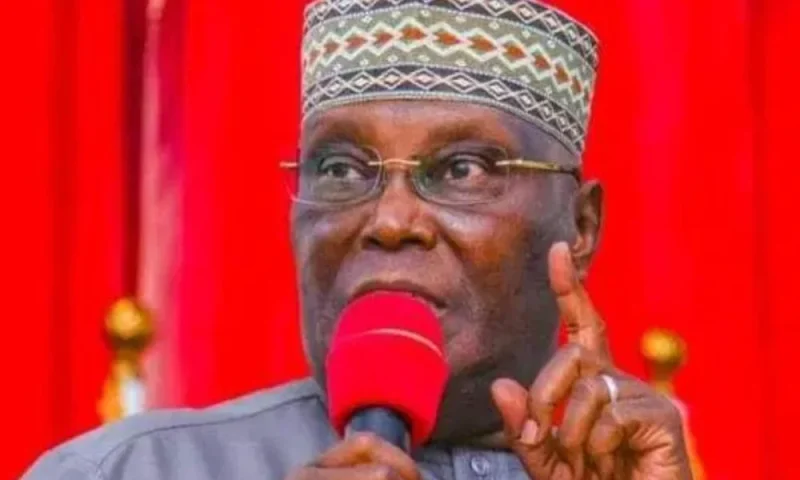
Tinubu govt can’t claim to have ended subsidy while funding fuel shortfalls – AtikuThe presidential candidate of the African Democratic Congress (ADC), Atiku Abubakar, has revealed that no amount of opposition from President Bola Tinubu would stop him from restoring a targeted fuel subsidy if elected.

He insisted that his proposal is different from the old subsidy system.

Atiku made the remark in a statement issued in Abuja on Sunday through his Senior Special Assistant on Public Communication, Phrank Shaibu.

“The government’s own spending records contradict its claim that fuel subsidy has been completely removed,” he said. 

Atiku maintained that he would implement a targeted, transparent and time-bound fuel subsidy plan.

“The NNPC audited financial statements for 2023 and 2024 showed that the government was still absorbing petrol price shortfalls, even though the expenditure was described as energy-security expenses,” he said.

He argued that changing the name of the expenditure did not change its effect on public finances.

“Nigerians do not eat semantics. Whether government calls it subsidy, under-recovery, shortfall or energy security, public resources were being used to bridge a gap between economic cost and the price at which petrol was sold,” he said.

He argued that the government could not claim to have ended fuel subsidy while continuing to fund similar price shortfalls under a different name in its accounts.

Atiku also accused the Federal Government of applying different economic standards to ordinary Nigerians and large oil investors.

He pointed to existing tax credits and incentives available to petroleum operators, saying the government was willing to support corporate interests while asking citizens to bear the full burden of economic reforms.

“The government can protect a multibillion-dollar oil investment from risk, yet it says protecting the Nigerian worker from crushing hardship is bad economics,” he said.

The former vice president said his proposed fuel subsidy would not be a return to what he called the “opaque and corruption-ridden” system of the past.

Instead, he said it would be targeted, capped, transparently budgeted and independently audited, with a clear exit plan, alongside efforts to boost domestic refining, improve public transportation and restore household purchasing power.

Niger’s food economy remains under threat as attacks drive traders, farmers off roads

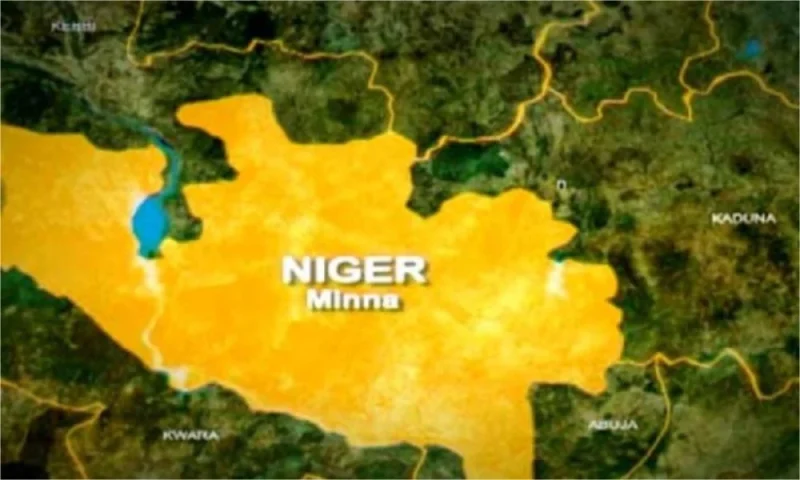
Niger’s food economy remains under threat as attacks drive traders, farmers off roadsThe roads may have reopened, but for many farmers, traders and drivers in parts of Niger State, the fear that forced them off the roads has not disappeared.

Earlier this month, commercial drivers along the Mokwa-New Bussa axis suspended loading and blocked roads in protest against repeated attacks, kidnappings and killings of motorists and passengers.

The action disrupted movement before police intervention led to the reopening of the roads on August 10.

But the return of vehicles has not restored normal economic activity.

Recommended

Across Borgu, farmers say insecurity is making it difficult to reach their farms or move harvested crops to markets, while traders who once travelled to rural communities to buy food are increasingly staying away.

The disruption has created a chain of losses: farmers struggle to move produce, traders avoid risky routes, drivers lose passengers and income, while consumers face the consequences when supplies become scarce.

Six Drivers Killed, Eight Abducted

For Alhaji Danladi Abdullahi, treasurer of the Niger State chapter of the National Union of Road Transport Workers, NURTW, the situation had become unbearable.

Abdullahi told DAILY POST that NURTW executives in New Bussa and Wawa alerted the state executive after drivers became increasingly concerned about attacks along the routes.

He said the state executive later received a call that drivers would not load passengers because of frequent kidnappings and killings of their colleagues.

According to him, six drivers were killed within the period, while about eight others remained in captivity. The union paid ransom for four victims, while one escaped.

Abdullahi said the union had yet to calculate the total amount spent because the incidents occurred in different locations, including Mokwa, Wawa, Gufanti and New Bussa.

“We don’t spend less than N3 million to secure a victim,” he said, adding that kidnappers sometimes demanded motorcycles in addition to ransom, with each costing more than N2 million.

In one case, he said the kidnappers demanded N80 million.

“Where do we get that from?” He asked.

Abdullahi noted that drivers were often the first targets because once a driver was captured, passengers were also exposed.

“If they get the driver, they will get the passengers,” he said.

The union treasurer added that the attackers sometimes blocked roads with large stones, forcing vehicles to stop.

The Chairman of the Niger State chapter of the National Association of Road Transport Owners, NARTO, Alhaji Alhassan Usman Shiroro, also decried the rate of kidnappings in the state and appealed to drivers to remain calm, saying the government was working to tackle insecurity and make the roads safe and motorable.

Security Response

The Niger State Police Command acknowledged that highway kidnapping incidents had occurred in the state but said it could not provide specific figures covering the incidents over time.

The Police Public Relations Officer, SP Wasiu Abiodun, said the police, the military and other security agencies had conducted joint clearance operations and patrols along vulnerable routes, while operational bases had been established at designated locations.

He said armoured personnel carriers, patrol vehicles, gun trucks, lorries and vans had been deployed, adding that increased visibility had improved response time to distress calls.

“Our collective efforts as security agencies have a significant impact in reducing the level of attacks,” Abiodun said, listing air operations, intelligence sharing, patrols and increased security visibility among measures helping to reduce attacks.

The police spokesman said arrests had been made, some terrorists neutralised during operations, while arms, ammunition and abducted victims had been recovered.

He said the measures would be intensified.

Abdullahi said the security intervention had also made a difference, with personnel deployed along affected routes, particularly around Babana and areas close to the national park.

He disclosed that patrol vehicles were provided by the state government, Mokwa Local Government, the area commander and the emir in tackling the situation.

DAILY POST reports that tollowing the intervention, NURTW officials met with Governor Mohammed Umaru Bago and later with drivers, appealing to them to return to work.

The union leaders also said they had continued sharing information about unsafe routes and advised drivers to report incidents to security agencies and local authorities.

Safer Roads, Fragile Confidence

For residents, however, improved security has not immediately translated into confidence.

Malam Abubakar, a Wawa resident, told DAILY POST at Enagi that the situation had improved following the deployment of security personnel, particularly around the national park.

He stated that there had been no recent reports of kidnapping in his immediate area, but that residents remained afraid to travel.

“The situation has improved with the presence of security agencies, especially around the national parks where a lot of abductions and killings take place,” he said.

“Many people don’t want to travel that route for now. There is a lot of panic among our people,” he added.

That fragile confidence was again tested on August 21 when the police said suspected terrorists invaded Gidan-Zana and Kpenya villages through Dekara District of Borgu and later attacked Kpenya mosque during prayers, abducting an unspecified number of people, while others escaped into a nearby forest.

The police said no life was lost and that a joint security detachment had been deployed for assessment and rescue operations.

Farmers Caught Between Farms and Markets

For farmers in Borgu communities, insecurity has affected not only where they farm but also how they sell what they produce.

Musa Hamidu told DAILY POST that farmers sometimes move their crops to markets in groups or rely on drivers willing to travel the routes.

He the drivers take the produce to market and hand it to people who sell it before returning the proceeds to the farmers.

“But when tension rises”, Hamidu said, “farmers sometimes do not take their produce to market at all.”

“When there are a lot of products in a market, prices could drop. When they are scarce because farmers are unable to bring them to the market, it raises the prices,” he disclosed.

He explained that farmers could also be forced to sell cheaply when they transport their produce to market but buyers fail to arrive.

Hamidu said farmers in security-prone parts of Borgu Kingdom, including Borgu and Agwara LGAs, were farming less, with some no longer having access to their farms because parts of their communities had been overtaken by bandits and terrorists.

Hadiza Zubairu told our correspondent that markets in the affected areas were no longer as full because farmers could not transport their produce, making it difficult for families to provide for their children.

She said some farmers now depend on farms shared by others because they no longer have access to their own.

The world lost a giant – Nigerian celebrities mourn Ogogo’s death

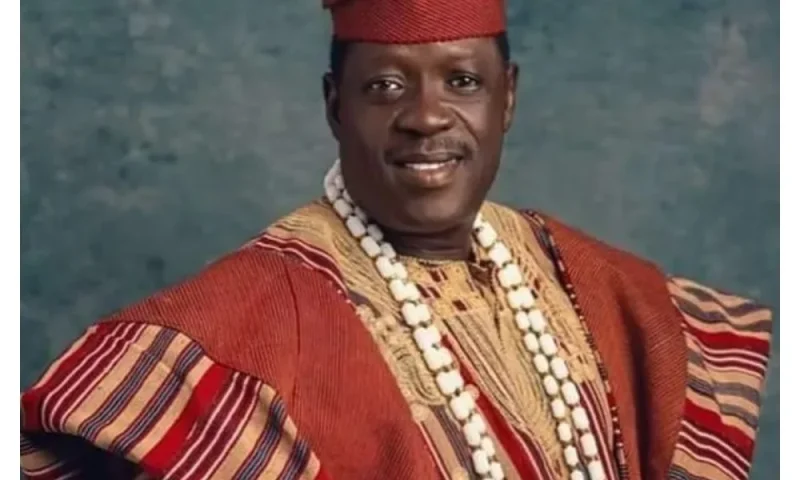
The world lost a giant – Nigerian celebrities mourn Ogogo’s deathNigerian celebrities have continued to mourn the passing of veteran actor Ogogo.
Ogogo’s death came two days after his colleagues held special prayers for him over his illness.

Ogogo died on Sunday, August 23, 2026, after losing his battle with stage 4 cancer.

Reacting to the news of his passing, many Nigerians, including celebrities, especially his colleagues in the movie industry, took to social media to mourn the late actor.

LASU resolves results crisis, assures eligible students of graduation

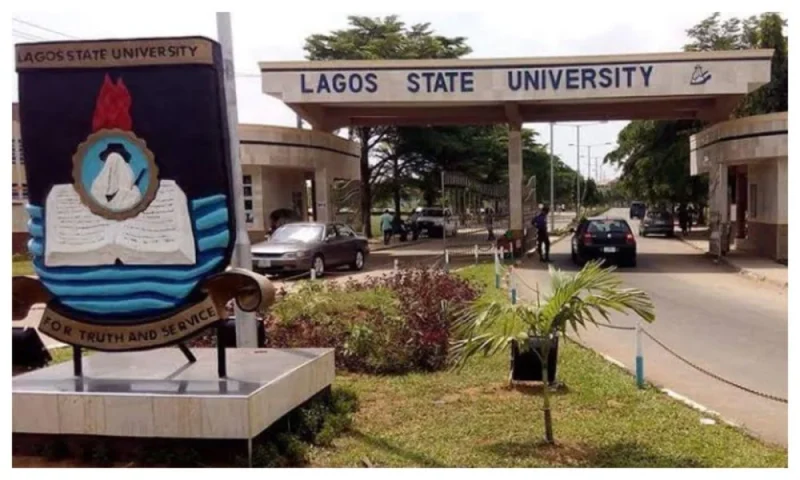
LASU resolves results crisis, assures eligible students of graduationLagos State University, LASU, has resolved the controversy surrounding the alleged delay in uploading the results of some graduating students in the Department of English, assuring qualified students that they will graduate alongside their colleagues.
The university gave the assurance in a statement published on its official social media platform on Sunday, August 23, 2026, following an internal review of concerns that outstanding results could prevent some students from completing their programmes as scheduled.

According to the institution, the Department of English had uploaded all outstanding results as of Sunday.

“Following an enquiry by the University Management into the allegation concerning the non-upload of results of some graduating students in the Department of English, the University wishes to clarify that the Department has uploaded all outstanding results as of Sunday, 23 August 2026,” the statement said.

FAAN sacks firm accused of illegal vehicle clamping

The Federal Airports Authority of Nigeria has ordered the immediate ejection of a transport company accused of illegally clamping vehicles and collecting N25,000 penalties from motorists at the Nnamdi Azikiwe International Airport, Abuja.

The action followed a complaint alleging questionable enforcement of the airport’s no-parking and no-pick-up rules, including claims that motorists were pressured into making payments through personal accounts and point-of-sale operators.

The Director of Public Affairs and Consumer Protection, Michael Achimugu, said the matter was escalated to FAAN Managing Director, Mrs Olubunmi Kuku, who directed that the company be removed from the airport.

Achimugu said, “Based on the escalation of this complaint to the Managing Director of FAAN, Ms Olubunmi Kuku, she has ordered the immediate ejection from the Abuja airport of the company responsible for this illegal action.”

He added that Kuku had consistently made clear that FAAN would act whenever there was evidence of illegality, “especially actions that inconvenience airport users.”

The complaint, made public by a lawyer, simply identified as Ogundele, alleged that motorists who stopped briefly around the airport could have their vehicles clamped by enforcement personnel, who then demanded a N25,000 fine.

According to him, motorists were directed to a ‘red-painted container’ where the alleged penalty was demanded. But instead of being guided to make payment through an official channel, he said some motorists were directed to POS operators and accounts bearing names such as Sani Nasiru, Bala Matazu and Yahaya Matage.

Ogundele said the arrangement left motorists with little practical choice, particularly those rushing to catch flights or pick up passengers. “Why am I paying a random PoS guy? Isn’t there a designated account for this purpose?” he recalled asking.

He further alleged that motorists who paid into the officially designated account could be made to wait for hours or even days for confirmation, while payments to the accounts supplied by the enforcement personnel were processed immediately.

FAAN, however, has moved to distance itself from the company and the alleged practices.

When contacted over the matter, the Managing Director of FAAN said, “Yes, it is because they do not have a current agreement and they have been warned against such practices in the past.”