Banks face N100m penalty for forex violations

cbnThe Central Bank of Nigeria has set a N100m penalty for banks that process foreign exchange transactions without adequate documentation as part of a sweeping compliance regime unveiled in its newly released Foreign Exchange Manual.

Under the offences and sanctions section of the fourth edition of the manual, the apex bank stated, “Authorised dealers shall pay N100m in addition to N10m per transaction” for consummating foreign exchange transactions with inadequate documentation.

The sanction forms part of a broader framework aimed at tightening oversight of Nigeria’s foreign exchange market, strengthening compliance standards, and curbing abuses among authorised dealers and other market participants.

The revised manual, issued by the CBN’s Trade and Exchange Department in May 2026, is the first major update since 2017. It serves as a regulatory guide for banks, authorised buyers, exporters, investors, and members of the public participating in foreign exchange transactions.

According to the CBN, the manual seeks to promote transparency in foreign exchange inflows and outflows, establish clear documentation and reporting requirements, strengthen enforcement mechanisms, and support national economic priorities by ensuring foreign exchange is channelled to productive uses.

Beyond the N100m sanction, the manual introduces a range of penalties for violations in the Nigerian Foreign Exchange Market.

Banks that exceed their approved Net Open Position limits face escalating punishments. A first offender will receive a warning letter, while a second offence attracts a 10-working-day suspension from the foreign exchange market. A third violation will result in a 90-day suspension from the market.

The apex bank also tightened reporting obligations for authorised dealers. Banks are required to submit daily returns on foreign exchange transactions by 10 a.m. for the preceding day and monthly returns within five working days after month-end. Failure to comply attracts sanctions.

Under the new rules, late rendition of returns will attract a penalty of N500,000, while non-rendition carries a minimum fine of N5m and an additional N500,000 for every day the violation continues.

The CBN further warned banks against reallocating foreign exchange funds without regulatory approval, stating that such actions could attract monetary fines, suspension of authorised dealership licences for at least six months, or outright licence revocation, depending on the severity of the breach.

Import-related transactions also received significant attention in the revised framework. The manual requires importers to submit Exchange Control Documents within 90 days of negotiating shipping documents with overseas correspondent banks. Importers who fail to comply will be restricted from conducting valid and non-valid foreign exchange transactions, including the processing of Form M applications.

First-time offenders will face a 90-day restriction, rising to 180 days for a second offence and 360 days for a third. A fourth violation will attract a complete ban from the foreign exchange market.

Where banks fail to report such defaults, they risk sanctions, including a warning and a N10m penalty for each affected transaction.

The manual also imposes stricter obligations on exporters. For non-oil exports, proceeds must be repatriated and credited to exporters’ domiciliary accounts within 180 days of shipment, while oil and gas export proceeds must be received within 90 days.

Exporters that fail to repatriate proceeds within the stipulated period will pay a penalty equivalent to one per cent of the naira value of the outstanding proceeds, while banks that fail to ensure compliance will be fined 0.5 per cent of the outstanding amount.

The manual further empowers the CBN to sanction banks for late approvals of export documentation, non-remittance of export supervision levies, and failure to render returns on export proceeds.

In addition to the sanctions, the revised framework introduces several operational reforms designed to improve market efficiency.

Among the changes are an increase in allowable advance payment for imports from 15 per cent to 30 per cent, the introduction of a permissible import shortfall or excess margin of plus or minus 10 per cent of the Cost and Freight value on Form M, and the removal of processing fees for Form NXP used for exports.

The CBN also introduced provisions covering service exports, technology-related remittances, Pan-African Payment and Settlement System transactions, non-resident investment accounts, and tuition fee remittances of up to $25,000 per semester for undergraduate and postgraduate studies abroad.

The manual additionally removed the mandatory requirement for Form A in remittances funded through ordinary domiciliary accounts, although banks are still required to verify the legitimacy and purpose of such transactions.

The apex bank said the reforms were developed after extensive consultations with banks, exporters, corporates, regulators, and development partners and are intended to support a transparent, rules-based, and market-oriented foreign exchange system.

According to the CBN, the revised manual is expected to improve compliance, reduce transaction bottlenecks, deepen market confidence, attract investment inflows, and strengthen the integrity of Nigeria’s foreign exchange market.

The Governor of the CBN, Mr Olayemi Cardoso, earlier said the initiative reflected the apex bank’s commitment to strengthening macroeconomic stability and modernising Nigeria’s foreign exchange administration.

He said the revised manual became necessary following evolving global economic conditions, domestic structural adjustments, and ongoing reforms in Nigeria’s foreign exchange market.

The Deputy Governor, Corporate Services Directorate of the CBN, Dr Muhammad Abdullahi, said the revised manual formed part of broader reforms initiated under Cardoso’s leadership to restore confidence, improve transparency, deepen liquidity, and strengthen market efficiency.

He said the review was undertaken to align Nigeria’s foreign exchange framework with current market realities and international best practices.

“Our goal is to reduce transaction frictions, improve processing timelines, deepen market confidence, encourage formal market participation, and create a more seamless and efficient experience for legitimate users of Nigeria’s foreign exchange market,” he said.

Govt, FAO launch $350,000 bird flu response programme

Idi Mukhtar MaihaThe Federal Government has said it is partnering with the Food and Agriculture Organisation to strengthen Nigeria’s preparedness, detection, and response to Highly Pathogenic Avian Influenza through a $350,000 intervention that will also train 240 animal health personnel.

The government disclosed this in a statement issued on Thursday night by the livestock ministry following the inauguration of the FAO Technical Cooperation Programme Project on Strengthening HPAI Preparedness, Detection, and Response in Nigeria.

According to the statement, the initiative is designed to improve disease surveillance, laboratory diagnostic capacity, risk communication, and stakeholder coordination under the One Health framework.

The Minister of Livestock Development, Idi Maiha, was quoted as saying that the poultry industry remains vital to Nigeria’s food security and economic growth but continues to face threats from transboundary animal diseases.

“The poultry industry remains a critical component of Nigeria’s livestock sector. However, it continues to face threats from transboundary animal diseases, particularly Highly Pathogenic Avian Influenza, which has remained a recurring challenge since its first occurrence in Nigeria in 2006,” the minister said.

Maiha noted that the resurgence of the disease since 2021 has continued to affect poultry farmers across different scales of operation, with implications for food security and international trade.

“We are concerned because of the destructive effect of avian influenza in Nigeria. It is threatening livelihoods, threatening food security, and threatening international trade. We must work together to restore livelihoods, close gaps in poultry product supply, and reconnect our poultry industry to international markets,” he stated.

The minister commended the FAO for approving and funding the project, describing the intervention as timely and consistent with the Federal Government’s efforts to strengthen disease prevention and control within the livestock sector.

The statement also quoted the Permanent Secretary of the ministry, Dr Chinyere Ijeoma Akujobi, represented by the Chief Veterinary Officer of Nigeria, Dr Samuel Anzaku, as saying that Nigeria has continued to record outbreaks of HPAI annually despite progress made in disease control.

“The epidemiology of the disease has evolved, with outbreaks now affecting multiple avian species. Layer farms remain the most severely impacted segment, resulting in substantial economic losses and disruptions across poultry value chains,” she said.

The FAO representative, Dr Otto Muhinda, reaffirmed the organisation’s commitment to supporting Nigeria in combating transboundary animal diseases and building a resilient poultry industry.

“FAO is proud to partner with the Federal Ministry of Livestock Development and other stakeholders in building a more resilient poultry sector. Through this project, we aim to enhance Nigeria’s capacity for early detection, preparedness, and rapid response to Highly Pathogenic Avian Influenza, thereby protecting livelihoods, food security, and public health.

“Over the next nine months, the project will train 240 animal health personnel, contributing to a stronger frontline workforce capable of preventing and responding to disease outbreaks. It will also support the development of predictive tools to improve preparedness and reduce future risks of HPAI in Nigeria,” he said.

According to the statement, stakeholders, including representatives of the Office of the National Security Adviser, the Veterinary Council of Nigeria, the Nigerian Veterinary Medical Association, the Federal Ministry of Health and Social Welfare, and the Federal Ministry of Environment, stressed the need for collaboration in tackling disease outbreaks.

The ministry stated that Nigeria recorded confirmed outbreaks of HPAI in Kebbi, Kano, Katsina, Plateau, and Bauchi states in 2026, underscoring the continued threat posed by the disease to the poultry industry, food security, and livelihoods.

It added that the FAO-supported intervention would be implemented in seven pilot states to strengthen disease surveillance, improve laboratory diagnostic capacity, enhance biosecurity measures, promote risk communication, and bolster rapid response mechanisms.

NNPC donates MRI machine to Kano hospital

NNPC donates MRI machine to Kano hospitalNNPC Foundation, the Corporate Social Responsibility arm of NNPC Ltd., has commissioned and handed over a fully installed state-of-the-art 1.5 Tesla Magnetic Resonance Imaging system to the National Orthopaedic Hospital, Dala, Kano State.

This is contained in a statement by the Chief Corporate Communications Officer of NNPC Ltd., Andy Odeh, a copy of which was made available to PUNCH Online on Friday.

The intervention, which is in furtherance of NNPC Ltd’s commitment to improving healthcare access and strengthening medical infrastructure across Nigeria, is expected to enhance the diagnosis and treatment of orthopaedic, neurological, trauma, musculoskeletal, and gynaecological conditions.

“Before the intervention, patients needing advanced MRI diagnostic services often faced challenges of travelling long distances, longer waiting times, and delays in care due to high cost and availability,” the statement partly read.

Speaking at the ceremony held on the hospital’s premises in Kano on Thursday, the Group Chief Executive Officer of NNPC Ltd., represented by the Managing Director of NNPC Foundation, Mrs Emmanuella Arukwe, said the donation is part of a wider corporate goal and focus to contribute strategically to national healthcare development.

“At NNPC Limited, we are intentional about ensuring that our social investments are impactful, sustainable, and beneficial to the communities we serve. Through the NNPC Foundation, we will continue to implement interventions that create measurable social value across Nigeria,” he said.

He described the intervention as timely and necessary, noting that it presents an opportunity to strengthen Nigeria’s healthcare system amid challenges of infrastructure deficits, equipment limitations, and increasing demand for specialised services.

Also speaking, the Executive Vice President, Business Services, NNPC Ltd., Mrs Sophia Mbakwe, represented by the Executive Director, Programme Management at the NNPC Foundation, Mrs. Rose Okonkwo, said NNPC Limited goes beyond crude oil production to impact lives positively, reaffirming the company’s commitment to improving the well-being of Nigerians as well as strengthening key national institutions.

“Today’s event is a testament to our steadfast commitment to delivering measurable impacts and scalable, sustainable interventions to communities across Nigeria, inclusively targeting underserved and vulnerable members of society.

“By this intervention, NNPC Limited aims to strengthen healthcare delivery and improve the quality of life of the people of Kano State, the North-West geopolitical zone, and, by extension, all Nigerians who depend on the National Orthopaedic Hospital, Dala for specialised medical care,” she stated.

In his remarks, Kano State Governor Abba Yusuf, who was represented by the Commissioner for Health, Abubakar Labaran Yusuf, commended NNPC Foundation for the donation, describing it as a major milestone in improving healthcare services in the region through early and accurate diagnosis and care.

The Chief Medical Director of the hospital, Dr Isa Nurudeen, expressed appreciation to NNPC Ltd. for the intervention, noting that the donation will have a transformative impact on the hospital’s operations and services.

2027: No apology for supporting Tinubu’s re-election bid — Gov Idris

Kebbi State Governor, Nasir Idris, has said he has no apology for his support for President Bola Ahmed Tinubu and his campaign for a second term in office.

The governor made the remarks on Wednesday at an event organized by the Tinubu Support Organisation, TSO, in Birnin Kebbi, where endorsements were also made for President Tinubu and the governor ahead of the 2027 general elections.

Idris responded to criticisms over his public support for the president, saying those questioning his position were not familiar with the realities in the state.

“I saw a clip last week questioning why Governor Idris should be in the forefront of supporting Bola Ahmed Tinubu,” he said, adding that the author of the clip was not from Kebbi State.

He maintained that President Tinubu “believes in Kebbi and loves its people,” noting that ongoing federal projects in the state reflect the strength of that relationship.

According to him, his support for the president is based on ongoing federal projects and development efforts in the state.

“That’s why we are enjoying federal projects today. The essence of democracy is to deliver democratic dividends to the doorsteps of the people,” he said.

Idris also reaffirmed his support for President Tinubu, describing him as a leader and mentor, and insisting that Kebbi State remains fully behind his re-election bid.

“Tinubu is my leader and mentor. We support him 100% in Kebbi State,” he stated.

The governor recalled that residents of the state had earlier gathered at the Haliru Abdu Stadium in Birnin Kebbi to endorse President Tinubu for a second term, describing it as one of the earliest such endorsements in the country.

“Last year, Kebbi people converged on the Haliru Abdu Stadium in Birnin Kebbi in their thousands to endorse Tinubu for a second term in office, the first state to do so in Nigeria,” he said.

Idris added that his administration would continue to support initiatives aligned with the development of Kebbi State and the country at large.

2027: ADC members urge Malami to pick running mate from Kebbi South

A pressure group within the African Democratic Congress, ADC, in Kebbi State has called on the party’s governorship candidate, Abubakar Malami, to select a running mate from Kebbi South Senatorial District ahead of the 2027 governorship election.

The group, operating under the banner of the Kebbi ADC Unity Forum, specifically recommended Paul Gambo Tase for the deputy governorship position, arguing that the choice would promote equity, inclusiveness and regional balance within the party.

The forum’s coordinator, Garba Abdulkareem, made the call in a statement issued on Thursday in Birnin Kebbi.

According to him, Tase, a former Labour Party governorship candidate and an indigene of Kebbi South, possesses the experience and competence required for the position.

Abdulkareem said the forum believes the deputy governorship slot should be zoned to Kebbi South, noting that Malami hails from Kebbi Central Senatorial District.

He added that the recommendation was based on considerations of fairness, merit and political inclusion as consultations continue ahead of the 2027 election.

The forum described itself as a coalition of party members, professionals, community leaders, youths and women seeking to strengthen the ADC’s prospects in the state.

According to the group, Tase has indicated his willingness to serve if nominated by the party and its governorship candidate.

Tase was the Labour Party governorship candidate in Kebbi State during the 2023 general election and is a retired economist who previously worked with the Nigerian National Petroleum Corporation (NNPC).

Malami, a former Attorney-General of the Federation and Minister of Justice, recently emerged as the ADC governorship candidate for the 2027 election in Kebbi State.

‘Attackers now occupying our territory’ – Displaced Nasarawa community cries out

What began as a brutal terrorist attack on communities in Odeni Gida Ward of Udege Development Area, Nasarawa Local Government Area of Nasarawa State has now evolved into something even more disturbing – the apparent occupation of deserted communities by the very attackers accused of forcing residents out.

Months after coordinated attacks left more than 80 people dead across several communities, survivors say the pain has not ended.

Homes were burnt, food stores looted, farms abandoned, and properties worth hundreds of millions destroyed.

Yet, beyond the bloodshed and displacement, many residents now fear there may be a deliberate effort to redefine what happened and bury the truth beneath the softer language of “communal clash.”

From the onset of the violence, several residents and community voices rejected attempts to describe the attacks as ordinary communal unrest. They insisted that what happened was a coordinated armed invasion carried out by alleged heavily armed Fulani attackers who stormed multiple communities simultaneously.

Despite this, some government officials and security authorities repeatedly leaned on the “communal clash” narrative, a description many affected residents believe grossly misrepresented the scale and nature of the killings.

For many survivors, the concern was not only about semantics, but about what that classification could eventually mean, accountability, justice, compensation, and even ownership of ancestral lands.

During a recent visit to affected areas by President Bola Tinubu’s Special Assistant on Community Engagement, Dr. Abiodun Essiet, another painful reality reportedly emerged.

Several of the attacked communities remain largely deserted, with displaced villagers yet to fully return home due to lingering fear and insecurity.

According to residents, some of the same individuals identified as participants in the attacks are now openly grazing cattle in those abandoned communities without resistance or challenge.

To many locals, that development has strengthened suspicions that the attacks may have been more than mere reprisals.

“The attackers have now taken over the very communities they displaced.

“That tells you this was never just a clash. It was a conquest,” one resident lamented.

Videos and photographs circulating online appear to support the scale of displacement, showing villagers, including women and children, fleeing with loads balanced on their heads as they searched for safety in neighboring settlements.

What has further fueled frustration among residents is the belief that the issue is gradually fading from public attention while attacks and intimidation allegedly continue in isolated forms, especially on farmlands.

Some community members accuse local leaders of weakening the push for justice by participating in reconciliation meetings that, according to critics, prematurely portrayed the crisis as resolved while victims were still displaced.

At one point, relief materials meant for affected persons were reportedly shared in ways some residents interpreted as equating victims with alleged attackers, a move critics say reinforced the “communal clash” narrative they had consistently opposed.

Although meetings were later held between affected communities and Fulani leaders, residents say little has been heard about whether agreements reached during those engagements were ever implemented or respected.

Meanwhile, reports of fresh attacks on farmers and continued insecurity in surrounding areas have persisted quietly, even as public discussions around the tragedy gradually diminished.

One of the loudest voices challenging the official narrative is Yahaya Kana Ismaila, who insists the attacks fit the pattern of organised armed violence rather than communal conflict.

According to him, the affected Eloyi communities share neither ethnic ties nor territorial identity with the armed men accused of carrying out the attacks, a major factor he argues weakens claims that the violence was communal in nature.

He maintained that the attackers came in large numbers, armed with sophisticated weapons, attacking multiple settlements simultaneously before burning homes and forcing residents to flee.

The debate over terminology has since become central to the crisis itself. While authorities and some stakeholders continue to frame the violence as communal unrest, many residents believe such descriptions risk minimising the gravity of what occurred.

Kana, a public affairs commentator, further described the Udege killings as a grim reminder of the growing insecurity in Nasarawa State, warning that the continued absence of arrests and accountability could deepen fear and hopelessness among residents.

According to him, despite reports that more than 70 people lost their lives in the attacks, no suspect had been arrested at the time of his reaction, a development he said raises serious concerns about justice and protection for vulnerable communities.

He lamented the destruction of homes, farm produce, motorcycles, and livelihoods built over several years, stressing that many affected families may never fully recover from the losses inflicted on them.

He further argued that the crisis had created an atmosphere where many rural residents now feel abandoned and helpless, especially in the face of recurring attacks linked to disputes over kidnapping, grazing, and destruction of farmlands.

“The painful reality is that many innocent people have been left traumatised, displaced, and uncertain about their future.

“Entire communities have been shattered, while survivors are expected to simply return and rebuild their lives amid fear and insecurity,” he stated.

He warned that unless decisive action is taken by security agencies and government authorities, the perception that armed groups can attack communities without consequences may continue to embolden criminal elements across the state.

As fear spreads across affected communities, residents continue to issue desperate appeals for urgent intervention from both the Nasarawa State and Federal Governments.

Reacting to renewed tension in parts of Odeni Gida Ward, Abdulwahid Angala Odeni described the situation as devastating.

“My people are shattered and homeless. My heritage is under invasion by radical hoodlums Fulani herdsmen. Odeni Gida Ward, Udege Development Area, Nasarawa Local Government Area, Nasarawa State.

“The Government of Nasarawa State should come to our aid.”

Another resident, Suleiman Otto Wakili, also called on federal authorities to step in.

“Fulani herdsmen attacked Sabon Gida Angwa Ogiri in Odeni Gida Ward, Nasarawa State. The Federal Government should take action concerning our situation please,” he said.

For many displaced residents, trust in local authorities appears to be fading rapidly.

Questions are increasingly being raised over the response of the Nasarawa State Government, security agencies, and emergency institutions.

Particular concern has also been expressed over the absence of large-scale humanitarian support, despite earlier assurances that aid would be provided to assist displaced persons and encourage safe return to affected communities.

Now, many victims believe the only remaining option is to push their case directly to the Presidency and demand federal intervention before more communities are permanently lost to fear, displacement, and silence.

As displaced families continue to wander between uncertainty and survival, one painful question continues to echo across Odeni Gida:

If the people cannot safely return home, then who truly owns the land now?

Governor Umar Namadi of Jigawa State has suspended one of his aides and restored another to office amid ongoing tensions within the ruling All Progressives Congress, APC in the state.
The decision was announced in a statement issued by the Secretary to the State Government, Bala Ibrahim, and released to journalists on Thursday.

According to the statement, the governor approved the indefinite suspension of Sule A. Musa, the Special Assistant on Education Monitoring in Auyo Local Government Area.

The statement said, “Governor Umar Namadi has approved the indefinite suspension of Sule A. Musa, Special Assistant on Education Monitoring, Auyo Local Government Area.”

The government did not state why Musa was suspended.

In a separate decision, Namadi lifted the suspension earlier placed on Basiru Abdullahi, popularly known as “Optimistic,” and returned him to his position as Special Assistant on Health Monitoring in Kafin Hausa Local Government Area.

The statement added, “Governor Namadi has lifted the suspension on Basiru Abdullahi (Optimistic), the Special Assistant to the Governor on Health Monitoring, Kafin Hausa Local Government Area.”

Abdullahi, who was suspended earlier this year, is expected to resume work immediately.

The government said both decisions take effect immediately.

The development comes as political tensions continue within the APC in Jigawa following recent party primary elections.

Several political appointees had previously been suspended over alleged anti-party activities, although the state government did not officially link the latest actions to the party crisis.

Insecurity: ‘State police close at hand’ – Presidency

The Presidency has said that the establishment of state police to curtail insecurity in the country is close at hand.

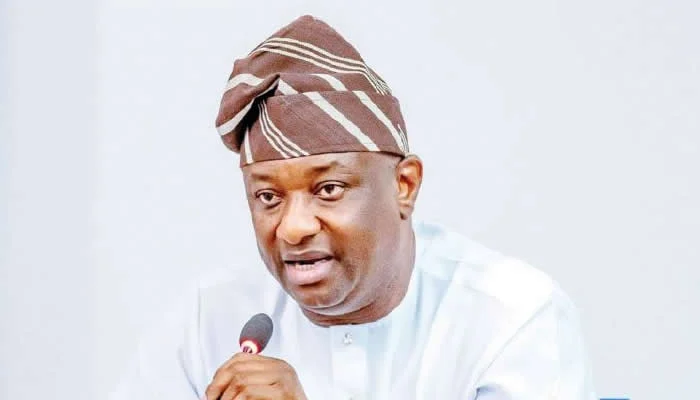
Chief of Staff to the President, Femi Gbajabiamila, disclosed this while briefing State House correspondents on Thursday after a high-level consultative meeting convened by the Presidency at the State House, Abuja.

Gbajabiamila stated that the Federal Government has made substantial strides toward establishing state police, with a constitutional amendment anticipated in the coming weeks.

According to him, deliberations on the framework for state police began three to four months ago, following a direct order from President Bola Ahmed Tinubu.

“Establishing state police is not something that you do with the snap of the fingers. There is a lot involved in terms of constitution and legalities.

“Thank God we have now gained a lot of traction. Hopefully, the amendment will come shortly, and the details of the amendment will come after that. It is close at hand,” he said.

The Chief of Staff further explained that discussions have now advanced to the stage of fine-tuning the necessary constitutional amendments, after which an enabling law will be enacted.

“Right now, what we are looking at is the constitutional amendment itself, and then the enabling law would follow thereafter,” Gbajabiamila added.

The former Speaker of the House of Representatives noted that the national conversation has shifted from whether state police should be established to how best to design its legal and institutional framework, adding that there is broad support across the country for the initiative.

Stop rejecting corps members – Reps caution MDAs

The House of Representatives has urged Ministries, Departments and Agencies (MDAs) of government to stop rejecting members of the National Youth Service Corps (NYSC) posted to them for the mandatory one-year national service.
The resolution followed the adoption of a motion sponsored by Rodney Ebikebina Ambaiowei during plenary on Thursday.

Moving the motion, Ambaiowei expressed concern over what he described as the growing practice by government establishments of rejecting corps members assigned to them, a development he said was denying young graduates valuable opportunities to gain practical work experience and contribute to national development.

According to him, the trend has left many corps members vulnerable to exploitation by private organisations while exposing some to criminal activities due to a lack of proper engagement during their service year.

The lawmaker further argued that the rejection of corps members amounts to a waste of public resources, noting that the Federal Government continues to pay monthly stipends to graduates who are not effectively utilised in their places of assignment.

He warned that the development could undermine the objectives of the NYSC scheme and discourage future graduates from participating actively in the programme.

Following deliberations, the House adopted the motion and called on all MDAs, including the National Assembly, to desist from rejecting corps members posted to them.

Lawmakers also urged the agencies to develop work schedules that would accommodate and effectively integrate corps members into their operations to maximise their skills and potential.

In addition, the House mandated its Committee on Youth Development to liaise with the Director-General of the NYSC to develop a framework for the effective engagement of corps members and ensure their talents are harnessed for national development throughout the service year.

FCMB partners FG, IITA on agribusiness drive

FCMB partners FG, IITA on agribusiness driveThe Federal Ministry of Youth Development, in partnership with the International Institute for Tropical Agriculture, has launched the National Youth in Agribusiness Land Trust Fund, an initiative aimed at improving access to land for young Nigerians engaged in agribusiness.

Supported by FCMB, the programme seeks to address land access constraints facing young agripreneurs while creating opportunities for financing, enterprise development and job creation.

A statement from FCMB on Thursday stated that the initiative was unveiled in Abuja on Monday during a gathering of government officials, development partners, financial institutions, youth organisations and stakeholders in the agricultural sector.

According to the organisers, the Youth in Agribusiness Land Trust Fund provides a framework that enables young people to access land for agricultural activities while promoting entrepreneurship and value-chain development.

Speaking at the launch, the Minister of Youth Development, Ayodele Olawande, said the initiative would support efforts to increase youth participation in agriculture and expand agribusiness opportunities.

“We want to train more than six million Nigerian youths in the coming years. We want to support at least 500,000 youth-led agribusinesses and connect young Nigerians to local and international markets.

“Agriculture has the potential to create millions of jobs, improve food production, reduce poverty, and accelerate economic growth. However, access to land remains one of the biggest barriers confronting young people today, and this initiative seeks to address that challenge,” he said.

Earlier, the Minister of Budget and Economic Planning, Senator Atiku Bagudu, said the initiative reflected efforts to strengthen youth participation in agriculture and reduce barriers to land access. He said the programme would help create conditions for youth-led agribusinesses to expand.

Representing FCMB at the event, the Divisional Head, Agribusiness and Non-Oil Export, Kudzai Gumunyu, said the bank remained committed to supporting initiatives aimed at making agriculture more accessible and commercially viable for young people.

“The future of Nigerian agriculture depends on how well we structure financing and support systems around the realities of young people and the sector. Agriculture must be presented as a modern, technology-driven business offering opportunities in logistics, processing, commodity trading, mechanisation, digital platforms, and innovation,” he said.

Gumunyu noted that many young Nigerians face challenges accessing finance because they lack the collateral and financial structures required by lenders.

He highlighted FCMB’s AgTech Aggregator Programme, which supports young innovators developing solutions to challenges across the agricultural value chain.

“Building the right ecosystem is critical. The future of Nigerian agriculture is young, climate-smart, market-driven, and innovation-enabled. To unlock its full potential, we must strengthen partnerships that improve access to finance, technical support, technology, and market opportunities,” he added.

Also speaking, the Director-General of the National Youth Service Corps, Brigadier General Olakunle Oluseye Nafiu, said the collaboration among government agencies, development institutions, and private-sector partners would support the development of young agribusiness entrepreneurs.

The Federal Ministry of Youth Development and IITA commended FCMB and other partners for supporting efforts aimed at youth empowerment and agricultural development.

The event attracted representatives of development agencies, donor organisations, state governments, financial institutions, youth networks, agribusiness stakeholders and members of the National Youth Service Corps.