World Bank plans $5.79bn private financing for Nigeria

The World Bank Group has disclosed plans to mobilize up to $5.79bn in private financing for Nigeria in the 2026 fiscal year to support investments in telecommunications, agriculture, small businesses and other critical sectors of the economy.

The initiative is expected to expand broadband access, improve agricultural productivity, increase credit availability for businesses and support the creation of about 850,000 jobs.

The bank disclosed this in a report published on its website on Sunday, titled Unlocking $5.79bn in Private Financing: The World Bank Group Is Leading the Charge for Private Capital Mobilisation in Nigeria.

“In fiscal year 2026, the World Bank Group is helping mobilise up to $5.79bn in private financing to address these barriers,” the report stated.

It explained that the financing initiative would combine policy reforms, commercial investments and risk-sharing arrangements involving the World Bank, International Finance Corporation and Multilateral Investment Guarantee Agency.

The institution linked the investment drive to economic reforms introduced in Nigeria since mid-2023, particularly changes in foreign exchange management, fuel subsidies and public finances.

It noted that the reforms, supported partly through its RESET and NAIJA development policy financing programmes, were improving conditions for private investment.

“Further reforms aim to deepen capital markets, expand digital trade, enable greater private participation in electricity, and improve competitiveness,” the report added.

A major component is the Building Resilient Digital Infrastructure for Growth project, which is expected to attract at least $156m in private equity during its first investor selection round.


Subsequent financing rounds could unlock up to $1.1bn by 2030 to develop a nationwide fibre-optic network. The project is expected to extend broadband access to an additional 58 million Nigerians, increasing coverage from 92 million people in 2025 to 150 million by 2030.

It will also target connectivity for 38,800 public schools, 16,900 health facilities and 3,400 local government offices. In agriculture, the bank plans to mobilise $242m through the Agricultural Value Chains for Growth project, targeting one million smallholder farmers.

The amount comprises $220m expected from agribusiness firms and $22m from certified seed producers. For small businesses, the Fostering Inclusive Finance for MSMEs in Nigeria programme is expected to attract nearly $1.89bn in private financing and support more than 250,000 enterprises.

Backed by a $500m financing package from the World Bank’s lending institutions, the programme could generate approximately 850,000 direct and indirect jobs, with 30 per cent of financing targeted at women-led businesses.

The report also disclosed that the IFC helped mobilise $1.02bn for Dangote Industries Limited and $282.5m for Indorama Fertiliser to expand domestic fertiliser production.

Together, the two projects have an annual production capacity of 6.8 million metric tonnes and are expected to improve access to agricultural inputs for over 10 million farmers.

Similarly, the IFC supported a $1.2bn bond issuance by IHS Towers, helping attract more than $1.1bn from private investors for telecommunications infrastructure.

The bank stressed that the financing arrangements were intended to attract greater private participation in Nigeria’s development. “Together, these reforms, platforms, guarantees, and investments are helping mobilise up to $5.79bn in private financing in fiscal year 2026,” it stated.

The institution added that the impact would ultimately depend on improvements in infrastructure, business financing, agricultural productivity and employment opportunities.

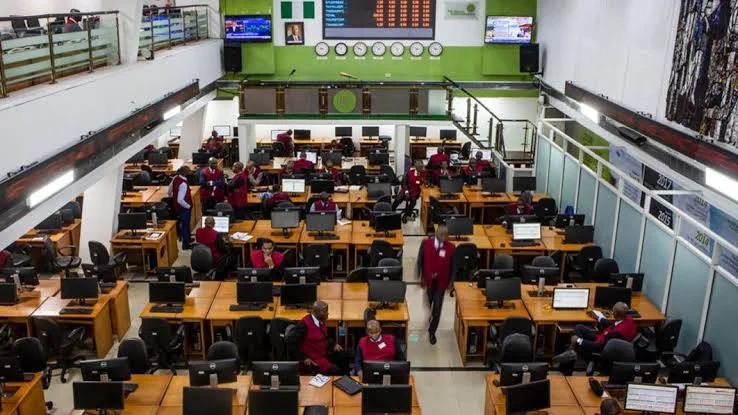
Equities dip as market value falls to N160tn on NGX

NGXEquities trading on the Nigerian Exchange Limited closed on a lower note on Monday, as the benchmark Monetary Policy Rate remained fixed at 23.00 per cent by the Central Bank of Nigeria. Market data from the trading session showed that total market capitalisation settled at 160,852,829,571,649.00 Naira, while the benchmark All Shares Index retreated to close at 247,736.24 points.

Throughout the preceding weekly trading period, market indicators fluctuated between a peak index point of 250,273.50 and a low of 247,736.24, bringing the period’s average index point to 248,902.51. Market-wide activity counters recorded a total of 52,891 deals, with investors exchanging a cumulative volume of 405,359,288 securities across all active boards.

Sector performance metrics mirrored the broader market downturn. The NGX Main-Board Index slipped to 10,751.25, the NGX 30 Index contracted to 9,114.65, and the NGX Banking Index dipped to 2,567.52.

Additional performance data indicated that the NGX Pension Index closed lower at 12,892.22, the NGX Insurance Index adjusted to 1,082.56, and the NGX Consumer Goods Index managed a marginal close at 4,035.46 points.

Meanwhile, industrial goods maintained relative resilience as the NGX Industrial Index closed at 10,442.78, while the NGX Oil and Gas Index closed the session at 5,993.51.

Individual equities recorded diverse transactional volumes and price movements across various high-cap segments. Premium board heavyweights saw MTN Nigeria Communications Plc trade at 844.00 Naira with a total volume of 1,769,623 shares, while Dangote Cement Plc exchanged hands at a price of 1,066.70 Naira.

Seplat Energy Plc maintained active trading at N16,000.10 with 52,474 shares traded. Financial services counters continued to attract high market liquidity, highlighted by Zenith Bank Plc trading at N129.00 with a heavy volume of 27,980,069 shares, and Access Holdings Plc recording a share price of N28.25 alongside 33,283,797 units changing hands.

Broader asset categories, encompassing fixed-income debt securities, exchange-traded products, and collective investment mutual funds, sustained their regular scheduled listings and pricing evaluations in line with official market summaries.

ADC chieftain, Aminu Ibrahim defects to APC in Sokoto

ADC chieftain, Aminu Ibrahim defects to APC in SokotoA chieftain of the African Democratic Congress, ADC, in Sokoto State, Professor Aminu Ibrahim has defected to the ruling All Progressives Congress, APC, ahead of the 2027 general elections.

Ibrahim, a former rector of Umaru Ali Shinkafi Polytechnic, Sokoto, and professor of mathematics at Usmanu Danfodiyo University, Sokoto, announced his defection at a ceremony in the state capital.

He said he joined the APC to contribute to the development of Sokoto State, particularly in education and other sectors of the economy.

The former rector said he considered it his responsibility as an academic to deploy his knowledge and experience towards improving the welfare of residents.

Sokoto State APC chairman, Haruna Sarkin-Gobir Adiya, welcomed Ibrahim into the party, describing his defection as a boost to its membership.

Adiya urged the former rector to work with existing members to promote unity and cooperation as the party prepares for the 2027 general elections.

Ibrahim’s defection comes amid political realignments in Sokoto State as parties seek to strengthen their structures ahead of the 2027 general elections.

Kano guber: Kwankwassiyya reveals next line of action over disqualification of NDC candidate

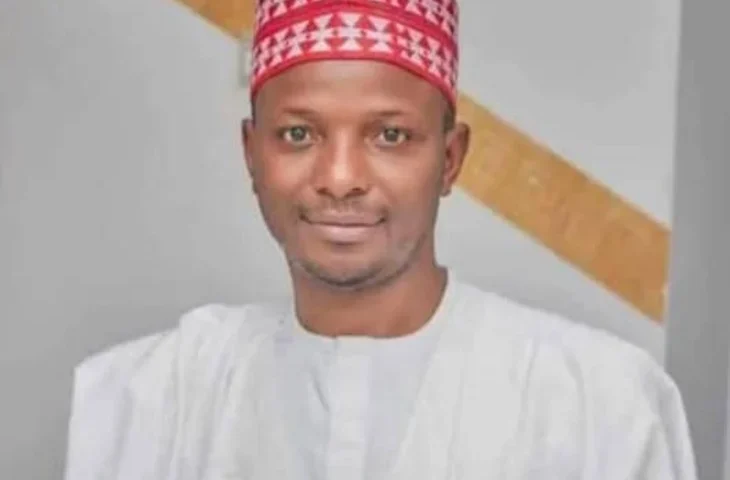
Kano guber: Kwankwassiyya reveals next line of action over disqualification of NDC candidateThe Kwankwassiyya Movement has revealed its next line of action following the omission of the Nigeria Democratic Congress, NDC, deputy governorship candidate in Kano State, Mustapha Rabiu Kwankwaso, from the final list of candidates published by the Independent National Electoral Commission, INEC.

Kwankwaso and his principal, Aminu Abdussalam Gwarzo, were omitted from the list published by INEC.

The NDC has since described the omission as an error, saying it is seeking a correction.

Speaking on Arise Television, Habibu Mohammed, spokesperson for the Kwankwassiyya Movement, said there was no apparent reason for the omission, adding that the movement would engage INEC to resolve the issue.

“It came as a shock because there had been no issue with INEC. Kwankwas, a former deputy governor, is registered with the NDC and met the stipulated deadline.

“Electoral provisions give candidates 14 days to seek redress if their names are omitted from the list. We will explore that opportunity and engage with INEC,” he said.

He added: “Actually, we believe there is no particular reason for the omission. INEC itself has not advanced any reason. We believe it may be an administrative error or something else because we do not have any pending judgment or court order.

“This is a man who has already served as a deputy governor, so we cannot even question his qualification. We also believe he was duly registered with the NDC within the stipulated period.

“Therefore, the omission came as a shock. However, in politics, we have seen many things, and we believe there are always ways to resolve issues. There is also a provision in the Electoral Act.

“If he is not on INEC’s list, I believe the Kwankwassiyya Movement, being law-abiding and committed to doing things the right way, will explore that opportunity and engage INEC. We are confident that the matter will be resolved because we see no reason why it should be otherwise.”

Xenophobia: FG repatriates 111 Nigerians from South Africa

Xenophobia: FG repatriates 111 Nigerians from South AfricaThe Federal Government has repatriated 111 Nigerians from South Africa, bringing the total number of citizens evacuated from the country since June to 2,037 amid concerns over xenophobic and Afrophobic attacks.

The Ministry of Foreign Affairs disclosed this in a statement on Sunday.

According to the statement, the returnees arrived in Lagos on Thursday, October 8, 2026, aboard South African Airways Flight SA060.

“The group consisted of 44 men, 23 women and 44 children. Officials from the Ministry of Foreign Affairs, NiDCOM, NAPTIP, NEMA and other relevant government agencies received them on arrival.”

The ministry said the evacuation was fully funded by the Redeemed Christian Church of God (RCCG), which donated $265,854 to support the return of 500 distressed Nigerians from South Africa.

According to the statement, the latest exercise brought the number of consular evacuations from South Africa to 15 since the operation began on June 10, 2026.

It added that a total of 2,037 Nigerians had been evacuated from the country, with the Federal Government covering the repatriation costs of 1,388 of them.

The ministry said 318 Nigerians had so far benefited from one-way tickets funded by the RCCG, leaving another 182 tickets to be covered under the church’s commitment.

The Federal Government also expressed appreciation to the church, led by Pastor Enoch Adejare Adeboye, for its financial support towards the evacuation of distressed Nigerians.

The ministry said the government would continue to engage relevant stakeholders, including South African authorities, to address xenophobia and Afrophobia and promote the safety and welfare of Nigerians living in the country.

It advised Nigerians in South Africa to obey local laws, remain vigilant and take the necessary precautions to protect themselves.

“The ministry advised Nigerians in South Africa to stay in touch with the Nigerian High Commission in Pretoria and the Consulate General in Johannesburg for assistance whenever the need arises,” the statement said.

The Federal Government reaffirmed its commitment to providing timely support to Nigerians living abroad and protecting their welfare and well-being.

Ogun NAWOJ demands end to child marriage, seeks enforcement of protection laws

Ogun NAWOJ demands end to child marriage, seeks enforcement of protection lawsThe Nigeria Association of Women Journalists, NAWOJ, Ogun State chapter, has called for an end to child marriage and greater investment in girls’ rights as the world marks the 2026 International Day of the Girl Child.

In a statement on Sunday, signed by its Chairperson, Morenikeji Sobaloju, NAWOJ said the year’s theme, ‘Ending Child Marriage and Investing in Girls’ Rights’, is a call to protect every girl’s right to education, safety and informed choices.

The association said child marriage robs girls of their childhood, disrupts their education, threatens their health and limits their contribution to society.

Sobaloju harped on the need to recognise that every girl deserves the opportunity to learn, grow, make informed choices and fulfil her potential without fear, discrimination or harmful cultural practices.

NAWOJ urged government, parents, traditional and religious leaders and civil society to act collectively to end the practice.

It also called on relevant authorities to strengthen enforcement of child protection laws, expand access to quality education and create more opportunities for girls to thrive.

“As women journalists, we reaffirm our commitment to using the power of the media to amplify girls’ voices, expose harmful practices and hold stakeholders accountable.

“Every girl deserves a future filled with hope, dignity, opportunity, and freedom from child marriage. When we invest in girls, we invest in stronger families, healthier communities, and a better society,” Sobaloju said.

The International Day of the Girl Child is marked globally on October 11 to highlight challenges facing girls and promote gender equality.

LAWMA seals 25 buildings, mobil filling station in Lagos

LAWMA seals 25 buildings, mobil filling station in LagosLagos Waste Management Authority, LAWMA, has shut down more than 25 buildings, including a Mobil filling station, along Ago Palace Way in Okota, Lagos, over alleged environmental offences.

The enforcement exercise, conducted on Sunday, also targeted heaps of refuse dumped on road medians and around bridge abutments, where the authority said indiscriminate waste disposal had become a persistent concern.

LAWMA Managing Director, Muyiwa Gbadegesin, led the operation, which deployed compactor trucks, a payloader, tipper trucks and street sweepers to clear the affected areas.

In a statement published on X, the authority said some of the sealed properties had illegal stalls on road setbacks or housed street traders whose activities allegedly contributed to littering and improper waste disposal.

Several cart pushers were also arrested over alleged illegal dumping. One of them, identified as Shamusi Muritala, reportedly admitted to dumping refuse on road medians and collecting as much as N5,000 from customers for the service.

LAWMA said Muritala, who identified himself as a native of Katsina State, appealed for leniency when questioned by officials.

The exercise also included public enlightenment campaigns for residents and traders on appropriate waste disposal practices. The authority urged them to dispose of their refuse through approved waste collection services.

Gbadegesin said LAWMA would continue to enforce regulations against illegal street trading and take action against individuals who patronised traders operating in prohibited areas.

He warned that such activities impeded movement, disrupted public order and worsened environmental degradation.

The Lagos State Environmental and Special Offences Unit, popularly known as the Taskforce, and the Kick Against Indiscipline (KAI) team provided support during the operation.

Police defend blockade of Tinubu Must Go meeting venue in Kano

Police defend blockade of Tinubu Must Go meeting venue in KanoThe Kano State Commissioner of Police, Ibrahim Adamu Bakori, has defended the police blockade of a venue booked for a meeting of the Tinubu Must Go (TMG) movement, saying the action was aimed at protecting the organisers and residents of the state.

Members of the movement protested against the police action on Sunday, October 11, 2026.

In a live video shared on his verified Facebook page, one of the movement’s conveners, Abba Hikima, alleged “You can see already that over 10 vehicles of mobile police have been stationed.”

He accused the police of violating their civic rights, arguing that the law did not require them to obtain permission before holding the meeting.

“We are to gather here to exercise our civic rights. This is even the more reason why Tinubu must go,” he said.

Hikima also maintained that a Court of Appeal decision supported their right to hold rallies without notifying security agencies.

“The Court of Appeal decision stands. I do not need to inform any security agent to hold my rallies. Next time, we are going to protest; Next time we are going to demonstrate; next time we are going to hit the ground,” he added.

He accused the Inspector-General of Police, Olatunji Rilwan Disu, and Bakori of allowing political interests to influence their official duties.

However, Bakori told DCL Hausa that although the organisers had the right to hold their meeting, notifying the police would have helped the command provide adequate security.

“What happened is that, in the first place, it is their right to come and organise their gathering. Nobody will stop them, and the law does not require them to inform us. However, notifying us is important because it allows us to regulate the event and ensure there is no tension, that nobody attacks them and that they do not engage in any activity in Kano that can constitute an offence,” he said.

The commissioner said he learnt about the planned gathering through social media the previous night and contacted Hikima to find out more about it.

According to him, Hikima explained that the group intended to hold a meeting, but Bakori asked him to notify the police so that security arrangements could be made.

Bakori said he asked Hikima to postpone the meeting and meet with him to discuss the arrangements, but the organiser said he would consult other members before responding.

The commissioner added that he made several attempts to contact Hikima afterwards but received no response.

He said the police needed information about the expected attendees and their accommodation to assess potential security risks and prevent tension among residents.

Bakori also cited an incident in Sabon Gari about two weeks earlier, when, he said, the police seized weapons and arrested some people who claimed they had come to Kano for political activities.

“We were concerned about another gathering that was expected to attract about 700 people. We did not know who they were or where they would stay. We need to protect them and the residents of the state. That is what happened,” he said.

He added, “Even though you have the right to do something, your right ends where another person’s right begins.”

The commissioner said the police were unaware of the specific nature of the gathering and only wanted the organisers to meet with them so they could understand the event and provide protection.

Bakori also rejected allegations that the police were acting on behalf of any political party, insisting that the command’s priority was maintaining peace and security.

He maintained that the police had provided security for the movement’s previous activities and advised the organisers to notify the command ahead of the planned meeting.

CBN maintains deadline for local data storage

CBN maintains deadline for local data storageThe Central Bank of Nigeria has ruled out an extension of the 1 January 2027, deadline for financial institutions to store and manage payment transaction data generated in Nigeria locally, putting pressure on banks, fintechs and payment service providers to complete their migration plans.

The disclosure was made at the CloudReady Nigeria Financial Services Roundtable, hosted in Lagos by Africa Hyperscalers Company in partnership with 100 Women in Digital Infra, Open Access Data Centres, Layer3, Nobus Cloud Services and the National Information Technology Development Agency..

Director of the CBN’s Payments System Supervision Department, Dr Rakiya Yusuf, reiterated the position in remarks delivered on her behalf by Assistant Director Babatunde Ajiboye at the CloudReady Nigeria Financial Services Roundtable organised by Africa Hyperscalers in Lagos. Yusuf was represented by Ajiboye, Payments Systems Supervision Division, CBN.

“The compliance date hasn’t changed. It is 1 January 2027,” Yusuf said.

The requirement was set out in a circular issued on 15 June 2026, directing payment service providers and other covered institutions to store and manage payment transaction data generated within Nigeria in the country. The deadline leaves affected institutions with limited time to assess their systems, review contracts with technology providers, and complete the migration of relevant data.

Yusuf said institutions must examine more than the physical location of their databases. Their compliance work should cover transaction logs, audit trails, metadata and the systems supporting payment operations.

“The practical sequence is to audit and classify the data, agree on the local architecture and contracts, then migrate, test, and independently verify completion,” she stated.

She also warned that institutions must preserve service continuity and data integrity throughout the transition. A migration that meets the location requirement but disrupts payment services or compromises records would not adequately address the operational risks involved.

For cross-border transactions, financial institutions must ensure that records covered by the Nigerian requirement remain compliant while accounting for the needs of foreign counterparties. Institutions experiencing difficulties are expected to demonstrate the progress they have made, identify outstanding gaps and present credible plans for addressing them.

The CBN also urged financial institutions to review their agreements with cloud and technology providers to establish where data is stored, how it is processed and backed up, and whether existing arrangements can meet the new requirements.

The deadline formed part of a wider discussion about Nigeria’s push to strengthen digital sovereignty and develop local infrastructure capable of supporting sensitive financial workloads.

Executive Director of Africa Hyperscalers, Temitope Osunrinde, noted that Nigeria had taken important steps towards greater control over its digital infrastructure through the National Cloud Policy, the National Sovereign Cloud Policy, the Nigeria Data Protection Act, and the CBN’s data-localisation requirements.

He said the challenge was no longer simply establishing the policy direction but determining how institutions could implement it successfully.

That would require clearer guidance on data and workload classification, resilient infrastructure, trusted service providers and coordination among regulators and industry participants, Osunrinde said.

The roundtable was intended to bring regulators, financial institutions and infrastructure providers together to discuss the practical requirements of compliance, including data residency, cybersecurity, cross-border transfers, business continuity and disaster recovery.

The discussions also highlighted the potential economic implications of the policy. More demand for locally hosted workloads could create opportunities for Nigerian cloud providers, data centre operators, cybersecurity companies and technology professionals. However, that opportunity depends on providers being able to demonstrate the security, reliability and capacity required by financial institutions.

The Chief Operating Officer of Nobus Cloud, Stephen Okoye, declared that locally developed cloud technology could support financial institutions seeking to move workloads into Nigeria while retaining the technical controls required for regulated operations.

He highlighted the role of Nigerian engineers in developing local cloud services and discussed the provider’s infrastructure, including its two availability zones. Okoye also cited the company’s compliance and assurance credentials, including ISO standards, Payment Card Industry Data Security Standard requirements, and the Nigeria Data Protection Act.

He said Nobus Cloud offered support to organisations migrating their systems, a process that can involve more than transferring information from one server to another. Institutions may need to review application dependencies, security configurations, connectivity and recovery arrangements before moving critical workloads.

Okoye also pointed to the company’s claimed 100 per cent uptime as an indication of its service reliability. For financial institutions, however, providers’ assurances must be assessed alongside their technical evidence, resilience arrangements and ability to maintain services during an outage or other disruption.

The transition is likely to require institutions to weigh local hosting options against their existing technology arrangements, particularly where applications rely on services and tools provided by international cloud platforms.

The Chief Executive Officer of Open Access Data Centres, Dr Ayotunde Coker, said readiness for the transition would depend on the complexity and requirements of each financial institution’s workloads.

He urged institutions to assess their needs and risks before deciding what to migrate, rather than treating localisation as a straightforward relocation exercise. Financial operators need to understand the demands of their applications, the infrastructure available to support them, and the regulatory requirements that apply to their data.

Coker also highlighted the importance of local data centres, connectivity and reliable power in building a stronger digital infrastructure ecosystem. Investment in these areas will be important as demand for cloud computing and more advanced digital services, including artificial intelligence, grows.

The discussion underscored that the availability of local data centre space is only one part of readiness. Financial institutions must also consider connectivity between systems, redundancy, disaster recovery and the capacity to keep critical services running if infrastructure fails.

For institutions with applications designed around overseas cloud platforms, migration may require architectural changes and testing to ensure that systems continue to perform as expected. The process can also affect costs, depending on the complexity of the workload and the changes required.

The Nigerian Data Protection Commission also emphasised the need to protect personal data and manage the risks associated with cloud service providers.

National Commissioner and Chief Executive Officer of the commission, Dr Vincent Olatunji, was represented at the event by Ibukunoluwa Owa. The commission’s contribution focused on the responsibilities of organisations that determine how personal data is processed and those that process it on their behalf.

Owa highlighted the need for data protection impact assessments, third-party risk assessments and appropriate data processing agreements. Institutions must understand the responsibilities of their service providers and ensure that their arrangements comply with applicable data protection requirements.

The commission’s guidance also covered breach reporting, transparent privacy policies and the need for organisations to explain how they will protect customers’ information.

Owa stressed the importance of preparing for operational disruption, including setting out appropriate remedies for possible downtime and maintaining disaster recovery plans.

Refiners back forward crude sales, oppose petrol price cap

PetrolThe Crude Oil Refiners Association of Nigeria has backed the Federal Government’s plan to sell crude oil to domestic refineries through forward contracts but warned against imposing a petrol price ceiling without explaining how costs above the limit would be recovered.

The association said forward sales could help refiners secure feedstock and reduce exposure to volatile international oil prices but insisted that the proposed arrangement must be transparent, commercially sustainable and accessible to all local refiners.

The position comes as petrol prices in Abuja have climbed to about N1,410 per litre, exceeding the government’s proposed N1,350-per-litre ceiling on the ex-gantry or landing cost of the product.

Last week, the government confirmed that it was negotiating a N1,350-per-litre ceiling under a price-modulation arrangement designed to cushion consumers against sharp fluctuations in global crude oil prices and exchange rates.

Under the proposal, refiners and importers would initially absorb costs above the ceiling and recover the shortfall when market conditions improve.

The Minister of Finance and the coordinating minister of the economy, Taiwo Oyedele, said at a press briefing that the Federal Government would also sell crude forward to domestic refineries.

According to him, the measure was expected to shield pump prices from global volatility as production increased and previously committed crude was freed up.

“Forward sales of crude to domestic refineries. As production rises and previously committed crude is freed up, this would shield pump prices from volatility in the global market,” he said.

Speaking with our correspondent on Sunday, CORAN spokesperson, Eche Idoko, said forward sales were workable in principle but questioned the proposed arrangement’s supply commitments, pricing mechanism and implementation.

“The proposed forward sale of crude to domestic refineries is workable in principle and could provide feedstock certainty and reduce price volatility. However, the critical questions are availability, pricing, transparency and the protection of existing contractual obligations,” Idoko said.

He asked whether the major industry groups had endorsed the proposal and how the government intended to administer it. “Have OPTS and IPPG bought into this arrangement? Who will administer it, and under what commercial terms?” he queried.

Idoko said the government must ensure that the arrangement did not favour only large refineries at the expense of smaller operators.

“I have consistently advocated affordable crude access for all domestic refineries, including modular refineries, not just the big operators. Any framework must be inclusive, commercially sustainable and properly coordinated by NUPRC and NMDPRA,” he said.

However, the CORAN spokesperson expressed reservations about the proposed N1,350-per-litre ceiling, warning that the policy could amount to a return to price regulation if the government failed to explain how losses would be handled.

“On the proposed N1,350 ex-gantry price ceiling, I have serious reservations. How was that figure determined? Who bears the difference when production costs exceed the ceiling, and how will the shortfall be recovered?” he asked.

He added, “While price stability is desirable, we must be careful not to reintroduce price regulation or subsidy through the back door.”

Idoko argued that the government should prioritise increasing crude oil production, improving feedstock access and reducing refining costs rather than determining the prices of refined petroleum products administratively.

His concerns come amid renewed debate over Nigeria’s ability to supply local refineries with sufficient crude oil, following comments by the finance minister.

Oyedele recently said Nigeria’s production of about 1.8 million barrels of crude oil daily did not translate into an equivalent volume available to the Federal Government for domestic allocation.

He explained that production-sharing contracts, joint-venture arrangements, production costs, and royalties reduced the volume available to the government.

“The reality is that today we do not have up to 700,000 free crude to give anyone, including Dangote,” Oyedele said during an interview on Channels Television’s Politics Today.

The minister’s comments highlight a key challenge for the proposed forward-sale arrangement: the government must secure sufficient available crude volumes while meeting existing contractual obligations and the needs of domestic refiners.

Meanwhile, the Chief Executive Officer of Petroleumprice.ng, Jeremiah Olatide, welcomed the proposed forward sales, saying the arrangement showed that the government was responding to industry concerns about rising crude prices and their impact on domestic fuel costs.

“I am happy that the Federal Government has decided to listen to experts’ advice that there must be a form of intervention through crude supply to the refineries. These forward sales to local refineries are a good move,” Olatide said.

He added that the arrangement could ease pressure on refiners and improve their bargaining power when negotiating feedstock prices.

“It is definitely going to help and ease the pressure on refineries and, with that, I think better negotiation, better price. It is good and shows the government is listening to what stakeholders are doing and taking the right steps, controlling the effect of crude oil prices to the Nigerian downstream market,” he said.

The government’s proposed price ceiling is part of broader efforts to cushion consumers against rising fuel costs amid international market disruptions.

However, the gap between the proposed N1,350 ex-gantry ceiling and petrol prices of about N1,410 per litre in Abuja underscores the distinction between wholesale costs and pump prices, which also reflect distribution expenses and retail margins.

MRS and other filling stations across Abuja and its environs have increased their retail prices of Premium Motor Spirit, popularly known as petrol, amid rising fuel costs.

A market survey by our correspondent on Sunday showed that MRS outlets raised their pump price by N39 per litre to N1,409 from N1,370 over the weekend.

The new price has been implemented at MRS stations in Kubwa, Katampe, Gwarinpa and other parts of the Federal Capital Territory.

Similarly, Ranoil and AA Rano increased their petrol prices by N10 per litre to N1,410 from N1,400. Nipco also sold petrol at N1,410 per litre, while MRS retailed the product at N1,409 per litre.