SERAP demands enforcement of judgment in N6tn NDDC project funds

NDDCThe Socio-Economic Rights and Accountability Project  has urged the Attorney General of the Federation and Minister of Justice, Mr Lateef Fagbemi (SAN), to immediately enforce a court judgment directing him and President Bola Tinubu to publish the names of individuals indicted in the alleged misappropriation of N6tn linked to abandoned projects of the Niger Delta Development Commission.

The funds were reportedly meant for the execution of 13,777 projects undertaken by the NDDC between 2000 and 2019.

The judgment, delivered on November 10, 2025, by Justice Gladys Olotu of the Federal High Court, Abuja, followed a Freedom of Information suit marked FHC/ABJ/CS/1360/2021  filed by SERAP.

Justice Olotu also ordered the Attorney General and the President to publish and make available to the public the NDDC forensic audit report submitted to the Federal Government on September 2, 2021.

In a letter dated December 13, 2025, and signed by SERAP’s Deputy Director, Kolawole Oluwadare, the organisation said the continued failure to acknowledge and enforce the judgment undermines the rule of law and Nigeria’s judicial system.

“The continuing failure and/or refusal to publicly acknowledge the judgment and immediately enforce it make a mockery of the country’s legal and judicial processes and the rule of law,” SERAP stated.

The organisation cited Section 287(1) of the 1999 Constitution (as amended), which mandates that decisions of Nigerian courts “shall be enforced in any part of the Federation by all authorities and persons,” stressing that the provision admits no exception.

SERAP warned that failure to comply exposes responsible officials to contempt proceedings, including personal liability.

“Justice Olotu’s judgment is not advisory; it is final, binding, and immediately enforceable against you and President Tinubu,” the letter said.

SERAP argued that non-compliance contributes to ongoing corruption and impunity in ministries, departments and agencies, and violates Nigeria’s international human rights obligations relating to transparency and accountability.

“The Attorney General is the Chief Law Officer of the Federation and has the responsibility to uphold the Constitution, ensure compliance with judicial decisions, obey the rule of law and act in the public interest,” the organisation added.

SERAP maintained that immediate compliance would help restore public confidence in the Tinubu administration’s commitment to the rule of law and its pledge to address long-standing challenges in the Niger Delta.

The group referenced the Supreme Court’s decision in Governor of Lagos State v. Ojukwu (1986), which held that “the rule of law presupposes that the state is subject to the law” and warned that a government that disobeys court orders “invites anarchy.”

SERAP gave the Attorney General seven days to comply with the judgment or risk contempt proceedings.

In her ruling, Justice Olotu held that the NDDC forensic audit report and the names of persons indicted qualify as public records under Section 31 of the Freedom of Information Act and are not exempt from disclosure, as they relate to the use and management of public funds.

She further ruled that the refusal of the President and the Attorney General to publish the report or act on its findings constituted a breach of their statutory duties under the FOI Act, Section 15(5) of the Constitution, and Nigeria’s international obligations to promote transparency and accountability.

SERAP noted President Tinubu’s recent public commitment to improving the welfare of the Niger Delta, stressing that enforcing the judgment would help fulfil that pledge.

ICPC recovers N37.4bn, $2.35m in 2025

ICPC logo

The Independent Corrupt Practices and Other Related Offences Commission has recovered N37.44bn and $2.3m  in 2025 through asset seizures and forfeitures.

A statement issued on Sunday by the agency’s spokesperson, John Odey, said the Chairman of the commission, Musa Aliyu (SAN), disclosed this during the ICPC’s End-of-Year Engagement, send-off for retiring staff and Annual Merit Awards ceremony.

Aliyu said the recoveries ranked among the commission’s most significant annual figures.

Reviewing the agency’s activities, he said the ICPC investigated 263 cases in 2025, exceeding its target of 250, and filed 61 cases in court.

He added that the commission recorded a conviction rate of 55.74 per cent.

The statement read in part, “2025 is a pivotal year marked by substantial progress across enforcement, prevention and public enlightenment. This year, the ICPC investigated 263 cases, exceeding its target of 250, and filed 61 cases in court, achieving a 55.74 per cent conviction rate. N37.4bn and $2.3m were recovered in 2025 through asset seizures and forfeitures.”

Aliyu listed the conviction of Professor Cyril Ndifon of the University of Calabar, who was sentenced to five years’ imprisonment for offences relating to sexual harassment and cyberbullying, as one of the notable outcomes of the year’s prosecutions.

On preventive measures, the ICPC chairman said 344 ministries, departments and agencies were assessed using the Ethics and Integrity Compliance Scorecard.

He added that the commission carried out 66 corruption-monitoring activities and 1,490 project-tracking exercises nationwide, as well as Systems Study and Corruption Risk Assessments in 12 MDAs.

“Systems Study and Corruption Risk Assessments were also completed in 12 MDAs, designed to reduce structural vulnerabilities to corruption. On public enlightenment, the ICPC reached more than 235,000 Nigerians through 644 sensitisation activities, generated 3.5 million digital engagements, established 86 Anti-Corruption Clubs and Vanguards, and trained 2,707 participants at the ICPC Academy,” the statement added.

According to him, the ICPC also initiated 15 collaborative activities with partners, while civil society organisations conducted 57 complementary engagements.

The chairman announced that the Commission had, for the first time, secured the Cost-of-Living Adjustment allowance for its staff.

He also said staff members who received merit awards were selected through a peer-driven nomination process, while retiring personnel were recognised for their service.

Aliyu urged staff to uphold integrity and professionalism as the commission prepares for 2026.


In his goodwill message, the Chairman of the Fiscal Responsibility Commission, Mr Victor Muruako, said the ICPC’s interventions at the local government level had strengthened accountability and pledged continued collaboration between both agencies.

The PUNCH reports that in 2024, Aliyu said the commission recovered more than N20bn and other properties from corrupt individuals.

The commission also realised a total of N1,868,969,400 from the auction of 23 forfeited assets in 2024, the highest amount recorded since its establishment.

Nigeria’s exports to African countries hit N4.9tn

ExportNigeria’s exports to Africa in the third quarter of 2025 surged 97.16 per cent year-on-year to N4.9tn, signalling what stakeholders describe as a realignment toward emerging markets, particularly intra-African trade and the BRICS bloc.

Foreign trade data from the National Bureau of Statistics revealed that Nigeria exported goods worth N4.9tn to African countries in Q3 2025, up from N2.49tn in the same quarter of 2024. The report also showed that exports to China and Brazil grew sharply, while exports to the United States and India declined significantly.

BRICS represent a grouping of countries that presents an alternative economic line to the Western-dominated system led by the United States of America. The founding member countries of BRICS are Brazil, Russia, India, and China.

The export data shows that Nigeria’s trade with BRICS is booming. The NBS data revealed that exports to China soared by 230.49 per cent, rising to N2.26tn in Q3 2025 from N683.74bn a year earlier. Exports to Brazil also grew by 19.58 per cent, reaching N446.76bn, compared to N373.61bn recorded in Q3 2024.

In contrast, exports to India fell by 52.83 per cent, dropping from N1.19tn to N560.76bn year-on-year. Nigeria’s exports to the United States suffered an even deeper slump, declining by 55.97 per cent to N743.63bn, down from N1.69tn in Q3 2024.

Analysis of data from the United States Census Bureau further confirmed the downward trend. It showed that between January and September 2025, US imports of Nigerian goods fell by $552.7m, declining from $4.68bn in the corresponding period of 2024 to $4.12bn.

The PUNCH previously reported that US imports from Nigeria between January and May 2025 dropped from $2.65bn to $2.12bn. US President Donald Trump had at the time issued a 14 per cent tariff on all Nigerian exports, worsening bilateral trade ties, and putting the hopes of a renewal of trade deals such as the African Growth and Opportunity Act at risk.

Stakeholders, including the Director-General of the Manufacturers Association of Nigeria, Segun Ajayi-Kadir, told The PUNCH that the trade data “provides clear evidence that Nigerian manufacturers and exporters appear to be increasingly pivoting toward BRICS countries as alternative markets.”

He explained that the move became necessary after the United States imposed a 14 per cent tariff on most imports. MAN’s DG noted that the tariff regime and rising trade tensions have made the US “less attractive” for Nigerian exporters.

Ajayi-Kadir stated, “For some manufacturers, this diversification is no longer optional; it has become a necessity. BRICS markets offer fewer trade barriers and, in some cases, bilateral agreements that ease market entry.”

He added that exporters now face “longer shipping times, increased compliance costs, and currency volatility” in US-bound trade, noting that BRICS countries have become more receptive to Nigerian-manufactured goods, agricultural produce and semi-processed commodities.

On whether the Trump-led tariffs contributed to the plummeting trade figures, MAN’s DG said the tariffs “undeniably played a central role,” adding that “No nation or business willingly absorbs higher tariffs. Policy shifts like these naturally redirect trade flows.”

He warned that uncertainty around the renewal of the African Growth and Opportunity Act could worsen the situation, stressing the need for Nigeria to deepen trade within Africa through the African Continental Free Trade Area.

Similarly, the Director-General of the Lagos Chamber of Commerce and Industry, Dr Chinyere Almona, attributed the decline in Nigeria’s exports to the US from January to September 2025 to the tariff war, saying the measures “disrupted trade, making Nigerian exports, including oil and agricultural goods, less competitive.”

Almona said exporters were “increasingly shifting to new trade partners,” including BRICS, Turkey, and the UAE, describing the shift as “strategic diversification” driven by tariff impacts, emerging market demand, and alternatives to dollar-dependent systems.

She cautioned that the tariffs, which she referred to as “Trump Tariffs,” were “implemented without bilateral dialogue” and warned that such protectionist approaches “erode trust and stability in trade relations.”

The LCCI DG urged the Federal Government to reactivate the Nigeria–US Bi-National Commission to address trade barriers, while calling for exporters to diversify into digital services, creative industries, and green technologies.

Almona added, “A strategic response to the tariff wars and low crude oil price is to ramp up crude oil production to cover the likely gap in budget revenue projections by the end of the year.”

Whereas Nigeria, a BRICS partner country, still trades robustly with America and Europe, the latest trade data shows that it is gradually reorienting its global trade footprint toward emerging markets, particularly within Africa and the BRICS bloc.

NGX gains N1.54tn as stocks rise 1.63%

NGXThe Nigerian Exchange closed last week on a positive note, gaining N1.54tn as the All-Share Index rose by 1.63 per cent despite a decline in trading volume. Financial services stocks dominated activity, followed by ICT and oil and gas, reflecting selective investor interest across key sectors. Analysts said the market’s resilience, supported by strong sector participation and new listings, signalled sustained investor confidence amid mixed performances across indices and equities. TEMITOPE AINA writes.

Investors on the floor of the Nigerian Exchange Limited traded a total of 4.373 billion shares valued at N97.783 bn in 110,736 deals last week, reflecting a slowdown compared with the preceding week when 6.617 billion shares worth N113.224 bn were exchanged in 109,590 deals. Despite the lower volume, the market recorded significant gains, as the All-Share Index and Market Capitalisation appreciated by 1.63 per cent and 1.64 per cent to close the week at 149,433.26 points and N95.264 tn, respectively.

The Financial Services Industry led market activity in terms of volume, accounting for 2.252 billion shares valued at N47.204 bn traded in 44,808 deals. This represented 51.49 per cent of total equity turnover by volume and 48.27 per cent by value. The Information and Communication Technology sector followed with 1.118 billion shares worth N13.148 bn in 10,413 deals, while the Oil & Gas Industry recorded a turnover of 233.891 million shares valued at N4.726 bn in 7,515 deals.

Trading in the top three equities, E-Tranzact International Plc, Access Holdings Plc and FCMB Group Plc, accounted for 1.921 billion shares worth N22.218 bn in 9,558 deals, representing 43.93 per cent and 22.72 per cent of total turnover by volume and value, respectively.

Market breadth closed mixed, with 49 equities appreciating in price, lower than the 55 recorded in the previous week, while 41 equities depreciated, higher than the 29 recorded earlier. Fifty-seven equities remained unchanged, compared with 63 in the preceding week. Most indices closed higher, although the Banking, AFR Div. Yield, MERI Growth, MERI Value, Oil and Gas, Sovereign Bond and Commodity Indices declined by between 0.12 per cent and 2.02 per cent.

In the corporate space, Chapel Hill Denham Management Limited listed an additional 140,100,000 units of its Series 11 Nigeria Infrastructure Debt Fund at N109.50 per unit under its N200 bn Issuance Programme. With the listing on Wednesday, 10 December 2025, total outstanding units of the fund on the NGX increased from 1,056,257,953 to 1,196,357,953 units. Analysts said the expanded fund would enhance investor access to infrastructure-focused instruments and improve liquidity in the fixed-income market.

Market analysts noted that although turnover declined week-on-week, the overall gains point to renewed investor confidence, particularly in the Financial Services and ICT sectors. They added that the rise in the All-Share Index and Market Capitalisation underscores the resilience of the equities market despite mixed sectoral performances.

UBA announces board appointments

uba-logoUnited Bank for Africa has announced strategic appointments to its executive board, effective 1 January 2026.

In a statement made available to The PUNCH on Sunday, it was indicated that the appointments followed the completion of tenure by four long-serving Executive Directors.

The retirements, which take effect on 1 January 2026, include Deputy Managing Director Mr. Muyiwa Akinyemi and Executive Directors Mrs. Abiola Bawuah, Mr. Alex Alozie, and Mrs. Sola Yomi-Ajayi.

To replace the retiring directors, the UBA Board has approved the appointment of three new Executive Directors—Mr. Emmanuel Lamptey, Mr. Tosin Adewuyi, and Mr. Chidi Okpala—effective 1 January 2026, subject to regulatory approval by the Central Bank of Nigeria.

Lamptey, appointed Executive Director, Digital Banking, is said to bring 25 years of multinational and cross-functional experience spanning retail and corporate banking, asset management, securities brokerage, pensions, insurance, and microfinance, with operations across more than 30 African countries.

He is an alumnus of Harvard Business School, a Fellow of the Association of Chartered Certified Accountants (UK), and holds a Bachelor of Commerce degree from the University of Cape Coast, Ghana.

Adewuyi, the new Executive Director, Corporate Banking, has over 25 years of experience across Sub-Saharan Africa, including more than 15 years in senior management and FCA- and CBN-approved roles in London and Lagos. He has driven senior client engagement across a broad corporate and sovereign clientele.

Adewuyi is a Fellow of the Association of Chartered Certified Accountants (FCCA) and holds a BA (Hons) in Economics and Accounting from the University of Manchester. He is an honorary member of the Chartered Institute of Bankers of Nigeria and an alumnus of The Wharton School.

Okpala will serve as Executive Director, UBA Nigeria. Prior to his appointment, he served as Executive Director for Payments, Group Integration, and Strategy at Heirs Holdings, where he provided leadership across the Group’s payments businesses while overseeing strategic investments in technology and healthcare.

Okpala has more than 20 years of banking experience and holds a BSc in Finance, an MBA in Banking and Finance, and an MSc in Leadership and Strategy from London Business School, where he is a Sloan Fellow.

Commenting on the new appointments, Group Chairman Tony Elumelu said: “I congratulate the incoming Executive Directors on their appointments. The Board is confident that they will bring the experience, depth, and execution capability needed to build on the solid foundation laid by their predecessors and to propel UBA into its next phase of growth.”

Elumelu also expressed appreciation to the retiring executives, saying: “I extend my sincere gratitude to our retiring Executive Directors for their years of dedicated service and unwavering commitment. Each has played a significant role in UBA’s growth and success. On behalf of the Board, I thank them for their contributions and commend the impact they have made. They remain cherished members of the UBA family and enduring ambassadors of our values.”

Africa’s global bank also announced other Group Executive Management appointments, including that of Mr. Vikrant Bhansali as Group Executive, International Banking. Before his appointment, Bhansali served as Chief Executive Officer of United Bank for Africa Plc in Dubai, where he led the bank’s Middle East operations and strategic expansion across the region. With more than 25 years of international banking experience spanning Sub-Saharan Africa, the United Kingdom, the Middle East, North Africa, and India, he brings deep expertise in cross-border financial services and emerging markets.

Mr. Joel Owoade, who has been approved as Group Chief Risk Officer, brings over two decades of experience in the financial services industry, with a strong background in credit risk management, strategic planning, and regulatory compliance. He holds an MSc in Banking and Finance from the University of Ibadan, Nigeria, and qualified as a member of the Institute of Chartered Accountants of Nigeria in 1991. He also serves as Vice President of the Chartered Risk Management Institute of Nigeria. His academic background and professional qualifications have equipped him with a deep understanding of the financial landscape, enabling him to make significant contributions to the institutions he has served.

Mr. Samuel Ocheho, appointed Group Executive, Treasury and Financial Institutions, is a seasoned financial markets executive with over 27 years of experience spanning banking, trading, and investment management. Throughout his distinguished career, Ocheho has successfully led diverse financial portfolios and large teams across Nigeria and West Africa. His expertise covers liquidity management, fixed income, derivatives, and foreign exchange. Renowned for his results-driven leadership, he has consistently delivered exceptional performance, driving revenue growth, shaping market behaviours, and sustaining operational excellence.

UBA operates in 20 African countries, as well as the United Kingdom, the United States, France, and the United Arab Emirates. The bank provides retail, commercial, and institutional banking services and is a leader in financial inclusion and technology-driven banking solutions.

UBA is one of the largest employers in the African financial sector, with 30,000 employees across the Group and more than 50 million customers globally.

Dangote names N739 as new petrol pump price

Dangote_Group_Logo.svgBarring any last-minute change, MRS and other partners of the Dangote Petroleum Refinery are set to begin selling petrol at N739 per litre.

This comes two days after the refinery slashed its petrol gantry price from N828 to N699 per litre. Speaking at a press briefing at the Lekki refinery on Sunday, the President of the Dangote Group, Alhaji Aliko Dangote, said he was aware that despite lower gantry prices, some filling stations often choose to keep pump prices high, thereby sabotaging his efforts.

According to him, MRS would commence the sale of petrol at N739 per litre from Tuesday, while other partners would follow. Dangote alleged that some officials had met with certain marketers and encouraged them to keep prices high in order to frustrate the price reduction, stressing that he would fight to enforce the new price regime.

“I was told that the marketers have met with (some officials) and were told to make sure that the price is maintained high. But this price we are going to introduce, we are going to start with MRS stations most likely on Tuesday in Lagos; that N970 per litre, you won’t see it again. We have also asked members of IPMAN to come now.

We have asked anybody who can buy 10 trucks to come and buy 10 trucks at N699.

“We are going to use whatever resources that we have to make sure that we crash the price down. We will get these sales; maybe it will take us a week to 10 days. But first of all, within a week to 10 days, we will be able to deliver. For this December and January, we don’t want people to sell petrol for more than N740 nationwide. Those who want to keep the price to sabotage the government, we will fight as much as we can to make sure that these prices are down. That’s not the price. If you have money to come and buy, you can pick up petrol at N699,” he said.

Dangote said transporting petrol from the refinery costs no more than N15 per litre, questioning why pump prices would rise as high as N900 per litre. He also accused the Nigerian Midstream and Downstream Petroleum Regulatory Authority of issuing 47 import licences to bring in more than seven billion litres of petrol in the first quarter of 2026, a move he said was killing local investments.

“Freight within Lagos is N10 or N15, maximum. So if it’s N10 to N15, everything is going to cost you N715. Why do you want to sell at N900? People should get the real price. I cannot come now and take the hit. Did we make money? No, we didn’t make money. But as we speak now, even our tanks are full because the NMDPRA has issued reckless licences. And we have to now go and complain to the government.

“They normally issue licences in the middle of the month. So, they are now ready to issue licences for about 7.5 billion litres for the first quarter of 2026, despite the fact that we have guaranteed to supply enough quantity.

“If you are talking about monopoly, did we stop anybody? They issued 47 licences. Let those people come and put up a refinery here, or let them go and buy even NNPC’s and operate them. If it’s profitable, they should go and do that now. NNPC was the only business that was bringing in fuel before.

“Now, we are the only one and one of the few modular refineries that are producing. Those modular refineries, I can tell you for nothing that they are almost on the verge of collapse. None of them is making a dime,” he added.

The billionaire businessman assured Nigerians that the N739 per litre price would be enforced, beginning with MRS stations on Tuesday. “Starting from Tuesday, MRS will start selling petrol at N739/litre. Definitely, we will enforce that low price. We will make sure that it’s implemented. If you have your truck, you can come here and buy it. We are selling at N699. The N699 includes the percentage of NMDPRA. So what actually comes out to us is about N389 or so,” he stated.

Contacted for his reaction, the NMDPRA spokesman, George Ene-Ita, said, “For now, no comment.”

Okpebholo urges Osun APC members to unite ahead of 2026 governorship poll

Edo State Governor and Chairman of the All Progressives Congress, APC, Primary Election Committee, Monday Okpebholo, has urged party members in Osun State to close ranks and work collectively toward winning back the state in the 2026 governorship election.

Okpebholo made the call on Friday night during a stakeholders’ meeting at the APC secretariat in Osogbo, where he said the gathering emphasised the party’s commitment to internal democracy ahead of Saturday’s primary election.

He announced that the party would adopt the affirmation method for the primary, noting that all 1,660 delegates would undergo proper accreditation before being allowed into the venue.

Appealing for calm and cohesion, Okpebholo warned against post-primary divisions, stressing that unity would be critical to the party’s success in the general election.

“I appeal to everyone to remain united after the primary. Do not allow internal grievances to weaken our chances.

“Our collective goal is to return Osun State to the progressive family in 2026, and that can only be achieved if we work together,” he said.

The governor also assured party members that the primary election would be conducted transparently and fairly, in strict compliance with the directive of the APC National Working Committee, NWC.

2027: Tinubu’s re-election should be top priority for APC – Aiyedatiwa

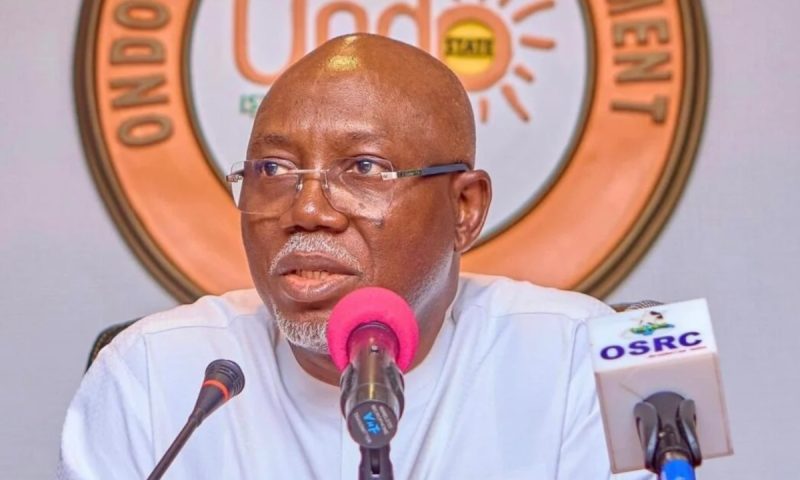
Ondo State Governor, Lucky Aiyedatiwa, has said securing President Bola Tinubu’s re-election in 2027 must remain a shared objective for members of the All Progressives Congress, APC, across the state.

The governor made this known while addressing party leaders at the APC’s quarterly stakeholders’ meeting, where he urged members to close ranks as political activities gradually intensify ahead of future elections.

Aiyedatiwa stressed the importance of unity within the party, cautioning against internal divisions driven by personal ambitions or conflicting interests.

“We must collectively work to deliver Ondo State for President Tinubu in 2027,” the governor said, adding that party cohesion is essential to achieving that goal.

He warned members against actions that could undermine party leadership or fellow party members, even while supporting preferred aspirants, noting that internal discord could weaken the APC’s electoral chances.

The governor explained that the quarterly stakeholders’ meeting was designed to enhance engagement, feedback and collaboration within the party, as well as to review political and developmental progress in the state.

Highlighting achievements of his administration, Aiyedatiwa said efforts had been intensified in the health sector, with several facilities undergoing renovation and standby ambulances being provided across local government areas.

He added that ongoing development projects were deliberately spread across all local councils to promote balanced growth statewide.

The governor also disclosed that the Federal Government had approved the revalidation of Ondo State’s deep seaport licence, explaining that the earlier registration contained errors that failed to properly reflect the state’s identity.

Earlier, the APC Chairman in Ondo State, Ade Adetimehin, who was represented by the party’s Vice Chairman, Atili Agabra, said the meeting provided an avenue for party members to directly engage with the governor.

He commended the state government for employing youths across various ministries, departments and agencies, describing the administration’s engagement with different party organs as unprecedented.

Also speaking, the APC National Vice Chairman (South-West), Isaac Kekemeke, reaffirmed that Aiyedatiwa remains the party’s leader in Ondo State.

While acknowledging the presence of other influential party figures, Kekemeke said the governor is the principal mobiliser for President Tinubu’s second-term ambition in the state.

He added that the President has confidence in APC governors nationwide, describing Aiyedatiwa as a strong loyalist and key campaign figure for Tinubu in Ondo.

Kekemeke observed that most criticisms of the government were coming from within the party, noting that opposition parties such as the Peoples Democratic Party, PDP, and Labour Party no longer pose significant threats in the state.

He urged the governor to continue accommodating diverse interests within the APC and to lead efforts to maintain unity ahead of future political contests.

Changing service chiefs now enough to end insecurity – NLC

The Nigerian Labour Congress, NLC, has told the Federal Government that fighting insecurity is not all about changing service chiefs, stressing that Nigerians need to see results.

President of the NLC, Joe Ajaero, stated this on Friday while responding to questions in an interview on Arise Television monitored

DAILY POST reports that the NLC has declared nationwide protest on December 17th over the wave of insecurity confronting the country.

“The Federal Government changing service chiefs and rejigging the security apparatus doesn’t mean we are seeing results. We need solutions.

“I think we should be real in discussing issues like this. That Minister has been removed, that the Chief of Army staff has been removed does not mean that we don’t have incidences of kidnap and banditry and all manner of things.

“We prefer to have solution to all those problems, and even change of guards, a theoretical pace. We want to see results,” he said.

When asked what options in terms of recommendations the NLC was putting on the table, Ajaero said,  “The NLC has stopped putting the options on the pages of newspaper.

“We wrote to Mr President since June to provide options on tax session, on strike in the tertiary institution, on strike in the education sector and other areas.

“And up to now, no acknowledgement of the letters. So where are we going to put our demand on if it’s not on the table?”

Alleged  $1m Theft: Ex-P-Square Manager,  Jude Okoye’s Wife Owns 800,000 Shares In Company-Witness

The first prosecution witness (PW1), Peter Obumuneme Okoye, in the ongoing trial of Jude Chigozie Okoye, an elder brother and former manager of Paul and Peter Okoye, has told Justice Rahman Oshodi of the  Lagos State High Court, Ikeja, that the defendant’s wife owns 800,000 shares in  Northside Music Limited.


Okoye, alongside his company, Northside Music Limited, is being prosecuted by the Lagos Zonal Directorate 1 of the Economic and Financial Crimes Commission, EFCC, on a four-count charge bordering on theft to the tune of over $1m.


He pleaded not guilty to the charges when they were read to him.


At the resumed trial of the matter  on Friday, December 12, 2025,  defence counsel, Clement Onwuenwunor (SAN) confronted the witness with the statements of account belonging to Northside Music Limited, detailing some transactions over a period of time


The PW1, however, stated the bank statements belonged to their joint business interest, saying, “These statements of account belong to me and my brother. We are P-Square. The company belongs to Peter and Paul. It was registered by him. I reported to the EFCC when I discovered funds were being diverted, and EFCC brought the matter to court”.


“My lord, we own an entertainment company together, and I discovered another company, Northside Entertainment Company diverting our funds. I showed it to my brother.”


He also confirmed that he petitioned the EFCC through his lawyer, and that the defendant’s wife owns 800,000 shares in the company in question.


The defence counsel, thereafter, sought to tender documents attached to the original petition submitted to the EFCC, insisting the documents were vital to their case.


However, the prosecution counsel M. K. Bashir, objected to their admissibility, arguing that “the documents are public documents.


“The defence merely produced copies stamped as Certified True Copies (CTC). They  were not attached to the petition, and they were not in proper legal form.”   He, therefore, urged the court to reject them.


In a short ruling, Justice Oshodi ruled that although the documents originated from the Corporate Affairs Commission (CAC) and ended in the EFCC’s custody, they did not meet the admissibility requirements of the court.


“I reject the documents and mark them as rejected,” the judge held.


The PW1 also confirmed that he wrote a statement at the EFCC after the petition was submitted by his lawyer.


The case was adjourned till February 20 and 27, 2026 for continuation of trial.