FG budgets N6.04bn payroll for idle Ajaokuta steel

Ajaokuta Steel Company

The Federal Government has proposed to spend N6.04bn on personnel costs for workers of the Ajaokuta Steel Company Limited in the 2026 budget, even though the steel plant has not produced a single sheet of steel for more than four decades after it was conceived.

Details from the 2026 Appropriation Bill show that Ajaokuta was allocated a total of N6.69bn for the year, with personnel expenses alone accounting for N6.04bn, or about 90.4 per cent of the entire allocation.

This reinforces the company’s long-standing status as a non-performing public enterprise sustained almost entirely by salary payments.

The personnel cost provision covers N4.79bn for salaries and wages, N1.25bn for allowances and social contributions, including N479.42m for employer pension contributions, N239.71m for NHIS, and N59.82m for employees’ compensation insurance. Regular allowances alone were budgeted at N468.9m.

In comparison, overhead costs were limited to N233.63m, while capital expenditure stood at just N410.8m, highlighting the minimal resources directed towards reviving production or completing the long-abandoned steel complex.

A year-on-year review shows that while personnel spending remains elevated, it represents a marginal adjustment from previous years rather than a structural shift.

In the 2025 budget, the Federal Government earmarked N6.21bn for salaries at Ajaokuta, up from N4.29bn in 2024, despite the company’s continued inactivity. That 2025 allocation marked a 44.76 per cent increase, showing how recurrent spending on the firm has continued to rise independently of output.

Although the 2026 personnel figure of N6.04bn is slightly below the 2025 salary-heavy provision, it still confirms that Ajaokuta’s core budget priority remains staff remuneration rather than steel production.

Recurrent expenditure for 2026 totals N6.28bn, compared with capital spending of N410.8m, meaning less than seven per cent of the company’s allocation is devoted to assets, rehabilitation, or infrastructure.

The capital budget includes N56.4m for fixed asset purchases, such as computers, printers and security equipment, N129.2m for construction and provision of facilities, and N225.2m for rehabilitation and repairs, largely for electricity-related works and office buildings.

These provisions fall far short of what would be required to revive a heavy industrial complex designed to anchor Nigeria’s steel and manufacturing value chain. Budget documents also show that Ajaokuta will generate zero independent revenue and receive no grants, leaving the company fully dependent on federal allocations.

Despite its non-operational status, the company continues to feature in constituency-style capital projects, including solar street lighting in parts of Niger East and Kwara North, water facilities, road repairs, security lighting, and grants to market women and youths. These projects, though ongoing, are not linked to steel production or industrial output.

However, the 2026 budget also makes a separate provision for the revitalisation of Ajaokuta Steel Company Limited and the National Iron Ore Mining Company under the Federal Ministry of Steel Development.

Budget documents show that N150.99m was allocated for the revitalisation programme of ASCL and NIOMCO, classified as an ongoing project within the ministry’s capital expenditure for the year.

Also, the 2026 budget shows N1.06bn was allocated for project preparation aimed at investment mobilisation for Ajaokuta Steel Company Limited under the ministry. The amount is for feasibility studies, Environmental and Social Impact Assessment, and financial modelling for Ajaokuta, signalling continued preparatory spending on revival plans even as the steel complex itself remains non-operational.

The total amount for 2026 is lower than what was budgeted in 2025, as The PUNCH earlier reported that the Ministry of Steel Development planned to spend N2.41bn on project preparation for investment mobilisation for Ajaokuta Steel Company Limited in 2025.

The ministry also budgeted N250.98m to revitalise Ajaokuta Steel Company Limited and the National Iron Ore Mining Company in the 2025 proposed budget.

Conceived in 1979 as Nigeria’s flagship industrial project, the Ajaokuta Integrated Steel Complex was designed to drive upstream and downstream industrial development, reduce steel imports, and support economic diversification.

More than 40 years later, budgetary allocations show it functions largely as a payroll institution, with successive governments funding salaries while production remains at zero.

On its website, the company claimed it employed about 3,000 people. It added, “While the project would directly employ about 10,000 staff at the first phase of commissioning, the upstream and downstream industries that will evolve all over the nation will engage not less than 500,000 employees.”

Ajaokuta Steel Plant, aptly known as the bedrock of Nigeria’s industrialisation, is more than just a rolling mill—it’s an Integrated Iron and Steel Plant. It boasts four distinct rolling mills: the Billet Mill, the Light Section Mill, the Wire Rod Mill, and the Medium Section and Structural Mill.

The plant utilises blast furnace technology, the most prevalent method of steel production, accounting for about 70 per cent of global liquid steel production. By 1994, the plant was estimated to be 98 per cent complete in terms of equipment installation.

While some units of the plant were operational at various times, 40 out of the 43 planned units had been constructed. However, due to mismanagement, the project remains incomplete over 45 years later.

At the Russia-Africa Summit in 2019, former President Muhammadu Buhari and Russian President Vladimir Putin agreed to revitalise the steel mill with Russian support and project funding from Afreximbank and the Russian Export Centre. However, it was delayed due to the COVID-19 pandemic, and the agreement was abandoned.

In January 2024, President Bola Tinubu began discussions with the Chinese steel company Luan Steel Holding Group to revive the Ajaokuta Steel Company. That discussion has not yielded any results so far. Despite its inactive status and reports of an ineffective workforce, the company continues to receive substantial annual budget allocations from the government.

The PUNCH earlier reported that the Federal Government paid workers of the moribund Ajaokuta Steel Company a total of N38.9bn in salaries and allowances over 10 years. A breakdown of the company’s annual budget from 2014 to 2024 showed that a total of N29.11bn was budgeted for salaries and wages, and N9.8bn for staff allowances.

Further analysis revealed that the government budgeted N3.82bn for personnel costs in 2014, which was reduced marginally to N3.8bn in 2015, N3.55bn in 2016, and N3.84bn in 2017. In 2018, an unverifiable number of workers at the company were allocated a total sum of N3.76bn for salaries and allowances, N3.2bn in 2019, and N3.5bn in 2020.

The cost increased to N3.89bn in 2021 and N3.94bn in 2022 but dropped significantly to N1.22bn in 2023.

At an investigative hearing recently, the lawmaker representing Kogi Central, Senator Natasha Akpoti-Uduaghan, questioned the Sole Administrator of the Steel Company, Summaila Akaba, about several workers collecting salaries from the N4.2bn appropriated for personnel costs in the 2024 budget.

She said that, being an indigene of the area and desirous of getting the steel company revamped and operational, she made unscheduled visits to it and found only 10 people there.

The lawmaker lamented further that, despite spending on personnel costs, no steel had been manufactured and no mill had rolled.

She said, “The sum of N4.2bn was appropriated for personnel cost in 2024, but from several visits I’ve made to the complex, hardly 10 people were sighted to be around or doing anything. So, who are the workers collecting monthly salaries from the appropriated N4.2bn?”

In the 2024 budget, the National Assembly increased budgetary allocation from N4.45bn in the proposed 2024 budget to N5.18bn in the approved version for the dormant Ajaokuta Steel Company.

This is an increase of N730m as the Federal Government plans to revive the moribund steel plant, which has been dormant for over 42 years. Saturday PUNCH observed that the increase was due to the addition of community projects not related to the steel plant and outside Kogi state.

At a briefing in 2024, the Minister of Steel Development, Shuaibu Audu, stated that the government was at an advanced stage of raising more than N35bn required to restart the Light Mill Section of the Ajaokuta Steel Company.

He also said that data from technical analysis and expert evaluations indicated that the government would require between $2bn and $5bn to revive the Ajaokuta steel company within three years.

The Federal Government of Nigeria, through the Ministry of Steel Development, also signed a Memorandum of Understanding with a Russian consortium for the rehabilitation, completion, and operation of the Ajaokuta Steel Company Limited and the National Iron Ore Mining Company.

The consortium, including Messrs Tyazhpromexport, Novostal M, and Proforce Manufacturing Limited, will spearhead the project to revitalise the steel industry in Kogi State. However, experts earlier insisted that the best option was to privatise the company to effectively maximise its potential.

Dangote asks EFCC to probe former NMDPRA boss

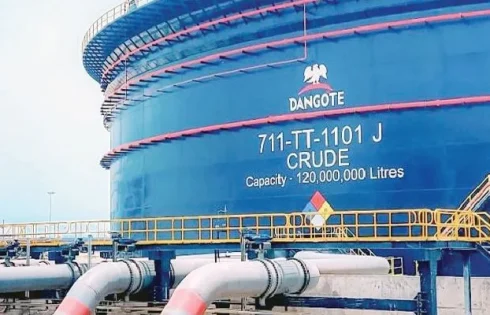
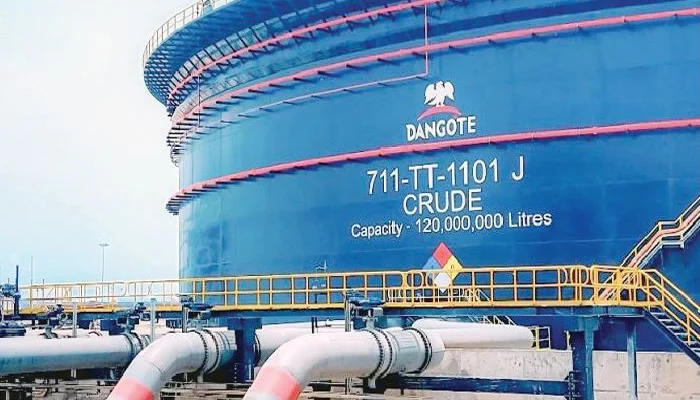
Dangote-3-688×460The Chairman of Dangote Industries Limited, Aliko Dangote, has said the Economic and Financial Crimes Commission is best placed to investigate alleged corruption involving the former Chief Executive of the Midstream and Downstream Petroleum Regulatory Authority, Farouk Ahmed, to accelerate the prosecution process.

Dangote, through his legal representative, has filed a formal corruption petition against the former Chief Executive of the NMDPRA at the headquarters of the EFCC. This was contained in a statement made available to our correspondent by the Dangote Group media team on Friday.

Recall that Dangote had earlier petitioned the Independent Corrupt Practices and Other Related Offences Commission to investigate Ahmed for allegedly spending $5m on his children’s secondary education in Switzerland. He withdrew the petition a few days ago, even as the ICPC vowed to continue with its investigation.

The statement on Friday said Dangote’s petition to the EFCC followed “the withdrawal of the same petition from the Independent Corrupt Practices and Other Related Offences Commission, a strategic decision aimed at accelerating the prosecution process.”

In the petition signed by Lead Counsel, Dr O.J. Onoja, Dangote urged the EFCC to investigate allegations of abuse of office and corrupt enrichment against Ahmed and to prosecute him if found culpable.

“We make bold to state that the commission is strategically positioned, along with sister agencies, to prosecute financial crimes and corruption-related offences, and upon establishing a prima facie case, the courts do not hesitate to punish offenders. See Lawan v. F.R.N. (2024) 12 NWLR (Pt. 1953) 501 and Shema v. F.R.N. (2018) 9 NWLR (Pt. 1624) 337,” the statement quoted Onoja as saying.

Onoja further urged the commission, under the leadership of Mr Olanipekun Olukoyede, “to investigate the complaint of abuse of office and corruption against Engr Farouk Ahmed and to accordingly prosecute him if found wanting.”

The petition also stated that “the commission’s firm resolve in handling this matter with dispatch is not only imperative and expedient but will also serve as a deterrent to other public officers out there with such corrupt proneness and tendencies.”

According to the statement, the development “reinforces Dangote’s unwavering commitment to transparency and accountability” in Nigeria’s oil and gas sector.

On December 14, 2025, Dangote raised concerns about Ahmed’s financial dealings, alleging that the former regulator was living far beyond his legitimate means.

According to Dangote, four of Ahmed’s children reportedly attended elite secondary schools in Switzerland, incurring costs running into several millions of dollars—an expenditure he said raises questions about potential conflicts of interest and the integrity of regulatory oversight in the downstream petroleum industry.

“Dangote listed the schools attended by Mr Ahmed’s children: Faisal Farouk (Montreux School), Farouk Jr (Aiglon College), Ashraf Farouk (Institut Le Rosey), and Farhana Farouk (La Garenne International School), noting that each child spent six years in these institutions. He estimated annual tuition, travel, and upkeep per child at $200,000, totalling approximately $5m for their secondary education,” the statement read.

Additionally, Dangote alleged that Ahmed spent another $2m on tertiary education for the four children, including $210,000 for Faisal’s 2025 Harvard MBA programme.

“Nigerians deserve to know the source of these funds, especially when many parents in Mr Ahmed’s home state of Sokoto struggle to pay as little as N10,000 in school fees,” Dangote stated.

The petition, it was learnt, called for a comprehensive investigation to ensure accountability and restore public confidence in Nigeria’s regulatory institutions.

Ahmed had resigned his position as the head of the NMDPRA in December amid the crisis. He had earlier described the allegations as untrue.

No going back on dissolution of Kano executive committee – NNPP

The New Nigeria People’s Party, NNPP, says the dissolution of the Kano State executives of the party at all levels stands and cannot be reversed by a court order.

This is contained in a statement issued by the party’s National Publicity Secretary, Ladipo Johnson, in Abuja on Thursday

Johnson said that the reaction followed media reports that a High Court in Kano State had reversed the dissolution of the party’s executive committees at the state, local government and ward levels in line with the NNPP Constitution.

He said the party National Working Committee, NWC, regards the purported reversal of its internal decisions by the court as “an ordinary street rumour” because it had not been served with any court process.

He said while media reported that the court, via an ex-parte order by Justice Nasiru Saminu on Tuesday, allegedly granted an interim injunction to this effect, the party leadership is yet to be served any court document.

Johnson said if the court order was in any way confirmed, such action would clearly be inconsistent with legal procedures and established legal precedents.

He said it was evidently a misnomer for a judge to purportedly grant such an over-reaching interim injunction against a completed action by the NWC of the party.

“We still regard the whole orchestration as a mere rumour. But if this is confirmed, we will take firm legal measures and ensure that the purported illegal injunction does not stand.

“Obviously, it can never stand because it is an illegality, a clear abuse of court process as the court lacks the jurisdiction to reverse a decision by the party, being an internal affair of the party.

“The dissolution of Kano State executives of the party at all levels therefore stands,” he said.

Johnson explained that the Supreme Court in a plethora of cases ruled that political party affairs were non-justiciable as such matters were the internal affairs of political parties.

“Therefore, the purported reversal by a Kano State High Court of the decision of the NWC of NNPP cannot be an exception.

“If the reported injunction of this nature is confirmed to be true, then it could only be described as an exercise in legal rascality,” he said.

Johnson added that in established instances of this nature, the NNPP would have no option than to take all necessary measures to ensure that the judicial officers involved were duly sanctioned by the National Judicial Council.

Impeachment: Fubara’s defection to APC threatens Wike’s grip on Rivers — Ex-Commissioner

A former Rivers State Commissioner for Information and Communication, Austin Tam-George, has suggested that the defection of Governor Siminalayi Fubara, to the All Progressives Congress, APC, altered the political dynamics in the state, weakening the influence of the camp loyal to the Minister of the Federal Capital Territory, Nyesom Wike.

Tam-George said that political calculations in the state within the last three weeks has changed, noting that the development appeared to have unsettled Wike and his allies.

Speaking during the Arise Television’s Prime Time, the former commissioner stated it was why Wike in recent weeks embarked on visits to several local government areas in the state.

According to him, the governor’s defection eroded the leverage previously enjoyed by the Wike camp over the Rivers State Government, forcing them to seek new ways of reasserting their influence.

He, however, warned that the prolonged political tension and instability resulting from the rivalry would ultimately be detrimental to the state and its people.

Tam-George said: “The movement of Governor Siminalayi Fubara to APC in the last 21 days has changed the political calculation in Rivers State.

“You know, in the past two weeks or so, the FCT Minister Nyesom Wike has been going from local government area to another local government area, threatening the government of Rivers state, even insulting the leadership structures of the APC at some point.

“He even accused some senior leaders and the Tinubu administration of going to Rivers State to literally accept, take money or bribes, also from the Rivers state government.

“So what I think is happening is that the defection of the governor has obviously threatened the original leverage that the Wike’s camp had over the governor, and they are finding a way to look for a way of asserting what they thought might be a threat to their leverage.

“But the regret is that it is the state ultimately that suffers from this kind of instability.”

16 ships with fuel, food items arrive Lagos ports – NPA

At least 16 vessels have docked at Lagos ports, including Lekki, Tincan Island, and Apapa, awaiting the discharge of petrol, diesel, and bulk gas, the Nigerian Ports Authority, NPA, has confirmed.

According to the NPA’s latest publication, Shipping Position, a copy of which was made available to journalists on Thursday in Lagos, a total of 40 ships carrying petroleum products, food items, and other cargo are scheduled to arrive at the three ports between January 8 and January 16, 2026.

The authority noted that the incoming shipments include bulk diesel, petrol, crude oil, condensate, bulk gas, buckwheat, fresh fish, bulk urea, and various containerised goods.

Eight vessels are currently at the ports discharging containers, diesel, bulk urea, and crude oil.

Court admits more exhibits in ex-Kwara gov’s N5.78bn corruption trial

gavelA Kwara State High Court sitting in Ilorin on Thursday admitted additional exhibits in the ongoing N5.78bn corruption trial of former Governor Alhaji Abdulfatah Ahmed and his former Commissioner for Finance, Alhaji Ademola Banu.

The Economic and Financial Crimes Commission is prosecuting the duo for alleged diversion of funds, including Universal Basic Education Commission matching grants and counterpart funds meant for the provision of infrastructure in primary and junior secondary schools across the state.

At the resumed hearing before Justice Mahmud Abdulgafar, the sixth prosecution witness, Ujilibo, testified that the EFCC obtained bank statements of the Kwara State Government from Polaris Bank and Guaranty Trust Bank, covering loans secured to pay teachers’ salaries under the State Universal Basic Education Board.

“My Lord, we wrote to the then Skye Bank, now Polaris Bank, and Guaranty Trust Bank requesting statements of SUBEB accounts and merging grants for 2013 and 2014,” Ujilibo said.

He added that the banks supplied all the requested documents, which were subsequently tendered and admitted as exhibits.

However, proceedings were briefly stalled following a dispute between the prosecution and the defence over the arrangement of the documents.

Defence counsel, Mr Kamaldeen Ajibade (SAN), argued that the bundle presented in court differed from what had been served on the defence and was neither paginated nor properly organised.

Prosecution counsel, Rotimi Jacobs (SAN), countered that the documents were the same as those served on the defence and that it was not the prosecution’s responsibility to arrange them.

Justice Abdulgafar later adjourned the trial to February 16, 2026, to allow proper arrangement of the exhibits.

Speaking after the proceedings, Ajibade described the situation as “unacceptable in a criminal trial,” saying the defence must have an adequate opportunity to review evidence. Jacobs, however, maintained that the EFCC had fulfilled its duty.

The EFCC alleges that Ahmed and Banu approved the use of UBEC matching grant funds to pay civil servants’ salaries, contrary to the purpose for which the funds were released.

At a previous hearing, former Kwara State Accountant-General Suleiman Oluwadare Ishola testified that N1bn of UBEC matching grants was borrowed in 2015 to pay salaries and pensions.

ICYMI: Rivers Assembly rejects political solution for Fubara

Siminalayi FubaraThe spokesperson for the Rivers State House of Assembly, Enemi George, has said lawmakers will see the impeachment proceedings against Governor Siminalayi Fubara and his deputy, Ngozi Oduh, to the end, dismissing suggestions for a political solution.

Speaking in an interview with Channels Television on Thursday, George dismissed suggestions that the impeachment was a political move designed to pressure the governor.

“Very sincerely, I doubt that because we’ve had one too many political solutions… It demeans, diminishes the institution of the Rivers House of Assembly if you say that everything that we do is because of politics… Right now, what we’re talking about is the law.”

On allegations of repeated misconduct by the governor, George described Fubara as a recidivist, explaining: “A recidivist is somebody who commits the same crime over and over again. He’s punished or forgiven, he comes back, he commits the same crime.

He cited instances where the governor allegedly mismanaged public funds, including appointing relatives to positions without proper screening.

George also addressed recent controversies over public funds, including the December 30th, 2025, rejection of a N100,000 “Christmas gift” credited to lawmakers’ accounts on the orders of the governor.

“Within that principle, there is no constitutional provision for that. We didn’t reject it because the money is too small, we rejected it because I don’t want to go to prison.

“These funds do not belong to my father, mother, or sister; they belong to the people of Rivers State, in the nooks and crannies, who will pay for it.”

He further argued that intervention from party leaders would not override the Assembly’s legal mandate.

“The first time the president intervened, he was insulted. They said it was a political solution that was not binding. The second time, the president went through hell to assemble stakeholders, to broker this peace, and then somebody goes back and reneges.

“You can’t keep breaking the law and expecting the president to come to your rescue,” George said, referring to previous efforts by President Bola Tinubu to mediate between the governor and lawmakers.

PUNCH Online reported that the Rivers State House of Assembly had begun impeachment proceedings against Fubara and Oduh.

During a plenary session presided over by Speaker Martins Amaewhule, Majority Leader Major Jack read out a notice of allegations of gross misconduct signed by 26 lawmakers, citing breaches of the Nigerian Constitution.

Amaewhule said the notice would be formally served to the governor within seven days. This is the second attempt by the Assembly to remove Fubara and his deputy, following a similar attempt in March 2025.

At that time, tensions in the state prompted intervention by President Tinubu, who brokered a reconciliation between Fubara, the FCT Minister Nyesom Wike, and the lawmakers, allowing the governor to return after six months.

Naval chief promises safe, secure maritime environment

G9pr8RHWEAAWpcHThe Chief of Naval Staff, Vice Admiral Idi Abbas, has reiterated the commitment of the Nigerian Navy to combating maritime crimes and ensuring the safety and security of Nigeria’s maritime environment.

Abbas made this pledge on Thursday during an operational visit to Calabar, the Cross River State capital, where he inspected facilities at the Nigerian Navy Reference Hospital and other ongoing projects.

He assured that the Navy would intensify efforts to secure the nation’s territorial waters.

“The Nigerian Navy is committed to making our waters safe and secure. Rest assured that we are going to make Nigeria’s maritime environment very safe and secure,” he said.

The naval chief expressed satisfaction with the facilities inspected and the operational gains recorded by the Navy in recent weeks, describing them as encouraging.

“I am happy with what I have seen, particularly the operational gains made in the last few weeks, which are very encouraging,” Abbas stated.

Explaining the purpose of his visit, Abbas said it was part of a broader operational tour of naval commands, units and formations across the country.

He said, “I am in Calabar as part of the operational visits I embarked upon some weeks ago. I have been going around various naval commands, units and formations to assess the operational capabilities of the Navy.

“This is with a view to identifying critical challenges and prioritising areas that need attention in order to effectively achieve the core mandate of the Nigerian Navy, which is the maritime security of the nation.”

ANVAI appoints Kolade interim DG

ANVAIThe Association of Nigerian Veterinary and Allied Industrialists has appointed Dr Adebayo Kolade as Interim Director-General, with a mandate to advance members’ interests, drive trade facilitation initiatives, and strengthen industry self-regulation.

ANVAI announced the appointment in a statement jointly signed by National Secretary Dr Tunji Nasir and Chairman of the Transition Committee Dr Yila Umaru, following a special general meeting held in December 207ntry.

According to the statement, ANVAI recently commenced an organisational renewal process in the last quarter of 2025, which it said would “culminate in the rapid expansion of its membership base nationwide.”

It added that the new leadership would focus on achieving early wins in engagement with key regulators, including the National Agency for Food and Drug Administration and Control and the Standards Organisation of Nigeria.

The statement noted, “The Interim Director General has been saddled with the task of driving the strategic change process initiated by the leadership of the association, including the take-off of trade facilitation initiatives and activities for members.”

ANVAI further said Kolade would articulate a peer regulation framework for members and defend industry standards, while ensuring that the collective interests of practitioners in the animal health value chain are protected and promoted.

The association stressed that strengthening internal regulation and improving market access for members remained central to its reform agenda.

As part of the assignment, ANVAI said the Interim DG would work closely with the association’s leadership and other stakeholders to rebrand the body, and, if necessary, rename it to better reflect its charter as the umbrella association of animal health industry practitioners in Nigeria.

“The Interim DG is expected to work with the leadership and all stakeholders to rebrand, and where necessary, rename the association to better reflect its mandate,” the statement said.

Kolade holds a degree in Veterinary Medicine from the University of Ibadan and has over 27 years of professional experience spanning multiple segments of Nigeria’s agricultural value chains.

He previously served as Head of Training and Head of Corporate Communications at Animal Care Services Konsult, Ogere Remo. He also worked as Chief Operating Officer and later Executive Director (Operations) at Zygosis Nigeria Limited, Lagos.

In addition to his corporate experience, Kolade anchors a weekly live radio programme, Agric Desk, and has conducted training programmes for farmers across different parts of the country.

He is an active member of professional bodies, including the Nigerian Veterinary Medical Association and the Poultry Association of Nigeria.

Stanbic Insurance gets A, A1 ratings from Agusto

Stanbic IBTC InsuranceThe credit rating company, Agusto & Co., has assigned a Long-Term Rating of ‘A’ and a Short-Term Rating of ‘A1’, both with a stable outlook, to Stanbic IBTC Insurance, a subsidiary of Stanbic IBTC Holdings.

This new rating was announced in the credit ratings for the 2025–2026 financial year.

The credit rating upgrade reflected stronger confidence in Stanbic IBTC Insurance’s financial resilience, governance standards, and long-term sustainability.

Commenting on the rating upgrade, the Chief Executive of Stanbic IBTC Insurance, Akinjide Orimolade, said, “We are delighted with this upgrade as a reflection of our progress and the trust we’ve earned from stakeholders.

“Our focus remains on delivering reliable protection, exceptional service, and enduring value to both policyholders and other stakeholders. This recognition motivates us to uphold the highest standards of financial discipline, service excellence, and integrity.”

The underwriter said that the improved ratings underscored its commitment to robust risk management, operational discipline, and its strong capacity to meet obligations to policyholders.

Agusto & Co. also cited Stanbic IBTC Insurance’s sound liquidity position, prudent business strategy, and the strategic backing it receives as part of Stanbic IBTC Holdings.

As part of its growth strategy, Stanbic IBTC Insurance said that it had continued to expand its retail footprint across Nigeria, enhancing access to life insurance solutions and deepening its presence in key markets.

“This expansion supports its mission to serve individuals, families, and businesses with reliable and accessible insurance offerings. In terms of claims settlement, Stanbic IBTC Insurance has consistently demonstrated its commitment to prompt and efficient payout to policyholders and annuitants. Since its establishment in 2021, the company has settled over 2,000 claims, amounting to more than N1.8bn in cash,” said the insurer.

Additionally, it has paid over N16bn in annuities to more than 4,900 retirees, reaffirming its dedication to delivering reliable and timely benefits. Stanbic IBTC Insurance also recommitted to maintaining its strong financial position, driving customer-centric innovation, and consistently delivering on its promise of security and peace of mind for Nigerians.