Osun AAC guber candidate calls for sweeping reforms in Nigeria’s political system

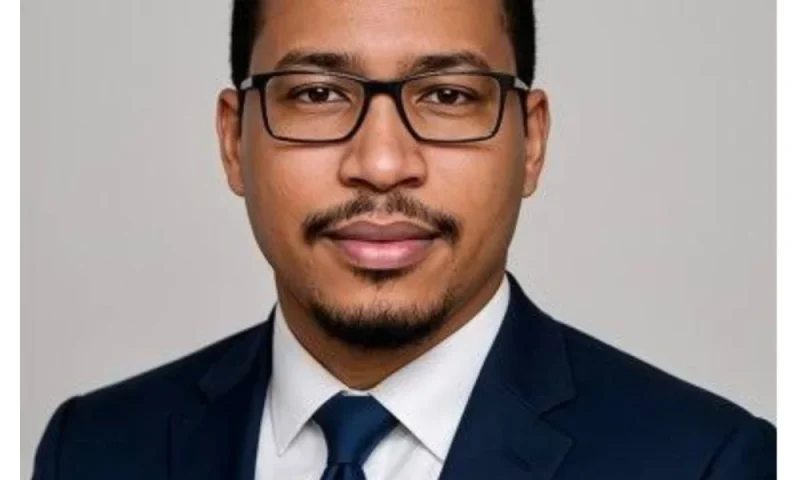
The governorship candidate of the African Action Congress, AAC, in the forthcoming Osun State governorship election, Olajide Esan, has called for sweeping reforms to Nigeria’s political system, saying the current structure discourages competent citizens from seeking public office.

Esan made the remarks on Tuesday while addressing journalists at the Osun State Council of the Nigeria Union of Journalists, NUJ, Guest Platform, where he outlined his vision for governance, economic development, and social welfare in Osun State.

According to him, the existing political system requires major adjustments because it has failed to produce the desired level of development.

He argued that the structure favours individuals who regard politics and governance as a business rather than public service.

“The system doesn’t allow people with ideas, but those who see politics and governance as a business to run for office. It is not sustainable, and this is one of the reasons why I decided to run for office,” Esan said.

The AAC candidate stated that his administration would promote participatory governance by giving residents greater involvement in decision-making processes.

He said governance should be people-centred and designed to reflect the aspirations of citizens across the state.

He also criticised the country’s political leadership since 1999, alleging that Nigeria has continued to recycle political leaders while nepotism has become increasingly entrenched.

“Leadership should be based on service and not imposition. Nigeria has too many politicians but not leaders,” he said.

Esan argued that poverty and ignorance had been used to manipulate citizens, adding that his administration would encourage stronger interfaith relationships to promote unity and discourage divisions among communities.

On social welfare, the governorship hopeful pledged to devote his entire salary to the welfare of senior citizens if elected.

He also proposed the creation of a comprehensive Osun residents’ database to improve planning and service delivery across the state.

The AAC candidate unveiled a proposal for an Osun Child Trust Fund, explaining that every child born in the state would have a dedicated investment account until the age of 18 to support higher education or provide start-up capital for a business.

Speaking on traditional institutions, Esan said a defined percentage of local government revenue should be allocated to traditional rulers to strengthen their roles in community development while ensuring they remain outside partisan politics.

On agriculture, he advocated an agro-based economy and stressed the need for policies that protect local agricultural practices. He expressed concern over the adoption of genetically modified organisms, saying Africa should carefully assess such technologies before their widespread implementation.

Addressing the mining sector, Esan alleged that the benefits of illegal mining were being enjoyed by a few individuals instead of the people.

He said tackling illegal mining forms part of the AAC manifesto, adding, “Leaders are the ones benefitting from the proceeds of illegal mining. Curtailing illegal mining is part of our manifesto because the proceeds of mining are meant for the people of Osun State.”

ADC bars state chapters from handling court cases

The African Democratic Congress (ADC) has directed all its state chapters to stop receiving court documents or hiring lawyers on behalf of the party without approval from its national leadership.

The directive, issued by the party’s National Publicity Secretary, Bolaji Abdullahi, requires every state chapter to forward any court process served on the party to the National Legal Adviser at the ADC national headquarters in Abuja.

The move comes as political activities and legal disputes increase ahead of the 2027 general elections.

According to the party, it has received reports that some court documents were being served on state chapters, while lawyers were allegedly engaged to represent the party without the knowledge or approval of its National Legal Adviser.

“The attention of the African Democratic Congress has been drawn to reports that court processes relating to the party are being served on some state chapters of the party and that, in certain instances, legal practitioners have been engaged purportedly on behalf of the party without the knowledge, consent or authority of the National Legal Adviser,” the statement said.

The ADC stressed that its constitution gives only the National Legal Adviser the authority to appoint lawyers or take legal action on behalf of the party.

“Only the National Legal Adviser of the party is authorised to issue letters of instruction to any legal practitioner to represent, act for, or take steps on behalf of the party in any court, tribunal, arbitration, administrative proceeding or other legal process,” the party stated.

The party also instructed state executives, legal advisers and other officials not to receive, acknowledge or keep any court documents served on the party through state offices.

It further warned that state chapters and officials have no authority to appoint lawyers, file legal documents, appear in court or make legal decisions for the party without written approval from the National Legal Adviser.

The ADC added that court papers served on state chapters would not be recognised as valid service on the party unless a court specifically orders substituted service. In such cases, the documents must be sent immediately to the National Legal Adviser electronically.

The party warned that any official or chapter that violates the directive or hires lawyers without authorisation could face disciplinary action under the party’s constitution.

Journalist, Zainab’s arrest linked to my bail process, not drone – Sowore counters DSS

Human rights activist and former presidential candidate, Omoyele Sowore, has dismissed the Department of State Services, DSS, explanation for the detention of journalist Zainab Sodiq, alleging that she was targeted because of her role in his bail process and not because she was carrying a drone.

Sowore made the allegation in a post on X on Thursday, shortly after the DSS said Sodiq was being investigated for travelling with an Unmanned Aerial Vehicle (UAV) without the required End User Certificate (EUC).

He said contrary to the statement by the DSS, she was not arrested and detained because of any drone.

Sowore claimed that the security agency had been after her for some time owing to their closeness.

“I had publicly disclosed this concern months ago.  The DJI Mavic Air drone in question belongs personally to me,” Sowore wrote.

According to Sowore, the drone belonged to him and had been used for media coverage of elections and other public events.

He said he personally informed DSS operatives at the Murtala Muhammed International Airport that the drone was his and instructed Sodiq to leave it behind and continue her journey to Abuja.

He claimed Sodiq was travelling with his international passport, which was required to fulfil bail conditions imposed by Justice M.G. Umar, and alleged that the real objective of the security agency was to prevent the passport from reaching Abuja and frustrate the perfection of his bail.

Sowore further alleged that Sodiq voluntarily reported to the DSS office after being invited but was immediately taken into custody without being allowed to settle the fare for the Bolt ride that conveyed her there.

According to him, his lawyers later contacted the Director-General of the DSS, Tosin Ajayi, who allegedly described Sodiq’s detention as a “routine screening” related to the drone.

He, however, claimed that the agency later changed its position and became displeased after he publicised Sodiq’s detention on social media.

Sowore accused the DSS of using state institutions to harass journalists, activists and government critics, alleging that the detention formed part of a broader pattern of repression.

The activist also levelled several allegations against the DSS leadership, including claims of abuse of power and attempts to suppress dissent.

DAILY POST reports that the DSS had earlier stated that Sodiq was intercepted by its operatives and personnel of the Aviation Security (AVSEC) unit of the Federal Airports Authority of Nigeria at the Lagos airport on Monday while travelling to Abuja with a drone allegedly without the required authorisation.

The Service maintained that its action was in line with regulations issued by the Office of the National Security Adviser governing the acquisition and use of drones, adding that investigations into the matter were ongoing.

Street begging: Lagos Assembly passes prohibition bill for second reading

Lagos State House of Assembly has passed for second reading a bill seeking to outlaw street begging across the state, with lawmakers expressing concern over the growing number of beggars on highways and other public spaces, describing the trend as a threat to public safety and environmental sanitation.

The development was disclosed in a statement issued on Wednesday by the Public Affairs Directorate of the Assembly.

According to the statement, the proposed legislation is designed to prohibit street begging and provide a legal framework for addressing what lawmakers described as a persistent social challenge affecting security, public hygiene and the image of Lagos as Nigeria’s commercial hub.

During deliberations on the bill at plenary, members of the Assembly offered varying perspectives on its implementation, with many advocating rehabilitation and welfare support for beggars instead of relying solely on punitive measures.

The bill comes on the heels of renewed efforts by the Lagos State Government to curb street begging. On Tuesday, the government announced the arrest of 396 beggars during a statewide enforcement operation, stating that those apprehended would be profiled before being repatriated to their respective states of origin.

Speaking during the debate, the member representing Surulere Constituency I, Desmond Elliot, urged the government to adopt a humane approach, particularly in dealing with children found begging on the streets.

He recommended that vulnerable children be removed from the streets and enrolled in rehabilitation programmes where they could receive proper care, education and other social support, while relevant government agencies should be strengthened to effectively carry out their responsibilities.

Also contributing, the lawmaker representing Ikorodu Constituency II, Aro Moshood, called for a thorough review of the bill to prevent possible misuse or misinterpretation by law enforcement agencies when the legislation eventually takes effect.

Bonu Solomon, who represents Badagry Constituency I, argued that a large number of street beggars in Lagos were not indigenes of the state. He suggested that beyond targeting those engaged in begging, the legislation should also discourage indiscriminate almsgiving by members of the public, noting that such acts often encourage the practice.

Similarly, Noheem Adams, representing Eti-Osa Constituency I, described the bill as a timely initiative and proposed that street beggars be moved to rehabilitation centres where they could receive vocational training, counselling and other forms of empowerment.

He noted that states such as Kano, Kaduna, Niger, Anambra and Abia, as well as the Federal Capital Territory, had already introduced measures to address street begging.

In his remarks, Speaker of the House, Mudashiru Obasa, acknowledged that supporting the less privileged remained a noble act but stressed that the increasing incidence of street begging had become a growing security concern.

Obasa suggested the establishment of structured channels through which charitable donations could reach genuinely vulnerable persons, while ensuring that those found begging on the streets are rehabilitated and successfully reintegrated into society.

He further directed that the proposed legislation be aligned with existing laws to facilitate effective implementation once passed.

At the end of the debate, the Speaker referred the bill to the House Committee on Youth, Sports and Social Development for further legislative scrutiny, directing the committee to submit its report within two weeks.

The House subsequently adjourned plenary indefinitely

El-Rufai granted bail with terms not viable – Wife cries out

Asiya El-Rufai, wife of detained former Kaduna State Governor, Nasir El-Rufai, has cried out that her husband was granted bail with terms that are not viable.

El-Rufai’s wife raised the alarm on Wednesday when she appeared as a guest in an interview on Arise Television’s ‘Prime Time’.

She disclosed that the court granted her husband a bail term with 2 sureties, N200 million each, and properties worth N200 million in GRA Kaduna, with attestation from the traditional council of Kaduna State.

According to her, efforts to get the bail conditions met became impossible

“The fundamental rights of individuals are guaranteed by section four of the Constitution. It guarantees right to life, right to health and right to interactions.

“Now Mallam has been accused of offenses in different courts and those charges are clearly bailable offenses under the Nigerian law. He has applied for bail severally in the High Court. He was denied bail.

“In the Federal High Court, he was granted bail with terms that are not viable. In the Federal High Court sitting in Kaduna, the judge granted him bail for two shorties, N200 million each, with property worth N200 million in GRA, Kaduna.

“The judge also said that the traditional council of Kaduna State must give attestation. Now, efforts to get this became impossible. The traditional council would not give that attestation.

“I don’t want to speculate. They gave no reason directly. They just said that they’re not able to do it,” she said.

CAC begins enforcement of company letter rules August 1

The Corporate Affairs Commission (CAC) has announced that it will begin enforcing statutory requirements on the contents of company business letters from August 1, 2026, warning that defaulting companies will face sanctions.

The commission disclosed this in a public notice signed by its management and posted on its X handle on Wednesday.

Under the Companies and Allied Matters Act 2020, company business letters are required to clearly display key details, including the company’s registered name, registration number, directors’ present forenames or initials and surnames, any former forenames and surnames, and the nationality of every non-Nigerian director.

The requirement applies to all company business letters, including invoices, quotations, official correspondence and other business documents.

According to the CAC, the enforcement will cover the full application of Sections 304(1), 304(2) and 304(1)(c) of the Companies and Allied Matters Act 2020.

The commission said, “Commencing the 1st day of August 2026, the Commission shall enforce the full application of the requirements of sections 304(1) & (2) and (1)(c) of the Act with respect to company business letters with attendant sanctions for non-compliance.”

It reminded companies registered under the Act “to state in legible characters on its business letters, the present forename or initials and surname; any former forename and surname; and nationality of every non-Nigerian director as well as the company’s name and registration number.”

The commission urged affected companies to comply with the provisions before the enforcement date to avoid sanctions.

NCC moves to end repeated road excavation for broadband

The Nigerian Communications Commission and relevant stakeholders have commenced moves to end the repeated excavation of roads for fibre-optic deployment by developing a cost-based pricing framework for sharing underground telecom ducts under the Federal Government’s Dig Once policy.

The initiative, unveiled at the Second Stakeholders’ Forum on the Consultancy Study for the Development of a Pricing Mechanism and Cost-Based Structure for Sharing Ducts under the Dig Once Policy in Abuja on Wednesday, is expected to lower broadband deployment costs, promote infrastructure sharing and accelerate fibre rollout nationwide.

The Dig Once policy seeks to ensure that telecommunications ducts are installed whenever roads are constructed or rehabilitated, allowing multiple operators to deploy fibre through existing underground infrastructure instead of repeatedly excavating roads.

Speaking at the forum, the Permanent Secretary of the Federal Ministry of Communications, Innovation and Digital Economy, Nadungu Gagare, said the initiative formed part of the Federal Government’s efforts to deepen digital infrastructure and improve broadband access.

He said, “The Dig Once Policy remains one of the Federal Government’s strategic interventions for accelerating fibre infrastructure development, reducing the cost of broadband expansion, preventing unnecessary road excavation and promoting efficient use of national resources.

“However, its full potential can only be realised when supported by a pricing framework that is transparent, commercially viable, equitable and encourages infrastructure sharing.”

Gagare said the proposed framework would strengthen investor confidence while safeguarding the public interest. “Our collective objective should be to establish a framework that promotes collaboration rather than duplication, efficiency rather than waste, and sustainable growth rather than short-term gains,” he said.

Earlier, the Director of Policy, Competition and Economic Analysis at the NCC, Ayuba Shuaibu, said the commission engaged consultants in 2023 to address the absence of a pricing mechanism for shared ducts, which he described as a major gap in the draft Dig Once policy.

According to him, “The Dig Once initiative is fundamentally aimed at reducing the cost and complexity of network deployment by promoting coordinated civil works and the shared use of underground duct infrastructure.”

He added that without a well-defined pricing mechanism, “the objectives of efficiency, fairness and investment protection may not be fully realised.” Shuaibu explained that the study would provide “a structured and cost-based framework that ensures equitable access while supporting sustainable infrastructure development across the sector.”

He added that the commission had reached a critical stage where stakeholders would review the consultant’s findings and proposed pricing methodology before the framework is finalised.

“The commission remains committed to a transparent, inclusive and consultative process. Our objective is to arrive at a pricing structure that balances the interests of infrastructure providers, access seekers and, ultimately, consumers, while also encouraging continued investment in broadband infrastructure,” he said.

Delivering the keynote address, the Managing Director of Dimension Data Nigeria, Olugbenga Olabiyi, who was represented by the company’s Lead Solutions Architect and Head of IT Systems and Infrastructure, Akpevwe Egbelughe, said repeated civil engineering works remained one of the biggest obstacles to broadband expansion in Nigeria.

He said, “The principle behind the Dig Once Policy is simple, yet transformational. Whenever roads are constructed, rehabilitated or opened for maintenance, provisions should simultaneously be made for telecommunications ducts and conduit systems.”

He added, “By embedding appropriately sized conduit infrastructure during road construction, multiple operators can subsequently deploy fibre through existing ducts without repeatedly excavating the same roads.”

According to him, the policy would reduce capital expenditure for operators, shorten deployment timelines, minimise traffic disruption and environmental impact, protect public infrastructure from repeated damage and accelerate broadband penetration.

Olabiyi said infrastructure sharing would only succeed where access was governed by fairness, transparency and effective market oversight.

“The framework should allow infrastructure owners to recover investments and earn reasonable returns while ensuring that access seekers can deploy services at costs that encourage network expansion, competition and innovation,” he said.

He also proposed the establishment of a National Passive Infrastructure Registry to provide visibility into available ducts, spare capacity and ownership, as well as a digital marketplace through which operators could request, lease and manage duct capacity.

The technology expert further stressed the need for stronger collaboration between the Federal Government and state governments, noting that harmonised Right of Way administration would be critical to the success of the policy.

Also speaking, the Cross River State Commissioner for Science and Technology, Justin Beshel, said the state had pioneered a shared duct arrangement with the NCC in 2012 and welcomed the proposed national pricing framework.

N100 notes still legal tender, says CBN

Olayemi CardosoThe Central Bank of Nigeria has ordered members of the public, businesses, and commercial banks to immediately cease the rejection of the standard N100 banknote, declaring that the currency remains a valid medium of exchange across the country.

The directive follows growing reports that sections of the public, informal traders, and various economic stakeholders were refusing to accept the standard N100 note. The apex bank attributed the trend to widespread, unfounded rumours that the older design had expired or been phased out.

Clarifying the situation in an official statement released in Abuja, the CBN Acting Director of Corporate Communications, Mrs Hakama Sidi-Ali, addressed the root of the public’s confusion.

She said, “The attention of the Central Bank of Nigeria has been drawn to reports of the rejection of the standard N100 banknote by some members of the public, businesses, and other stakeholders, apparently due to doubts about its continued legal tender status.”

Sidi-Ali explained that much of the anxiety stemmed from the introduction of the commemorative N100 note, which was launched over a decade ago to celebrate Nigeria’s centennial. According to the apex bank, the commemorative design was never intended to push the original note out of circulation.

“For the avoidance of doubt, the CBN hereby reiterates that both the commemorative N100 banknote and the standard N100 banknote remain legal tender in Nigeria and must be accepted for all transactions nationwide.

The commemorative N100 banknote, which was introduced to mark Nigeria’s centenary, did not replace the existing standard N100 banknote,” she added.

Moving beyond mere clarification, the financial regulator issued a stern warning to anyone found breaking currency laws. The bank noted that rejecting any duly issued national currency constitutes a clear violation of federal legislation.

Sidi-Ali warned, “The CBN strongly cautions individuals, businesses, financial institutions, and other economic agents against rejecting the standard N100 banknote. Such rejection constitutes a violation of the provisions of the CBN Act and undermines confidence in the national currency.”

The apex bank further emphasised that it would actively police compliance and penalise any defaulting market agents, shops, or banks.

“The Bank will not hesitate to apply appropriate enforcement measures against any person or entity found to be in breach,” the statement read.

Concluding the briefing, the CBN reassured the public of its commitment to ensure a steady supply of cash, urging citizens to confidently use all legally issued notes in their daily commerce.

The statement further read, “The Bank remains committed to safeguarding the integrity of the Naira, ensuring confidence in all duly issued banknotes, and promoting smooth currency circulation across the country. Accordingly, members of the public are urged to accept and transact with all banknotes legally issued by the Central Bank of Nigeria.

NNPC ends crude-backed loans to fund PH, Warri refineries

NNPCThe Nigerian National Petroleum Company Limited has said it is ending the practice of financing the Port Harcourt and Warri refineries with loans backed by crude oil production, opting instead for a performance-driven funding model aimed at making the facilities commercially sustainable.

The NNPC said both refineries must become financially self-sustaining, as the national oil company moves to a new commercial model that requires the plants to raise financing for their operations rather than rely on loans.

The Group Chief Executive Officer of NNPC Ltd, Bayo Ojulari, disclosed this on Tuesday while speaking at the Nigeria Oil and Gas Conference in Abuja.

According to him, the company’s long-term strategy is to ensure the refineries operate as commercially viable businesses capable of attracting financing on their own.

He said future financing for the refineries would be tied to their productivity and operational performance rather than crude oil volumes.

“You heard me talking about our refineries. We’re moving away from situations where the refineries are taking loans based on barrels and not linked to the productivity and performance of the refineries. We are changing that.

“Our solution has to be that those refineries are able to work, raise their own, and deliver, not more contractors coming to take value. That’s the strategy. That’s sustainability. And that’s what will live beyond us,” Ojulari said.

The declaration marks a significant shift in NNPC’s approach to refinery financing, amid ongoing efforts to reposition the state-owned refineries under commercially sustainable business models.

The NNPC boss explained that the company had already begun restructuring its investment portfolio by eliminating projects that lacked clear financing and profitability prospects.

“We recognise that our portfolio has put NNPC into a lot of problems in the past years, where a lot of infrastructure development projects do not have a clear line of sight to finance. They do not have a clear line of sight to profitability. We eliminated all of that from our portfolio last year,” he said.

He added that the company had introduced a new financing model for major infrastructure projects, citing the Ajaokuta-Kaduna-Kano gas pipeline as an example.

“For the first time, we put in a new financing for infrastructure that has never been done in Nigeria, ‘Project Nexus’, where we are able to put financing against the AKK pipeline based on its own throughput, not from another barrel from anywhere. That is the way we are going,” Ojulari stated.

He said the same commercial principles would underpin NNPC’s refinery ambitions, which he noted would rely on integrated partnerships across engineering, logistics, technology and marketing.

“Our refinery ambition depends on integrated partnership. You can see that across engineering, logistics, technology, and marketing. Our energy transition journey requires collaboration with innovators and researchers, development institutions and new technology,” he added.

Ojulari’s latest remarks come weeks after NNPC signed a Memorandum of Understanding with Sanjiang Chemical Company Limited and Xinganchen (Fuzhou) Industrial Park Operation and Management Company Ltd to explore a technical equity partnership for the Port Harcourt and Warri refineries.

The proposed arrangement, which might be modelled after the NLNG ownership structure, could see the Chinese investors acquire about a 51 per cent stake in the facilities as part of efforts to rehabilitate, expand and commercially reposition them.

Under the proposed partnership, the Chinese firms are expected to participate in completing outstanding engineering works, operations and maintenance, capacity expansion, petrochemical integration and gas-based industrial projects around the refinery complexes.

The arrangement is also designed to replace the traditional contractor model with long-term equity participation and joint governance, subject to technical, commercial, financial and legal due diligence before any binding agreement is signed.

During a recent visit to the Warri refinery, Ojulari described the initiative as a strategic move to transform the refineries into profitable and sustainable businesses rather than simply complete rehabilitation projects. He said NNPC was seeking the right technical and financial partners to ensure the facilities operate efficiently and create long-term value.

His remarks reinforced the fact the national oil company intends to move away from financing refinery operations through loans and instead position the Port Harcourt, Warri and Kaduna plants as commercially viable assets capable of attracting investment and generating their own funding.

There are many who are of the belief that the refineries may never work again, but Ojulari is optimistic, assuring Nigerians that the plants will become commercially viable again.

Dangote’s N45 dividend to inject billions into NGX

DangoteInvestors in the Nigerian equities market are gearing up for a significant liquidity boost this week as the landmark N45.00 per share dividend payout from Dangote Cement Plc hits investors’ bank accounts, injecting billions of naira in raw cash into the financial ecosystem.

Market analysts expect the massive capital injection to trigger a wave of reinvestments, potentially arresting a three-week bearish run on the Nigerian Exchange that has pushed major blue-chip equities down to multi-month technical support baselines.

The influx of dividend cash comes at a critical juncture for the local bourse. Over the last 21 days, a heavy institutional shakeout has dominated trading, culminating in a third consecutive weekly loss that dragged the NGX All-Share Index down to 229,240.34 points, while market capitalisation closed at N147.11tn.

Despite the downward pressure on prices, activity velocity has spiked remarkably. Trading volume in the preceding week surged by over 1.5 billion shares to hit 3.821 billion shares traded, up from 2.324 billion shares the week prior

Market observers note that savvy buyers have actively been absorbing panic selling, viewing the current prices as an attractive wholesale entry point.

The market’s recent pullback was heavily driven by corrections across major sectors. The Industrial Goods index led the decline, dropping 4.93 per cent, closely followed by the Consumer Goods index which shed 4.56 per cent. The Oil & Gas and Banking sectors also dipped  4.34 per cent and 3.72 per cent, respectively.

However, with valuations currently sitting at fresh three-week lows, investment desks are reporting that bargain hunting is intensifying.

Traders are adjusting their portfolios to position in strength, keeping a close eye on volume trends within the financial and consumer goods spaces.

Adding to the week’s momentum is the official countdown to the early Q2 and half-year (H1) corporate earnings season. The combination of newly available dividend liquidity and anticipation of robust corporate performance is expected to drive tactical positioning.

Wealth managers are currently advising investors to treat the three-week market pullback as an open wholesale window, recommending a disciplined tranche strategy to gradually deploy capital into heavily discounted, high-value banking and industrial stocks as the third quarter takes off.

Shareholders of Dangote Cement Plc earlier approved a final dividend of N45 per ordinary share for the financial year ended 31 December 2025, bringing the total payout to an unprecedented N753.8bn.

The approval came as the company reaffirmed its long-term strategy of expanding across Africa through aggressive investments in production capacity, cleaner energy, and operational efficiency.

The dividend was approved at the company’s 17th Annual General Meeting in Lagos, where the Chairman of Dangote Cement Plc, Emmanuel Ikazoboh, said the firm was positioning Africa for self-sustaining industrial growth by leveraging local resources and strategic investments.

The National President of the Association for the Advancement of the Rights of Nigerian Shareholders, Dr Faruk Umar, lauded the group’s overarching focus on continental independence.

Umar said, “The key thing for this year’s AGM is transforming Africa. You will notice that our founder is trying to ensure he positions Africa to be the source of our own wealth, using our own wealth to take care of our own business and activities, rather than depending on investors from other parts of the world coming to help us build our continent.

“This 50 per cent dividend increase may look like a rumble, but there is a lot of strategy that has gone behind it. Some of the most important strategies have focused on exports. We have grown in areas where we previously weren’t able to reach out because of past challenges. More things are in the pipeline, which are progressively getting implemented. We expect that we can continue the momentum that we have built over the last year into the forthcoming years as well.”

A shareholder and financial analyst, Mr Nornah Awoh, commended the board for its financial discipline, citing the deployment of 3,000 CNG trucks and a 50 per cent reduction in bank borrowings as key drivers of profitability.

Awoh said, “First of all, you have to commend the company because we now have 3,000 CNG trucks being used rather than hiring them, which is improving our revenue. Secondly, the company has drastically reduced its loans; only half of the loan is left to be collected and paid to banks, reducing borrowings by 50 per cent. Another thing is that the first quarter is 101 per cent higher than last year, so you can see what we are expecting.

“They have paid us a N45 dividend. If this trend continues to the fourth quarter, we expect nothing less than an N60-to-N70 dividend. Additionally, you can see the synergy. With the new refinery, we are going to be getting diesel and gas directly from the Dangote Refinery. This is going to boost us and help significantly with profitability.