FAAN, MTN Nigeria Launch Free Airport WiFi Service in Public-Private Partnership

The Federal Airports Authority of Nigeria (FAAN), in partnership with MTN Nigeria, has launched free WiFi services at the Murtala Muhammed International Airport (MMIA) Terminal 2, Lagos, and the Nnamdi Azikiwe International Airport, Abuja.

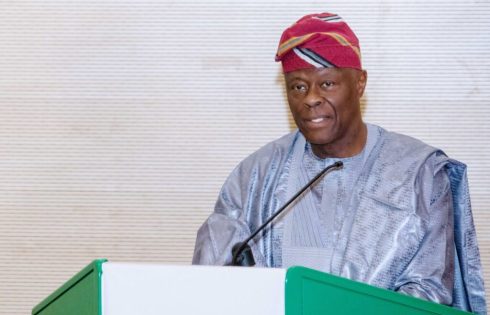
The official launch of the internet service took place at MMIA Terminal 2, Lagos, and was launched by the Managing Director/Chief Executive, FAAN, Mrs Olubunmi Kuku, who was represented by the Director of Airport Operations, Captain Abdullahi Mahmood. Also present was Lynda Saint-Nwafor, Chief Enterprise Business Officer of MTN Nigeria, who represented the Chief Executive Officer, Mr Karl Toriola.

The WiFi service, which is completely free for passengers and airport users, will be extended to the MMIA temporary terminal and other international airports across the country within the next three months.

In his address, Captain Mahmood described the launch as a milestone for FAAN and a benchmark for digital infrastructure and passenger experience at Nigerian airports.

He noted that the partnership with MTN Nigeria demonstrates how effective Public-Private Partnership (PPP) alignment can modernize infrastructure and strengthen Nigeria’s digital economy.

The Director of Airport Operations added that the initiative aligns with the Renewed Hope Agenda of Bola Ahmed Tinubu and the transformation drive of the Minister of Aviation and Aerospace Development, Festus Keyamo.

In her remarks, Saint-Nwafor assured that the service would be reliable, secure, and efficient for all users. She commended the FAAN management team for its collaboration and foresight in ensuring the successful completion of the project.
APC holds ward congresses in Kebbi, elects new executives

Kebbi State Governor, Nasir Idris, on Wednesday, monitored the All Progressives Congress, APC, ward congresses held across the state, pledging to work with newly elected party officials.

Idris observed the exercise alongside party leaders, including the Minister of Budget and Economic Planning, Abubakar Atiku Bagudu; Senator Muhammad Adamu Aliero; the APC National Organising Secretary, Suleiman Muhammad Argungu; and the State APC Chairman, Abubakar Kana-Zuru.

The governor visited selected venues, including Kauran Gwandu Primary School and Justice Ibrahim Umar Primary School in Birnin Kebbi, where ward congresses were conducted.

Party officials said the congresses were held across the 225 wards in the state and produced new ward executives through a consensus process.

Speaking at one of the venues, Idris said his administration would cooperate with the newly elected ward leaders in advancing party and government programmes at the grassroots level.

The APC State Chairman, Kana-Zuru, stated that the consensus process followed consultations with stakeholders and complied with party guidelines.

The Chairman of the Ward Congress Committee, Abdulmalik Mahmood, said the exercise adhered to the party’s constitution.

The congresses were conducted on the same day the holy month of Ramadan commenced.

INEC registers over 1.2 million new voters in ongoing CVR exercise

The Independent National Electoral Commission, INEC, has announced a significant rise in voter enrolment under the ongoing Continuous Voter Registration, CVR, exercise, revealing that more than 1.2 million Nigerians have successfully registered in the second phase of the programme.

In an update shared on its official X platform on Thursday, the Commission disclosed that as of February 13, 2026, a total of 1,228,648 eligible voters had completed registration during Phase II, Week Six of the exercise.

This represents a sharp increase from the 884,737 registrants recorded at the close of Week Five.

INEC’s data shows that 673,124 applicants initiated their registration through the online pre-registration portal, while 555,524 individuals finalised the process at designated physical registration centres nationwide.

A state-by-state analysis indicates that Jigawa State recorded the highest number of new registrants, with 98,698 voters, accounting for 8.03 per cent of the total figure.

It is followed by Lagos State (86,307), Sokoto State (77,004) and Kano State (71,990).

The gender distribution reveals that women account for the majority, with 696,891 registrants (57 per cent), while men make up 531,757 (43 per cent).

In terms of age, young Nigerians between 18 and 34 years dominate the registration figures, numbering 848,066, or 69.02 per cent of the total.

INEC also reported that 19,414 Persons with Disabilities, PWDs, have registered nationwide so far.

The Commission noted that the CVR exercise is currently ongoing across the country, except in the Federal Capital Territory, FCT, where registration has been suspended in compliance with the Electoral Act ahead of the February 21, 2026, Area Council elections.

Phase II of the CVR commenced on January 5, 2026, and is scheduled to run until April 2026. It follows Phase I, which took place between August and December 2025, during which approximately 2.78 million new voters were added to the national register.

Gas flare: We no longer sleep at night – Akwa Ibom community (Video)

For the people of Ikot Ebidang in Onna Local Government Area of Akwa Ibom State, sleep has been murdered following the oil and gas exploration activities in their community.

Aside from the smell of the noxious gas discharge that hits anyone who enters the community, the tumultuous sounds from the gas flare sites have sacked some residents and rendered those who do not have alternative homes sleepless.

Ikot Ebidang, host to the Oil and Gas company, Natural Oilfield Service (Sterling Global) has raised the alarm over destruction of their environment, poor crop yield and poor health outcomes through fossil fuel extraction.

One thing remarkable in the sleepy community is the preponderance of darkened and corroded rooftops due to combustion residues from the flare stack.

Speaking during a dialogue on renewable energy, the people decried the destruction of aquatic ecosystems, farm crops, as well as heat and skin rashes which have become very common.

One of the community stakeholders narrated, “We have lost a lot of people in our community, our health is in danger.

“If you are coming into the community, you will be perceiving the gas not to talk of those living around the site. This is not just natural global warming but community burning.

“The soil nutrient is reducing and the gas flare has altered aquatic life. Our forest and rivers are polluted. I don’t know if it’s at the expense of one man or two who wants to do business, we are dying, we need help.

“If you stay here till around 7- 8 pm when everywhere is quiet, the sound alone is like an earthquake, people are afraid of what will happen next.”

Meanwhile, the operating company did not sneak into the community to begin its activities, there must be a Memorandum of Understanding (MoU) between them, the government and the community.

To this end, people of Ikot Ebidang have called for the renegotiation of the MoU granting the company access to their community to adequately address concerns around pollution and environmental harm.

In a communique, the people called on the Akwa Ibom government to halt fossil fuel extraction activities, and the operating company to pipe associated gas away from residential areas rather than flaring within the community.

“Continued flaring within the community worsens health outcomes, environmental degradation, and community vulnerability.

“The community must be compensated for livelihood losses and damages resulting from oil extraction, alongside the provision of adequate health facilities to help residents cope with ongoing impacts,” the communique added.

Gasflaring is illegal – Expert

According to an environmental expert, Dr Nnimmo Bassey, who is also the Executive Director of Health of Mother Earth Foundation, (HOMEF), one of the facilitators of the dialogue, gas flaring remains illegal and a violation of human rights in Nigeria, especially when done where people are living.

He stated that every community in the Niger Delta has serious environmental problems, noting that from the complaints of the people of Ikot Ebidang, they have surface knowledge of the implication and life threatening effects of gas flare.

His words, “Gasflare problem is central because of its implication to human health, environmental health.

“In-fact they have not started experiencing the serious problem of gasflare, not just about noise, heat or rashes which they have largely complained of, if it continues this way, they risk reproductive problems, cancers, blood disorders and so many problems associated with gas flaring. I think people actually have a very surface understanding of what is coming.”

He promised to help the community get environmental justice and achieve their demands.

Document Evidence of Negative Impacts – Community told

Meanwhile, the community has been told to document in real time all evidence of negative impacts of gas flare and oil spill they have witnessed.

Umo Isua-Ikoh of the Peace Point Development Foundation, PPDF, also one of the dialogue facilitators, and Edem Edem, the immediate past African representative of Climate Investment Fund of the World Bank, Washington DC, in their joint presentation, harped on the need to have evidence in case either of the parties wants to institute a legal action.

“In environmental monitoring, we are looking at how you can have a good evidence should you be taken to court or you want to go to court, so you must have something the court must accept such as a real time evidence for instance if there is an oil spill, you must have a picture of the spill with GPS camera so that location will be captured.

“You can also take samples with a container, cork and label so that by the time we present it to NODSRA for testing, the test will be able to detect the asset owner.

“The community should also be able to have a picture of how the community was and how it is today. Not only for the court, also for posterity.

“For us as environmentalists, we want to see how we can encourage the communities to take monitoring and evidence documentation seriously because this will enable them to observe changes in their community.

“They can also equally begin to engage themselves to find lasting solutions to their issues,” they stated.

They also noted that communities must be compensated for livelihood losses and damages resulting from oil extraction, alongside the provision of adequate health facilities to help residents cope with ongoing impacts.

“The government must prioritise the wellbeing of communities such as Ikot Ebidang rather than sacrificing them in efforts to increase oil production to 3 million barrels per day.

“The community should be supported to train and deploy environmental advocates who can centre and champion community interests and environmental perspectives.

“The company should provide renewable energy solutions to help address energy poverty while mitigating the impacts of extractive activities on the community.

“The government must ensure routine environmental monitoring and regular air quality inspections to safeguard community health and environmental integrity,” they concluded.

ICPC takes El-Rufai into custody after release by EFCC

Former Kaduna State governor, Nasir El-Rufai, has been taken into custody by the Independent Corrupt Practices and Other Related Offences Commission (ICPC).

El-Rufai was moved to the ICPC headquarter in Abuja after spending 48 hours at the Economic and Financial Crimes Commission (EFCC), where he had earlier been granted bail.

There were initial reports that he had been arrested by the Department of State Services (DSS), which also filed criminal charges against him. However, the ICPC later clarified that the former governor is in its custody.

In a statement issued on Wednesday night, ICPC spokesperson J. Okor Odey confirmed the development.

“The Independent Corrupt Practices and Other Related Offences Commission (ICPC) writes to state that Malam Nasiru El-Rufai, the former Governor of Kaduna state is in our custody as at close of work today Wednesday the 18th day of February, 2026. Malam Nasiru El-Rufai is in the custody of the Commission in connection with investigations,” the statement read.

The commission did not disclose details of the investigation.

The DSS had earlier filed a three-count charge against El-Rufai at the Federal High Court in Abuja, marked FHC/ABJ/CR/99/2026.

The charges followed comments he made during an interview on ARISE Television.

During the programme, El-Rufai alleged that the ICPC, acting on the orders of the National Security Adviser, Nuhu Ribadu, had directed the DSS to arrest him. When asked how he got the information, El-Rufai said someone had tapped Ribadu’s phone and that he heard what the NSA said.

Based on that claim, the DSS accused him of unlawfully intercepting the phone communications of the National Security Adviser, an offence it said violates the Cybercrimes (Prohibition, Prevention, etc.) Amendment Act, 2024, and the Nigerian Communications Act, 2003.

In one of the counts, prosecutors alleged that El-Rufai admitted during the interview that he and others “unlawfully intercepted the phone communications” of Ribadu.

Another count claimed he acknowledged knowing someone who carried out the interception but failed to report the individual to security agencies.

The charges also accused him and others still at large of using technical equipment to intercept communications in a manner that compromised public safety and national security.

El-Rufai, who served as governor of Kaduna State from 2015 to 2023, has also faced separate allegations of financial misconduct.

In 2024, the Kaduna State House of Assembly indicted him over the alleged diversion of N423 billion and money laundering, and asked anti-graft agencies to investigate him.

He denied the allegations and later sued the Assembly, accusing it of attempting to damage his reputation.

Lagos bans ‘korope’ buses amid protest

Lagos State Government has faulted the blockage of traffic along the CMS–Lekki–Epe Expressway by some mini-bus operators, popularly known as korope, describing the action as a breach of earlier agreements reached with transport unions.

In a statement issued by the Lagos State Ministry of Transportation, the government said the disruption occurred on Tuesday, February 17, and Wednesday, February 18, 2026, despite extensive consultations with key stakeholders.

According to the statement, the government had engaged the two major transport unions, the National Union of Road Transport Workers (NURTW) and the Road Transport Employers Association of Nigeria (RTEAN), before rolling out reforms for the Lekki–Epe corridor.

Speaking on behalf of the government, the Special Adviser on Transportation, Hon. Sola Giwa, said the actions of the protesting operators undermine the Bus Reform Initiative (BRI), a programme designed to improve transportation services along the busy axis.

“Such disruptions go against the agreements we made with the unions.

“The government has worked closely with all stakeholders to provide safe and efficient transportation for Lagos residents. We strongly encourage all operators to comply with the reform in the interest of commuters and the state,” Giwa said.

The Bus Reform Initiative, which was first discussed in 2024, is aimed at restructuring public transportation on major routes. The plan includes deploying high-capacity buses, relocating korope and mini-buses to inner arterial roads, introducing e-ticketing, regulating bus operations, and strengthening security along the corridor.

At a stakeholders’ meeting held on June 27, 2024, a formal agreement was endorsed by Giwa, the Permanent Secretary of the Ministry of Transportation, and the state leadership of NURTW and RTEAN. The meeting outlined the framework for the reform and stressed the importance of cooperation among all parties.

A follow-up meeting on December 2, 2025, fixed December 8, 2025, as the official commencement date of the reform. The first phase covers four major routes: Ajah–CMS (Marina)/Obalende, Ajah–Oshodi, Ajah–Berger, and Ajah–Iyana Ipaja.

Under the arrangement, one operator provides express services, while others run regular stopping services along the corridor.

All buses participating in the scheme are painted in the standard Lagos State blue-and-white colour scheme. They are fitted with QR codes embedded in PTCS stickers for verification, unique identification numbers, and Touch and Pay (TAP) stickers. Drivers are also required to display official Ministry of Transportation badges to promote accountability and boost commuter confidence.

Giwa reiterated the government’s commitment to formalising transport operations, improving commuter comfort, enhancing safety, and maintaining fare stability across the state.

“The success of this initiative depends on the cooperation of all transport operators.

“The state remains determined to protect commuters’ interests and ensure that Lagos continues to operate as a safe and efficient transport city,” he said.

The State Government added that it will continue engagement with stakeholders while strictly enforcing the Bus Reform Initiative, warning that non-compliance will not be tolerated.

FCT council election: Police restrict movement ahead of Feb 21 election

The Federal Capital Territory (FCT) Police Command has imposed a 12-hour restriction of movement across Abuja from 6 a.m. to 6 p.m. on February 21 to facilitate the conduct of the Area Councils’ elections.

The command’s Public Relations Officer, SP Josephine Adeh, announced the measure on Wednesday, explaining that it applies to all residents except essential service providers and individuals officially engaged in the electoral process.

Adeh said extensive security deployments have been made across the territory to maintain order and ensure a free poll.

The operation involves a joint effort by multiple security agencies, including the Nigerian military, the Department of State Services, and the Nigeria Security and Civil Defence Corps.

“Agencies involved in the deployment include the Nigeria Army, Nigeria Air Force, Nigeria Navy, Department of State Services (DSS), Nigeria Security and Civil Defence Corps (NSCDC), among others,” she said.

She quoted the FCT Commissioner of Police, CP Miller Dantawaye, as directing officers to demonstrate professionalism, and respect for citizens’ rights while on election duty.

“He also advised officers to remain vigilant, impartial, and courteous in the discharge of their duties, while respecting the rights of all citizens,” she said.

The commissioner also appealed to residents to cooperate with security personnel and observe operational guidelines during the elections.

He assured voters that adequate security arrangements are in place to support a free, fair, and peaceful exercise and encouraged them to participate without fear.

Dantawaye further urged members of the public to remain vigilant and report suspicious activities through the police emergency lines: 08032003913 and 08061581938.

Unity, Providus Banks Merger a Done Deal as Integration Progresses

Following the recently held Court-Ordered Meeting and subsequent overwhelming endorsement, the merger and business combination between Unity Bank Plc and Providus Bank Limited remains firmly on course.

Analysts appraising the ongoing recapitalisation programme believe that the regulatory backing and shareholders’ support for the merger represent the most important milestones for meeting the recapitalisation requirements within the stipulated timeline.

Recall that the Central Bank of Nigeria (CBN) backed the merger between the two lenders, with a pivotal financial accommodation to support the transaction. The merger also received a further boost with a “no objection” nod from the Securities and Exchange Commission (SEC). The regulatory approvals form part of broader efforts to strengthen the resilience of Nigeria’s banking system, reinforce capital adequacy across the sector, and mitigate potential systemic risks.

The development positions the combined entity among the 21 banks that have satisfied the apex bank’s new capital threshold for national banking operations.

Through the proposed merger, the combined capital base of Unity Bank and Providus Bank exceeds N200 billion, which is the minimum requirement to retain a national banking licence under the CBN’s recapitalisation framework. The transaction marks a significant milestone in strengthening the financial stability and long-term competitiveness of the enlarged institution.

Following the CBN’s approval, shareholders of both banks overwhelmingly endorsed the merger at their respective Extraordinary General Meetings held in September 2025, where the scheme of merger was formally adopted. The transaction has since progressed with additional regulatory clearances from the Securities and Exchange Commission (SEC) and other relevant authorities. Integration activities between the two institutions are currently underway, with the final court sanction expected to conclude the process.

Managing Director and Chief Executive Officer of Unity Bank, Ebenezer Kolawole, described the development as a defining moment for the institution, adding that the complementary strengths and unique advantages of the Unity Bank and Providus Bank merger place the new entity on a strong footing to create and leverage opportunities in the market.

“This milestone underscores our commitment to building a stronger, more resilient bank that can deliver greater value to our customers and stakeholders. The merger with Providus Bank significantly enhances our capital base, operational capacity, and strategic positioning. We are confident that the combined institution will be better equipped to support economic growth and deliver innovative financial solutions across Nigeria.”

The Bank further clarified that, contrary to reports in certain sections of the media suggesting that the merger process had stalled, the transaction remains firmly on track. The necessary regulatory steps have been completed, with a few other steps only a matter of formality.

When completed, the Unity-Providus merger is expected to deliver a stronger, more competitive, and customer-centric financial institution — one with the scale, innovation, and reach to redefine the retail and SME banking landscape in Nigeria.

Sterling HoldCo Commences Allotment Of Public Offer Shares … Achieves 109.8% Subscription

 Sterling Financial Holdings Company Plc (“Sterling HoldCo” or “the Group”) has announced the commencement of the allotment process for its 2025 Public Offer of 12,581,000,000 ordinary shares of 50 kobo each at ₦7.00 per share.
This follows the earlier receipt of final approval from the Central Bank of Nigeria (CBN) and the recent clearance by the Securities & Exchange Commission.
The allotment process, which begins
immediately, marks the continuation of a disciplined, multi-year capital-raising programme that has positioned the Group as one of the fastest-growing financial institutions in the region.
The Public Offer, which opened on September 15, 2025, attracted strong participation from the investing public, with the Company receiving 18,280 applications for 16,839,524,401 ordinary shares valued at approximately ₦117.88 billion.
Following a thorough verification process, valid applications were received from 18,276 shareholders for a total of 13,812,239,000 ordinary shares. This represents a subscription level of 109.79% and reflects
sustained confidence in Sterling HoldCo’s strategic direction, governance, and long-term growth prospects.
In line with the guidelines set out in the offer prospectus, the Group confirmed that all valid applications will be allotted in full. Every investor who complied with the terms of the offer will receive all the shares for which they applied. A very small number of applications were not processed or were partially rejected due to non-compliance with the offer terms, including duplicate payments and failure to meet the minimum subscription requirement of 1,000 units or its multiples, as stipulated in the offer documents.
The Public Offer forms part of a broader capital-raising programme designed to enable Sterling HoldCo expand credit responsibly, accelerate innovation, and provide sustained support to businesses and households across Nigeria.
In addition to strengthening the
capital buffers of its banking subsidiaries, Sterling HoldCo will inject ₦10 billion into SterlingFI Wealth Management Limited, its asset management subsidiary, in line with the revised minimum capital requirements for Capital Market Operators issued by the SEC in January 2026.
The capital injection will support the commencement of full operations and contribute to the Group’s revenue diversification objectives.
The Group ensures a seamless post-offer process, with refunds for excess or rejected
applications, along with applicable interest, to be remitted via Real Time Gross Settlement or NIBSS Electronic Funds Transfer directly to the bank accounts detailed in the application forms.
These payments will be processed by the Registrars, Pace Registrars Limited, not later
than Tuesday, 17 February 2026.
Simultaneously, the electronic allotment of shares will be credited to successful shareholders’ accounts with the Central Securities Clearing System (CSCS) by the same date.
For applicants who do not currently have CSCS accounts, their allotted shares will be
temporarily held in a registrar-managed pool account pending the submission of their completed account opening documentation to Pace Registrars Limited, after which the shares will be transferred to their personal CSCS accounts.
The Offer attracted significant participation from a new generation of investors, with data from the application process showing that a substantial proportion of successful applicants were first-time shareholders in a financial services company. This broadening of the ownership base reflects growing retail investor belief in Sterling HoldCo’s vision and strengthens the Group’s connection to the communities it serves.
The allotment announcement follows a period of strong financial momentum for Sterling HoldCo. In its FY25 interim results, the Group reported a 99% increase in profit before tax, building on the 102% growth achieved in 2024. Gross earnings rose 46% to ₦476.5 billion, driven by growth across both interest and non-interest income streams, while total assets expanded to ₦3.92 trillion. Customer deposits grew by 18% to ₦2.98 trillion, and shareholders’
funds increased by 39% to ₦424.0 billion, reflecting sustained profitability and balance-sheet expansion.
The Group’s cost-to-income ratio improved to 63% from 72% in the prior year,
underscoring the scalability of the Group’s platforms and the resilience of its business model.
This performance is supported by a diversified financial services structure that spans multiple segments of the market. Its core businesses include Sterling Bank Limited, its conventional banking subsidiary; The Alternative Bank Limited, its non-interest banking arm; and SterlingFI
Wealth Management, which provides investment and wealth advisory services.
This diversified structure enables the Group to serve a broader customer base, reduce
concentration risk, and generate income across multiple revenue streams.
The recapitalisation of the Group’s core banking subsidiaries is already complete. Sterling Bank Limited and The Alternative Bank Limited are fully compliant with the CBN’s revised minimum capital requirements, having received final regulatory approvals in January 2026.
The Alternative Bank, in particular, has emerged as a national non-interest bank with aphysical network now surpassing 150 points, deploying capital to solve real-world
challenges through initiatives such as the Mata Zalla project, which trains women as electric tricycle drivers and mechanics, and an agricultural programme in Plateau State designed to secure economic futures.
These outcomes demonstrate that the capital raised is already being put to work in ways that create tangible impact.
Sterling Financial Holdings Company Plc warmly welcomes its new shareholders and thanks all investors for their participation.
With a strengthened capital base, increasing deposits, a diversified earnings mix, and residual capacity for further investment, the Group is wellpositioned to sustain growth across its subsidiaries, deploy capital responsibly, and support sustainable economic activity.
Cardoso Tasks Central Banks, DFIs on Africa’s Growth


CAIRO – The Governor of the Central Bank of Nigeria, Mr. Olayemi Cardoso, has
stated that Africa must grow, industrialise, create jobs, expand opportunities, and lift
millions out of poverty, while also decarbonising and building climate resilience.
Mr. Cardoso recently stated in his keynote speech at the Egypt 30by30 Programme
organised by the Central Bank of Egypt and the International Finance Corporation
(IFC), that the collaborative ambition behind the 30by30 initiative embodies a shared
continental vision that Africa’s future must be resilient, climate-aware, and
economically sustainable.
Through closer collaboration with the Central Bank of Egypt and partners across the
World Bank Group, he said the CBN remains dedicated to building a resilient, risk-
aware financial framework, advancing green finance, strengthening cross-border
cooperation, and positioning Africa not just to withstand shocks, but to thrive in a
changing global economy.
Governor Cardoso also emphasised that resilience begins with credibility, adding
that “In Nigeria, disciplined and transparent reforms are strengthening
macroeconomic fundamentals and boosting confidence in the financial system,
laying the groundwork for sustainable growth.
“To build resilient financial systems, we must anchor our economies on trustworthy
institutions, credible policies, transparent markets, and risk-aware innovation,” he
added.
Furthermore, Governor Cardoso noted that “Climate risk is financial risk. It affects
sovereign ratings, cost of capital, inflation dynamics, food security, insurance
markets, and fiscal sustainability.”
He argued that Africa contributes the least to climate change yet bears some of its
highest costs. He, however, noted that Africa also offers some of the world’s greatest
opportunities in renewable energy capacity, biodiversity, a young population, and
rapidly evolving financial markets.
“To seize these opportunities, we must innovate for resilience, not as isolated
nations, but as a continent. By working together deliberately, transparently, and with
unwavering commitment, we can build the resilient, sustainable, and inclusive
financial systems that Africa needs not only to withstand future shocks but also to
thrive in the decades ahead,” Governor Cardoso noted.
The engagement underscored a defining imperative for the continent: Africa’s
financial future depends on a dual commitment to stability and sustainability.