
Lagos 2027: Obasa declares bid for Agege House of Reps seat

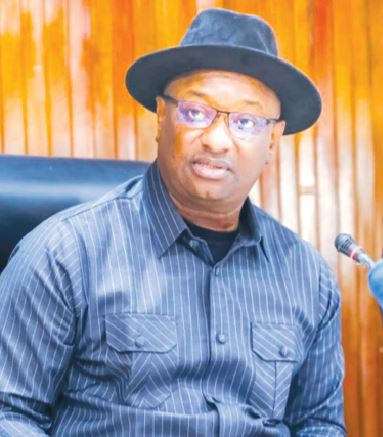
Speaker of the Lagos State House of Assembly, Mudashiru Obasa, has declared his intention to contest for the Agege Federal Constituency seat in the House of Representatives ahead of the forthcoming primaries of the All Progressives Congress, APC.

Obasa announced his decision on Tuesday during a stakeholders’ meeting held in Agege, Lagos, stating that leaders of the APC in the area had encouraged him to join the race for the federal legislative position.

During the gathering, the Speaker also appealed to party members and stakeholders to support the aspiration of former Chairman of Agege Local Government Council, Ganiyu Egunjobi, who is seeking to represent Agege Constituency I in the Lagos State House of Assembly.

He further endorsed Azeez Oladapo Yusuf Ninolowo for the Agege Constituency II seat in the state assembly.

The development is expected to heighten political activities within Agege as aspirants continue consultations and grassroots mobilisation ahead of the APC primaries.

Supporters and party loyalists across Agege and Orile-Agege have also intensified efforts to mobilise delegates and residents as the contest for party tickets gathers momentum.

Meanwhile, APC members in Agege, Orile-Agege and other parts of Lagos State are awaiting the outcome of the ongoing screening exercise being conducted by the state and national leadership of the party ahead of the primaries.

Imo ADC reaffirms loyalty to David Mark leadership

lmo State chapter of African Democratic Congress, ADC, has stated that it remains structurally intact, ideologically focused and firmly under capable leadership.

This was contained in a communique issued on Tuesday by its Publicity Secretary, Chief Macdonald Amadi after the party’s state Executive committee meeting held in Owerri, the state capital.

According to the statement, the State Executive Committee convened the meeting to assess the current state of the Party, to reinforce internal cohesion and consolidate strategy ahead of the 2027 general elections.

The statement stated that the meeting was held against the backdrop of recent political realignments, and the Committee used the opportunity to reaffirm the party’s stability, direction and commitment to disciplined and issue-based politics.

It stated further: “Any insinuation of fragmentation does not reflect the reality on ground.

“To sustain this momentum, the Committee resolves to intensify grassroots mobilization across all 27 Local Government Areas of the state.

“This sustained engagement will consolidate the membership base, deepen civic participation, and ensure the party enters the forthcoming primaries and general elections with unmatched organizational strength.

“The Committee further expresses profound confidence in the leadership of His Excellency, Rt. Hon. Emeka Ihedioha, former Governor of Imo State, and Hon. Engr. Gerald Irona, former Deputy Governor.

“Their commitment, experience, and stabilizing influence have been pivotal in keeping the Party united and focused during this period.

“In the same vein, the Committee pledges unalloyed loyalty to the National leadership of the ADC under the distinguished chairmanship of Senator David Mark.

“The Chapter is aligned with the National Working Committee’s vision and will work collaboratively to position the Party for decisive victory in 2027.

“Above all, the Committee reaffirms its unwavering commitment to a united Nigeria governed by the principles of justice, competence, and inclusive development.

“The African Democratic Congress remains the most credible platform to deliver the renewal Nigerians deserve.

“The ADC in Imo State is united, resolute, and purpose-driven. All members are urged to remain steadfast, resist distractions, and rededicate themselves to building a Party that will restore confidence in governance and deliver tangible progress to the people.”

UUTH shut as EFCC attempt to arrest staff

Activities at the University of Uyo Teaching Hospital, UUTH, Akwa Ibom State, were brought to a halt on Tuesday, May 12, following the attempted arrest and eventual arrest of Prof. Effiong Ekpe and three other staff members of the hospital by operatives of the Economic and Financial Crimes Commission, EFCC, Uyo Zonal Office.

It was gathered that EFCC officials, while attempting to arrest Prof. Ekpe, who is the Deputy Chairman, Medical Advisory Committee, CMAC, on a court warrant, met resistance from other staff members of the hospital, while the hospital security also locked the gate, barring their exit from the facility.

It was further gathered that the operatives called for backup as the atmosphere became tense before the police arrived.

Following the incident, Dr. Aniekan Peters, the State Chairman of the Nigerian Medical Association, NMA, directed doctors across the state to immediately shut down services, while JOHESU leaders also declared a total hospital shutdown in protest against what they described as an inhumane and barbaric act.

Confirming the incident, the Public Relations Officer of the Nigerian Medical Association, NMA, Dr. Gabriel Eyo, said the action of the EFCC was an onslaught on the hospital and its workers.

Eyo said it was wrong for a professor of cardiothoracic surgery and the only one in the state, to be treated like a criminal, noting that the man was injured in the process. As such, the strike was called to protest the alleged injustice.

“Prof. Ekpe is the professor of cardiothoracic surgery, the only one we have in Akwa Ibom State. Anyway, we don’t know what he has done, but we don’t really care at this point. Whatever he did, there is due process for this kind of thing. Even criminals are not treated this way. The only thing that should have been done would have been to send an invitation, which was not done.

“The NMA just had a meeting of its members, so we’ve begun the indefinite strike. The resolutions will be made public very soon.”

Meanwhile, the police have distanced themselves from involvement in the arrest of the professor, saying their operatives were only drafted to the scene to calm the situation and verify the authenticity of the officers who came for the arrest.

The Commissioner of Police, CP Baba Mohammed Azare, said he ordered some policemen to join the EFCC officials to pick up a staff member of the hospital on the instruction of the judge in an ongoing court case.

Azare said that before the policemen entered the hospital premises for the arrest, he had informed the Chief Medical Director, Prof. Emem Bassey, to instruct his staff to grant the policemen access into the premises.

“The EFCC went for an arrest in the hospital this morning, and the CMD called me to verify if my men were among those in the hospital.

“I called the head of the EFCC, who confirmed to me that they were actually the ones who went to pick up that person on the instruction of the court. Right now, they are in court and handling a court case, and the judge stood down the matter and ordered that they bring that person. That is why they went to bring him.

“I called the CMD and advised him to open the gate for them to take the man because it is a legitimate duty.”

However, the spokesperson of the EFCC, Dele Oyewale, in a statement dismissed allegations of assault by the operatives on anyone, saying rather that the officers suffered unprovoked attacks and resistance when they visited the facility for “inquiries.”

Speaking on why the EFCC operatives visited the UUTH in the first place, Oyewale explained: “The operatives’ visit was informed by the need to authenticate a medical report presented by a suspect under remand by Justice M.A. Onyetunu of the Federal High Court, Uyo, for allegedly defrauding multiple microfinance banks, including the University of Uyo Microfinance Bank.

“The suspect had presented a medical report which required authentication by the UUTH management. The Commission wrote two different letters, dated March 11, 2026, and April 20, 2026, to the hospital management to this effect without receiving any response. The Investigating Officer handling the matter took the further step of visiting the hospital to enquire about the status of the request. Still, no response.

“As a last resort, operatives of the commission visited the chief medical director of the hospital on Tuesday to make further enquiries, only to be locked in with a false alarm and subjected to unprovoked attacks by misguided staff of the facility, who pelted them with stones and other dangerous objects.

“While within the hospital, the CMD reportedly directed that the gates of the facility be shut, making it impossible for any lawful enquiry to be made. Police authorities in Akwa Ibom State advised the CMD to open the hospital gates to enable the operatives to exit the premises peacefully, but the entreaties were turned down.

“In spite of the hostility and provocation, there was no breakdown of law and order as the operatives exercised restraint and professionally made their way out of the hospital premises without disrupting its activities.

“Enquiries bordering on operational engagements of the Commission are lawful. It is therefore necessary to remind the public and corporate bodies that they are obligated to cooperate with the agency in such circumstances. Contrary action could be deemed obstruction, which is criminal with attendant legal consequences.”

Insecurity: Plateau declares ‘state of war’ against terrorists

Plateau State Government has declared what it described as a “state of war against terrorists and enemies of the state” following a series of coordinated attacks recorded across parts of the state over the past four months.

The declaration was made after an emergency meeting of the State Security Council convened on Tuesday by Governor Caleb Mutfwang at the Rayfield Government House in Jos.

Addressing journalists after the session, the Secretary to the State Government, Samuel Jatau, said the council extensively reviewed the worsening security situation and adopted several measures aimed at protecting lives and property.

“Rising from the meeting, the Plateau State Security Council held an emergency session where the current security situation in the state was critically deliberated,” Jatau stated.

The meeting had in attendance security chiefs, chairmen of the 17 local government areas, as well as the Chairman of the Plateau State Joint Traditional Council, His Majesty, the Gbong Gwom Jos, Da Jacob Gyang Buba.

According to Jatau, members of the council observed that Plateau had remained under sustained attacks in recent months, with indications suggesting the assaults were coordinated.

As part of efforts to restore security, the council resolved to strengthen enforcement of existing restrictions on motorcycle operations, night grazing and illegal mining activities, which authorities believe have contributed to insecurity in the state.

The council also directed security agencies to recover ungoverned territories, public institutions and other vulnerable locations across the state.

To support security operations, the government approved additional logistics, including motorcycles and operational vehicles, to enhance rapid response and field effectiveness.

The council further agreed to improve intelligence sharing and collaboration between local government security structures and host communities.

On public order, the government warned that obstruction of highways would now be treated as a criminal offence, with violators facing prosecution.

Authorities also emphasized the need to secure farmlands ahead of the farming season to guarantee safe agricultural activities for residents.

Traditional rulers were urged to maintain closer supervision of cultural and community associations operating within their domains.

Declaring the government’s position, Jatau said: “Plateau State is in a state of war with terrorists and enemies of the state.”

He added that the administration remained committed to protecting the lives, property and communities of residents across the state.

The government also announced a renewed crackdown on drug trafficking and abuse, declaring war against drug dealers, suppliers and users operating within the state.

Zamfara airstrike casualties yet to be verified — DHQ

The Defence Headquarters (DHQ) has denied reports claiming that civilians were killed during a recent military operation in Zamfara State, saying the casualty figures being shared are not verified.

In a statement released on Tuesday in Abuja, the Director of Defence Media Operations, Michael Onoja, said troops of the Joint Task Force under Operation Fansan Yamma carried out the operation on Sunday, May 10.

He explained that the strike targeted what he described as a meeting of terrorist leaders in Tumfa Village, located in Shinkafi Local Government Area of Zamfara State.

According to him, intelligence reports confirmed that the location was being used to coordinate attacks on nearby communities.

Onoja said it was difficult to immediately determine the number of casualties because of the nature of the airstrike operation.

“The casualty figures circulating across media platforms remain speculative, unverified and inconsistent with official military assessments,” he said.

“Our official position remains that several terrorists were neutralised after post-strike battle damage assessment.”

He also dismissed claims that civilians were affected during the operation, insisting that military findings has not shown any evidence of civilian casualties.

“The target remained a confirmed terrorist structure occupied by armed non-state actors threatening civilian lives,” he said.

“Those making such claims should rely on verified evidence, not social media reports or adversarial sources.”

Onoja added that the Nigerian Armed Forces will continue to follow strict operational rules and international humanitarian laws during military operations.

“Civilians are never deliberately targeted during operations,” he stressed.

He said troops were still carrying out clearance operations in the area and urged the public to depend on official channels for accurate information.

The military spokesman also assured that if any civilian casualty is confirmed, the information would be made public through established military procedures.

He reaffirmed the military’s commitment to professionalism, accountability and the protection of civilians during ongoing operations.

Court adjourns Nnaji’s N14.5bn suit till June 3

Court gavelThe Enugu State High Court has adjourned the N14.5 billion suit filed against former Minister of Power, Prof. Barth Nnaji, and one Okechukwu Nnaji for alleged demolition of property belonging to members of the Nkomoro Onuogba Community in Enugu State until June 3, 2026.

The matter, which came up for mention on Tuesday before Justice Veronica Ajogwu, was adjourned to enable parties regularise their court processes after the defendants filed their statement of defence and a motion seeking extension of time.

Speaking shortly after the proceedings, counsel for the defendants, Mr Benjamin Nwobodo, said the court merely mentioned the matter and fixed a new date for continuation of proceedings.

“The first defendant has filed his defence. So today was for mention and the court has adjourned it to June 3 for us to regularise our processes,” Nwobodo told journalists

He maintained that the dispute over the land had already been decided by the court in 2013 and questioned the basis of the fresh suit.

Providing background to the dispute, Nwobodo explained that the original suit was instituted in 2001 by one Alinta against members of the Ezza community over ownership of the disputed land.

According to him, after Alinta’s death, his children substituted him in the suit, and judgment was eventually delivered in 2013 in favour of Alinta.

“The judgment was that Alinta was the owner of the property. Before Alinta died, he transferred his interest to Prof. Barth Nnaji, who is now the owner of the land,” he said.

He further stated that the execution of the judgment, including demolition on the land, was carried out lawfully by the court with police backing and not by Nnaji personally.

Responding to allegations that properties belonging to the plaintiffs were demolished, Nwobodo argued that demolition formed part of the lawful execution of a subsisting court judgment.

“If judgment is given to me over a property, it is my right to take possession or demolish structures there. It was demolished by the court and nothing else.

“Prof. Barth Nnaji has nothing to do with any allegations. Nobody is above the law,” the lawyer added,

Also speaking after the court session, counsel for the plaintiffs, Mr Peter Igwe, confirmed that the defendants served their statement of defence and accompanying motion on the plaintiffs shortly before the sitting commenced.

“Today they served us with their statement of defence with motion for extension of time within which to regularise their processes. We were just served this morning when court was about to sit.

“We informed the court that because we were just served, we needed time to study the processes and respond appropriately. So there was no substantial business today.”

The plaintiffs, who are 25 members of the Nkomoro Onuogba Community, had instituted the suit against the defendants over the alleged demolition of properties said to be worth billions of naira.

According to court documents, the plaintiffs are seeking compensation for 11 two-storey buildings, six three-storey buildings, 93 duplexes and 170 bungalows allegedly demolished.

They are also demanding N7 billion as compensation for seven deceased persons allegedly killed during the dispute.

In addition, the plaintiffs are seeking N3.4 billion for alleged looting of personal belongings, including motorcycles, televisions, mattresses, sewing machines, cooking utensils and air conditioners.

The plaintiffs are equally asking the court to declare them rightful owners of the disputed ancestral land and grant a perpetual injunction restraining the defendants from further interference with the property.

Nigeria misses OPEC oil production quota again

OPECAgain, Nigeria has missed its crude oil production quota set by the Organisation of the Petroleum Exporting Countries after averaging 1.49 million barrels per day in April, below the 1.5 mbpd benchmark.

Figures from the Nigerian Upstream Petroleum Regulatory Commission showed that the country produced an average of 1,488,540 barrels of crude daily in April, representing about 99 per cent of the OPEC quota. When condensates were added, total daily production rose to 1.66mbpd

Last month, the NUPRC said oil production now averaged 1.8mbpd. However, data released on Tuesday was at variance with the report. The latest data mean Nigeria remained below its OPEC allocation for the ninth straight month since July 2025.

The NUPRC document showed that combined crude oil and condensate production peaked at 1.85 mbpd during the month, while the lowest output stood at 1.46 mbpd. The PUNCH reports that the April figures are an appreciable improvement compared to March, when oil output was 1.55mbpd.

Nigeria’s oil production has struggled for years due to crude theft, pipeline vandalism, ageing infrastructure, and underinvestment in the upstream sector. Although output improved marginally in April compared to March, it was still insufficient to meet the country’s OPEC target, underscoring persistent challenges in ramping up production despite government efforts to boost volumes.

The PUNCH reports that Nigeria’s crude production in March was 1.38 mbpd. While there was a 69,000 bpd increase from the 1.31 mbpd recorded in February, the figure is still 117,000 bpd below the OPEC quota.

The figures for February indicated a month-on-month decline of 146,000 barrels per day, widening the country’s shortfall from its OPEC production allocation. This is the eighth consecutive month the country has failed to meet the OPEC quota since July 2025.

Recall that although Nigeria recorded a marginal improvement in January, when production rose from 1.422 mbpd in December 2025 to 1.46 mbpd, the rebound was short-lived as output fell significantly in February 2026.

Earlier data from NUPRC had also shown that crude oil production weakened at the end of 2025. Production declined from 1.436 mbpd in November 2025 to 1.422 mbpd in December, before recovering slightly in January.

In 2025, Nigeria’s crude oil production fell below its OPEC quota in nine months of the year, meeting or slightly exceeding the target only in January, June, and July.

Nigeria opened 2025 strongly, producing 1.54 mbpd in January, about 38,700 barrels per day above its OPEC allocation. However, production slipped below the quota in February at 1.47 mbpd and weakened further in March to 1.40 mbpd, marking one of the widest shortfalls during the year.

Fidelity Bank earnings jump 45%, shareholders’ funds hit N1tn

Fidelity Bank Plc has reported a 45 per cent increase in gross earnings for the 2025 financial year, as the lender’s shareholders’ funds crossed the N1tn mark following sustained balance sheet expansion and fresh capital injection.

Analysis from the audited financial statements for the year ended 31 December 2025, submitted to the NGX on Tuesday, reveals that the bank delivered robust results across key financial metrics, including Gross Earnings, which stood at N1.5tn, up from N1.04tn reported in 2024.

Net Interest Income rose to N831.3bn, compared to N629.7bn in 2024, reflecting the bank’s stronger earnings capacity amid elevated interest rates and growth in interest-earning assets.

Interest and similar income calculated using the effective interest rate rose 38.7 per cent to N1.11tn in 2025 from N803.05bn in 2024, while other interest and similar income increased 25.1 per cent to N184.51tn.

Net interest income after credit loss also rose significantly by 41.2 per cent to N809.74bn from N573.33bn. The bank also recorded an improvement in asset quality costs, as credit loss expense moderated to N21.61bn from N56.44bn, representing a 61.7 per cent improvement year-on-year.

Fidelity Bank continued to expand its digital banking footprint, enhance customer experience, and support key sectors of the economy. Non-interest revenue performance remained strong during the period, with fee and commission income increasing 44.7 per cent to N113.36bn from N78.36bn. This was driven by letters of credit commissions and fees (N12.5bn), ATM charges and fees (N11.6bn), commission on travellers’ cheques and foreign bills (N8.9bn), account maintenance charges (N7.13bn) and commission on e-banking activities (N2.2bn).

Other operating income rose 200.5 per cent to N8.24bn, while foreign currency revaluation gains surged 749.9 per cent to N99.58bn from N11.72bn in 2024.

Fidelity Bank’s investment assets expanded significantly during the year, reflecting the bank’s stronger positioning in fixed income and other securities markets. Debt instruments at fair value through other comprehensive income rose 199 per cent to N557.78bn from N186.57bn, while debt instruments at amortised cost increased 27.2 per cent to N1.97tn from N1.55tn. Equity instruments at FVOCI also rose 26.2 per cent to N87.85bn.

The bank also recorded gains from financial assets measured at fair value through profit or loss, which increased 280.7 per cent to N2.75bn. A new gain of N988bn from derecognition activities was also recorded during the period.

On the balance sheet side, cash and cash equivalents increased sharply by 87 per cent to N1.32tn from N707.45bn, indicating stronger liquidity buffers. Restricted balances with the Central Bank of Nigeria also rose to N1.65tn from N1.59tn.

Other assets surged 76.4 per cent to N278.89bn, while investments in property, plant, and equipment rose 161.6 per cent to N203.72bn. Intangible assets climbed 147.5 per cent to N50.44bn, indicating continued investment in technology and operational infrastructure. Deferred tax assets also increased significantly to N33.10bn from N5.31bn.

The bank further reduced debts issued and other borrowed funds to N888.95bn from N929.60bn, reflecting lower reliance on external borrowings. Deferred tax liabilities declined completely from N727m in 2024 to zero in 2025.

The lender’s total assets grew 18.6 per cent to N10.46tn from N8.82tn, driven by growth in liquid assets and investment securities. Customer deposits rose 16.1 per cent to N6.89tn from N5.94tn, reflecting sustained customer confidence and expansion in the bank’s funding base.

Fidelity Bank also strengthened its capital position during the year as total equity increased 21.1 per cent to N1.09tn from N897.87bn, pushing shareholders’ funds above the N1tn mark, reinforcing the lender’s capacity to support larger transactions, absorb shocks, and expand its regional and international banking ambitions.

The bank disclosed that it completed a private placement of 12.9 billion ordinary shares in December 2025, raising fresh capital that increased eligible capital to N532.6bn, above the CBN’s N500bn minimum requirement for banks with international authorisation.

The PUNCH reported that the bank raised N259bn through a Private Placement of ordinary shares, significantly boosting its capital base as the lender intensifies efforts to meet the new regulatory capital requirements for commercial banks with international authorisation.

In a statement issued on the Nigerian Exchange Limited, the bank said the Private Placement was conducted following approvals from the CBN and the Securities and Exchange Commission and was successfully opened and closed on 31 December 2025.

“Fidelity Bank Plc is pleased to inform the general public that, following approvals granted by the CBN and the SEC, it successfully opened and closed a Private Placement of ordinary shares on 31 December 2025,” the bank stated.

The exercise increased total issued shares from 50.2 billion units to 63.17 billion units, significantly boosting shareholders’ funds beyond the N1tn threshold.

The stronger capital base is expected to improve the lender’s capacity to finance larger transactions, expand lending activities, and support future regional growth opportunities.

Dangote exports 1.66bn litres fuel amid US-Iran tensions

DANGOTE REFINERYFresh data from the Nigerian Midstream and Downstream Petroleum Regulatory Authority has shown that the Dangote Petroleum Refinery & Petrochemicals exported an estimated 1.66 billion litres of refined petroleum products in April 2026.

This came amid mounting tensions in the Middle East and fears of possible disruption to global fuel supply routes following the growing conflict involving the United States and Iran.

An analysis of the NMDPRA’s April 2026 fact sheet by our correspondent showed that the country exported about 513 million litres of Premium Motor Spirit, popularly called petrol; 534 million litres of Automotive Gas Oil, also known as diesel; and 615 million litres of aviation fuel within the month under review.

The Dangote refinery is the only major functional refinery in Nigeria that currently produces enough refined petroleum products for both local consumption and export.

This is the first month the refinery has exported such a high volume of petroleum products, especially jet fuel and diesel, indicating the significance of the 650,000-barrel-per-day plant in Lekki, Lagos State.

The combined export volume translates to approximately 55.4 million litres daily. The development comes as the international oil market faces fresh uncertainty over the security of the Strait of Hormuz, a critical global oil shipping route, following the failure of the United States and Iran to agree on a peace deal.

Industry experts said the rising geopolitical uncertainty had significantly boosted demand for refined petroleum products from alternative suppliers such as Nigeria, especially as Europe, Africa, and parts of Asia scramble for more secure fuel sources.

The NMDPRA document showed that local refineries operated at an average capacity utilisation of 99.12 per cent in April, with the Dangote refinery accounting for the overwhelming share of production.

The regulator stated that the refinery achieved 100 per cent capacity utilisation “for most of the days in April.” The report also indicated that domestic refineries received 18.37 million barrels of crude oil in April, up from 13.11 million barrels recorded in March.

Findings further showed that the refinery maintained strong export momentum despite increased domestic supply obligations. According to the fact sheet, average daily petrol production stood at 53.6 million litres, while 40.7 million litres were supplied locally and 17.1 million litres were exported daily.

Similarly, diesel production averaged 23.6 million litres daily, with exports accounting for 17.8 million litres per day, more than double the domestic supply volume of 8 million litres daily. For aviation fuel, exports stood at 20.5 million litres daily, compared to the domestic supply of 2.6 million litres per day.

The strong aviation fuel export performance comes weeks after reports emerged that domestic airline operators threatened to shut down over the rising cost of the fuel.

There are reports that Nigeria has become a net petrol exporter for the first time in decades due to rising output from the Dangote refinery. The refinery had earlier exported about 434 million litres of petrol in March after domestic production exceeded local consumption levels.

The latest figures underscore Nigeria’s gradual transition from a major importer of refined petroleum products to an export hub within Africa. It was observed that jet fuel exports may rise further if instability in the Middle East continues to disrupt traditional supply chains serving Europe and other regions.

The Middle East accounts for a substantial share of global aviation fuel exports, with the Strait of Hormuz serving as a strategic transit corridor for crude oil and refined petroleum products. The prolonged disruption in the region has tightened global fuel supply and pushed up prices internationally.

The NMDPRA report also revealed that Nigerians consumed an average of 51.1 million litres of petrol daily in April, slightly above the 50 million litres benchmark estimated by the regulator. Diesel consumption stood at 17.3 million litres daily, while aviation fuel consumption averaged 2.5 million litres per day.

Despite increased local refining activity, petrol prices remained elevated across the country. The regulator attributed prevailing prices partly to international crude oil costs, which averaged $120.55 per barrel during the month, while gasoline costs stood at $1,074.97 per metric tonne.

The refinery, with a nameplate capacity of 650,000 barrels per day, is expected to play a central role in Nigeria’s energy security and foreign exchange earnings as global fuel trade patterns shift amid geopolitical tensions.

As the Nigerian refinery exports petrol, the NMDPRA has continued to issue licences for the importation of petrol.

CBN order: Four banks release 321,181 dormant accounts

Four banks have published details of no fewer than 321,181 dormant accounts following a directive by the Central Bank of Nigeria,

This comes as economic analysts have warned that the CBN directive raises major concerns around customer communication, account reactivation procedures, business failures, and privacy.

The published dormant accounts span individuals, companies, cooperatives, churches, clubs, community associations, and small businesses that have remained inactive for over 10 years.

The banks include Access Bank Plc, Union Bank of Nigeria Plc, Stanbic IBTC Bank, and Fidelity Bank Plc.

The disclosures followed the CBN’s July 2024 Guidelines on Management of Dormant Accounts, Unclaimed Balances and Other Financial Assets, which directed financial institutions to publish dormant account details on their websites six months before such funds become eligible for transfer to the apex bank’s Unclaimed Balances Trust Fund Pool Account.

Analysis of the published records showed that Access Bank listed 243,934 dormant accounts, Stanbic IBTC published 26,135 dormant accounts, Fidelity Bank disclosed about 61,900 dormant accounts, while Union Bank published 212 dormant and unclaimed accounts that had remained inactive for 10 years and above.

The combined figure from the four banks stood at about 321,181 dormant accounts. Findings from the Access Bank register showed an almost even split between individual and corporate dormant accounts, indicating that business inactivity contributed heavily to the rising dormant account volumes across the banking industry.

A full extraction of the Access Bank document showed 122,390 individual accounts and 120,718 corporate accounts, representing 50.34 per cent and 49.66 per cent, respectively.

The Fidelity Bank register showed a significantly different pattern, with corporate accounts accounting for about 79 per cent of dormant accounts. The document, which spanned 693 pages, contained approximately 48,900 corporate dormant accounts and about 13,000 individual dormant accounts.

The accounts reflected widespread inactivity among SMEs, oil and gas firms, logistics operators, churches, schools, hospitality businesses, pharmaceutical firms, marine operators, and informal trading businesses.

Several dormant accounts were linked to Lagos commercial districts such as Idumota, Oyingbo, Allen Avenue, Awolowo Road, and Ladipo, while major clusters also appeared around Port Harcourt oil-service corridors and northern trading centres.

Union Bank’s list, though significantly smaller at 212 entries, largely consisted of cooperatives, clubs, churches, associations, alumni bodies, women’s groups, and community development unions spread across the country.

Stanbic IBTC’s dormant accounts register, which exceeded 1,520 pages, showed strong concentrations in Lagos, Abuja, Kano, Port Harcourt, Ibadan, Kaduna, and Maiduguri. The document contained mostly current accounts, including salary accounts, joint accounts, and a smaller number of corporate and institutional accounts.

Meanwhile, some major lenders adopted different approaches. United Bank for Africa Plc did not publish a dormant accounts register but instead maintained an unclaimed dividend list.

First Bank of Nigeria Limited and Zenith Bank Plc provided dedicated portals for customers to search for affected accounts rather than publishing comprehensive lists.

Guaranty Trust Bank Plc published dormant account management guidelines without attaching a dormant accounts document, while Ecobank Nigeria offered dormant account reactivation services but did not publish a Nigerian dormant accounts list.

Analysts react

In phone interviews with The PUNCH, analysts and finance stakeholders addressed the implications for bank-customer communications, improved customer relations, and privacy concerns. They also noted that the data from the documents revealed the state of business and corporate account holder closures/ dormancy.

The Director of the Centre for the Promotion of Private Enterprise, Muda Yusuf, said the CBN directive highlighted shortcomings in customer communication by banks. “I think it’s more about getting the banks to communicate a lot more with their customers because if the CBN is compelling them to publish, it’s a communication issue,” Yusuf said.

“So, the bank needs to do a lot more to get in touch with its customers. This is a customer service issue, actually, to know what exactly is happening, why they are not active in their accounts, what they can do to resuscitate their accounts.”

Yusuf added that worsening economic conditions and rising SME failures contributed heavily to dormant corporate accounts. “The mortality rate of businesses has grown significantly. When you are running a business, you have an account, and the business collapses because of a whole lot of issues. You just walk away from everything,” Yusuf said.

“The economic situation and the high rate of business mortality, especially among micro-enterprises, small businesses, and even medium-sized businesses, are also factors.”

He also criticised account reactivation procedures, saying cumbersome documentation discouraged customers from reviving dormant accounts. “We need to simplify as much as possible the process of resuscitating dormant accounts,” Yusuf said. “If I have my ID card, I will give you my name. I have my BVN. I have my NIN. Why are you asking me for the NEPA bill?”

Yusuf further called for reforms to simplify access to funds belonging to deceased account holders. “It’s not fair for the families of people who have died to have huge amounts of money in their accounts, and they cannot access it,” Yusuf said. “We have to simplify the process. The process is very, very bureaucratic.”

Professor of Economics and Public Policy at the University of Uyo, Akpan Ekpo, questioned the rationale behind publishing dormant account details publicly.

“The Central Bank has examiners who can go to a bank and ask for accounts and know what they have to do without making it public,” Ekpo said. “For me, it bothers me about privacy. Because if you publish that person A has a dormant account, it doesn’t look good in terms of the environment we are living in. You can expose the person.”

Ekpo said the apex bank already possessed enough regulatory powers to inspect dormant accounts directly from banks without public disclosure.

“I don’t see any reason why that has a monetary policy purpose,” Ekpo said. “They should communicate more about why they want to do it.”

Former President of the Lagos Chamber of Commerce and Industry, Gabriel Idahosa, said dormant accounts emerged for several reasons, including bank mergers, customer relocations, deaths, and abandoned businesses.

“Companies collapsed, failed, and the owners did not bother to withdraw all the balances from accounts,” Idahosa said. “People who passed on and do not have the next of kin to open their accounts. There are all kinds of reasons why accounts become dormant.”

Idahosa said many customers abandoned small balances because of the stress associated with account recovery. “A couple of people tried to go to the new banks that inherited their accounts from the other banks. Especially for small amounts, people just forgot about it because of the trouble pursuing it,” Idahosa said.

He also warned that publication of dormant account holders could trigger legal disputes and privacy concerns. “Ordinarily, the central bank should not do that because of the privacy doctrine in the relationship between the customer and the bank,” Idahosa said. “A lawyer or a group of lawyers, or even civil society organisations, can go to court to prevent the central bank from doing so.”

He added, “It could lead to some chaos in some families, who may find that their parents have lots of money in an account and they never knew about it. Now there will be battles among the children to come and get it.”

Under the 2024 guidelines, the CBN said dormant accounts and unclaimed balances had become vulnerable to fraud and abuse.

The apex bank stated that dormant balances eligible for transfer included current accounts, savings accounts, domiciliary accounts, prepaid card wallets, unclaimed salaries, stale drafts, deposits for shares, and abandoned financial assets that had remained inactive for at least 10 years.

The CBN also directed banks to notify dormant account owners regularly through emails, text messages, and letters, while maintaining audit trails and quarterly reporting obligations.