2027: Imo ADC women leaders rally support for party stability, expansion

The women wing of the African Democratic Congress, ADC, in Imo State held a strategic leadership meeting at the party’s State Secretariat in New Owerri, reaffirming the unity, strength, and stability of the party across the state.

The meeting brought together local government area women leaders and other stakeholders as part of efforts to strengthen party cohesion, encourage active participation among women, and advance the collective vision of the ADC in Imo State.

The gathering also provided an opportunity for discussions on grassroots mobilisation, party development, and strategies for sustaining the growth and expansion of the party across the 27 local government areas of the state.

In her opening remarks, the State Woman Leader of the party, Uju Ihejiagwa, commended the women leaders for their loyalty, dedication, and commitment to the progress of the party despite prevailing political challenges.

She urged members not to be discouraged by the defection of some party members to other political parties, stating that the ADC in Imo State remains united and focused.

This was contained in a statement issued on Wednesday by the Director of Imo ADC New Media, Ihezie Dede Walax, and made available to journalists in Owerri.

According to her, some individuals may attempt to influence or persuade members to leave the party, but the women leaders must remain steadfast and committed to the ideals of the ADC.

“The ADC remains one united family in Imo State. Our strength lies in our togetherness, mutual respect, and shared vision for a better society. As women, we have a major responsibility to sustain the stability of this party and continue mobilising support for its growth across every community,” she stated.

In her remarks, the South-East Zonal Woman Leader, Hon. Barrister Mrs Chioma Joy Anyanwu, applauded the Imo women leadership for their resilience and organisational capacity, while urging them to continue promoting peace, unity, and responsible leadership within the party.

According to her, the ADC remains committed to democratic values, inclusive leadership, and the empowerment of women and youths across the South-East region and beyond.

Among those present were Hon. Lady Leticia Okere, Hon. Mrs Ruth Nwokocha, Hon. Mrs Getrude Iroemeh, Hon. Barr. Chisom Dominic, and Nneoma Gloria Chukwuba, alongside other women stakeholders and party faithful from across the state.

APC dismisses rumoured changes to 2027 primary election dates

The All Progressives Congress, APC, has dismissed reports circulating on social media alleging changes to the schedule of its 2027 primary elections.

The clarification was contained in a press statement posted on the official page of APC.

According to the statement, the dates earlier announced for the primary elections remain unchanged.

The APC stated that the House of Representatives primary election would hold on Friday, May 15, 2026 while the Senate primary is scheduled for Monday, May 18, 2026.

The party also announced that the State House of Assembly primary election would take place on Wednesday, May 20, 2026, followed by the governorship primary on Thursday, May 21, 2026.

According to the statement, the presidential primary election will hold on Saturday, May 23, 2026.

“This clarification has become necessary following the circulation of false and misleading reports on social media and other communication platforms suggesting otherwise,” the party stated.

NSCDC busts syndicate recycling stolen railway, NNPC infrastructure in Kaduna

The Nigeria Security and Civil Defence Corps (NSCDC) has uncovered a sophisticated criminal syndicate allegedly involved in the theft, concealment and recycling of critical national assets and infrastructure.

DAILY POST recalls that a recent viral video on social media showed extensive vandalism of the newly laid Kaduna-Kano railway tracks as well as old rail infrastructure.

Following the incident, the Commandant General of the Corps, Ahmed Abubakar Audi, directed the Special Intelligence Squad (SIS) and the Kaduna State Command to identify and arrest those responsible.

In a statement issued on Wednesday by the National Public Relations Officer of the NSCDC, ACC Afolabi Babawale, the corps said operatives carried out a targeted operation on Tuesday, May 12, 2026.

According to the statement, the SIS, under the leadership of Commandant Apollos Dandaura and in collaboration with the Kaduna State Command, stormed and sealed the Kaduna branch of Inner Galaxy Steel Company located in Birnin Yero, Igabi Local Government Area.

“The operation followed weeks of intensive, intelligence-led surveillance. Investigations revealed that the company operated a criminal smokescreen, posing as a scrap-buying entity while actually serving as a hub for receiving vandalised railway materials, NNPC pipes, and Water Board infrastructure,” the statement said.

The NSCDC alleged that the syndicate purchased stolen railway tracks and pipes from vandals, compressed them into scrap metal at the Kaduna facility to conceal their original form, and transported them to the company’s head office in Aba, Abia State.

“There, the stolen national assets were melted down and recycled into nails and iron rods to be sold back to the public,” the statement added.

According to the corps, 12 key suspects were arrested during the raid.

Recovered exhibits included large quantities of vandalised railway tracks, railway sleepers, and suspected NNPC and Water Board pipes valued at billions of naira.

NSCDC Commandant General Ahmed Abubakar Audi commended Commandant Apollos Dandaura and his team for what he described as their professionalism and bravery during the operation.

He also warned that the corps would not treat acts of economic sabotage lightly.

Tinubu reelection: Probe FAAC deduction, greatest crime against Nigeria – Adeyanju to EFCC, ICPC

Activist lawyer, Deji Adeyanju, has condemned the reported deduction of Federation Account Allocation Committee, FAAC, funds in Nigeria for President Bola Tinubu’s reelection, saying it violates the country’s constitution.

Noting that such a measure would amount to one of the greatest crimes against Nigeria, Adeyanju charged the Economic and Financial Crimes Commission (EFCC) and the Independent Corrupt Practices and Other Related Offences Commission (ICPC) to investigate the matter.

In a terse statement he signed, Adeyanju said: “Any deduction of statutory allocations at source for the purpose of political campaigns raises grave constitutional and criminal concerns.

“Under Section 162 of the CFRN 1999 (as amended), FAAC allocations are public funds belonging to the states as federating units and held in trust for the people, not private resources to be deployed at the discretion of governors for partisan interests.

“Beyond these constitutional issues, any contribution running into billions of naira may also violate the donation limits prescribed under the Electoral Act 2022, which places a cap on individual political contributions.

“Where public funds are allegedly diverted for campaign financing, such conduct could amount to criminal breach of trust, misappropriation of public funds, abuse of office, and economic sabotage against the affected states.”

Adeyanju said the absence of transparency or the consent of the people whose resources are allegedly involved is equally troubling.

“If these allegations are true, the relevant anti-corruption agencies, including the EFCC and ICPC, must immediately investigate, recover any diverted funds, and ensure that all persons involved are held accountable in accordance with the law,” he added.

‘SERAP missing N26.9bn claim against USPF misleading’ – Yaro

A public affairs analyst and accountability advocate, Abubakar Yaro, has said the Socio-Economic Rights and Accountability Project’s (SERAP) claim that N26.9 billion is missing from the Universal Service Provision Fund (USPF) is misleading.

Yaro disclosed this in a statement on Wednesday.

DAILY POST reports that SERAP had demanded a probe of the Minister of Communications and Digital Economy, Bosun Tijani, and the Secretary of the USPF, Yomi Arowosafe, over the alleged missing N26.9 billion.

Reacting, Yaro said the narrative being pushed to the public is selective, exaggerated, and lacks critical context.

He explained that available records and findings clearly show that the widely circulated N26.9 billion allegation is completely misleading.

“The data available from the investigation shows the average annual allocation to the USPF within the period under review was about N7.5 billion. Simple arithmetic, therefore, raises a legitimate question: how does an institution with an average yearly funding of N7.5 billion suddenly ‘lose’ N26.9 billion?

“Even more revealing is the fact that over N13.8 billion of the amount being referenced relates to operating surplus deductions reportedly handled directly by the Nigerian Communications Commission (NCC) before funds are transferred to the USPF. According to the records reviewed, the USPF does not receive or retain those funds in the first place.

“Therefore, we must ask SERAP why these explanations were ignored before rushing to the media space,” he stated.

Nigerian govt threatens to sanction Airtel, Glo, others over poor network

The Federal Government has warned telecommunications operators to improve service quality or face regulatory sanctions. It warned that its recent reforms do not allow excuses over poor network performance.

Minister of Communications, Innovation and Digital Economy, Dr. Bosun Tijani, issued the warning in a statement on Sunday, stating that Nigeria’s connectivity gaps were largely structural, driven by years of underinvestment and constraints on operators.

He said the government has tackled these problems through long-term infrastructure planning and immediate sector-stabilization measures aimed at restoring sustainability and investor confidence.

He said, “When we assumed office, it was clear that Nigeria’s connectivity challenges were structural, driven by years of underinvestment in infrastructure and constraints that limited the ability of operators to deliver quality service,” the Minister noted.

“We have addressed this on two fronts. First, the long-term structural solution. We have secured funding, led by the World Bank, and established the framework for a special purpose vehicle with Project BRIDGE, to deliver nationwide open access fibre infrastructure.

“Deployment of fibre will commence, alongside new tower rollouts through NUCAP, before the end of the year even as we also expand our satellite capability.”

“Regarding immediate interventions, the government has stabilized the sector through tariff adjustments, the designation of telecom infrastructure as critical national infrastructure, tax harmonization efforts, and broader macroeconomic reforms.

“These changes have restored operator profitability and created a more transparent, market-driven environment, giving telcos the capacity to invest in network improvements.

“It is now the responsibility of telecom operators such as MTN Nigeria, Airtel Nigeria, Globacom, and 9mobile to take all necessary steps to resolve network challenges and deliver the level of service Nigerians expect,” the minister insisted.

“The Nigerian Communications Commission (NCC) has been fully empowered to monitor performance, enforce standards, and ensure compliance, with sanctions expected for defaulting operators,” he said.

Strong 2025 earnings lift NEM Insurance assets to N186bn

NEM Insurance Plc has released its audited financial results for the year ended 31 December 2025, showing strong growth in assets and revenue across its group and parent operations.

At the Group level, total assets rose significantly by N61.81bn to N186.04bn in 2025, up from N124.23bn recorded in 2024. This growth reflects the company’s continued expansion and strengthened investment base.

Group liabilities also increased to N101.58bn from N58.79bn, in line with higher underwriting activities and obligations, while total equity climbed to N84.46bn, compared to N65.44bn in the previous year, underscoring improved shareholder value.

The Group recorded a strong rise in total revenue, which grew to N173.04bn from N121.6bn in 2024, representing a substantial increase driven by enhanced premium income and investment performance.

However, profitability moderated during the period, with Profit Before Tax declining to N27.98bn from N33.7bn, while Profit After Tax stood at N23.9bn, down from N29.24bn in the prior year.

At the Parent Company level, NEM Insurance Plc also posted notable growth in key balance sheet indicators.


Total assets increased to N178.59bn in 2025 from N121.93bn in 2024, while total liabilities rose to N94.59bn, compared to N56.49bn recorded in the previous year.

Revenue for the parent company grew to N165.72bn, up from N119.88bn, reflecting sustained business expansion and improved operational performance.

Similar to the Group, profitability declined, with PBT falling to N27.56bn from N33.52bn and PAT decreasing to N23.55bn from N29.08bn in 2024.

Commenting on the results, the company noted, “The performance demonstrates resilience and strong market positioning, driven by revenue growth and asset expansion, despite prevailing economic and industry challenges that impacted margins.”

The company reaffirmed its commitment to delivering value to shareholders, strengthening underwriting capacity, and sustaining growth through innovation and customer-focused insurance solutions.

Union Bank bags ASBON award

Union-Bank-logoUnion Bank of Nigeria has bagged the Best SME Growth Banking Initiatives Award for 2025, reaffirming its reputation as a premier supporter of local commerce.

The accolade was presented by the Association of Small Business Owners of Nigeria at the Nigeria National SME Business Awards recently held in Lagos.

The award recognises the Bank’s strategic leadership in advancing the growth and resilience of small and medium-sized enterprises through a differentiated suite of solutions designed to enable business expansion and long-term value creation.

Receiving the award on behalf of the bank, Head of the SME Segment at Union Bank, Ayokunnumi Abraham, described the recognition as a strong endorsement of the institution’s commitment to the sector.

“We are honoured to receive this recognition, which reflects Union Bank’s continued commitment to helping SMEs grow by making banking simpler, faster, and more accessible,” Abraham said.

“Through enhancements to our specialised platforms, such as Union360, we have meaningfully reduced the time it takes for businesses to come on board and begin transacting,” he added.

He further noted that these digital improvements have shortened onboarding times, increased digital adoption among SME customers, and accelerated the acquisition of new business clients.

“Our focus remains on delivering practical solutions that help Nigerian businesses thrive,” he added.

ASBON, in partnership with the Lagos State Government through the Ministry of Commerce, Cooperatives, Trade, and Investment, brought together public and private sector stakeholders to celebrate organisations making meaningful impact across Nigeria’s SME ecosystem.

Established in 1917, Union Bank remains a leading provider of financial services in Nigeria, guided by its “Simpler, Smarter Banking” philosophy. With more than 300 branches and a digital suite, including mobile banking, trade finance, and equipment leasing, the Bank helps public and private sectors achieve lasting success.

Dangote rejects NNPC offer to increase stake in refinery

Dangote-3-688×460The President of the Dangote Group, Alhaji Aliko Dangote, has said the group rejected requests by the Nigerian National Petroleum Company Limited to increase its 7.25 per cent stake in the Dangote Petroleum Refinery.

Dangote stated this in an interview with the Chief Executive Officer of the Norwegian Sovereign Wealth Fund, Nicolai Tangen. The interview was monitored by one of our correspondents on Wednesday.

This came as findings by The PUNCH showed that petrol supply from the $20bn Lekki-based refinery rose to 3.18 billion litres in the first quarter of 2026, while imports fell sharply to 965.52 million litres.

Further findings indicated that the average domestic ex-depot petrol price from the Dangote refinery across January to March 2026 was about ₦1,000 per litre. This implies that the multi-billion-dollar plant supplied over N3.2tn worth of petrol domestically during the review period.

Also, the war between the United States and Iran, and its resultant disruption of the oil sector and other sectors, has led to increased revenue for the Dangote refinery, as the plant has raised its refined petroleum products export.

According to Dangote during the interview, the NNPC’s offer to increase its 7.25 per cent stake in the refinery was rejected because the company is planning to go public and give other Nigerians the opportunity to own shares in the plant.

It was reported that in 2021, the NNPC acquired the 7.25 per cent stake in the refinery for $1bn, with an option to acquire the remaining 12.75 per cent stake by June 2024. But the national oil firm reneged on its decision.

During the interview with the Norwegian Sovereign Wealth Fund CEO, Dangote revealed that the national oil company had made attempts to acquire more stakes in the refinery, but this was turned down.

Responding to questions about what could be the biggest risks to his businesses, Dangote mentioned civil war and government policy inconsistencies, saying, “Actually, if there are civil wars, which is not in the offing at all.

“The other biggest risk is government inconsistencies in policies, and we are addressing that one because if you look at our refinery, the national oil company already owns 7.25 per cent, and they are trying to buy more. We are the ones that said no; we want to now spread it and have everybody be part of it.”

Recall that the NNPC, under the former Group Chief Executive Officer, Mele Kyari, reduced its stake in the refinery from 20 per cent to 7.25 per cent. Aliko Dangote made this public in 2024. He disclosed that the NNPC had only a 7.2 per cent stake in the refinery and not 20 per cent as many Nigerians believed.

“The agreement was actually 20 per cent, which we had with NNPC, and they did not pay the balance of the money up until last year; then we gave them another extension up until June (2024), and they said that they would remain where they had already paid, which is 7.2 per cent. So NNPC owns only 7.2 per cent, not 20 per cent,” Dangote stated in 2024, to the surprise of many Nigerians.

Speaking further during the latest interview, the billionaire businessman said shareholders can get their dividends in dollars. “What we are announcing is that when you invest in any of our businesses going forward, in cement or in the refinery, in petrochemicals, in fertiliser, we guarantee to pay you a dividend in dollars because we are very well into exports. 80 per cent of our revenue will be in dollars,” he said.

To raise funds for building the refinery, Dangote said he got a lot of support from various financial institutions, including Nigerian banks.

According to him, the initial plan was to fund most of the construction work “from our internally generated funds”, but because of naira devaluation, the group “had to rely on Afreximbank, Africa Finance Corporation, Zenith Bank, Access Bank, UBA and a couple of the local banks, but of course we also have a very good relationship with the Standard Bank of South Africa and, at the beginning, Standard Chartered Bank of the UK”.

He maintained that the company was lucky and what happened when the plant was completed “turned out to be much more than our own expectations”.

In the interview, Dangote disclosed how he sold his properties in the United States and the United Kingdom to settle in Nigeria.

“When I decided to go into the industry, you know what I did? I sold all my properties in the US. I had two houses in the US, big mansions, and I had a house in the UK. I wanted to really sit in Nigeria and concentrate.

“You know, sometimes when you own a holiday home anywhere, you have to create that time to go and use that property. So, now my life is very simple. Wherever I go, I use hotels; I pay. When I leave, nobody will call me and say I have a burst pipe or something is wrong. So I’m committed to what I do, and I just don’t do things; I always create a vision.

“It’s just like now; we created a vision for 2030. So, I know I have a target to meet. I just don’t do business. All my businesses are targeted,” he said.

On how he decides which business to venture into, the business mogul replied, “I first of all look at what we need as a people? What is it that we are supposed to be producing, and we’re importing? So we do what you call ‘backward integration’. We produce what the people need, and we are now producing things that when you wake up as a human being every morning, you must use part of what we produce,” he said.

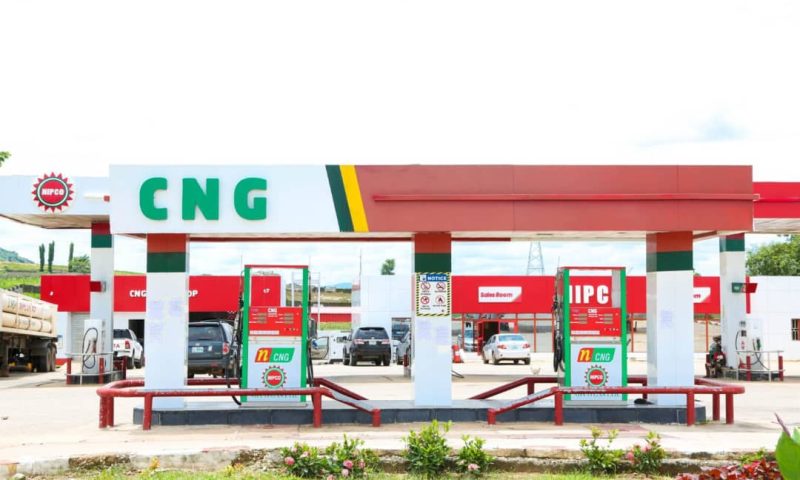
While defending why the NNPC reduced its planned stake in the Dangote refinery in 2024, the NNPC’s former spokesman, Olufemi Soneye, said it was to invest in compressed natural gas stations.


N3.2tn petrol supply

Petrol supply from local refineries rose to 3.18 billion litres in the first quarter of 2026, while imports fell sharply to 965.52 million litres, according to data from official documents of the Nigerian Midstream and Downstream Petroleum Regulatory Authority analysed by The PUNCH.

Although the NMDPRA documents did not directly name Dangote refinery in the first-quarter supply table, industry records show that it is the only refinery in Nigeria currently known to be producing Premium Motor Spirit on a commercial scale.

The agency’s fact sheet also listed Dangote among Nigeria’s active refineries and separately tracked its PMS performance. The figures showed that Nigeria’s total petrol supply stood at 4.14 billion litres between January and March 2026, with local refinery supply accounting for 76.7 per cent, while imports contributed 23.3 per cent.

This marked a major shift from the first quarter of 2025, when domestic refineries supplied 1.99 billion litres, while oil marketers imported 2.43 billion litres. Total supply in Q1 2025 stood at 4.42 billion litres.

For a proper year-on-year comparison, The PUNCH converted the 2025 figures from the average daily supply provided by the NMDPRA into monthly volumes by multiplying each month’s million litres per day by the number of days in the month and then by one million. This became necessary because the 2026 report provided actual monthly litre volumes, while the 2025 data was presented as daily averages.

The analysis showed that local refinery supply jumped by 59.2 per cent from 1.99 billion litres in Q1 2025 to 3.18 billion litres in Q1 2026. Importation, however, dropped by 60.2 per cent from 2.43 billion litres to 965.52 million litres.

Despite the increase in local refining, total petrol supply declined by 6.2 per cent year-on-year from 4.42 billion litres in Q1 2025 to 4.14 billion litres in Q1 2026.

In January 2026, local refinery supply stood at 1.24 billion litres, importation was 698.19 million litres, while total supply reached 1.94 billion litres. This translated to a daily average of 40.07 million litres from local refining, 22.52 million litres from imports, and 62.59 million litres in total supply.

Compared with January 2025, local refinery supply rose by 109.8 per cent from 19.1 million litres per day, while imports fell by 8.8 per cent from 24.7 million litres per day. Total daily supply also increased by 43.2 per cent from 43.7 million litres per day.

In February 2026, local refinery supply dropped to 824.45 million litres, while imports collapsed to 85.10 million litres. Total supply fell to 909.55 million litres. On a daily basis, local refinery supply averaged 29.44 million litres, imports averaged 3.04 million litres, and total supply averaged 32.48 million litres.

This showed that while local refinery supply was 18.7 per cent higher than the 24.8 million litres per day recorded in February 2025, imports crashed by 88.9 per cent from 27.5 million litres per day. Total supply also fell by 37.9 per cent from 52.3 million litres per day in the same month of 2025.

In March 2026, local refinery supply recovered to 1.11 billion litres, while importation rose to 182.24 million litres. Total supply stood at 1.29 billion litres. This amounted to daily averages of 35.87 million litres from local refining, 5.88 million litres from imports, and 41.75 million litres in total supply.

Compared to March 2025, local refinery supply increased by 56.6 per cent from 22.9 million litres per day, while importation fell by 79.5 per cent from 28.7 million litres per day. Total supply declined by 19.1 per cent from 51.6 million litres per day.

Month-on-month, total petrol supply fell by 53.1 per cent from 1.94 billion litres in January 2026 to 909.55 million litres in February, before rising by 42.3 per cent to 1.29 billion litres in March.

Local refinery supply also fell by 33.6 per cent between January and February, before rising by 34.9 per cent in March. Imports declined by 87.8 per cent in February but increased by 114.2 per cent in March.

The NMDPRA’s April 2026 FAAC report showed that PMS supply rose from 909.55 million litres in February to 1.29 billion litres in March, representing a 42.29 per cent increase. It also showed that PMS distribution through truck-out fell from 1.59 billion litres in February to 1.47 billion litres in March.

The figures indicate that Nigeria’s petrol market is becoming less dependent on imports, with domestic refining now providing the bulk of the national supply.

However, the decline in total Q1 supply suggests that increased local refinery output has not fully translated into higher overall petrol availability compared with the same period of 2025.

The PUNCH earlier reported that Nigerians consumed about 4.93 billion litres of Premium Motor Spirit (petrol) to fuel various economic activities in the first quarter of 2026, according to an analysis of the Nigerian Midstream and Downstream Petroleum Regulatory Authority’s downstream fact sheet monthly data.

It revealed that this amount represents a 7.4 per cent increase from the 4.59 billion litres recorded in the corresponding period of 2025.

The PUNCH also reported that the Dangote Petroleum Refinery exported about 434 million litres of Premium Motor Spirit (petrol) in March 2026, as the facility diversified its customer base after significantly outpacing domestic consumption.

The report indicated that the refinery, owned by Aliko Dangote, operated at an average capacity utilisation of 93.62 per cent, reinforcing its position as the dominant supplier of refined petroleum products in Nigeria.

In earlier remarks reported in 2025, the Dangote group chairman, Aliko Dangote, asserted that the refinery had sufficient refined products in storage to meet domestic needs, saying:

“Right now, we have more than half a billion litres in storage. The refinery is producing enough refined products, gasoline, diesel, and kerosene to meet all of Nigeria’s needs.”

Commenting in an earlier report, renowned energy economist Professor Wumi Iledare, noted that Nigeria’s reliance on imported petrol has declined but has not been eliminated. He also warned against claims that fuel importation has ended following increased domestic supply from the Dangote Petroleum Refinery.

In a personal note titled “Dangote Refinery, Petrol Imports, and Market Reality,” Iledare said recent assertions that Nigeria no longer imports petrol reflect “understandable optimism” but overstate the economic reality of the downstream oil market.

“Recent claims that petrol importation into Nigeria has ended because Dangote Refinery now meets domestic demand reflect understandable optimism, but they overstate economic reality.

“Dangote Refinery has significantly improved domestic supply conditions and reduced Nigeria’s marginal reliance on imported petrol. However, neither Dangote refinery nor petroleum marketers determines national supply outcomes,” he said.

The Chief Executive Officer of petroleumprice.ng, Jeremiah Olatide, recently said that Nigeria’s domestic refining capacity has grown significantly.

Olatide described the development as a major milestone in the country’s long-standing quest to reduce dependence on imported petroleum products.

NNPC, NIPetGE push AI adoption in energy sector

NNPC LimitedThe Nigerian National Petroleum Company Limited and the Nigerian Institute of Petroleum and Gas Engineers have advocated increased adoption of artificial intelligence and other digital technologies to improve operations in Nigeria’s oil and gas industry.

This was disclosed during a courtesy visit by the President-elect of NIPetGE, Prisca Kanebi, and her delegation to the Group Chief Executive Officer of NNPCL, Bayo Ojulari, represented by the Executive Vice President, Gas, Power and New Energy, Mr Olalekan Ogunleye, in Abuja.

According to a statement made available on Sunday, discussions at the meeting focused on the future of Nigeria’s hydrocarbon industry amid global energy transition concerns, technological changes and sustainability targets.

The statement indicated that the NNPCL acknowledged the role of NIPetGE in policy advocacy, technical development and innovation within the sector.

Speaking during the meeting, Kanebi highlighted recommendations from the institute’s recent conference, including the proposed establishment of a national centre for intelligent energy systems to support the deployment of artificial intelligence, the Internet of Things and robotics across the petroleum value chain.

She also commended the Federal Government’s decarbonisation efforts and reiterated the institute’s support for policies aimed at improving sustainability in the industry.

The institute also recommended the creation of a hydrocarbon-linked emissions trading system to allow Nigeria to take part in global carbon markets.

The institute also proposed fiscal incentives to support local manufacturing and service delivery in the oil and gas sector, as well as the expansion of the Energy Transition Plan to include measurable upstream decarbonisation targets backed by tax credits.

Other proposals included increased public-private partnerships in emission control infrastructure, carbon capture projects and hybrid renewable energy initiatives.

Both organisations also stressed the need for stronger collaboration between industry and academic institutions to improve professional capacity and align petroleum engineering practice in Nigeria with international standards.

The institute further disclosed that its bill seeking chartered status had passed second reading and was progressing towards a third hearing at the National Assembly.

It was added that NNPCL pledged support for future collaborations with the institute on initiatives aimed at improving efficiency and innovation in the energy sector.