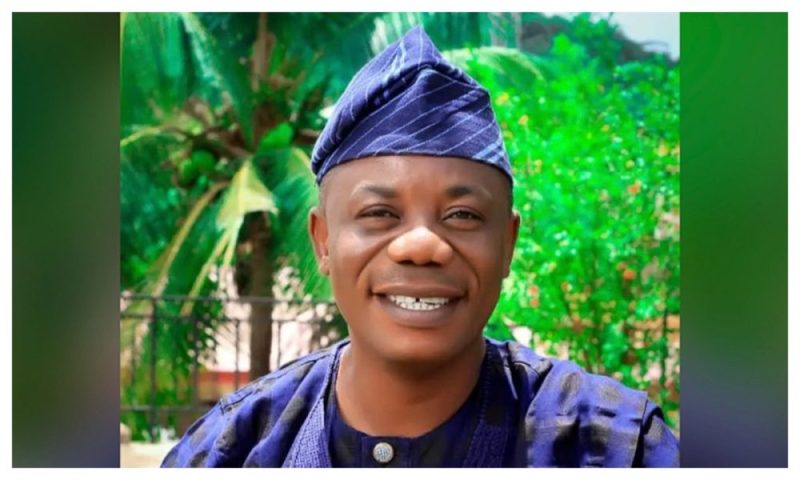
New APC executives emerge in Adamawa through consensus

New executives in the Adamawa State chapter of the All Progressive Congress (APC) have emerged at the weekend as it concluded its state congress through consensus.

Ambassador Baba Gana Ajimi, chairman of the state congress, conducted the congress at the Mahmud Ribadu Square and called for the dissolution of the former state executive council of the party.

Kate Raymond Mamunu, Majority Leader of the State House of Assembly and member representing Demsa State Constituency, moved the motion for the dissolution of the state exco, and was seconded by the chairman of Toungo Local Government Area, Suleiman Ahmed Gangkuba, which brought to an end the tenure of the last exco.

For the state congress to be on consensus, Senator Grace Bent moved the motion according to the party’s constitution, and former Deputy Speaker and member representing Guyuk State Constituency in the State Assembly, Hon. Sunday Peter, seconded the motion for consensus.

Ajimi, the chairman of the congress committee, asked the delegates through a voice vote to confirm the election of the state party executives through consensus.

As a result, Ajimi announced Hamza Bello Madagali as the state chairman, Dr. Raymond Chindama as vice chairman, Mustapha Atiku Ribadu as secretary, Bature Moses as assistant secretary, Victor Dogo as publicity secretary, and Dedan Raymond as youth leader, among others.

Governor Ahmadu Fintiri, speaking at the event, explained that the state has achieved full political integration into the ruling APC and is set for victory come 2027, stressing that what happened in the state was nothing but a political evolution, with the APC having successfully transitioned from alignment to what he called a “full fusion” of political structures across all levels.

He noted that while all stakeholders may not have achieved their individual expectations, “no one is a loser” in the process, as political integration requires sacrifice and compromise.

According to the governor, the congresses in the state reflected the political maturity of stakeholders and demonstrated a shared commitment to building a stronger and more competitive party structure in the state, with the smooth execution of ward, local government, and state congresses.

A political platform tagged “Adamawa Renewed Hope 226 Movement (ARH226M),” according to the governor, has been established, saying that it is a grassroots mobilisation structure covering all 226 wards of the state.

Assist your people or resign – Gov. Namadi tells political appointees

Jigawa State Governor, Umar Namadi, has directed all political appointees to prioritize the welfare of people at the grassroots as part of his administration’s core policy of promoting unity and mutual support.

This was contained in a press statement signed by Zainab S. Rabo, SSA Media Affairs to the Governor.

She said the Governor stated this during a stakeholders’ meeting held on Sunday at the Banquet Hall, Government House Dutse.

The Governor emphasized that governance must be people-centered, urging appointees to be humane, responsive, and committed to improving the lives of citizens across all levels.

He reiterated that his administration’s guiding principle is built on helping one another, calling on all officials to strengthen their connection with the people and address their needs effectively.

Governor Namadi further stressed that true leadership is reflected in service, compassion, and dedication to the well-being of the masses.

The governor’s comments come amid the growing number of complaints from members of the public against some political office holders over their lack of support and unwillingness to assist people from what they are getting.

He noted that some of these appointees claimed they have nothing to offer, despite what they are getting.

“Anybody who feels he earns nothing to use in supporting the public should resign,” Gov. Namadi noted.

Oyedepo reveals what will happen to bandits, sponsors in seven days

Bishop David Oyedepo, the General Overseer of the Living Faith Church Worldwide, on Sunday, pronounced God’s judgment on bandits wrecking havoc around the country and their sponsors.

The cleric was speaking on the theme “Covenant Day of Vengeance” at the church headquarters in Ota, Ogun state.

Oyedepo claimed that within the next seven days, divine punishment will come upon the people responsible for killings and kidnappings.

“I declare judgment on those who caused these tragedies and their supporters in the name of Jesus,” Oyedepo said.

“Unless I am not sent, this will happen in the next seven days.”

He also assured Nigerians that in the coming week, they will hear “testimonies of vengeance”.

Cleric urges Tinubu to tackle insecurity, economic hardship in northern Nigeria urgently

The Chairman of TEKAN/ECWA, Rev. Andemun Musa, has called on President Bola Tinubu to take decisive action in addressing the persistent security challenges in Northern Nigeria, particularly what he described as targeted attacks on Christians.

Rev. Musa made the appeal on Sunday during the 2026 First Quarter Combined Service of TEKAN/ECWA held in Taraba State.

He also urged the nation’s leadership to intensify efforts toward alleviating the economic hardship affecting millions of poor Nigerians.

While expressing concern over national issues, the cleric commended Taraba state governor, Dr. Agbu Kefas for improvements in security within the state, as well as policies he said have positively impacted the lives of residents.

Earlier in the service, the guest speaker, Bishop Ande I. Emmanuel of the United Methodist Church Nigeria, who also oversees mission districts in Cameroon and Senegal, called on Christians to remain attentive to the voice of God despite life’s challenges.

Delivering a sermon titled “Be Still,” drawn from Psalm 46:10, Bishop Emmanuel encouraged believers to stay spiritually grounded amid economic, political, and social pressures.

He warned against growing divisions within the Christian community, stressing that failure to heed the Holy Spirit and biblical teachings could worsen existing problems.

“Unless we listen to the Holy Spirit and follow the direction of the Bible, a lot of things will continue to go wrong,” he said.

The bishop further cautioned that denominational differences and internal conflicts weaken the Christian faith, adding that church affiliations or titles hold no value in eternity.

“Church denominations will not take anyone to heaven, neither are there positions in heaven,” he stated, urging unity and spiritual reflection among Christians.

Gov Alia urges JAMB to reschedule exams for abducted UTME candidates

Benue State Governor, Hyacinth Alia, has urged the Joint Admissions and Matriculation Board (JAMB) to reschedule exams for eight candidates of the 2026 Unified Tertiary Matriculation Examination (UTME) who were abducted in the state.

The victims were part of a group of passengers kidnapped last Wednesday along the Makurdi–Otukpo highway. They were later freed during a security operation carried out in a forest located in Okere ward, Ohimini Local Government Area.

Addressing journalists at the Government House in Makurdi on Sunday, Alia disclosed that 15 individuals were initially taken by the attackers.

He explained that two victims managed to escape earlier, while the remaining 13 were eventually rescued by troops of the Nigerian Army with assistance from local residents.

“Many of the students were travelling to Otukpo. Seven were regular passengers, and 15 were kidnapped that fateful day. One of the victims escaped, and another one escaped the following day,” the governor said.

“Today, all the remaining 13 kidnap victims were rescued by the security agents with the cooperation of the communities.

“I call on JAMB to look into the case of the eight young students and reschedule dates for them to write their examination.”

Earlier, authorities had challenged reports claiming the abducted passengers were UTME candidates.

The Benue State Police Command, through its spokesperson Udeme Edet, described such reports as “misinformation and incorrect”.

In the same vein, JAMB spokesperson Fabian Benjamin clarified that the travellers were returning from a police recruitment exercise in Makurdi when the incident occurred, not heading for the UTME.

Niger CAN chairman laments insecurity, says nobody safe in Nigeria

The Chairman of the Christian Association of Nigeria (CAN), Niger State Chapter, Most Reverend Bulus Dauwa Yohanna, has expressed concern over the worsening security situation in the country, warning that Nigeria is fast becoming unsafe for citizens.

Speaking during a CAN council meeting held at the State Secretariat in Minna, the cleric, who is also the Catholic Bishop of Kontagora Diocese, said the nation has “nosedived into a state of fear” due to persistent insecurity challenges, economic hardship, and what he described as unfulfilled promises by leaders.

He further lamented the growing level of insecurity, citing reports of foreign nationals issuing travel advisories warning their citizens against visiting some states and even Abuja, the nation’s capital, over fears of possible attacks.

“Who is safe, and where in Nigeria can one boast of safety? If Nigerian military generals and senior security officers can be killed, then who cannot be killed?” he asked.

Bishop Yohanna also listed cases of kidnappings, abductions, killings, destruction of houses, and the burning of markets and farmlands, alleging that such incidents have continued to destabilise communities across the country.

He noted concerns over circulating reports and security alerts on social media and alleged internal security communications warning of possible attacks on Abuja and other states, including Niger State.

Referencing a leaked memo reportedly attributed to the Nigeria Customs Service on planned attacks on government facilities and military bases, he urged Nigerians to remain vigilant and prayerful.

“With or without certainty, the situation calls for vigilance, security awareness, and prayers for divine intervention. I believe that one day, good will triumph over evil,” he said.

The cleric called on President Bola Tinubu and Niger State Governor, Umar Bago, to urgently strengthen security measures, warning that “there is no smoke without fire”.

He further cautioned that Nigeria’s situation would not improve unless citizens collectively change their ways, stressing that failure to do the right thing would continue to affect all sectors of national life.

Nigeria exports 55.39m barrels as Dangote battles crude shortage

Crude oilNigeria exported 55.39 million barrels of crude oil in the first two months of 2026, even as the Dangote Petroleum Refinery continues to struggle with inadequate domestic feedstock supply.

According to the latest data from the Central Bank of Nigeria, the country shipped out 31.31 million barrels in January and 24.08 million barrels in February. In January, crude production averaged 1.46 million barrels per day with exports at 1.01 mbpd. In February, production fell to 1.31 mbpd while exports averaged 0.86 mbpd.

Total crude production for the two months stood at 81.94 million barrels, meaning that 26.55 million barrels were left behind for local refineries in the first two months of 2026.

The strong export figures come at a time when the 650,000-barrel-per-day Dangote refinery is battling an acute shortage of local crude. The refinery has repeatedly complained of receiving far below its required volumes from domestic sources, forcing it to import crude from international markets.

This situation persists despite Nigeria’s position as Africa’s largest crude oil producer. Industry sources note that a significant portion of produced crude continues to be exported while the country’s flagship refinery grapples with supply constraints under the naira-for-crude arrangement.

Before the Nigerian National Petroleum Company Limited recently increased crude supply to the Dangote refinery from five cargoes to 10 cargoes, The PUNCH reports that the ambitious deal between the Dangote refinery and the NNPC faced challenges, as the refinery experienced a crude oil supply shortfall of approximately 79.53 million barrels between October 2025 and mid-March 2026.

Data obtained from an impeccable senior management source within the refinery indicated that the facility, which requires approximately 19.77 million barrels of crude monthly to operate at full capacity, received significantly lower volumes during the period.

The official argued that, under the Petroleum Industries Act, the export of crude before meeting local demand was clearly prohibited, stressing that the $20bn Lekki-based plant had been grappling with inadequate crude volumes, while the country, through NNPC, continued to export some of its oil.

A breakdown of the figures shows that the refinery is supposed to get about 19.77 million barrels of crude monthly, but it got 4.55 million barrels in October, 6.45 million barrels in November, 4.30 million barrels in December, 5.65 million barrels in January, and 4.66 million barrels in February. For March, only 3.6 million barrels were delivered between the 1st and 15th.

In total, crude supplied within the five-and-a-half-month period stood at 29.21 million barrels, compared to an estimated 108.74 million barrels required for the same duration. This translates to a supply performance of about 26.9 per cent, indicating that more than three-quarters of the refinery’s crude needs were not met.

Earlier, the Dangote refinery had repeatedly lamented that it was not getting enough crude locally for its operations.

As the Iran-US war continues to disrupt global oil supply, the Dangote refinery effected multiple fuel price increases, raising the petrol pump price above N1,300 per litre before it was later reduced to the current N1,250 per litre.

Defending these price hikes, the Dangote refinery said in a statement that local crude producers were refusing to supply feedstock to its facility, forcing it to rely more on imported crude.

According to the company, the refinery received just five cargoes every month from the national oil company instead of 13 cargoes, adding that the cargoes were paid for at international market prices.

“While we receive about five cargoes a month from NNPC, which we pay for in naira, these cargoes are priced at international market prices plus premium and fall short of the 13 cargoes which we require to support sales into Nigeria.

“The high crude cost is compounded by the fact that Nigeria’s upstream producers have failed to supply crude oil to the refinery as required under the Petroleum Industry Act, forcing us to source a substantial portion through international traders who charge an additional premium,” it stated.

However, reliable sources at the NNPC, who pleaded anonymity due to the sensitivity of the matter, confirmed to our correspondent that the company was leveraging its global crude trading network to source third-party crude for the 650,000-barrel Lekki refinery.

According to the source, the NNPC would sell the crude to the refinery at prices that are competitive with prevailing international market rates, ruling out calls by some stakeholders that the Federal Government should sell feedstock to local refineries at rates designed locally to shield Nigeria from the global price rise.

“Leveraging our global crude trading network, we are sourcing third-party crude for the refinery at prices that are competitive with prevailing international market rates.

“As the national oil company entrusted with safeguarding Nigeria’s energy security, NNPC Limited remains fully committed to supporting domestic refining, including the Dangote Petroleum Refinery. Within the framework of our existing agreements, we continue to facilitate crude supply to the refinery in the face of temporary availability constraints,” he explained.

Our correspondent gathered from other sources within the national oil company that there was truly a shortfall because some volume of NNPC’s daily crude output had been front-sold in the past.

“Indeed, there’s a shortfall, but it wasn’t deliberate. You know that some volumes have been front-sold in the past. That is causing some form of distortion, but that doesn’t mean the NNPC will not meet up. The company is looking at other alternative sources,” it was said.

Recently, Africa’s richest man and President of the Dangote Group, Aliko Dangote, revealed in a report by Bloomberg that the refinery received 10 cargoes of crude oil from the state-owned oil firm in March, compared to an average of about five cargoes monthly since late 2024.

Dangote said the shipments included six cargoes paid for in naira and four in dollars, under the crude supply arrangement between the refinery and the NNPC. However, this is still below the over 19 million barrels required by the refinery monthly.

The Publicity Secretary of the Crude Oil Refiners Association of Nigeria, Eche Idoko, called for increased crude supply to local refineries.

Idoko declared that refiners would intensify demand for more crude with the reported improvement in national production. The CORAN spokesman explained that consistent crude supply would improve refinery operations and profitability, noting that modular refineries would not make profits unless they get enough feedstock locally.

“If we get crude, of course, we will make gains; we have our cash flow. If we get regular products like we ought to do, yes, we would make gains. But without products, we are not making gains. If the oil producers give us feedstock, we will make gains. That’s how good the refining business is,” he said.

Petrol price drop in doubt after Hormuz disruption

The decision by Iran to reclose the Strait of Hormuz has dampened hopes that fuel prices would crash in Nigeria.

The Strait of Hormuz was opened on Friday following a ceasefire deal between Iran and the United States. But barely 24 hours later, Iran reclosed the strait, calling the decision a response to a continued blockade of its ports by the United States.

The Iranian military on Saturday said control of the strategic waterway, through which 20 per cent of globally traded oil transits, had “returned to its previous state”, with reports saying Iranian gunboats fired at a merchant vessel as it attempted to cross.

Fuel marketers had earlier projected that petrol prices could drop from the current N1,250 to about N900 when the strait was opened on Friday.

The spokesman of the Petroleum Products Retail Outlet Owners Association of Nigeria, Joseph Obele, said on Friday that the prices of crude oil had crashed following the reopening of the strait.

Obele recalled that petrol was around N800 before February 28, when the crisis started, expressing optimism that a sharp reduction should be expected if the development had been sustained.

“With the reopening of the Strait of Hormuz, Nigerians should expect a very significant reduction in petrol prices. Petrol will fall below N1,000 by next week, probably to N900 per litre. Don’t forget that the product was N800+ before the Middle East crisis. Now that the war is over, we should be expecting a return to that price regime,” he said on Friday.

But on Sunday, Obele told our correspondent that the reclosure of the Hormuz had dashed hopes of a price drop projection. Obele said the status quo would remain at the moment, pending when both Iran and the US agree on a lasting ceasefire.

President Donald Trump said Sunday that Iran had violated the ceasefire agreement with the US by attacking ships in the Strait of Hormuz, and he repeated threats to attack Iranian energy infrastructure unless it accepts a deal to end the war.

Our correspondent observed, however, that there has not been a major oil price surge since Saturday when the strait was reclosed by Iran. According to oilprice.com, Brent traded at $90 per barrel on Sunday, up from $88 before the Hormuz Strait reclosure. Recall that Brent was $95 as of Friday morning.

Meanwhile, US President Donald Trump said Sunday that Iran had violated the ceasefire agreement with the US by attacking ships in the Strait of Hormuz, as he repeated threats to attack Iranian energy infrastructure unless it accepts a deal to end the war.

“Iran decided to fire bullets yesterday in the Strait of Hormuz — a total violation of our ceasefire agreement!” he posted on Truth Social. “That wasn’t nice, was it?”

“We’re offering a very fair and reasonable deal, and I hope they take it because, if they don’t, the United States is going to knock out every single power plant and every single bridge in Iran,” he continued. “No more Mr Nice Guy!” he said.

Trump disclosed that negotiators would arrive on Monday evening in Islamabad, Pakistan, which last weekend hosted direct talks between the two sides, with the current two-week ceasefire set to end on Wednesday.

Reforms saved Nigeria from severe hardship a Reforms saved Nigeria from severe hardship after global shocks – CBN fter global shocks – CBN

CBN Governor, Olayemi Cardoso. Photo: CBN / XThe reforms implemented by the Central Bank of Nigeria have helped cushion the impact of global economic shocks on Nigerians, preventing more severe hardship despite ongoing external pressures, the apex bank has said.

CBN Governor Olayemi Cardoso disclosed this at the final briefing of the bank during the just-concluded Spring Meetings of the World Bank/International Monetary Fund in Washington DC.

“The decisions of the MPC (Monetary Policy Committee), as we consistently emphasise, are data-driven. They are not based on emotion but on careful analysis of available information, and we respond accordingly. I am pleased that this cautious approach has proven justified by subsequent developments.

“I would also add that if we had not taken the steps we did at the time—and if the reforms had not been implemented when they were—the outcome for the country could have been far more difficult and painful,” Cardoso stated, while responding to a question on the March uptick in inflation.

On Friday, The PUNCH reported that Nigeria’s inflation rate rose to 15.38 per cent in March 2026, reversing the recent easing trend as global shocks from the US–Iran conflict pushed up energy, transport, and food costs. The PUNCH also observed that this is the first increase in headline inflation since March 2025.

Cardoso admitted that the recent National Bureau of Statistics report “showed an uptick in inflation, which, quite frankly, should not be too surprising given the global disruptions taking place at this time. Much of this increase can be attributed to global shocks.”

He noted that it was important to remind ourselves that, up to this point, the country had experienced consistent deceleration in inflation. “We had also begun the process of reducing rates, although we remained cautious. At the time, we were careful to avoid easing too early, as doing so could expose the economy to exactly the kind of shocks we are now witnessing—and that is precisely what has happened.

“There was an expectation that the central bank, given several months of deceleration, would adopt a more aggressive approach to reducing rates.

“However, this underscores an important point: members of the MPC have access to data and insights that are not always visible to the public. This situation clearly demonstrates why there was concern about potential shocks on the horizon. We wanted those uncertainties to clear before taking more decisive action.”

In direct response to the question on inflation, Cardoso insisted that the recent uptick was largely the result of global shocks. “Nonetheless, we remain committed to building resilience and staying the course on our long-standing objective of bringing inflation down to single digits,” he stated.

The CBN boss added, “Despite current challenges, we will maintain this focus because we believe it directly addresses the key concerns of Nigerians, particularly the real impact of macroeconomic developments on everyday life. Encouragingly, stability has begun to take hold, meaning that some of the negative consequences associated with instability can now be put behind us.”

Recall that both the Minister of Finance/Coordinating Minister for the Economy, Wale Edun, and the CBN governor, Cardoso, had earlier declared that Nigeria is currently in a sound position to withstand global economic shocks stemming from the Middle East crisis or other issues.

Both men took turns reiterating this position during a press briefing at the Spring Meetings of the World Bank and the International Monetary Fund in Washington, DC, United States.

Speaking at the briefing, Edun said, “Nigeria came to this meeting with a clear message: our reforms are durable, self-sustaining. We are more resilient to global shocks, and we are focused on inclusive growth.

“Due to the reforms undertaken under the leadership of His Excellency, Mr President, Nigeria is well-positioned to withstand external shocks, such as the one we are witnessing at this time.

“Across our engagements this week, there has been strong recognition and commendation that Nigeria’s reform programme is strengthening our economic fundamentals and restoring confidence. This has placed us in a stronger and better position to withstand the ongoing situation described as the Israeli–US–Iran conflict.

“With the economy now operating a market-reflective foreign exchange regime and market-based pricing for petroleum products, adjustments are occurring relatively smoothly—without distorted controls, unsustainable subsidies, or a rapid depletion of reserves, based on the data available to the Central Bank of Nigeria.”

Edun noted that this improved resilience was “widely acknowledged throughout the week at our various meetings, including at the International Monetary Fund, the World Bank, and in our engagements with other development partners and bilateral counterparts.”

Banking the Economy That Actually Exists

There is a version of the Nigerian economy that the banking sector has always served well. It is the economy of salaried professionals, corporate treasurers, documented collateral, and monthly pay cycles. It is the economy that fits neatly into conventional credit models, standard account structures, and the risk frameworks that Nigerian banking inherited from its colonial and post independence institutional architecture. That economy is real, and serving it matters.
There is another version. It is the economy of the cooperative chairwoman in Ogun whose members pool contributions weekly. The textile trader in Balogun who turns inventory four times a month but has never had a formal credit history. The agro dealer in Kaduna whose working capital needs spike in planting season and collapse in the dry months. The artisan in Aba whose business has been profitable for fifteen years, but whose collateral is her workshop and her reputation. This economy is also real. It is, by most measures, larger than the first; and for most of Nigerian banking history, the sector was not designed to serve it.
The gap is not a matter of intention. It is a matter of architecture. Conventional banking products were designed around a specific customer profile: formally employed, predictable monthly income, assets that could be valued and pledged, credit history held in a bureau. Nigerians who fit that template, whether men or women, whether in Lagos or Kano, were served well. Those who did not, regardless of how productive their economic activity, were structurally underserved. They were not refused service. The products simply did not fit the shape of their lives.
The numbers confirm what anyone who has spent time in a Nigerian market already knows. According to the 2023 EFInA report, 26 per cent of Nigerian adults remain financially excluded. The World Bank’s surveys of Nigerian SMEs consistently identify access to finance as the single largest constraint on business growth, particularly among enterprises operating in the informal and semi formal sectors.
These are not idle businesses. They are enterprises generating real output and real employment, operating in a financial blind spot that the banking sector created not through malice but through product design.
A small number of institutions have begun to close that gap by building differently. Union Bank of Nigeria is one of them.
Through alpher, the bank’s financial proposition designed specifically for underserved market segments, Union Bank disbursed over ₦150 million in cash flow loans to entrepreneurs in a single three month window in 2025. The underwriting methodology behind alpher was built for businesses whose income flows through market associations and cooperative structures rather than through conventional payroll. These are businesses that traditional credit scoring cannot see, not because they are risky but because the scoring model was never calibrated for them.
Through alpher partnerships, the bank extended more than ₦106 million in discounted credit to seventy one businesses operating in market clusters that had previously sat outside the formal banking system. Its financial literacy outreach through alpher reached over 230 individuals in targeted sessions, and a parallel programme supported fifty nine previously unbanked entrepreneurs with micro grants and account opening.
The significance of these numbers is less in their volume and more in their method. alpher represents a decision to redesign the product rather than wait for the customer to fit the existing one. That is a meaningful institutional choice, because it requires a different kind of underwriting capability, a different kind of relationship management, and a different kind of patience than conventional retail or SME banking demands.
What makes Union Bank’s work on financial inclusion credible is that the institutional culture behind it is itself built on inclusion. Forty-five per cent of the bank’s board is female, exceeding the Central Bank of Nigeria’s thirty per cent governance threshold by fifteen percentage points.
The Managing Director and Chief Executive Officer, Mrs Yetunde B. Oni, leads an institution whose most recent graduate intake was sixty per cent female. The bank offers five month fully paid maternity leave, among the longest in the Nigerian banking sector, alongside ten day fully paid paternity leave, formalised adoption and surrogacy leave, and the CareCube crèche facility at the head office. These are not separate from the bank’s external inclusion work.
They are the internal architecture that makes it possible. An institution that invests in the breadth of its own talent base develops a broader product imagination than one that does not.
The honest assessment is that the Nigerian banking sector as a whole has a considerable distance still to cover. The informal and semi formal economy remains the largest segment of Nigerian economic activity, and it remains the least well served by formal financial institutions.
The products available to this segment are still too few, still too expensive in many cases, and still too narrowly distributed. Closing the gap will require more institutions to make the same architectural choice that the early movers have made: to build for the economy that actually exists, not for the economy that conventional banking assumed it was serving.
As Union Bank enters its 109th year, the inclusion question is not peripheral to its institutional story. It is central to it. A bank that has been present in Nigeria since 1917 has watched the country’s economic structure change repeatedly. The cooperative economies of the North, the trading networks of the South West, the manufacturing clusters of the South East, and the digital enterprises of Lagos each demand different financial products and different engagement models. The institutions that build for that diversity will be the ones that remain relevant. The ones that do not will find that the economy they were designed to serve is no longer the economy they need to serve.
Nigeria’s productive economy is broader, more diverse, and more resilient than any single customer profile can capture. The banking sector’s next chapter will be defined by which institutions recognised that earliest and built accordingly.
Union Bank of Nigeria has started. The work continues.