Benue records 383 suspected Lassa fever cases, 47 confirmed

Benue State Government says no deaths from Lassa fever have been recorded in the last 11 days, despite a rise in suspected infections.

The Commissioner for Health and Human Services, Dr. Paul Ogwuche, disclosed this while briefing journalists, noting that suspected cases have increased to 383, with 47 confirmed infections so far.

He added that the total number of deaths since the outbreak remains 14.

Providing further details, the commissioner said only six new cases were confirmed within the last 11 days, indicating a slowdown in infections.

He also noted that 20 patients are currently in isolation 14 at Benue State University Teaching Hospital and six at the Federal Medical Centre, Makurdi.

According to him, “We have not recorded any mortality in the last 11 days. So far, the cumulative figure of suspected cases has moved from 251 to 382, while 47 cases have been confirmed cumulatively.”

Dr. Ogwuche attributed the improvement to intensified awareness campaigns, early detection, and support from health partners, including the Nigeria Centre for Disease Control (NCDC), Médecins Sans Frontières (MSF), and the World Health Organization (WHO).

He said surveillance has been strengthened across all 23 local government areas, with health workers trained on infection prevention and control measures.

“The rates have dropped drastically because we are out combing for suspected cases. Those that are positive are few compared to before. We have engaged in regular meetings with WHO, NCDC, and the Emergency Operations Centre.

“Surveillance is ongoing in all 23 LGAs. We provide regular updates and carry out training of health workers on basic prevention and infection control in isolation centres, which accounts for why they are not infected. There are 14 cases in BSUTH and six at FMC, Makurdi, in isolation.

“The pillars we put in place — sensitisation and health education — have accounted for this development. People now know what to do and what they should not do.

“The message has reached all 23 LGAs. We are also tracking our cases very early now because the surveillance officers are in the field. Any reported positive case is monitored along all contact lines; once there are symptoms, we test and take them to the isolation centre.

“The earlier you present, the better the outcome. The low mortality shows that people are being tracked in their communities and brought in for early treatment.

“There is also a lot of intervention from our partners. Many of them are on the ground, the NCDC, MSF and WHO are all working together to see how we can curtail it.

“The pillars of the response, including infection prevention and control, are in place, and all our laboratories are functional, capable of detecting early infection and initiating treatment. A lot has been done by the Ministry and its partners.

“The state government has supported the response with substantial funds, which have enabled us to work effectively.

“Everybody is on their toes doing the needful. We have not recorded any outbreak in the IDP camps.

“We are on the verge of distributing IAC materials (flyers) to the 15 IDP camps in the state,” he said.

NiMet forecasts 3-day dust haze from Wednesday

The Nigerian Meteorological Agency, NiMet, has forecast dust haze across the country from Wednesday to Friday.
NiMet’s weather outlook, released on Tuesday in Abuja, expected moderate dust haze with horizontal visibility between two and five kilometres over the northern region on Wednesday.

It anticipated localised visibility of less than or equal to 1,000 metres over parts of Katsina, Kano and Jigawa States throughout the forecast period.

The agency envisaged moderate dust haze over the North-Central region throughout the period.

According to the agency, sunny skies with a few patches of cloud over the southern region, with slim prospects of afternoon or evening thunderstorms accompanied by light rainfall over parts of Lagos, Bayelsa, Delta, Rivers, Cross River and Akwa Ibom States.

NiMet stated that moderate dust haze is expected over the northern and North-Central regions throughout the forecast period on Thursday.

It also predicted sunny skies with few patches of cloud over the southern region, with slim chances of isolated thunderstorms and light rainfall over Ondo, Bayelsa, Rivers, Delta and Edo states later in the day.

The agency predicted slight dust haze over the northern region during the forecast period on Friday.

NiMet envisaged moderate dust haze over the North-Central region throughout the period.

The agency anticipated sunny skies with few patches of cloud over the southern region, with slim chances of isolated thunderstorms and light rainfall over Lagos, Edo, Delta and Bayelsa States later in the day.

The agency warned that dust particles would remain in suspension while advising the public to take necessary precautions.

NiMet advised the people with asthma and other respiratory conditions to be cautious under the prevailing weather conditions.

It further advised motorists to drive with caution during rainfall and urged airline operators to obtain airport-specific weather reports from NiMet for effective operational planning.

ICPC clarifies El-Rufai’s detention, says court adjourns case to March 31

The Independent Corrupt Practices and Other Related Offences Commission (ICPC) has clarified the circumstances surrounding the detention of former Kaduna State governor, Nasir Ahmad El‑Rufai, stating that the agency did not approach the court to seek a fresh extension of his detention as widely reported.

In a statement signed by John Okor Odey, Head of Media and Public Communication on Tuesday, the commission explained that it appeared in court on March 17, 2026, only for the hearing of an application filed by El-Rufai challenging the court order that renewed his remand.

According to the ICPC, the application was dated and filed on March 6, 2026, seeking to overturn the remand order earlier granted by the court on March 5.

During the proceedings, counsel to El-Rufai was served with the commission’s response to the application and subsequently requested an adjournment to study and respond to the filing.

“The lawyer subsequently requested an adjournment to respond to the Commission’s response. Consequently, the Magistrate adjourned the hearing of the application to 31st March 2026 to allow Mr. El-Rufai’s team sufficient time to react to our response,” the statement said.

The commission also outlined the timeline of the court-approved detention of the former governor, noting that the initial remand order allowed investigators 14 days to probe allegations of money laundering and abuse of office.

It added that upon the expiration of the initial order, the commission applied for an additional 14-day extension to conclude its investigations, which the court granted on March 5.

The ICPC further disclosed that an earlier attempt by El-Rufai’s legal team to set aside the remand order issued on February 19, 2026, was dismissed by the court on March 9.

“Mallam El-Rufai remains in the lawful custody of the ICPC under the remand order dated 5th March, 2026,” the commission stated.

The agency stressed that it was strictly complying with court directives, including the requirement to provide progress reports, and reiterated its commitment to due process.

“The ICPC conducts its duties with the highest professionalism and respect for the rule of law,” the statement added, noting that the detention was authorised by a court in accordance with the provisions of the Administration of Criminal Justice Act.

The commission also cautioned against misinformation circulating in the media and on social media platforms.

“We urge the public to avoid spreading unverified information and to rely on official updates from the Commission,” it said.

2027: Reps proposed 2 years imprisonment for dual party membership stirs controversy

The fresh amendment to the recently signed 2026 Electoral Act where the House of Representatives proposed a N10 million fine or two years imprisonment for anybody who is a member of more than one political party has become a subject of discussion in political circles.

According to political pundits, the move raises fresh concerns about the preparedness and willingness of the ruling All Progressives Congress, APC-led Federal Government under President Bola Tinubu to provide a level playing field for all political actors.

The presence of a level playing field, according to analysts, would be one of the preconditions for free, fair and credible elections in 2027, while its absence would present a contrary situation.

Recall that the lower legislative chamber of the National Assembly yesterday passed a fresh amendment to the Electoral Act 2026, which was signed into law just last month by President Tinubu.

The fresh amendment, which was taken through first and second reading as well as committee consideration and third reading at plenary, yesterday, introduced three new clauses to Section 77 of the Electoral Act, which deals with membership of political parties.

The proposed legislation prescribed a fine of N10 million and a maximum of two years imprisonment for anyone found guilty of belonging to more than one political party at the same time, as well as the loss of membership of both parties.

The legislation, sponsored by the House Leader, Julius Ihonvbere, states that, “A person shall not be registered as a member of more than one political party at the same time.

“Where it is established that a person is registered as a member of more than one political party at the same time, such dual membership shall be void and the person shall cease to be recognised as a valid member of any political party pending regularisation, in accordance with the provisions of this Act and the constitution of the political party concerned.

“A person who knowingly registers or maintains membership in more than one political party at the same time commits an offence and is liable on conviction to a fine of N10 million or imprisonment for a term of two years or both.”

The proposal immediately created a sharp division among the lawmakers, While some lawmakers threw their weight behind it and some strongly kicked against it, others called for caution.

Chairman, House Committee on Solid Minerals, Jonathan Gaza, while expressing support for the bill, said it would be mischievous for anyone to register as a member of two political parties.

However, the chairman, House Committee on University Education, Abubakar Fulata, said the proposed alteration was seemingly in conflict with Section 40 of the 1999 Constitution (as amended).

He said: “This proposed amendment seems to be in contravention of Section 40 of the Constitution of the Federal Republic of Nigeria, as amended, which guarantees the freedom of association at any time.

“Instead of denying the membership of two parties, I think we should recommend that you be limited to only one. Denying him the freedom to associate with all the political parties to which he might have belonged is a contravention of his right under Section 40 of the Constitution.”

The deputy speaker, Benjamin Kalu, who presided over the plenary, in his intervention, stated that individuals should identify with a political party that suits their ideologies, rather than registering in multiple political parties, insisting that dual party membership was ‘fraudulent misrepresentation.’

Apart from the lawmakers, other Nigerians, particularly from the opposition parties, have also condemned the proposed amendment, describing it as unconstitutional as it infringes on the citizens’ right to freedom of association.

Leading the voices against the proposed amendment is the leader of the Social Democratic Party (SDP) and the party’s presidential candidate in the 2023 elections, Prince Adewole Adebayo. He described the move as unconstitutional and a threat to democratic freedoms.

He said the bill violates the constitutional right of citizens to freely associate with any political organization, insisting that the legislation contradicts Section 40 of the Nigerian Constitution, which guarantees freedom of association.

“It is unconstitutional to punish a person for joining political parties. You cannot legislate that someone cannot join three political parties if they want to,” Adebayo said.

The SDP chieftain argued that the law only allows a politician to be sponsored by one political party during an election but does not prohibit membership in multiple political associations.

He accused lawmakers of turning the legislature into what he described as a “theatre of the absurd,” alleging that the proposed bill is aimed at protecting the administration of President Bola Tinubu and the ruling All Progressives Congress (APC) from internal political instability.

“They are legislating for one person. What they are doing is legislative lynching,” he said.

In his contribution, a lawyer and public affairs analysts, Maarcellus Onah also argued that the ruling party fears a potential wave of defections as dissatisfaction grows among its members amid economic hardship and security challenges across the country.

He noted that the poor state of the economy coupled with the worsening security situation in the country as well as the poor general welfare of Nigerians, have led to a significant decline of public confidence in the government.

“So, the proposed legislation is intended to prevent politicians within the ruling party from abandoning it if political conditions worsen,” he stated.

He also lampooned members of the National Assembly for allegedly failing to hold the executive accountable and urged Nigerians to remove them from office in future elections.

“The National Assembly is the enabler of many of the problems we complain about. It is their constitutional duty to ensure that the executive obeys the constitution, but instead of rising to that important constitutional role, they simply chose to approve whatever that is sent to them,” he lamented.

He also alleged that some lawmakers who are pushing the anti-defection proposal had, at one time or the other, switched political loyalties.

However, one would wonder why the ruling APC is not comfortable with the current electoral law considering the fact that it has over 30 governors out of the 36 state governors, and an overwhelming majority in both chambers of the national assembly.

But, responding to the APC’s growing political dominance, Adebayo said the numbers were achieved largely through political maneuvering rather than electoral support.

He argued that defections among politicians do not necessarily reflect the mood of ordinary Nigerians.

“The fact that you capture the governors does not mean the people are happy with you,” he said, adding: “It is the people who will have the final say.”

FG ends Customs’ 7% FAAC deduction policy

Abdullahi MaiwadaThe Federal Government, through the Federation Account Allocation Committee, has discontinued the long-standing seven per cent cost-of-collection deduction previously retained by the Nigerian Customs Service from Federation Account revenues, a move that effectively removes the agency from direct allocations of shared federal earnings, The PUNCH has gathered.

An analysis of the Federation Account Allocation Committee report for February 2026, which captured revenue generated in January, indicated that the Customs Service no longer receives the seven per cent cost-of-collection previously deducted from the federation’s earnings.

The line item that usually indicates the amount received as cost of collection showed that the Nigerian Customs Service recorded N0.00 for January 2026, a sharp contrast to the N24.01bn it received under the same category in December 2025.

The report, however, indicated that other revenue-generating agencies continued to receive their statutory deductions, with the Nigerian Upstream Petroleum Regulatory Commission receiving N21.44bn as a four per cent cost of collection, while the Nigerian Revenue Service received N44.16bn as a four per cent cost of collection for the month of January.

Our correspondent further gathered that the new arrangement was introduced by the Nigerian Customs Service Act, 2023.

The service is now funded through a statutory charge of at least four per cent of the Free-on-Board value of imports rather than through the Federation Account sharing system.

The development marks a major shift in the financing structure of one of Nigeria’s largest revenue-generating agencies and is expected to affect how federal revenues are distributed among the three tiers of government.

Confirming the change in an interview with our correspondent, the National Public Relations Officer of the Nigerian Customs Service, Deputy Controller Abdullahi Maiwada, said the agency no longer collects the seven per cent cost of collection from the Federation Account.

Maiwada explained that the new law governing the service provides a different funding model known as the Financing of the Customs Service, which is based on a percentage of import value rather than deductions from federally shared revenues.

The officer said, “Please check the Nigerian Customs Service Act of 2023. What we operate now is four per cent of the Free-on-Board value of imports under the financing arrangement for the service.

“That is what we use to run the service. So you shouldn’t expect any allocation from FAAC to the Nigerian Customs Service because we no longer collect the seven per cent surcharge as the cost of collection.

“What we collect now is the Financing of the Customs Service, which is based on four per cent of the Free-on-Board value of imports. So you should not expect any allocation from the FAAC sharing committee.

“The FAAC distribution is exclusively for the three tiers of government: the Federal Government, the states, and the Local Governments. The Nigerian Customs Service is not part of that sharing arrangement anymore.”

The PUNCH also gathered that the funding model is backed by Section 18 of the Nigerian Customs Service Act, 2023, which outlines the sources of financing for the service’s operations.

Mastercard to acquire Stablecoin’s BVNK for $1.8bn

MastercardGlobal payments giant Mastercard has reached an agreement to acquire stablecoin infrastructure provider BVNK in a deal valued at up to $1.8bn, as the company deepens its push into digital assets and blockchain-based payments.

The agreement, announced on Tuesday, includes up to $300m in contingent payments and is expected to close before the end of the year, subject to regulatory approvals and customary closing conditions.

The acquisition marks one of Mastercard’s most significant moves yet into digital currencies, as financial institutions increasingly explore stablecoins and tokenised deposits to improve cross-border payments, remittances and business transactions.

In a statement, Mastercard said evolving technology continues to reshape how value moves between individuals and businesses, with blockchain-powered digital assets offering the potential to make payments faster, more efficient and programmable. Digital currency payment use cases are expanding rapidly, reaching at least $350bn in transaction volume in 2025, according to the company.

Mastercard said growing regulatory clarity around digital currencies across several markets has encouraged banks and fintech firms to consider offering customers payment options enabled by stablecoins and other tokenised financial instruments.

“We expect that most financial institutions and fintechs will in time provide digital currency services, be it with stablecoins or tokenised deposits,” Chief Product Officer at Mastercard, Jorn Lambert, stated. “We want to support them and their customers with a best-in-class, highly compliant, interoperable offering that brings the benefits of tokenised money to the real world.”

Lambert added that integrating on-chain payment rails into Mastercard’s network would enable greater speed and programmability across a wide range of transactions while maintaining the security and compliance standards associated with traditional payment systems.

While card payments currently dominate consumer transactions globally due to their reach and protections, Mastercard noted that crypto wallets increasingly rely on cards as the preferred credential for enabling everyday spending using digital currencies. Stablecoins, the company said, present growing opportunities in areas such as peer-to-peer transfers, cross-border remittances, payouts and business-to-business payments.

Founded in 2021, BVNK has developed infrastructure designed to bridge traditional fiat currencies and stablecoins. The platform enables businesses to send and receive payments across major blockchain networks in more than 130 countries, positioning it as a key player in payment orchestration between conventional and digital financial systems.

“For all of the advancements made in simplifying the digital currency opportunity, we have only scratched the surface of what’s possible,” Co-founder and Chief Executive Officer of BVNK, Jesse Hemson-Struthers, stated. “This deal brings together complementary capabilities to define and deliver the future of money. Together, we’re able to deliver an unprecedented infrastructure for digital currency-based financial services.”

Mastercard said combining its global payments network with BVNK’s blockchain infrastructure would help create interoperable payment solutions capable of connecting fiat and digital currency systems seamlessly across multiple blockchain networks.

The acquisition also builds on Mastercard’s broader digital asset strategy, including initiatives such as its Crypto Partner Program, aimed at expanding collaboration with fintech firms and accelerating innovation in on-chain payments.

NUPRC advances 2025 oil licensing round to bidding stage

NUPRCThe Nigerian Upstream Petroleum Regulatory Commission has advanced Nigeria’s 2025 oil and gas licensing round to a critical stage, announcing the completion of the pre-qualification process and formally notifying successful applicants, in a move that signals the transition from screening to competitive bidding.

In a statement issued on Tuesday, the commission announced that the milestone, achieved on March 16, 2026, marks the completion of the initial screening phase conducted in accordance with the 2025 Licensing Round Guidelines and sets the stage for the next phase of the exercise.

The notice, signed by the Head of Media and Strategic Communication, Eniola Akinkuotu, confirmed that only applicants who scaled the pre-qualification hurdle would proceed to access the subsurface data required for bid preparation.

The notice read, “The Nigerian Upstream Petroleum Regulatory Commission wishes to inform the public that it has completed the pre-qualification stage of the 2025 Licensing Round and has notified successful pre-qualified applicants accordingly.

“This was done on March 16, 2026, in line with the 2025 Licensing Round Guidelines. With the pre-qualification stage now completed, the Commission will, from today, March 17, 2026, permit successful applicants to lease data in preparation for the technical and commercial bid submissions.”

The regulator stressed that access to credible geological and geophysical data would be strictly controlled, underscoring its push for transparency and standardisation in the bid process.

The emphasis on paid data access reflects a deliberate shift by the Commission to ensure that only serious and technically capable investors proceed to the bidding stage, reducing speculative participation.

By insisting on evidence of data purchase before bid submission, the regulator is effectively filtering out unserious bidders while also boosting confidence in the integrity of the process.

The commission directed interested stakeholders to its dedicated portal for further details, noting that all subsequent stages of the exercise would be conducted digitally to enhance efficiency and accountability.

“Please note, pre-qualified applicants are mandated to lease data only from the two data sources (as applicable) and upload evidence of payment as a prerequisite to the submission of bids,” the notice concluded.

The 2025 oil licensing round was formally launched in December 2025 following approval by President Bola Tinubu as part of efforts to attract fresh investment into the country’s upstream petroleum sector.

The bid round offers 50 oil and gas blocks located across several sedimentary basins, including the Niger Delta, Anambra, Bida, Benue Trough, and Chad basins, with the objective of boosting exploration activity, increasing reserves, and supporting long-term crude production growth.

As of now, the process has completed the pre-qualification stage, with the submission window closing on February 27, 2026, after which qualified companies are expected to proceed to the technical and commercial bidding phase, where bids will be evaluated before final awards are announced.

The latest development indicates that the 2025 round is progressing on schedule, with the next phase expected to culminate in the submission of technical and commercial bids, followed by evaluation and eventual award of oil blocks.

For prospective investors, the immediate task is clear: secure the required data, meet compliance conditions, and prepare competitive bids in what is shaping up to be one of Nigeria’s most closely watched licensing exercises in recent years.

Dangote, marketers collaborate to strengthen fuel supply

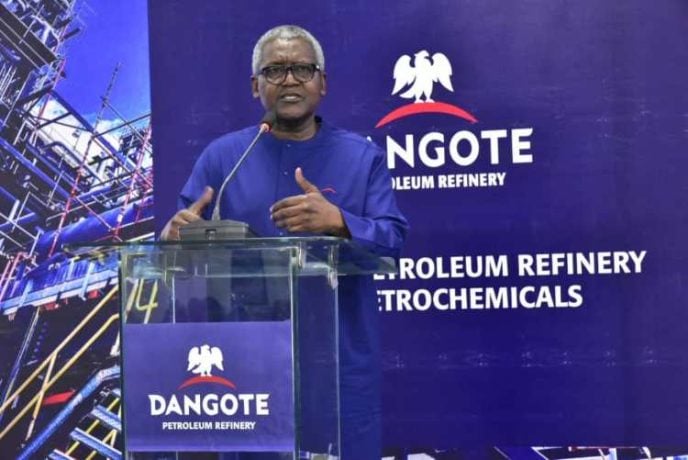
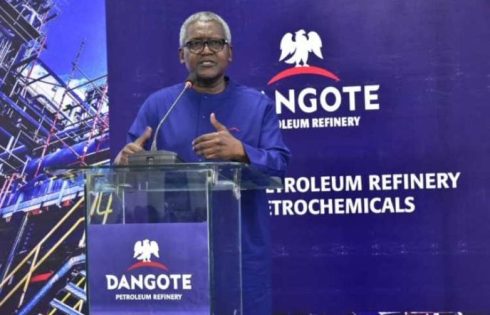
Dangote refineryThe Dangote Petroleum Refinery partnered with major fuel marketers to safeguard nationwide supply and reduce risks associated with a single-source system, the Major Energies Marketers Association of Nigeria has said.

Speaking during a MEMAN webinar on Tuesday, the association’s Chairman, Hubb Stokman, said the supply arrangement with marketers was designed to improve efficiency and address concerns around concentration risk in the downstream sector.

He noted that while Nigeria now has a large refinery capable of meeting most of its domestic needs, relying heavily on a single facility comes with inherent risks.

“I think that Nigeria is actually very blessed with having a refinery. Sometimes you forget, in a situation like this with the crisis in the Middle East, that having a refinery that can produce a large part, if not almost everything, that the country needs is a huge benefit,” he said, adding that Nigeria should count its blessings in that regard.

Stokman, however, added that the size and dominance of the refinery also necessitated deliberate efforts to spread supply channels.

“Now, one of the things is, of course, when you get a huge, mega refinery that can produce almost anything and everything that the country needs, it’s all concentrated in one place.

“So actually, this supply arrangement and selling to MEMAN members and other major marketers was mainly based also on making sure to address a little bit the risk of having one single big place to get all the products from, and also make it operationally efficient.”

He explained that the arrangement was also carried out in consultation with regulators to ensure it aligns with market realities and enhances distribution efficiency. “And I think they did that by talking also to the regulator to make sure what makes sense,” he added.

Stokman said the current global oil market volatility, triggered by the Middle East crisis, had reinforced the need for flexibility in supply arrangements. He said the crisis in the Middle East happened a couple of days after the purchase arrangement was communicated.

“And when the crisis happened, of course, everybody’s prices changed. It’s all a bit up in the air because it’s moving so fast. Don’t forget, the crisis in the Middle East is only two weeks old, and it happened basically a couple of days after this arrangement was communicated,” he said.

He noted that despite the volatility, the Nigerian market has so far responded positively because the arrangement was working. However, he warned that Nigeria needs to remain agile in a volatile environment in order not to be bogged down.

“So, I think so far, it’s been working. But I think we need to realise that in these kinds of fast-volatility environments, you need to remain agile.”

He warned against rigid approaches to market management, stressing the need for continuous adjustment in response to global developments. “I think that’s always the key thing. Don’t get bogged down in one way sometimes. But I must say, I’m very impressed with how the refinery is dealing with it and also the market,” Stokman added.

The MEMAN chairman further stated that Nigeria’s fuel pricing continues to reflect international market trends, as the deregulated system tracks global benchmarks. “The prices in Nigeria have followed, let’s say, import parity and the international market. So in that sense, I think the market has responded very quickly,” he said.

Speaking about the suspension of import licences, he added that supply security remains strong, with the regulator maintaining a needs-based approach to imports.

“I think what the NMDPRA does at the moment is very good. It (import) is scheduled on a needs basis. And I think that’s a very good approach, looking at the market and what is needed. The NMDPRA said at the beginning of March that the country had over 30 days of stock availability of PMS, which is actually, in a situation like this, quite a good position to be in from a supply security point of view.”

On the role of the Nigerian National Petroleum Company Limited, Stokman said the company remains critical to maintaining stability as a supplier of last resort.

“NNPC remains committed to its statutory role, of course, as a supplier of last resort, making sure the stability and continuity of supply of petroleum products across the country.”

Stokman expressed confidence that with both local refining and imports functioning within the framework of the Petroleum Industry Act, Nigeria can sustain an adequate supply. He added that the Nigerian market has shown increasing discipline in responding to shocks, reflecting gradual maturity since deregulation.

“I think the market is responding very, very fast and very disciplinarily. I think both the refineries, the NMDPRA, and the market players are all very, very disciplined in the way we do it,” he added.

Also speaking, a partner at Zeta Advisory and Consulting, Joe Nwakwue, stressed that Nigeria must deliberately promote a competitive, or “contestable”, market to prevent abuse of dominance by any single supplier.

He added, “We have a single refinery, 650,000 barrels, that is operational. So that risk is there. However, through regulatory action, the risk can be mitigated.” Nwakwue said allowing imports remains critical to sustaining competition and preventing price distortions.

“And that’s where I think a contestable market is important. So in practical terms, if that refinery knows that importers will bring in product and sell at a margin, its pricing will be influenced by that. But if that refinery knows that there’s no hope of getting product from anywhere else, then of course, there’s no way to regulate its behaviour.

“I think my personal view is that at all times, the only way today that you can have a contestable market is that you continue to allow imports,” Nwakwue stated.

On pricing, he noted that Nigeria is still exposed to global oil market volatility.

“The next question is, is Nigeria immune to fair price volatility? No, we’re not. As I said, domestic pricing is still import-quality pricing. So, irrespective of what the crude-for-naira deal says, we are still benchmarking Brent, and so that means whatever happens anywhere in the world that impacts Brent will be transmitted directly to the domestic market,” the expert stated.

He said there was a need to explore buffers within policies such as the naira-for-crude arrangement to reduce exposure to international price swings.

“I think that using the mechanism of the naira-for-crude, as I said, it’s until I see the agreements; I wouldn’t know, but I think you can build in buffers there, some discounts or things that can allow you to isolate the domestic refining from the vagaries of the international crude market.”

Nwakwue also raised concerns over policy inconsistencies, saying mixed signals from regulators could undermine market confidence. “I’m not aware that we have importation challenges. I think what we’ve had are uncertainties around policy and regulations. And I think that that’s what the regulator needs to clarify. People need to be certain,” he warned.

He cautioned that rising petrol prices could hurt economic growth if not carefully managed. “I think that if fuel price goes way into the N2,000s per litre, it’s going to affect economic growth. So the government should have an interest in ensuring that Nigerians don’t have to pay N2,000 per litre,” Nwakwue noted.

He, however, advocated a targeted and temporary intervention mechanism rather than an open-ended subsidy regime. “So somebody needs to model that and know what that threshold is. And then the government needs to design something; I don’t want to call it a subsidy, but that’s what it ultimately is. It’s a temporary measure that does not allow prices to hit the roof, where they will destroy the economy,” he added.

APC confirms zoning for NWC position ahead of National Convention

The All Progressives Congress, APC, has reaffirmed that its existing zoning arrangement for National Working Committee, NWC, positions will remain in force ahead of the party’s 2026 National Convention.

In a statement issued on Monday in Abuja, the party’s National Publicity Secretary, Felix Morka, said the decision is intended to guide aspirants and ensure stability within the party as it prepares for key internal elections.

According to the statement, the zoning formula outlined in the published 2026 Schedule of Nationwide Congresses, National Convention and Related Activities remains valid and will be strictly applied during the convention process.

“The existing zoning arrangement for National Working Committee positions across states within the geo-political zones remains valid and applicable to the upcoming National Convention,” the statement said.

The party also advised aspirants seeking national offices to strictly comply with the zoning framework when obtaining and submitting their Expression of Interest and Nomination Forms.

“Accordingly, aspirants are advised to be STRICTLY GUIDED by the existing zoning arrangement,” Morka added.

The APC noted that maintaining the zoning structure would help ensure fairness, balance and orderliness in the conduct of the party’s internal processes ahead of the convention.

Taraba PDP insists party still dominant, dismisses division claims

The Chairman of the Peoples Democratic Party, PDP, in Taraba State, Bitrus Obidah, has dismissed concerns over recent defections to the All Progressives Congress, APC, expressing confidence that the party will remain a dominant political force in the state ahead of the 2027 general elections.

Obidah made the remarks on Monday while speaking with journalists in Jalingo, where he maintained that the PDP remains strong, united, and firmly positioned to retain its political relevance in the state.

He rejected reports suggesting that the party is experiencing internal divisions, insisting that the PDP in Taraba operates under a single and duly elected leadership whose tenure remains valid.

According to him, the party has sustained a strong political presence in the state since the return of democratic rule in 1999, backed by established structures across all the 16 local government areas of Taraba.

The party chairman also revealed that some individuals who previously defected to the APC are beginning to reconsider their decisions and are making moves to return to the PDP.

He said the party remains open to welcoming back former members who are willing to work toward strengthening its political base in the state.

Obidah further assured party supporters that the leadership is committed to transparency and fairness in the selection of candidates for future elections. He emphasized that aspirants would be encouraged to build genuine support among grassroots members rather than rely on imposed candidacies.

He added that reconciliation efforts are currently underway at the national level of the party to resolve internal disputes and restore unity across various chapters.

He also expressed optimism that the PDP would emerge stronger from the ongoing reconciliation process and remain well prepared for the political contests leading up to the 2027 general elections.